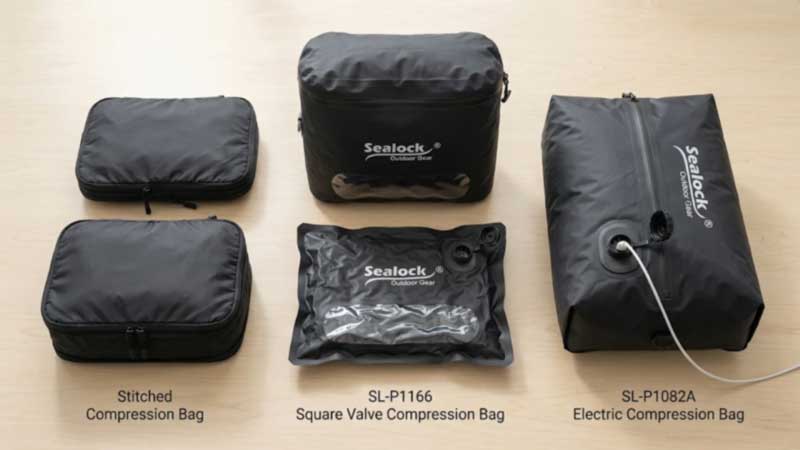
A compression packing cube is a packing cube that also pushes air out of the clothes inside it. The idea is simple. How it works in practice is not, because three quite different products are sold under the same name. A zip-compression cube squeezes its load with a second zipper. A valve cube is sealed and has a one-way valve. An electric cube has a small pump built into the valve. They save different amounts of space, behave differently with water, and need different materials and seams to make. This guide explains each type, answers the questions travellers most often ask, and sets out what a brand needs to specify when it develops its own compression packing cubes.
What Is a Compression Packing Cube?
An ordinary packing cube is a fabric box with a zipper. It keeps clothes sorted and makes a bag easier to unpack, but it does not make anything smaller. A compression packing cube adds a way to reduce the volume of the load once the cube is full. The organising job stays the same: one cube for shirts, one for base layers, one for the clothes you will wear later in the trip. The difference is that each cube ends up thinner, so more of them fit in the same backpack, duffel or suitcase.
That puts compression cubes between plain packing cubes and vacuum bags. We compare all three in detail in Vacuum Bags vs Packing Cubes. This article looks at the compression cube itself: how each type removes air, and what that means for the traveller and for the brand that sells it.
How Do Compression Packing Cubes Work?
All compression cubes work on the same principle. Soft clothing is mostly air. Down, fleece and knitwear trap air between their fibres, which is why they are warm and also why they are bulky. Removing that air shrinks the load. The three types differ only in how they get the air out and whether they can keep it out.
Zip-compression cubes
A zip-compression cube has two zippers. The first closes the lid. The second runs around the side wall, and closing it pulls the top and bottom of the cube together and folds away part of the gusset. Air escapes through the fabric and the zipper teeth as the cube is squeezed. These cubes are usually sewn from lightweight nylon or polyester. They are quick to use and easy to open mid-trip, but because the fabric breathes they cannot hold a vacuum. The reduction depends on how hard the second zipper can pull, and it is moderate.
Valve compression cubes
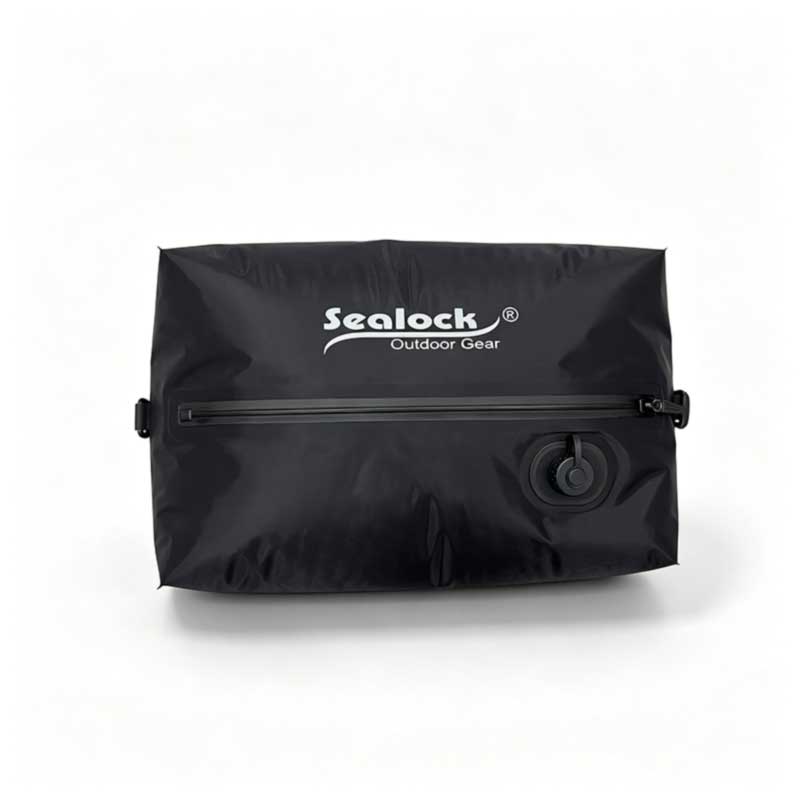
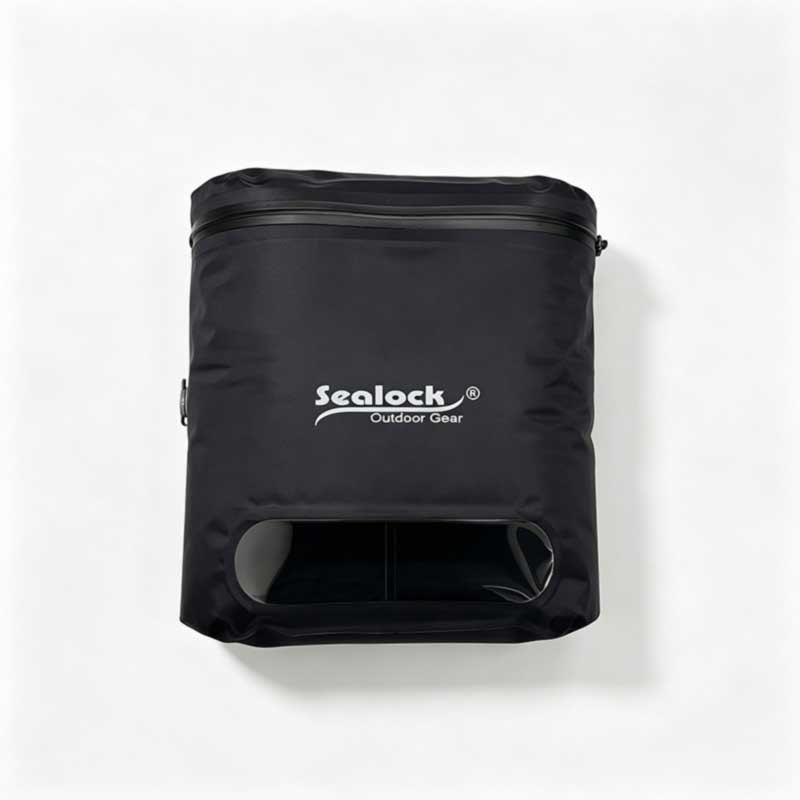
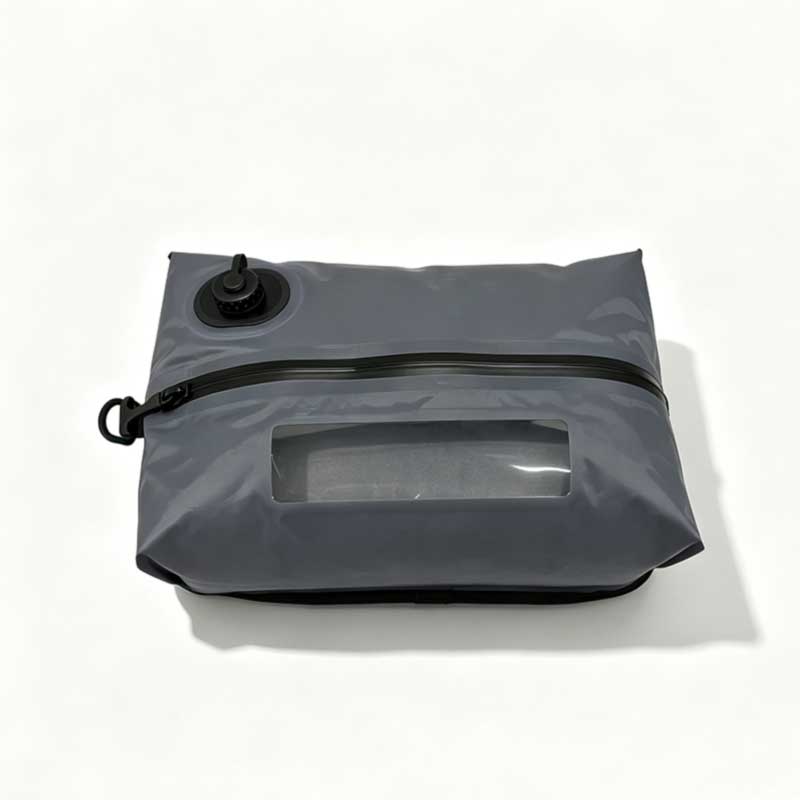
A valve cube is a sealed box. The body is a coated fabric such as TPU-coated nylon, the seams are high-frequency welded so there are no needle holes, and the lid closes with a waterproof zipper. A one-way purge valve sits in one panel. You close the zipper and press down on the cube or roll it, and air leaves through the valve and cannot flow back in. Because the cube is airtight, it stays compressed until you open the valve or the zipper. On soft clothing, our valve cubes reduce volume by up to about 50%.
Electric compression cubes
An electric cube is a valve cube with a small pump inside the valve housing. You unscrew the cap, switch it on, and the pump draws the air out. Our USB-C Rechargeable Compression Bag (SL-P1082A) compresses a load in about 15 seconds, and one charge of its 1,500 mAh battery covers around 90 compressions. The appeal is speed and no separate pump to carry, which matters most on trips where the bag is repacked every day or two.
Zip-compression, valve and electric cubes all organise clothes; they differ in how much air they remove and whether they hold it out.
Do Compression Packing Cubes Actually Work?
Yes, but how much they help depends on what goes in them. Bulky, air-filled clothing compresses the most. A down jacket, a fleece and a few base layers can end up at about half their packed height in a valve cube. Denim, cotton trousers and dense knits have less air to lose, so the saving is smaller. Shoes, toiletries and anything rigid do not compress at all and should stay out.
Buyer reviews of compression cubes return to the same few complaints, and almost all of them come from expecting the wrong thing:
"My bag is heavier." Compression reduces volume, not weight. A cube saves space, and if that space is filled with more clothes, the bag gets heavier. Check airline weight limits before using the space you gained.
"The zipper split." Most zipper failures on compression cubes come from overfilling. If the zipper has to be forced around the corner, the cube is too full. A folded gusset above the zipper, as on our square compression cube (SL-P1166), gives the zipper room to close over a full load.
"It puffed back up." A valve cube only holds a vacuum when the zipper is run fully to its end stop and the valve cap is screwed down. A gap of a few millimetres lets air back in overnight.
"My clothes came out creased." Tighter compression means more creases. Roll or fold clothes neatly before compressing, and keep shirts that must not crease in an ordinary cube.
Used for the right clothes and not overfilled, compression cubes do what they promise: the same wardrobe in a smaller bag, still sorted and easy to find.
Zip, Valve or Built-In Pump: Which Type to Choose
Zip-compression cube
Valve cube
Electric cube
How air leaves
Squeezed out by a second zipper
Pressed or rolled out through a one-way valve
Drawn out by a pump in the valve
Holds the compression
Only while zipped; fabric breathes
Yes, airtight
Yes, airtight
Volume reduction
Moderate
Up to about 50%
About 50%
Water resistance
Limited
Rain and splash resistant
Rain and splash resistant
Typical construction
Sewn nylon or polyester
High-frequency welded TPU-coated nylon
Welded TPU laminate, battery and motor
Best for
Everyday clothes you open often
Bulky layers, wet and dry separation
Frequent repacking on multi-stop trips
For a traveller, the choice usually comes down to how often the cube will be opened. Clothes reached for every day suit a zip cube or an ordinary cube. Layers and spare clothes that stay packed for several days suit a valve cube, which keeps them flat and dry. An electric cube suits someone who repacks often and does not want to press out air by hand each time. Many travellers end up with a mix, which is also why mixed sets sell well at retail.
Which Size, and How Many?
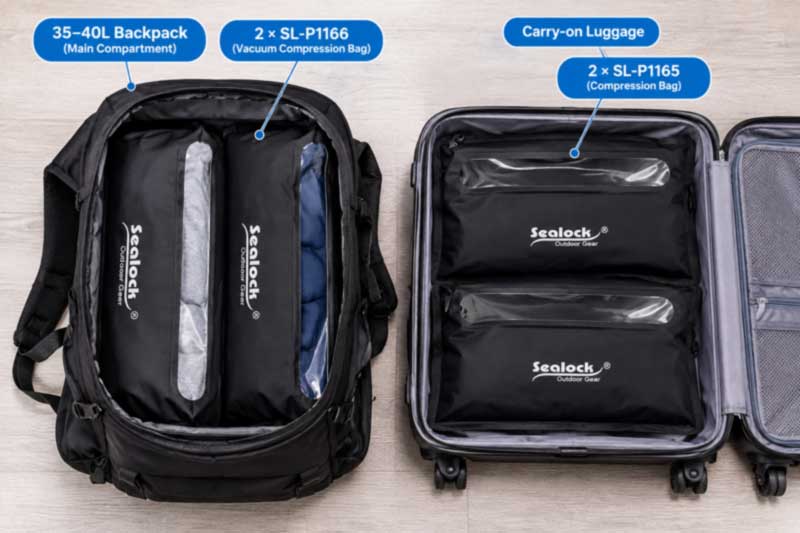
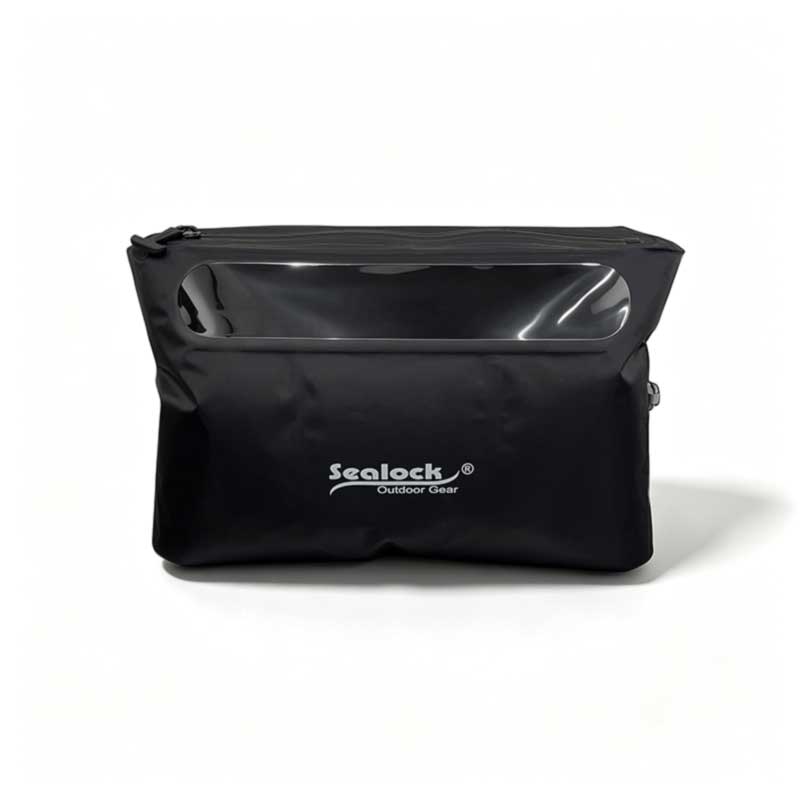
Shape matters as much as volume. A square cube stands upright in the main compartment of a backpack. Our SL-P1166 is 34.5 × 36 cm and about 15 L, so it fits backpacks from 30 L and one end of a duffel, and after compression it is about 6–8 cm thick, so two or three stand side by side. A long, flat bag suits a suitcase. The travel compression bag (SL-P1165) is 49.5 × 29 cm, also about 15 L, and lies flat in carry-ons from 55 × 40 × 20 cm.
As a guide, one 15 L cube holds 15 to 20 T-shirts, or a down jacket, a fleece and a set of base layers. For a weekend in a 30–40 L backpack, one or two cubes are enough. For a week out of a carry-on, two or three cubes for clothing, with shoes and toiletries packed loose in the remaining space, usually works. For packing suitcases and duffels in more detail, see Compression Bags for Suitcases and Compression Bags for Duffel Bags.
Square cubes stand upright in a backpack; long flat bags lie in a suitcase.
Are Compression Packing Cubes Waterproof?
Sewn cubes are not. Even with a coated fabric, every stitch is a needle hole, and water and air pass through. Welded valve cubes are a different matter. With no stitch holes and a waterproof zipper, they keep rain, a spilled drink or a wet beach towel away from the clothes inside, and they keep damp clothes away from dry ones on the way home. That is useful in a duffel on a boat deck or in a backpack in a downpour.
They are still rain and splash resistant, not submersible. Our compression cubes are verified with a heavy rain and water-jet test. For gear that may go underwater, a roll-top dry bag is the right product, and a compression cube can go inside it.
Can You Fly With an Electric Compression Cube?
Usually, yes. The battery in the SL-P1082A is 1,500 mAh, well under the 100 Wh limit most airlines set for lithium batteries in devices. Rules still differ by airline and route, so check before flying, and keep the cube in a bag you can reach if your airline asks for battery devices in the cabin. Ordinary valve and zip cubes have no restrictions. We cover airline questions in more detail in Are Vacuum Bags Allowed on Planes?
For Brands: What to Specify for Custom Compression Packing Cubes
The travel brands that do well with compression cubes treat them as part of their range, not as a generic add-on. The cube is sized to their own backpacks or suitcases, the colours match, and the set is sold together. These are the decisions to make when you brief a factory.
Compression method and seams. This decides the production line. Zip-compression cubes are sewn; valve and electric cubes are high-frequency welded. We run both lines in-house, so a range can combine sewn cubes for everyday clothes with welded valve cubes for layers, made to the same colour standard. Our sewing line works with the same care as our welding line: zipper tracks, binding and corner stitching are all checked against the load the second zipper puts on them.
Shape and size. Give the inside dimensions of the bags the cubes are meant for. A square cube for a 30 L backpack, a flat bag for a 55 cm carry-on and a deeper cube for a duffel are different patterns. Custom sizes are developed from your dimensions or a sample bag.
Material and details. TPU-coated nylon is standard for welded cubes. Then decide on the valve (position, cap colour), whether to add a clear window, and handles or carry loops. Windows are worth it on cubes sold in sets, because they let travellers tell cubes apart without opening them.
Logo. Screen print, heat transfer and UV digital print go on the front panel; a welded TPU patch suits a raised logo. Electric cubes can also carry a logo on the valve cap, which adds about 10 days to the lead time. Printed content or size labels help retail sets.
Sets and packaging. Valve cubes are shipped folded flat in a polybag, 100 pieces per carton, with colour boxes or header cards as options. A cube and a flat bag can be packed as one set. Electric cubes ship in a colour box with a USB-C cable, 40 pieces per carton, with UN38.3 and MSDS documents for the lithium battery.
MOQ and lead time. MOQ is 300 pieces per colour. Samples take 7–15 days. Production takes about 25 days for 300–500 pieces, 30 days for up to 1,000, 35 days for up to 3,000 and 45 days for up to 10,000, with split shipments available. Fully new designs need extra development time before sampling. Production can run in our factories in Guangdong, China or Ho Chi Minh City, Vietnam, depending on your tariff position.
For the full development process, from tech pack to bulk, see Custom Vacuum Compression Bag Production and OEM Vacuum Compression Bags. We have also produced an airtight, valve-equipped IPX7 travel bag for Ekster, so we are used to compression features being built into a brand's own bag design.
Compression Packing Cubes in Our Range
The table below lists the compression cubes and bags in our vacuum compression bags range that are most relevant to packing cubes, newest first. Each can be customised in colour, logo and packaging.
Vacuum compression bag with hand pump for travel; the tightest squeeze for down and fleece that stay packed for days
How We Test Compression Packing Cubes
Every order goes through IQC on incoming TPU-coated fabric, zippers, valves and pump parts, IPQC during welding, sewing and assembly, and OQC on finished cubes, with SGS or QIMA third-party inspection available on request. Welded seams are tested for tensile and bonding strength, with attention to the corners, the valve flange and the zipper ends, which take the most strain when a full cube is pressed flat. Finished cubes go through a load test of 1,500+ cycles, and zippers are opened and closed 3,000 times, because a compression cube's zipper is pulled closed over a full load every time it is used. Hardware is checked in salt spray, fabric for abrasion, and colour fastness and colour difference are checked across every cube in a set. Valve and electric cubes are verified with a heavy rain and water-jet test, and electric cubes are checked for pump suction, charging and battery documentation before packing.
Every valve and electric cube then goes through our customer inspection procedure: unboxing, vacuum extraction, a 24-hour static rest and air-leak determination. A cube that has re-inflated after 24 hours does not ship. Over 20 years of making waterproof and airtight bags have taught us that leaks show up at the valve seat and the zipper end stops, so those are the first places we check.
Frequently Asked Questions
Do compression packing cubes really work?
Yes, on soft and bulky clothing. Valve cubes reduce the volume of clothes like down jackets, fleece and base layers by up to about 50%. Dense fabrics such as denim compress less, and rigid items not at all.
What is the difference between compression cubes and vacuum bags?
Compression cubes are built to organise as well as compress, so they keep a box shape and open easily during a trip. Vacuum bags are built for maximum volume reduction and are better for bedding or clothes that stay packed. Valve and electric cubes sit close to vacuum bags in performance while keeping a cube shape.
Do compression packing cubes wrinkle clothes?
Some creasing is normal, and the tighter the compression, the more creases. Roll clothes or fold them flat before compressing, and pack shirts that must stay smooth in an ordinary cube.
Why does my compression cube puff back up?
On a valve cube, the zipper is usually not fully closed or the valve cap is loose. Run the zipper to the end stop, press the air out, then screw the cap down firmly.
What is the MOQ for custom compression packing cubes?
300 pieces per colour, for valve cubes, flat compression bags and electric cubes. Custom sizes and colours are available; Pantone colour matching applies to the body, and windows stay clear.
How much do custom compression packing cubes cost?
It depends on the compression method, size, material, number of pieces per set, logo method, packaging and order quantity. Electric cubes cost more than valve cubes because of the pump and battery. Send us your target sizes and quantity for a quotation.
Can you put our logo on the cubes?
Yes. Screen print, heat transfer, UV digital print or a welded TPU patch on the front panel, and a debossed or printed logo on the valve cap of electric cubes. Branded colour boxes, header cards and hangtags are also available.
Can electric compression cubes be shipped by sea and air?
Yes. They contain a small lithium battery and are shipped with UN38.3 test reports and MSDS documents, which carriers require for battery products.
Develop Compression Packing Cubes for Your Brand
Tell us which bags your cubes are meant for, which compression method you prefer, and how many pieces each set should have. We will propose sizes, make samples and plan production in China or Vietnam. Contact us at info@sealock.com.hk or call +86-769-82009361.
We use cookies to offer you a better browsing experience, analyze site traffic and personalize content. By using this site, you agree to our use of cookies.
Privacy Policy
 English
 Español
 Português
 русский
 Français
 日本語
 Deutsch
 tiếng Việt
 Italiano
 Nederlands
 ภาษาไทย
 Polski
 Svenska
 magyar
 Malay
 বাংলা ভাষার
 Dansk
 Suomi
 हिन्दी
 Pilipino
 한국어
 Türkçe
 Gaeilge
 العربية
 Indonesia
 Norsk
 تمل
 český
 ελληνικά
 український
 Javanese
 فارسی
 தமிழ்
 తెలుగు
 नेपाली
 Burmese
 български
 ລາວ
 Latine
 Қазақша
 Euskal
 Azərbaycan
 Slovenský jazyk
 Македонски
 Lietuvos
 Eesti Keel
 Română
 Slovenski
 मराठी
 Srpski језик