

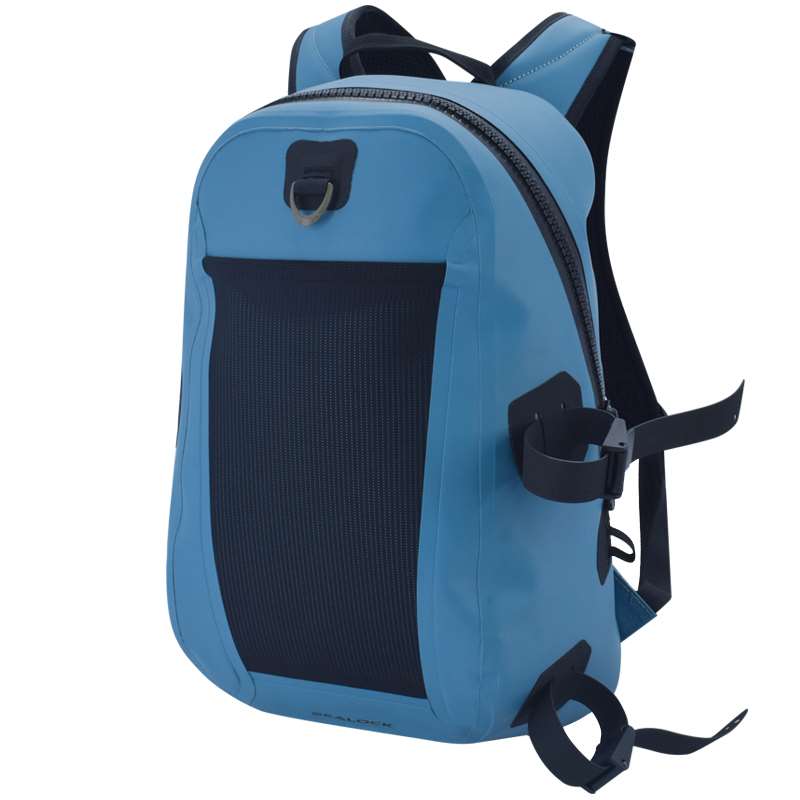
RF Welding: A Complete Guide to Waterproof Seam Engineering for TPU Outdoor Products
RF welding (Radio Frequency welding) uses electromagnetic energy to fuse thermoplastic materials at the molecular level—no stitching, no needle holes, no seam tape. For waterproof bags, soft coolers, and tactical equipment, it has become the construction method that separates products capable of surviving sustained submersion from those that merely survive a splash test.
This guide covers how RF welding actually works, why TPU responds to it the way it does, where the process is most commonly misapplied, and what rigorous quality control looks like in a professional manufacturing environment.
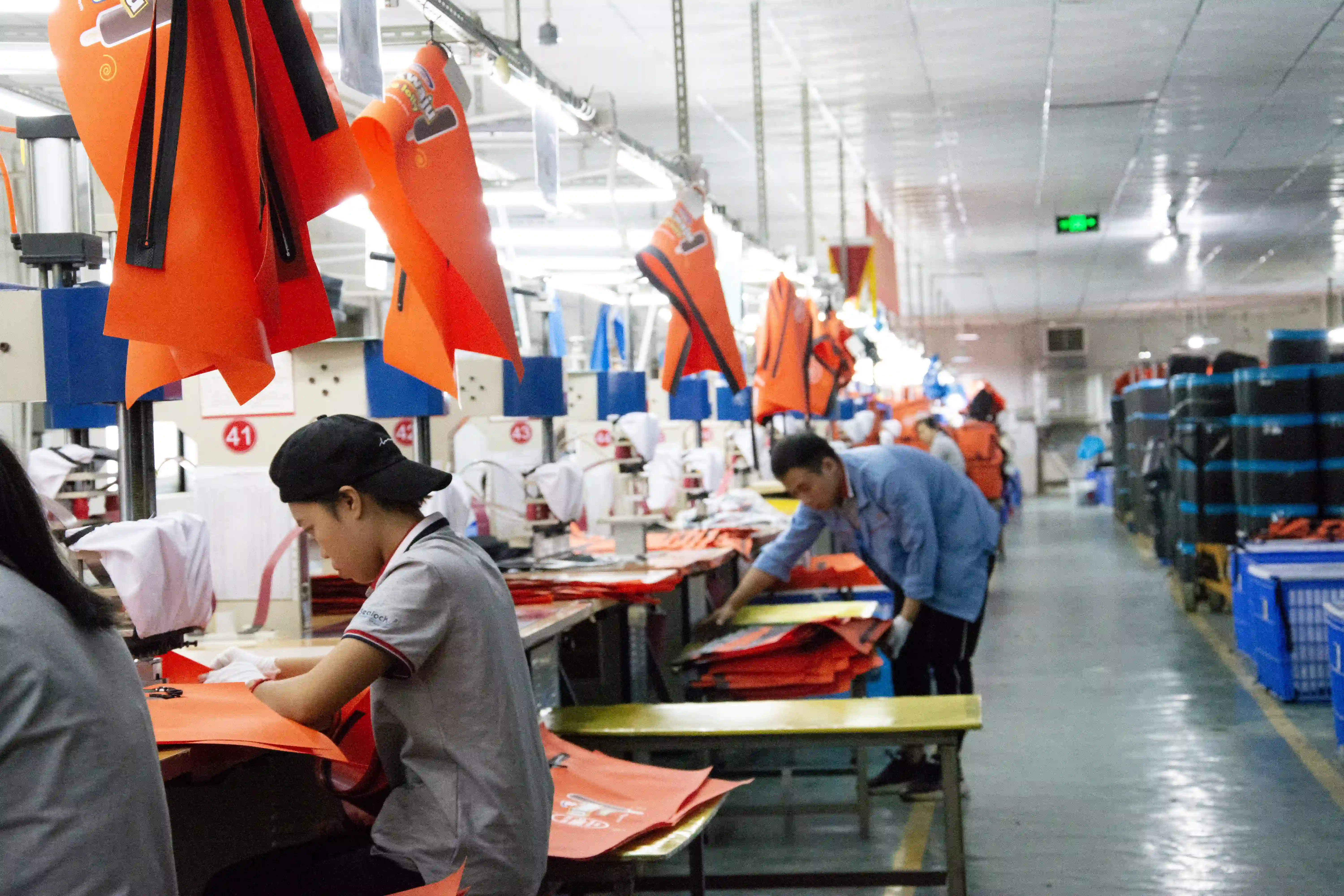
1. What Is RF Welding?
RF welding—also referred to as High Frequency (HF) welding or dielectric welding—is a manufacturing process that bonds thermoplastic materials using electromagnetic energy rather than external heat, adhesives, or mechanical fastening. The two terms are interchangeable in industrial practice; the underlying physics are identical.
The distinguishing characteristic of RF welding is where the heat originates. In conventional heat sealing, thermal energy is applied to the material surface and conducted inward. In RF welding, the electromagnetic field penetrates the material and generates heat from within, at the molecular level. This internal heating produces a bond that is, in most cases, stronger than the base fabric on either side of the join.
The technology has been in industrial use since the 1940s, initially for PVC-based medical and packaging applications. Its adoption in premium outdoor gear manufacturing accelerated as TPU replaced PVC across product categories where flexibility, environmental compliance, and long-term performance matter. Today, RF welding is the standard construction method for any waterproof product that needs to hold under sustained hydrostatic pressure—not just surface splash resistance.
Typical product applications include:
- Submersible dry bags and waterproof backpacks
- Leakproof soft coolers and insulated carriers
- Inflatable outdoor structures
- Waterproof medical transport packaging
- Military and tactical equipment cases
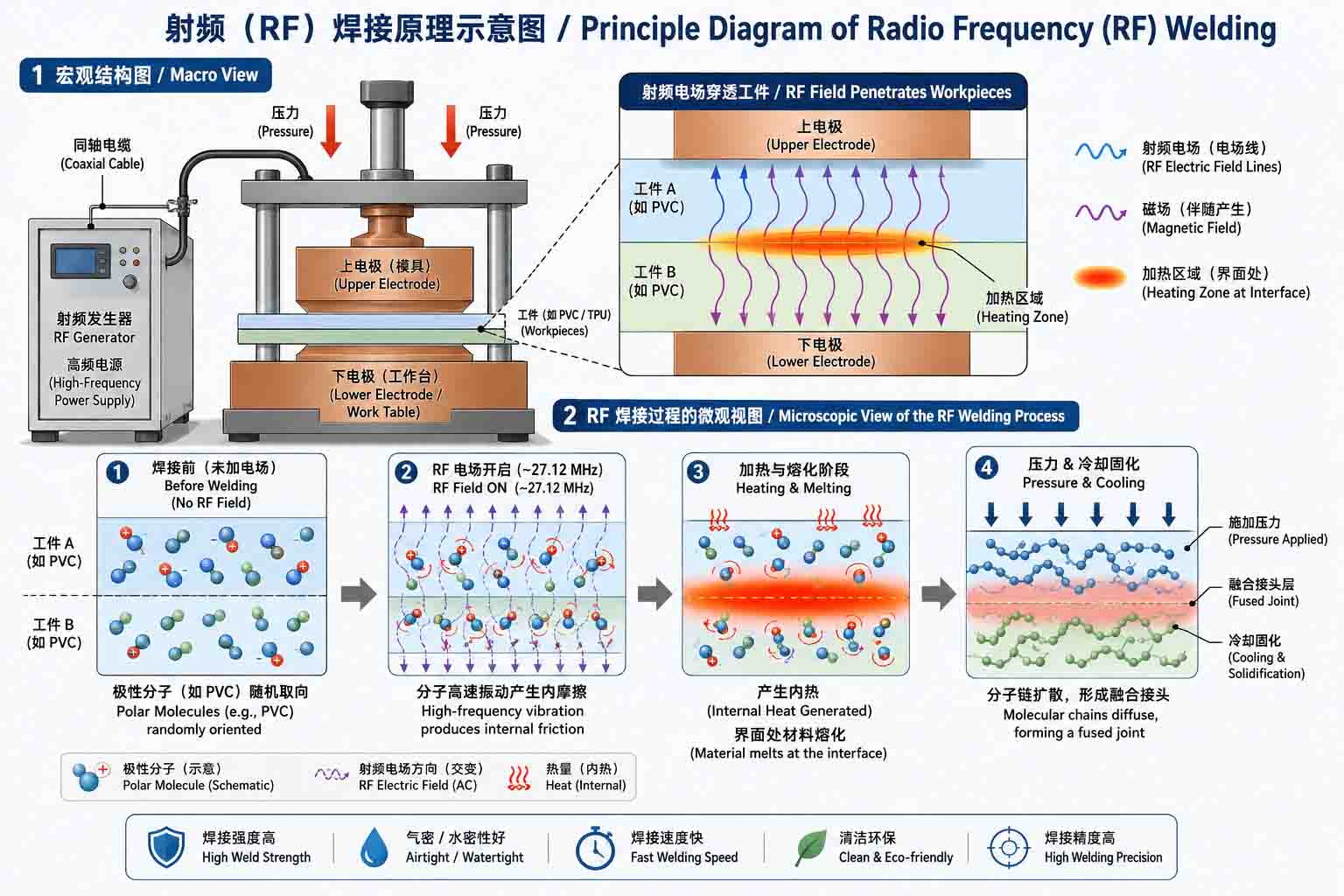
2. How RF Welding Works
RF welding equipment operates by passing a high-frequency alternating current—typically between 27 MHz and 40 MHz, with 27.12 MHz being the most common industrial frequency—between two metal electrodes (called dies or platens). The material to be welded is placed between these dies.
When thermoplastic materials with polar molecular structures are exposed to a rapidly alternating electromagnetic field, their molecules attempt to realign with each oscillation of the field. At 27.12 MHz, this means roughly 27 million realignment attempts per second. The friction generated by this molecular movement produces heat—not at the surface, but uniformly throughout the material thickness at the weld zone.
Simultaneously, the press applies controlled pneumatic pressure to the dies, compressing the material layers together. As the internal temperature reaches the material's fusion point, the layers at the interface melt and intermingle at the molecular level. When RF energy is removed and the material cools under sustained pressure, the two layers have become one continuous material—not glued, not stitched, but fused.
This internal heat generation has several practical advantages over surface-applied heat methods:
- The bond forms uniformly across the entire weld zone rather than progressing from the surface inward
- Outer surfaces are less likely to scorch or deform, since the electrodes themselves don't need to reach fusion temperature
- Complex die geometries can produce precise, repeatable weld patterns including curves, corners, and multi-layer joins
- Cycle times are short—typically 3 to 15 seconds per weld depending on material thickness and die area
3. Why TPU Is Particularly Well-Suited to RF Welding
Not all thermoplastics respond equally to RF welding. The process depends on the material having a polar molecular structure—one where electrical charge is distributed unevenly across the molecule. Polar molecules respond to alternating electromagnetic fields by attempting to orient themselves; that attempted orientation is what generates heat.
TPU (Thermoplastic Polyurethane) has a naturally polar structure due to the urethane linkages in its molecular backbone. This makes it highly responsive to RF energy and relatively easy to weld consistently across a range of thicknesses and laminate configurations.
In addition to RF compatibility, TPU brings several material properties that make it the preferred substrate for premium waterproof outdoor gear:
| Property | Performance Benefit |
|---|---|
| Polar molecular structure | Efficient, uniform internal RF heating |
| High elasticity and flex recovery | Seams resist cracking under repeated bending |
| Inherent waterproof film layer | Maintains airtight seal across the weld zone |
| Cold-weather flexibility (to -30°C) | Weld integrity holds in low-temperature field use |
| UV and chemical resistance | Long-term durability in marine and high-altitude environments |
| PFAS-free, REACH compliant | Compatible with ESG requirements in EU and US markets |
Other RF-weldable materials include PVC-coated fabrics, EVA, and certain PU films. PVC is the legacy option—it welds easily and cheaply, but carries plasticizer-related regulatory risk and becomes brittle at low temperatures. For products intended to last, or for brands with environmental compliance requirements, TPU is the practical choice.
4. RF Welding vs. Traditional Stitching: What the Difference Actually Means in Use
The comparison between RF welded seams and stitched seams is straightforward from an engineering standpoint, but it's worth being precise about where and how stitched construction fails—because the failure mode is often slow and non-obvious until it isn't.
| Characteristic | RF Welding | Stitching + Seam Tape |
|---|---|---|
| Waterproof integrity | Molecular-level seal, no pathways for water ingress | Dependent on tape adhesion; degrades with use and UV |
| Needle holes | None | Thousands per meter of seam length |
| Performance under hydrostatic pressure | Holds at 1.0 Bar and above | Tape bonds typically fail between 0.1–0.3 Bar |
| Seam strength | Weld zone often stronger than base fabric | Thread wear and abrasion reduce strength over time |
| Interior hygiene | No gaps for moisture to accumulate in insulation layers | Seam gaps allow mold-prone moisture infiltration |
| Long-term durability | Weld bond does not degrade through normal use cycles | Seam tape delaminates; thread frays at stress points |
The seam tape failure mode deserves particular attention. Tape performs adequately when new and under moderate conditions. The problem is that waterproof bags and coolers don't live under moderate conditions—they get stuffed full of heavy, wet gear, flexed repeatedly during transport, left in hot vehicles, and occasionally sat on. Under these real-world loads, tape bond lines begin to lift at edges and corners. The delamination is invisible from the outside until water is already getting in.
RF welding eliminates this degradation pathway entirely. There are no tape edges to lift, no needle holes to work open under pressure, and no thread to abrade at seam stress points. The weld zone either holds or it doesn't—and in a properly executed weld on compatible material, it holds well past the point where the surrounding fabric would fail first.
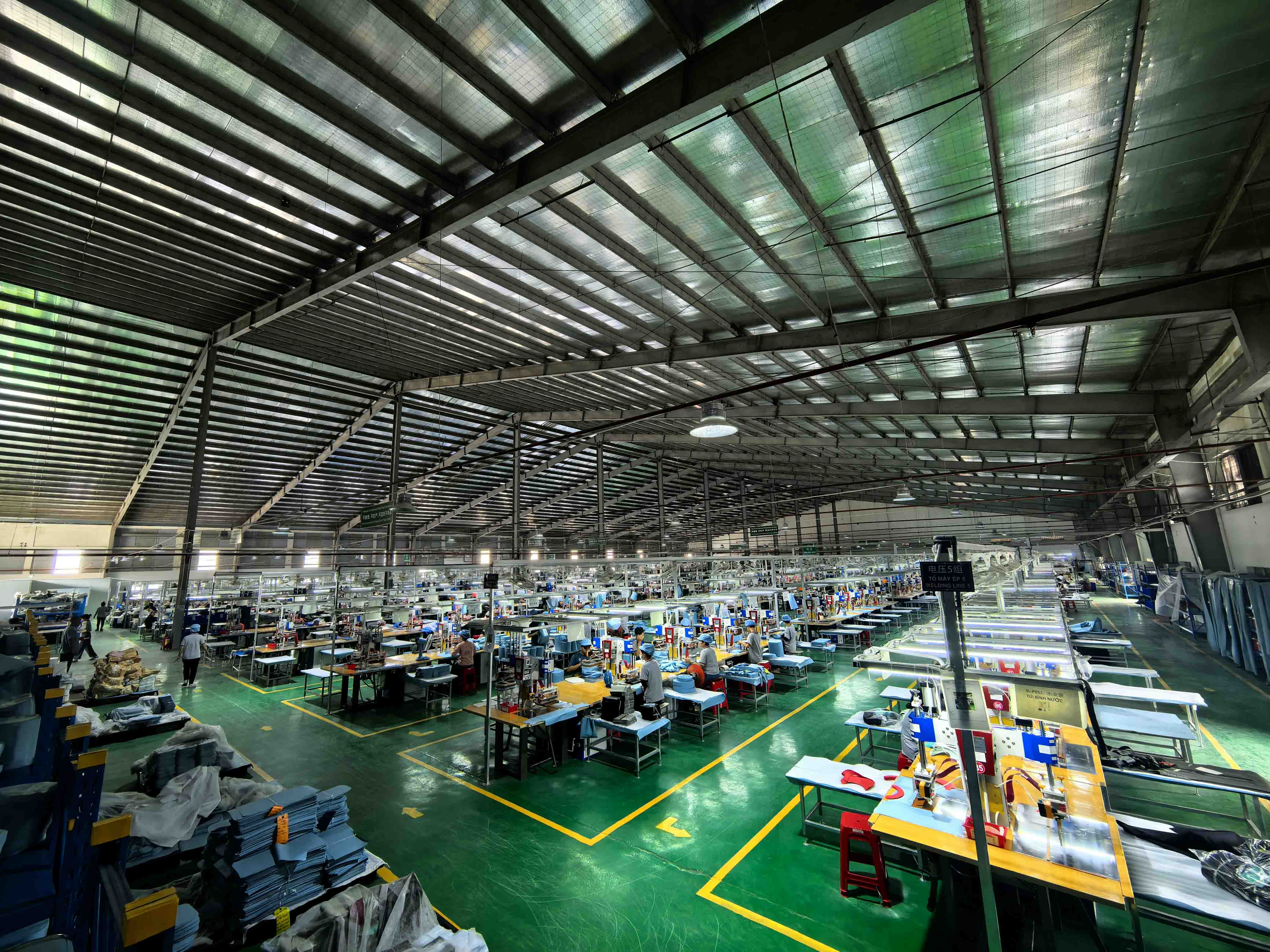
5. The RF Welding Manufacturing Process, Step by Step
Step 1 — Material Preparation
TPU laminated panels are cut to precise dimensions using CNC cutting or custom die-cutting systems. Panel accuracy at this stage directly affects weld alignment downstream; even a few millimeters of dimensional drift will produce a misaligned weld zone. Material surfaces must be free of contamination—oils from handling, dust from cutting, or moisture from storage can all interfere with RF energy transfer and produce incomplete fusion.
Step 2 — Die Selection and Machine Setup
The welding die is the shaped electrode that determines weld geometry. Different product configurations require different die profiles—a flat seam die for panel joins, a shaped die for curved closures or reinforcement patches, a multi-cavity die for high-volume repetitive welds. Die selection is matched to the specific weld geometry required by the product. Machine parameters—frequency, power output, press pressure, and cycle time—are calibrated to the specific TPU formulation and material thickness being welded. These parameters are documented in the product SOP and repeated consistently across production runs.
Step 3 — Material Positioning
Panels are aligned within the die according to the weld layout. Consistent positioning is critical for weld width uniformity; most professional RF welding setups use fixture guides or registration marks to eliminate operator positioning variability.
Step 4 — RF Energy Activation and Pressure Bonding
The press closes, applying pneumatic pressure to the material stack. RF energy is activated for the calibrated cycle duration. Internal molecular heating brings the material at the weld interface to fusion temperature while the outer surfaces remain below their deformation point. Pressure is maintained throughout this phase.
Step 5 — Cooling Under Pressure
RF energy is switched off, but press pressure is maintained through the cooling phase. This is a step that is frequently shortcut in lower-quality manufacturing environments, and it matters: if pressure is released before the weld zone has solidified, the fused material can deform, producing a weaker bond with dimensional inconsistencies. Proper cooling time is determined during the parameter development phase and treated as a non-negotiable part of the cycle.
Step 6 — Trim and Inspection
Flash material at the weld perimeter is trimmed. Each weld is visually inspected for burn marks, incomplete fusion zones, or dimensional deviation before the part moves to the next assembly stage.
6. Seam Engineering: The Variables That Determine Whether a Weld Holds
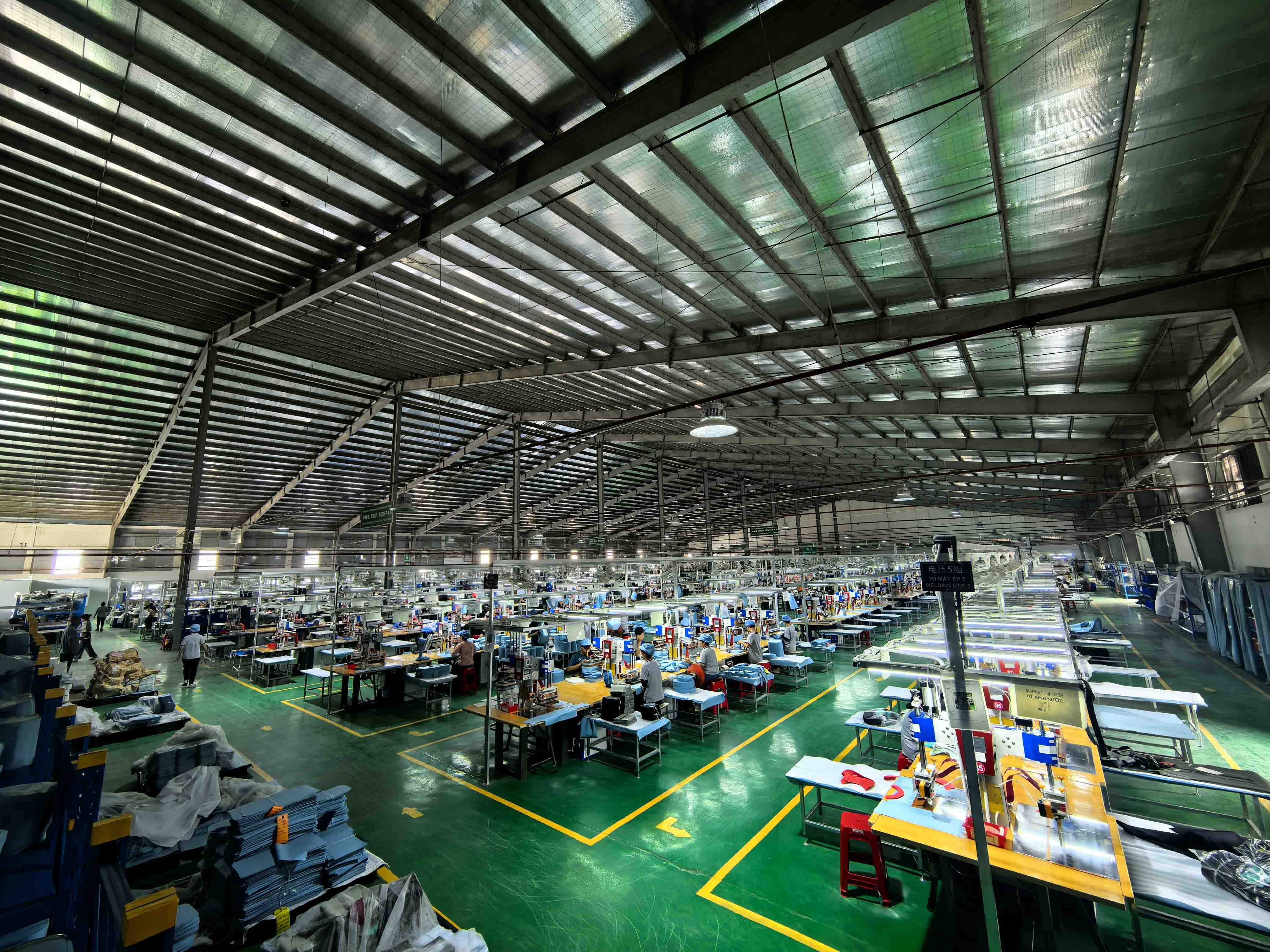
RF welding is not a process where consistent machine settings produce consistent results regardless of other factors. Seam performance is determined by the interaction of several variables, each of which needs to be understood and controlled.
Weld Width
Wider weld zones distribute stress over a larger area and generally produce higher seam burst resistance. For products that will see sustained hydrostatic pressure or dynamic load—submersible dry bags, cooler base seams, inflation bladder joins—minimum weld width is a specification item, not a production afterthought. Narrow welds at corners and radius transitions are common failure initiation points and should receive explicit attention during die design.
RF Power Consistency
Unstable power output during the weld cycle produces non-uniform internal heating. The visual indicators are burn marks at high-power zones and pale, under-fused areas elsewhere. Neither is acceptable in pressure-rated products. Professional RF welding equipment maintains consistent power delivery throughout the cycle; periodic calibration verification is part of responsible equipment maintenance.
Material Thickness and Formulation Matching
RF welding parameters are specific to material thickness and TPU formulation. A parameter set optimized for 0.8mm TPU film will produce insufficient fusion if applied to 1.5mm laminated fabric, and may burn thinner materials if used in reverse. When material specifications change between product runs—different fabric weights, different TPU coating weights—parameters need to be re-validated, not assumed to transfer.
Common Failure Causes
- Insufficient RF energy or cycle time: Produces a bond that looks complete on the surface but fails at low pressure because the interface never reached full fusion temperature
- Surface contamination: Oils, moisture, or particulate matter at the weld interface create localized voids where fusion did not occur
- Incorrect press pressure: Too low allows the melted interface to separate before cooling; too high can squeeze material out of the weld zone, reducing effective bond width
- Premature pressure release during cooling: Produces dimensional distortion and reduced bond strength at the weld zone edges
- Die wear: Worn or damaged die surfaces produce inconsistent pressure distribution, leading to variable weld quality across the die face
7. RF Welding in Soft Cooler Manufacturing
Soft coolers present a particularly demanding application for seam engineering because they combine hydrostatic requirements (the liner must hold water without leaking) with thermal requirements (the insulation system must not be compromised by moisture infiltration) and hygiene requirements (interior surfaces must be cleanable and mold-resistant).
In a stitched soft cooler, the seam between the interior liner and the insulation foam layer is a moisture pathway. Melted ice water wicks through needle holes and accumulates between the liner and foam, where it cannot drain or dry. Over weeks of regular use, this produces the persistent odor and mold growth that procurement officers consistently identify as the top complaint about legacy supplier product quality.
RF welding eliminates this pathway structurally. The interior liner of an RF welded soft cooler is a single watertight basin—no seam gaps, no needle holes, no tape edges. Melted ice water stays in the liner and can be poured out or wiped away. The insulation layer remains dry throughout the product's service life.
Additional performance benefits of RF welded soft cooler construction:
- The airtight interior chamber reduces convective heat exchange, directly improving ice retention duration
- Smooth, non-porous TPU interior surfaces meet food-grade contact standards and resist microbial growth
- HF welded reinforcement patches allow D-ring and handle attachment without piercing the primary waterproof membrane
- Watertight zipper closure systems can be integrated to complement the welded body, maintaining hermetic performance at the access point
8. Laboratory Testing and Quality Control for RF Welded Products
RF welded construction is only as reliable as the QC process that validates it. Visual inspection is necessary but not sufficient—a seam can appear fully fused on the surface while containing internal voids that will fail under pressure. Professional-grade QC for waterproof RF welded products involves several distinct test protocols.
Air Pressure (Hydrostatic) Test
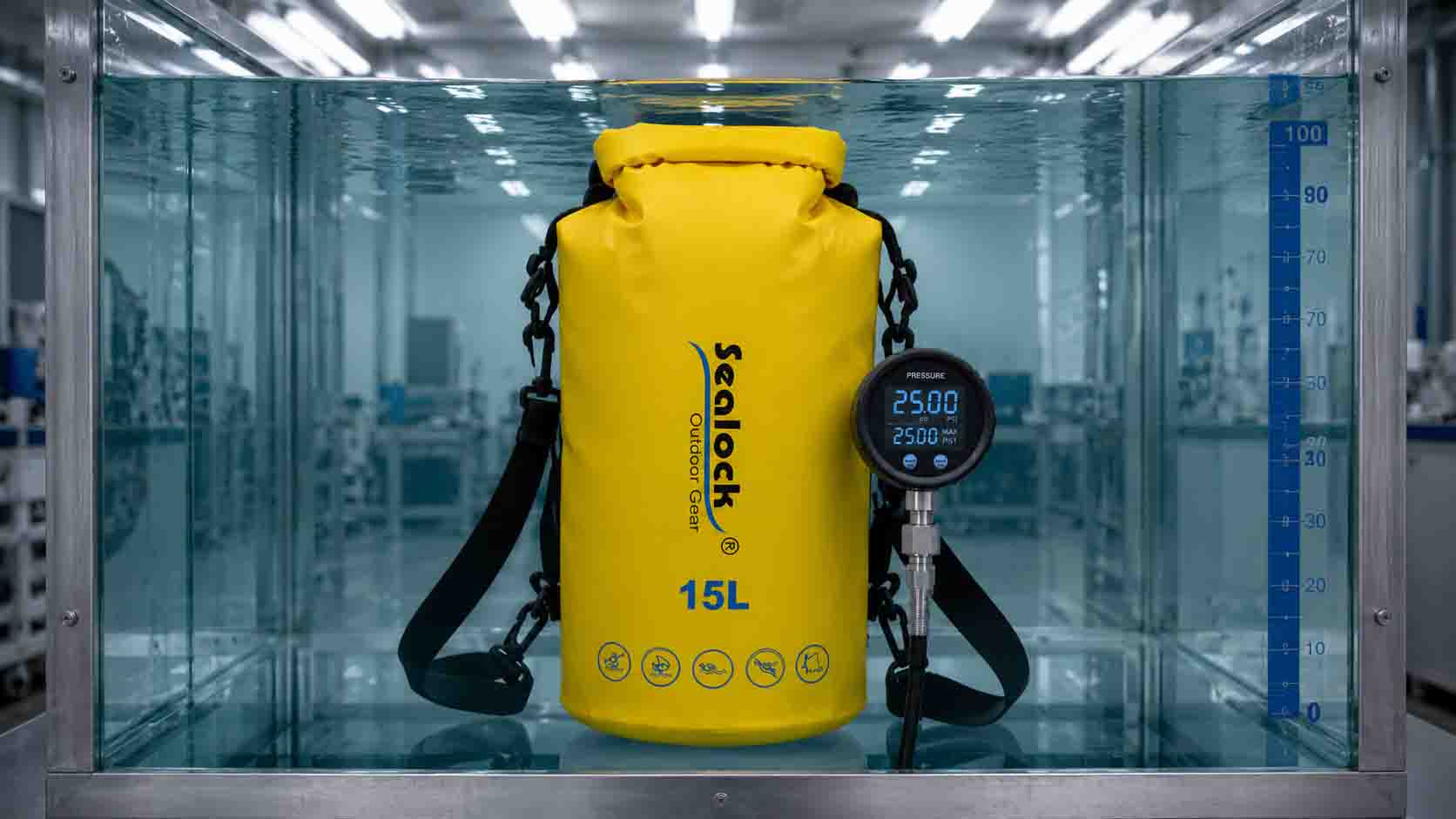
The most direct test of seam integrity for pressure-rated products. The completed bag or cooler is inflated to a specified internal pressure—1.0 Bar is the standard for extreme marine and submersible applications—and held at that pressure for a defined period. The bag is submerged or observed with soapy water to detect micro-bubble emissions at any seam or closure point. No emissions is the pass condition. This test confirms both hydrostatic performance and blowout resistance simultaneously.
Water Immersion Test
The product is submerged at a specified depth for a defined duration, then inspected internally for moisture ingress. This test identifies micro-leakage points that may not produce detectable bubbles under static air pressure testing but will allow water infiltration under real submersion conditions.
Seam Burst Test
A destructive test that measures the pressure at which a weld zone fails. Burst pressure is compared against the product specification minimum; results below specification indicate a process parameter problem that needs to be diagnosed and corrected before production continues. Burst testing is typically applied to sample sets from each production run rather than individual units.
Cold Flex Test
Weld zones that perform well at ambient temperature can become brittle failure points at low temperatures, particularly if material formulation or cooling parameters were not optimized for cold-weather use. Cold flex testing subjects weld samples to repeated flexing at temperatures down to -20°C or -30°C, verifying that the seam maintains integrity under the thermal and mechanical conditions of cold-weather field use.
Accelerated Weathering Test
UV radiation, high humidity, and saline exposure cycling is used to simulate multi-year marine use in compressed laboratory time. This test is applied to weld zone samples rather than full products and evaluates TPU coating adhesion, weld bond durability, and dimensional stability under long-term environmental stress.
9. Common RF Welded Product Applications
Waterproof Outdoor Gear
- Submersible dry bags (roll-top and zipper closure)
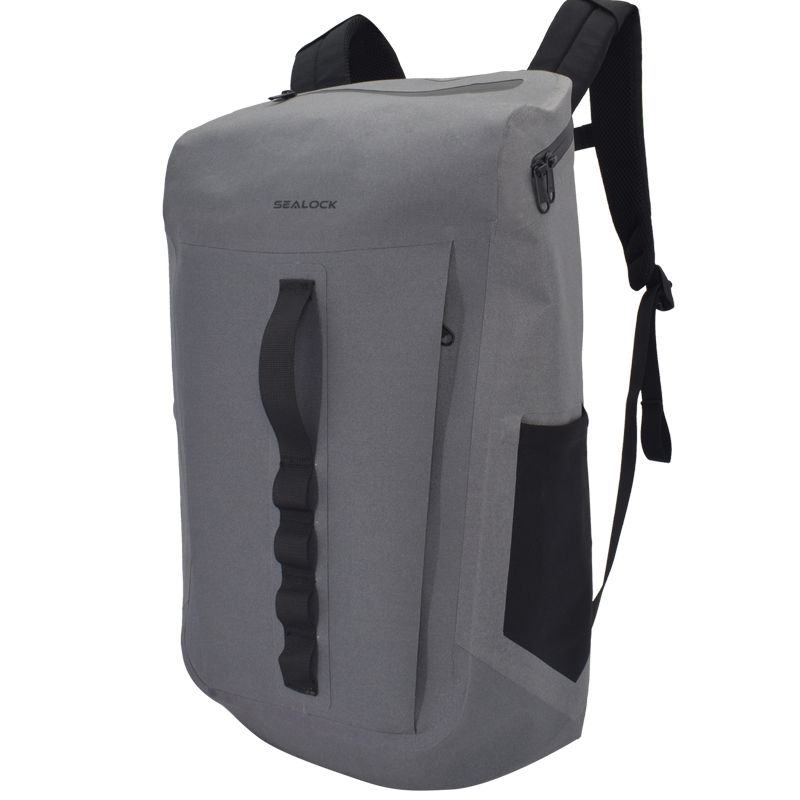
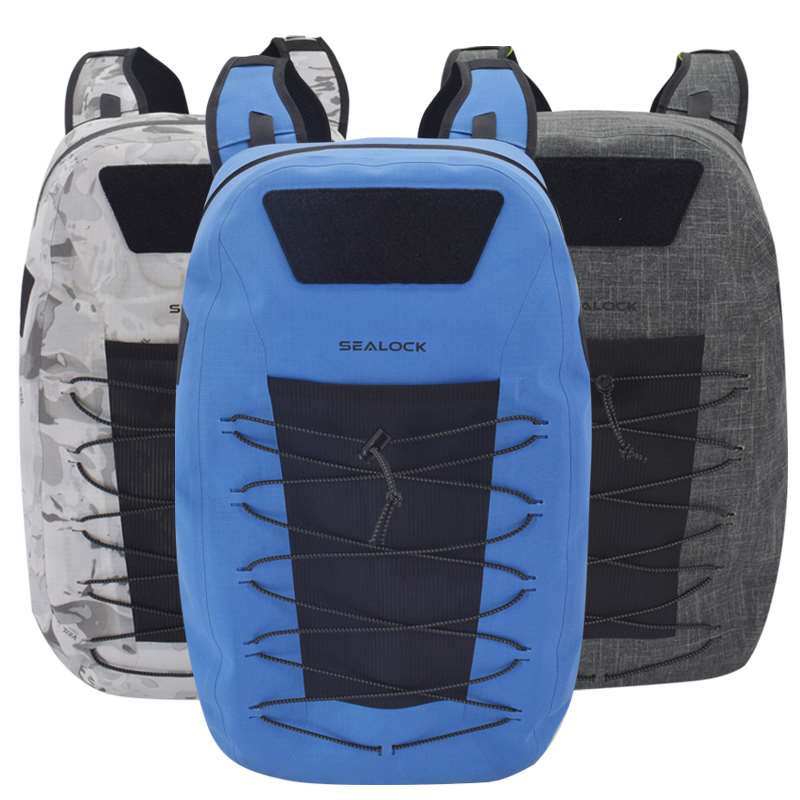
- Waterproof backpacks and duffel bags
- Kayaking and rafting waist packs
- Motorcycle tail bags and waterproof panniers
Soft Coolers and Insulated Carriers
- Leakproof soft cooler backpacks
- Marine fish cooler bags
- Medical sample and vaccine transport coolers
- Commercial cold-chain delivery bags
Industrial and Tactical Products
- Inflatable outdoor shelters and structures
- Waterproof equipment covers and cases
- Military-spec tactical dry bags
- Waterproof medical packaging and containment
10. Frequently Asked Questions
What materials can be RF welded?
RF welding requires materials with a polar molecular structure. TPU-laminated fabrics, PVC-coated fabrics, EVA, and certain PU films are all RF-compatible. TPU is the preferred choice for most outdoor and medical applications due to its flexibility, environmental compliance, and cold-weather performance. Polyester, nylon, and polyethylene without a polar coating are not RF weldable.
Is RF welding stronger than stitching?
In terms of tensile and burst strength at the seam, yes—properly executed RF welds typically exceed the strength of the surrounding base fabric. More practically, RF welded seams don't have the degradation pathways that stitched seams do: no needle holes that work open under repeated pressure, no seam tape edges that delaminate, no thread that abrades at high-stress points. For any application involving water pressure, the performance gap is significant.
Can all TPU materials be RF welded?
Most TPU materials are RF compatible, but welding performance varies with formulation and thickness. Some highly cross-linked TPU grades have reduced polarity and require higher energy levels or modified parameters. Any new material entering an RF welding production line should go through a parameter development and validation process before production, not assumed to behave identically to previous materials.
Why do RF welded seams sometimes leak?
Seam leakage in RF welded products is almost always a process problem, not a fundamental limitation of the technology. Common causes include insufficient RF energy or cycle time producing an incomplete fusion bond; surface contamination at the weld interface creating voids; incorrect press pressure allowing interface separation during cooling; premature pressure release before the weld zone has solidified; and die wear producing inconsistent pressure distribution. Each failure mode has a distinct visual signature that helps identify the root cause.
What's the difference between RF welding and ultrasonic welding?
Both processes generate internal heat to fuse thermoplastic materials, but through different mechanisms. RF welding uses electromagnetic field excitation of polar molecules, making it well-suited to flexible films and fabric laminates over large weld areas. Ultrasonic welding uses high-frequency mechanical vibration, which works better for rigid thermoplastics and smaller, more precise weld geometries. For the fabric weights and seam configurations typical in outdoor gear, RF welding is the more practical choice and produces more consistent results across large seam areas.
How do I evaluate an RF welding supplier's capability?
Ask for hydrostatic pressure test results on production samples—specifically, at what pressure their seams are validated and whether testing is done per-unit or per-batch. Ask how welding parameters are documented and how they're verified when materials change. Ask whether they conduct cold flex testing and accelerated weathering on weld samples. A manufacturer with genuine RF welding capability will have straightforward answers to all of these; a manufacturer relying on stitched construction with seam tape will not.
Conclusion
RF welding is not a marketing term. It describes a specific manufacturing process with specific physics behind it, specific material requirements, and specific quality outcomes when executed correctly. The gap between a properly RF welded seam and a stitched-and-taped alternative isn't marginal—it's the difference between a product that reliably holds under hydrostatic pressure and one that eventually doesn't.
For brands building waterproof bags, soft coolers, or any product where seam integrity matters beyond the first season of use, understanding RF welding at a technical level makes supplier evaluation more straightforward. The right questions get clearer answers, and the difference between a genuine RF welding operation and a factory that applies the term loosely becomes easy to identify.