




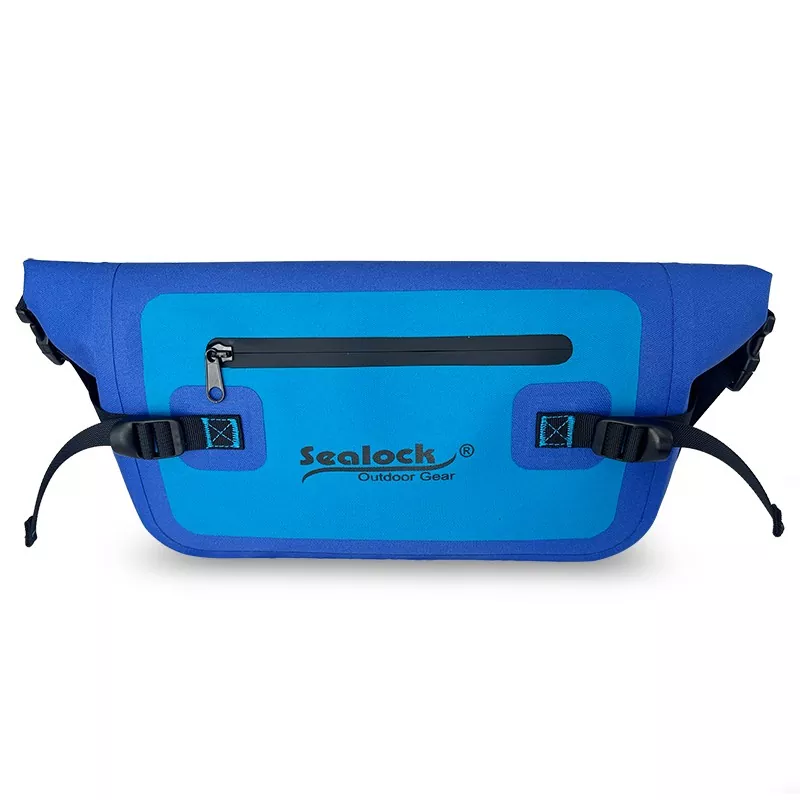
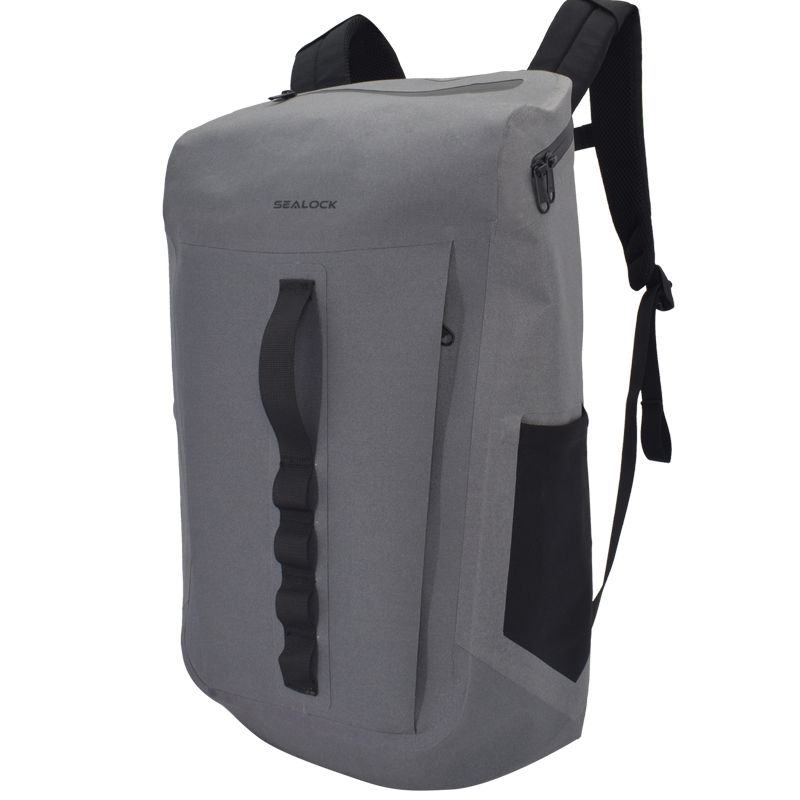

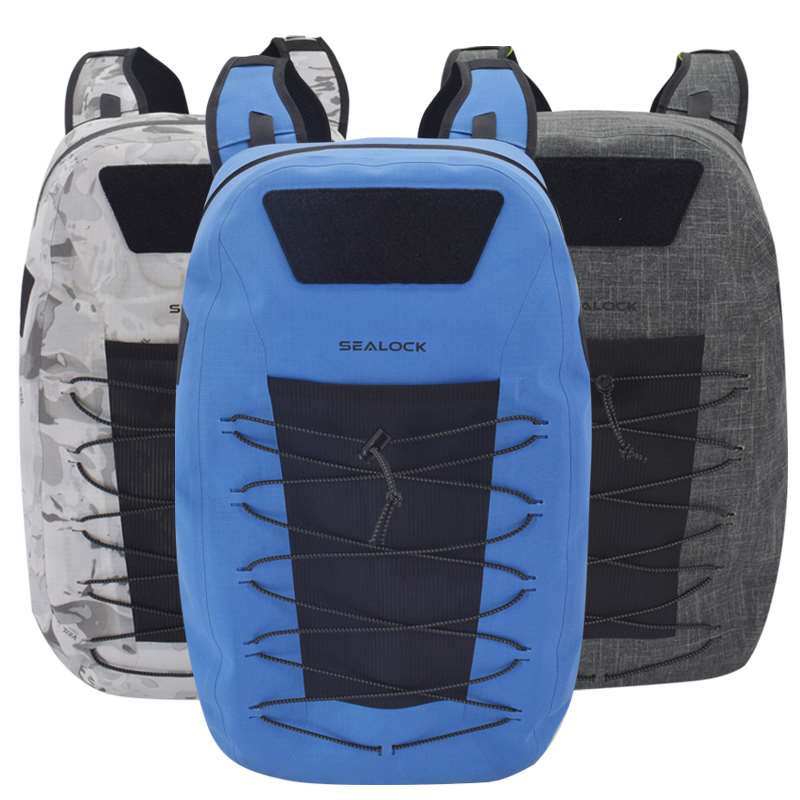
Most waterproof product failures don't start with the fabric. The TPU holds, the coating holds, and the insulation is fine—but somewhere along a seam line, water finds its way in. Understanding why that happens, and how the choice between RF welding and stitching determines whether it will, is one of the more consequential decisions in waterproof gear design.
What Is RF Welding?
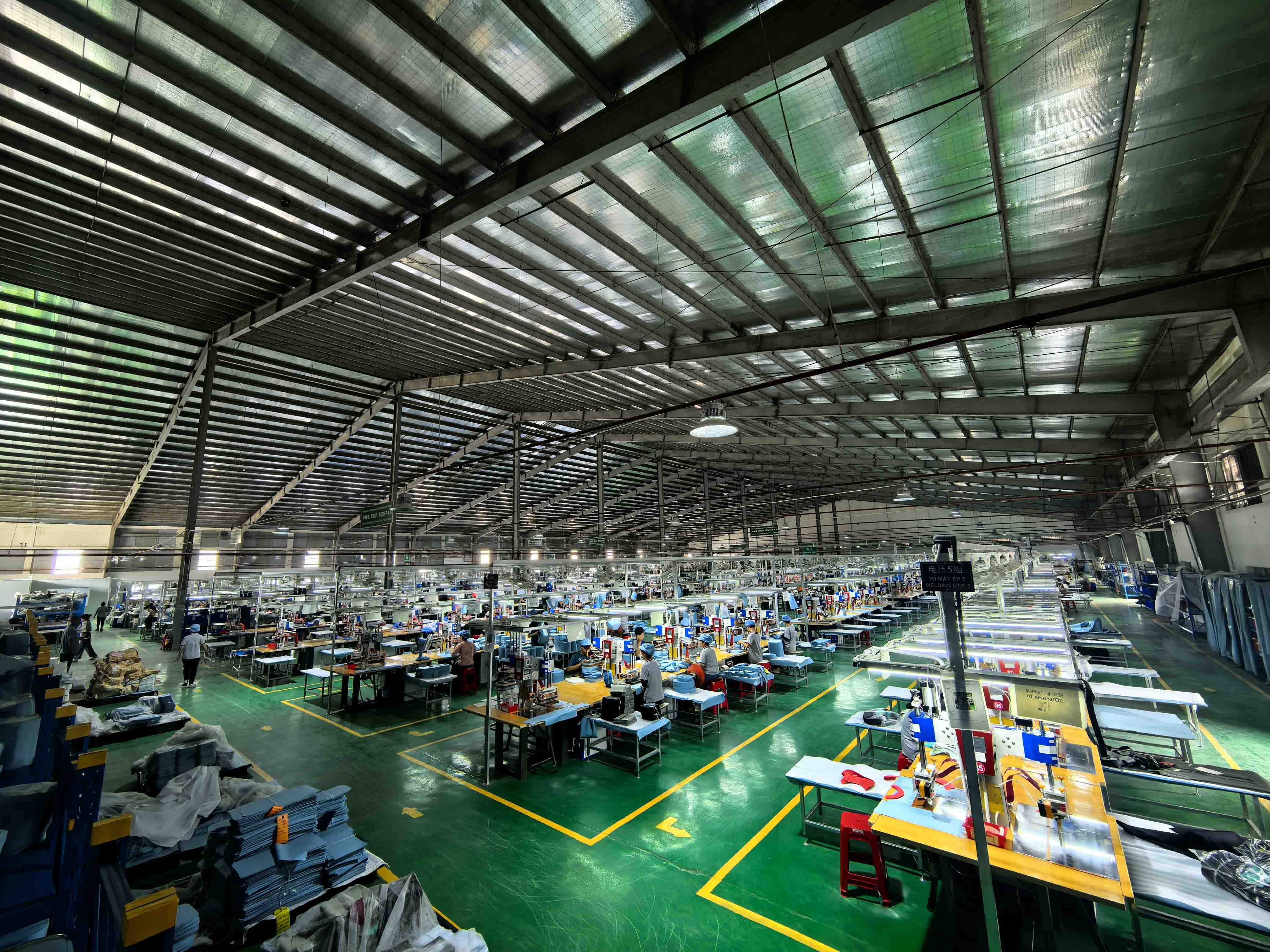
RF welding—also called high-frequency or HF welding—is a manufacturing process that bonds thermoplastic materials using electromagnetic energy rather than thread, adhesive, or surface heat. When compatible materials like TPU are exposed to a high-frequency electromagnetic field, the polar molecules within the material begin to oscillate rapidly. That molecular movement generates heat from inside the material outward, and under controlled pneumatic pressure, the two layers at the join interface melt together and fuse into a single continuous structure.
Once the RF energy is removed and the material cools under sustained pressure, the weld is permanent. There's no seam in the traditional sense—just a zone where two separate pieces of material have become one. No thread, no needle holes, no tape holding anything together.
The technology is used across a range of demanding applications: submersible dry bags, leakproof soft coolers, inflatable outdoor structures, waterproof medical transport packaging, and military-grade tactical gear. What these applications share is an intolerance for seam failure—situations where leakage isn't just inconvenient but costly or dangerous.
What Is Traditional Stitching?
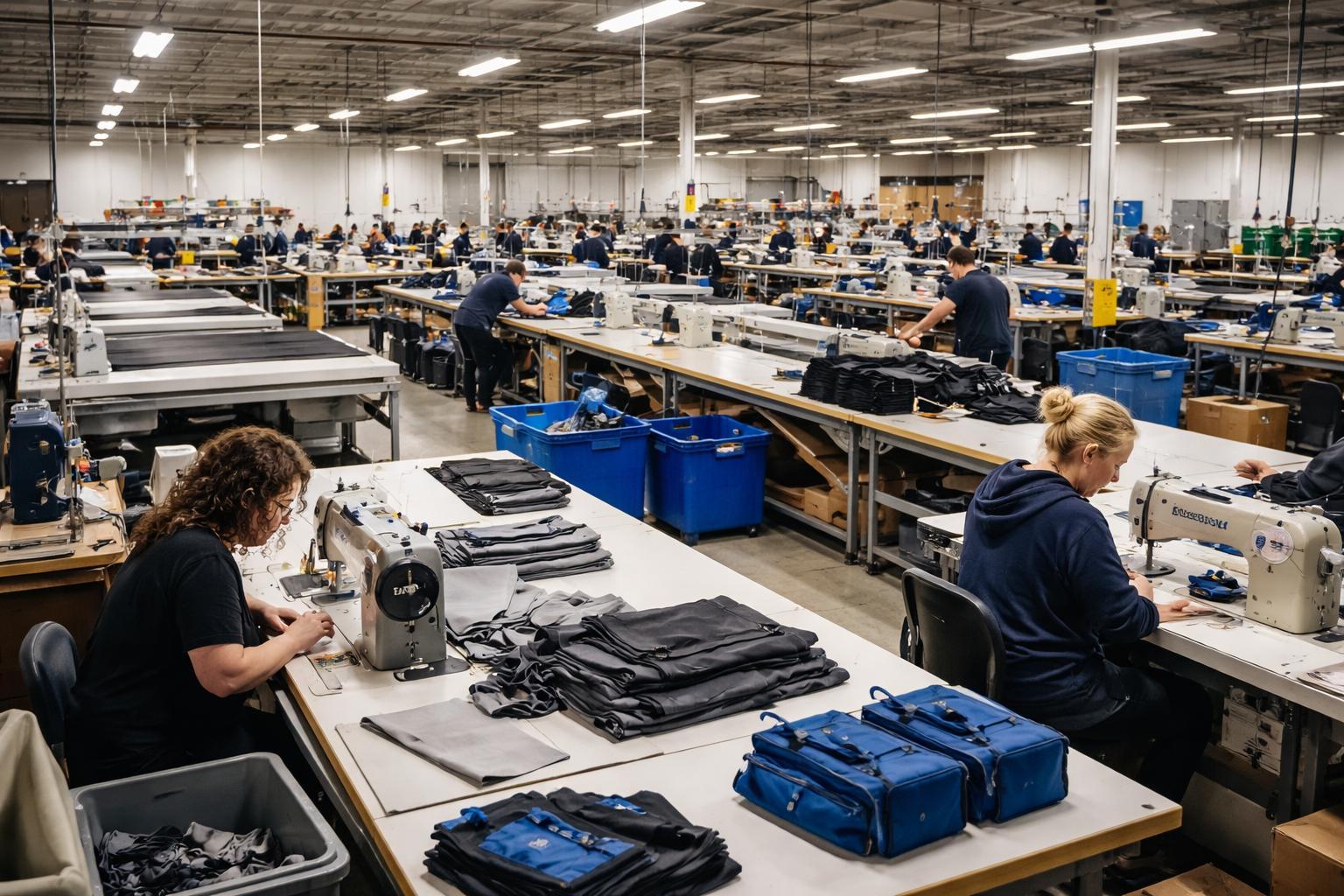
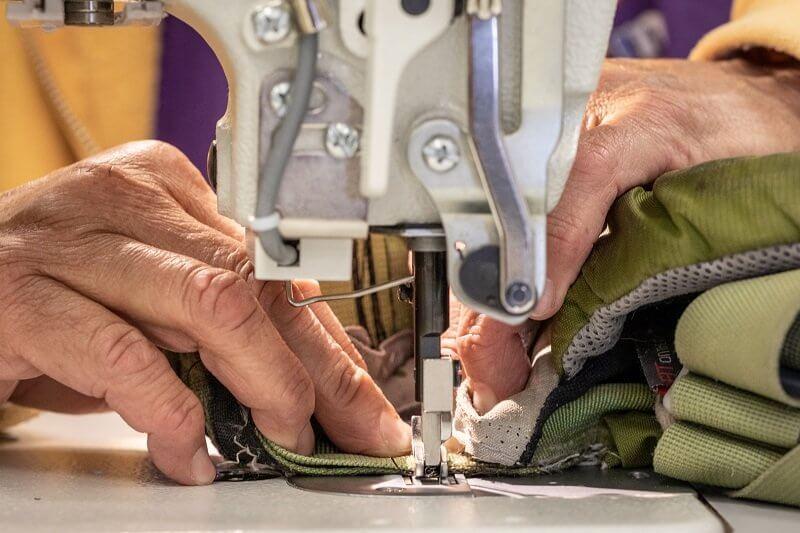
Industrial stitching joins materials mechanically: needles pass through the fabric layers carrying thread, which locks between passes to hold the panels together. It's a mature, highly flexible process that has been the backbone of textile manufacturing for well over a century. For most fabric goods—apparel, general luggage, breathable hiking gear—it works well and offers significant advantages in production flexibility and cost.
The problem specific to waterproof applications is structural and unavoidable: every needle pass through a waterproof fabric creates a hole. A single meter of stitching at standard density creates hundreds of these perforations. Individually, each hole is tiny. Collectively, they form a continuous pathway through the waterproof membrane along every seam line in the product.
Manufacturers address this with seam tape, waterproof coatings, and sealants. These solutions work, up to a point. They can raise a stitched product from "water-resistant" to "waterproof" for practical purposes under moderate conditions. But they add process steps, add cost, and introduce their own failure pathways—tape delamination, coating wear—that become relevant under sustained use and pressure.
How the Two Methods Join Materials: The Structural Difference
The distinction between these two construction methods comes down to where the stress lives in the seam.
In stitched construction, the mechanical load on a seam is carried by thread passing through a series of holes punched in the material. The thread is, in most cases, narrower and less strong than the fabric it's holding together. Each stitch hole is a stress concentration point—a location where the fabric has been perforated and where repeated flexing under load will cause progressive enlargement. This is why stitched seams fail the way they do: gradually, at stress points, usually starting at corners or attachment points where load concentration is highest.
In RF welded construction, there are no holes and no thread. The load on a seam is distributed across the entire welded area, which has fused into a continuous layer of material. Well-executed weld zones typically match or exceed the tensile strength of the surrounding base fabric, meaning that in a destructive pull test, the base fabric tears before the weld line gives way. The failure mode, when it occurs, is different and generally later in the product's service life.
For waterproof performance specifically, the difference is binary: RF welded seams have no inherent pathway for water ingress; stitched seams do, by definition, and the question is only how well those pathways are covered.
Waterproof Performance: Where the Gap Is Most Measurable
Under static, low-pressure conditions—light rain, a brief splash—the performance difference between a well-taped stitched seam and an RF welded seam may not be immediately obvious. Both can keep water out in those circumstances. The gap becomes clear when conditions get more demanding.
RF welded seams on compatible materials can be pressure-tested to 1.0 Bar—equivalent to the hydrostatic pressure of a 10-meter water column—without leakage. This covers genuine submersion, water pressure from rapids, and the dynamic loads of a kayak bag being compressed against rocks or sat on by a paddler. The weld either holds or it doesn't, and a properly executed weld on quality TPU holds reliably.
Stitched seams with seam tape typically begin showing leakage at a fraction of that pressure. The specific failure point varies with tape quality, application consistency, and how many use cycles the product has seen—but 0.1 to 0.3 Bar is a realistic range for stitched construction under real-world conditions. Beyond that, tape bond edges lift, and water finds the needle holes underneath.
The practical implication: for anything marketed as submersible, for products used in marine environments, or for any application where the contents of the bag matter if wet, stitched construction with seam tape is not a reliable long-term solution. For light-duty outdoor use where occasional splash resistance is sufficient, it often is.
Durability Over Time: How Each Seam Type Ages
Outdoor gear doesn't get used once. It gets stuffed, compressed, folded, UV-exposed, salt-soaked, and temperature-cycled over years of regular use. The seam area accumulates this stress differently depending on construction method.
RF welded seams age without the specific degradation pathways that affect stitched construction. There's no thread to fray, no stitch holes to work open, and no tape adhesive to delaminate from the repeated expansion and contraction of a bag moving between cold water and warm sunlight. A weld that passes pressure testing when the product is new will generally still pass years later, assuming the base material hasn't been physically damaged.
Stitched seams age in ways that are often invisible until they're not. Thread frays incrementally. Stitch holes in waterproof membranes enlarge slightly under repeated flex stress. Seam tape that looked perfect on a new product begins to lift at corners and edges after UV exposure and thermal cycling. None of these changes are dramatic—they're cumulative. The result is a product that performs adequately early in its life and progressively less well as use accumulates, until a failure event makes the degradation obvious.
For brands that sell on product quality and back it with warranty commitments, this aging trajectory has direct commercial implications. Returns and warranty claims on waterproof products cluster around seam failures, not fabric failures—and the root cause is almost always construction method.
Appearance: What the Seam Communicates About the Product
This is a category that matters more than it might seem in a technical comparison.
RF welded seams are flush, smooth, and geometrically precise. The weld line doesn't add bulk, doesn't create a ridge of folded fabric, and doesn't have the visual irregularity that comes with thread tension variation in stitching. The aesthetic result reads as technical and intentional—which is appropriate for products positioned in the premium outdoor or tactical space.
Stitched seams aren't unattractive, but they read differently. For lifestyle bags, fashion-forward luggage, or products where a handcrafted textile quality is part of the brand identity, stitching is the right aesthetic choice. For a product marketed on waterproof performance and engineering quality, a stitched exterior with visible seam tape is communicating something that may undercut the positioning.
Experienced buyers in the outdoor gear market have become adept at using seam construction as a proxy for overall manufacturing quality—not unreasonably, since the correlation tends to hold.
Production Cost: Where the Real Comparison Gets Nuanced
The straightforward version of this comparison is that stitching is cheaper. That's true at the unit level and at the equipment investment level. RF welding requires specialized machinery, process-specific tooling (dies for each weld geometry), and operators who understand how to set and maintain welding parameters. Stitching equipment is far more accessible, operators are easier to train, and the process handles complex three-dimensional shapes with more flexibility.
The more complete version of the comparison accounts for what happens downstream of production.
RF welded construction, when executed correctly, produces consistent results across production runs with low seam failure rates. Products arrive in the market holding their waterproof specification and continue holding it through the product's service life. Warranty claims for seam failure are low. Return rates are low.
Stitched construction with seam tape introduces more variability—tape application consistency, tape quality across supplier batches, operator attention to corner coverage—and the failures that result tend to show up after the product has been in the field for a season or two. By then, the cost has shifted from manufacturing to warranty fulfillment, customer service, and brand reputation.
For brands selling into the premium outdoor market where product quality is a core positioning element, this downstream cost calculation usually resolves in favor of RF welded construction despite the higher initial manufacturing cost. For budget-oriented products where price is the primary competitive axis, stitching remains the rational choice.
Material Compatibility: What Can and Can't Be RF Welded
RF welding works by exciting polar molecules within the material—which means it only works on materials that have polar molecular structures to excite. Thermoplastics like TPU, PVC, EVA, and certain PU-coated fabrics are RF-compatible. Natural fibers (cotton, wool), untreated nylon, and polyester without a compatible coating are not.
This is one reason the outdoor gear industry's shift toward TPU-laminated fabrics has accelerated alongside the adoption of RF welded construction. The materials were partly selected because they're engineered for this process.
Within the category of RF-compatible materials, performance varies. TPU is generally the preferred choice for premium outdoor applications because of its cold-weather flexibility, UV resistance, PFAS-free formulation options, and long-term elasticity at weld zones. PVC welds easily and cheaply but carries regulatory risk in markets with strict chemical standards and becomes brittle at low temperatures. Material selection and weld process parameters need to be developed together—a weld setting that works well for one TPU formulation may produce incomplete fusion on a different one, even at the same thickness.
Industries Where RF Welding Has Become Standard Practice
The adoption of RF welding tends to correlate with application severity—the more consequential a seam failure, the earlier an industry moved toward welded construction.
Medical device and pharmaceutical packaging were early adopters precisely because contamination from a compromised seal has direct patient safety implications. Military and tactical gear followed because field equipment failures in harsh environments carry operational consequences that product returns don't adequately address. Premium outdoor gear—dry bags, submersible coolers, marine deck bags, whitewater equipment—has been moving in the same direction as consumer expectations for genuine waterproof performance have risen and brands have found that "water-resistant" positioned against a genuinely waterproof competitor loses consistently.
Industrial protective covers, inflatable structures, and waterproof safety equipment round out the application landscape. In each case, the common factor is that the product's core function depends on seam integrity holding over time and under load—not just out of the box.
When Stitching Remains the Right Choice
RF welding is not universally superior—it's superior for specific applications. Stitching remains the practical choice in a number of real scenarios.
Complex three-dimensional structures that require seams to follow compound curves or tight radii are often easier to execute well with stitching than with welding dies that need to be engineered for each geometry. Products where breathability matters—performance apparel, ventilated hiking packs—cannot use RF welded construction on their primary panels without sacrificing the moisture vapor transmission that makes them functional. Fashion and lifestyle bags where a textile aesthetic is part of the product identity often look better with stitched construction. And for any application where "water-resistant" is genuinely sufficient—a casual daypack that will see occasional rain but never submersion—the additional cost and material constraints of RF welding are not justified by the performance gain.
Many well-engineered products also use both methods deliberately. A waterproof dry bag might use RF welded construction for the main body and roll-top liner—the zones that need to hold under pressure—while stitching is used for external accessory pockets, shoulder harness attachment points, and decorative panel joins where waterproof performance isn't required and sewing offers more design flexibility. The best manufacturers understand both processes well enough to apply each where it performs best, rather than treating the choice as binary.
The Real Cost of Getting Seam Construction Wrong
Sourcing decisions for waterproof products tend to focus on fabric specifications: denier count, coating weight, material grade. These matter, and buyers are right to evaluate them. But the seam construction question often receives less attention during procurement—and it's where most actual field failures originate.
Customers who return a waterproof bag rarely report that the fabric failed. They report that water leaked inside, that a corner separated, that electronics or food were damaged despite the product being rated waterproof. In most cases, a seam failed. And in most cases, the seam failure was predictable from the construction method and the conditions the product was sold into.
Experienced OEM buyers have learned to ask seam-specific questions during supplier evaluation: What pressure does the manufacturer validate their welded seams to? Is hydrostatic testing done per-unit or per-batch? How are weld parameters documented and verified when materials change between production runs? Is cold-flex testing part of the QC protocol? These questions separate manufacturers with genuine RF welding capability from those who list the technology in their capabilities without the process discipline to execute it consistently.
Seam construction has moved from a manufacturing footnote to a product differentiator. For brands competing in the premium waterproof market, it belongs in the product specification, not as an assumed detail.
RF Welding vs. Stitching: Direct Comparison
| Category | RF Welding | Traditional Stitching |
|---|---|---|
| Waterproof performance | Inherently waterproof; no needle holes or tape dependencies | Water-resistant to waterproof depending on tape quality and application |
| Hydrostatic pressure resistance | 1.0 Bar and above on compatible TPU | Typically 0.1–0.3 Bar before tape bond failure |
| Airtight capability | Yes; enables use as flotation aid or inflatable structure | No; needle holes prevent true airtight construction |
| Long-term durability | Weld bond does not degrade through normal use cycles | Thread frays, stitch holes enlarge, tape delaminates over time |
| Seam appearance | Flush, smooth, technically precise | Traditional textile look; may show tape or thread texture |
| Material compatibility | Thermoplastics only (TPU, PVC, EVA, PU-coated fabrics) | Works across nearly all fabric types including natural fibers |
| Initial manufacturing cost | Higher; requires specialized equipment and tooling | Lower; equipment is widely available and operators easier to train |
| Long-term commercial cost | Lower warranty claims and return rates in waterproof applications | Higher failure rate under sustained use generates downstream costs |
| Design flexibility | Limited by die geometry; complex shapes require custom tooling | High; accommodates complex 3D shapes and compound curves |
| Ideal application | Any product requiring genuine waterproof or airtight seam performance | General textile products, breathable gear, fashion bags, budget waterproof |
Choosing the Right Method for the Right Product
The choice between RF welding and stitching isn't a judgment about which technology is better in the abstract. It's a product design decision that should be driven by what the product needs to do and where it's going to fail if the seam construction doesn't hold.
For products that will see genuine outdoor water exposure—submersion, sustained rain, marine environments, dynamic loads from use in moving water—RF welded construction on compatible TPU materials is the only construction method that reliably delivers long-term waterproof performance without depending on tape bonds that degrade over time. The higher manufacturing cost is real; so is the reduction in downstream warranty and return exposure.
For products where water resistance is secondary to breathability, design flexibility, or cost, stitching remains a practical and well-understood choice. Many products use both methods deliberately, applying each where it performs best.
What's changed over the past several years is that buyers—both end consumers and B2B procurement teams—have become more sophisticated about evaluating this distinction. "Waterproof" as a label no longer closes the conversation; construction method increasingly opens it.