

TPU Waterproof Material Guide: Structure, Performance, Applications & Engineering Insights
1. What is TPU Waterproof Material?
TPU — short for Thermoplastic Polyurethane — is an elastomer that's earned a solid reputation across waterproof outdoor gear, industrial sealing, and flexible protective equipment. It's not a new material, but the reason manufacturers keep coming back to it is straightforward: it works, and it holds up.
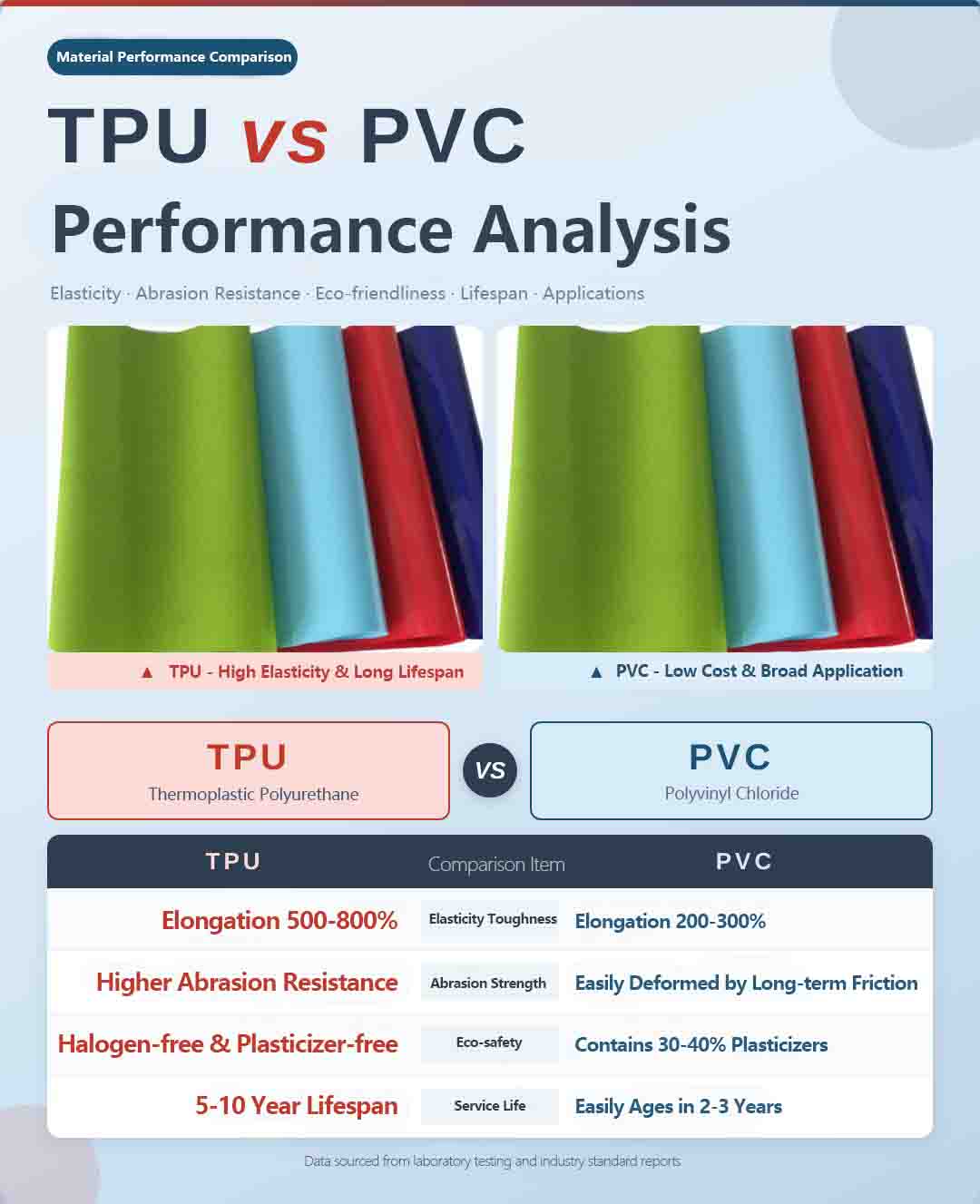
Where TPU really separates itself from older materials like PVC is in the combination of properties it brings to the table. It stretches without tearing, stays pliable in freezing temperatures, shrugs off abrasion better than most alternatives, and bonds cleanly under RF welding — all in one material. That's a difficult combination to match.
In most waterproof product manufacturing, TPU is applied as a lamination or coating layer over a base fabric — typically nylon or polyester. The result is a composite material tough enough for dry bags, soft coolers, waterproof backpacks, and military-spec field equipment.

2. TPU Material Structure Explained
At the molecular level, TPU is a block copolymer — meaning its chain alternates between two distinct segment types, each doing a different job.
The hard segments handle structural integrity. They're what gives the material its strength, rigidity under load, and resistance to deformation over time. The soft segments do the opposite — they introduce the elasticity and flexibility that let TPU bend, compress, and recover without cracking or fatiguing.
That balance between hard and soft is what makes TPU so versatile. You can push it mechanically and expose it to harsh environments, and it doesn't have to choose between staying strong and staying flexible — it does both.
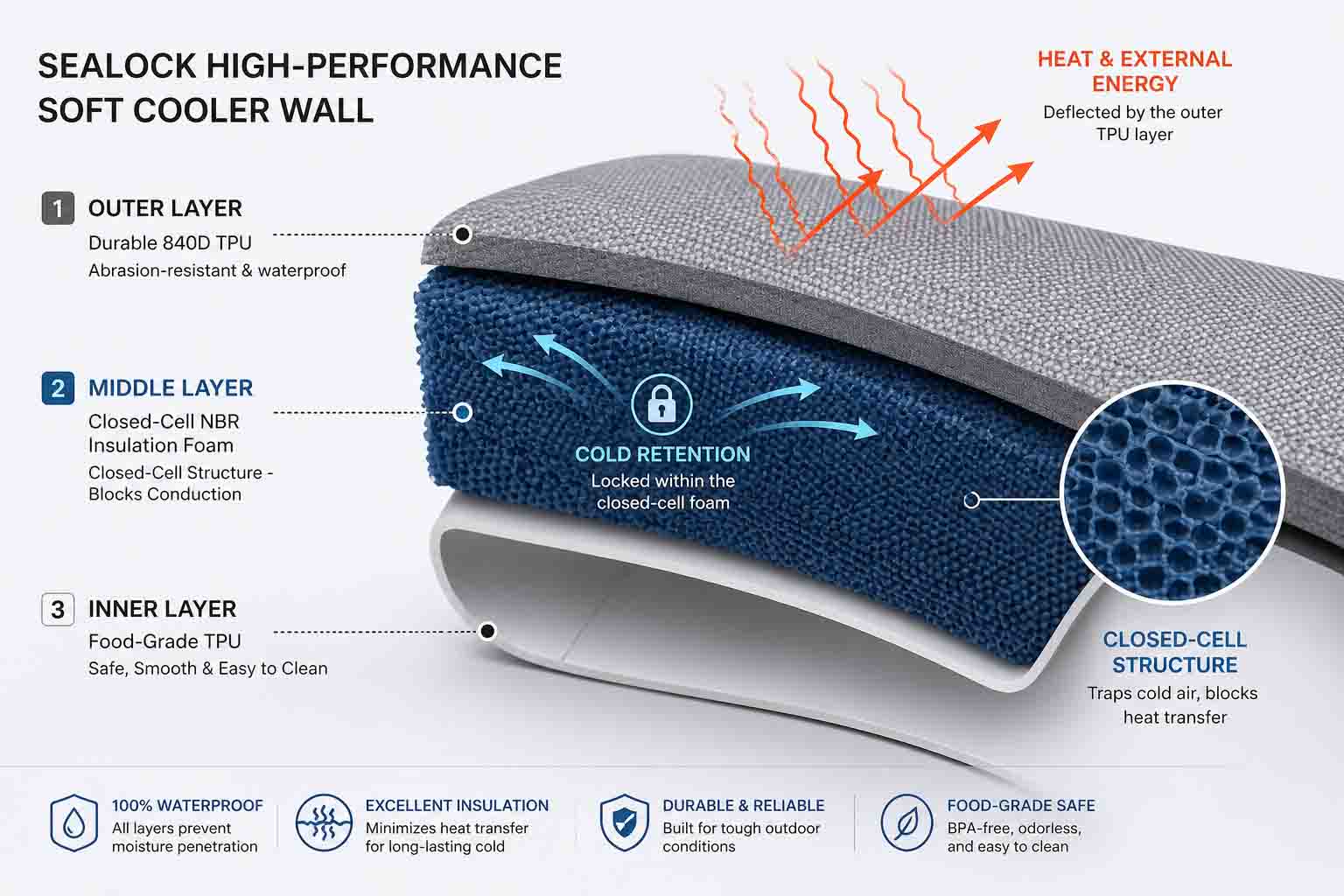
In practice, TPU almost never gets used as a standalone film. It's laminated onto base fabrics to give the composite the tear resistance and dimensional stability needed for real-world use. Common constructions include:
- Pure TPU film layers
- Single-side laminated fabric (e.g., 840D polyester with TPU coating)
- Double-side TPU composites for maximum protection
3. Key Performance Properties of TPU
3.1 Waterproof Performance
TPU's waterproofing comes from its molecular structure — there simply aren't pores or gaps for water to pass through. That's different from coated fabrics that rely on a surface treatment sitting on top of a breathable weave. With TPU, the barrier is the material itself.
When seams are RF welded rather than stitched, the result is a bond at the molecular level. No needle holes. No seam tape over stitching. Just a continuous waterproof structure that holds under pressure.
3.2 Abrasion Resistance
This is one of the clearest performance gaps between TPU and PVC. Under repeated friction — whether that's a bag dragged across rock, a cooler slid in and out of a truck bed, or tactical gear in field conditions — TPU holds its surface integrity far longer. That's not just about aesthetics. Surface degradation is usually where waterproofing starts to fail.
It's why TPU has become the go-to for hiking bags, fishing gear, soft-sided coolers, and tactical equipment where durability over thousands of use cycles actually matters.
3.3 Low-Temperature Flexibility
PVC gets brittle in the cold. It's a known issue, and for outdoor gear used in winter conditions, it becomes a serious one — seams crack, material stiffens, and the product fails at exactly the moment reliability is most critical.
TPU maintains flexibility down to -30°C and, depending on the formulation, even to -40°C. That's a meaningful difference for any product designed to perform in actual cold-weather environments rather than just look good in a product photo.
3.4 UV and Hydrolysis Resistance
Long-term outdoor exposure puts two specific stresses on waterproof materials: UV radiation breaks down polymer chains over time, and moisture accelerates hydrolysis — a chemical degradation process that causes materials to soften, crack, and lose structural integrity.
High-grade TPU is formulated to resist both. For products stored outdoors, used in marine environments, or left in vehicles through seasonal temperature swings, that resistance is what separates a five-year product from one that degrades in eighteen months.
4. TPU vs PVC: Key Material Comparison
The comparison between TPU and PVC comes up constantly in waterproof manufacturing decisions. Here's how they stack up across the properties that actually matter in production:
| Property | TPU | PVC |
|---|---|---|
| Flexibility | High | Medium |
| Cold resistance | Excellent | Poor |
| Abrasion resistance | High | Medium |
| Weldability | Excellent (RF compatible) | Medium |
| Environmental impact | More eco-friendly | Less eco-friendly |
| Long-term durability | High | Moderate |
PVC still has a role — it's cheaper and widely available, and for low-demand applications the performance gap matters less. But for products where durability, cold-weather use, and seam integrity are requirements rather than nice-to-haves, TPU is the practical choice.
5. TPU Manufacturing & Lamination Process
The path from raw TPU resin to finished laminated fabric involves a few distinct stages, each of which affects the final material's performance characteristics.
Extrusion is the starting point. TPU resin is melted under controlled heat and pressure, then pushed through a die to form a continuous film of uniform thickness. The consistency of this step directly affects how the material performs in bonding and welding later on.
Lamination bonds that film onto a base fabric — most commonly nylon (210D, 420D, or 840D) or polyester Oxford weave. The base fabric provides the tear resistance and dimensional stability that a pure TPU film can't achieve on its own. Together, the two layers complement each other in ways neither could manage alone.
Coating and curing finishes the process. Temperature-controlled curing locks in the bond between the TPU layer and the fabric, establishing the adhesion strength that determines how the composite holds up over years of use. Shortcuts in this stage show up later as delamination — one of the more common failure modes in lower-quality waterproof products.
6. TPU in RF Welding Applications
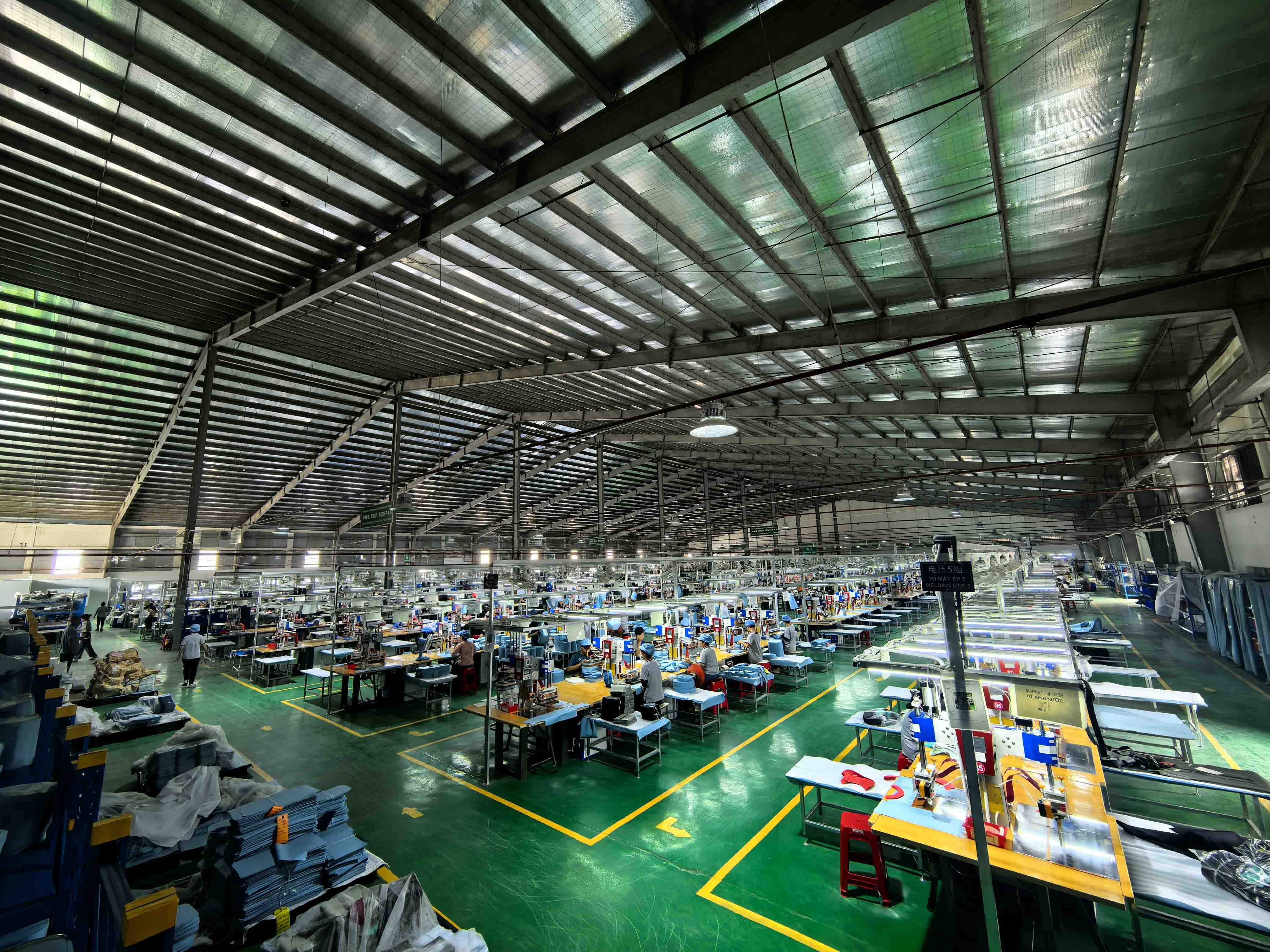
RF (Radio Frequency) welding is one of the main reasons TPU has displaced older materials in serious waterproof manufacturing. The process uses electromagnetic energy to heat the TPU at a molecular level, fusing two pieces of material together without adhesive, heat guns, or stitching.
What makes TPU particularly suited to this is its polar molecular structure. When exposed to RF energy, those polar molecules respond — they generate heat from within the material itself, creating a true molecular-level bond at the seam. The result is a joint that's genuinely as strong as the surrounding material, not just attached to it.
From a waterproofing standpoint, the implications are significant. Stitched seams — even with seam tape applied after — still have needle penetrations running through the fabric. RF welding has none of that. The seam is continuous, airtight, and watertight along its entire length.
This is why RF welding has become the standard process for high-performance dry bags, soft coolers, inflatable structures, and military waterproof gear. The technology isn't new, but when the material is right — and TPU is — the results are difficult to match by any other joining method.
7. Industrial Applications of TPU Waterproof Materials
TPU's combination of properties makes it useful across a wider range of product categories than most single materials can serve.
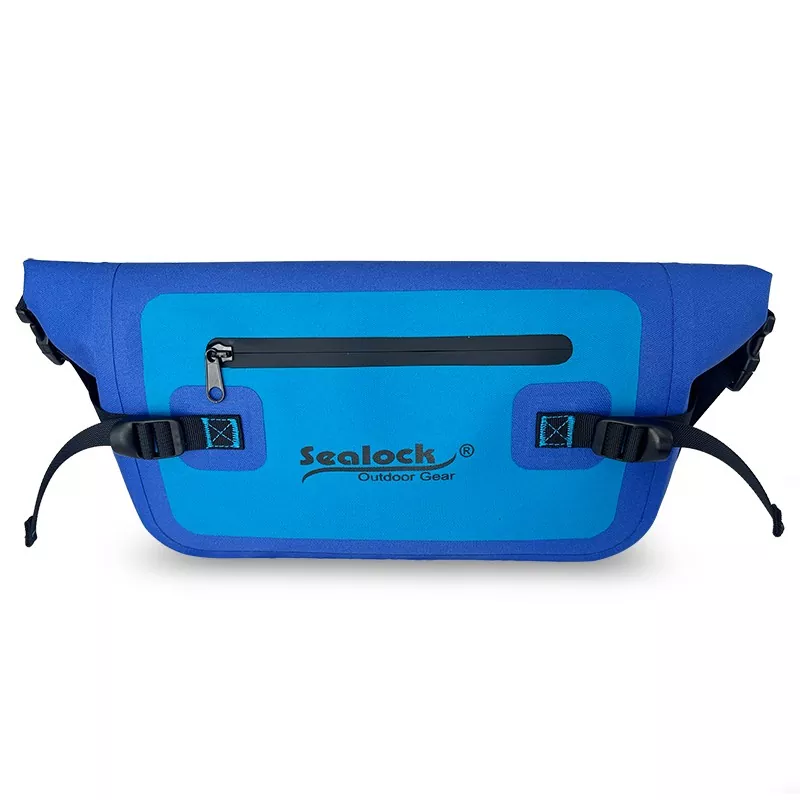
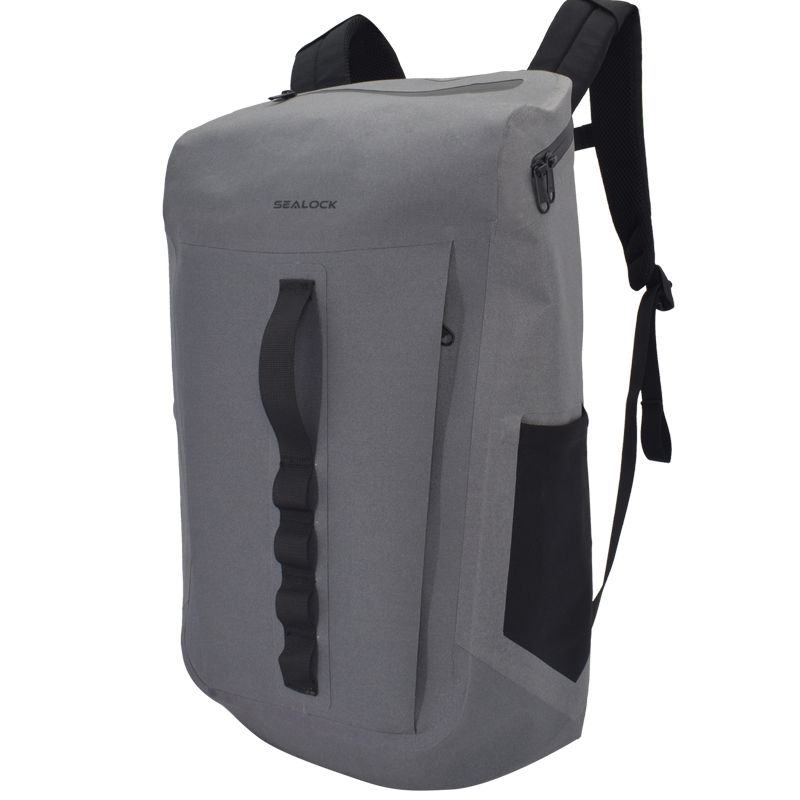
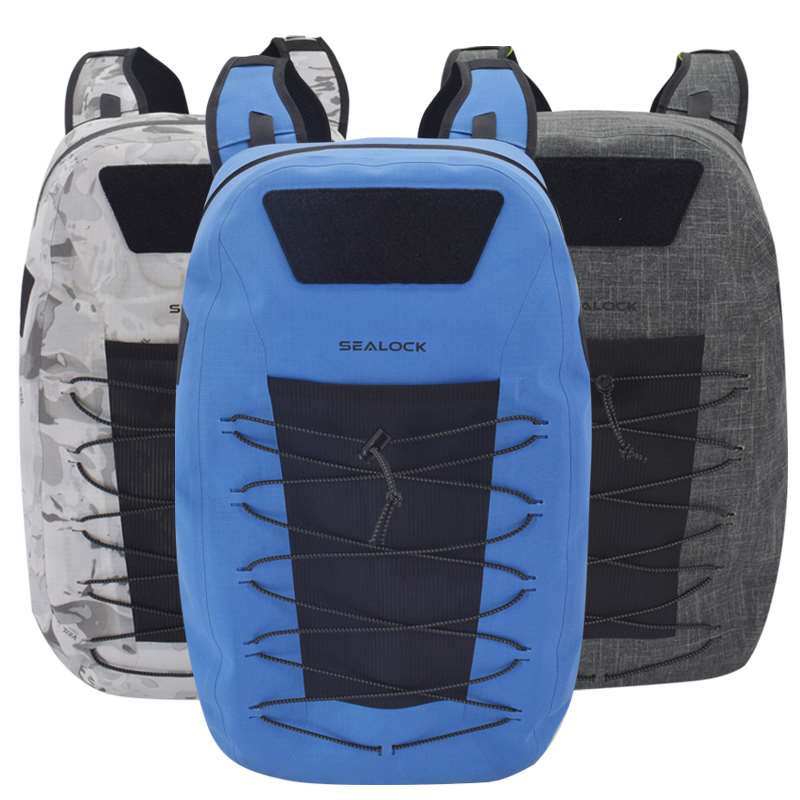
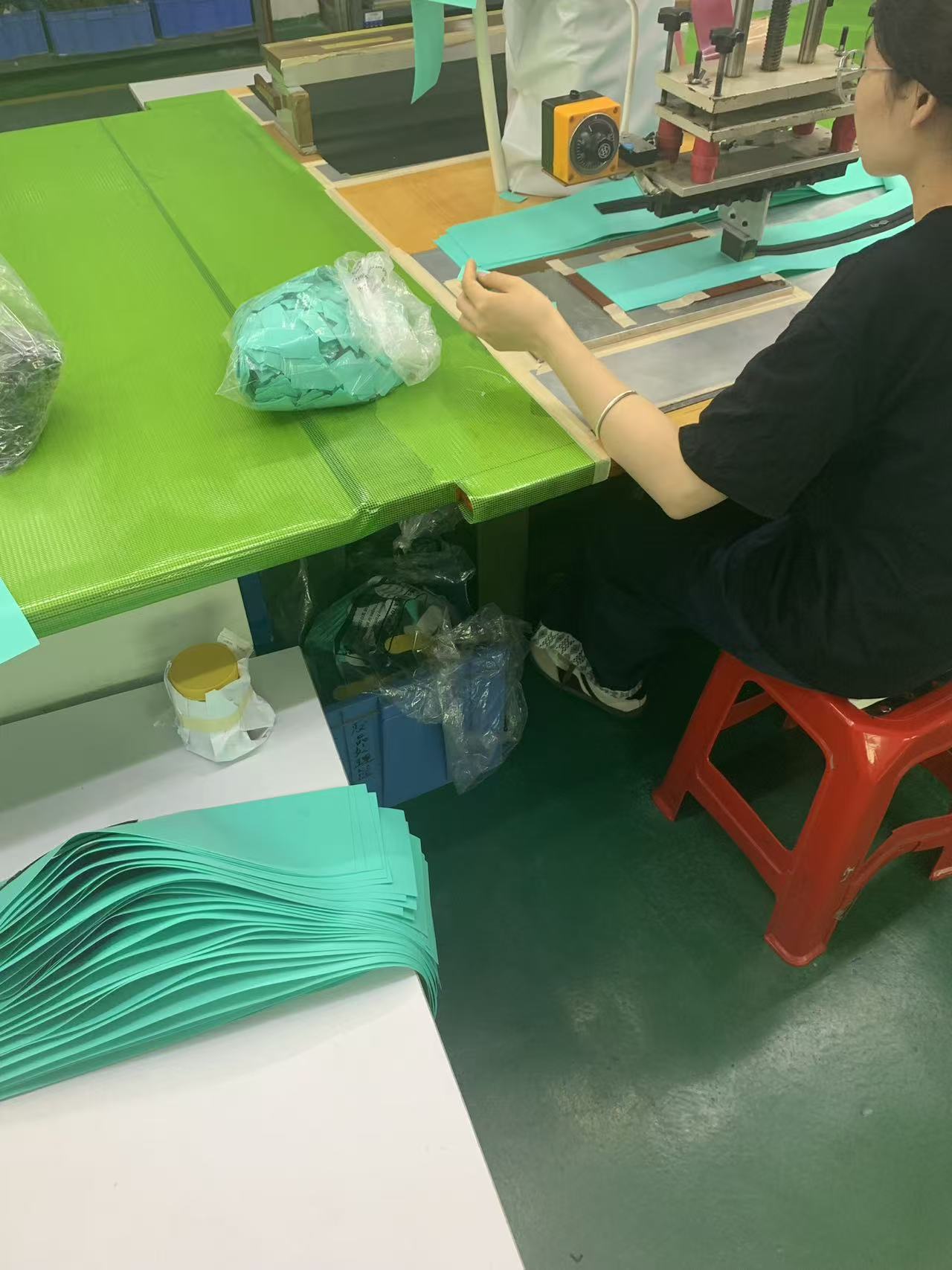
In outdoor gear, it's become the standard for dry bags, waterproof backpacks, and fishing bags where leakage isn't acceptable and the material needs to hold up through rough handling and extended field use.
Soft cooler systems represent another major application area. Leakproof insulated coolers and ice retention bags need a material that can handle repeated temperature cycling, resist puncture, and seal completely — all areas where TPU performs reliably.
For tactical and military equipment, the requirements around environmental resistance, seam integrity, and long-term durability under field conditions make TPU the logical specification choice for waterproof transport gear and field storage systems.
Beyond outdoor applications, TPU also appears in medical and industrial packaging — airtight protective packaging and sterile barrier systems where consistent, verifiable sealing is required.
8. Laboratory Testing & Quality Verification
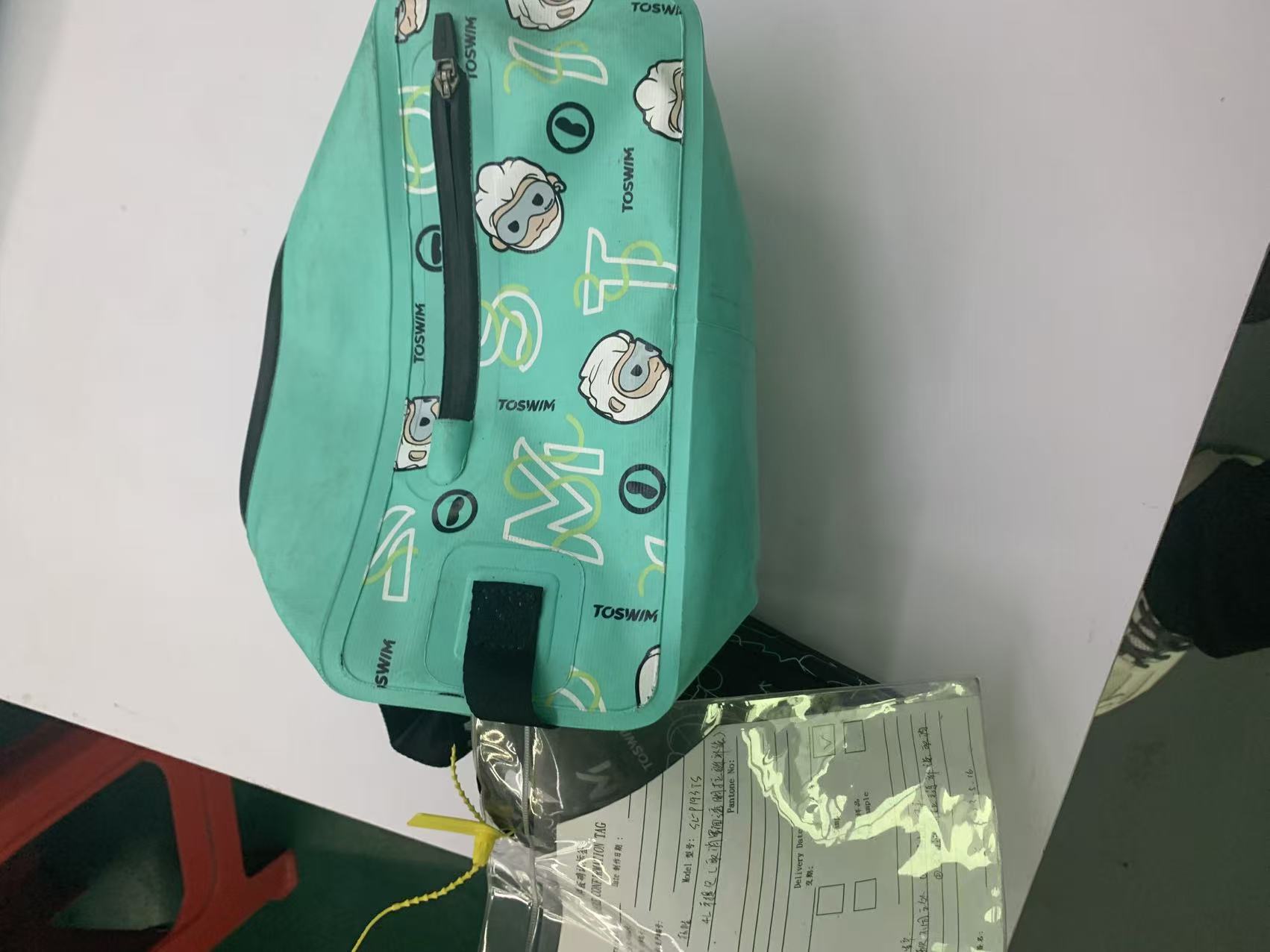
Claiming a material is waterproof is easy. Demonstrating it under controlled, repeatable test conditions is the standard that actual buyers — especially B2B procurement teams — require before committing to a material spec.
The Hydrostatic Pressure Test applies water pressure directly to the material surface, typically up to 1.0 bar or beyond, to establish at what point water penetration occurs. For RF-welded seams, this test also covers the weld zone specifically, since seams are often the first point of failure in lesser-quality construction.
The Seam Strength Test measures peel and burst resistance along welded joints. A seam that looks clean and holds in normal use can still fail under load — these tests quantify the actual bond strength rather than relying on visual inspection.
The Cold Crack Test verifies low-temperature performance by flexing the material under extreme cold to confirm it stays pliable rather than cracking or fracturing. For any product with cold-weather use claims, this test provides the supporting data.
Together, these tests form the baseline quality verification that responsible TPU suppliers maintain as standard practice — not as a premium option, but as part of what it means to supply a material that performs as specified.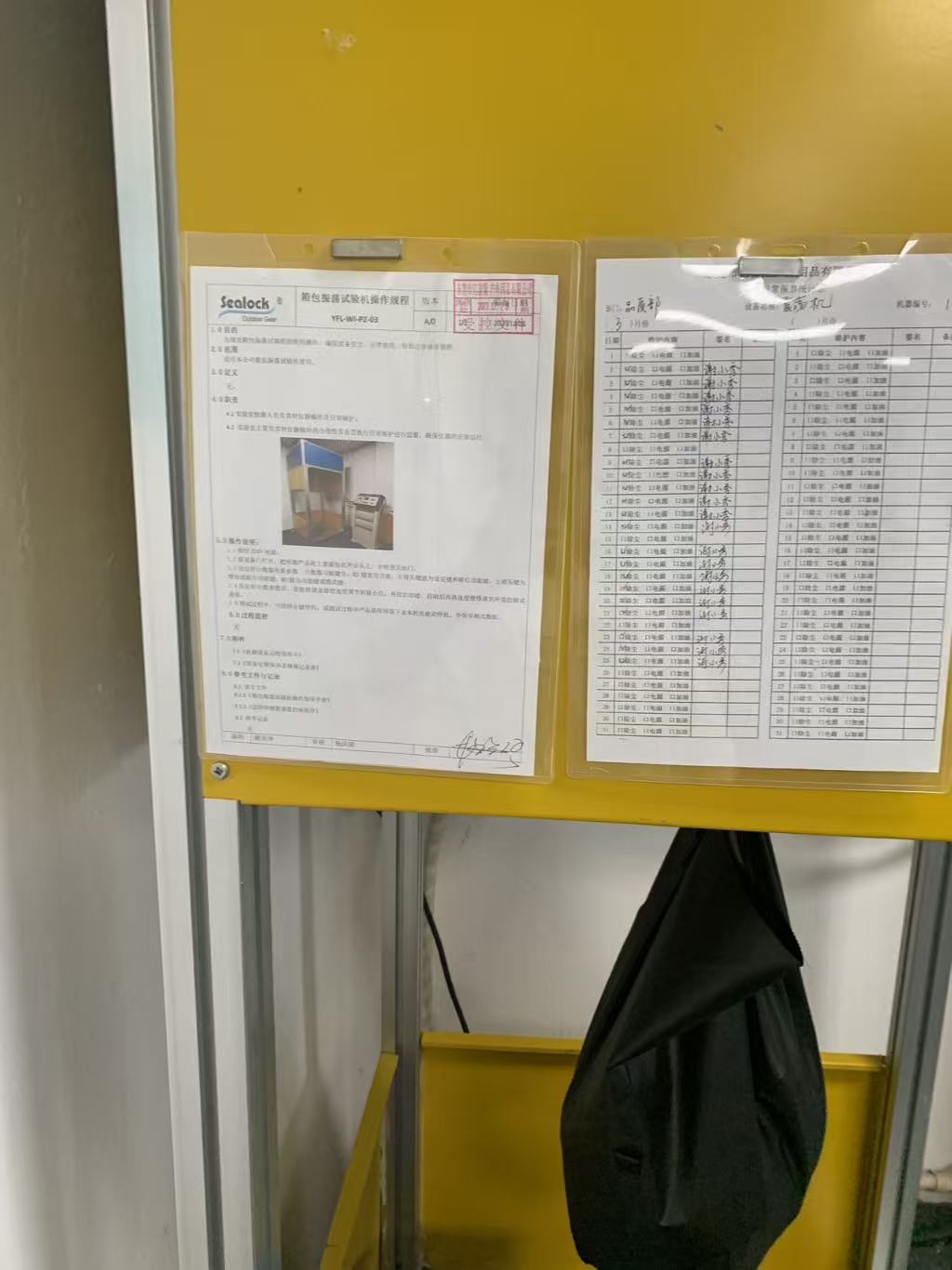
9. FAQ: TPU Waterproof Material
- Is TPU better than PVC?
- For most demanding applications, yes. TPU outperforms PVC on flexibility, cold resistance, abrasion resistance, and long-term durability. PVC remains a cost-effective option for lower-spec products, but where performance requirements are real, TPU is the more defensible choice.
- Can TPU be RF welded?
- Yes — and this is one of TPU's strongest practical advantages. Its polar molecular structure responds directly to RF energy, enabling strong, airtight seam bonding that stitching simply can't replicate.
- What thickness of TPU is used for waterproof bags?
- Consumer bag applications typically use 0.3mm to 0.8mm TPU layers. Industrial and heavy-duty applications generally specify 0.8mm to 1.2mm, where greater puncture resistance and seam durability are required.
Conclusion
TPU has earned its position as the material of choice in serious waterproof manufacturing — not through marketing, but through consistent performance across the properties that actually determine whether a product holds up in use. Its ability to combine structural strength, low-temperature flexibility, abrasion resistance, and RF weldability in a single material is what makes it genuinely difficult to replace in high-demand applications.
For manufacturers, specifying TPU isn't just a materials decision. It's a commitment to building products where the waterproofing is engineered in, not applied as an afterthought.