




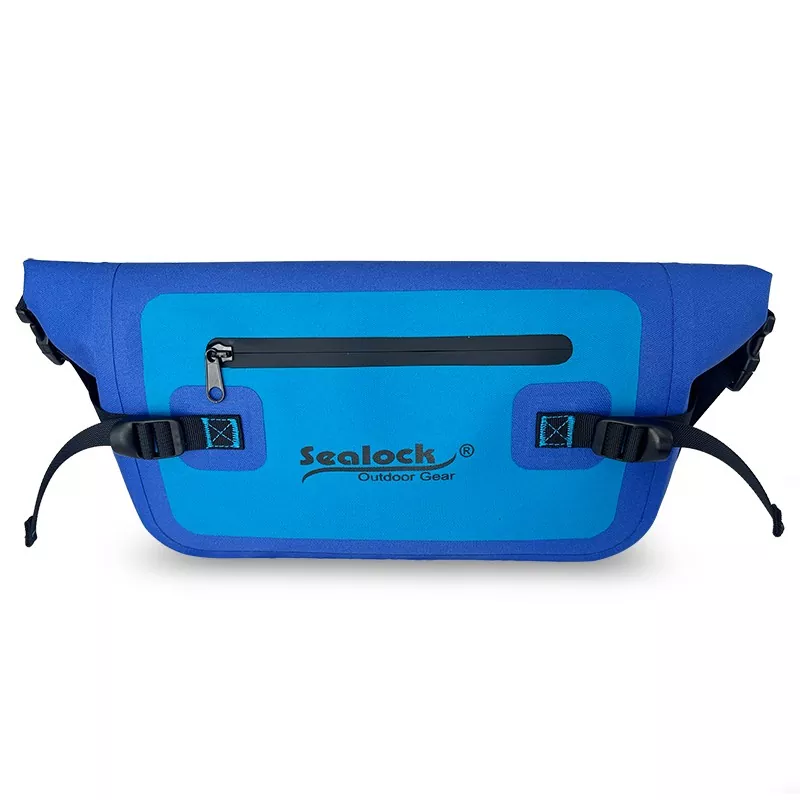
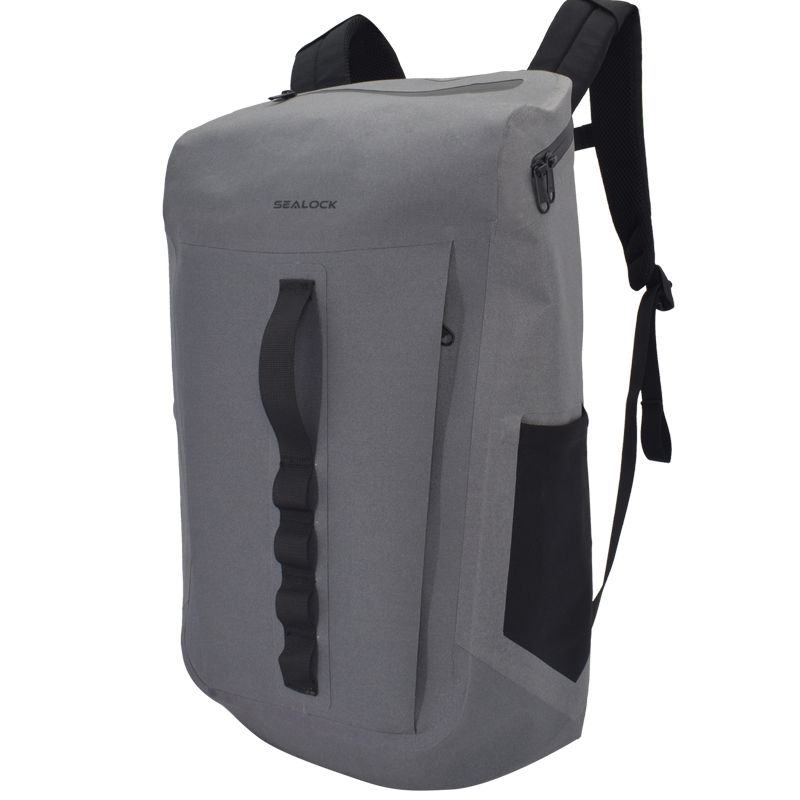

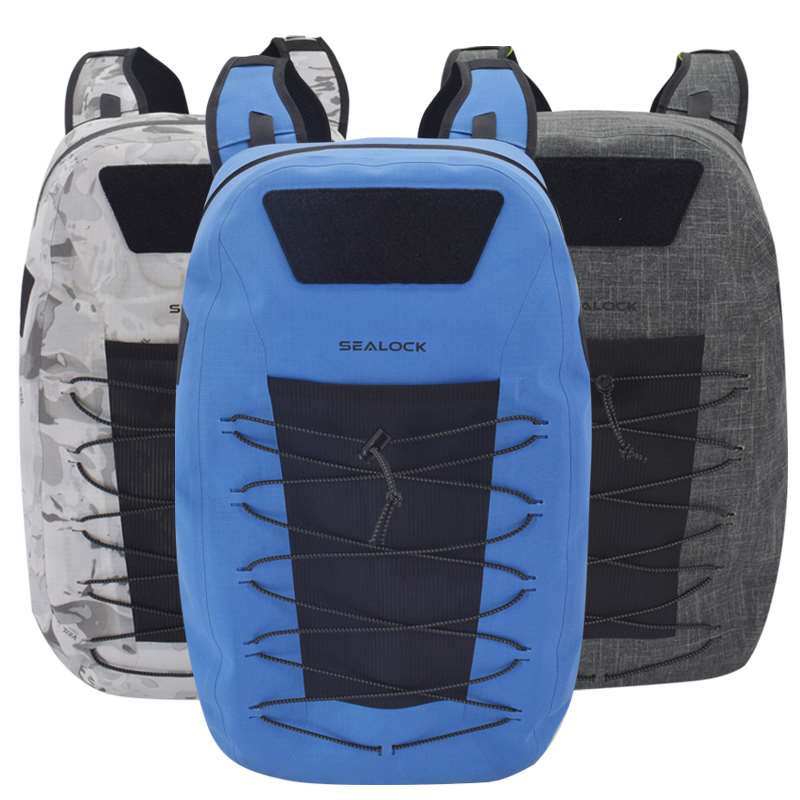
For brands where seam failure is not an acceptable outcome, the difference between those two situations is worth understanding in some detail.
The 27.12 MHz Standard: Why RF Welding Heats Differently
The core distinction between RF welding and conventional thermal bonding isn't just efficiency—it's the direction heat travels through the material.
Conventional methods (hot bars, heated platens, heat guns) apply energy to the material surface and rely on conduction to bring the interior to bonding temperature. For thin films this works adequately. For the thick, dense TPU laminate fabrics used in premium waterproof gear, it creates a practical problem: bringing the interior interface to fusion temperature requires enough surface dwell time to risk scorching or deforming the outer layer first. The window between "not enough" and "too much" narrows as material thickness increases.
RF welding bypasses this by generating heat from within the material rather than conducting it inward. Professional RF welding equipment operates at 27.12 MHz—the designated ISM (industrial, scientific, and medical) radio frequency band allocated for this class of industrial equipment. At this frequency, the alternating electromagnetic field causes polar molecules within the TPU to attempt realignment with each oscillation: approximately 27 million times per second. The molecular friction this produces generates heat uniformly throughout the weld zone, at the interface where fusion needs to occur, without relying on surface-to-interior thermal conduction.
Under simultaneously applied pneumatic pressure, the material at the join interface reaches fusion temperature and the layers merge at the molecular level. Once the field is removed and the material cools under sustained pressure, the original boundary between the two panels no longer exists structurally—the weld zone has become a single continuous piece of material. In destructive pull testing, this zone typically holds past the failure point of the surrounding base fabric. That outcome is the practical benchmark for a properly executed RF weld.
Welding 840D High-Tenacity TPU: A Narrower Margin for Error
RF welding works across a range of compatible thermoplastics—PVC, PET, EVA, various PU-coated fabrics. For heavy-duty outdoor applications requiring sustained abrasion resistance and structural integrity under load, 840-denier high-tenacity TPU is the benchmark material. It's also the one that places the most demands on process calibration.
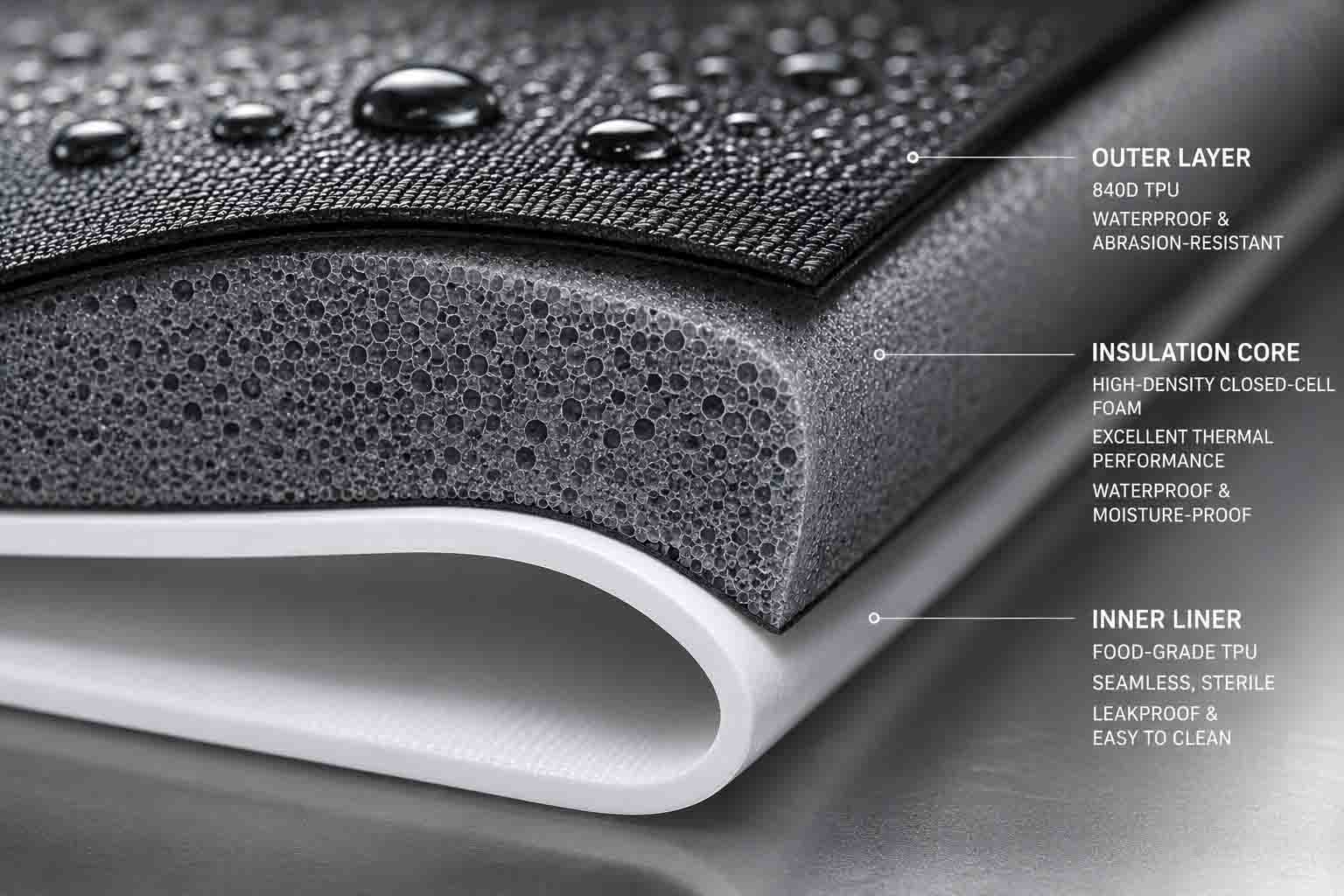
Higher denier means more material mass at the weld zone, which requires more electromagnetic energy to bring to fusion temperature. The difficulty is that this doesn't simply mean turning up the power. The operating window—the range between insufficient energy (incomplete fusion, leak-prone weld) and excessive energy (material scorching, compromised waterproof barrier)—narrows as fabric weight increases. A power setting that works cleanly on 420D TPU may produce cold spots on 840D at the same cycle time, while a setting calibrated for 840D may burn thinner materials in the same product.
Managing this requires material-specific calibration. When 840D TPU enters a production line—whether a new product introduction or a new batch of material from the same supplier—RF power output, press pressure, and cycle timing need to be validated against that specific material: its denier, TPU coating weight, and formulation. These parameters belong in a documented SOP, verified at the start of each production run. A facility applying uniform settings across all fabric weights is not doing this work, regardless of how the capability is described.
Three Process Variables That Determine Production Consistency
A prototype passing pressure testing establishes that the right weld is achievable. Consistent production requires controlling the variables that determine whether it's repeatable across volume.
Die Tooling Precision
The welding die—the shaped electrode that contacts the material and defines weld geometry—is machined from brass or aluminum to the dimensions required by the specific seam pattern. Dimensional accuracy in this tooling is not a secondary concern. An uneven die surface produces uneven pressure distribution across the weld zone, which produces uneven internal heating: cold spots where the material didn't reach full fusion temperature and hot spots where it was overheated. Cold spots become leak initiation points. Hot spots become areas of material thinning that compromise long-term seam integrity.
Die wear has the same effect over production volume. Contact surfaces that were within tolerance at the start of a production campaign drift out of tolerance gradually. Responsible RF welding operations track die condition and replace or recalibrate tooling before wear affects weld quality—not after QC testing begins showing elevated failure rates.
Pressure Application: Two Phases, Two Different Functions
Pneumatic pressure in RF welding serves distinct functions during the active weld phase and the cooling phase that follows, and both matter.
During the active RF phase, pressure ensures intimate contact between material layers at the weld interface, enabling molecular intermingling as the TPU reaches fusion temperature. During the cooling phase after RF energy is removed, pressure holds the fused zone in position while polymer chains solidify. Releasing pressure before the weld zone has cooled sufficiently allows the still-soft material to deform—producing a weaker bond and dimensional inconsistencies at weld zone edges that become stress concentration points in use.
Premature pressure release is among the most common process shortcuts in high-volume RF welding, where cycle time pressure creates operational incentive to move to the next part quickly. The resulting welds often pass visual inspection and initial low-pressure testing, then show elevated failure rates under sustained load and repeated flex cycling in the field.
Cycle Timing
A complete RF welding cycle runs in three phases: pre-press (pressure applied before RF activation, allowing material to seat correctly in the die), active weld (RF energy on, molecular heating and fusion occurring), and cooling under pressure (RF off, weld zone solidifying). Each phase has an optimal duration specific to the material thickness, coating weight, and die geometry in use.
These timings don't transfer between materials. A cycle developed for a specific TPU specification will under-weld heavier fabric and risk over-welding lighter material used elsewhere in the same product. When material specifications change between production runs—different denier, different coating weights, different supplier batches—cycle parameters require re-validation, not assumption of continuity.
1.0 Bar Hydrostatic Pressure Testing: What It Actually Confirms
Visual seam inspection identifies surface-level defects: visible burn marks, obvious gaps in weld coverage, gross dimensional distortion. It does not identify under-fused interior zones, micro-voids at the weld interface, or cold spots that hold under ambient conditions but open under load. For waterproof products with any pressure-rating claim, visual inspection is a floor, not a ceiling.
The 1.0 Bar hydrostatic pressure test is the validation standard for serious RF welded outdoor products. One Bar corresponds to the hydrostatic pressure of a 10-meter water column—significantly beyond the submersion conditions most outdoor products will encounter in field use, which is exactly what makes it a meaningful production qualification test.
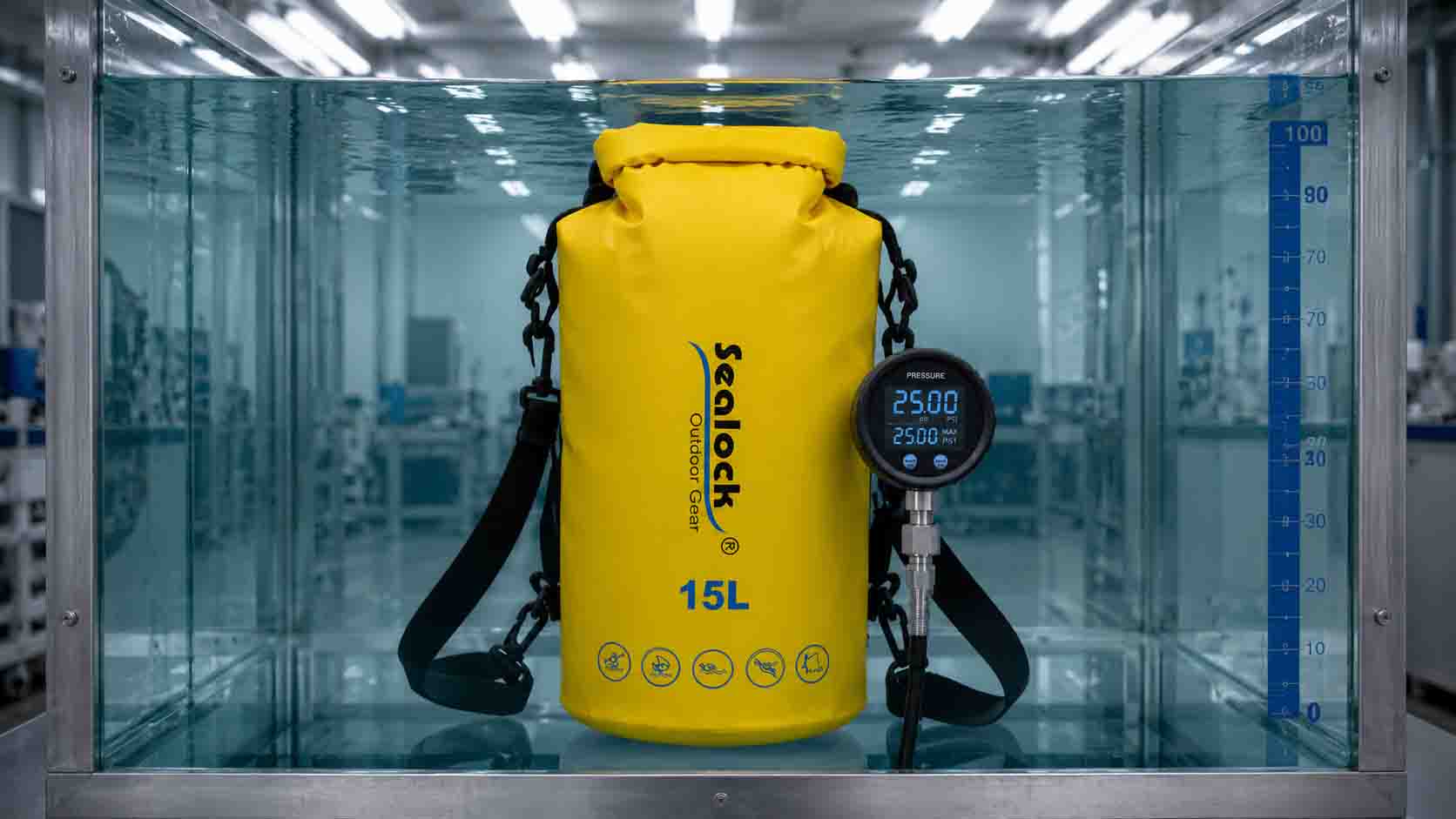
The procedure: completed products are inflated to 1.0 Bar internal pressure and either submerged in water or held under pressure for a defined period. Pass condition is zero micro-bubble emission from any seam, weld zone, or closure point. A single bubble indicates a leak pathway that will admit water under field use regardless of scale. There is no acceptable partial pass at this test level.
What the test confirms goes beyond whether a specific unit holds pressure at the moment of testing. A product passing 1.0 Bar has confirmed full molecular fusion across every weld zone, correct die contact across the complete seam geometry, and adequate cooling before pressure release. Consistent pass rates across a production run are evidence of process control—not individual unit variation that happened to trend positive.
Testing frequency is as consequential as test severity. Per-unit testing on critical seam products provides complete production coverage and catches individual failures before they ship. Batch sampling provides statistical confidence at lower cost but allows individual failures through. The appropriate protocol depends on the downstream cost of a single unit field failure—for products where one leak generates a warranty claim and potential brand exposure, per-unit testing is the rational position.
Evaluating RF Welding Capability: The Questions That Distinguish Process Maturity
Leak prevention in RF welded waterproof products is an engineering outcome, not a manufacturing claim. The process variables are known, the control methods are established, and the testing protocol that validates the result is well-defined. A manufacturer with genuine capability in this area will describe their operation in those specific terms.
The questions worth asking during supplier evaluation are concrete:
How are RF power settings and cycle times documented per material specification, and what triggers re-validation when material batches change?
How is die condition monitored and at what threshold is tooling replaced?
Is hydrostatic testing conducted per-unit or by batch sampling, and at what pressure?
Can they provide test records from recent production runs of comparable products?
These are not difficult questions for a facility that actually controls these variables. They are very difficult questions for a facility that runs RF welding equipment without the process discipline behind it. The answers tell you which situation you're in.