




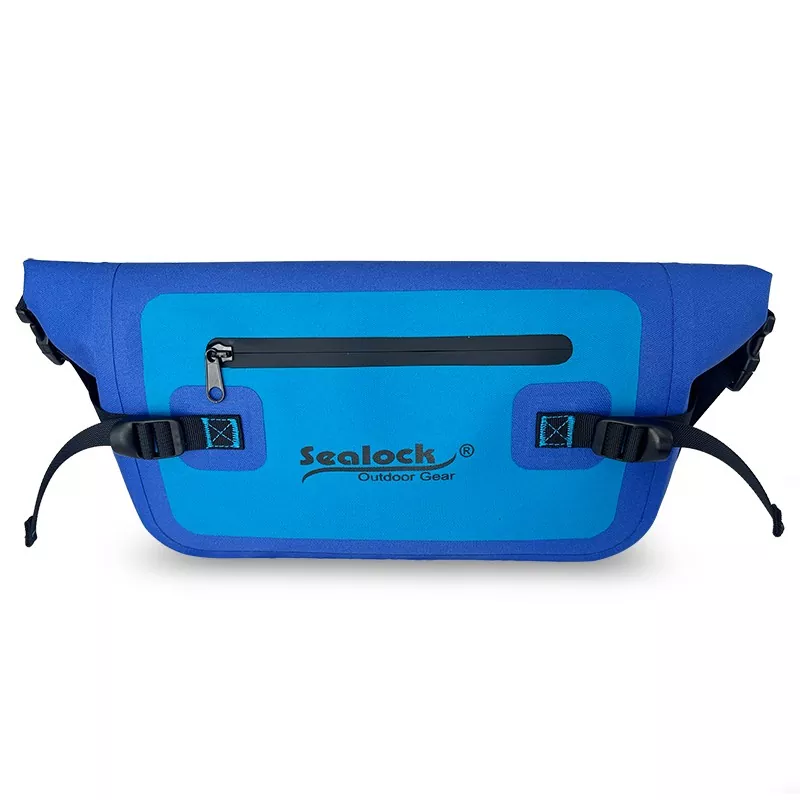
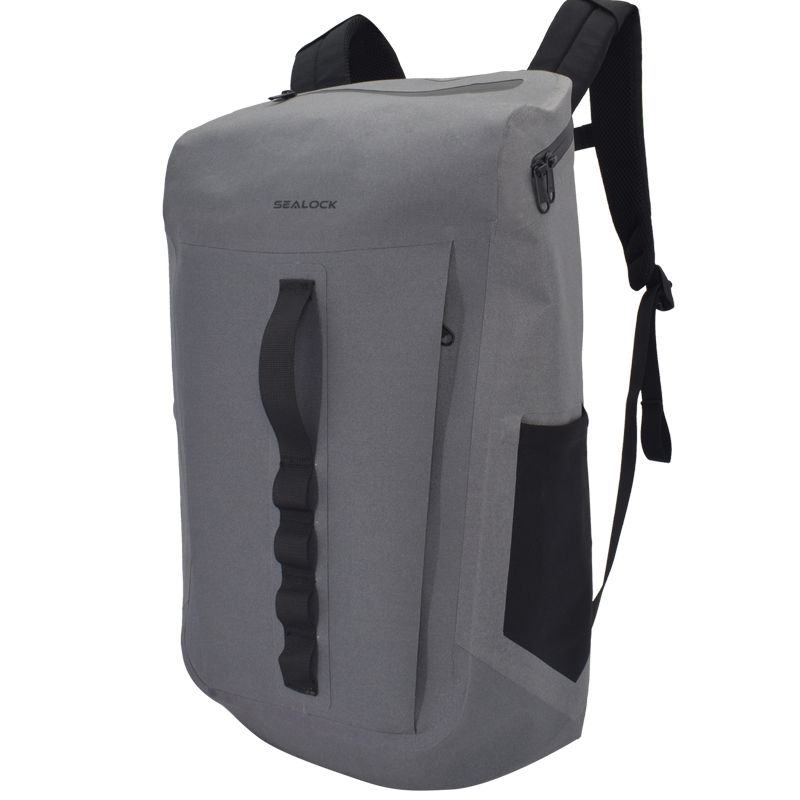

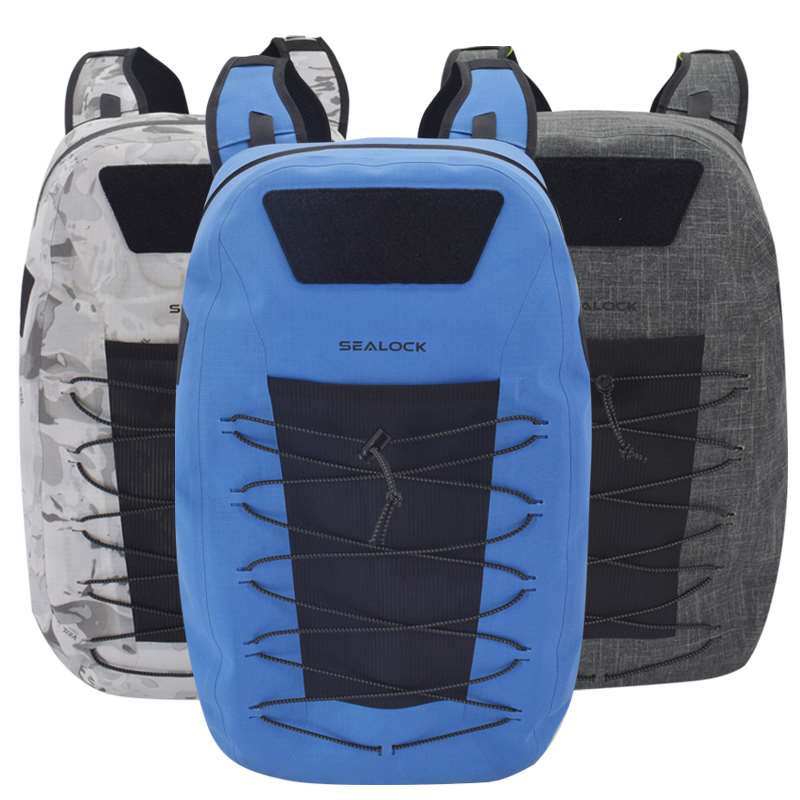
For brands sourcing high-performance soft cooler backpacks or tactical dry bags, the audit questions that matter most are the ones that go past the production floor capability checklist. Here are the three areas that separate a factory capable of making good samples from one capable of being a long-term manufacturing partner.
1. Material Traceability: Where the TPU Actually Comes From
Consumer-facing sustainability claims in outdoor gear have moved from brand differentiator to baseline expectation in most major markets. EU sustainability frameworks, California's Proposition 65, and increasingly retailer-level supplier requirements have made material traceability a procurement risk issue, not just a marketing one. A supplier who can't document their material sourcing chain creates exposure for your brand the moment a major retail partner or investigative outlet asks the question.
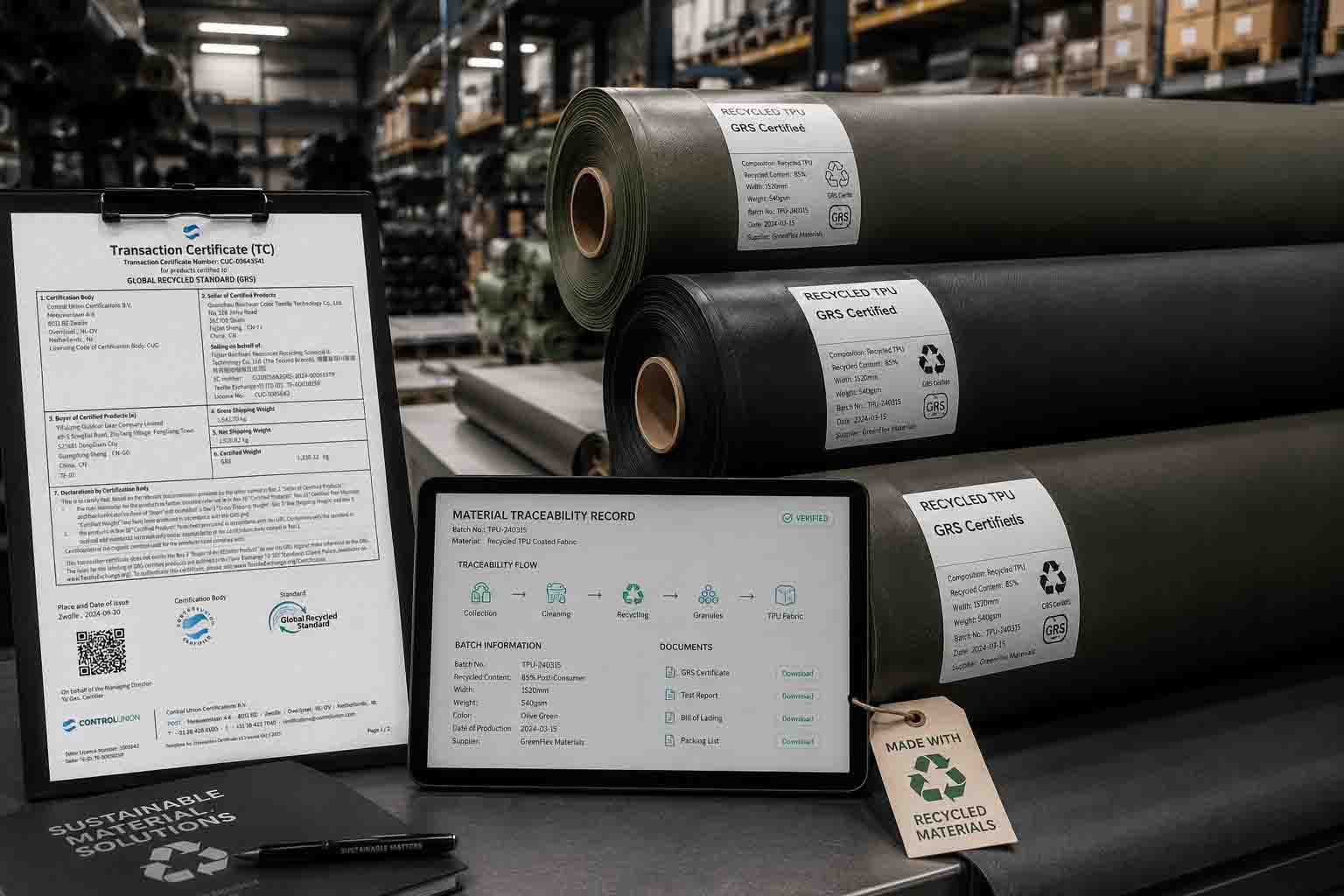
The Global Recycled Standard (GRS) is the relevant certification for recycled TPU and PET materials used in premium soft cooler and dry bag construction. GRS certification establishes a verifiable chain of custody from raw material through to finished goods—meaning the recycled content claim on your product can be substantiated with documentation, not just asserted.
What this looks like in a factory audit: the supplier should be able to produce GRS transaction certificates for specific material batches, not just a general facility certification. The two are different. A facility-level GRS certificate indicates the supplier is capable of handling certified materials; transaction certificates confirm that the specific materials going into your product are actually from certified sources. Ask for both.
Beyond recycled content, the inner liners of food-contact soft coolers carry their own compliance requirements. Food-grade TPU liners need to meet FDA standards for direct food contact, be demonstrably BPA-free, and comply with EU REACH regulations on restricted chemical substances. A qualified OEM maintains this documentation as part of standard material onboarding—suppliers who need to be asked for it during a specific audit are likely not managing it proactively. That distinction matters when your product is being sold through a retail channel with its own supplier compliance requirements.
2. ISO 9001 on the Factory Floor: What the Certification Actually Tells You
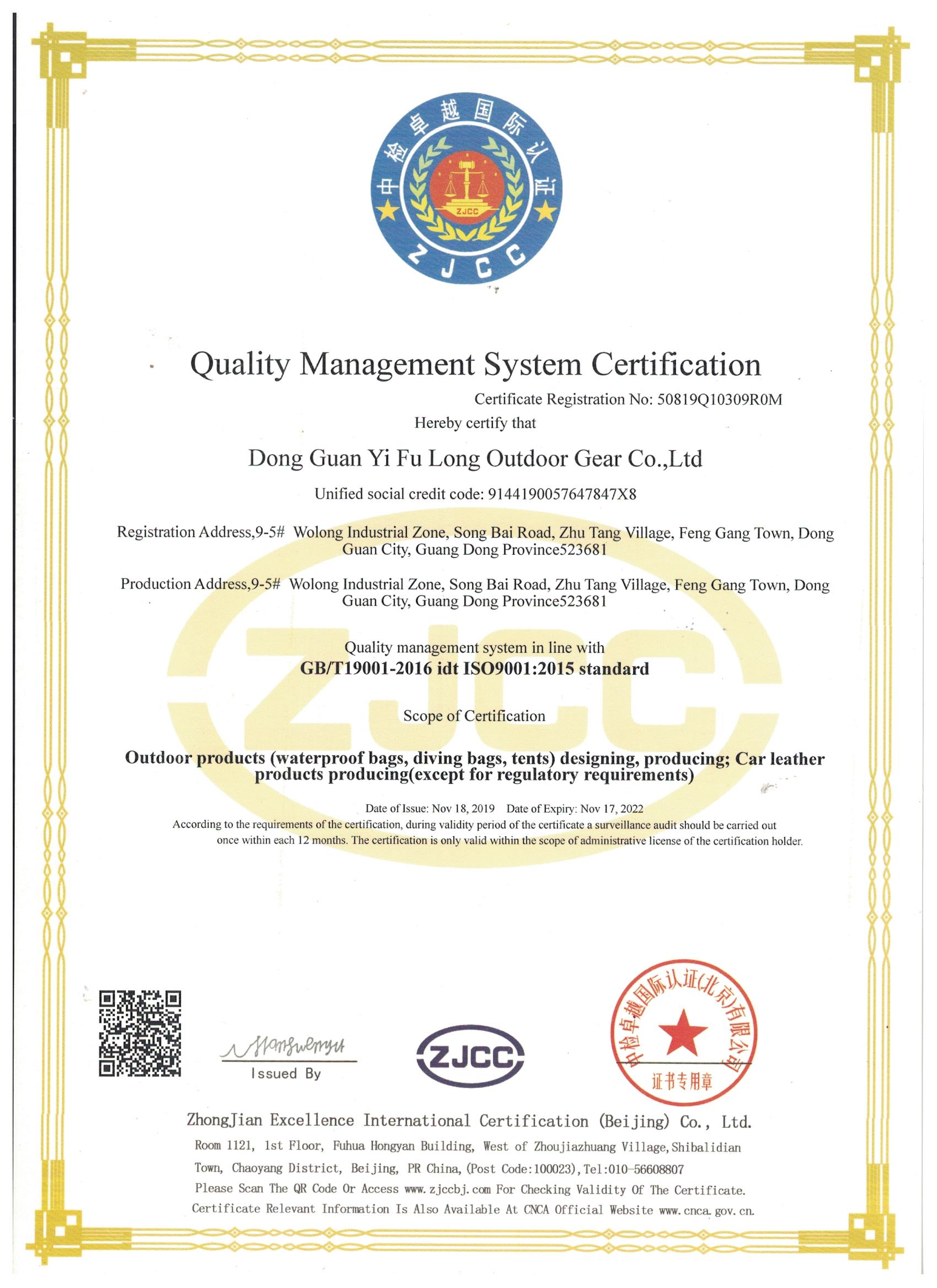
ISO 9001 certification appears on almost every serious factory's capability list. The certification indicates a quality management system has been implemented and audited; it says less about how rigorously that system is applied day-to-day on the production floor. For RF welding specifically, where process variable drift has direct consequences for seam integrity, the gap between a documented QMS and an actively enforced one is where most production problems originate.
When auditing for ISO 9001 compliance in a soft cooler manufacturing context, the questions should be specific to the process:
Incoming Quality Control
Does the facility test incoming 840D TPU fabric batches for tensile strength and coating adhesion before material reaches the cutting table? Fabric specifications from the same supplier can vary between batches—denier count, coating weight, formulation—in ways that affect RF welding parameters. A factory that accepts material based on a supplier's certificate without independent incoming testing is carrying a process variable it doesn't control. Ask what the IQC protocol looks like for new material batches and what the rejection criteria are.
In-Process Quality Control
Are RF welding parameters documented in SOPs at the machine level, and are operators required to verify and log settings at the start of each production shift? Die condition monitoring—tracking die contact surface wear against replacement thresholds—should also be part of the IPQC protocol. A facility where parameters are set by operator judgment rather than documented SOPs will produce consistent results when experienced operators are on shift and variable results when they aren't. That variability shows up in field warranty claims, not prototype approval.
Final Quality Control and Laboratory Validation
The outgoing QC protocol tells you the most. For pressure-rated waterproof products, final QC should include 1.0 Bar hydrostatic pressure testing, heavy-load drop testing on strap and handle attachment points, and zipper fatigue cycling to confirm the closure system maintains waterproof integrity through a realistic use life. Ask whether this testing is per-unit or batch sampling—for soft coolers destined for professional outdoor or marine use, per-unit pressure testing is the appropriate standard. A factory that tests 5% of production and considers that sufficient for a product marketed as submersible is not managing its QC risk at the level your product requires.
3. Social Compliance: The Audit Readiness That Protects Your Brand
Material compliance and production quality protect the product. Social compliance protects the brand. For outdoor gear brands distributing through major retail channels—or selling into European markets where supply chain due diligence legislation is increasingly active—a supplier's social compliance posture is a material risk factor, not a secondary consideration.
The relevant audit frameworks are BSCI (Business Social Compliance Initiative) and SMETA (Sedex Members Ethical Trade Audit). A factory with genuine audit readiness in these frameworks maintains its compliance infrastructure continuously, not as a pre-audit preparation exercise. The practical difference is visible during an unannounced or short-notice audit: are personnel records organized and current, are working hour logs accurate and accessible, is wage documentation complete? Factories that assemble compliance documentation before audits and maintain separate records in between are a known risk in international supply chains. The indicators are consistent and experienced auditors find them.
For soft cooler manufacturing specifically, the production environment audit carries additional considerations. High-frequency welding equipment generates RF emissions that require proper shielding. Cutting and finishing operations involve equipment that requires guarded machinery standards. A factory maintaining genuine SMETA compliance will have these in place as standard operating procedure, not as audit-period installations.
Choosing a supplier with mature, continuous compliance management does something beyond protecting against audit failure: it removes a category of risk from your supply chain that has ended brand relationships with major retailers. The due diligence cost at the sourcing stage is substantially lower than the reputational cost downstream.
The Practical Audit Framework
Finding a factory that can produce a good soft cooler sample is straightforward. Finding one that delivers consistent zero-defect production at volume, maintains traceable sustainable material sourcing, and can pass a SMETA audit from your largest retail partner on short notice is a different selection process.
The three dimensions covered here—GRS material traceability, ISO 9001 process discipline as applied in practice rather than on paper, and continuous social compliance readiness—are the ones that distinguish a manufacturing partner from a manufacturing vendor. The distinction matters most when something goes wrong: a compliance flag from a retail partner, a field failure rate that triggers warranty exposure, or a supply chain investigation that looks for the weakest documentation link.
When evaluating OEM candidates for waterproof outdoor gear, ask the specific questions in each category. The answers will tell you more than the equipment list.
Looking for an OEM partner that meets all these criteria? Contact our engineering team today to discuss your next soft cooler or waterproof bag project.