Introduction: Beyond Surface Waterproofing—The Reality of Submersibility
In the competitive 2026 outdoor market, the term "waterproof" has become an industry baseline, but "submersible" remains an elite technical achievement. For professional divers, emergency responders, and premium adventure brands, a product must do more than repel rain; it must withstand the relentless pressure of immersion. At Sealock (Yi Fu Long), we distinguish between these categories through empirical data and rigorous physics. Our gold standard is defined by two pillars: 27.12 MHz High-Frequency Welding and the 1.0 Bar Hydrostatic Integrity Test.
Achieving this level of performance consistently across a global supply chain is not accidental. It is the result of 25 years of material science mastery and a rigid adherence to technical protocols that bridge our R&D hub in China with our high-capacity production lines in Vietnam.
1. The Physics of 27.12 MHz: Achieving Molecular Fusion
The foundation of any submersible bag is its seams. While many manufacturers rely on hot-air taping or simple heat sealing, these methods only create a surface-level bond that is prone to "creeping" or delamination under stress. Sealock utilizes High-Frequency (HF) Welding at the optimized frequency of 27.12 MHz.
1.1 Understanding Molecular Vibration
HF welding works by creating a high-frequency electromagnetic field between two electrodes. When TPU or PVC fabric is placed in this field, the molecules within the material vibrate at 27.12 million times per second. This internal friction generates heat from within the material, causing the polymer chains to intertwine and fuse. This is Molecular Fusion—the two layers of fabric become one. The resulting seam is not a joint; it is a continuation of the material itself, often exhibiting higher tensile strength than the original fabric.
1.2 Precision Tooling and Consistency
As seen in our production facility, the precision of the weld depends on the quality of the molds and the stability of the power output. Our Product Development & Production Protocol ensures that every machine is calibrated daily to maintain the exact voltage and dwell time required for specific fabric weights. This prevents "over-burning," which can weaken the material, or "cold-welding," which results in micro-leaks.
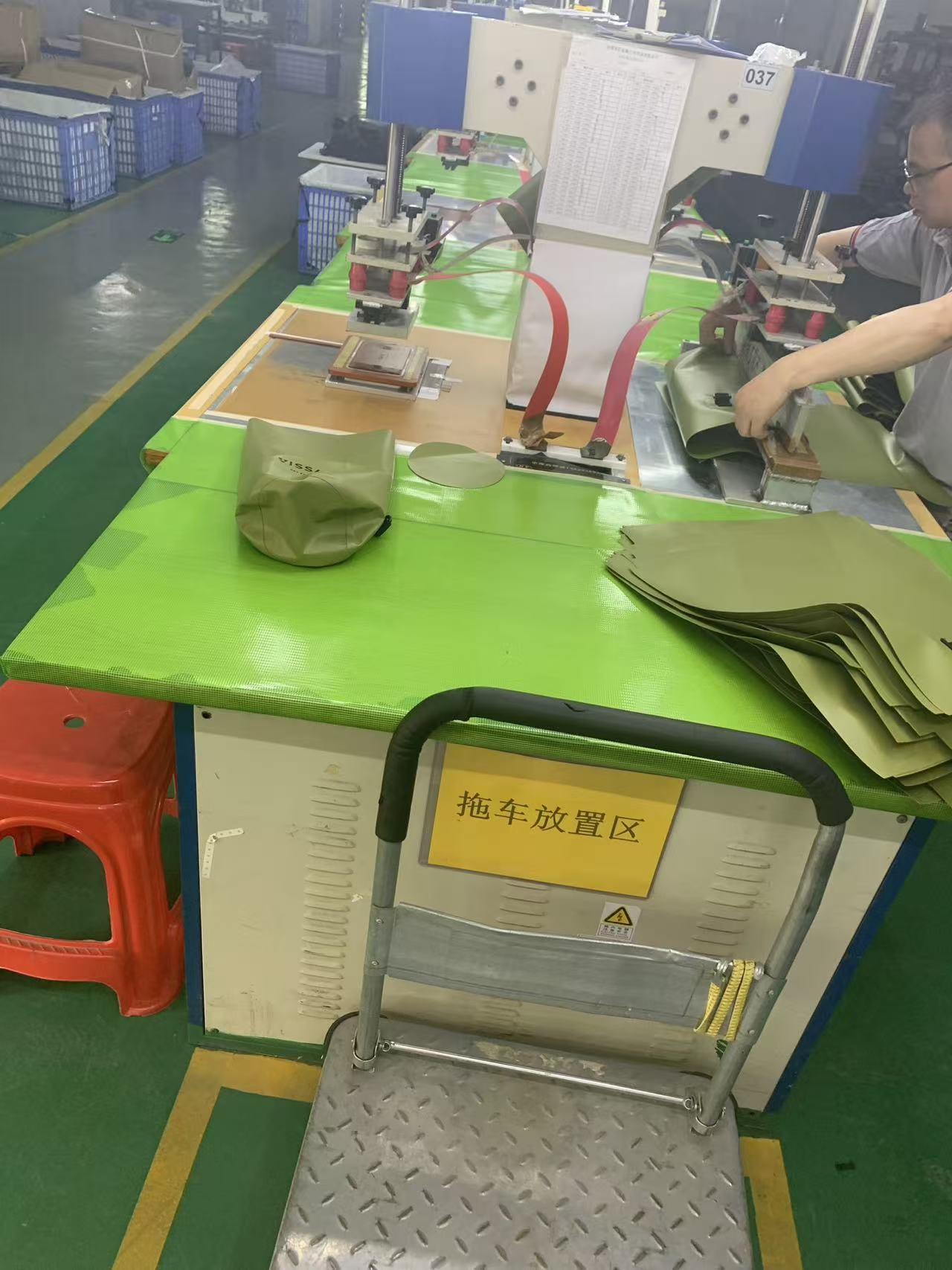
Alt: Professional HF welding operation at Sealock factory, focusing on the precision electrodes used for submersible gear.
2. The 1.0 Bar Standard: Defining Extreme Integrity
What does it mean for a bag to be "1.0 Bar tested"? To the layman, it sounds like a statistic; to our engineers, it is a 100% pass-fail survival mandate. 1.0 Bar of pressure is approximately 14.5 PSI, which simulates the hydrostatic pressure found at a depth of 10 meters (33 feet).
2.1 The Inflation and Immersion Protocol
During our Phase 4: Mass Production quality checks, samples are selected for the inflation test. The bag is pressurized to exactly 1.0 Bar using calibrated air compressors. It must hold this pressure for a minimum of 24 hours with zero drop in PSI. Furthermore, in our immersion tanks, any escaping air—even a single bubble the size of a pinhead—results in immediate batch rejection and an investigation into the HF welding parameters used during that shift.
2.2 Why 1.0 Bar Matters for Brands
Most consumer-grade "dry bags" are tested to 0.1 or 0.2 Bar. By pushing our standard to 1.0 Bar, we provide a massive "Safety Buffer." This ensures that even as the product ages or is subjected to the rough handling of an expedition, its integrity remains intact. For a brand, this translates to near-zero return rates and high customer trust.
3. The Quality Life Cycle: From Design Correctness to Final Audit
Our 25 years of experience have taught us that quality cannot be "inspected into" a product at the end; it must be "engineered into" the product at the start. This is the core of our China-Vietnam Synergy Protocol.
3.1 R&D (The China Brain)
In Dongguan, our R&D team focuses on "Design Correctness." They determine the optimal overlap for seams and select the specific PFAS-Free TPU grade that will best respond to the 27.12 MHz frequency. They create the "Master Sample" that serves as the gold standard for the entire production run.
3.2 IPQC (The Vietnam Execution)
In our Vietnam facility, In-Process Quality Control (IPQC) is the heartbeat of the factory floor. Our QC officers conduct patrols every 2 hours, checking the "First Article" of every shift and conducting destructive pull tests on seam scraps to ensure the molecular fusion is reaching the required depth. As shown in our facility photos, the workspace is organized to ensure that raw materials and finished goods are never cross-contaminated.
4. Frequently Asked Questions (FAQ)
Q1: Is 1.0 Bar pressure testing necessary for all dry bags?
A: While not necessary for basic splash protection, 1.0 Bar is the minimum standard for professional submersible gear. It provides a safety margin that ensures the bag remains waterproof even during accidental deep immersion or under heavy external weight.
Q2: How does TPU material affect the high-frequency welding process?
A: TPU is highly responsive to 27.12 MHz waves due to its molecular structure. This results in a cleaner, stronger, and more reliable weld compared to PVC, and it remains flexible in cold temperatures where other materials might crack.
Q3: What is the difference between heat sealing and HF welding?
A: Heat sealing applies external heat to melt the surface. HF welding creates internal heat through molecular vibration, fusing the entire thickness of the fabric. HF welding is significantly more durable and resistant to UV and heat aging.
Q4: Do you provide test reports for each production batch?
A: Yes. As part of our commitment to transparency, Sealock provides internal lab reports for hydrostatic pressure tests, pull tests, and material SGS compliance (such as PFAS-Free reports) upon client request.
Q5: Can your Vietnam factory maintain the same technical standards as China?
A: Yes. By using identical machinery, synchronized SOPs, and cross-trained technical staff, our Vietnam base operates as a perfect technical mirror of our China R&D center.
Conclusion: Investing in Integrity
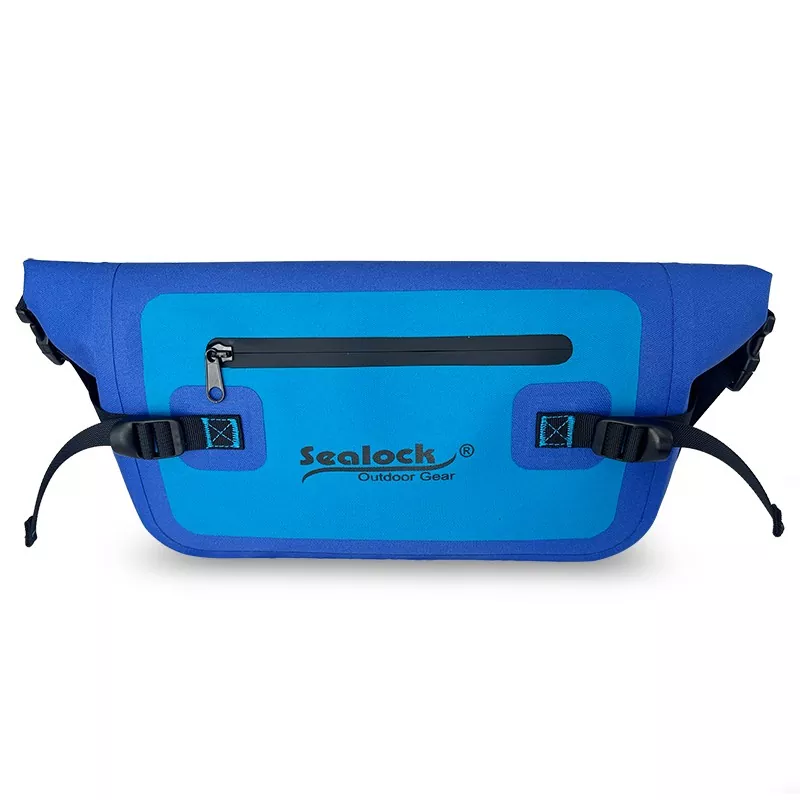
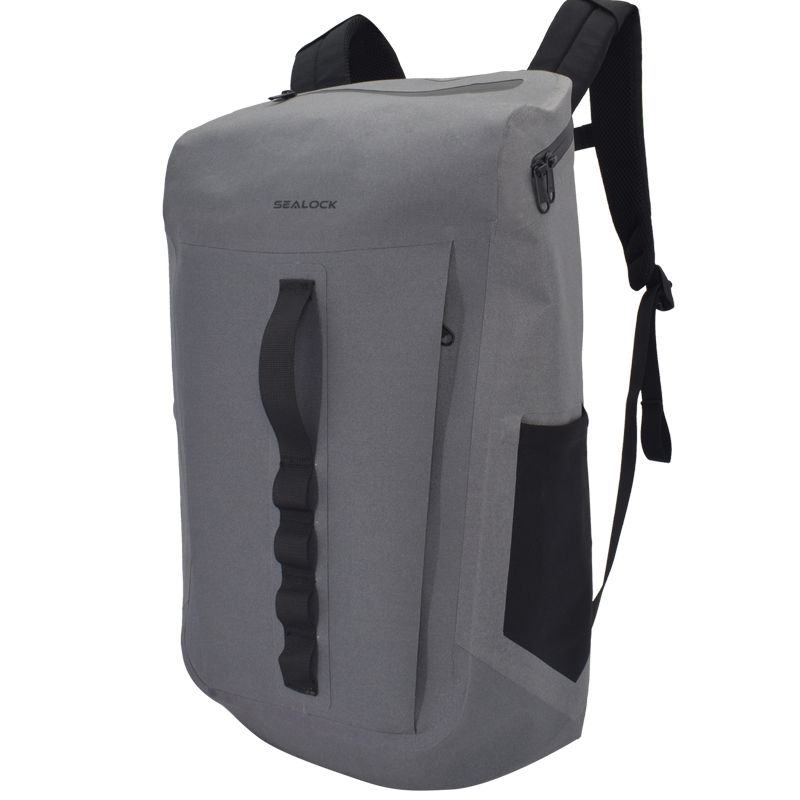
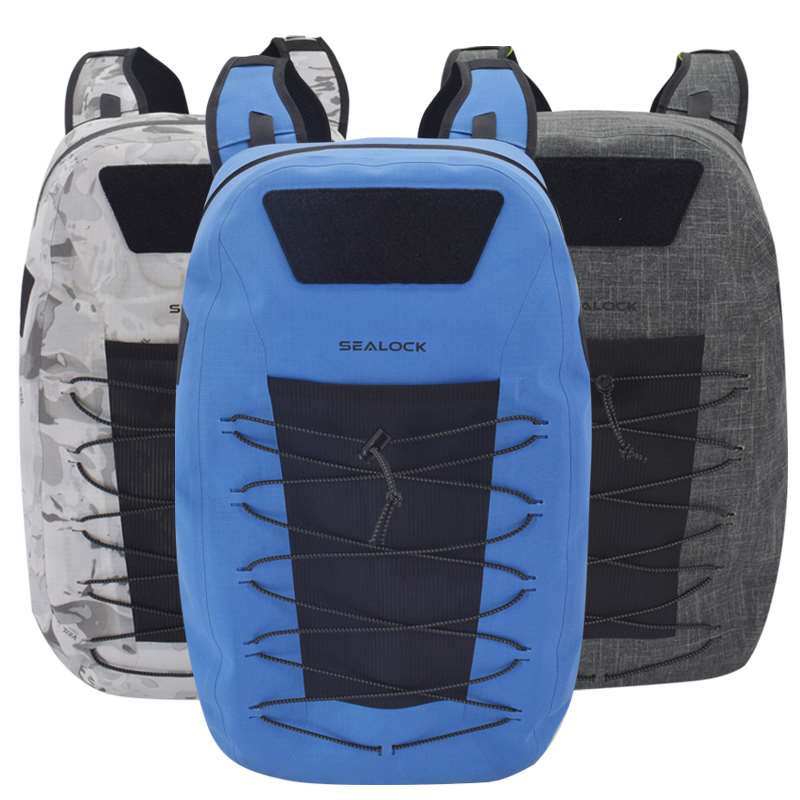
In the high-end outdoor industry, a product’s reputation is only as strong as its weakest seam. By adhering to the 1.0 Bar testing standard and utilizing the precise physics of 27.12 MHz HF welding, Sealock provides brands with a foundation of technical integrity. Whether you are developing a technical backpack or a maritime rescue bag, our China-Vietnam synergy ensures that your vision is realized with zero compromise.
Advance Your Technical Product Line
Don't leave your brand's reliability to chance. Contact Sealock's engineering experts to learn more about our 1.0 Bar validation process and technical OEM capabilities.
Request a Technical Quote | View Submersible Gear
 English
  Español
  Português
  русский
  Français
  日本語
日本語  Deutsch
  tiếng Việt
  Italiano
  Nederlands
  ภาษาไทย
  Polski
  Svenska
  magyar
  Malay
Malay  বাংলা ভাষার
  Dansk
Dansk  Suomi
Suomi  हिन्दी
  Pilipino
  한국어
한국어  Türkçe
  Gaeilge
  العربية
  Indonesia
  Norsk
Norsk  تمل
تمل  český
český  ελληνικά
  український
  Javanese
  فارسی
فارسی  தமிழ்
தமிழ்  తెలుగు
  नेपाली
  Burmese
  български
  ລາວ
ລາວ  Latine
  Қазақша
  Euskal
  Azərbaycan
  Slovenský jazyk
  Македонски
  Lietuvos
  Eesti Keel
  Română
  Slovenski
  मराठी
मराठी  Srpski језик