China-Vietnam Dual-Base Manufacturing: The Ultimate OEM Supply Chain Strategy
Tariff mitigation is a trailing metric. The real risk in multi-country contract manufacturing is specification drift during cross-border tool transfer. For sourcing directors managing high-stakes heavy-duty waterproof gear portfolios, a dual-sourcing strategy only works if the technical execution is flawless across both borders. Sealock Outdoor Group operates a fully synchronized, vertically integrated China-Vietnam dual-engine infrastructure designed to neutralize geopolitical risk without sacrificing engineering precision.
I. Bypassing the Pitfalls of Cross-Border Specification Drift
Most diversified supply chains fail during mass production scale-up because of unmanaged operational variance between the prototype lab and the contract facility. A sample hand-built in a specialized R&D center in Guangdong cannot be replicated on a mass assembly line in Southeast Asia without rigid parameter locking.
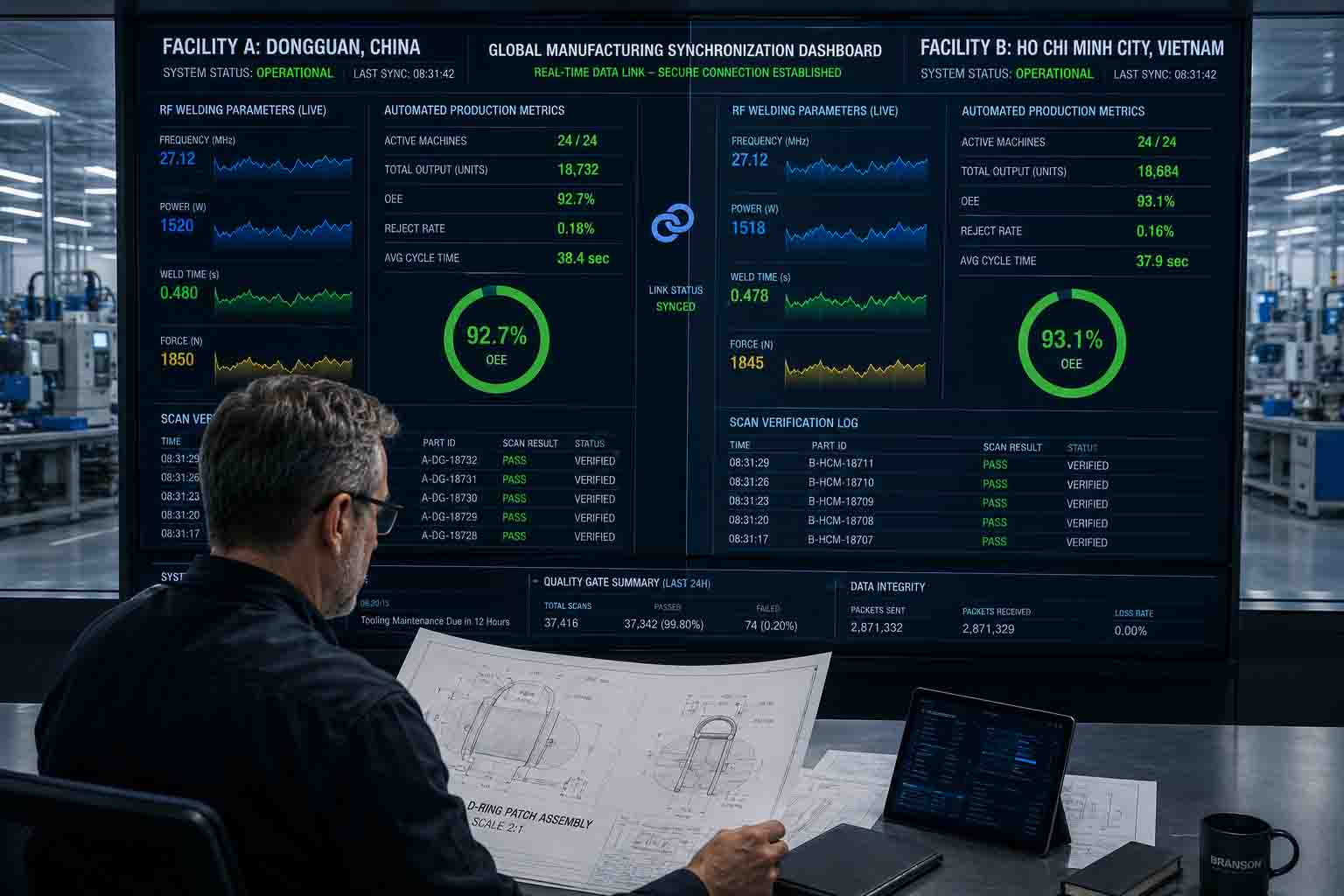
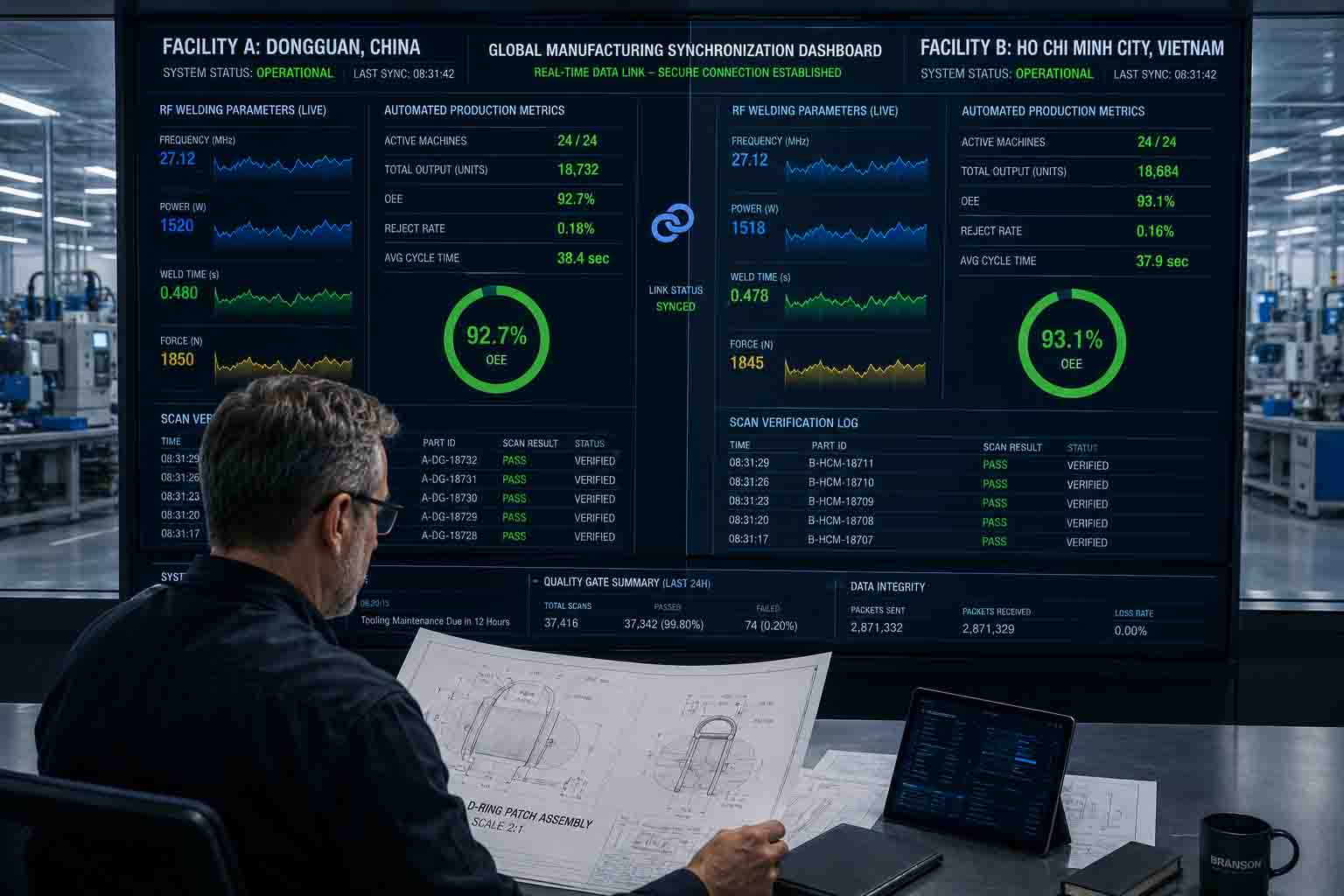
In practice, the transition from development to high-volume manufacturing is where microscopic vulnerabilities emerge. Material chemistry shifts, localized operator techniques vary, and ambient factory humidity alters the behavior of heavy-duty polymers during processing. We eliminate this vulnerability structurally. Our Dongguan headquarters functions as the technical intelligence hub, establishing exact, unalterable Standard Operating Procedures (SOPs) and digital welding profiles before a single machine cycle runs in our Ho Chi Minh City plant.
This operational rigidity is the cornerstone of our status as an authoritative OEM outdoor gear manufacturer. By centralizing product development and parameter engineering, we guarantee that the duty-exempt output from our Southeast Asian lines perfectly matches the high-precision prototypes signed off by your engineering team in China.
II. Tooling Calibration and Ambient Climate Compensation
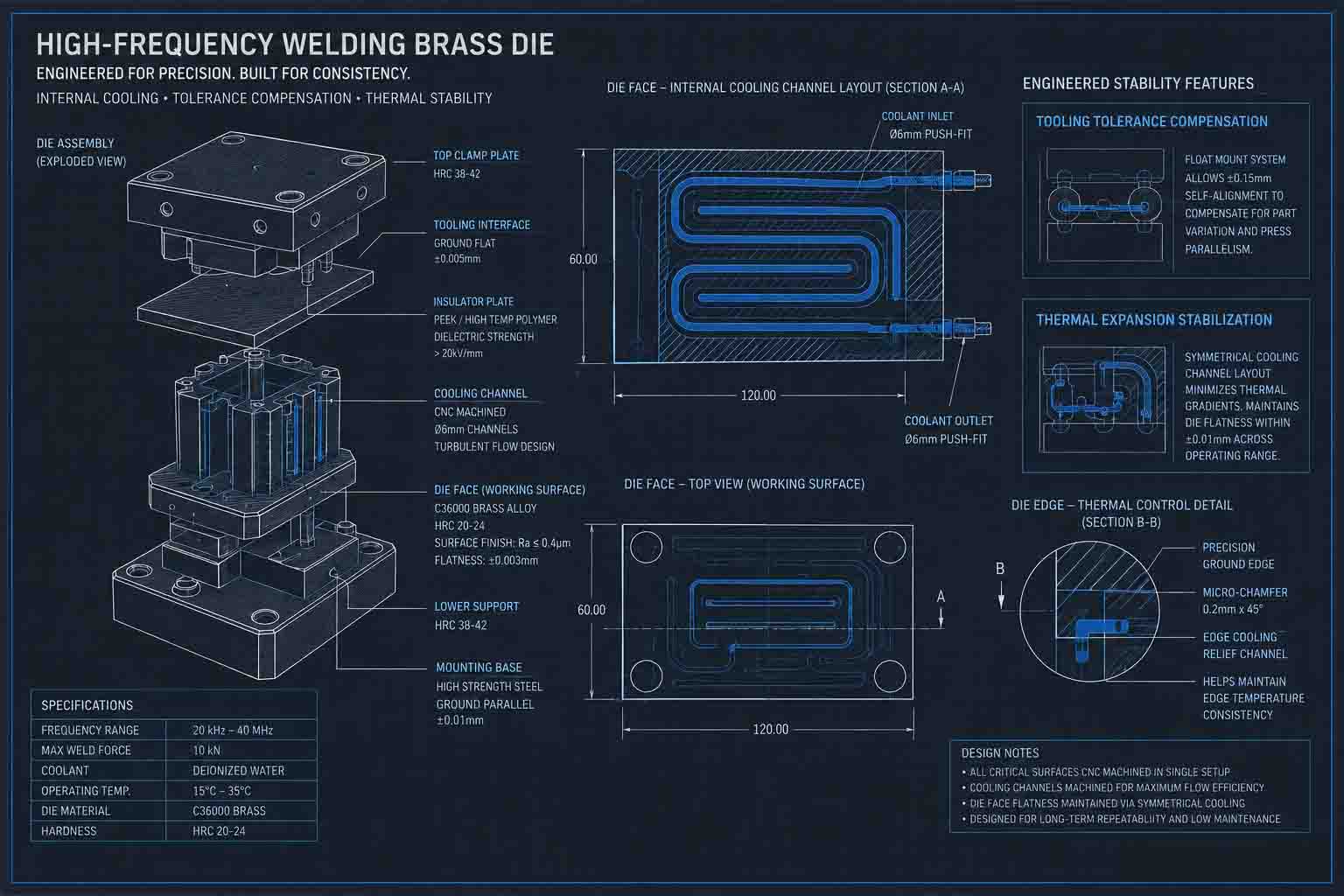
A high-frequency welding die or hot-air sealing jig calibrated for an air-conditioned workshop in China behaves differently under the tropical ambient climate of a standard Ho Chi Minh City production floor. Polymer thermal expansion rates change. Dielectric behavior shifts. The result is edge fusion instability and localized overheating along critical seam stress points.
Managing a robust China-Vietnam dual-base manufacturing strategy requires active tooling tolerance compensation. Our production engineers do not use set-and-forget parameters. We adjust dwell time, pneumatic pressure distributions, and radio frequency outputs based on real-time environmental data logged directly from the factory floor. This level of process discipline ensures that the peel strength and shear resistance of our seams remain uniform, completely neutralizing the root causes of field returns highlighted in our guide on advanced OEM QA testing standards.
The Cross-Border Audit Kill-Shot: When evaluating a supplier claiming dual-base capabilities, do not ask about their square footage. Demand to see their cross-border Engineering Change Order (ECO) logbook. If the factory cannot show a digital, audited trail proving that a tooling modification made in China was instantly updated, re-calibrated, and signed off on the Vietnam line, they are operating two disconnected businesses, not a synchronized supply chain.
III. Upstream Material Sovereignty and Vertical Integration
Brokers and assembly-only cut-and-sew operations are entirely dependent on third-party fabric suppliers. If a raw material batch suffers from polymer thickness variation or inconsistent coating lamination, the assembly line stalls, or worse, processes defective substrates that fail during field deployment.
True supply chain resilience requires a high vertical integration rate. Sealock maintains direct control over the fabric formulation and lamination stages. Our material scientists specify the exact polyether or polyester base weight, polymer density, and UV-stabilizer packages required for heavy-duty marine and tactical environments. This upstream control ensures absolute consistency before the material ever reaches the high-frequency welding dies, a critical prerequisite for manufacturing products that pass the strict testing protocols detailed in our industrial-grade waterproofing analysis.
Furthermore, our integrated component sourcing handles everything from heavy-duty hardware to specialized closures, significantly lowering your total cost of ownership (TCO) by eliminating middleman markups and reducing raw material transit lead times between China and Vietnam.
IV. 2026 Compliance Framework: SCAN, ISO, and GRS Execution
In the 2026 procurement landscape, corporate social responsibility and supply chain security are no longer optional checklists—they are absolute regulatory gates. A factory with excellent engineering is useless if its security protocols trigger a customs hold at your port of entry.
Both our Dongguan and Ho Chi Minh City production hubs operate under unified compliance mandates:
-
SCAN (Supply Chain Security Audit): Strict access controls, digital container tracking, and verified manifest logging to eliminate border security vulnerabilities.
-
ISO 9001:2015: Total quality management systems with fully traceable digital testing logs for every production lot.
-
GRS (Global Recycled Standard): Auditable chain-of-custody documentation for brands requiring verified sustainable polymer integration without structural performance drops.
The Compliance Audit Kill-Shot: A manufacturer that cannot provide parameter traceability by material batch is not operating a verified production line. During your next site visit, select a finished unit at random from the shipping dock and demand to see its raw material lot certificate, its inline welding pressure log, and its specific ASTM leak test record. If they cannot pull this data within ten minutes, their compliance certificates are just paper.
V. Strategic TCO Optimization for Global Procurement Directors
Geopolitical agility should not carry a manufacturing premium. By dividing labor logically between our dual engines, we optimize every dollar of your procurement budget. Dongguan absorbs the heavy engineering, complex tooling fabrication, and initial prototyping costs. Ho Chi Minh City executes the high-volume, duty-exempt mass assembly. Sourcing directors achieve maximum tariff insulation, localized engineering backup, and optimized shipping logistics through a single, accountable corporate entity.
Frequently Asked Questions for Supply Chain VPs
How does Sealock ensure quality parity between its China and Vietnam factories?
We do not allow local factory floor modifications to engineering files. All tooling designs, CNC milling programs, and high-frequency welding machine parameters are created and locked at our Dongguan R&D center. These digital assets are transferred electronically to our Ho Chi Minh City facility. Both facilities utilize identical testing machinery calibrated to the exact same ASTM and ISO baselines, ensuring zero operational deviation.
What are the tariff advantages of your Ho Chi Minh City Phase II facility?
Products manufactured at our fully operational Vietnam facility qualify for major tariff exemptions and preferential duty rates into the North American and European markets. We provide full country-of-origin documentation, raw material chain-of-custody tracking, and verified transformational manufacturing proof to satisfy strict international customs audits.
How is material lot traceability handled across borders?
Every roll of polyether or polyester TPU fabric received at our facilities is assigned a unique digital barcode tracking its origin, chemical formulation batch, lamination date, and thickness profile. When material moves from our primary sourcing networks to our Vietnam line, this digital passport moves with it, allowing us to link any finished product serial number directly back to its raw material component lot.
About Sealock Outdoor Group
Sealock Outdoor Group is an authoritative B2B contract manufacturer specializing in flexible waterproof lamination, precision high-frequency welding, and heavy-duty outdoor gear engineering. Operating synchronized, SCAN-compliant facilities in Dongguan, China, and Ho Chi Minh City, Vietnam, we deliver risk-mitigated supply chain diversification, absolute tariff compliance, and zero-defect manufacturing execution for elite global brands.
For procurement directors seeking a technically mature manufacturing partner capable of executing flawless cross-border production, Sealock provides verified industrial capability.
Contact our global sourcing division today to initiate an Engineering Change Order review or request factory audit documentation.
 English
  Español
  Português
  русский
  Français
  日本語
日本語  Deutsch
  tiếng Việt
  Italiano
  Nederlands
  ภาษาไทย
  Polski
  Svenska
  magyar
  Malay
Malay  বাংলা ভাষার
  Dansk
Dansk  Suomi
Suomi  हिन्दी
  Pilipino
  한국어
한국어  Türkçe
  Gaeilge
  العربية
  Indonesia
  Norsk
Norsk  تمل
تمل  český
český  ελληνικά
  український
  Javanese
  فارسی
فارسی  தமிழ்
தமிழ்  తెలుగు
  नेपाली
  Burmese
  български
  ລາວ
ລາວ  Latine
  Қазақша
  Euskal
  Azərbaycan
  Slovenský jazyk
  Македонски
  Lietuvos
  Eesti Keel
  Română
  Slovenski
  मराठी
मराठी  Srpski језик