For sourcing directors and supply chain VPs evaluating OEM partners, surface-level manufacturing capabilities are no longer sufficient. The hidden costs of seam failure—manifesting as product recalls, brand damage, and margin erosion—require a microscopic approach to Quality Assurance (QA). When auditing a factory's technical competency, the focus must shift from basic assembly to rigorous, laboratory-grade material engineering and seam strength validation.
The Hidden Costs of Seam Failure in Global Supply Chains
In the high-stakes arena of heavy-duty and waterproof gear, a 1% defect rate in seam integrity can translate to catastrophic Total Cost of Ownership (TCO) spikes. Manufacturers often rely on outdated metrics, ignoring the complex interplay between coated fabrics and environmental stressors. Advanced OEM partners mitigate this by implementing testing protocols that simulate years of abuse in a matter of hours, ensuring that production consistency matches R&D prototypes exactly.
Beyond Basic Methods: Comprehensive Laboratory Testing Standards
While baseline hydrostatic pressure testing is standard, truly authoritative OEMs deploy a multi-tiered laboratory testing matrix. Sourcing professionals must audit factories for the following advanced protocols:
-
ASTM D751 & ISO 13936: Evaluating Seam Slippage and Peel Strength: Relying solely on basic welding parameters is a critical oversight. Top-tier laboratories utilize universal testing machines (UTMs) to measure exact peel strength and seam slippage. This ensures the bond between the thermoplastic polyurethane (TPU) or polyvinyl chloride (PVC) and the base textile can withstand extreme dynamic loading without delamination.
-
Accelerated Hydrolysis and Environmental Stress Cracking (ESC): Coated fabrics degrade when exposed to prolonged moisture, heat, and UV radiation. A robust QA protocol includes environmental chamber testing to accelerate hydrolysis. This predicts the material's lifespan and structural integrity over a 5-to-10-year lifecycle, far beyond the initial factory inspection.
-
Tensile Strength Diagnostics in High-Capacity Production: Consistent tensile strength across a production run of 50,000 units is infinitely more challenging than perfecting a single prototype. End-of-line grab tests and tear resistance evaluations must be logged digitally, ensuring batch-to-batch uniformity.
Auditing the QA Infrastructure: What Sourcing Directors Must Look For
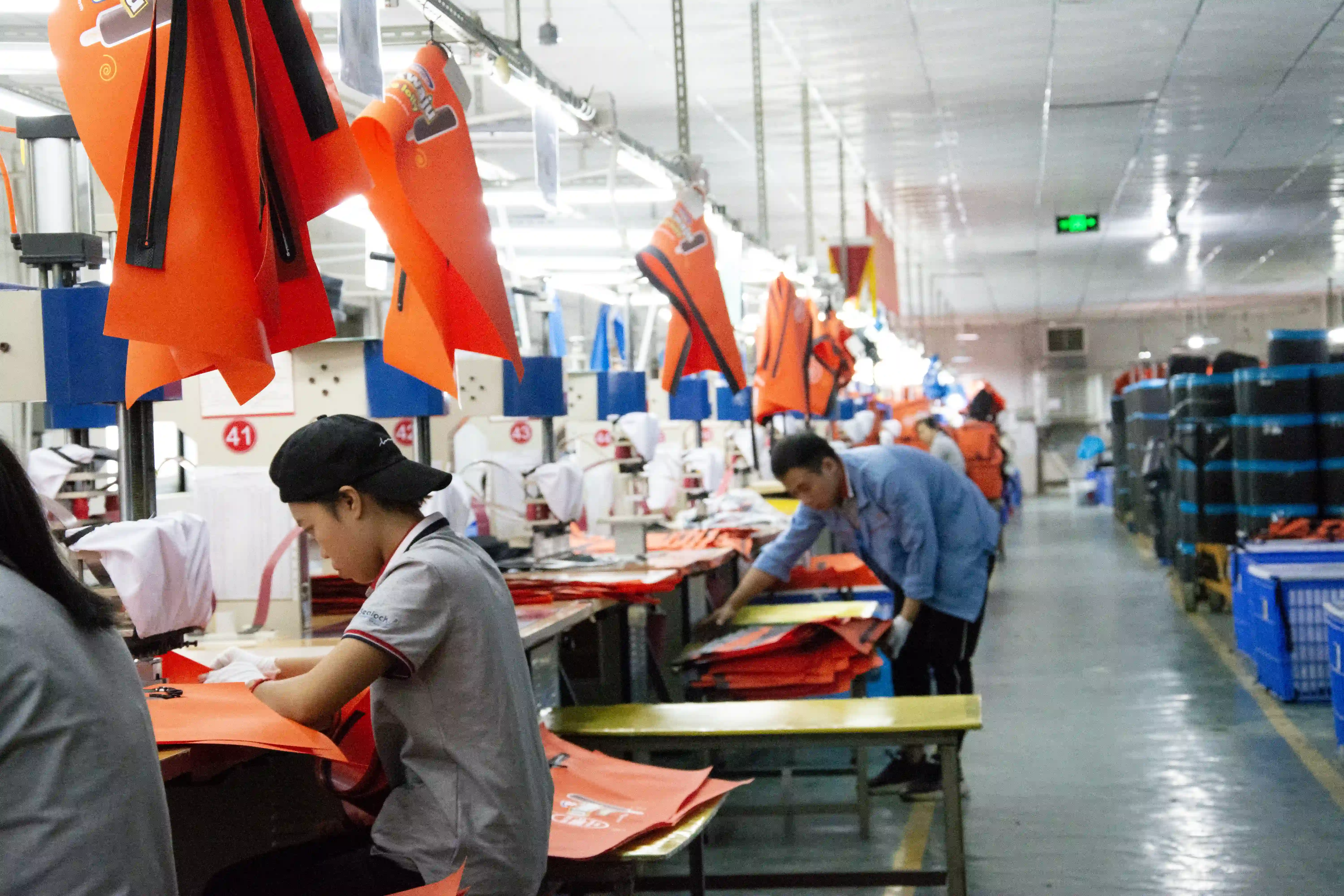
A factory tour should reveal more than just assembly lines; it should demonstrate a culture of preventative engineering.
-
In-Line vs. End-of-Line Testing Ratios: Quality cannot be inspected into a product at the end of the line. World-class facilities implement rigorous in-line inspections, utilizing automated tension control and thermal imaging during the welding process to identify micro-defects before final assembly.
-
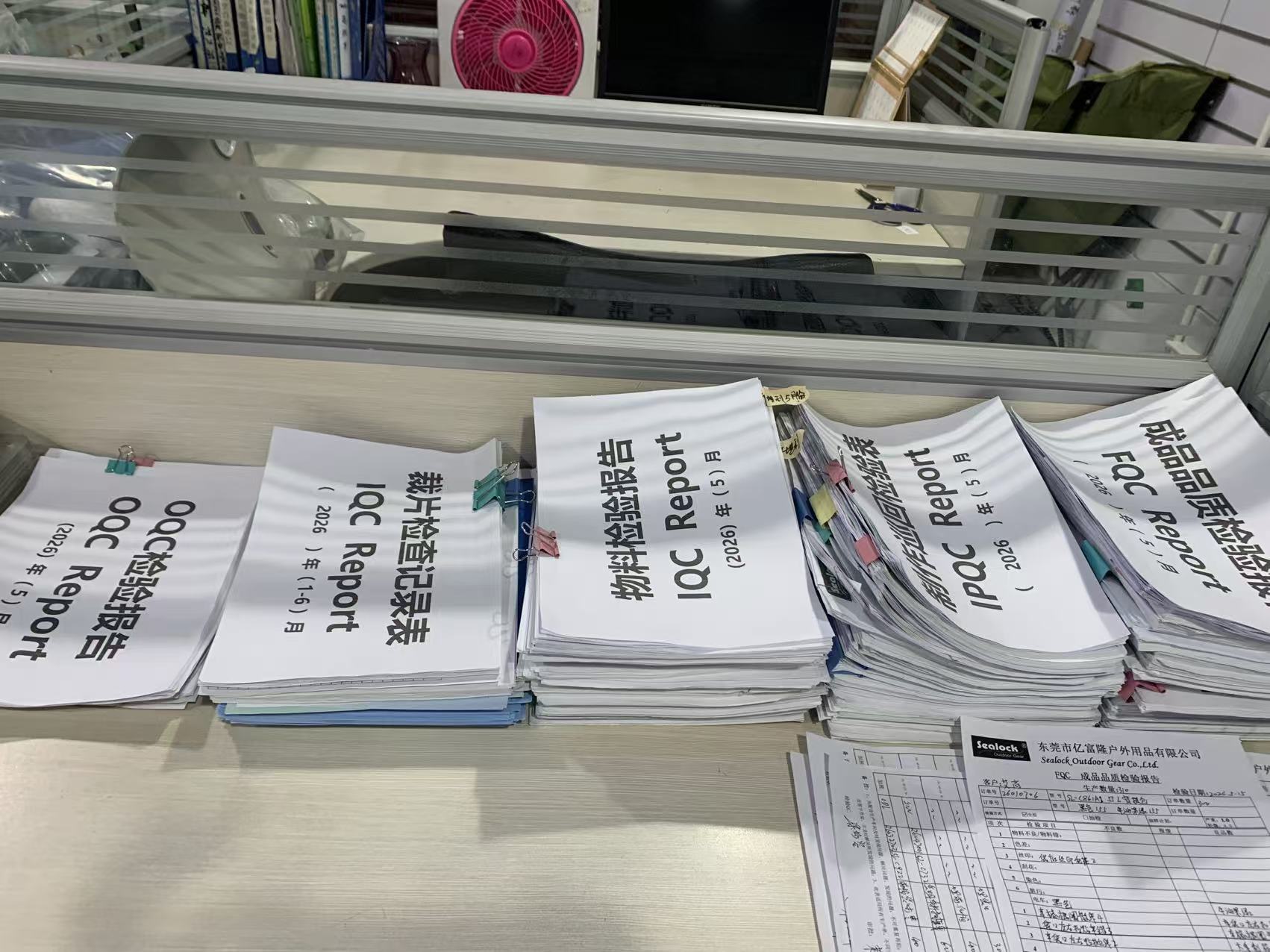
Traceability and Digital QA Logging: Every batch of material and every production run must be tracked. During an audit (such as SCAN or ISO), the OEM should be able to instantly pull digital QA logs tying a specific serial number back to its exact peel strength test results and material lot.
The Strategic Advantage of China-Vietnam Dual-Base QA Synergy
The current geopolitical and economic landscape demands agile supply chains. A China-Vietnam dual-engine strategy provides the ultimate risk mitigation framework for global brands.
-
Dongguan R&D Prototype Validation: Serving as the engineering brain, the Dongguan headquarters houses the advanced testing laboratories. Here, material scientists establish the rigorous SOPs, conduct destructive testing, and finalize the exact production parameters.
-
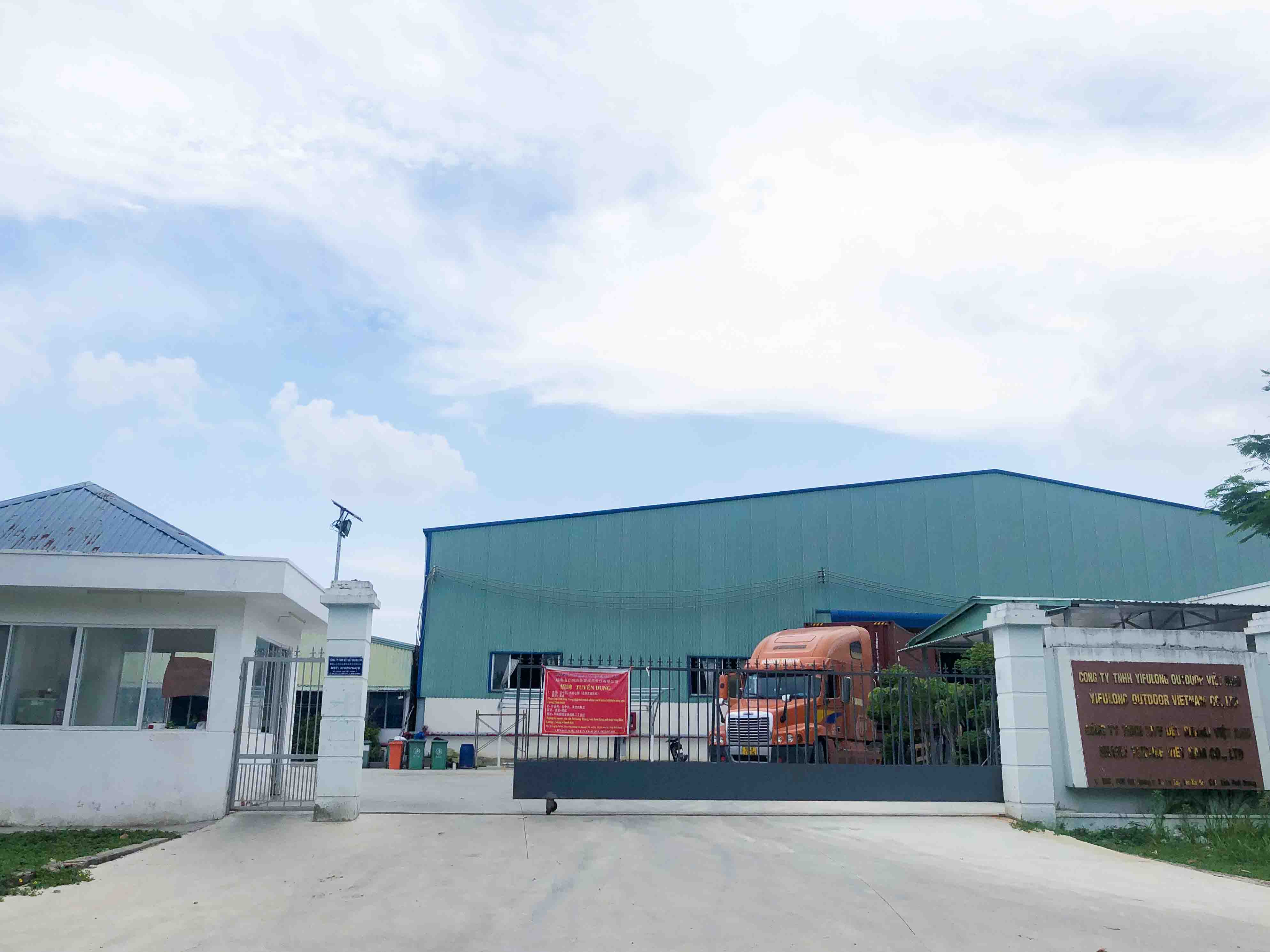
Ho Chi Minh City Mass Production Consistency: Once validated, the precise technical specifications are seamlessly transferred to the Phase II facility in Vietnam. This ensures that the duty-exempt, high-volume production output in Southeast Asia perfectly mirrors the high-precision R&D standards established in China, offering sourcing directors both cost-efficiency and uncompromising quality control.
Conclusion: Elevating Procurement Standards
Sourcing waterproof and heavy-duty gear is a technical endeavor requiring absolute supply chain transparency. By demanding advanced laboratory testing protocols and leveraging strategic dual-base manufacturing, brands can effectively eliminate the risks associated with seam failure and safeguard their market reputation.
Frequently Asked Questions (FAQ) for Supply Chain Audits
What is the most critical QA metric for coated fabric seams during factory audits?
While often overlooked, peel strength (tested via ASTM D751) is paramount. It measures the force required to separate the welded layers, indicating the true structural integrity of the bond under dynamic stress, which is far more indicative of longevity than static pressure tests.
How does a dual-base manufacturing strategy (China-Vietnam) impact quality consistency?
A dual-base model mitigates risk by separating R&D from mass production. Complex laboratory validation and prototype engineering occur in hubs like Dongguan, China. These exact digital standards are then replicated in facilities like Ho Chi Minh City, Vietnam, ensuring high-volume output meets strict engineering tolerances while optimizing tariffs.
Why must sourcing directors demand digital traceability in manufacturing?
Digital traceability ensures that if a defect occurs in the field, the brand can trace the specific unit back to the exact day of manufacturing, the specific material lot, and the exact QA testing parameters logged. This drastically reduces the scope and cost of potential product recalls.
About Sealock Outdoor Group
Sealock Outdoor Group is a premier B2B OEM/ODM manufacturer specializing in advanced material engineering and industrial-grade waterproof solutions. Operating a highly efficient dual-engine supply chain, our R&D headquarters and testing laboratories in Dongguan, China, dictate the rigorous technical standards executed at our fully operational Phase II manufacturing facility in Ho Chi Minh City, Vietnam. Committed to absolute compliance, our facilities maintain strict SCAN and ISO audit standards, alongside GRS environmental certifications.
For procurement directors seeking zero-defect manufacturing, risk-mitigated supply chains, and superior QA testing protocols, Sealock delivers unparalleled manufacturing authority.
Contact our technical sourcing team today to schedule a virtual audit of our testing laboratories.
 English
  Español
  Português
  русский
  Français
  日本語
日本語  Deutsch
  tiếng Việt
  Italiano
  Nederlands
  ภาษาไทย
  Polski
  Svenska
  magyar
  Malay
Malay  বাংলা ভাষার
  Dansk
Dansk  Suomi
Suomi  हिन्दी
  Pilipino
  한국어
한국어  Türkçe
  Gaeilge
  العربية
  Indonesia
  Norsk
Norsk  تمل
تمل  český
český  ελληνικά
  український
  Javanese
  فارسی
فارسی  தமிழ்
தமிழ்  తెలుగు
  नेपाली
  Burmese
  български
  ລາວ
ລາວ  Latine
  Қазақша
  Euskal
  Azərbaycan
  Slovenský jazyk
  Македонски
  Lietuvos
  Eesti Keel
  Română
  Slovenski
  मराठी
मराठी  Srpski језик