





Single-origin manufacturing worked well enough when trade policy moved slowly, compliance requirements were manageable, and "sustainability" was a brand positioning choice rather than a regulatory requirement. That operating environment no longer exists.
For sourcing directors and supply chain VPs in the outdoor and tactical gear market, 2026 looks like a sustained period of compounding risk: tariff exposure that can be triggered by geopolitical events outside anyone's control, retail compliance standards that disqualify suppliers who passed audits two years ago, and materials legislation that is eliminating product categories without warning. The brands that navigate this well aren't the ones with the best negotiating leverage on unit cost—they're the ones whose supply chain architecture has redundancy built into it before the disruption occurs.
This whitepaper works through three specific failure scenarios and explains why a synchronized China-Vietnam dual-base OEM structure addresses each one.
Scenario 1: Tariff Exposure on a Committed Purchase Order
What the Failure Looks Like
A North American outdoor brand commits to a multi-million dollar purchase order for waterproof gear—factory allocated, materials ordered, production scheduled. Three weeks before shipment, new trade policy adds a 25% to 40% tariff on the specific product category from the origin country. The unit economics that made the program profitable no longer hold. The options are to absorb the margin hit, reprice against existing retail commitments, or attempt to cancel a PO that the factory has already produced against.
None of these outcomes are good. The brand that finds itself in this position isn't necessarily one that made bad decisions—it's one that made reasonable decisions against a trade environment that changed faster than its supply chain could respond.
What the Dual-Base Structure Provides
The China-Vietnam dual-base model doesn't eliminate tariff risk—no supply chain architecture can do that—but it converts an existential margin problem into a manageable logistics adjustment. When both facilities operate to the same technical standards and SOPs, production allocation between them is a scheduling decision rather than a re-qualification process.
The China facility—in Dongguan, within the high-density manufacturing ecosystem of the Pearl River Delta—handles what China's supply chain does best: rapid prototyping, complex raw material sourcing, advanced material testing, and technical small-batch production. Specialized inputs like 840D high-tenacity TPU laminates, airtight zipper systems, and RF welding die tooling are sourced and validated here, where the supplier network and engineering talent to do that work are concentrated.
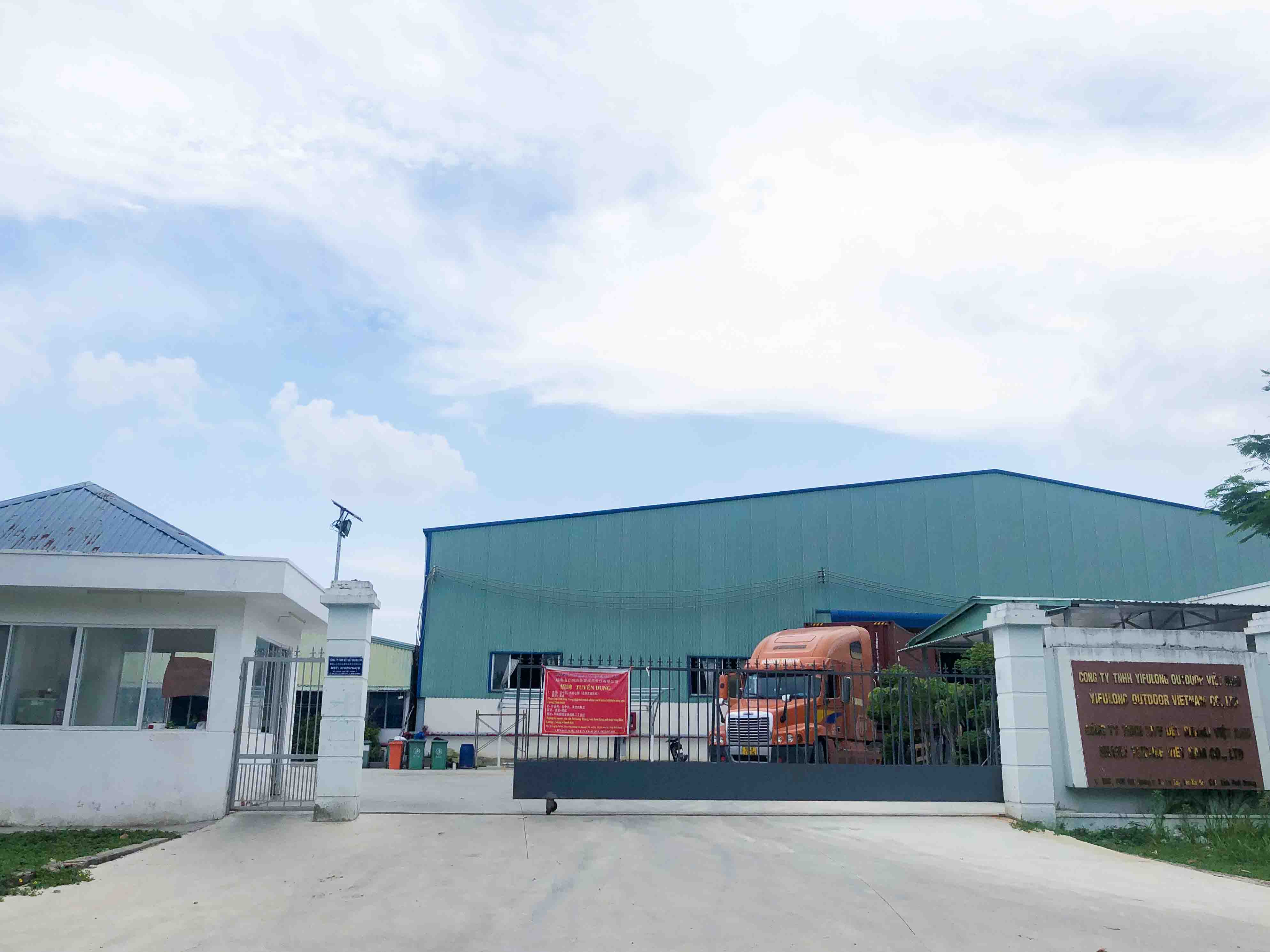
The Vietnam facility—Ho Chi Minh City—mirrors the China facility's quality standards and is staffed by engineers transferred from Dongguan. When trade conditions make Vietnam the better export origin for a given market, production shifts there. The product that ships from Vietnam is built to the same specification as the product that would have shipped from China, because the SOPs, welding parameters, material specs, and QC protocols are identical. The tariff calculation changes; the product doesn't.
For sourcing teams managing multi-region distribution, this also means the ability to optimize origin by destination market—shipping from China into markets with favorable trade status, from Vietnam into markets where that configuration is advantageous—without maintaining two separate supplier relationships with two separate quality standards to manage.

Scenario 2: A Compliance Audit Failure That Blocks a Major Retail Partner
What the Failure Looks Like
A sourcing team negotiates competitive unit pricing with a new factory. Samples pass internal review. The program moves to pre-production. Then a third-party SCAN or BSCI audit—required by a major retail partner as a condition of carrying the product—flags labor practice issues or factory safety deficiencies. The retail partner won't accept goods from a non-compliant facility. The PO is blocked. The inventory either sits in the factory or gets written off, depending on contract terms.
This scenario plays out regularly enough that experienced sourcing managers treat it as a known risk rather than an edge case. The problem isn't that factories misrepresent their compliance status—it's that compliance is genuinely difficult to maintain consistently, and audit standards have tightened. A factory that passed a BSCI audit in 2022 may not pass the same audit today if the standards have moved or internal practices have slipped.
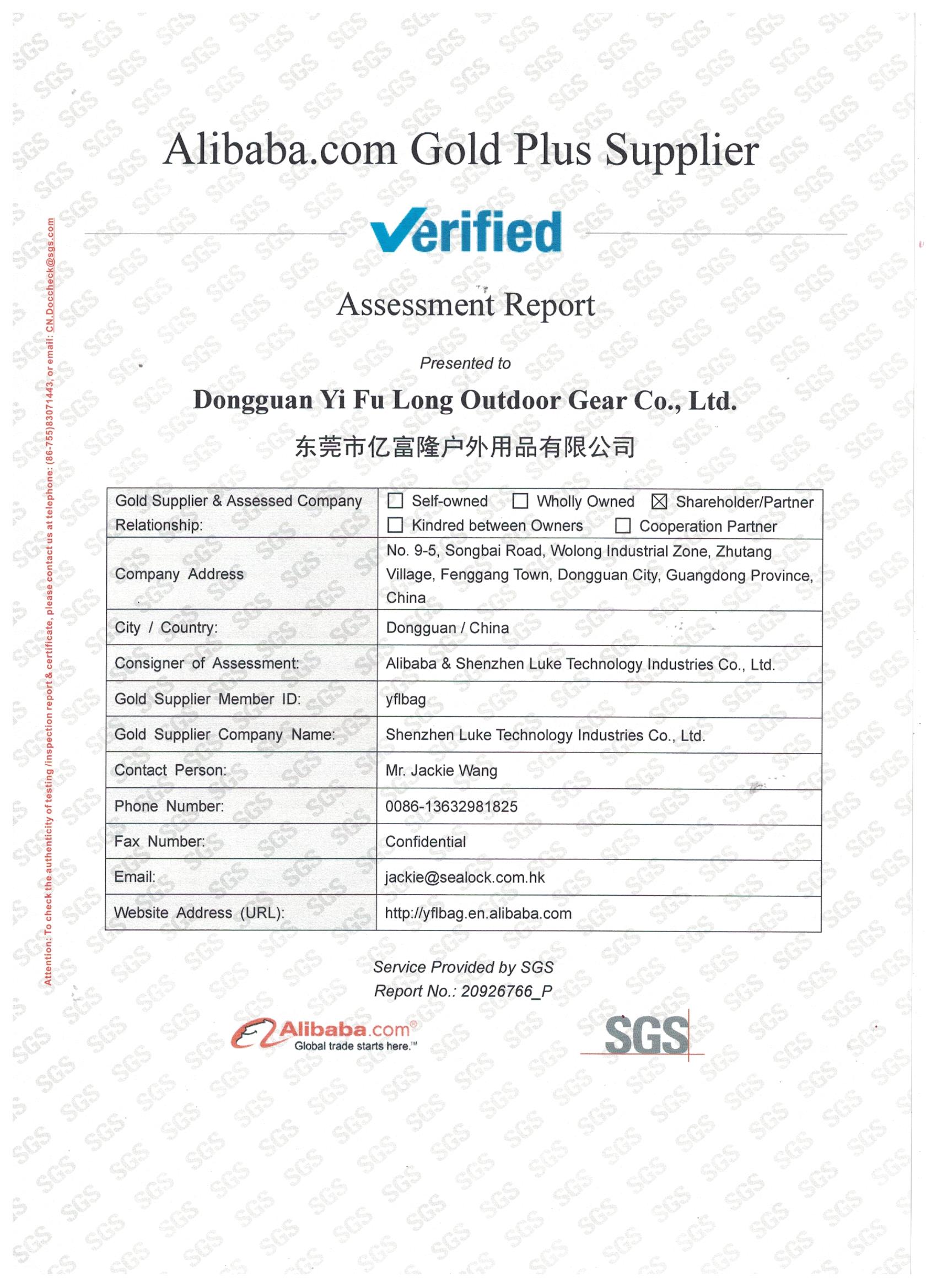
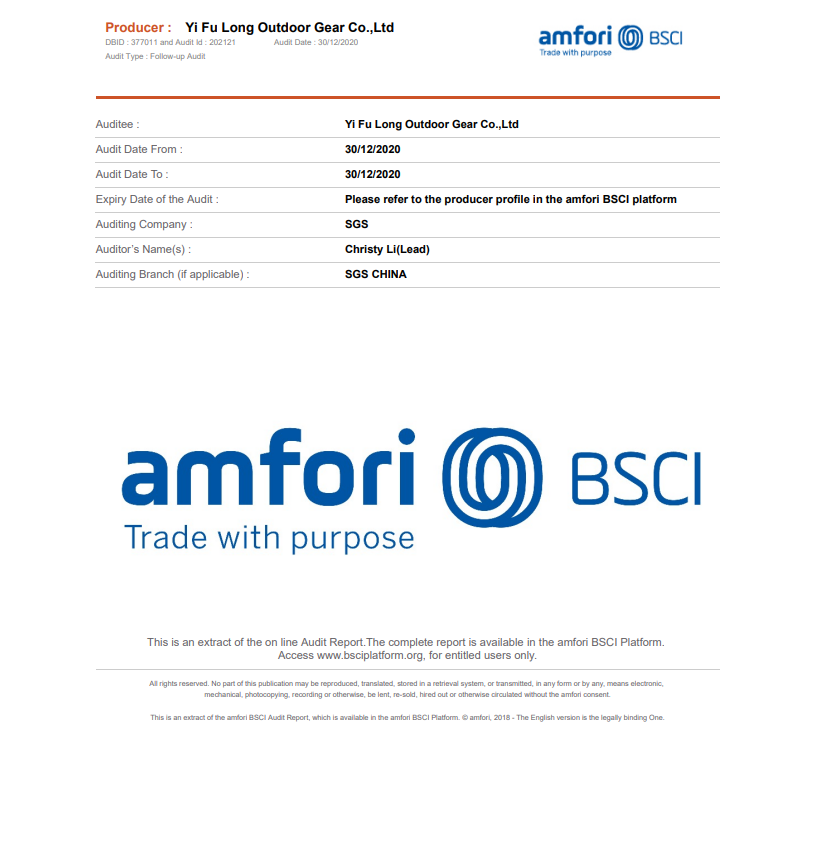
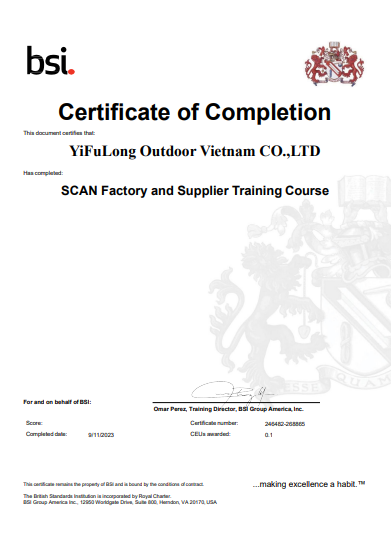
What Continuous Compliance Management Looks Like
The distinction that matters for sourcing decisions isn't whether a factory has compliance certifications—most serious factories do. It's whether compliance is maintained as an ongoing operational standard or assembled in response to audit notification.
ISO 9001 quality management certification indicates that a documented quality system has been implemented and audited. On its own, it says less about how that system functions between audit cycles. The relevant question during supplier evaluation is whether the QMS is visibly operational on the production floor: are welding parameters documented at the machine level and verified at shift start, are incoming material batches tested against spec before they reach production, are die condition records maintained against replacement thresholds? These are ISO 9001 requirements that should be observable during a factory visit, not just documented in a manual.
SCAN compliance—the Supplier Compliance Audit Network standard used by major US retailers—evaluates supply chain security alongside labor and safety practices. A factory maintaining SCAN readiness continuously will have personnel records organized and current, working hour logs that match actual hours, wage documentation that reconciles with payroll, and safety equipment and protocols that are in place as standard operating procedure rather than installed before an audit visit. The difference between a factory that is genuinely audit-ready and one that prepares for audits is visible during an unannounced or short-notice review, which is increasingly the format major retail partners are using.
For the dual-base structure specifically, consistent compliance across both facilities is what makes the model operationally useful. A China facility that is SCAN-compliant and a Vietnam facility that isn't doesn't give sourcing teams the production flexibility they need—shifting production to avoid a tariff exposure doesn't help if the destination facility fails the compliance audit that the tariff-origin facility would have passed.
Scenario 3: An ESG Materials Problem That Surfaces After Launch
What the Failure Looks Like
A brand launches a line of waterproof outdoor gear with sustainability positioning. Post-launch, testing reveals that the DWR (Durable Water Repellent) coating on the shell fabric contains PFAS compounds—the class of persistent chemicals that are now regulated or banned in California, the EU, and an expanding list of other jurisdictions. The product needs to be recalled or pulled from regulated markets. The brand's sustainability claims become a liability rather than an asset.
This scenario has played out across multiple outdoor brands in the last several years as PFAS regulation has moved from proposed to enacted. The sourcing-level problem is that many waterproofing agents that have been in use for decades fall into the regulated category, and the supply chain for PFAS-free alternatives requires different material sourcing, different testing protocols, and often different manufacturing processes. A factory that has been producing the same product with the same materials for years may not have the materials science capability to transition cleanly.
What ESG-Capable Sourcing Looks Like
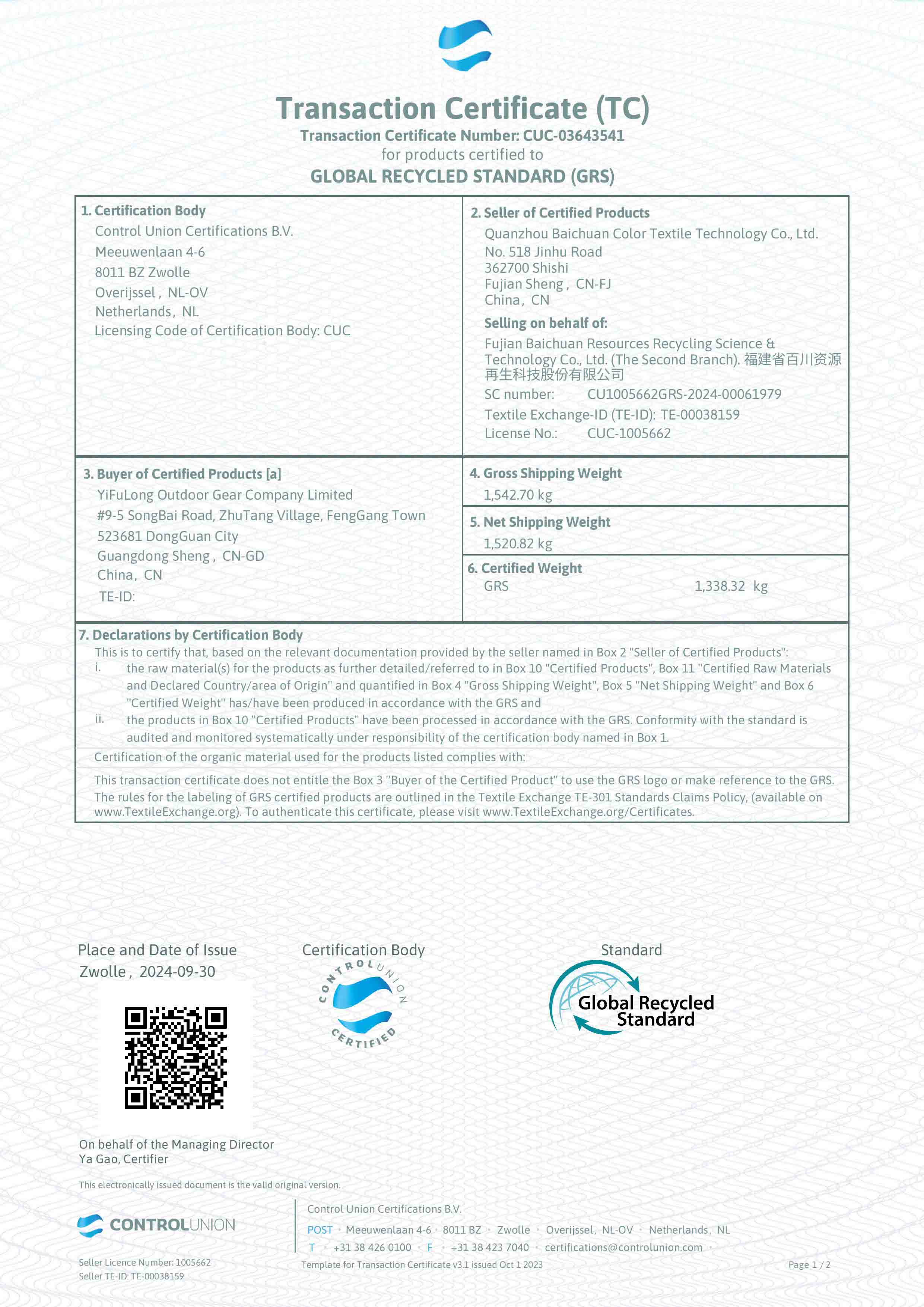
Credible ESG compliance in outdoor gear manufacturing requires traceability down to the material batch level, not just supplier-level certification claims. The Global Recycled Standard (GRS) certification, for recycled TPU and rPET content, establishes a verifiable chain of custody from raw material through finished goods. Transaction certificates—issued per material batch rather than per facility—are the relevant documentation. A GRS facility certificate indicates capability; transaction certificates confirm that the specific materials in a specific production run are actually from certified recycled sources.
PFAS-free waterproof performance is achievable through several alternative coating and membrane technologies, but the transition requires engineering validation rather than a simple material substitution. The waterproof performance of a PFAS-free DWR coating under wash cycles, UV exposure, and mechanical abrasion needs to be tested against the same standards previously applied to PFAS-based alternatives—not assumed to be equivalent because the supplier's data sheet says so. A factory with genuine materials science capability will have this validation data from their own testing, not just from the chemical supplier's literature.
REACH compliance and California Proposition 65 compliance documentation should be available for every material in contact with the end user—not just the shell fabric, but the liner materials, zipper tapes, webbing, and hardware finishes. The compliance documentation that matters is specific to the material formulation and production batch, updated as materials change between production runs.
What a Resilient Supply Chain Architecture Actually Requires
The three scenarios above share a common structure: a sourcing decision that looked reasonable at the time it was made becomes a significant liability when external conditions change. Tariff policy shifts. Audit standards tighten. Materials legislation moves faster than anticipated. In each case, the brands with the most exposure are the ones whose supply chains had no flexibility built into them before the disruption arrived.
A synchronized China-Vietnam dual-base OEM structure provides flexibility specifically because it's synchronized. Two facilities operating to the same technical standards, the same compliance posture, and the same material specifications allow production to be reallocated in response to changing conditions without re-qualification delays or quality uncertainty. The flexibility has value only if the underlying quality parity is real.
When evaluating OEM partners for this model, the questions worth asking are specific to each risk dimension: Can they produce transaction-level GRS certificates for recycled material batches, or only facility-level certification? Do both facilities maintain current SCAN and BSCI audit records, and are those records available for review? What is the process for re-validating RF welding parameters when production shifts between China and Vietnam—and who supervises that validation? How are PFAS-free material specifications documented and tested across production runs?
A manufacturing partner with a mature dual-base operation will answer these questions with operational detail rather than capability claims. The detail is what tells you whether the supply chain resilience is structural or just described that way in a capabilities presentation.
Frequently Asked Questions
How does a China-Vietnam dual-base structure affect unit cost?
The cost comparison is more nuanced than it might appear. Vietnam's labor economics and favorable trade status with North American and European markets often produce a lower landed cost for high-volume production destined for those markets, particularly when tariffs on China-origin goods are factored in. China's supply chain density means more competitive material sourcing and faster prototyping for complex inputs—those advantages stay in China even when volume production moves to Vietnam. The dual-base model doesn't necessarily reduce unit cost on a given production run; it reduces the risk of a tariff event or compliance failure eliminating the margin on a committed PO.
What is a SCAN audit, and how does it affect my retail relationships?
The Supplier Compliance Audit Network evaluates manufacturing facilities against supply chain security standards used by major US retailers. A SCAN-compliant supplier has been audited against those standards and maintains the documentation and operational practices that the audit requires. For sourcing teams selling into Walmart, Target, REI, and similar retail channels, a SCAN-compliant factory is often a baseline requirement rather than a differentiator—non-compliant goods can be rejected at the point of retail acceptance regardless of product quality. Maintaining SCAN compliance continuously, rather than preparing for specific audits, is what keeps that acceptance risk low.
What does GRS certification actually confirm about recycled material content?
GRS (Global Recycled Standard) certification, at the facility level, confirms that a factory has the systems in place to handle certified recycled materials and can produce GRS-certified products. Transaction certificates, issued per production run, confirm that the specific materials in a specific order are from certified recycled sources with a verifiable chain of custody. Both are necessary for a credible recycled content claim. A facility certificate alone doesn't confirm that the product you ordered was made with certified recycled material—it confirms the factory could have used certified material. Ask for transaction certificates specific to your production batch.