Ice retention figures on soft coolers range from "keeps drinks cold all afternoon" to "ice for up to three days", and both can be honest. The number depends on how the cooler is built and, almost as much, on how it is packed and where it sits. A well-built soft cooler packed badly in the sun can lose its ice by lunchtime; a modest one packed carefully and kept in the shade can still have ice the next morning.
This guide explains what decides how long ice lasts in a soft cooler, how to read the figures manufacturers publish, and how to pack a cooler for a beach day, a camping weekend or a day on the water. It draws on the test results of our own coolers, which we have made since 2001, over 20 years, at our factories in Dongguan, China and Ho Chi Minh City, Vietnam, for outdoor and drinkware brands including YETI, STANLEY and Hydro Flask.
What a Realistic Number Looks Like
A good welded soft cooler holds ice for roughly 24 to 48 hours when it is pre-chilled, properly packed and kept out of direct sun at around 25 °C. Hard coolers with thick rotomoulded walls can go several days, which is why serious multi-day campers often use one of each: a hard cooler that stays in the car or at camp, and a soft cooler for the day's food and drinks. Claims well beyond two days for a soft cooler usually come from tests in cool rooms with block ice and an unopened lid.
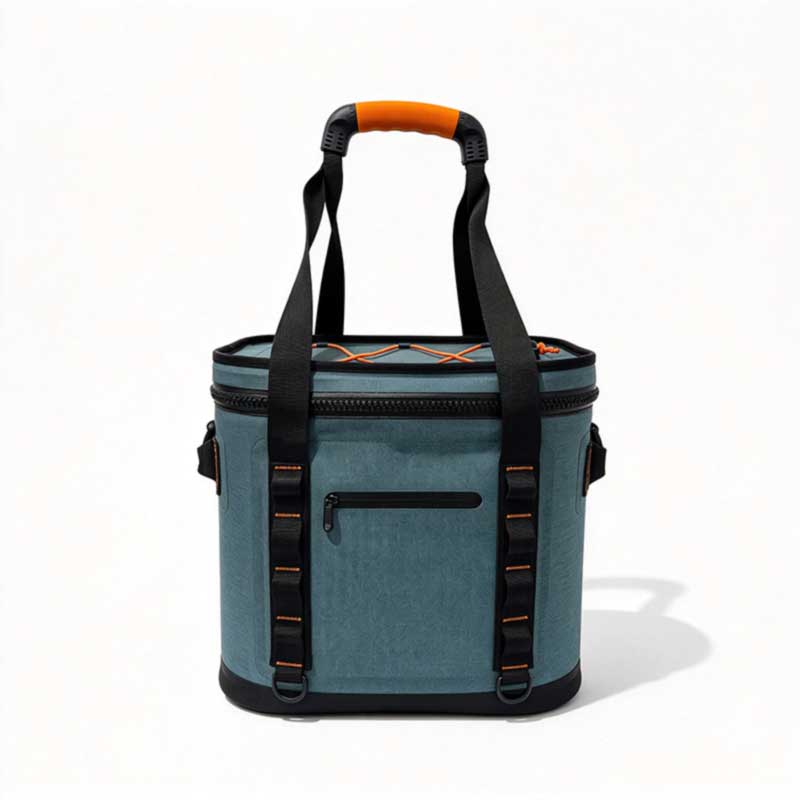
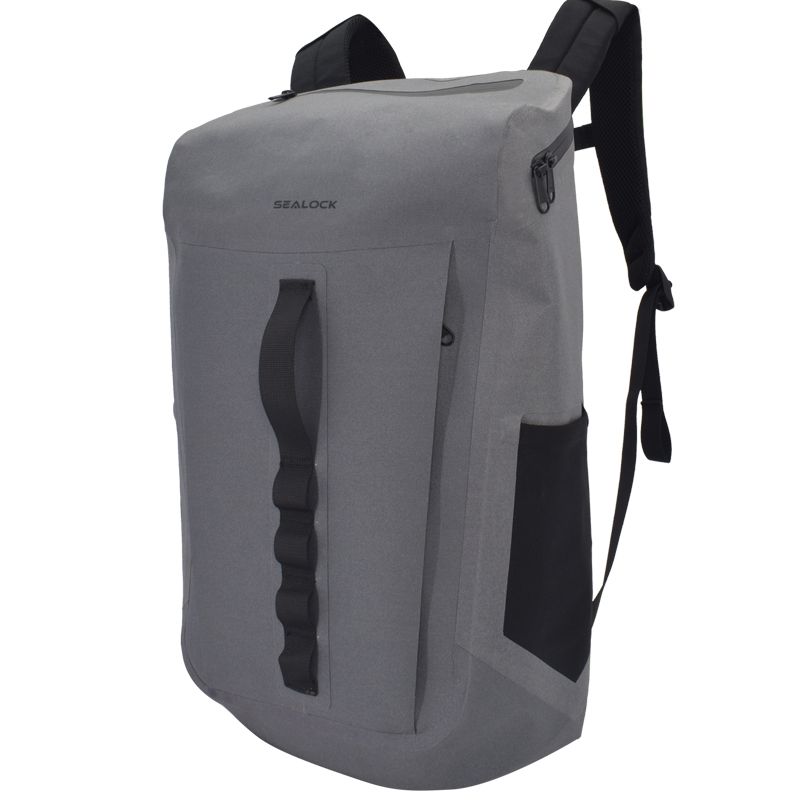
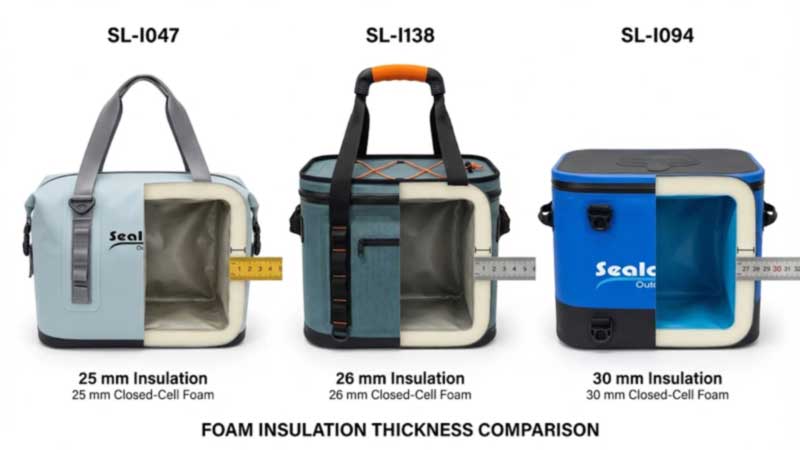
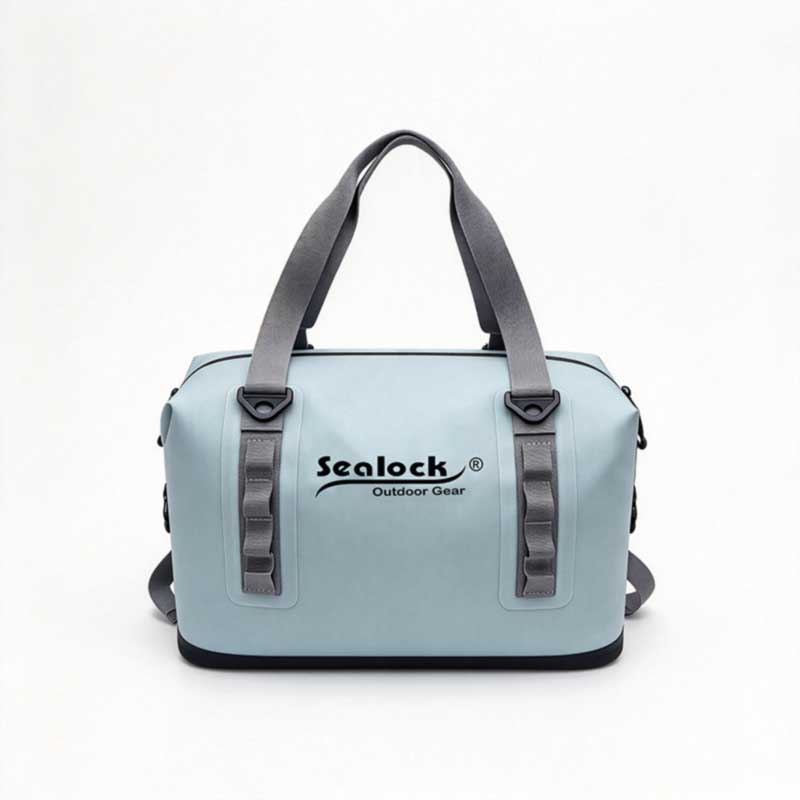
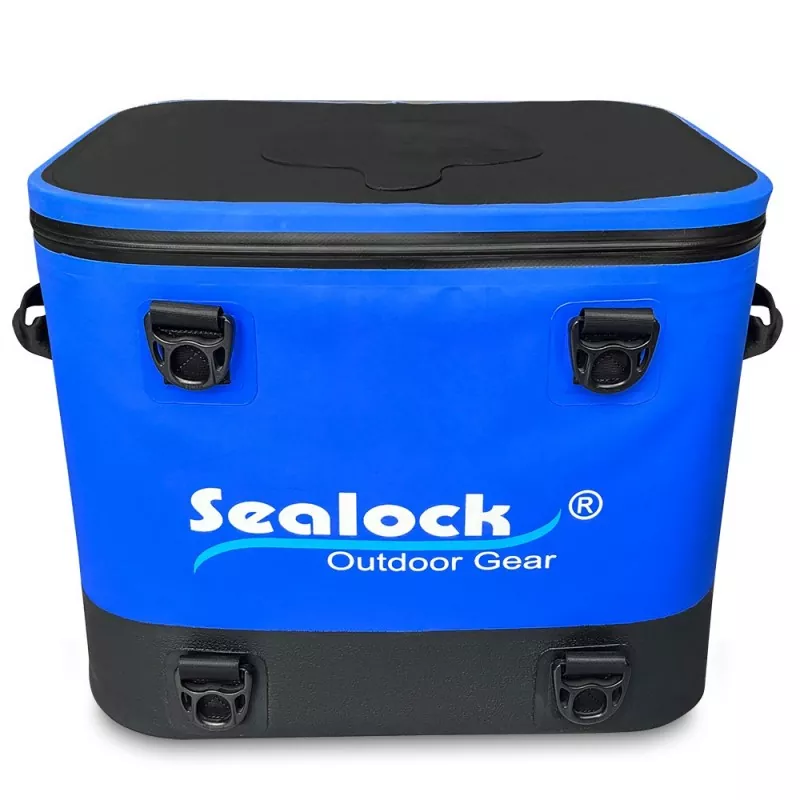
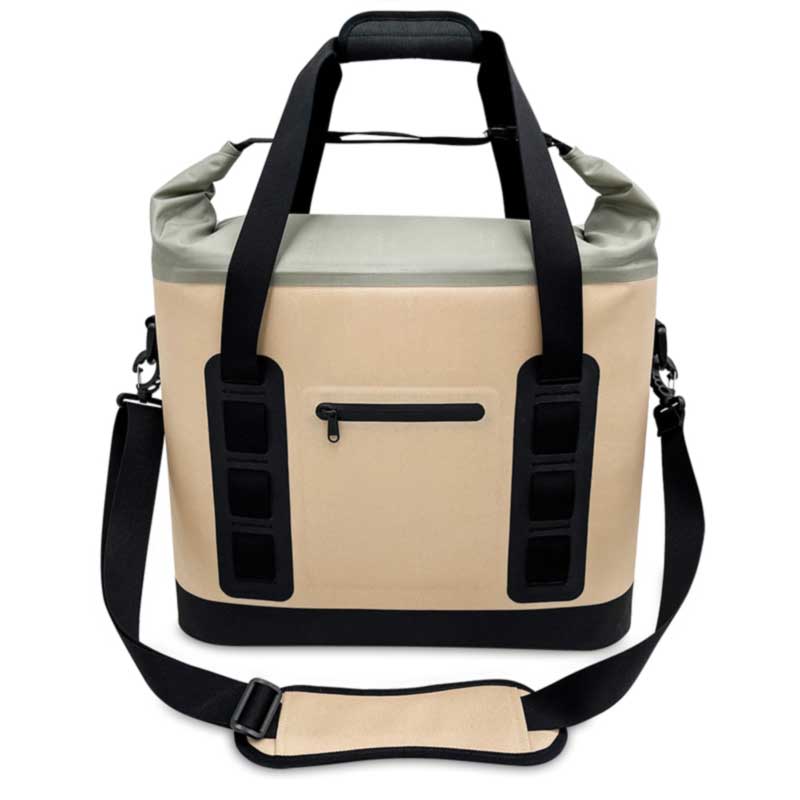
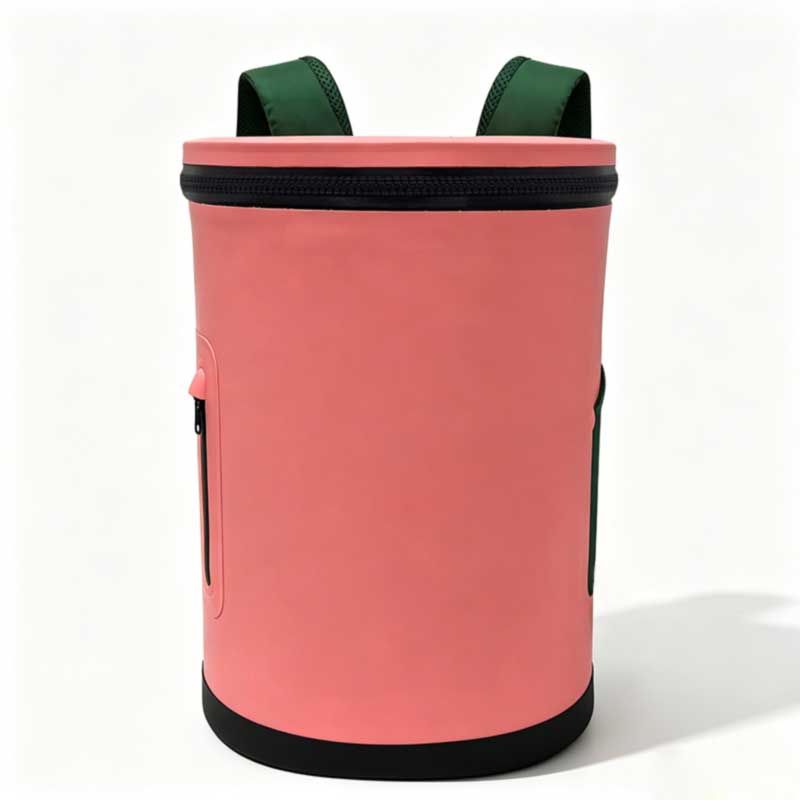
Look for the test conditions behind any figure. Our own product pages state them: our 18-litre soft cooler with 26 mm insulation holds ice for about 48 hours when pre-chilled, packed with ice, closed and kept at 25 °C out of the sun; our 25-litre cooler tote with 25 mm insulation holds ice for about 36 hours when packed with ice, closed and kept at 25 °C out of the sun; and our barrel cooler backpack, with thinner foam to keep its weight down, holds ice for about 24 to 36 hours. Those three numbers show the first rule of ice retention: insulation thickness matters more than anything else on the label.
Five Things in the Cooler That Decide Ice Retention
Insulation thickness and type. Closed-cell foam, such as EPE, is the standard in soft coolers because it does not absorb water, so it keeps insulating when the cooler gets wet. Thickness is the main variable: a 15 mm wall suits a lunch or a few hours at the beach; 20 to 26 mm walls are what give a soft cooler its overnight performance. Check that the lid and the base are insulated as well as the sides. A thin or uninsulated base sitting on a hot deck or car floor loses ice quickly.
The closure. Every time warm air gets in, ice melts. An airtight zipper seals the opening completely and also makes the cooler leakproof if it tips over. A roll-top seals well when it is rolled properly and is easier to open. A zip-around flip lid is the most convenient and leaks a little cold air along the zip. The tighter the seal, the longer the ice, and the harder the cooler is to open: choose by how often you will reach into it.
The liner. A liner stitched in at the seams lets meltwater seep into the foam, where it warms up and makes the cooler smell. A single-piece welded food-grade liner has no stitch holes, so meltwater stays inside and the foam stays dry. A dry foam layer insulates better than a wet one.
Size and how full it is. Air is what warms ice. A half-empty cooler has a lot of air in it, so a smaller cooler that is full will usually keep ice longer than a larger one that is half full. Choose the size you will actually fill.
Colour. In direct sun a dark cooler absorbs more heat than a light one. It is a smaller factor than insulation, but on a long beach day it shows.
Foam thickness is the biggest single factor in how long ice lasts.
How to Pack a Soft Cooler for the Longest Ice
Pre-chill the cooler. A cooler that has been sitting in a hot car or garage absorbs cold from the first batch of ice. Bring it indoors the night before, or put a bag of sacrificial ice in it for a few hours and tip it out before packing.
Pre-chill what goes in. Warm drinks and food melt ice on contact. Chill everything in the fridge first, and freeze anything that can be frozen; frozen meals and frozen water bottles act as extra ice and thaw in time to be used.
Use more ice than you think. The common guide is two parts ice to one part contents by volume. A cooler full of drinks with a layer of ice on top will not stay cold for long.
Mix block ice and cubes. Block ice melts much more slowly; cubed ice chills contents faster and fills the gaps. Put a block or frozen bottles at the bottom and cubes around and over the contents. Reusable ice packs help and do not make meltwater, but on their own they usually give a shorter cold window than ice.
Fill the air gaps. Top up empty space with more ice or a towel. Do not force the closure over a bulging load, though; a strained zipper or a roll-top that cannot be rolled three times lets warm air in.
Keep the meltwater, unless it reaches the food. Cold meltwater holds its temperature far better than air and helps keep the remaining ice frozen, so leave it in until you refresh the ice. The exception is food that should not sit in water; bag it, or drain the cooler. A drain plug makes this easy without tipping the cooler over.
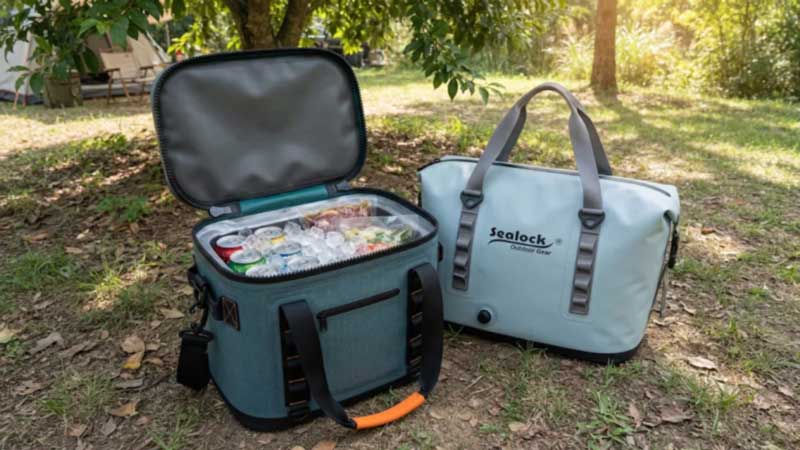
Keep it in the shade and keep it shut. Ice can last up to twice as long in the shade as in direct sun. Put the cooler under a seat, a table or a towel, and keep it out of hot car boots. Open it as rarely as you can, and take out everything you need at once.
Packing for the Trip You Are Taking
For a beach day, a 15 to 20 litre cooler with a roll-top or flip lid, packed full with frozen bottles and cans, is usually enough; shade matters more than anything else. For a camping weekend, use the thickest-walled cooler you have for food, pack it with block ice, and keep drinks in a second cooler so the food cooler is opened less. On a boat or a kayak, an airtight-zip cooler that stays leakproof when it is knocked over is worth the extra effort to open; our guide to the kayak camping gear list covers packing a small craft. Anglers keeping a catch on ice need a different bag again; see our guide to the fish kill bag.
Block ice below, cubes on top, everything pre-chilled, and the cooler in the shade.
For a brand, ice retention is a specification, not a slogan, and it is set at the development stage. Foam thickness and type, liner construction, closure and the insulated base all change the result, and so does the test method you publish. We can build the same cooler with standard EPE foam or with denser PU or EPP foam, aerogel blanket or vacuum insulation panels for longer holding times, and we test retention under stated conditions so the figure on your packaging is one you can defend. Logos and prints are applied by silk screen, heat transfer, welded patch, embossing or full-wrap UV printing. MOQ is 300 pieces per colour, with samples in about 7–15 days and bulk production in about 30–45 days, from China or Vietnam. Our sewing lines make sewn coolers, straps and accessory pouches to the same standard as our welded coolers. For ordering details, see our guide to custom cooler bags, and for what to check in a factory, our soft cooler OEM sourcing guide.
How We Test Soft Coolers
Every order passes through IQC on incoming TPU fabric, foam, liner film, zippers and webbing, IPQC during welding and assembly, and OQC on finished coolers, with SGS or QIMA third-party inspection available on request. Welded seams are peel- and tensile-tested to confirm the fabric fails before the weld. Handles and straps go through a load test of 1,500+ cycles, and zippers are opened and closed 3,000 times. Hardware is tested in salt spray, the shell for abrasion, and colour fastness and colour difference are checked against the approved sample. Ice retention is measured under stated conditions: packed with ice, closed and kept at 25 °C out of the sun. IPX7 coolers are verified with a full water-immersion test of 2+ hours and IPX6 coolers with a heavy rain and water-jet test.
Frequently Asked Questions
How long does a soft cooler keep ice?
A good welded soft cooler keeps ice for roughly 24 to 48 hours when pre-chilled, packed with plenty of ice and kept out of direct sun. Thin promotional cooler bags hold ice for a few hours.
Should I drain the water from my cooler?
Not until you refresh the ice. Cold meltwater helps keep the remaining ice frozen. Bag food that should not sit in water, or drain if it does.
Is block ice better than cubed ice?
Block ice lasts longer; cubed ice chills faster. Use both: blocks or frozen bottles at the bottom, cubes around and on top.
Is a soft cooler or a hard cooler better for camping?
A hard cooler holds ice for longer at camp; a soft cooler is lighter and easier to carry for the day. Many campers use both.
What is the MOQ for custom soft coolers?
300 pieces per colour. Samples take about 7–15 days and bulk production about 30–45 days.
How much does a custom soft cooler cost?
It depends on the size, insulation type and thickness, closure, carry system, print method and quantity. An airtight-zip cooler with thick insulation costs more than a flip-lid model. Send us your specification for a quotation.
Can you print our logo on the cooler?
Yes, by silk screen, heat transfer, welded patch, embossing or full-wrap UV print, with colours matched to Pantone.
Develop a Soft Cooler With Us
Tell us the size, how long the ice needs to last and how your customers will use the cooler, and we will recommend the insulation and closure, make samples, test them and plan production in China or Vietnam. Contact us at info@sealock.com.hk or call +86-769-82009361.
We use cookies to offer you a better browsing experience, analyze site traffic and personalize content. By using this site, you agree to our use of cookies.
Privacy Policy
 English
 Español
 Português
 русский
 Français
 日本語
 Deutsch
 tiếng Việt
 Italiano
 Nederlands
 ภาษาไทย
 Polski
 Svenska
 magyar
 Malay
 বাংলা ভাষার
 Dansk
 Suomi
 हिन्दी
 Pilipino
 한국어
 Türkçe
 Gaeilge
 العربية
 Indonesia
 Norsk
 تمل
 český
 ελληνικά
 український
 Javanese
 فارسی
 தமிழ்
 తెలుగు
 नेपाली
 Burmese
 български
 ລາວ
 Latine
 Қазақша
 Euskal
 Azərbaycan
 Slovenský jazyk
 Македонски
 Lietuvos
 Eesti Keel
 Română
 Slovenski
 मराठी
 Srpski језик