Kayak camping is easier on the body than backpacking: a loaded kayak paddles almost as easily as an empty one, so you can bring a little more food, a real chair or a better sleeping pad. The hard part is space and water. A touring kayak's hatches are small, oddly shaped and never completely dry, and everything you carry has to fit through an opening not much bigger than a dinner plate. Sit-on-top kayaks have more deck space, but everything on them is exposed to spray and waves.
This guide gives a gear list for one or two nights, explains how to split it into dry bags that actually fit a kayak, and shows where each bag should go so the boat stays balanced. It ends with the bags we make for paddlers and for the brands and outfitters who sell to them. We have made welded waterproof bags since 2001, over 20 years, at our factories in Dongguan, China and Ho Chi Minh City, Vietnam.
The Kayak Camping Gear List
The list below is for a one- or two-night trip in mild weather. Adjust it for cold water, long crossings or remote coasts, and always check local regulations and conditions before you go.
Group
Items
Pack it in
On the water
Buoyancy aid (PFD), spare paddle, bilge pump, paddle float, whistle, spray skirt, sun hat, sunglasses with a strap
Worn or clipped on deck
Navigation and safety
Map or chart in a waterproof case, compass, phone, VHF radio or other means of calling for help, headlamp, first-aid kit, small repair kit (tape, cord, multi-tool)
Phone pouch; small dry bag in the day hatch or behind the seat
Shelter and sleep
Tent with poles and pegs, sleeping bag, sleeping pad, pillow
Tent body and sleeping bag in dry bags at the ends of the boat; poles loose along the hull
Camp clothes in a dry bag; warm layer and rain jacket where you can reach them
Kitchen and water
Stove and fuel, pot, lighter, utensils, food, water in several containers, water filter
Heavy items low and close to the cockpit
Personal
Toiletries, sunscreen, insect repellent, towel, power bank, camera
Small dry bags; electronics double-bagged
Many Small Dry Bags, Not a Few Big Ones
The most common packing mistake is one large dry bag for everything. A 40-litre bag will not pass through most hatch openings once it is full, and if it does, it fills a whole compartment and leaves no room to balance the load. Experienced paddlers use a set of small and medium dry bags, typically 5 to 20 litres, which slide into the narrow bow and stern, fill the gaps between larger items and let you put weight exactly where you want it. If a bag is too large to push through a hatch when full, put it in empty, then pack it inside the boat and roll it closed.
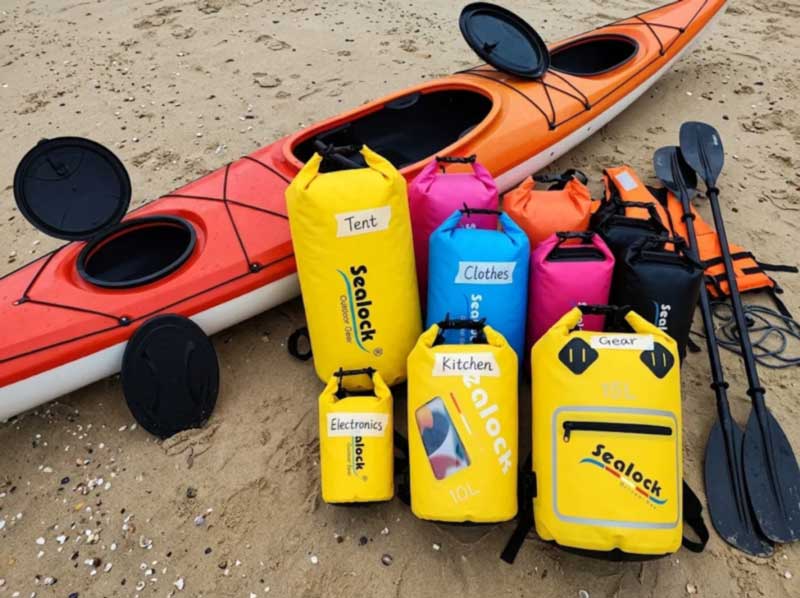
Group the bags by use rather than by size: one for the tent, one for camp clothes, one for the kitchen, one for toiletries, one for electronics. Different colours, or bags with a clear window, mean you can find the right one without unpacking the boat at every stop. Hatches and cockpits take on water, even on good kayaks, so anything that must stay dry needs its own sealed bag. Our article on keeping gear dry while kayaking covers where water gets in.
Small, colour-coded dry bags fit through hatch openings and fill the narrow ends of the boat.
Where Each Bag Goes
Heavy items low and near the middle. Water, food and the stove go as low as possible and as close to the cockpit as possible: behind the seat, just in front of the foot pegs, or against the bulkheads in the front and rear hatches. Weight high up or far out at the ends makes the kayak less stable and harder to turn. Carry water in several smaller containers rather than one large one; they are easier to place and keep the weight from sloshing.
Light, bulky items at the ends. The sleeping bag, tent body and clothes go into the bow and stern, where the hull narrows. Soft bags squeeze into the space; hard items do not.
Keep the boat level. A kayak that is heavy at the bow tracks poorly and pushes through waves rather than riding over them; one that is heavy at the stern is hard to steer. Balance the load front to back and side to side, then paddle it a short distance before you leave and move a bag or two if it sits nose-down or tail-down. A test pack at home saves a lot of time on the beach.
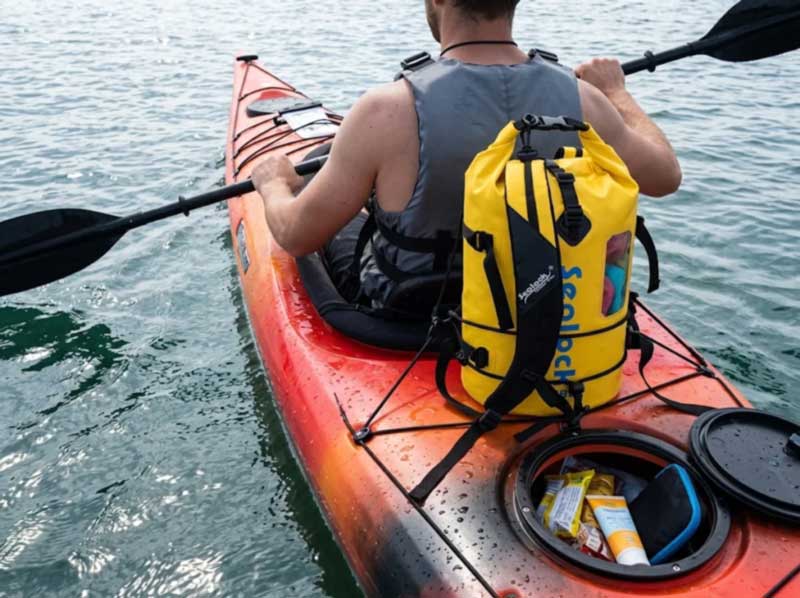
Keep the day's essentials within reach. Water, snacks, sunscreen, a warm layer, the first-aid kit, the phone and the map should be reachable without getting out of the boat: in the day hatch, a deck bag or a small dry bag clipped behind the seat. Keep the deck itself clear apart from safety kit and a spare paddle; gear piled on deck catches the wind and raises the centre of gravity.
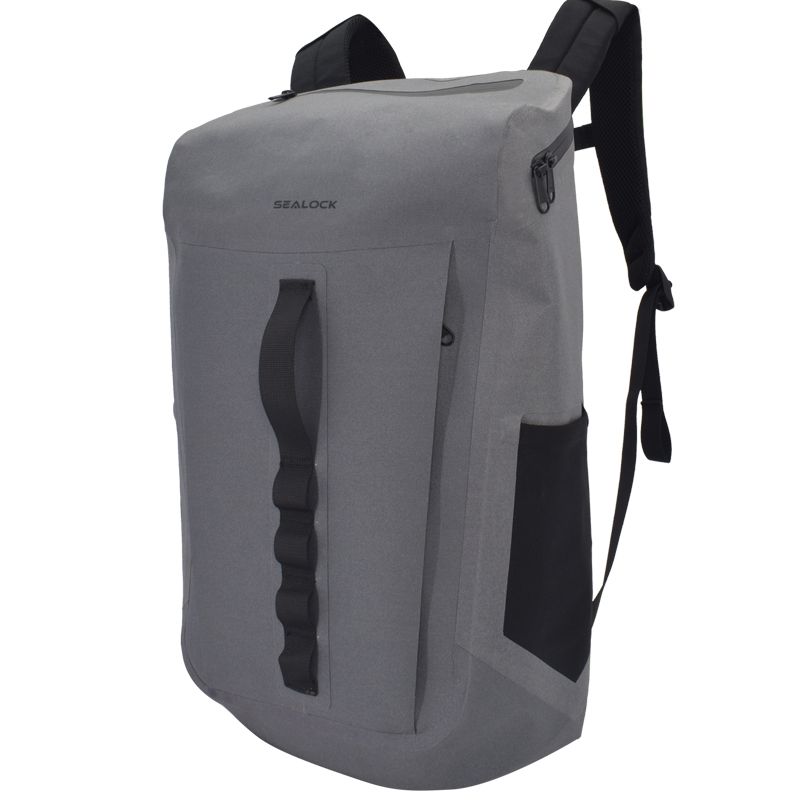
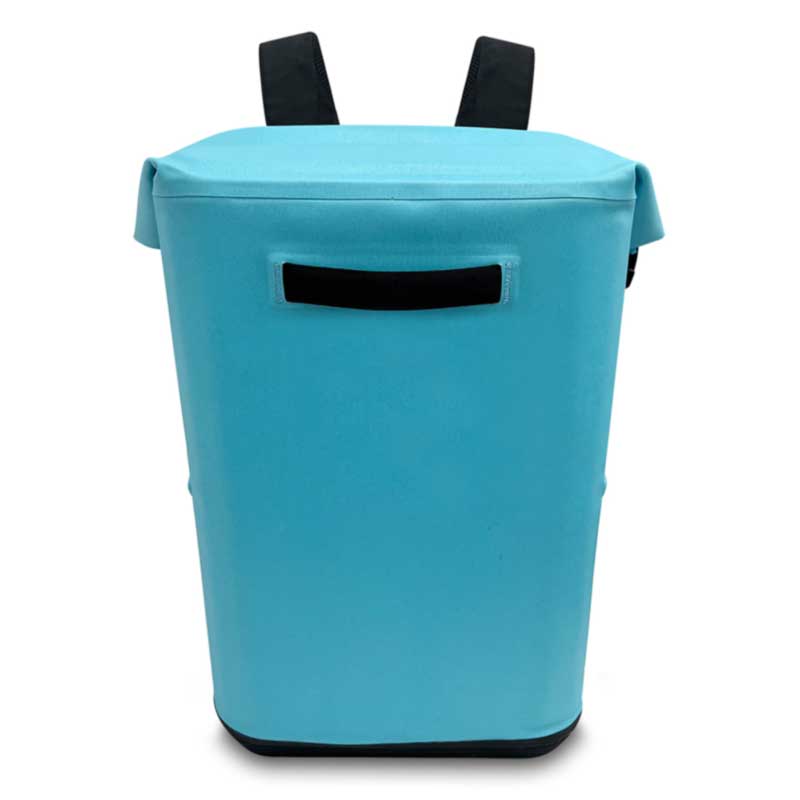
Sit-on-top kayaks. Most of the load goes in the rear tank well. Use dry bags or a roll-top dry backpack, strap everything down so it stays with the boat if you capsize, and keep the heaviest bags close to the seat.
Saving Space: Compression and the Sleeping Bag
The sleeping bag is usually the bulkiest item on the list. A compression bag can cut its packed volume considerably, which can be the difference between it fitting through the hatch or not. Two cautions apply. A vacuum compression bag is not a substitute for a dry bag on the water; put it inside a dry bag or a dry hatch. And do not leave a down sleeping bag compressed for days at a time once you get home; store it loose. The same goes for spare clothes: compressed, they take up far less of a hatch. Our guide to how to use vacuum bags covers the different ways to compress without a household vacuum.
Electronics and the Phone
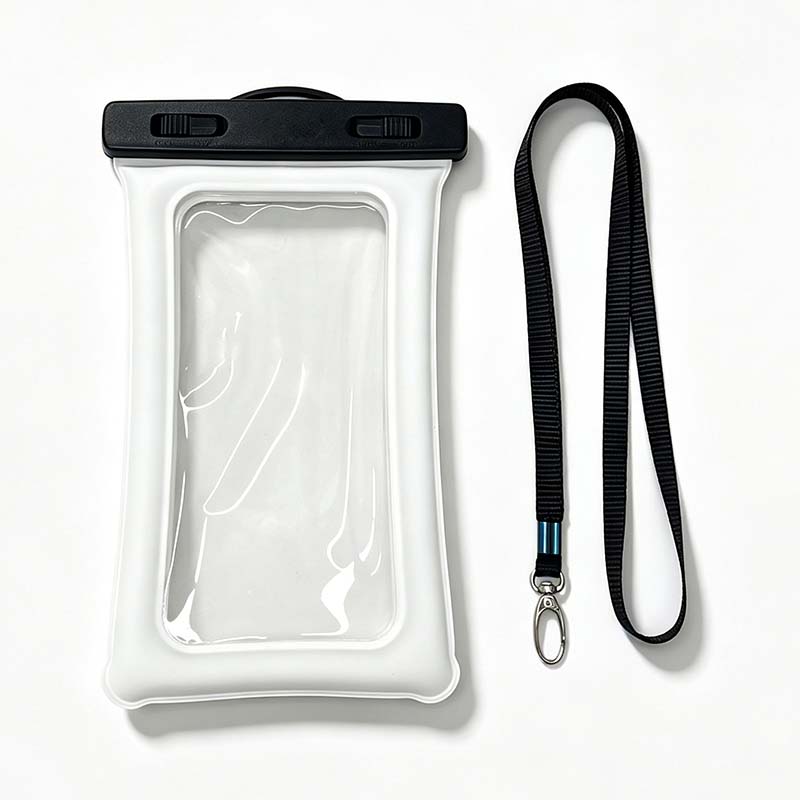
A phone is now a camera, a map, a tide table and, in many places, a way to call for help, so it needs more protection than a pocket. Keep it in a waterproof phone pouch on a lanyard so you can use it through the window without opening anything. Put a power bank, camera and spare batteries in a small dry bag, and that dry bag inside a second one or in a hatch. Our article on protecting electronics while kayaking goes into more detail.
The day's essentials within reach: a small dry bag behind the seat and the phone in a pouch.
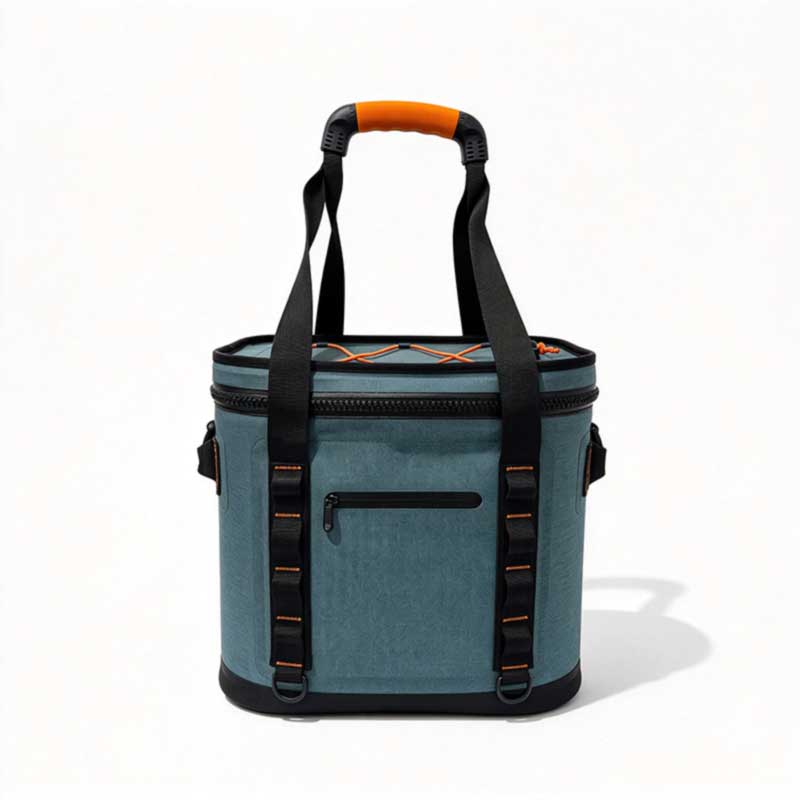
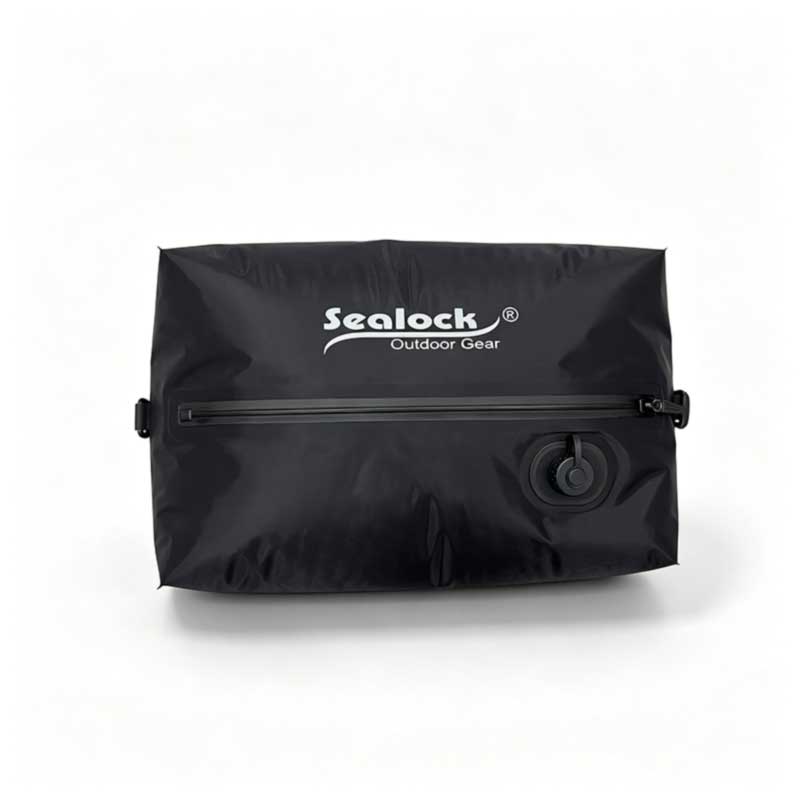
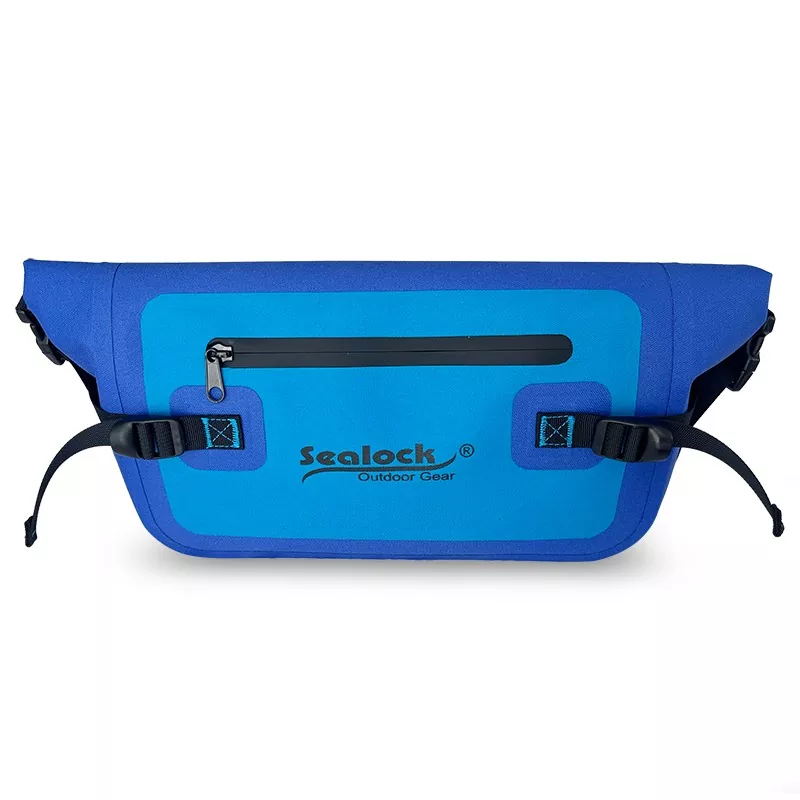
Kayak tour operators and rental fleets need dry bags in quantity, in sizes that fit their own boats, and in colours that tell one group's bags from another's. Paddling brands and retailers want a matched set: several sizes of dry bag, a deck bag, a phone pouch and a dry backpack in one colour story. We make all of these, and can size a dry bag set to the hatch openings of a specific kayak, print a size and contents label on each bag, and add an outfitter's name and logo. Logos go on by silk screen, heat transfer or welded patch, so nothing pierces the waterproof shell. MOQ is 300 pieces per style for most models (500 for some dry bags), with samples in about 7–15 days and bulk production in about 30–45 days, from China or Vietnam. Our sewing lines also make the mesh deck bags and sewn carry bags that complete a paddling range. For more on ordering, see our guides to OEM kayak dry bags and kayaking backpacks wholesale.
How We Test Kayak Bags
Every order passes through IQC on incoming PVC, TPU, buckles, valves and webbing, IPQC during welding and assembly, and OQC on finished bags, with SGS or QIMA third-party inspection available on request. Welded seams are tested for tensile and bonding strength, with attention to the base and the roll-top band, which takes the most creasing. Straps, buckles and D-rings go through a load test of 1,500+ cycles and are tested in salt spray, and fabric is tested for abrasion against the rough inside of a hatch. Colour fastness and colour difference are checked so a colour-coded set stays consistent. IPX7 dry bags are verified with a full water-immersion test of 2+ hours; IPX6 bags with a heavy rain and water-jet test. Compression bags go through our customer inspection procedure: unboxing, vacuum extraction, a 24-hour static rest and air-leak determination.
Frequently Asked Questions
What size dry bags do I need for kayak camping?
Mostly 5 to 20 litres. Small bags fit through hatch openings and into the narrow ends of the boat; one or two larger bags are useful for the sleeping bag and tent.
Where should heavy gear go in a kayak?
Low and close to the cockpit: water, food and the stove behind the seat or against the bulkheads. Light, bulky items go towards the bow and stern.
Do kayak hatches keep gear dry?
Not reliably. Hatches and cockpits take on water, so anything that must stay dry needs its own sealed dry bag.
Can I use a vacuum compression bag in a kayak?
Yes, to shrink a sleeping bag or clothes, but put it inside a dry bag or a dry hatch. It is not designed to be submerged.
What is the MOQ for custom kayak dry bags?
300 pieces per style for most models, 500 for some dry bags. Samples take about 7–15 days and bulk production about 30–45 days.
How much do custom kayak dry bags cost?
The price depends on the sizes, material, closure, windows and pockets, logo method and quantity. Send us your sizes, colours and quantity for a quotation.
Can you print our logo or a size label on each bag?
Yes, by silk screen, heat transfer or welded patch, with colours matched to Pantone.
Order Kayak Dry Bags From the Factory
Tell us which kayaks the bags are for, the sizes and colours you need and your quantity, and we will recommend a set, make samples and plan production in China or Vietnam. Contact us at info@sealock.com.hk or call +86-769-82009361.
We use cookies to offer you a better browsing experience, analyze site traffic and personalize content. By using this site, you agree to our use of cookies.
Privacy Policy
 English
 Español
 Português
 русский
 Français
 日本語
 Deutsch
 tiếng Việt
 Italiano
 Nederlands
 ภาษาไทย
 Polski
 Svenska
 magyar
 Malay
 বাংলা ভাষার
 Dansk
 Suomi
 हिन्दी
 Pilipino
 한국어
 Türkçe
 Gaeilge
 العربية
 Indonesia
 Norsk
 تمل
 český
 ελληνικά
 український
 Javanese
 فارسی
 தமிழ்
 తెలుగు
 नेपाली
 Burmese
 български
 ລາວ
 Latine
 Қазақша
 Euskal
 Azərbaycan
 Slovenský jazyk
 Македонски
 Lietuvos
 Eesti Keel
 Română
 Slovenski
 मराठी
 Srpski језик