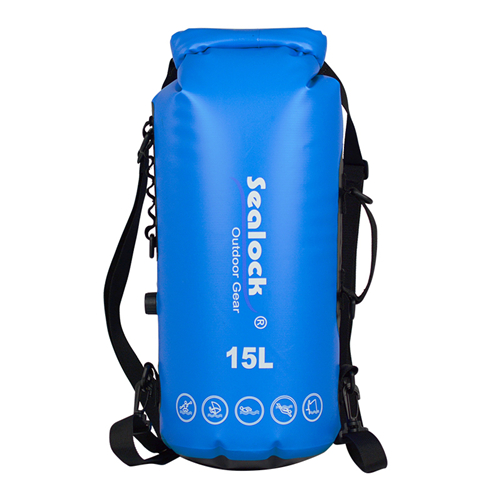
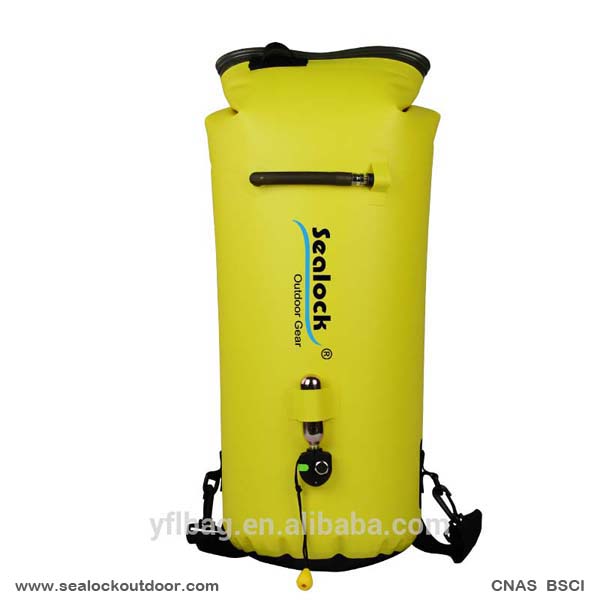
Sealock is an OEM kayak dry bag supplier and manufacturer. Most sourcing guides in this category assume a single kind of buyer — an outdoor brand building a retail line. In paddlesports that assumption is wrong. Kayak dry bags are bought by boat brands bundling accessories, by rental liveries outfitting a fleet, by outfitters and paddling schools, by specialty retailers, and by tour operators and clubs buying branded gear. Each wants a different bag at a different price with different packaging, and briefing a factory as though they were the same is how a programme ends up satisfying nobody. This guide sets out what each buyer type actually needs.
Five Buyers, Five Different Briefs
Buyer
What they optimise for
What the spec looks like
Kayak & SUP brands
Brand consistency, dealer margin, bundling with boats
Large logo, bright colour, cost-effective build, polybag
The Fleet Buyer: Uptime Is the Whole Specification
Rental liveries and outfitters are the least-served buyer in this category and the most demanding in a specific way. Their gear is used by beginners, dragged across gravel launches, packed wet, and turned around several times a day through a short season. Commercial operators consistently favour robust, serviceable designs that reduce downtime, and training fleets select standardised configurations for consistent fleet management — one model, one size, one colour, so any bag fits any boat and staff don't have to think.
What that means in a spec:
Heavier denier over lighter weight. A fleet bag never has to be carried far; it has to survive being dropped on a boat ramp. 500D PVC tarpaulin is the right call.
Roll-top over any sealed zipper. Nothing to jam, nothing to lubricate, no maintenance schedule — and a broken buckle can be replaced rather than retiring the bag. Sand and grit tolerance matters when the same bag meets a beach launch twice a day.
One capacity, not a ladder. Standardisation is the point. 15–25L covers most rental use and fits most hatches.
High-visibility colour. Easier to spot on the water, easier to count back in, and it doubles as livery identity.
Reinforced lash points. Fleet bags get clipped and unclipped constantly, so the anchors take more cycles than a consumer bag ever will.
Minimal packaging. No hangtag, no care card, no retail box — bulk polybag and carton keeps the unit cost where a fleet buyer needs it.
Replacement cadence. Fleets replace seasonally, so a supplier that holds the spec and can repeat the exact same order next year is worth more than one that saves five cents this year.
One practical note on onboarding: fleet buyers usually want to start small and scale, which is why the paddlesports industry tends to offer low initial commitment on rental programmes. Tell us your first-season quantity and we'll quote against it rather than pushing a number that doesn't match your fleet size.
The Boat Brand: The Bag Has to Look Like It Came With the Kayak
For a kayak or SUP brand, an accessory line is brand extension, not just added margin. The requirements are visual and commercial rather than technical:
Colour matching to the hull range — confirmed on a physical sample, never on a screen.
Restrained branding — a welded or reflective logo reads more premium than a large silk-screen, and reflective doubles as a genuine safety feature at dawn and dusk.
Retail-ready packaging — hangtag, care card, barcode and carton marking so dealers can shelve it directly.
A coherent set — a deck-reach small sack, a hatch-sized main bag, and a phone pouch, all in one colour story, so a dealer can sell a bundle rather than a bag.
The Retailer: Assortment Beats Any Single Bag
Specialty retailers and paddlesports distributors serve two needs at once — filling shop shelves and outfitting rental fleets — which is worth knowing when you quote them. For the shelf side, the levers are a size ladder (5L and 10L for cockpit essentials, 15–25L as the hero, 30–40L for overnight), several colours in the sizes that move, and multipacks, which sell strongly because paddlers genuinely pack modularly.
What Doesn't Change: The Construction
Whichever buyer a programme serves, the underlying build is the same, because a kayak bag that fails is a failure in every channel:
High-frequency welded seams at 27.12 MHz — no needle holes, no adhesive tape to lift under repeated immersion.
Buoyancy — a sealed bag traps air and floats, so gear that comes loose in a capsize stays at the surface.
Lash points engineered into the panels — stitched at high tension before the body is welded, then load- and jerk-tested, because paddlers are advised to attach deck gear at two points minimum and those anchors carry everything.
A reinforced base — kayak bags are dragged over rock and hull edges more than most gear.
Verification on the finished bag — up to a verified IPX7 on welded roll-top builds, and IPX8 on our rubber-seal expedition construction.
Fleet or retail, the anchors carry the same load — and get tested the same way.
Seasonality: Order Against the Season, Not the Calendar
Paddlesports is sharply seasonal, and the mistake is briefing late. Working back from a spring season opening: sampling 3–10 days per round with typically two rounds, then production 20–45 days after approval, plus shipping and inspection. That means briefing in autumn or early winter for a spring fleet or retail launch. Fleet buyers in particular should plan the reorder before the season ends, since outfitters typically refresh gear between seasons rather than mid-season.
The Product Basis
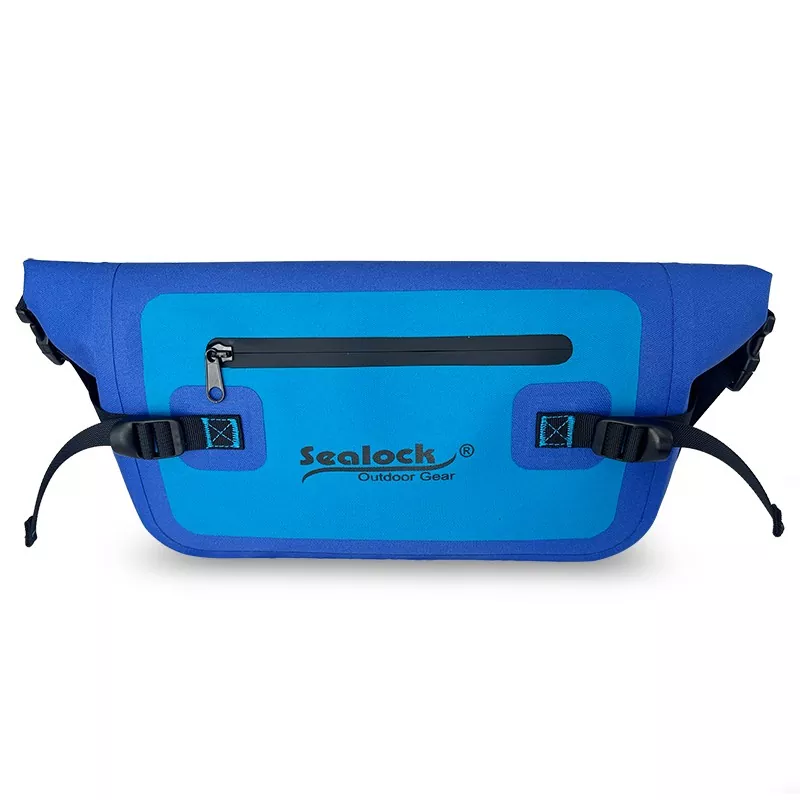
These welded bags, from Sealock's dry bag line, are equal starting points for an OEM programme — none is ranked above another; the notes indicate which buyer each suits most naturally:
Image
Model & specs
Suits
MOQ
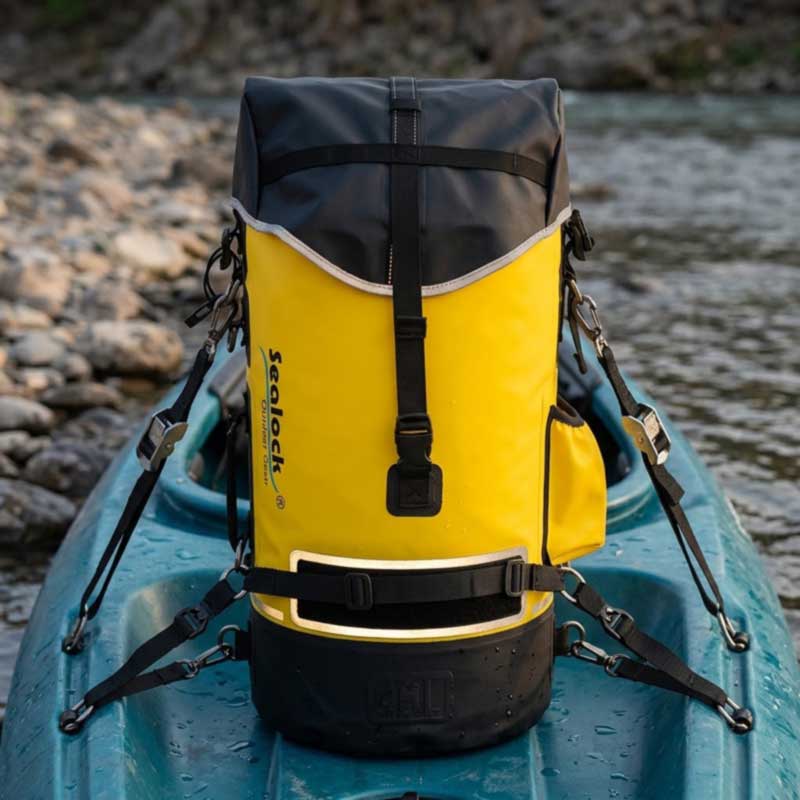
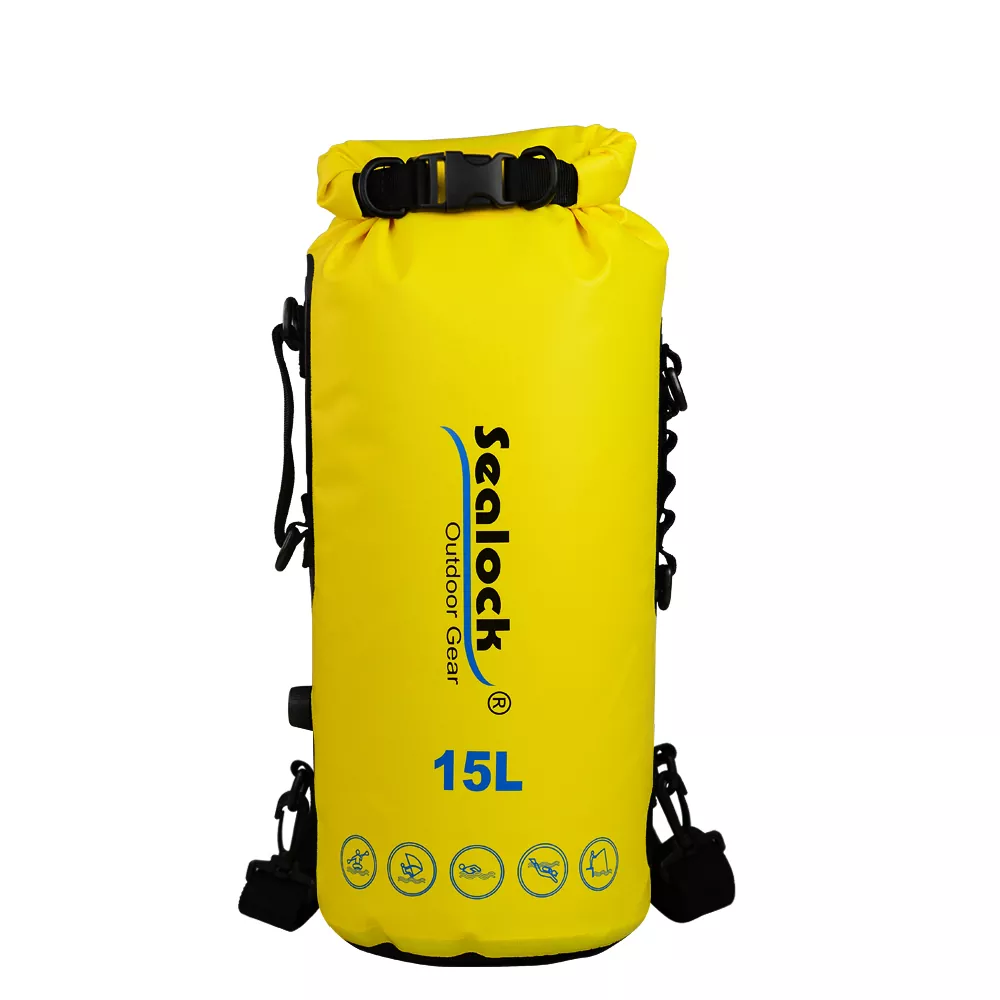
SL-D135 Kayaking Tube Dry Bag — 500D PVC tarpaulin; roll-top with fold-seal and back-up Velcro; seven colours; inner pocket with waterproof zipper; ISO9001, BSCI, Bureau Veritas; supply 20,000 pcs/month.
Fleets and liveries — no maintenance, high output capacity
500
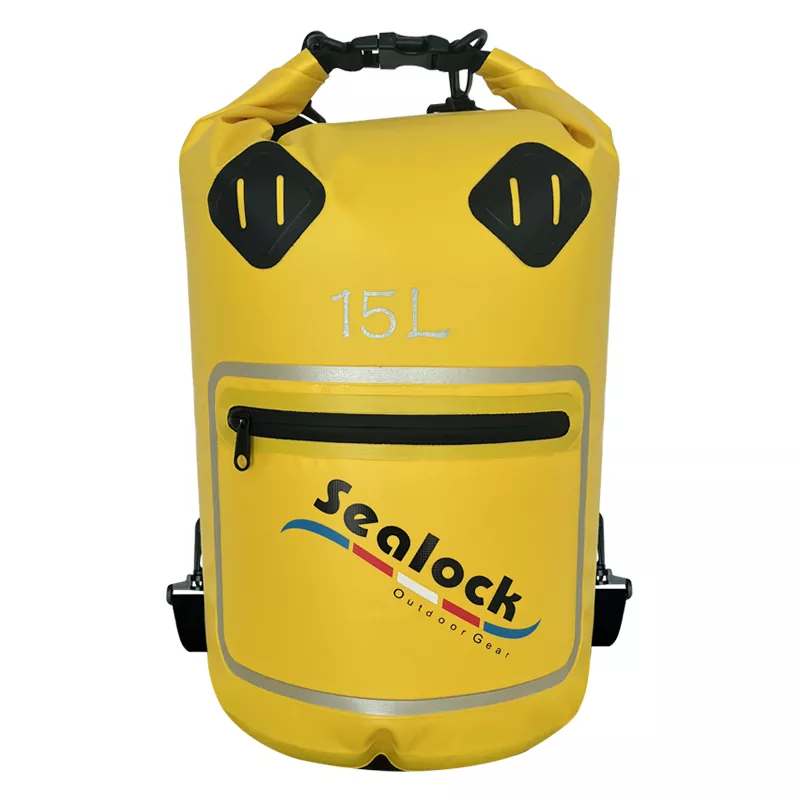
SL-D025 Kayaking Dry Bag — 5/10/15/20/30/40L with published dimensions per size; 500D PVC mesh; custom colours; sample 7–10 days; supply 50,000 pcs/month.
Retailers — a full ladder on one pattern; also high-volume fleets
Boat brands and retail — the premium hatch-sized hero
300
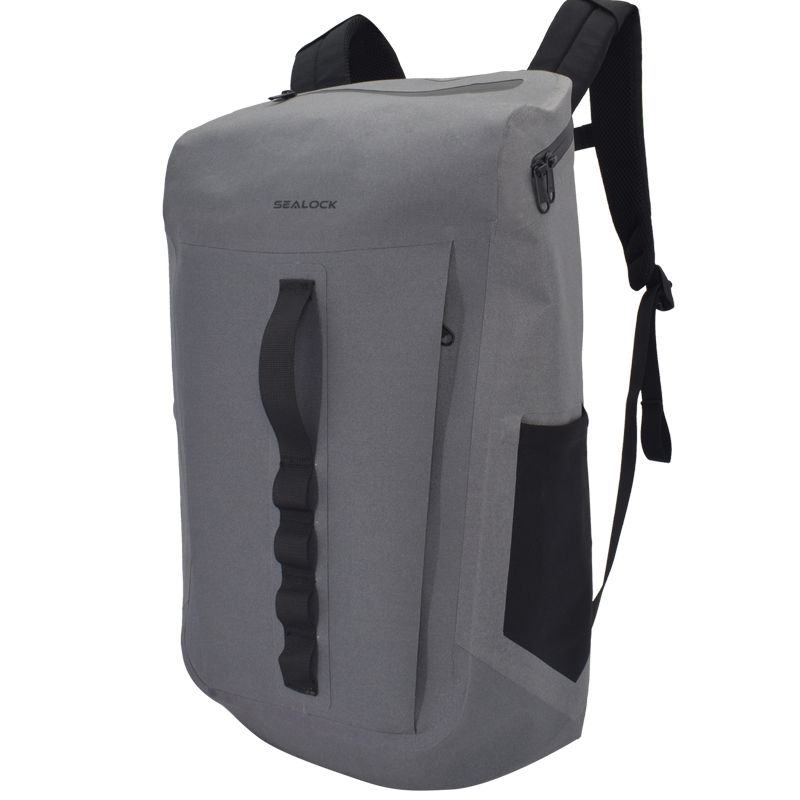
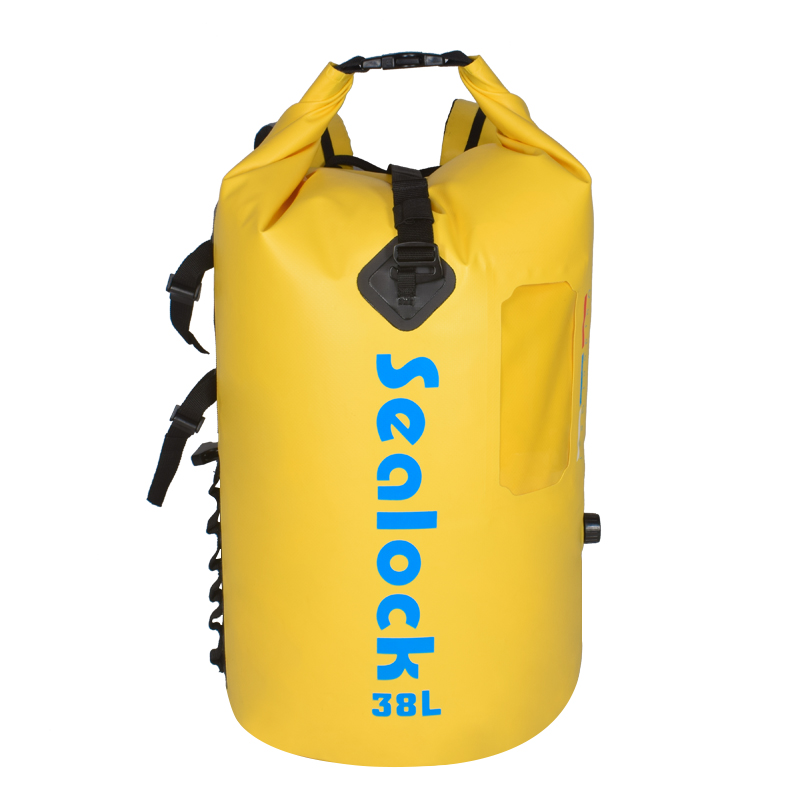
38L Waterproof Dry Backpack for Kayak — 500D PVC 0.5 mm; semi-circular shell; front phone window; multi-function lock for a paddle board; side inflation/deflation valve; one-piece EVA back panel.
Boat brands — the feature-led flagship that gets reviewed
300–500
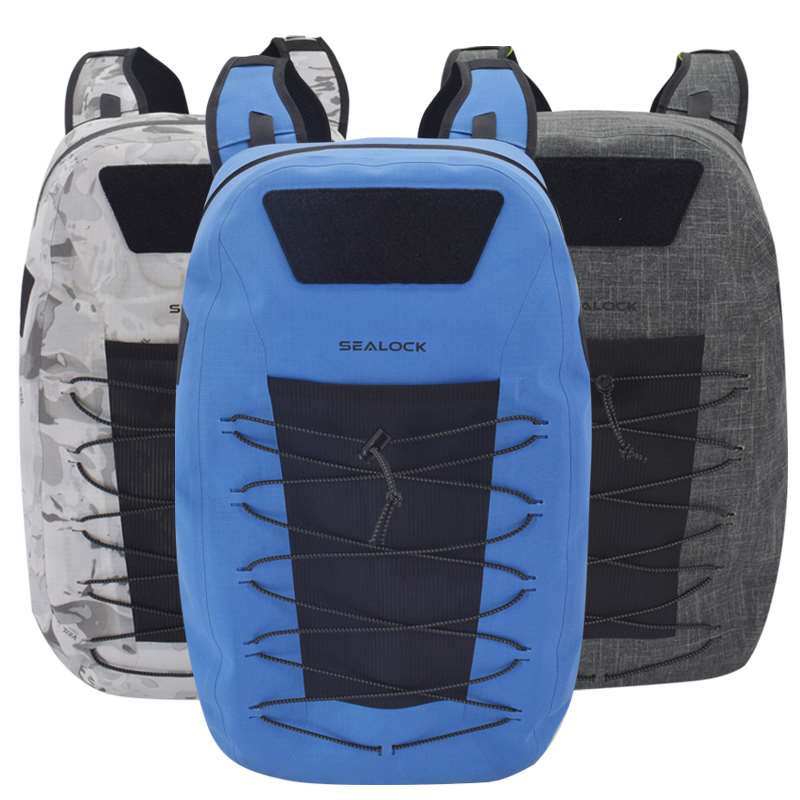
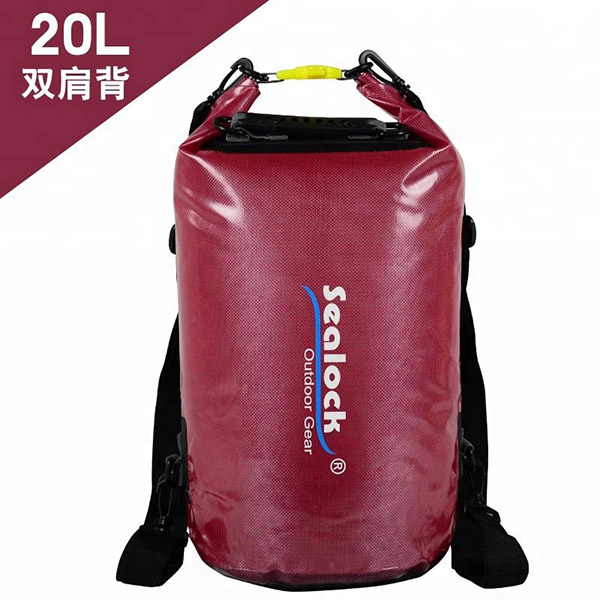
SL-E102 Dry Backpack — 15L / 20L / 30L with published dimensions per size; 500D PVC mesh; custom colours and sizes.
Outfitters and schools — standardised, three sizes, one build
Technical retail — purge to fit a hatch, inflate for buoyancy
500
Capacity, material, colourway, valves, windows, lash hardware, branding and packaging are all specifiable per order, and a bag can be developed from a sketch.
Terms and Quality Control
Item
Detail
MOQ
300–500 pcs per model; fleet quantities quoted per programme
Sampling
3–10 days per round; typically two rounds
Production
20–45 days after sample approval
Capacity
Nine HF welding lines; around 100,000 units/month
Packaging
Bulk polybag for fleets; hangtag, care card, barcode and carton marking for retail
Origin
Dongguan, China or Ho Chi Minh City, Vietnam
Quality is gated in three tiers — IQC (incoming tarpaulin, valves, buckles and webbing against the signed standard, with colour difference and fastness, which matters when a livery reorders the same colour season after season), IPQC (cutting tolerance, weld integrity, valve and window installation, and lash-point assembly, with peel tests on sample welds at each run start), and OQC (ISO 2859 AQL sampling, a real water-submersion batch test, and gold-sample comparison, with SGS or QIMA inspection available). Sealock also strictly executes the complete customer inspection procedure on finished goods: unboxing, vacuum extraction, a 24-hour static rest, and air-leak determination. The lab additionally runs weld bond and peel strength, a 1,500+ cycle load test with jerk-loading on lash points and strap anchors, buoyancy checks, abrasion, tear, tensile, salt spray, UV, colour fastness and colour difference.
FAQ: OEM Kayak Dry Bag Supply
Q: We're a rental livery, not a brand. Can you still work with us?
A: Yes, and the spec should look different. Fleet programmes favour a single standardised size in a heavy denier and a bold colour, roll-top closure with no maintenance requirement, reinforced lash points, and bulk packaging — the priority is uptime and repeatability, not shelf appeal.
Q: Can we start small and scale up?
A: Tell us your first-season quantity and we'll quote against it. Fleet buyers typically want a low initial commitment and a supplier that can repeat the exact same specification next season, which matters more than a marginal price difference.
Q: We're a kayak brand. Can the bags match our hull colours?
A: Yes — custom colourways with colour difference control, confirmed on a physical sample rather than a screen. A welded or reflective logo generally reads more premium than a large silk-screen, and reflective adds real low-light visibility.
Q: Which closure for fleet use?
A: Roll-top. There is nothing in the seal path to jam, no lubrication schedule, good tolerance of sand and grit at beach launches, and a broken buckle can be replaced rather than retiring the bag.
Q: When should we place a seasonal order?
A: Work backwards: two sample rounds at 3–10 days each, production 20–45 days after approval, plus shipping and inspection. Brief in autumn or early winter for a spring season, and plan fleet reorders before the current season closes.
Q: Can one supplier cover both our retail line and our rental fleet?
A: Yes, and it's efficient — the same welded platform serves both, with the spec, colour and packaging differing by channel. Distributors in this industry routinely buy for both the shelf and the fleet from one source.
Talk to the Factory
Whether you're outfitting a fleet, bundling with boats, or building a retail line, contact Sealock at info@sealock.com.hk or +86-769-82009361. Over twenty years of in-house high-frequency welding, nine welding lines, dual China–Vietnam production, and a full customer inspection procedure on every shipment.
We use cookies to offer you a better browsing experience, analyze site traffic and personalize content. By using this site, you agree to our use of cookies.
Privacy Policy
 English
  Español
  Português
  русский
  Français
  日本語
日本語  Deutsch
  tiếng Việt
  Italiano
  Nederlands
  ภาษาไทย
  Polski
  Svenska
  magyar
  Malay
Malay  বাংলা ভাষার
  Dansk
Dansk  Suomi
Suomi  हिन्दी
  Pilipino
  한국어
한국어  Türkçe
  Gaeilge
  العربية
  Indonesia
  Norsk
Norsk  تمل
تمل  český
český  ελληνικά
  український
  Javanese
  فارسی
فارسی  தமிழ்
தமிழ்  తెలుగు
  नेपाली
  Burmese
  български
  ລາວ
ລາວ  Latine
  Қазақша
  Euskal
  Azərbaycan
  Slovenský jazyk
  Македонски
  Lietuvos
  Eesti Keel
  Română
  Slovenski
  मराठी
मराठी  Srpski језик