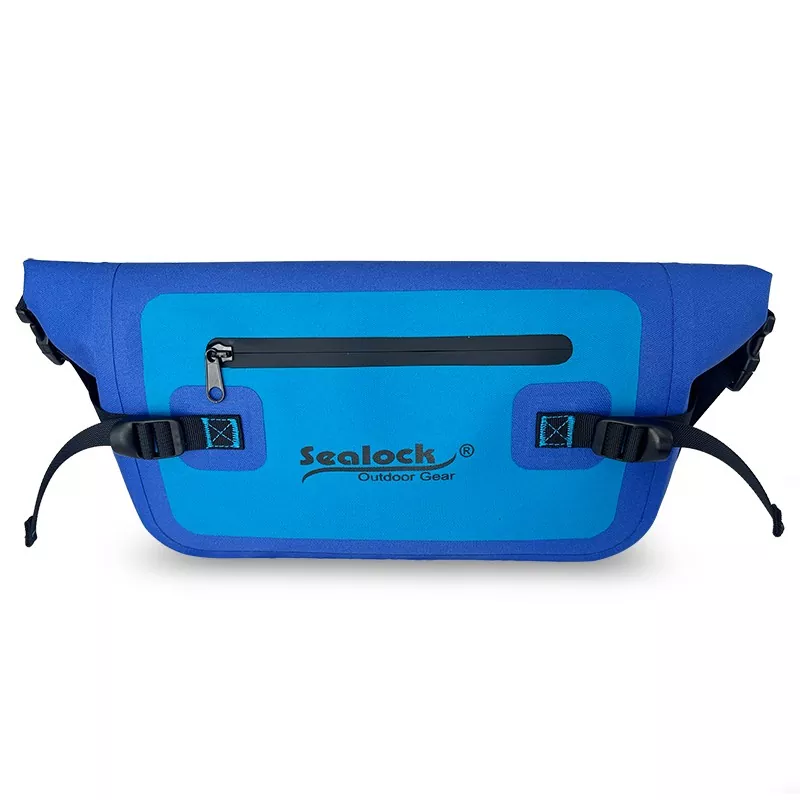
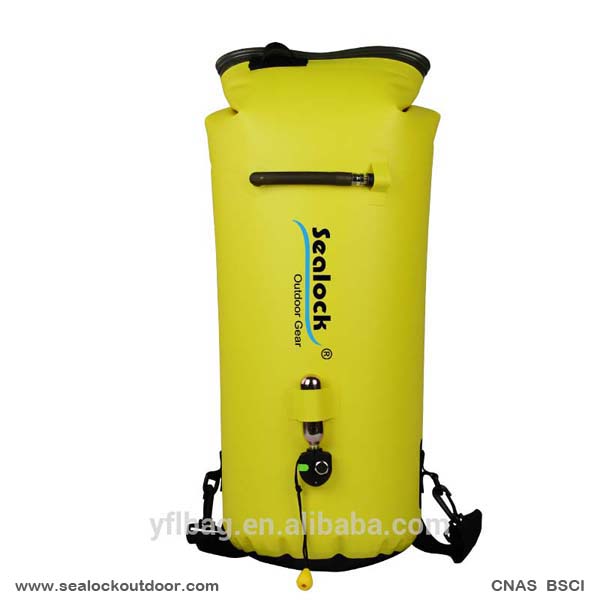
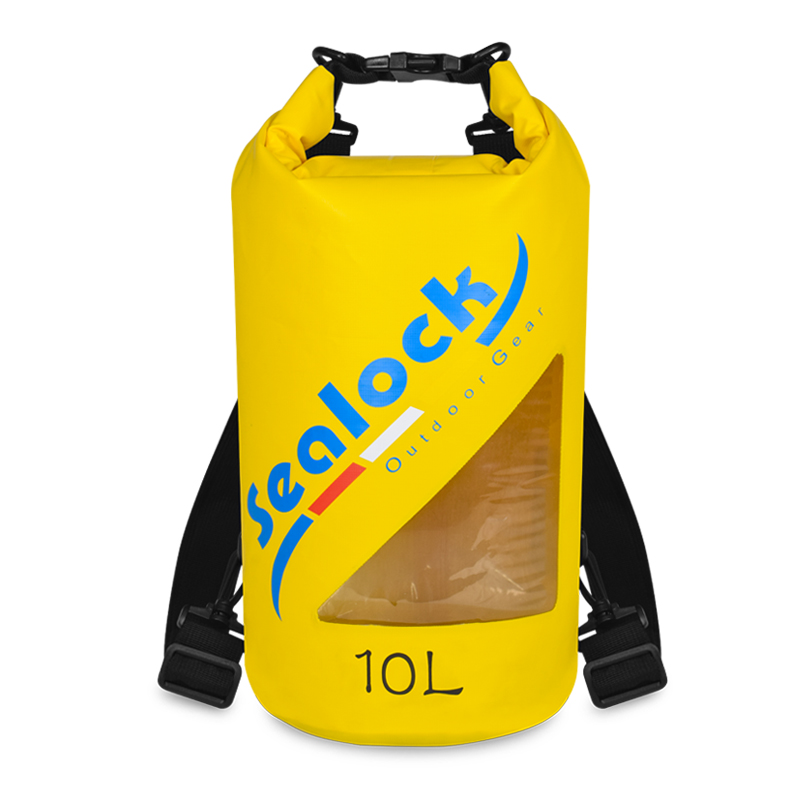
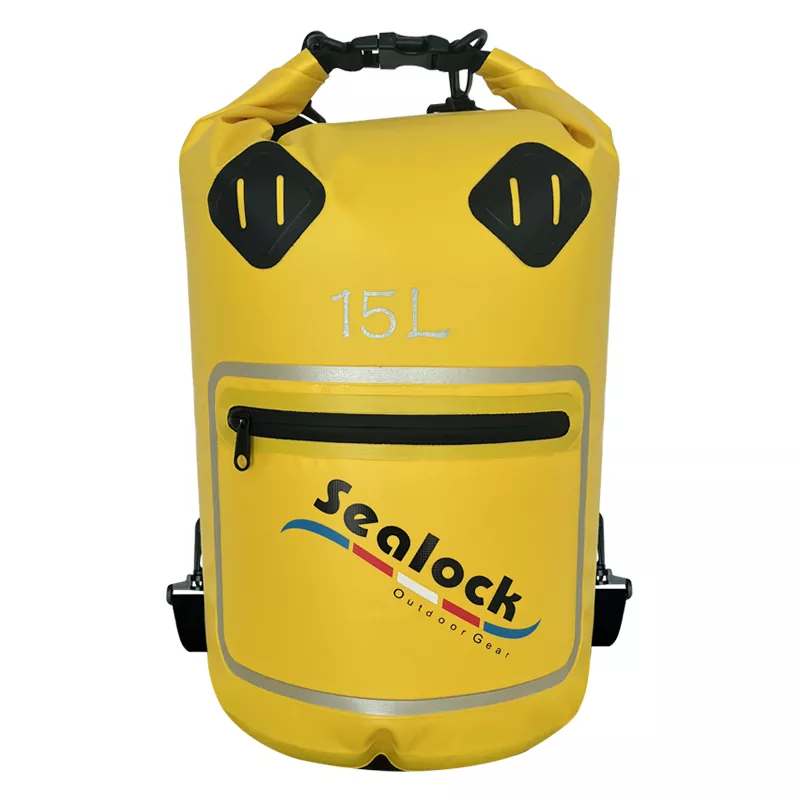
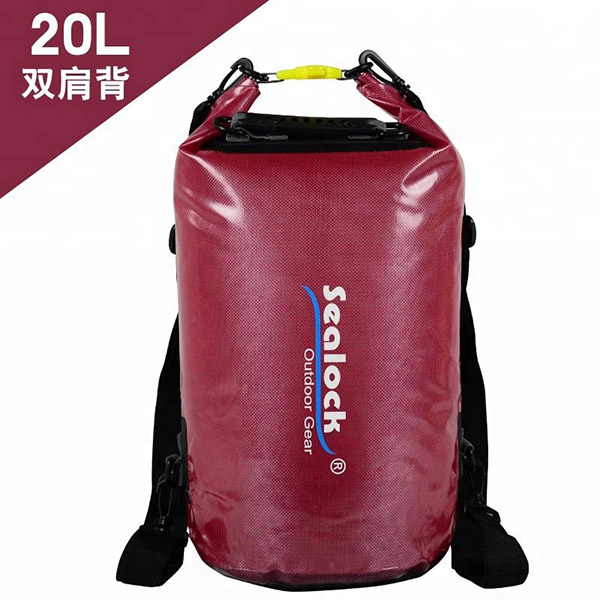
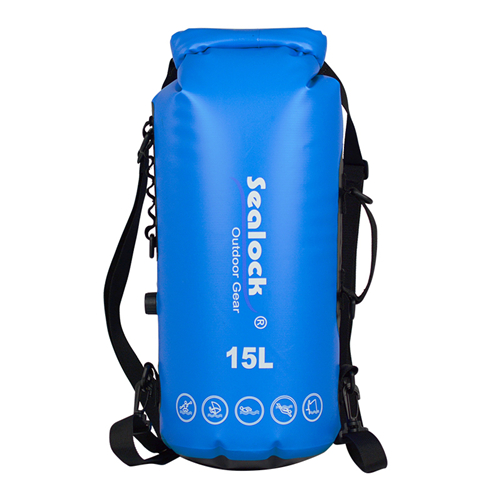
Sealock is a kayak bag manufacturer in China supplying OEM, ODM, and wholesale buyers worldwide. A kayak is the hardest environment a soft bag routinely faces: the hull sits low in the water, the cockpit and hatches are open to spray, rain and wake, and a capsize turns "water-resistant" into a claim the customer tests personally. A kayak bag has to do three things an ordinary bag cannot — stay dry when fully submerged, float when it comes loose, and compress and lash down so it doesn't move. This overview covers how those requirements translate into construction, the range, and the sourcing terms.
What a Kayak Bag Has to Do
Survive submersion, not just splash. A correctly rolled dry bag can be dunked, not merely rained on. On moving water capsizing is a matter of when, not if.
Float. Air trapped inside a sealed bag gives it buoyancy, so gear that comes loose stays at the surface instead of sinking to the bottom of the lake. This is why paddlers are advised not to fill a dry bag with dense metal objects that defeat flotation.
Compress and lash. A roll-top lets the paddler purge excess air for a smaller, firmer package that bungees to a deck or slides into a hatch. A rigid, air-filled bag simply won't fit where it needs to go.
Attach securely. D-rings, lash cords and integrated webbing let the bag tie into deck lines. Serious guidance is specific: anything carried on deck should be attached at a minimum of two points, so losing one attachment doesn't lose the bag.
Not become a hazard. Loose items in a cockpit slide under foot braces and become an entanglement risk during a wet exit. Everything should clip, lanyard or stow.
Each of those is a construction decision rather than a marketing feature, and each one is specifiable on an OEM order.
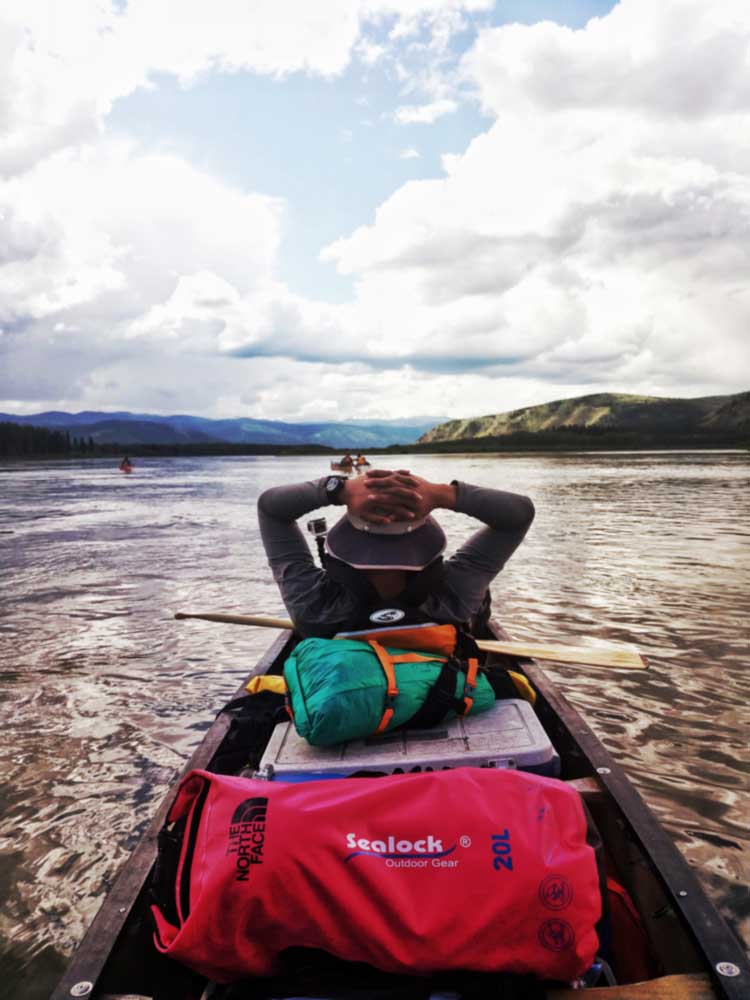
Submersible, buoyant, compressible, and lashed at two points — the kayak brief in one image.
Sizing to the Boat, Not to the Trip
Kayak bags are unusual in that the hatch opening constrains the size before the trip length does. A bag that holds a weekend's kit is useless if it won't pass through the hatch. The practical guidance paddlers work to:
Capacity
What it carries
Where it goes on the boat
2–10L
Phone, keys, wallet, sunscreen, a snack
Within arm's reach in the cockpit or clipped to deck lines
15–25L
Half a day of gear — change of clothes, rain layer, lunch, first-aid kit
The sweet spot — fits most sea kayak storage hatches
30–40L
Full-day or overnight loads, camping layers, bulkier gear
Tank well or rear hatch, depending on hatch size
45L+
Multi-day expedition and portage loads
Carried on the back between put-ins; stowed or lashed
Two further points that shape a range. First, small bags are their own product, not a lesser version of a big one — experienced paddlers use several small sacks to organise gear inside a larger one or inside a hatch, and assorted colours make identification instant in a dark compartment. Second, whitewater changes the mounting rules: a bag should be lashed to the back deck where it can be reached, never to the bow, where waves can tear it off.
How a Kayak Bag Is Built
High-frequency welded seams — panels fused at 27.12 MHz with no needle holes. Stitched-and-taped seams rely on adhesive that lifts, sometimes within days of genuine immersion. For a product that will be submerged, welded is not optional.
A sealing system matched to the use — a roll-top folded three to four times for general paddling, or a compressed rubber sealing strip under a fold-over flap where a higher rating is required.
Material matched to the hazard — 500D PVC tarpaulin for whitewater, rock contact and abrasion; TPU-laminated nylon where lighter weight, cold flexibility and tear strength matter.
Reinforced attachment points — D-rings and lash patches stitched to the panels at high tension before the body is welded, so the load path is engineered rather than glued on, then load- and jerk-tested.
A reinforced base — kayak bags get dragged over rock, gravel and hull edges more than most gear.
Reflective detail — paddlers are often out at dawn and dusk, and a reflective bag is findable in low light if it goes in the water.
Features That Solve Real Kayaking Problems
Beyond the basics, a few features come up repeatedly in paddling reviews, and several appear across our range:
Inflation and deflation valves — purge air to compress a bag into a hatch, or inflate it for temporary buoyancy support.
A front window pocket for a phone — usable and dry without opening the main chamber.
Transparent windows — identify contents without unrolling, which matters inside a dark hatch.
A multi-function lock — secures the bag or a paddle board when the paddler leaves the boat.
Removable straps — a harness is useful on the portage and gets in the way inside a hatch.
Dry-wet separation — keeps a wet layer away from dry clothing on the way home.
The Factory
Dongguan: 12,000 m², 400+ staff, nine high-frequency welding lines, around 100,000 units per month; over twenty years in welded waterproof bags.
Two Ho Chi Minh City, Vietnam plants for diversified origin and US-tariff mitigation.
Exports to 40-plus countries; 20-plus waterproofing patents; OEM production for brands including OSPREY, West Marine, attwood, SIMMS, PENN and CHUMS.
Certifications: ISO 9001, BSCI, SMETA P4, HIGG, GRS and SCAN at factory level; Bureau Veritas, SGS, REACH, EN71 and RoHS at product level on relevant models.
Kayak Bag Range
Kayak Dry Backpacks
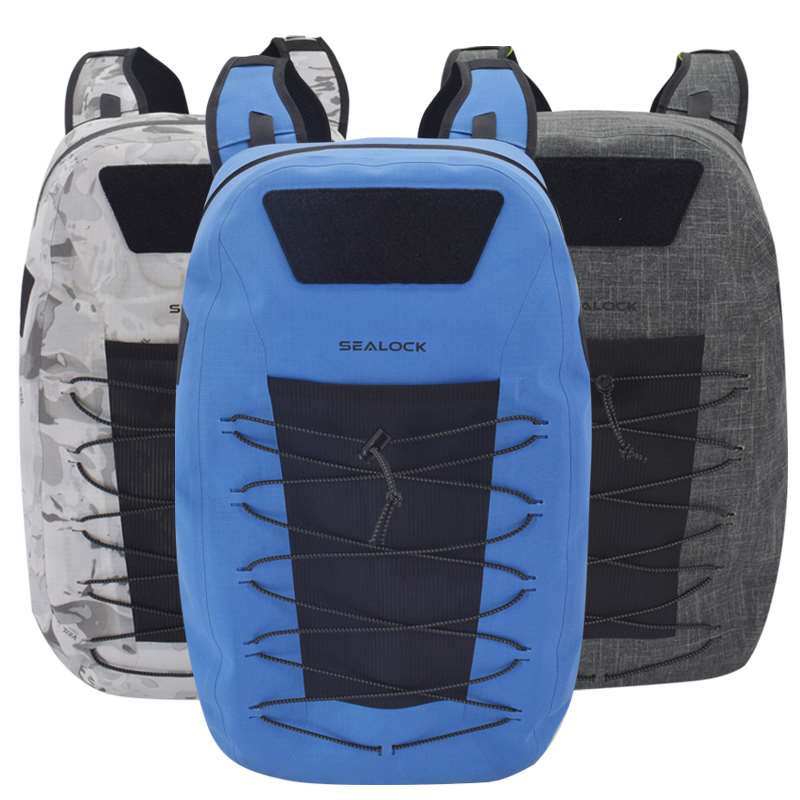
Welded packs with a carry system, for boats reached on foot and gear moved between put-ins:
Image
Model & specs
Built for
MOQ
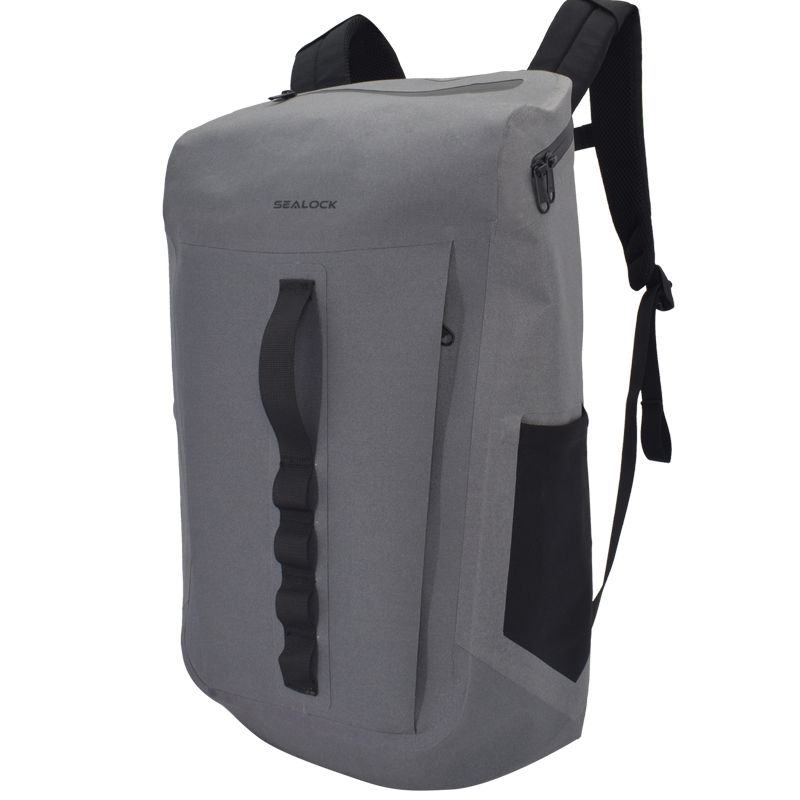
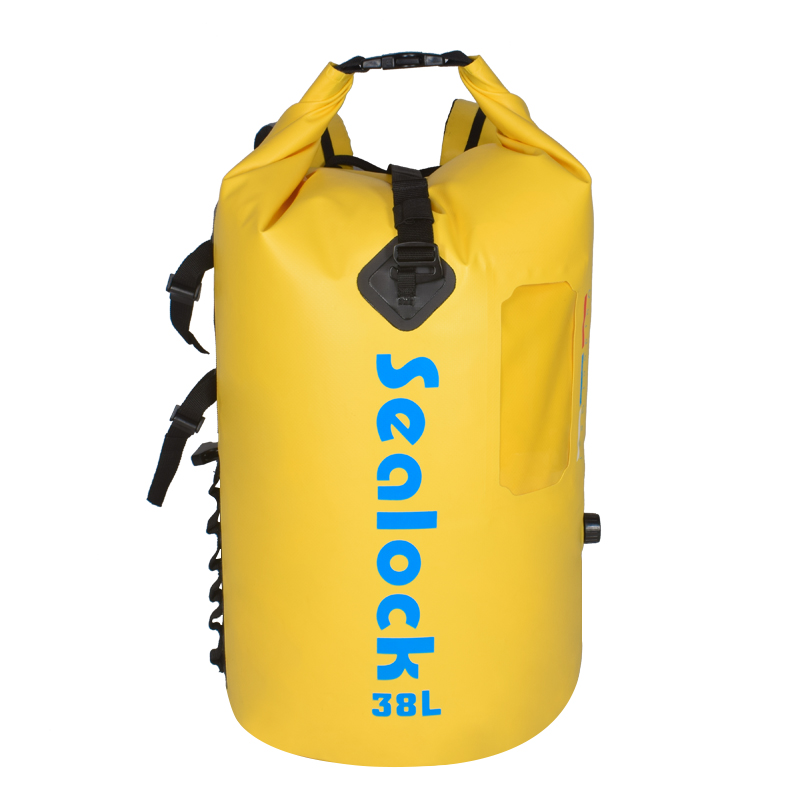
38L Waterproof Dry Backpack for Kayak — 500D PVC, 0.5 mm; semi-circular shell; front window pocket for a phone; multi-function lock for a paddle board; side inflation/deflation valve for temporary flotation support; one-piece EVA back panel to cut weight and heat.
Full-day and overnight paddling
300–500
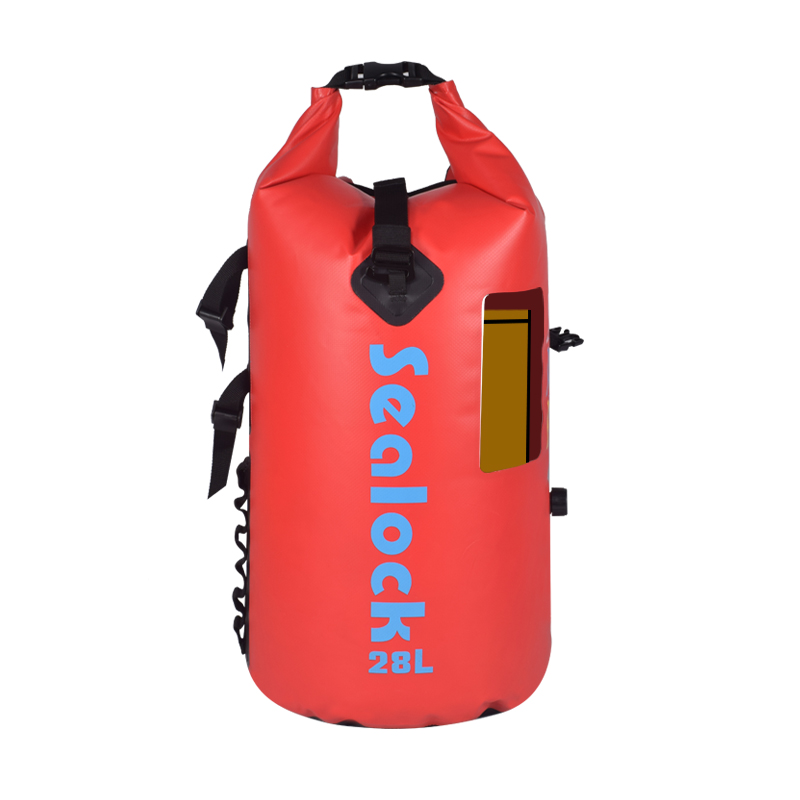
SL-E977 Kayak Dry Backpack — 28L; 500D PVC, 0.5 mm; semi-circular shell; phone window; multi-function lock; side inflation/deflation valve; EVA back panel.
Cockpit-reach essentials; promotional and club orders
300–500
Capacity, material, colourway, closure, valves, windows, lash hardware and branding are all specifiable per order, and a bag can be developed from a sketch. Note the practical planning point: the SL-D025 and SL-D110 each span a full capacity ladder on one pattern, which lets a brand build a complete kayak range without committing to several separate models.
OEM / ODM Terms
Item
Detail
MOQ
300–500 pcs per model
Sampling
3–10 days depending on the build; new tooling quoted separately
Production
20–45 days after sample approval
Materials
500D PVC tarpaulin and mesh, TPU-laminated 420D nylon, recycled (GRS)
Rating options
Verified IPX7 on welded roll-top builds; IPX8 on rubber-seal expedition construction
Quality Control and the Customer Inspection Procedure
Quality is gated in three tiers — IQC (incoming tarpaulin, TPU film, valves, buckles and webbing against the signed standard, with colour difference and fastness), IPQC (cutting tolerance, weld integrity, valve and window installation, and lash-point assembly in line, with peel tests on sample welds at the start of each run), and OQC (ISO 2859 AQL sampling, a real water-submersion batch test, and gold-sample comparison, with SGS or QIMA inspection available). Sealock also strictly executes the complete customer inspection procedure on finished goods: unboxing, vacuum extraction, a 24-hour static rest, and air-leak determination — a pinhole that passes a brief dunk still bleeds vacuum over a full day, which matters on a product that will eventually be capsized. The lab additionally runs weld bond and peel strength, a 1,500+ cycle load test with jerk-loading on lash points and strap anchors, buoyancy checks, abrasion, tear, tensile, salt spray, UV, colour fastness and colour difference.
FAQ: Sourcing Kayak Bags
Q: What capacity should a kayak bag range cover?
A: 15–25L is the sweet spot because it fits most sea kayak storage hatches; 5–10L for cockpit-reach essentials; 30–40L for the tank well or rear hatch on overnight trips; 45L+ for expedition and portage. Size to the hatch opening first, then to the trip.
Q: Does a kayak bag need to float?
A: Yes — it's one of the three things a kayak bag must do. A sealed bag traps air and floats, so gear that comes loose stays at the surface. Advise customers not to pack dense metal items that defeat buoyancy.
Q: Why do you build lash points into the panels rather than adding them later?
A: Because all the load passes through them. Lash patches and D-rings are stitched at high tension before the body is welded, so the force spreads across a stitched footprint rather than peeling a welded patch. Paddlers are advised to attach deck gear at two points minimum, which means the anchors have to hold.
Q: PVC or TPU for kayaking?
A: 500D PVC tarpaulin for whitewater, rock contact and abrasion resistance — the safer default. TPU-laminated nylon where lighter weight, tear strength and cold flexibility matter, as on our expedition pack.
Q: What waterproof rating can you build to?
A: A verified IPX7 on welded roll-top dry bags, proven on the finished bag. Our expedition construction, which seals with a compressed natural rubber strip under a fold-over flap, is rated IPX8. We rate to what can be demonstrated on the finished product.
Q: What are the MOQ and lead times?
A: Typically 300–500 pieces per model, samples in 3–10 days, and production 20–45 days after approval.
Talk to the Factory
For quotations, samples, and OEM/ODM proposals on kayak bags, contact Sealock at info@sealock.com.hk or +86-769-82009361. Over twenty years of in-house high-frequency welding, nine welding lines, dual China–Vietnam production, and a full customer inspection procedure on every shipment.
We use cookies to offer you a better browsing experience, analyze site traffic and personalize content. By using this site, you agree to our use of cookies.
Privacy Policy
 English
  Español
  Português
  русский
  Français
  日本語
日本語  Deutsch
  tiếng Việt
  Italiano
  Nederlands
  ภาษาไทย
  Polski
  Svenska
  magyar
  Malay
Malay  বাংলা ভাষার
  Dansk
Dansk  Suomi
Suomi  हिन्दी
  Pilipino
  한국어
한국어  Türkçe
  Gaeilge
  العربية
  Indonesia
  Norsk
Norsk  تمل
تمل  český
český  ελληνικά
  український
  Javanese
  فارسی
فارسی  தமிழ்
தமிழ்  తెలుగు
  नेपाली
  Burmese
  български
  ລາວ
ລາວ  Latine
  Қазақша
  Euskal
  Azərbaycan
  Slovenský jazyk
  Македонски
  Lietuvos
  Eesti Keel
  Română
  Slovenski
  मराठी
मराठी  Srpski језик