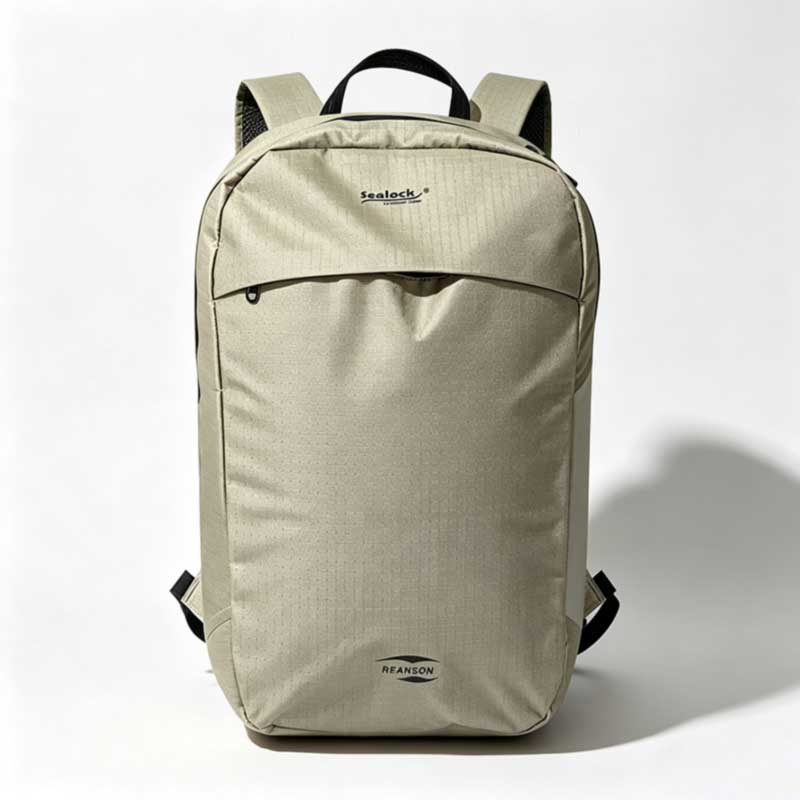
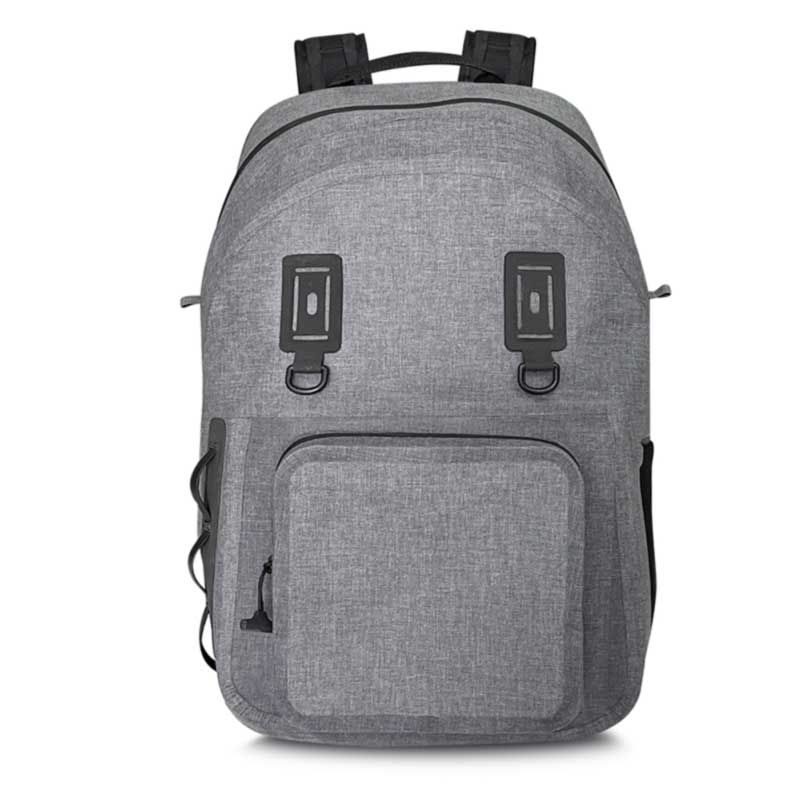
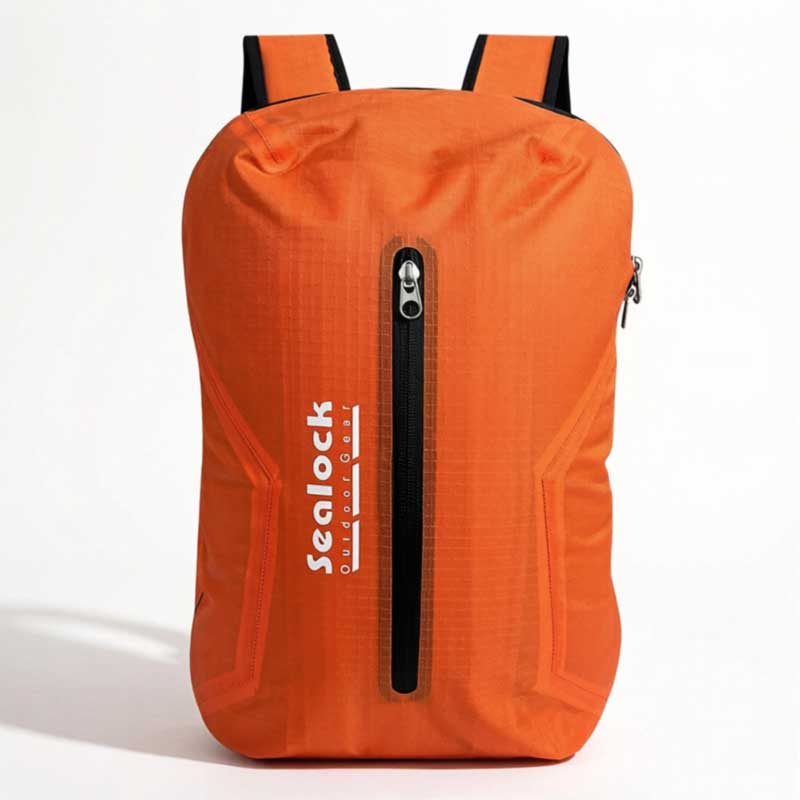
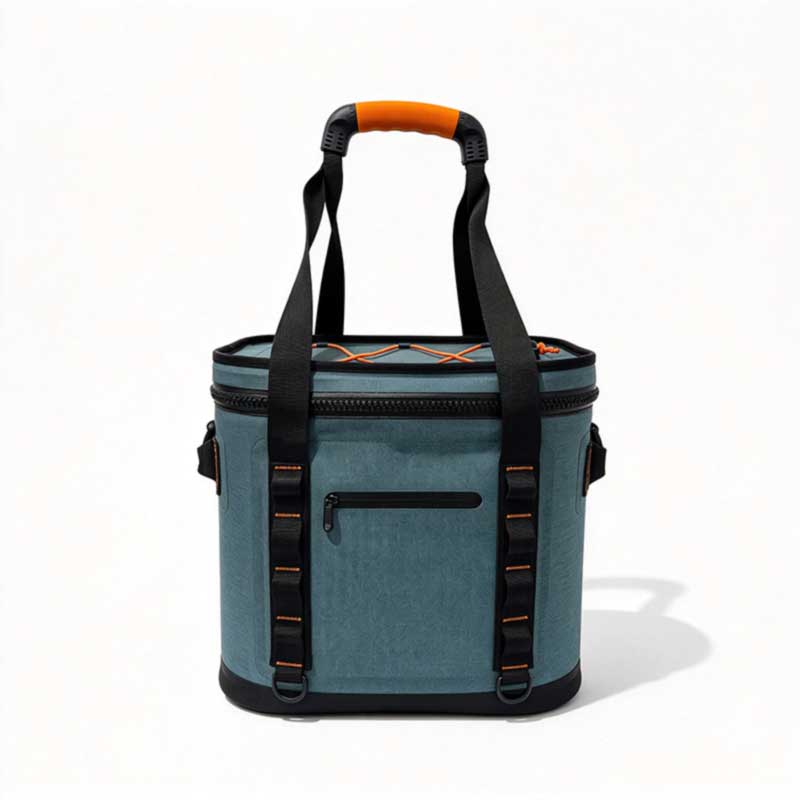
A waterproof pannier can keep the rain out and still be the wrong bag for a bicycle. The upper hooks might fit the rack while the lower attachment cannot reach it. The bag might hang securely but catch the rider’s heel on every pedal stroke. These problems are easier to solve before choosing the bag than after a customer has packed it for the first ride.
Start with three things: where the bag attaches, how much space it occupies when filled, and how it is held away from the wheel. This guide explains those checks, then looks at capacity, rain protection and the details a brand or importer should agree before developing waterproof bike panniers.
What Makes a Bike Bag a Pannier?
A pannier hangs beside a bicycle rack. It needs an attachment that carries the load and a way to control movement at the bottom. That arrangement differs from a bag strapped beneath the saddle or clipped to the handlebar, even when the bags use similar waterproof fabric.
For commuting, a removable pannier lets the rider take work clothes, lunch or shopping indoors. Touring puts more emphasis on packing space, secure retention and serviceable hardware. Both uses depend on the same starting point: a compatible bag and rack.
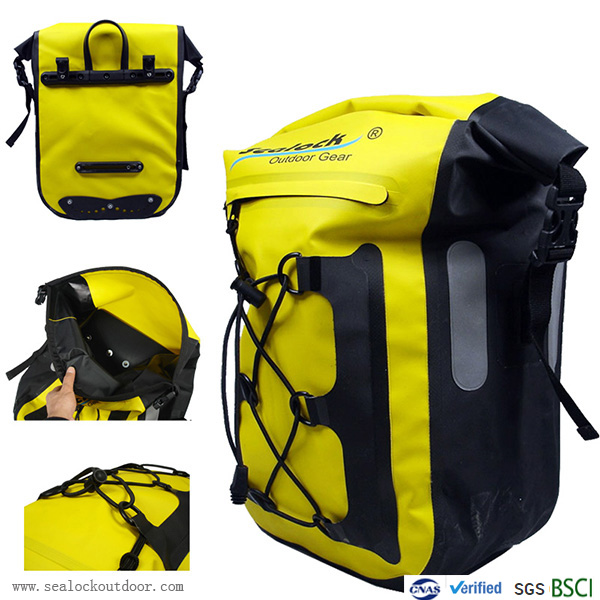
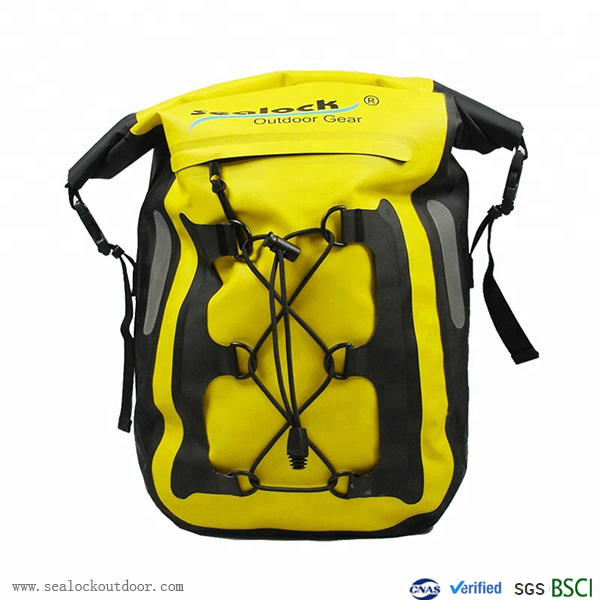
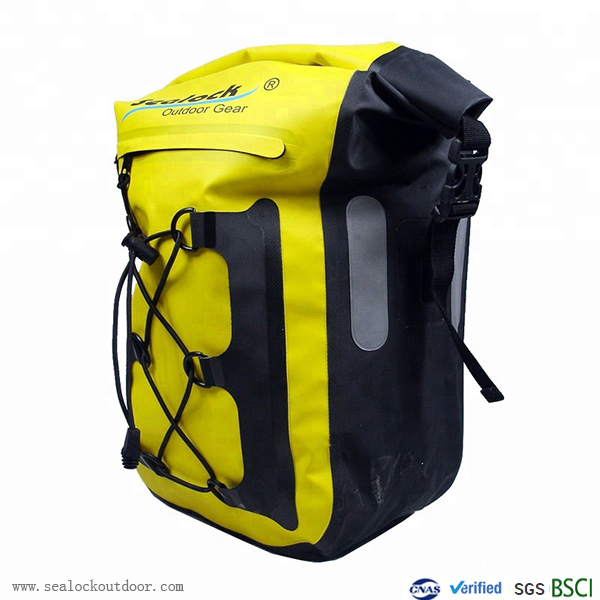
When comparing our waterproof bicycle bags, look at the mounting side as well as the front photograph. Our SL-K003 rack-mounted bicycle bag, for example, has rear mounting hardware that should be checked against the intended rack before a sample is approved.
The mounting-side view is essential: bag shape alone does not establish rack compatibility. SL-K003 product photographs.
Will Any Pannier Fit Any Bike Rack?
No. A rack’s overall width does not tell you whether a side pannier will fit. The hooks must engage the actual rail, avoid its junctions and work with the lower attachment. A rack-top platform, battery housing or another bag can also obstruct the mounting mechanism.
Buyer reviews describe bags that fit one rack but not another, including cases where the upper attachment worked and the lower strap was too short. The useful question is therefore more specific than whether a bag is suitable for a road bike or an e-bike: can every attachment engage on this particular rack?
Measure the rail and the available mounting space
Check
What to record
What it tells you
Rail section
Tube outside diameter, or the dimensions and shape of a non-round rail
Whether the hook can seat and its retention mechanism can close
Clear rail length
Usable rail between welds, uprights and other obstructions
Whether both upper attachments have room
Lower attachment
Its position below and behind the upper rail
Whether the lower hook or strap reaches a suitable fixing point
Space behind the bag
Rack platform, battery, mudguard and wheel position
Whether hardware, back panel or release parts will interfere
Loaded bag outline
Front edge, bottom edge and bulging side panels
Whether the filled bag clears the heel and moving parts
Use a caliper for the rail measurement and a tape measure for the layout. Send a side photograph with the measurements marked on it. For a retailer stocking bags for several rack models, keep a separate fit record for each one; the bicycle category is too broad to serve as a compatibility list.
Check the lower attachment before buying
The lower connection restrains the bottom of the pannier. It must meet the rack where the mounting system was designed to engage. A hook touching a tube without securing behind it is not the same as an engaged hook.
If a lower strap cannot reach, use only a manufacturer-approved adjustment or replacement. Moving the bag into a position that obstructs the wheel or compromises the upper hooks does not solve the fit problem.
Why Does a Pannier Hit the Rider’s Heel?
Heel strike occurs when the rider’s shoe and the front of the loaded bag occupy the same space during pedalling. Bag length matters, but so do the rack position, the bag’s shape, the bicycle geometry and the rider’s footwear. A capacity figure cannot answer this question.
Moving a pannier rearward can create more room where the mounting system permits it. It must still leave the upper attachments properly supported and the lower connection engaged. If the available adjustment cannot achieve both, the bag-and-rack combination needs to change.
Check clearance with the actual load
Pack a representative load. Use the lunch box, clothing, tools or touring kit the bag is intended to carry, then close it normally.
Mount the bag according to its instructions. Confirm the upper retention and lower attachment before checking anything else.
Check the whole pedal stroke. With the bicycle safely supported, use the rider’s normal shoes and foot position to check the closest point between heel and bag.
Check both sides when selling a pair. Include any rack-mounted accessories and secure loose straps.
Complete a controlled ride check. After static clearance is established, check for movement under the intended riding conditions and inspect the attachments again.
For an OEM sample, a short video of the loaded fit is more useful than a photograph of an empty bag on a display bicycle. Include the rack model, footwear and load in the sample record so the result can be repeated.
Why Does a Pannier Rattle or Swing on Bumpy Roads?
First identify what moves. If the hooks move against the rail, inspect their fit and any specified inserts. If the bottom swings while the top stays seated, check the lower attachment. If the mounting hardware stays still but the bag deforms toward the wheel, inspect the back panel and how the contents are supported.
A stronger fabric does not by itself correct movement at the mounting points. Likewise, adding more tension is not a remedy for a cracked hook, a loose mounting plate or a damaged fastener.
Rattle at the top: check hook engagement and the correct hardware for the rail.
Swing at the bottom: check whether the lower fixing point is engaged and correctly positioned.
Movement around a screw or rivet: stop using the damaged assembly and arrange an approved repair or replacement.
Loose material near the wheel: remove or secure shoulder straps, hook covers and excess webbing as the product instructions require.
Reviews include both attachment failures and loose covers entering the wheel area. These are reasons to examine the complete mounting assembly during sampling. Ask how damaged hooks, fasteners and other service parts can be replaced, as well as how the new bag attaches.
How Much Can You Pack and Still Close the Bag?
Choose capacity around a closed load. A roll-top bag needs enough free material above the contents to form its specified closure. Filling to the opening and leaving the collar unfolded does not demonstrate usable waterproof capacity.
For a commuter range, trial-pack a lunch container, change of clothes and the intended laptop sleeve together. For a touring range, use the actual packed equipment. A rigid object can determine the required opening and depth even when there appears to be spare volume around it.
Buyer feedback about difficult rolling and unexpectedly small usable space points to a useful sample check: can the intended user close the filled bag without forcing the buckles or changing the packing list? Include a gloved opening-and-closing check if winter commuting is part of the brief.
Also state whether a listed capacity refers to one bag or a pair. Volume and payload should have separate specifications. A bag with room for a heavy item is not automatically approved to carry its weight; the bag, mounting system, rack and bicycle limits all apply.
What Makes a Pannier Waterproof in Everyday Riding?
Look at the fabric, the seams and the closure together. Our SL-K003 product page lists 500D PVC mesh material and high-frequency welded seams. Those are useful construction details, but an intended water-protection claim still needs to be checked on the finished bag with the closure correctly secured.
Material and seam construction
When comparing PVC and TPU constructions for a custom range, request the complete material specification and a finished sample of each proposed version. A material name alone does not describe the whole bag. Examine the welded joints, corners and the way mounting components connect to the body.
Follow the closure instructions for the model being supplied. Keep the sealing surfaces clear of grit and leave the required rolling space. Ask separately about external pockets: a flap over a zipper does not establish the same protection as the main compartment.
Specify whether the product is intended for rain and wheel spray or another exposure. If the brief calls for an IP rating, request the relevant test report, sample identification and closure configuration. Do not turn a rain-use claim into an immersion claim.
Check access and closure with the intended load. Confirm external-pocket protection separately from the main compartment.
What Should Brands Specify Before an OEM Run?
Start the brief with the target racks and the job the bag must do. A commuter who removes a bag at every stop has different access needs from a touring rider who opens it mainly at camp. Write that use case down before choosing pockets, handles or closure hardware.
Intended use
Useful sample check
Detail to agree
Daily commuting
Fit the work kit, close the bag and remove it while wearing normal riding gloves
Opening, organisation, carrying method and release access
Touring or outfitter use
Check both loaded bags on the selected rack and inspect after a representative ride
Retention, permitted payload, spare hardware and repair procedure
E-bike retail range
Check the actual rack, battery access and other fitted accessories
Named compatible combinations and clear exclusions
Several rack models
Repeat installation and clearance checks on each specified rack
Hardware versions, supplied adapters and a fit guide
Before approving production, agree the loaded dimensions, usable closed capacity, mounting hardware, water-protection requirements and test conditions. Keep an approved sample and photographs of the accepted installation. These checks become much more useful when the factory and buyer are assessing the same configuration.
SL-K003 is a relevant starting point for a rack-mounted bicycle bag project. Its product photographs show the mounting side, and its published construction uses welded PVC material. Send your target rack information with the inquiry so the proposed mounting configuration can be reviewed.
Confirm the current capacity, dimensions, permitted load and rack compatibility in the sample specification. Colour and logo customisation are available; mounting changes should be reviewed against the target rack.
How Should Panniers Be Cleaned and Checked?
Remove road dirt from the bag and mounting surfaces with a soft cloth and mild soap solution, following the supplied care instructions. Let the bag dry before storage. Clear grit from the closure and check the hooks, lower attachment and fasteners before the next ride.
Repeated scuffing in one place is a reason to recheck the fit. For a retail range, include cleaning, installation and spare-part information with the product so the customer knows what to inspect and how to request the correct replacement.
Frequently Asked Questions
Will waterproof bike panniers fit any rack?
No. Check the rail shape and size, clear space for the upper attachments, the lower fixing point and clearance around the filled bag. Compatibility should be confirmed for the particular bag-and-rack combination.
How do I stop my heel hitting a rear pannier?
Check clearance with the bag packed and with normal riding shoes. Where the mounting system permits it, move the bag rearward while keeping all attachments properly engaged. If sufficient clearance is still unavailable, choose a different bag or rack combination.
What if the upper hooks fit but the lower strap cannot reach?
The lower attachment still needs to engage as designed. Check the approved adjustment range or ask for a suitable replacement part. If it cannot reach a valid fixing point, the combination is not ready to use.
Why does my pannier swing on rough roads?
Inspect upper-hook fit, the lower attachment and the back panel separately to identify where movement starts. Correct the fit using the specified hardware. Replace damaged mounting components before riding.
Why does a roll-top pannier hold less than I expected?
The closure needs free material above the load. Check usable capacity with the intended contents and the closure fully secured, and confirm whether the stated litres describe one bag or a pair.
How can I check whether a pannier is easy to use with gloves?
Try mounting, releasing, opening and closing a loaded sample while wearing the gloves used for riding. Check access to the release mechanism and buckle tabs, including when other rack accessories are installed.
Can I leave the shoulder strap attached while cycling?
Only if the product instructions provide a secure way to stow it clear of the wheel and other moving parts. Otherwise remove it. Check loose webbing and hardware covers as part of the same inspection.
Request a Quote
Developing waterproof bike panniers for a brand, importer or retailer? Send the target rack models or measured photographs, the intended packing list, the required closed capacity and your order quantity. Include the preferred material, colour, logo and water-protection requirements.
We use cookies to offer you a better browsing experience, analyze site traffic and personalize content. By using this site, you agree to our use of cookies.
Privacy Policy
 English
 Español
 Português
 русский
 Français
 日本語
 Deutsch
 tiếng Việt
 Italiano
 Nederlands
 ภาษาไทย
 Polski
 Svenska
 magyar
 Malay
 বাংলা ভাষার
 Dansk
 Suomi
 हिन्दी
 Pilipino
 한국어
 Türkçe
 Gaeilge
 العربية
 Indonesia
 Norsk
 تمل
 český
 ελληνικά
 український
 Javanese
 فارسی
 தமிழ்
 తెలుగు
 नेपाली
 Burmese
 български
 ລາວ
 Latine
 Қазақша
 Euskal
 Azərbaycan
 Slovenský jazyk
 Македонски
 Lietuvos
 Eesti Keel
 Română
 Slovenski
 मराठी
 Srpski језик