Sealock is a bikepacking bag manufacturer and OEM supplier. Bikepacking is rackless by definition: every bag hangs off the bike by straps alone, and there is no rack to carry the load, stop it swinging, or keep it off the tyre. That single fact changes the engineering of every bag in the system. This guide covers the problems that actually generate returns and poor reviews in this segment — sway, cable abrasion and clearance — and how a bag is specified to solve them.
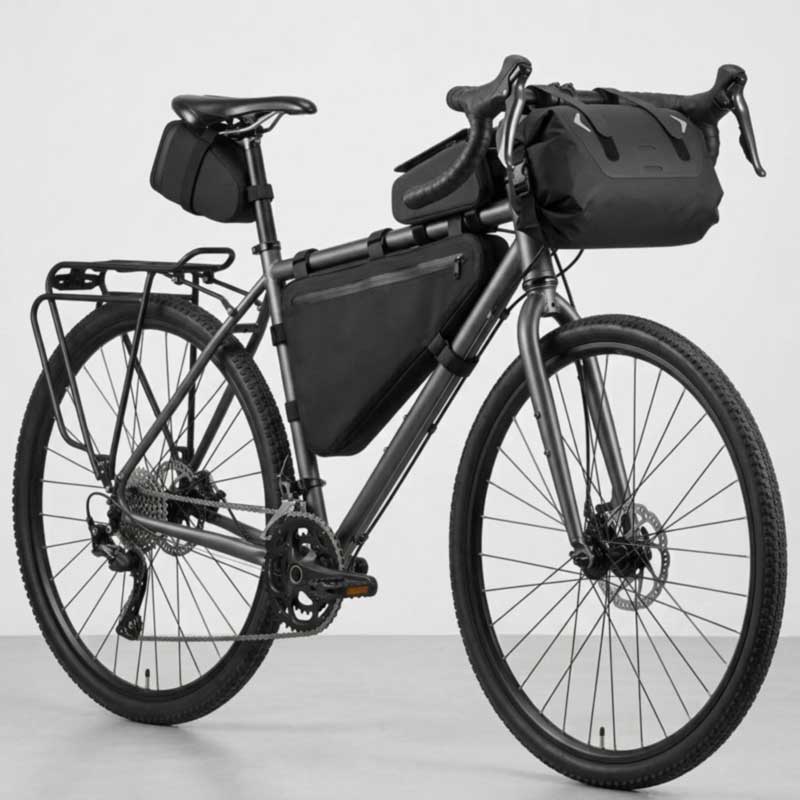
The distribution follows a simple principle: heavy items low and central, in the frame bag; light, bulky items at the extremities. Weight at the handlebar makes steering heavier; weight far back on a seat pack amplifies sway. A brand building a system rather than a single bag should design capacity at each position around that rule.
No rack anywhere — every bag is held on by its straps alone.
Problem One: Seat Pack Sway
The tail wag of a loaded seat pack is the defining complaint of the segment. Modern designs are much better at resisting it, but with a sloppy pack job even the best will wiggle — and on technical terrain, a bag that shifts or sways makes riding difficult and potentially dangerous.
Three things drive it, and each has a design response:
Mass far from the seatpost. The further back the load sits, the longer the lever. The guidance riders are given is to put the heaviest items closest to the seatpost — so the pack should be shaped to make that the natural way to fill it.
A loose load inside the bag. Contents that shift internally move the bag with them. The answer is compression — “high and tight”, everything compressed and every strap cinched — which is why an air purge valve matters, covered below.
Mounting that relies on the wrong components. Compression cords on top of a pack are not retention. The rule experienced riders repeat: if it can bounce loose, it will. Retention has to come from straps designed to carry the load, not from accessory cords.
For the heaviest-duty applications, stabilised seat packs add a rack support to eliminate sway altogether. That is a legitimate premium tier; for most programmes, correct shape, compression and strap geometry do the job.
Problem Two: The Handlebar — Where a Bag Can Cut a Brake Line
This is the safety issue in the category, and it is under-discussed. A handlebar bag sits among the brake hoses, gear cables and dropper lines, and two failures follow:
Installation interference. Cables and hoses get in the way of mounting, and the more a bike has, the worse it gets.
Abrasion over distance. A bag that presses cables against the frame will wear through them over a long trip — which can be catastrophic when the line in question is a brake hose.
Two further handlebar problems are less dangerous but drive reviews: frame rub and squeak, where a loaded bar bag contacts the head tube and squeaks as the bars turn, and steering weight, since heavy items at the bars make the bike take more force to steer.
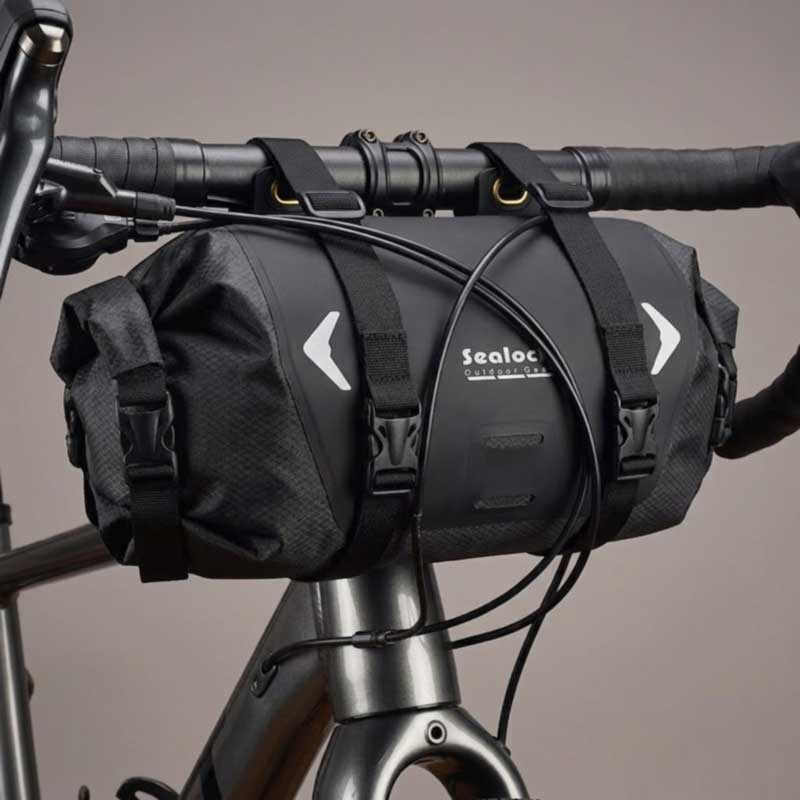
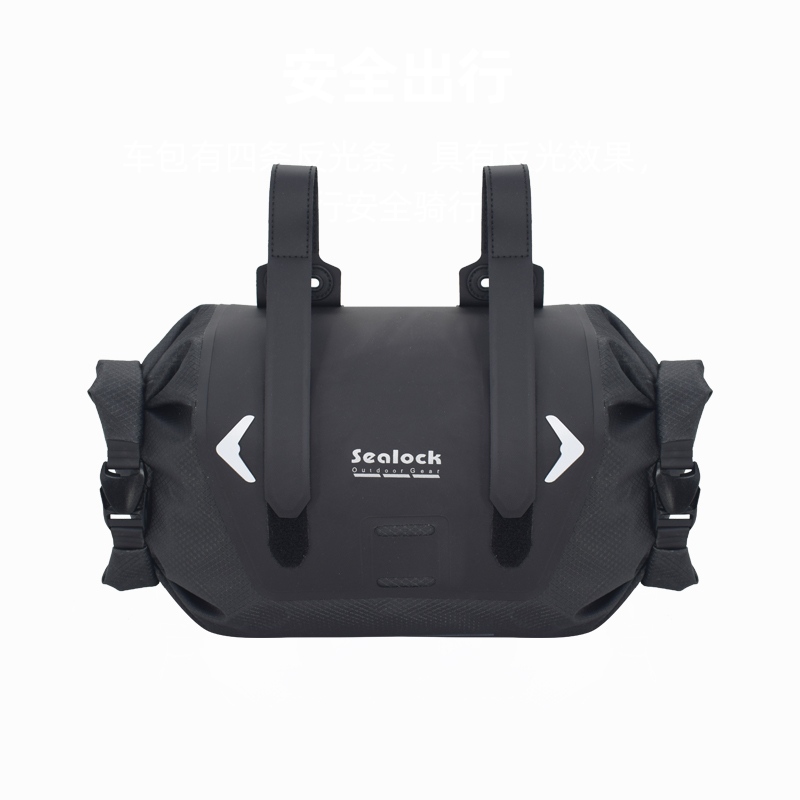
The design responses are standoff and mounting geometry: straps that route through welded ports rather than wrapping the bag body, spacers that hold the bag forward of the cables, and a mounting position that keeps the load off the head tube. Our 7L bar roll mounts via hook-and-loop straps through welded ports, backed by an independent retention buckle.
Problem Three: Clearance
Rackless bags live in tight spaces, and contact with a moving tyre destroys a bag quickly. The practical numbers:
Leave at least 3 inches (around 7.5 cm) between the bottom of a seat pack and the tyre — more on a bike with rear suspension.
On full-suspension bikes, measure at full compression, not at sag. A bag with clearance at rest can hit the tyre on the first big impact.
Dropper posts reduce the exposed seatpost available for mounting and need the stanchion protected, so smaller seat packs exist specifically for bikes with short exposed posts.
Road bikes have limited frame space and narrow tyre clearance, so total system capacity is inherently lower.
For a brand, clearance is a range-planning question: a single large seat pack will not suit every bike, and a smaller option serves riders with dropper posts, small frames or full suspension who would otherwise have no product.
Straps through welded ports, cables clear of the bag — the brake line is what's at stake.
Air Management: The Purge Valve
A roll-top traps air as it closes, and trapped air is the enemy of a stable load: a bag full of air is larger, softer, and more prone to shifting. Riders note that packing is far easier when the bag can purge air while it is being rolled closed.
Our handlebar roll uses a threaded air purge valve with a gasket, welded into the shell. It serves two purposes that matter specifically in bikepacking: the roll compresses down onto its load rather than holding a cushion of air, and the valve then draws the shell tight so the contents stay still against the bars instead of shifting on rough ground. It is a small component that directly addresses the stability problem.
Terrain Sets the Stability Specification
Smooth gravel and road — capacity can take priority over stability, since weight shifts won't create dangerous handling.
Mixed terrain — versatility matters most; bags need to stay secure across conditions even at the cost of some capacity.
Technical singletrack — tight, secure mounting becomes critical. This is where retention redundancy, compression and correct shape stop being refinements and become the product.
The OEM Specification Checklist
Capacity per position, designed around weight distribution rather than maximum volume.
Mounting method — one-piece bag with integrated hardware, or a two-piece harness with a removable dry bag.
Retention redundancy — an independent buckle or strap beyond hook-and-loop, particularly on the bars.
Cable standoff on handlebar bags, and straps through welded ports.
Strap material — rubberised straps protect the frame finish and grip better.
Air purge valve on roll-top bags.
Clearance guidance in the listing, including full-suspension compression and dropper posts.
Size range so small frames and short seatposts are served.
Rating in numbers — for bikepacking, a water-jet rating models road spray better than a still-water dunk.
The Range
Image
Model & specs
Position in the system
MOQ
SL-K060B Roll-Top Handlebar Bag — 7L, 39×25 cm; RF-welded TPU-laminated ripstop; roll-top at both ends, each opening independently; threaded air purge valve with gasket; side compression straps both ends; two hook-and-loop bar straps through welded ports plus an independent retention buckle; four retroreflective elements; IPX6; fits drop, flat and riser bars; also available as smaller bar bags, larger rolls and a harness-mount version.
Handlebar roll — a standard bikepacking position for a shelter, sleeping bag or insulation layer
300
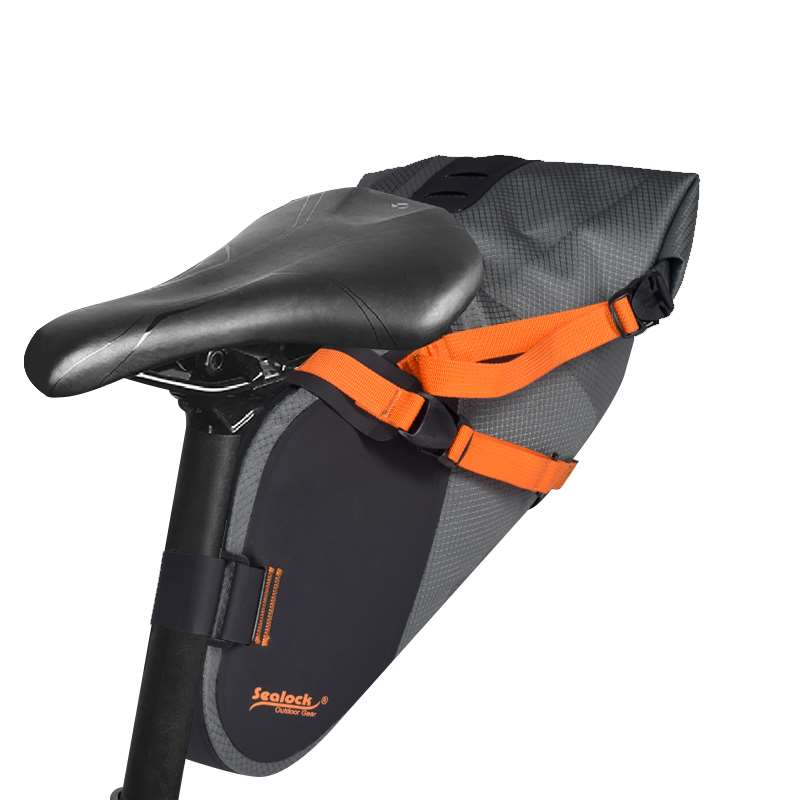
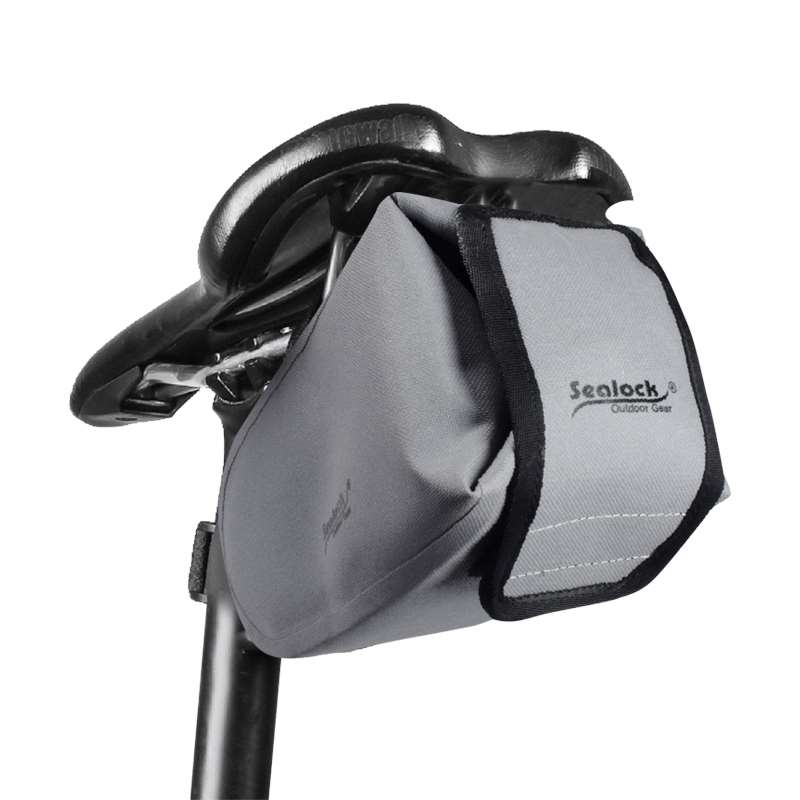
SL-K069 Bikepacking Seat Bag — waterproof TPU film on 600D nylon; roll-style closure; keeps gear dry through days of wet riding; doubles as a fender for the rider; wipes clean.
Seat pack — clothing and camp kit, roll closure for the rear spray zone
300
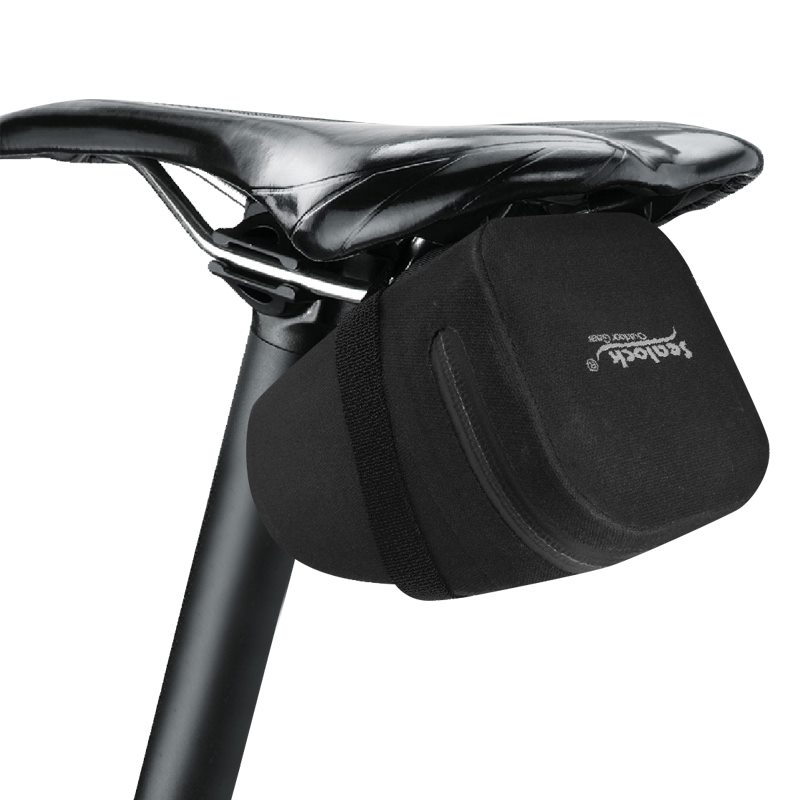
SL-K032 Cycling Back Seat Bag — 840D TPU / nylon; seamless bonding process across the body; waterproof zipper; adjustable size; cold resistant, ageing resistant, easy to clean.
Seat pack — adjustable volume lets the load be cinched tight against sway
300
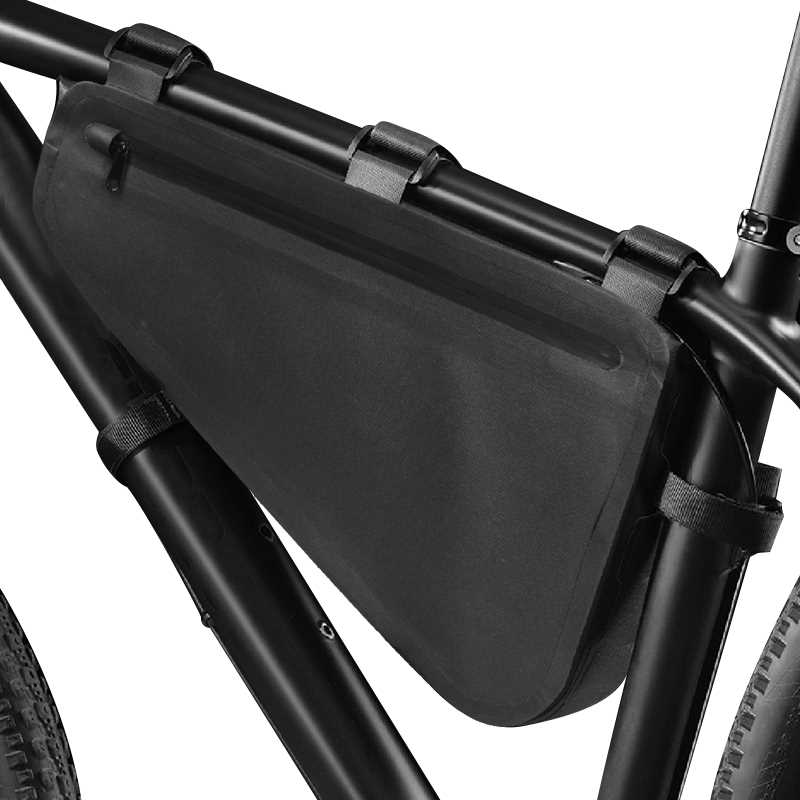
SL-K036 Bicycle Triangle Bag — 600D waterproof nylon; waterproof zipper; sized to sit inside the frame triangle.
Frame bag — the dense, heavy items, carried low and central
300
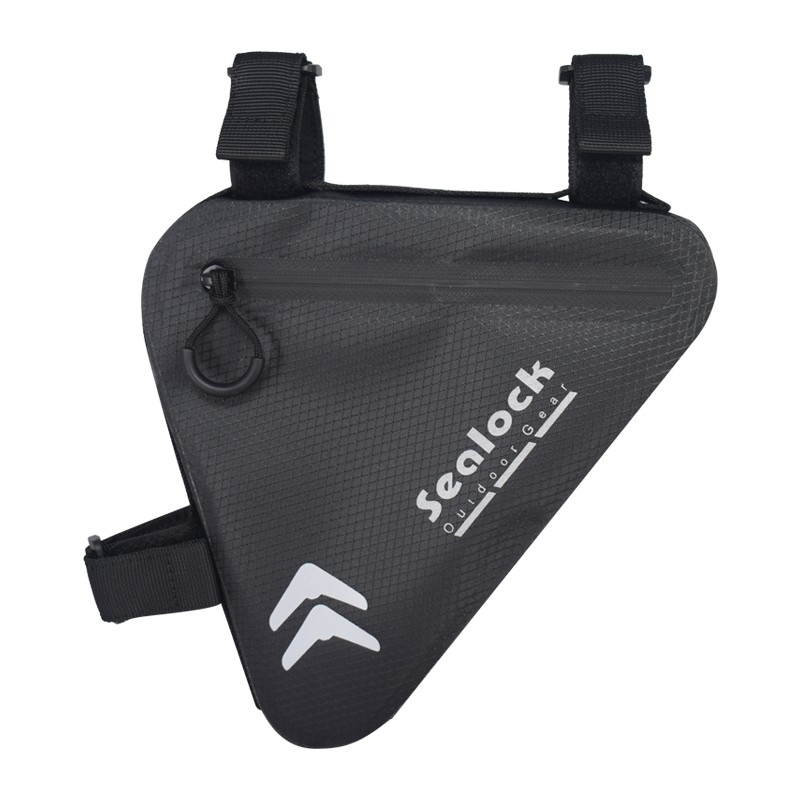
Waterproof Bicycle Frame Bag — 0.8L, 80 g; 800D TPU; waterproof zipper; three adjustable straps, one removable and repositionable.
Compact frame bag — for small frames and bikes that need bottle cage access
300
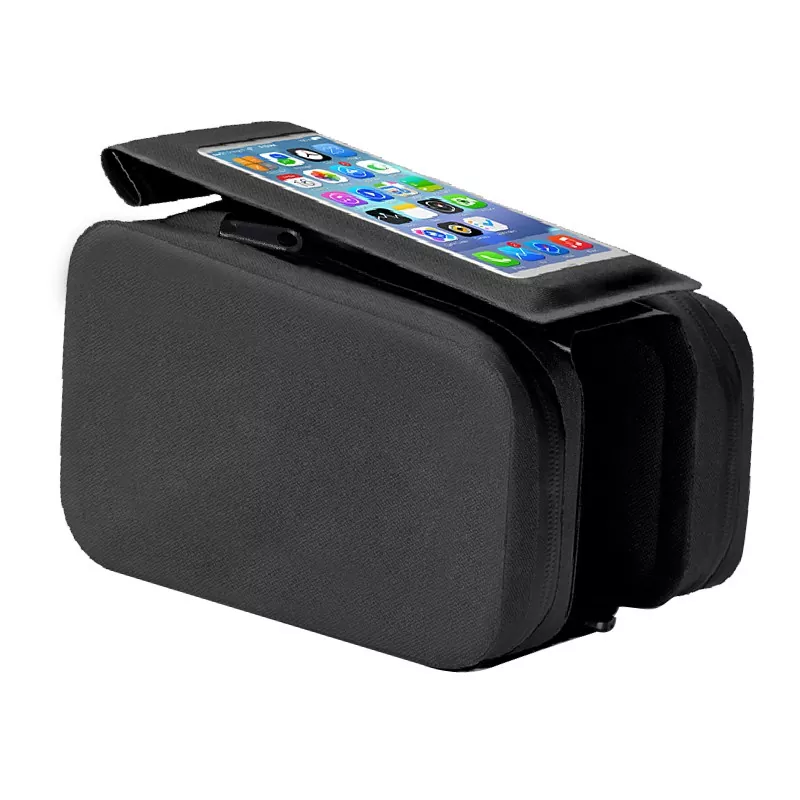
SL-K041 Top Tube Bag with Phone Window — approx. 0.7L across two compartments; moulded EVA hard shell; touch window for phones to 6.5″; cable port to run power to the phone bay; three tool-free straps; fits round, aero and carbon top tubes; water-repellent.
Top tube — navigation and a power bank within reach
500
SL-K055 Strap-On Wedge Pack — TPU; waterproof non-slip zipper; aerodynamic wedge; two straps wrapping the aero seatpost; reflective logos both sides.
Repair kit carrier — for bikes with little exposed seatpost
300
Capacity, mounting method, strap material, retention hardware, valve, reflective layout, external lash points and harness-mount versions are all specifiable per order, or a system can be developed from a sketch. Samples 7–15 days, production 30–45 days after approval, from Dongguan or Ho Chi Minh City.
Quality Control
Production runs under an ISO 9001 quality system, gated in three tiers — IQC (incoming TPU laminate for coating thickness, adhesion and weldability, plus straps, hook-and-loop, buckles, valves and reflective film against the signed standard), IPQC (cutting tolerance, weld integrity at body seams, strap ports and valve mountings, and closure alignment, with peel tests on sample welds at each run start), and OQC (AQL sampling, water-jet testing to the declared rating, and gold-sample comparison, with SGS or QIMA inspection available). A pre-production sample is approved before mass production and a final inspection is carried out before every shipment.
For bikepacking the lab weights toward the rackless failure modes: vibration testing on loaded mounts, hook-and-loop cycle testing including with contamination present, strap and port tensile strength at and beyond rated load, valve seal testing after repeated opening, closure band fatigue at both roll lines, cold flex, and reflective retention after abrasion and UV, alongside bonding strength under peel load.
FAQ: OEM Bikepacking Bags
Q: What causes seat pack sway, and how is it designed out?
A: Mass far from the seatpost, a loose load inside the bag, and retention that relies on the wrong components. The design answers are a shape that puts heavy items near the post, compression — including an air purge valve — and straps sized to carry the load rather than accessory cords.
Q: Is a handlebar bag a safety risk?
A: It can be if it presses cables against the frame. Over a long trip that abrades them, which is catastrophic if the line is a brake hose. Straps through welded ports and a standoff that holds the bag forward of the cables are the design response.
Q: How much tyre clearance does a seat pack need?
A: At least 3 inches between the bottom of the bag and the tyre, more with rear suspension — and on full-suspension bikes, measured at full compression rather than at sag.
Q: Why does a purge valve matter on a bikepacking bag?
A: Trapped air makes a roll-top larger, softer and more prone to shifting. Purging while rolling compresses the bag onto its load, and the valve holds the shell tight so contents don't move on rough ground.
Q: One-piece bag or two-piece harness?
A: One-piece bags are sleek and quick to fit; two-piece harness systems use a removable dry bag, so the load can come off the bike without unstrapping the harness. Both are worth offering, and our bar roll is available in a harness-mount version.
Q: Does one seat pack fit every bike?
A: No. Dropper posts, small frames and full suspension all reduce the space available, which is why a range should include a smaller seat pack alongside the main one.
Talk to the Factory
For quotations, samples, and OEM/ODM proposals on bikepacking systems, contact Sealock at info@sealock.com.hk or +86-769-82009361. Over twenty years of high-frequency welding and industrial sewing under one roof, ISO 9001 production, vibration-tested mounts, dual China–Vietnam manufacturing, and third-party inspection on request.
We use cookies to offer you a better browsing experience, analyze site traffic and personalize content. By using this site, you agree to our use of cookies.
Privacy Policy
 English
  Español
  Português
  русский
  Français
  日本語
日本語  Deutsch
  tiếng Việt
  Italiano
  Nederlands
  ภาษาไทย
  Polski
  Svenska
  magyar
  Malay
Malay  বাংলা ভাষার
  Dansk
Dansk  Suomi
Suomi  हिन्दी
  Pilipino
  한국어
한국어  Türkçe
  Gaeilge
  العربية
  Indonesia
  Norsk
Norsk  تمل
تمل  český
český  ελληνικά
  український
  Javanese
  فارسی
فارسی  தமிழ்
தமிழ்  తెలుగు
  नेपाली
  Burmese
  български
  ລາວ
ລາວ  Latine
  Қазақша
  Euskal
  Azərbaycan
  Slovenský jazyk
  Македонски
  Lietuvos
  Eesti Keel
  Română
  Slovenski
  मराठी
मराठी  Srpski језик