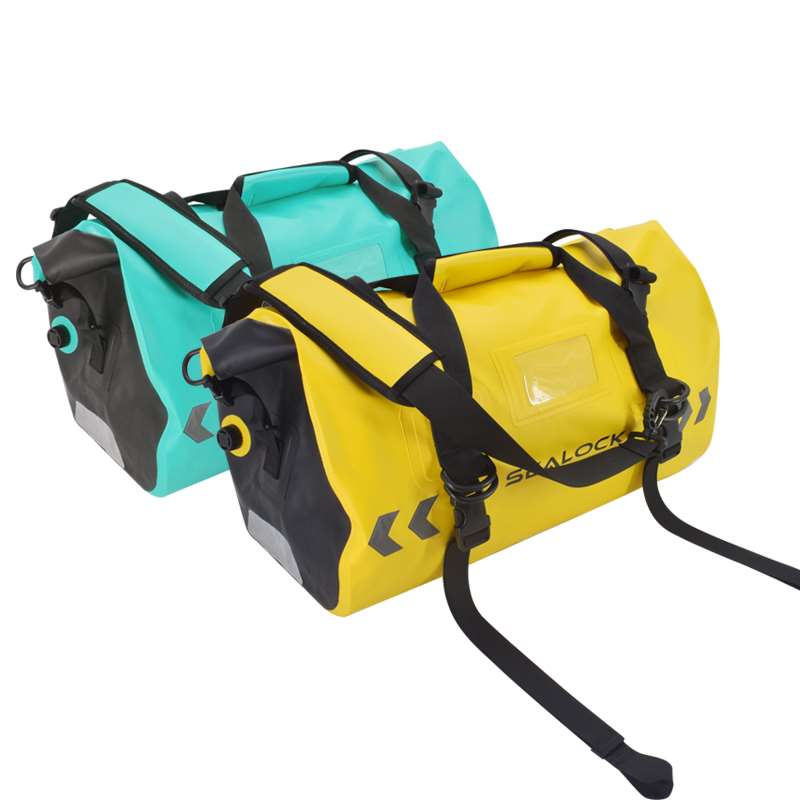
Sealock is a waterproof motorcycle bag manufacturer and OEM supplier. Motorcycle luggage faces three hazards that no other bag category deals with: a hot exhaust a few centimetres away, sustained high-speed vibration that loosens everything it touches, and a 50-kilogram load that must not move at highway speed. Rain is almost the easy part. This guide covers what those conditions demand from construction, where soft luggage genuinely wins and where it doesn't, and the range.
Hazard One: Exhaust Heat
This is the failure that produces the most visible and frustrating damage a rider can experience, and it is specific to this category. Soft luggage mounted too close to exhaust pipes melts, deforms and scars, and the damage happens on a single ride rather than over a season.
Three things follow for a product specification:
Fitment must be checked before mounting, not after. Clearance around the rear wheel, exhaust pipes and suspension components should be measured with the bike on level ground. Universal-fit bags in particular need the available mounting space measured before committing to a position.
Saddlebag supports are the standard remedy for keeping soft bags off hot exhaust components, and a brand selling universal-fit soft luggage should say so plainly in its fitting instructions rather than leaving a customer to discover the problem.
Material temperature range belongs in the specification. A coated fabric has a working temperature range, and proximity to an exhaust is exactly the condition that tests it. This is a line worth writing into a tech pack rather than assuming.
Clearance to the exhaust is checked before the first ride, not after the first melt.
Hazard Two: Vibration Loosens Everything
Sustained motorcycle vibration works against every fastening on the bike. Riders report bolts backing out, brackets loosening and, in the worst accounts, bags coming off entirely. The accepted countermeasures tell you what the engineering problem actually is: thread-locking adhesive on screws, vibration-resistant washers, rubber gaskets to absorb shock, and — the important one for soft luggage — adjustable straps or safety cables as a secondary retention system, particularly on long-distance rides.
That last point is the honest weakness of soft luggage and worth stating directly: soft bags rely on straps and buckles that can loosen over rough terrain, so regular checks are essential. The design response is redundancy rather than denial — our motorcycle bags mount with hook-and-loop plus two independently adjustable straps, so the retention does not depend on a single system. The customer-facing response is equally simple: tell riders to check the straps at fuel stops, and print it.
Hazard Three: Load Security and Balance
A 50-kilogram load carried at speed changes how the bike handles, and the mounting stress depends on how it is distributed. The guidance riders are given maps directly onto how twin panniers should be specified:
Distribute gear evenly between both bags — uneven loading puts excess stress on the mounting system and causes instability, regardless of total weight.
Heavy items low and close to the bike's centre, to keep the centre of gravity stable.
Avoid packing one side with dense items — tools, locks, water — while the other carries only clothing.
Stay within the rated load, because overloading stresses the mounting system however evenly it is spread.
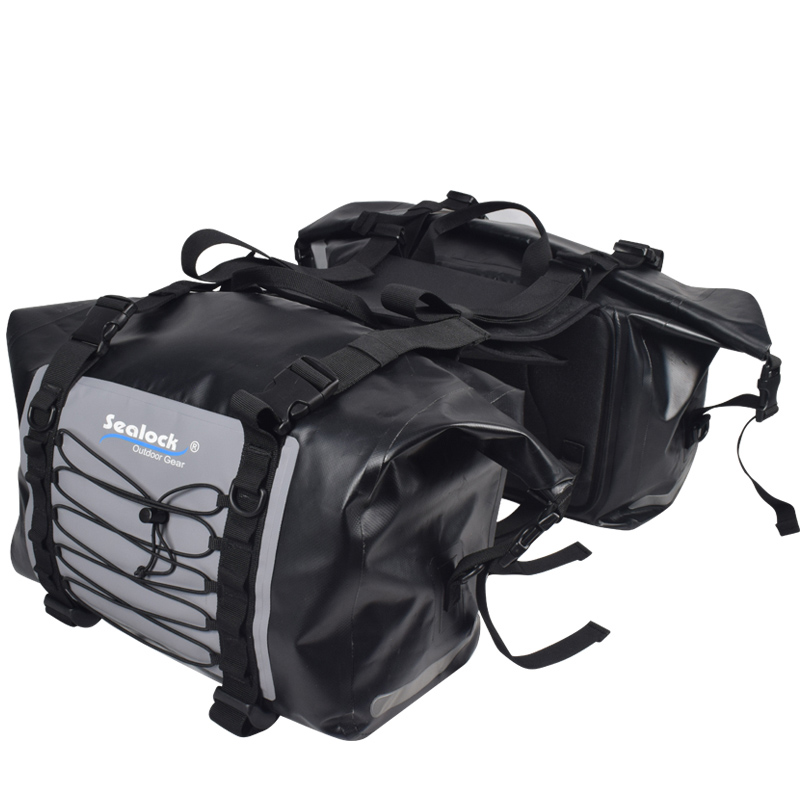
Which is why our twin-pannier products are built as two separate, independently usable compartments of equal capacity rather than one bag draped over the seat: symmetrical volumes make even loading the default rather than something the rider has to work at.
Soft or Hard: An Honest Comparison
Soft luggage
Hard panniers
Weight
Lighter
Heavier; affects handling
In a fall
Less likely to cause injury — why adventure riders prefer it
Acts as a sacrificial structure protecting the bike
Off-road
Preferred — flexes rather than cracking
Boxes can crack at mounting points from vibration
Security
The genuine weakness — no integrated lock
Integrated locks and rigid construction
Failure modes
Wear at contact points, zipper failure, strap fraying
Cracking at mounts; plastic can shatter in cold
Repairability
Straps and buckles replaceable in the field
Extensive damage usually means replacement
Packability
Folds away when not in use
Fixed volume
We build soft luggage, so it is worth being straight about the trade: soft bags do not offer the theft protection of a locking hard case. The honest guidance to pass to customers is to use zip and mounting-point locks, secure the bag to the bike with a cable lock when leaving it, and carry valuables off the bike. Many riders run a hybrid setup for exactly this reason — soft bags for compressible items, a small hard case for electronics.
Why Welded Construction Earns Its Place Here
At highway speed the water load is not rain falling on a bag. It is road spray driven at pressure, hour after hour, with grit in it — and vibration working that water along any stitch line it can find. A seamlessly welded PVC body has no needle holes for that mechanism to exploit, which is why our motorcycle bags are welded rather than stitched and taped.
Two further reasons specific to this use:
Wipe-clean. Motorcycle luggage collects road film, salt and insects. A welded PVC shell cleans with a cloth, where a stitched textile bag holds it.
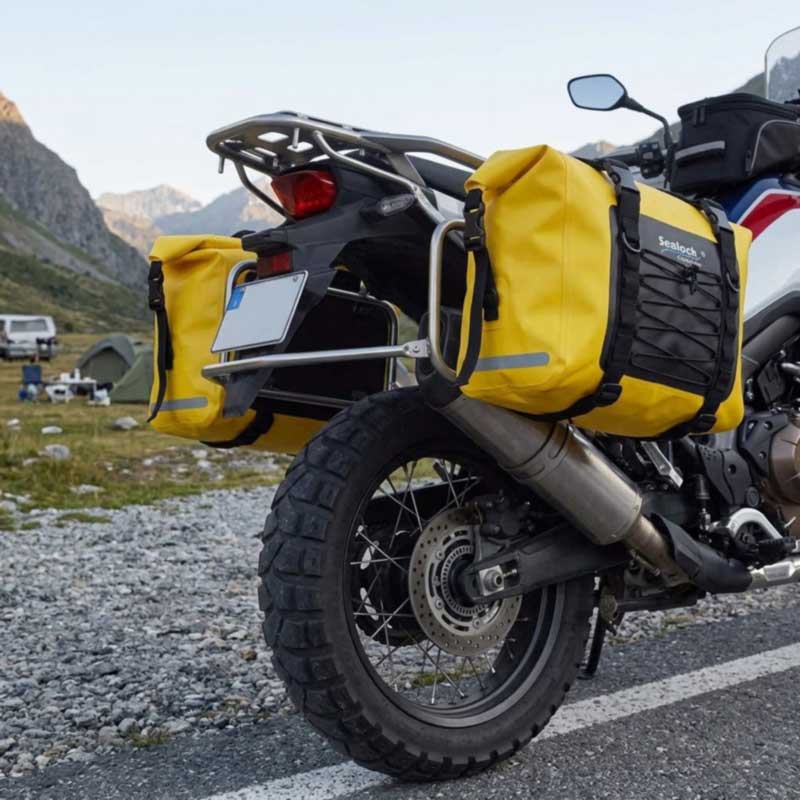
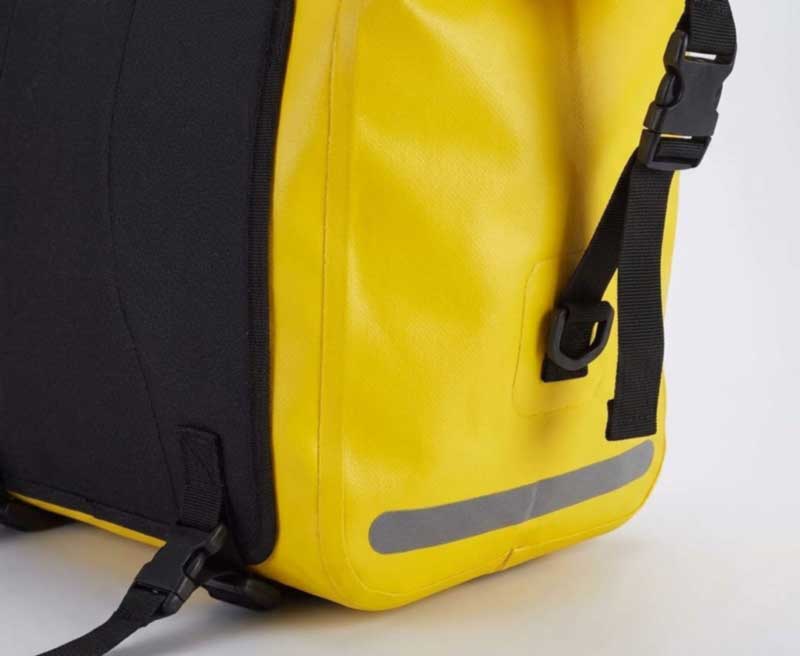
Reflective at both sides. A motorcycle is overtaken from behind at closing speeds a cyclist never faces, so reflective elements on both sides of a pannier are a safety specification rather than a styling one.
Welded seams, reflective both sides, and two retention systems rather than one.
The Range
Image
Model & specs
Format
MOQ
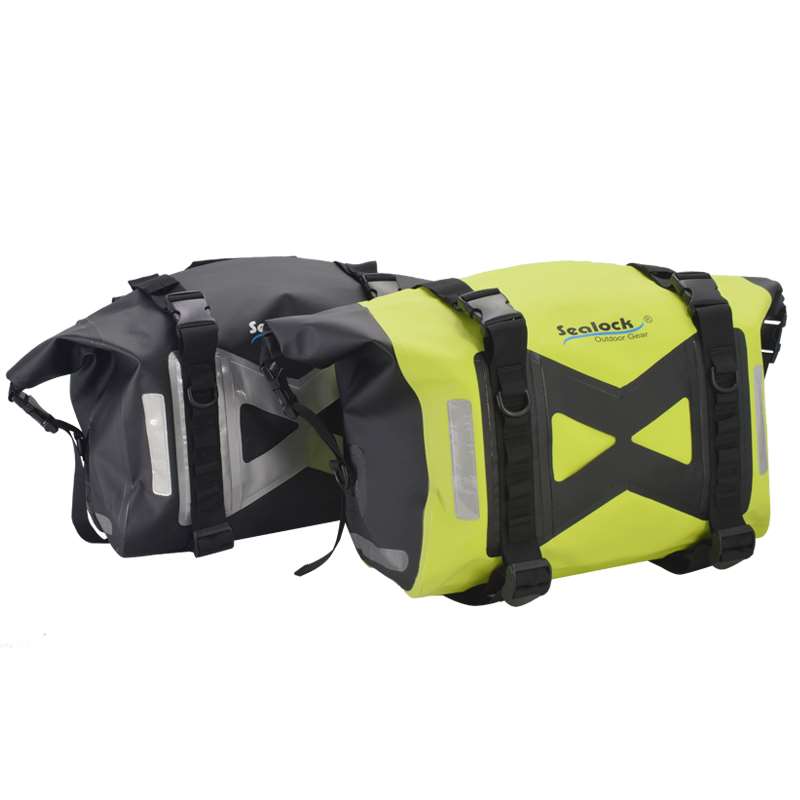
SL-C704 Motorcycle Saddlebags 80L — 80L as 40L×2; 50 kg carrying capacity; durable PVC, waterproof, dustproof and weatherproof; two separate left and right pockets, usable independently; hook-and-loop plus two length-adjustable straps; sturdy shoulder straps; reflective signs both sides; holds helmets, bottles, clothing, camping gear; yellow.
Twin panniers — the largest in the range, for touring
300–500
SL-C704 Motorcycle Side Bags 50L — 50L as 25L×2, detachable; 50 kg carrying capacity; durable PVC; two separate pockets usable independently; hook-and-loop plus two adjustable straps; sturdy shoulder straps; reflective design.
Twin panniers, mid capacity — detachable pair
300–500
SL-C807 Backseat Bag 50L — 50L as 25L×2; 50 kg carrying capacity; durable PVC, waterproof, dustproof, weatherproof; two separate pockets usable independently; hook-and-loop plus two adjustable straps; sturdy shoulder straps.
Backseat mount — suits Adventure, Sportster, Softail, V-Star, Shadow, Vulcan
300–500
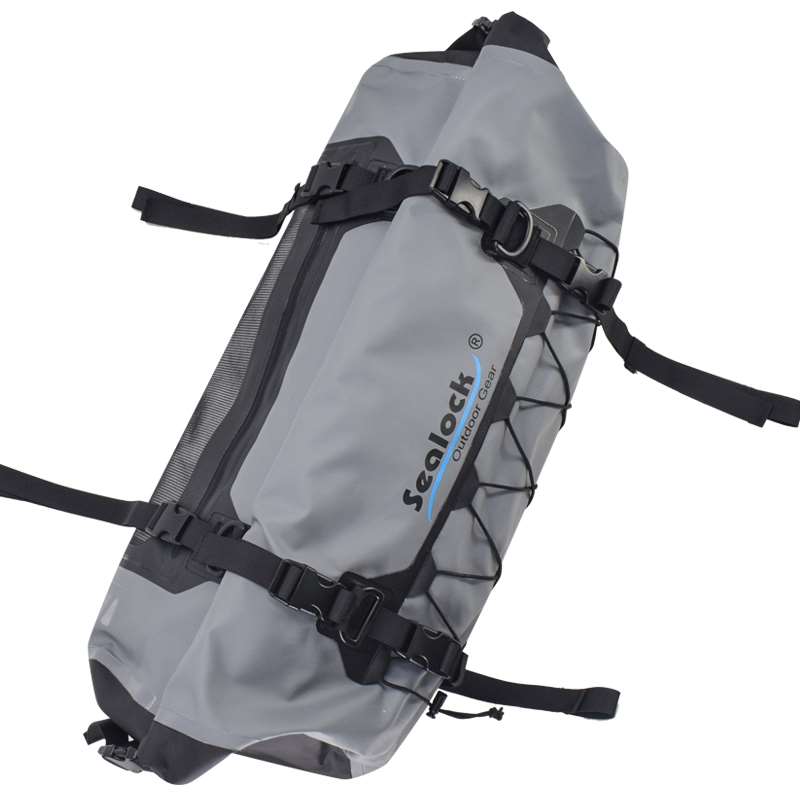
SL-C668 Backseat Bag 40L — 40L; 50 kg carrying capacity; strong durable PVC, seamlessly welded, easy to clean; reflective logos both sides for night visibility; holds helmets, bottles, clothing, camping equipment.
Single large backseat bag — long-distance touring
300–500
SL-C624 Backseat Bag 40L — 40L; 50 kg carrying capacity; strong durable PVC, seamlessly welded, easy to clean; reflective logos both sides; suits a wide range of models.
Single backseat bag — the core touring size
300–500
Capacity, mounting system, strap configuration, reflective layout, colourway and branding are all specifiable per order, or a bag can be developed from a sketch. Model-specific fitment can be developed where a brand serves a particular platform — which removes most of the fitment risk that universal-fit luggage carries. MOQ 300–500 pieces, samples 7–15 days, production 30–45 days after approval, from Dongguan or Ho Chi Minh City.
One Design Note Worth Passing to Customers
A bag mounted over the pillion seat means the bike cannot carry a passenger. It is obvious once stated and routinely overlooked at the point of purchase, so it belongs in the listing copy rather than in a return request. For two-up touring, the twin-pannier format is the answer: it uses the sides rather than the seat.
Quality Control
Quality is gated in three tiers — IQC (incoming PVC for coating thickness, adhesion and weldability, plus webbing, buckles, hook-and-loop and reflective film against the signed standard, with colour difference and fastness), IPQC (cutting tolerance, weld integrity at body seams and strap anchor points, and mounting assembly, with peel tests on sample welds at each run start), and OQC (AQL sampling, water testing to the declared rating, and gold-sample comparison, with SGS or QIMA inspection available). Sealock also executes the customer inspection procedure on finished goods: unboxing, vacuum extraction, a 24-hour static rest, and air-leak determination.
For this category the lab weights toward the three hazards: vibration testing on the mounting system under load, strap and hook-and-loop cycle testing including with contamination present, elevated-temperature exposure, load testing to and beyond the rated 50 kg with jerk-loading on strap anchors, reflective retention after abrasion and UV, and salt and road-grime exposure, alongside weld bond and peel strength, abrasion, tear and tensile.
FAQ: Sourcing Motorcycle Bags
Q: What is the most common cause of damage to soft motorcycle luggage?
A: Contact with hot exhaust components. Clearance around the exhaust, rear wheel and suspension should be checked with the bike on level ground before mounting, and saddlebag supports are the standard way of keeping soft bags clear. Put the fitting guidance in the packaging.
Q: How do you stop straps loosening from vibration?
A: With redundancy rather than a single system. Our bags mount with hook-and-loop plus two independently adjustable straps, and riders should be told to check them at fuel stops. Soft luggage relies on straps that can loosen over rough terrain — that's a real characteristic of the format, not a defect.
Q: Why twin panniers rather than one big bag?
A: Even weight distribution. Uneven loading stresses the mounting system and destabilises the bike regardless of total weight, so two symmetrical compartments make balanced packing the default. They also leave the pillion seat free for a passenger.
Q: Is soft luggage secure against theft?
A: Not to the level of a locking hard case, and we'd rather say so. Advise zip and mounting-point locks, a cable lock to the bike when leaving it, and valuables carried off the bike. A hybrid setup — soft bags plus a small hard case — is what many touring riders settle on.
Q: Why welded rather than stitched and taped?
A: Because at highway speed the load is pressurised road spray with grit in it, and vibration works water along any stitch line. A seamlessly welded PVC body has no needle holes for that to exploit, and it wipes clean of road film and salt.
Q: Can you build model-specific fitment?
A: Yes. Model-specific luggage is pre-engineered to fit a particular platform and removes most of the fitment risk universal bags carry, which is worth doing if your brand serves a defined set of machines.
Talk to the Factory
For quotations, samples, and OEM/ODM proposals on motorcycle luggage, contact Sealock at info@sealock.com.hk or +86-769-82009361. Over twenty years of high-frequency welding and industrial sewing under one roof, seamlessly welded PVC construction, vibration-tested mounting systems, dual China–Vietnam production, and third-party inspection on request.
We use cookies to offer you a better browsing experience, analyze site traffic and personalize content. By using this site, you agree to our use of cookies.
Privacy Policy
 English
  Español
  Português
  русский
  Français
  日本語
日本語  Deutsch
  tiếng Việt
  Italiano
  Nederlands
  ภาษาไทย
  Polski
  Svenska
  magyar
  Malay
Malay  বাংলা ভাষার
  Dansk
Dansk  Suomi
Suomi  हिन्दी
  Pilipino
  한국어
한국어  Türkçe
  Gaeilge
  العربية
  Indonesia
  Norsk
Norsk  تمل
تمل  český
český  ελληνικά
  український
  Javanese
  فارسی
فارسی  தமிழ்
தமிழ்  తెలుగు
  नेपाली
  Burmese
  български
  ລາວ
ລາວ  Latine
  Қазақша
  Euskal
  Azərbaycan
  Slovenský jazyk
  Македонски
  Lietuvos
  Eesti Keel
  Română
  Slovenski
  मराठी
मराठी  Srpski језик