A wet dry bag is a bag with two separated zones: one that keeps dry things dry, such as a phone, towel or change of clothes, and one that holds wet things, such as a swimsuit, goggles or a damp towel, so the water does not reach the dry side. Swimmers, gym users, beachgoers and surfers use them to carry wet and dry kit together in one bag. The idea is simple, but how the two zones are separated decides whether the bag actually works, and it is the part most cheap wet dry bags get wrong.
This guide explains the three main ways wet dry bags are built, the common problems users report, and what to look for when choosing or specifying one. It is written for swim clubs, gyms, retailers and brands sourcing wet dry bags, and draws on over 20 years of making welded waterproof bags at our factories in Dongguan, China and Ho Chi Minh City, Vietnam.
The Question That Decides the Design: Keep Water In, or Keep It Out?
Every wet dry bag has to answer one question: is the waterproof barrier there to keep water out of the dry items, or to keep water in with the wet items? The two goals pull in opposite directions. A sealed wet compartment holds dripping swimwear without leaking onto your other things, but it also traps humidity, so a towel left inside overnight will smell. A vented or mesh wet pocket lets wet kit breathe and dry, but it lets water drip out of the bag.
Good designs make the choice deliberately for the way the bag will be used. For a bag that goes into a car, onto a desk or into a locker, keeping wet water in usually matters more. For a beach or pool bag that will be put down on a wet deck anyway, keeping the dry side sealed and letting the wet side drain is often the better trade.
Three Ways a Wet Dry Bag Is Built
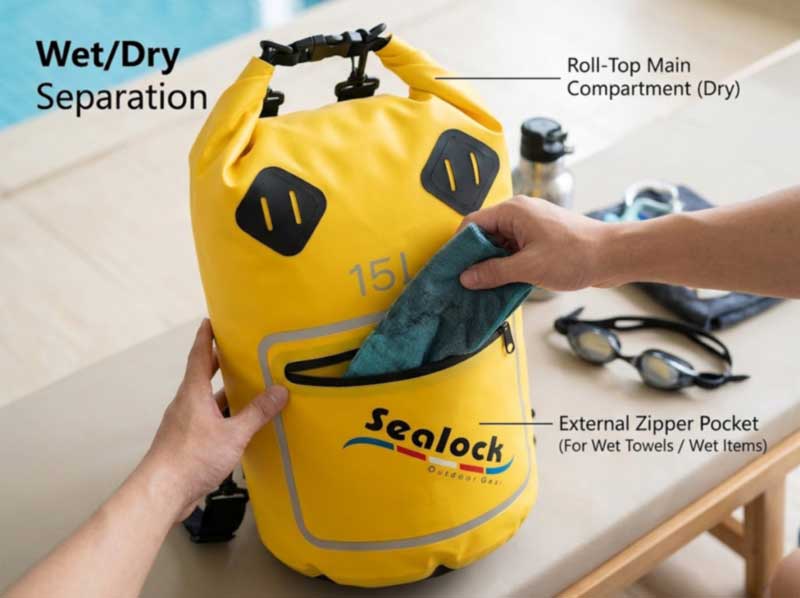
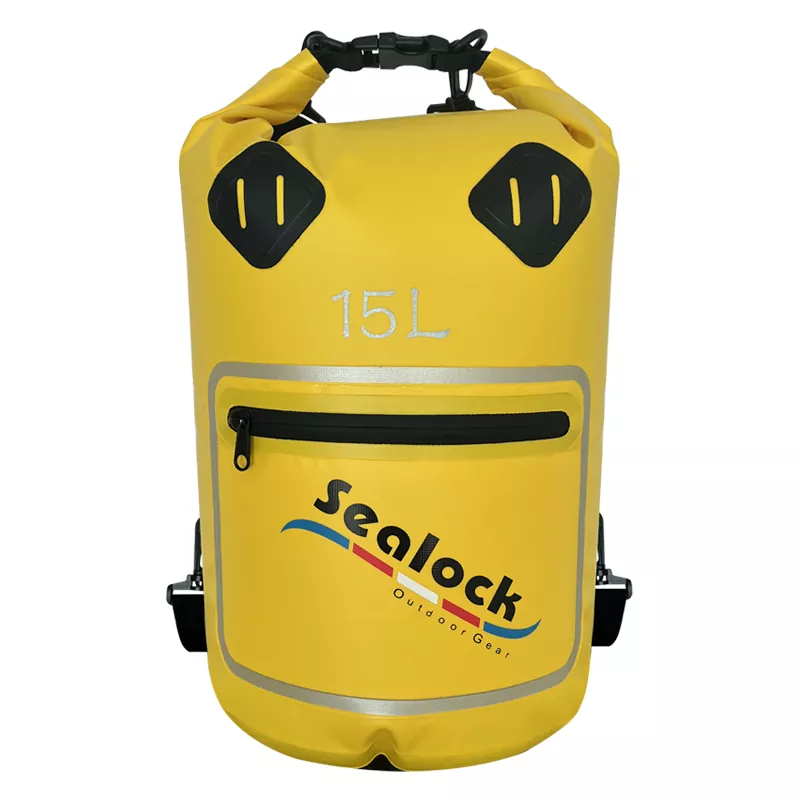
The first and most robust approach is a sealed dry main compartment with a separate wet pocket outside it. The main compartment is a welded roll-top or a waterproof zipper chamber that protects the dry items completely, while the wet pocket sits outside the waterproof envelope. Water from the wet pocket cannot reach the dry side because the two are separated by a welded, waterproof wall. Our SL-D693 tube dry bag is built this way, with a sealed IPX7 roll-top main chamber and an external zip pocket for damp items.
The second approach is two sealed compartments in one bag, one for dry and one for wet, each with its own waterproof closure. It keeps water in on the wet side and out on the dry side, which is ideal for gym bags and travel. The critical detail is the wall between the compartments: if it is sewn, water seeps through the stitch holes from one side to the other, which is the most common reason users say a wet dry bag "leaked into" the dry side. A welded dividing wall does not have this problem.
The third approach is a single waterproof bag used together with a separate wet pouch inside it. It is simple, cheap and flexible, and the pouch can be removed and washed, but the separation is only as good as the pouch and its closure.
A sealed dry chamber with the wet kit kept outside it: water cannot cross a welded wall.
What Users Complain About, and How to Avoid It
The most common complaint is mildew and smell. A sealed bag with a wet towel inside is a warm, humid space, and within a day or two it starts to smell. The fix is partly design, such as a wet pocket with ventilation or drain holes, and partly use: wet kit should come out and dry as soon as possible, and the bag should be stored open. Smooth, wipe-clean PVC and TPU interiors are much easier to keep fresh than fabric linings.
The second complaint is water crossing from the wet side to the dry side, usually through a sewn divider or a wet pouch that was not closed properly. Welded construction for any wall that separates wet from dry is the reliable answer. The third is corroded zippers: chlorine and salt water attack standard metal zippers quickly, so pool and beach bags need plastic or corrosion-resistant zippers and hardware. The fourth is a soggy base. Fabric bottoms soak up water from wet pool decks and changing room floors, while a tarpaulin base stays dry and wipes clean. Finally, a wet pocket that is too small for a towel or fins forces users to put wet kit in the dry side anyway, so the wet zone needs to be sized for the bulkiest wet item.
Choosing the Right Size
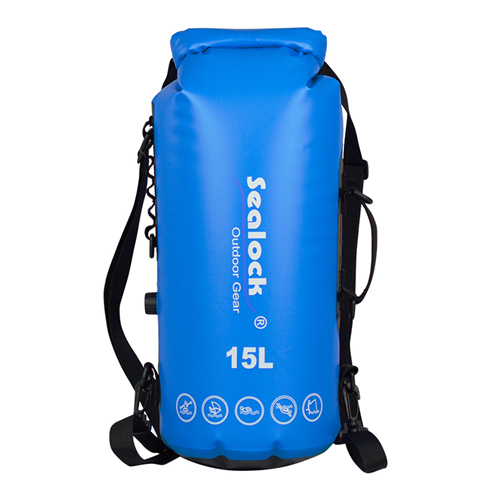
For a swimsuit, goggles and a cap, a small wet pouch of 2–5 litres is enough. For a swim or gym session with a towel and a change of clothes, 15–20 litres is the practical range, which is why our tube wet dry bags come in 15 and 20 litre sizes. Beach days with towels for several people, or open-water swimming with a wetsuit, call for 30–40 litres. If the bag will be carried on the shoulder for any distance, a padded or adjustable strap makes a big difference. Our dry bag capacity guide covers sizing in more detail.
Useful Features for Swimming and Gym Bags
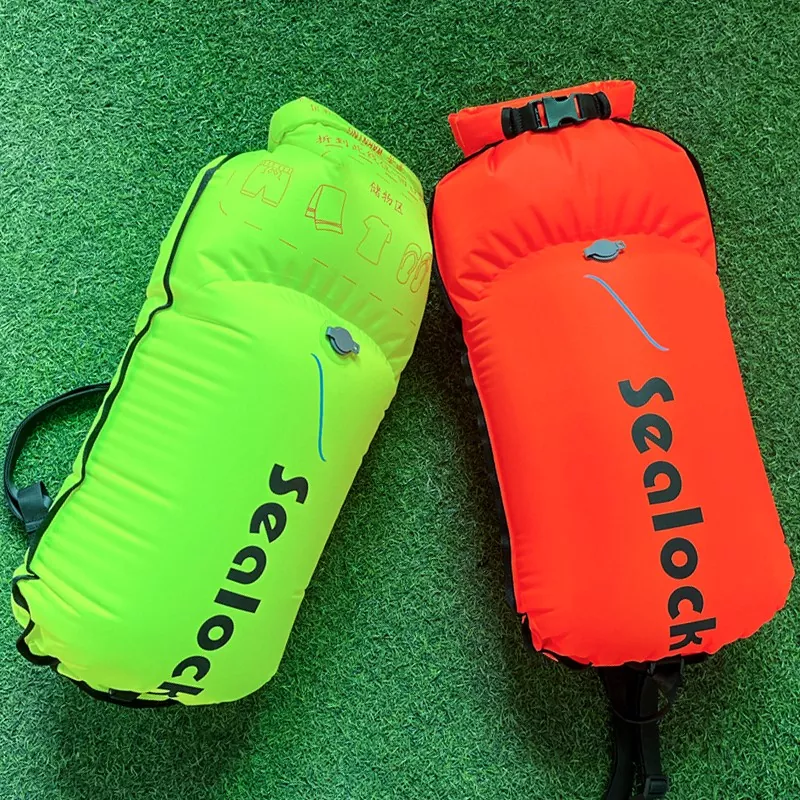
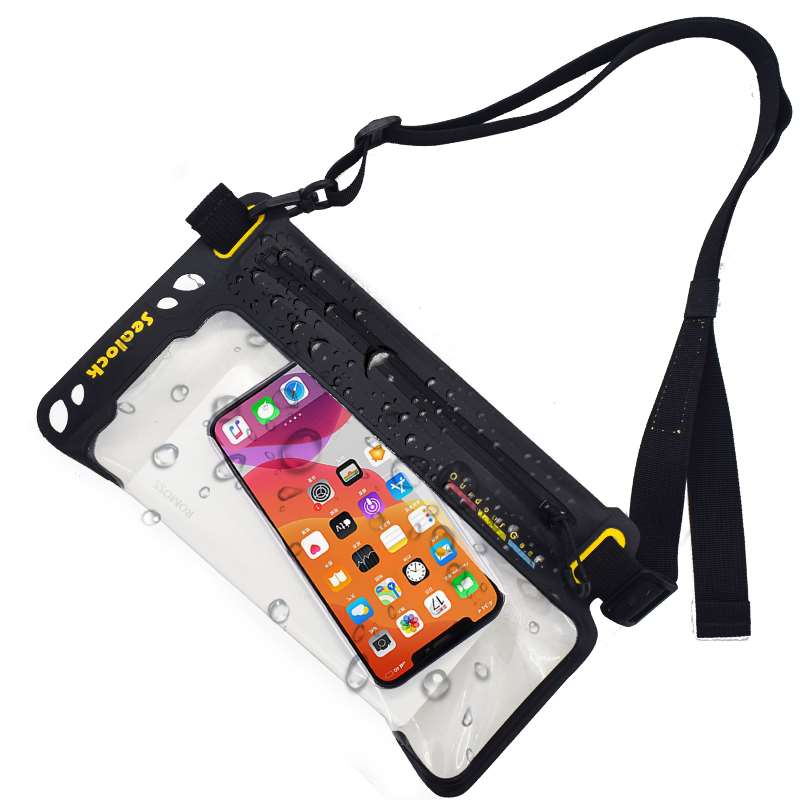
A clear window on the dry side lets users find a phone or keys without opening the bag, which keeps the seal closed more of the time. A small phone pocket or a separate waterproof phone pouch keeps the most valuable item easy to reach; for swimming with a phone, see our guide to whether a waterproof phone pouch is safe for swimming. Bright colours help the bag stand out on a crowded beach or pool deck, and a sealed bag with air inside will float if it falls in, as explained in our article on floating dry bags. For open-water swimmers, a swim buoy with a built-in dry compartment combines visibility on the water with dry storage for keys and a phone.
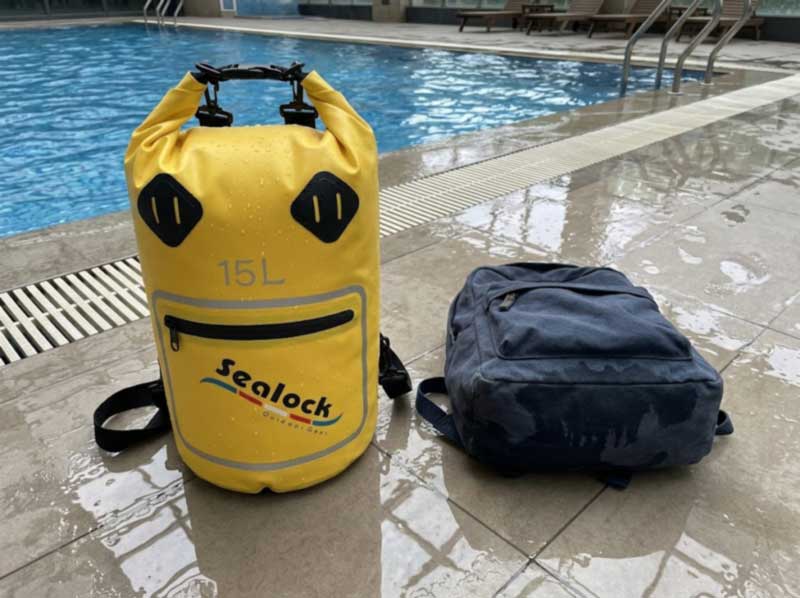
On a wet pool deck, a tarpaulin base stays dry while a fabric base soaks up water.
Wet Dry and Swim Bags in Our Range
All of these products can be supplied with your logo, colours and packaging for swim clubs, gyms, schools, retailers and brand programmes.
TPU composite, welded, IPX7 waterproof zipper; keeps the phone dry inside a wet bag
500
How We Test Wet Dry Bags
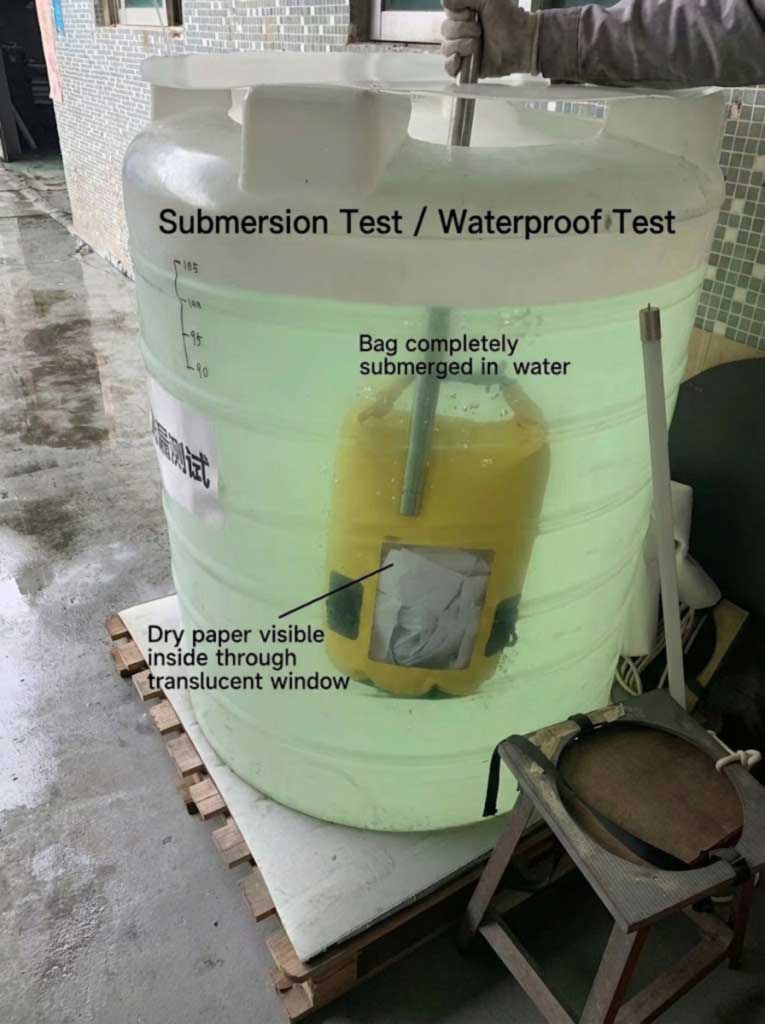
Every order passes through IQC on incoming fabric, film and hardware, IPQC during welding and sewing, and OQC on finished bags, with SGS or QIMA third-party inspection available on request. For wet dry bags, the welded wall between the wet and dry zones is checked for bonding strength along with every other seam, and hardware goes through salt spray testing because these bags live around chlorine and salt water. The standard programme also covers tensile strength, abrasion, colour fastness and colour difference, a load test of 1,500+ cycles and zipper fatigue testing to 3,000 cycles. Waterproofing is verified against the rating: a full water-immersion test of 2+ hours for IPX7 compartments such as the SL-D693 main chamber, and a heavy rain and water-jet test for IPX5 and IPX6 parts. For sealed products, buyers can follow our customer inspection procedure: unboxing, vacuum extraction, a 24-hour static rest and air-leak determination. Our article on how dry bags are tested before shipment explains each step.
The dry chamber is filled with paper and held under water; it must come out dry.
Frequently Asked Questions
What is a wet dry bag used for?
Carrying wet and dry items together without the water reaching the dry ones: swimwear and towels after the pool, sweaty gym kit, beach gear, or wet clothes on a trip.
How do I stop my wet dry bag from smelling?
Take wet items out as soon as you can, rinse the bag in fresh water, and let it dry fully with the closures open before storing it. Smooth PVC and TPU interiors clean much more easily than fabric linings.
Why does water get into the dry side of my wet dry bag?
Usually because the wall between the two sides is sewn, so water passes through the stitch holes, or because a closure was not sealed. A welded dividing wall prevents the first problem.
What size wet dry bag do I need for swimming?
About 15–20 litres for a swim or gym session with a towel and a change of clothes; 30–40 litres for beach days or open-water swimming with a wetsuit.
Can you make wet dry bags with our club or brand logo?
Yes. Screen printing, heat transfer and welded patches all work on PVC and TPU, and we can match your club or brand colours. MOQ is 200 to 500 pieces depending on the model.
How long does a custom order take?
Branded samples take about 7–15 days and bulk production about 30–45 days, with China or Vietnam origin available.
Develop Wet Dry Bags With Us
Tell us who will use the bags, what they will carry and whether wet kit needs to be sealed in or simply kept apart, and we will recommend a construction and size and prepare branded samples. Contact us at info@sealock.com.hk or call +86-769-82009361.
We use cookies to offer you a better browsing experience, analyze site traffic and personalize content. By using this site, you agree to our use of cookies.
Privacy Policy
 English
 Español
 Português
 русский
 Français
 日本語
 Deutsch
 tiếng Việt
 Italiano
 Nederlands
 ภาษาไทย
 Polski
 Svenska
 magyar
 Malay
 বাংলা ভাষার
 Dansk
 Suomi
 हिन्दी
 Pilipino
 한국어
 Türkçe
 Gaeilge
 العربية
 Indonesia
 Norsk
 تمل
 český
 ελληνικά
 український
 Javanese
 فارسی
 தமிழ்
 తెలుగు
 नेपाली
 Burmese
 български
 ລາວ
 Latine
 Қазақша
 Euskal
 Azərbaycan
 Slovenský jazyk
 Македонски
 Lietuvos
 Eesti Keel
 Română
 Slovenski
 मराठी
 Srpski језик