Sealock is an OEM dry bag factory in China supplying outdoor brands, paddlesports labels, and wholesale buyers worldwide. An outdoor brand rarely needs one dry bag — it needs a line: a small sack for a phone and wallet, a mid-size for a day on the water, a large one for a weekend, and usually a backpack version for the walk in. Building that line so it looks and performs like a family, at one waterproof standard, is what a welding factory is for. This guide covers how to structure a dry bag range, where to differentiate, and how the manufacturing side supports it.
Structure the Range Around How People Paddle
Capacity in this category maps directly onto trip length, and the breakpoints are well established across the market:
Capacity
Trip
Carry system it needs
2–5L
Phone, wallet, keys — the valuables sack
D-ring or wrist loop; often sold as an add-on
5–15L
Day paddling — phone, snacks, a rain layer
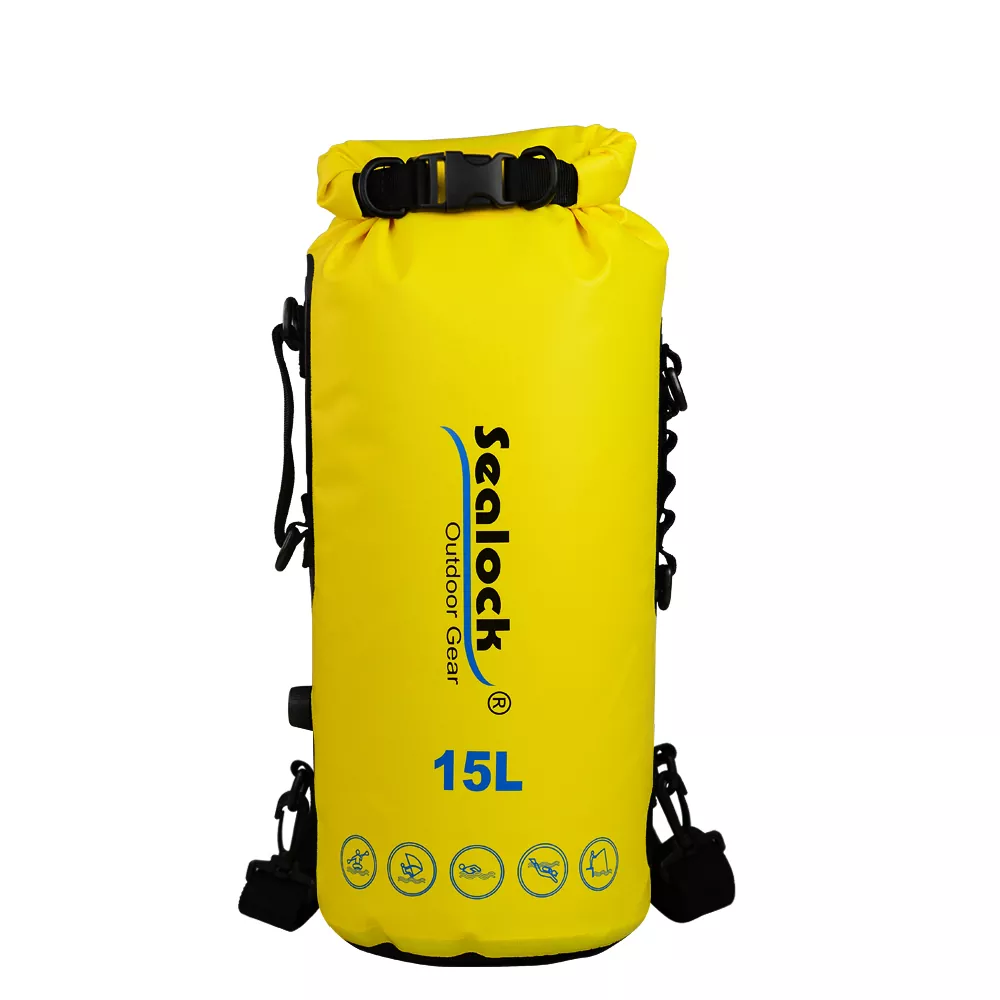
Single adjustable shoulder strap
20–30L
Weekend — spare clothes and food
Shoulder strap, or backpack straps if carried far
40–60L
Multi-day and expedition loads
Backpack straps, ideally with a chest strap
80–100L
Basecamp and raft hauling
Haul handles and lash points
Two rules the market has settled on: small sizes get a single strap, and only the largest justify backpack straps — adding a harness to a 10L sack raises cost without raising the price a customer will pay. And a set of small sacks in mixed sizes is its own product, not a lesser version of a big one, because paddlers and backpackers use them to organise inside a larger pack.
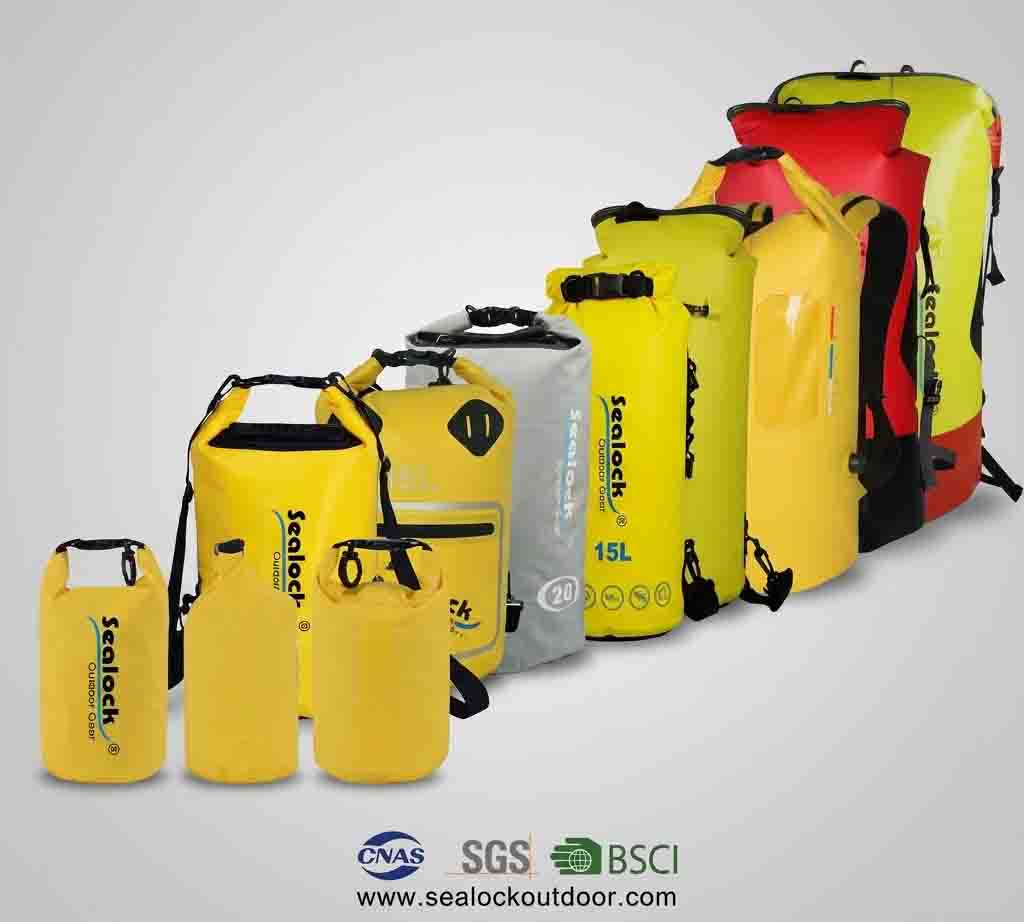
A line, not a product — stepped capacities, one look, one waterproof standard.
Where Brands Actually Differentiate
Every dry bag is a welded tube with a roll-top. Reviewers reward the details that solve a real on-water problem, and each of these is a specifiable feature rather than a marketing line:
Reflective branding — most dry bags are designed to be seen in daylight, but paddlers are often out at dawn and dusk. A reflective logo makes a bag findable if it goes in the water in low light — a genuine safety advantage, and it doubles as brand real estate.
A transparent window — so contents are identifiable without unrolling; the "view" version of a bag is frequently a separate best-seller.
A removable strap — paddlers detach it when stuffing the bag into a kayak hatch, where a strap just gets in the way.
D-rings and lash loops — for clipping carabiners and bungee-cording the bag to a deck. On the water this is what stops a bag being lost.
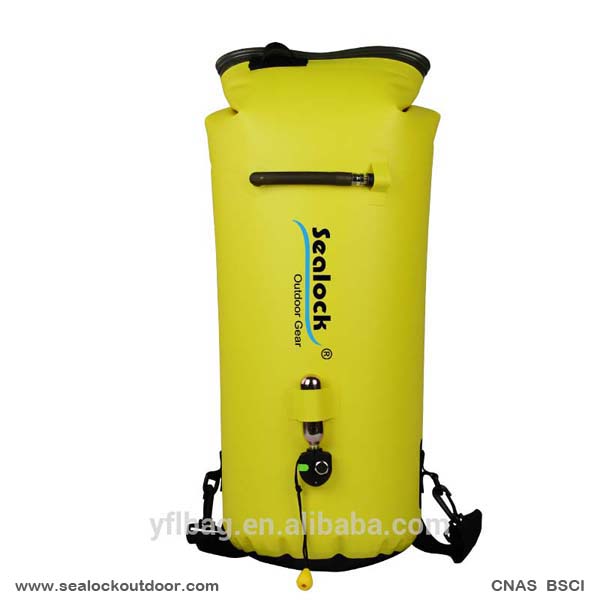
A gas valve — letting a bag be inflated for buoyancy or purged to compress the load.
A phone window pocket — so a device stays usable and dry without opening the main chamber.
Colour coding across the set — assorted colours make gear identification instant inside a hatch or a pack.
Material: Match It to the Hazard, Not the Price List
500D PVC tarpaulin — the durability standard for whitewater, rafting, and anything that contacts rock. Heavier, tougher, cost-effective.
500D PVC mesh — reinforced construction for high-abrasion use.
TPU-coated — lighter, softer, better in cold, and the easier sustainability story.
70D nylon-coated PVC — the ultralight option where every gram counts, at some cost to puncture resistance.
Recycled (GRS) options — where the brand needs documentation behind a green claim.
This is where an OEM buyer should not economise. Taped-seam bags are common at the budget end and they behave differently over time — tape ages and lifts, and seam construction can show pinhole leaks under real submersion. High-frequency welding at 27.12 MHz fuses the panels with no needle holes, which is why a welded bag survives repeated immersion seasons. If your brand promises submersible performance, welded is the only construction that supports the claim; the reasoning is set out in our dry bag manufacturer in china overview.
The Factory Behind the Line
Dongguan: 12,000 m², 400+ staff, nine HF welding lines, output around 100,000 units per month; over twenty years in welded waterproof bags.
Two Ho Chi Minh City, Vietnam plants — a dual-base option that diversifies origin and mitigates US tariffs.
Exports to 40-plus countries; 20-plus waterproofing patents; OEM production for outdoor names including SIMMS, PENN, West Marine, attwood, OSPREY and CHUMS.
Certifications: SMETA P4, HIGG, SCAN, GRS, BSCI, ISO9001, plus product-level Bureau Veritas, SGS, REACH, EN71 and RoHS testing on relevant models, and an IP-protection process for private-label work.
The Product Basis
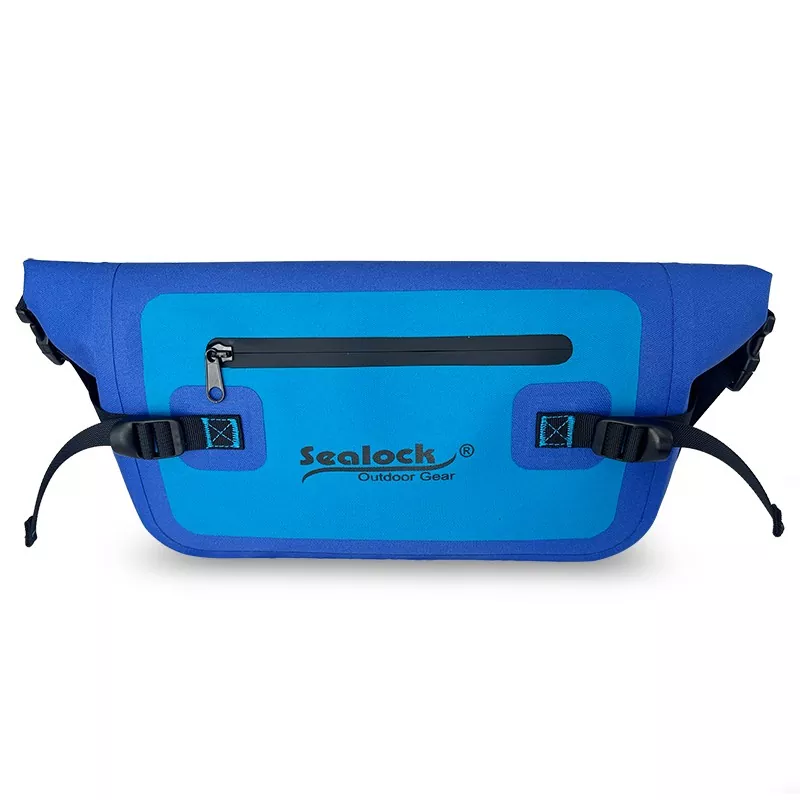
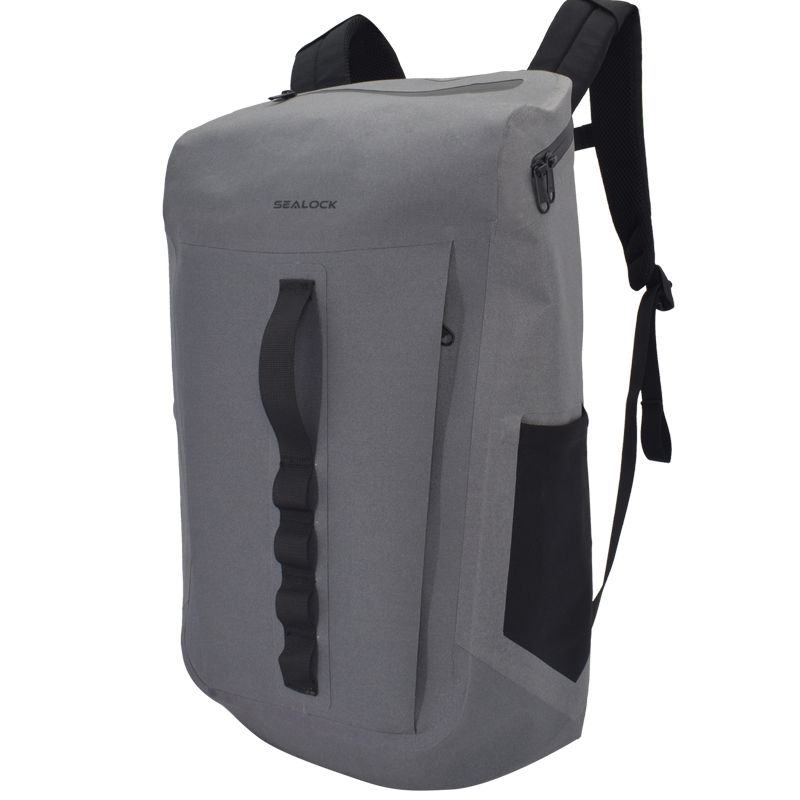
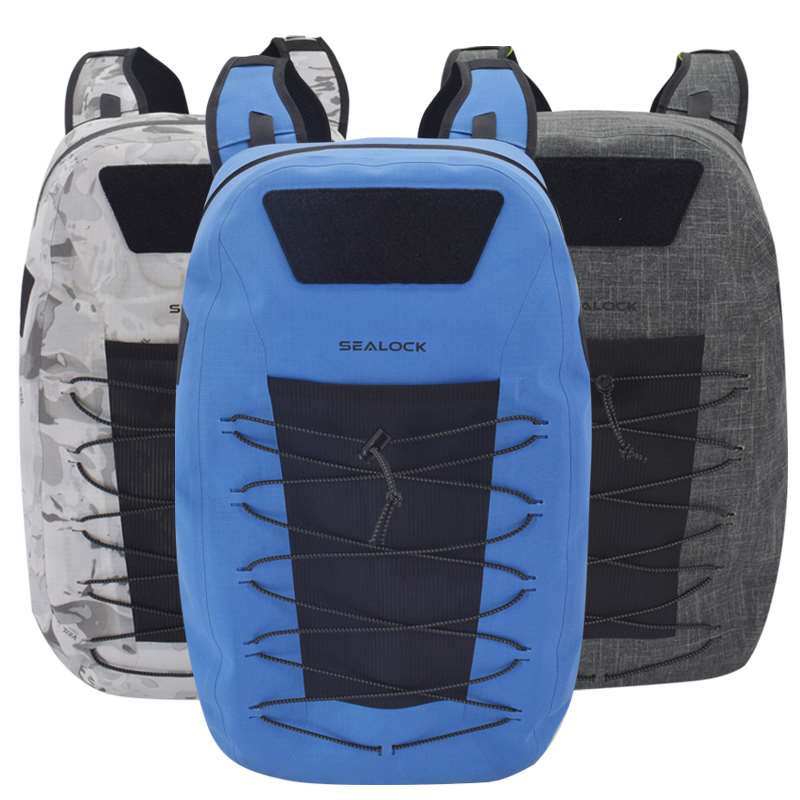
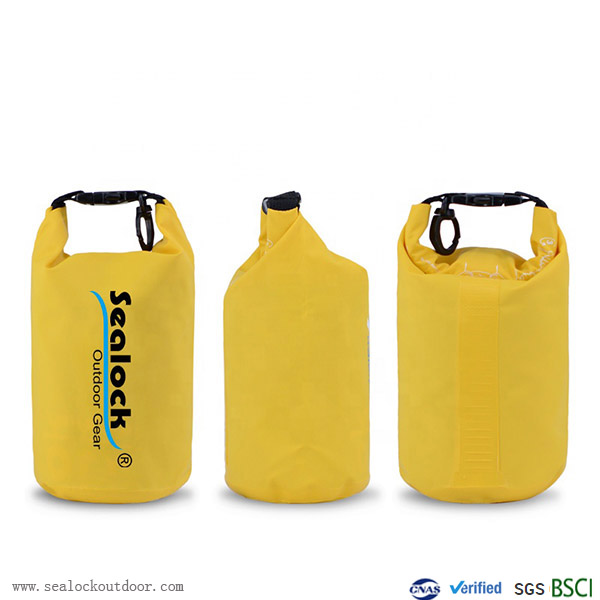
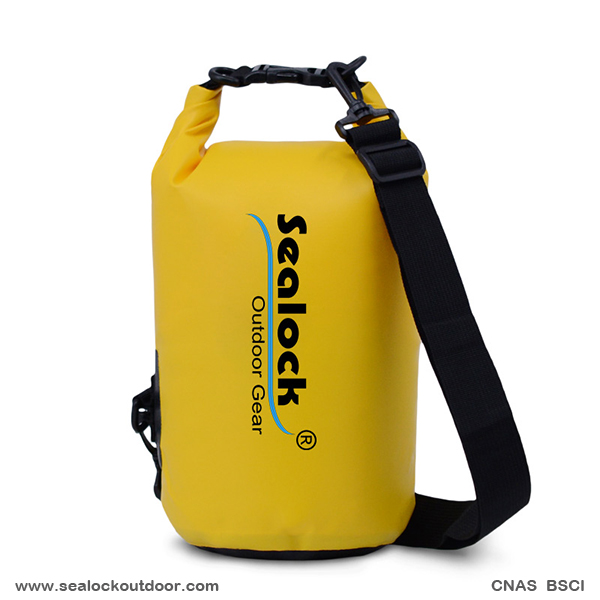
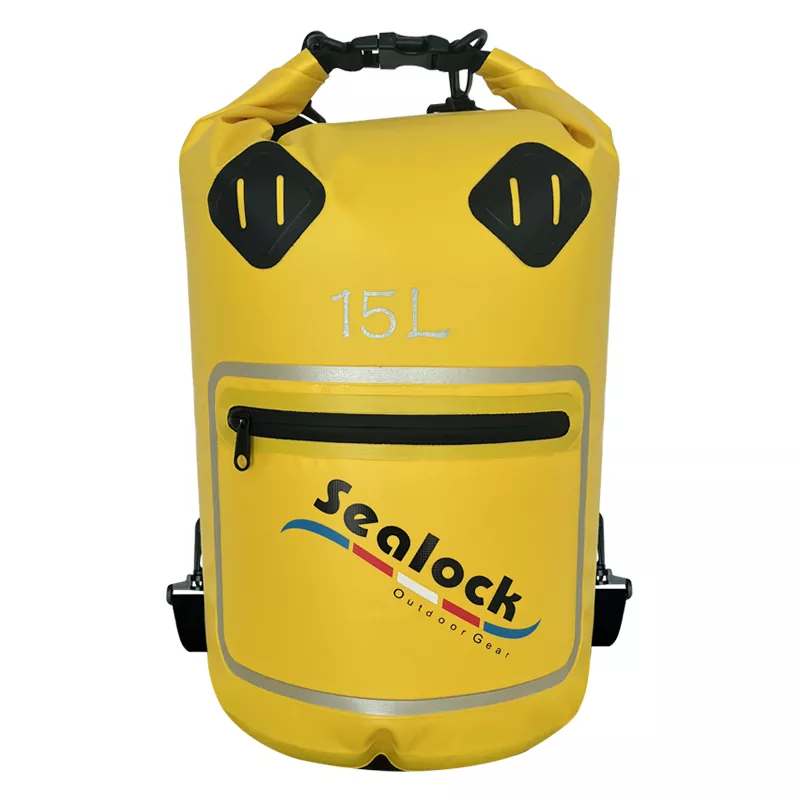
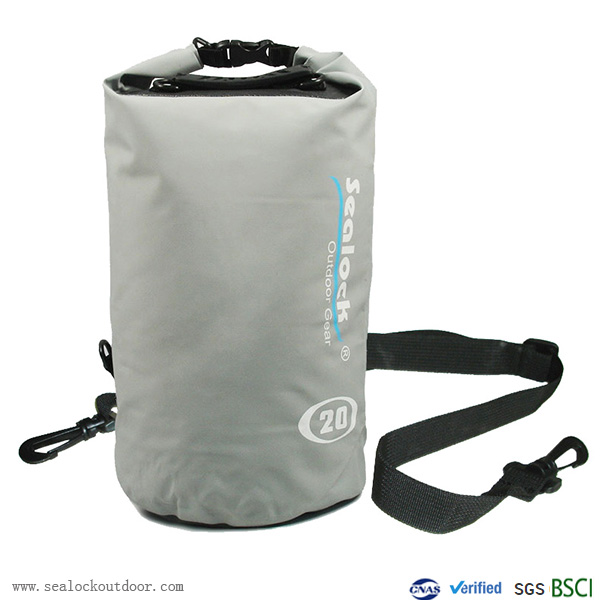
These welded bags, from Sealock's dry bag line, are equal starting points for a brand programme — none is ranked above another; between them they cover every rung of the capacity ladder and each of the differentiating features above:
Image
Model & specs
Role in a brand line
MOQ
SL-D051 2L Dry Tube Bag — 500D PVC tarpaulin 0.50 mm; black, blue, yellow, red; fold-seal with back-up Velcro; REACH, EN71, Bureau Veritas; small quantities accepted.
The valuables sack — add-on and gift-with-purchase
The premium “view” model — visibility plus wet/dry
300
SL-D069 Dry Bag (full size ladder) — 5/10/15/20/30/40/50/60/80/100L with published dimensions per size, from D15.5×H45 cm to D36×H115 cm; 500D PVC mesh; eight colours; sample 7–10 days.
The widest ladder — one model covers an entire range
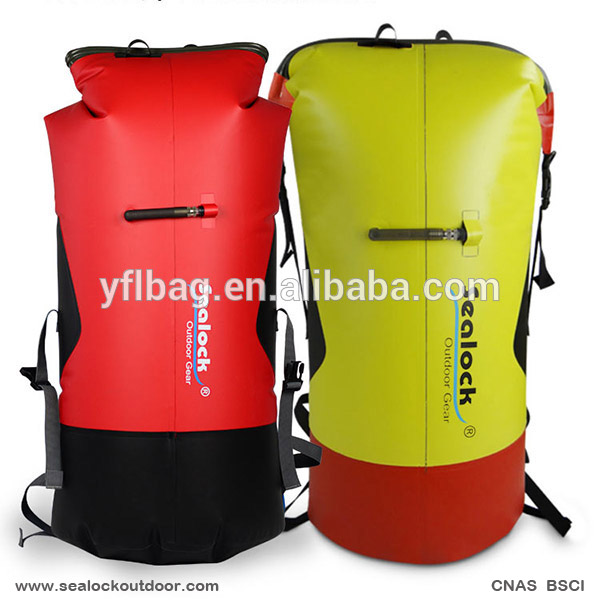
SL-E977 Kayak Dry Backpack — 38L; 500D PVC 0.5 mm; semi-circular shell; front phone window; multi-function lock for a paddle board; side inflation/deflation valve for temporary flotation; one-piece EVA back panel.
The flagship paddling SKU — features that get reviewed
A brand can lock one fabric, one colourway, and one branding method across the whole set, then roll it out from the 2L sack to the 100L hauler so the line reads as a family. Development runs from customizing a base model to building from a sketch; the workflow and timeline are set out in our OEM waterproof sling bag supplier guide.
Up to a verified IPX7 (1 m / 30 min) on sealed builds
Origin
China or Vietnam (dual-base option)
Quality Control Across a Whole Range
A line only works if the 5L performs like the 80L. Quality is gated in three tiers — IQC (incoming tarpaulin, buckles and webbing against the signed colour card, with colour difference and fastness — critical when a brand runs one colourway across ten sizes), IPQC (cutting tolerance, weld integrity and strap-anchor assembly, with test welds before each run), and OQC (AQL sampling, a real water-submersion batch test, and gold-sample comparison, with SGS or QIMA inspection available). Sealock also strictly executes the complete customer inspection procedure on finished goods: unboxing, vacuum extraction, a 24-hour static rest, and air-leak determination — a pinhole that passes a brief dunk still bleeds vacuum over a full day. The lab additionally runs weld bond and peel strength, a 1,500+ cycle load test with jerk-loading on strap anchors and buckles, abrasion, tear, tensile, salt spray, UV, colour fastness and colour difference.
FAQ: OEM Dry Bag Programmes
Q: How many sizes should a first range cover?
A: Three usually works — a 5–10L day sack, a 20–30L weekend size, and one larger or backpack model. Add a 2–5L valuables sack as an add-on, and consider a mixed-size set, which paddlers and backpackers buy as its own product.
Q: Which sizes need backpack straps?
A: Generally only the larger ones. Small and mid sizes take a single adjustable shoulder strap; backpack straps earn their cost from around 30L up, with a chest strap on the biggest for stability.
Q: What features actually get noticed in reviews?
A: Reflective branding for low-light visibility, a transparent window for identifying contents, a removable strap for stuffing into a kayak hatch, D-rings and lash loops for clipping to a deck, and a gas valve. All are specifiable.
Q: Welded or taped seams?
A: Welded, if the brand claims submersible performance. Taped seams age and lift and can show pinhole leaks under real immersion; HF welding fuses the panels with no needle holes.
Q: Can one model cover several sizes in our line?
A: Yes — the SL-D069 alone runs from 5L to 100L with published dimensions per size, and the SL-D002 covers 5–30L, so a brand can build most of a ladder on one pattern and one fabric.
Q: What are the MOQ and lead times?
A: From 200 pieces on some models, typically 300–500, with samples in 3–10 days and production 20–45 days after approval. Brief early for peak season, when capacity tightens.
Talk to the Factory
To build a dry bag line for your outdoor brand, contact Sealock at info@sealock.com.hk or +86-769-82009361. Over twenty years of high-frequency welding, nine welding lines, a China–Vietnam dual-base option, and a full customer inspection procedure on every shipment.
We use cookies to offer you a better browsing experience, analyze site traffic and personalize content. By using this site, you agree to our use of cookies.
Privacy Policy
 English
  Español
  Português
  русский
  Français
  日本語
日本語  Deutsch
  tiếng Việt
  Italiano
  Nederlands
  ภาษาไทย
  Polski
  Svenska
  magyar
  Malay
Malay  বাংলা ভাষার
  Dansk
Dansk  Suomi
Suomi  हिन्दी
  Pilipino
  한국어
한국어  Türkçe
  Gaeilge
  العربية
  Indonesia
  Norsk
Norsk  تمل
تمل  český
český  ελληνικά
  український
  Javanese
  فارسی
فارسی  தமிழ்
தமிழ்  తెలుగు
  नेपाली
  Burmese
  български
  ລາວ
ລາວ  Latine
  Қазақша
  Euskal
  Azərbaycan
  Slovenský jazyk
  Македонски
  Lietuvos
  Eesti Keel
  Română
  Slovenski
  मराठी
मराठी  Srpski језик