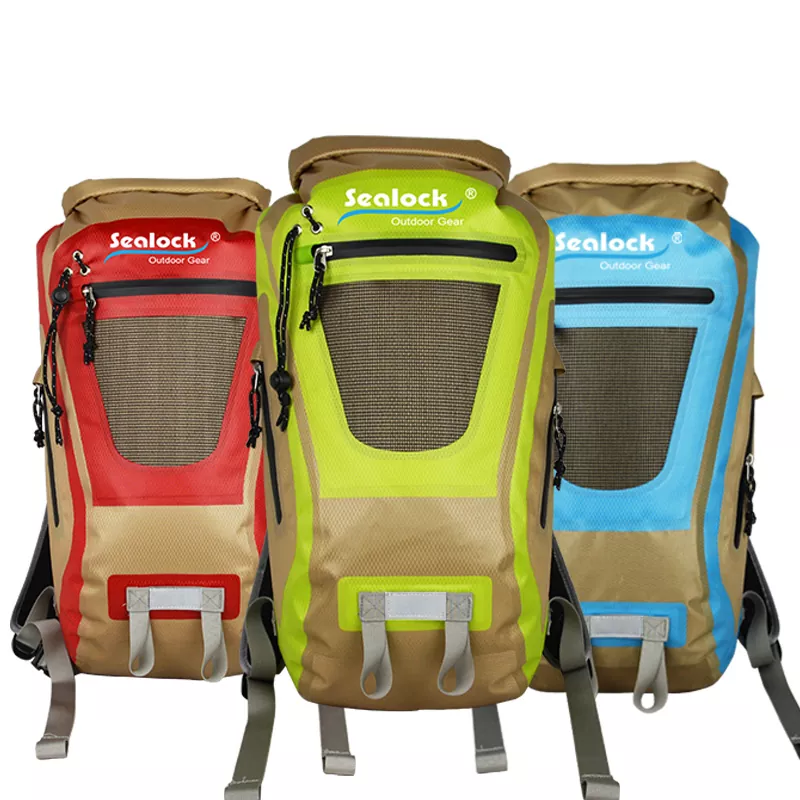
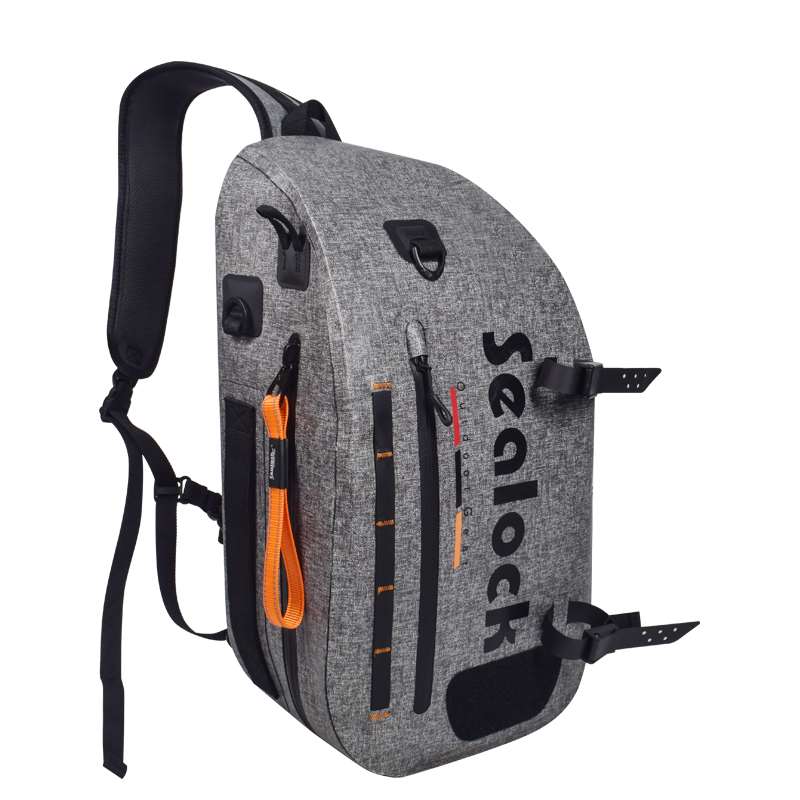
Yes, TPU is waterproof. Thermoplastic polyurethane is a solid, non-porous plastic, so liquid water cannot pass through a TPU film. When TPU is laminated or coated onto nylon or polyester, the fabric becomes waterproof too. But a TPU bag or backpack is only waterproof if its seams and closure are also sealed, and not every TPU fabric performs the same over time. The details below explain what makes the difference.
We work with TPU fabrics every day at our factories in Dongguan, China and Ho Chi Minh City, Vietnam, where we have made waterproof bags for over 20 years. These are the questions buyers ask us most often about the material, answered from the production floor.
What Is TPU?
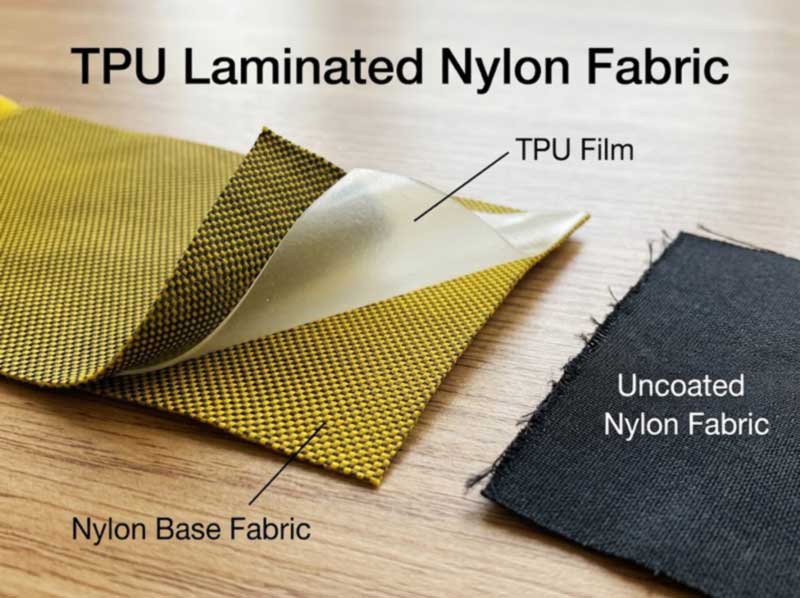
TPU, short for thermoplastic polyurethane, is a flexible, tough plastic that sits between rubber and rigid plastic in its properties. It stretches and recovers, resists abrasion and oils, and stays flexible at low temperatures. Because it is a thermoplastic, it softens when heated and hardens again when it cools, which is what allows TPU fabrics to be joined with high-frequency welded seams. In outdoor products, TPU is rarely used on its own. It is applied as a thin film or coating on a woven base fabric, which provides the strength while the TPU provides the waterproof barrier.
Why TPU Is Waterproof
A TPU film has no pores or gaps for liquid water to travel through. That makes it fundamentally different from a water-repellent fabric, which relies on a surface finish that makes water bead up and roll off but still lets water through once the fabric is soaked or under pressure. A TPU layer keeps water out regardless of how long it is exposed, which is why TPU fabrics are used for dry bags, waterproof backpacks, duffels and soft coolers.
Waterproofness of the fabric itself is usually measured by hydrostatic head, the height of a column of water the fabric can hold back before it leaks. TPU-laminated bag fabrics perform very well on this test, far beyond what rain alone can produce. In practice, the fabric is almost never the weak point of a well-made TPU bag; the seams and closure are.
TPU-laminated fabric: the woven base gives strength, the TPU film keeps water out.
Is TPU Breathable?
It depends on the type. Some very thin TPU membranes used in rainwear are designed to be breathable, letting water vapour from the body escape while keeping liquid rain out. The thicker TPU films and coatings used on bags are not breathable. For a bag, that is the point: you want to keep both water and humidity out of the contents. The trade-off is that a TPU backpack does not let sweat escape from your back, which is why ventilated back panels matter on waterproof backpacks.
Laminated vs Coated TPU Fabric
TPU reaches the fabric in two main ways. In a laminated fabric, a pre-formed TPU film is bonded to the base fabric with heat and pressure. In a coated fabric, liquid TPU is spread directly onto the base and cured. Both can be waterproof, but they behave differently in production and in use.
TPU-laminated
TPU-coated
How it is made
Film bonded to base fabric
Liquid TPU spread and cured on base fabric
Waterproof layer
Even, consistent thickness
Can vary with coating weight
Weldability
Excellent with a substantial film
Good if the coating is thick enough
Main risk
Delamination if the bond is poor
Thin coating wears through at rub points
Typical use
Dry bags, submersible backpacks, coolers
Lighter bags, linings, cost-sensitive ranges
A common surprise for buyers is that two fabrics described with the same words, such as "420D TPU", can behave very differently on the welding machine and in the field. The weight and quality of the TPU layer, and how well it is bonded, matter more than the denier of the base fabric.
Is a TPU Bag Automatically Waterproof?
No. Waterproof fabric is only the first requirement. If a TPU bag is stitched together, every stitch is a hole that lets water through. If it closes with an ordinary zipper, water passes between the teeth. A TPU bag is waterproof only when its seams are welded or fully sealed and its closure is a roll-top, a waterproof zipper or an airtight zipper, and the rating on the label tells you how far that goes: IPX5 or IPX6 for rain and water jets, IPX7 for immersion to 1 metre for 30 minutes. Our article on RF welding explains how welded seams are made.
How Long Does TPU Stay Waterproof?
A good TPU fabric keeps its waterproofness for many years, but three factors decide how long. The first is hydrolysis. TPU comes in two main chemical families, polyester-based and polyether-based. Polyether-based TPU resists breakdown by water and humidity much better, which makes it the stronger choice for bags that live in damp or wet conditions, although it costs more. The second is UV. Some TPU grades yellow over time in sunlight; UV-stabilised and aliphatic grades resist this, which matters for clear windows and light-coloured bags. The third is abrasion: the TPU layer wears fastest where the bag rubs, so reinforcement at the base and contact points extends its life.
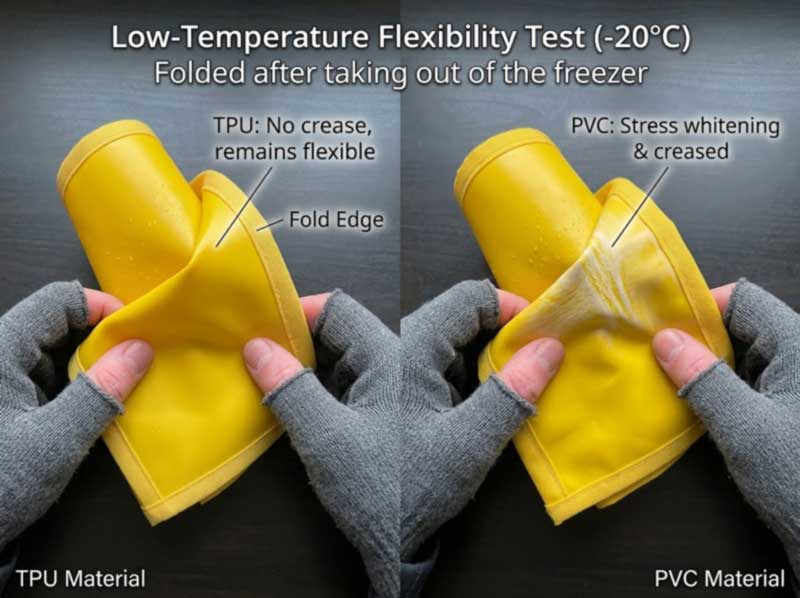
Compared with PVC, TPU stays flexible in the cold rather than stiffening and cracking along fold lines, which is one reason it outlasts PVC on roll-top bags used in winter. Our freezing-cold test of TPU and PVC dry bags shows the difference.
After cold exposure, PVC whitens at the fold while TPU stays flexible.
TPU does not need the plasticisers that make PVC flexible, and food-grade TPU grades are widely used as liners in soft coolers and hydration products. It is also a thermoplastic, so production scrap can be reprocessed, and recycled TPU content is available. Waterproofing does not depend on fluorinated chemicals either, because the TPU layer itself keeps water out; our article on PFAS-free TPU covers this in more detail. As with any material, buyers selling into regulated markets should ask for the relevant test reports.
TPU fabric is checked at IQC when it arrives, including coating weight, bond quality and colour against the approved sample, because the TPU layer decides how well the fabric welds and how long it lasts. Welding is monitored at IPQC with sample welds pulled on a tensile tester to confirm bonding strength, and finished bags are checked at OQC, with SGS or QIMA third-party inspection available on request. Our standard programme also covers tensile strength, abrasion, salt spray on hardware, colour fastness and colour difference, a load test of 1,500+ cycles and zipper fatigue testing to 3,000 cycles. Waterproofing is verified against the rating on the label, with a heavy rain and water-jet test for IPX5 and IPX6 bags and a full water-immersion test of 2+ hours for IPX7 bags. For sealed bags, buyers can follow our customer inspection procedure on arrival: unboxing, vacuum extraction, a 24-hour static rest and air-leak determination.
Frequently Asked Questions
Is TPU 100% waterproof?
The TPU film itself does not let liquid water through. Whether a product made from it is fully waterproof depends on its seams and closure, so always check the product's rating.
Is TPU better than PVC for waterproof bags?
For most outdoor uses, yes: TPU is lighter, more flexible in the cold and free of plasticisers. PVC is cheaper and very tough, which keeps it popular for heavy-duty and cost-sensitive bags.
Does TPU crack or peel over time?
Good TPU fabrics resist cracking well, even in cold weather. Peeling or delamination usually points to a poor bond between the film and the base fabric, or to a hydrolysis-prone grade used in very humid conditions.
Is TPU waterproof enough for a dry bag that goes underwater?
Yes, if the bag is welded and closed with a roll-top or airtight zipper rated for immersion. Look for IPX7 and a full water-immersion test.
Can TPU fabric be sewn?
Yes, and sewing is used for straps, pockets and padding. Sewn seams in the waterproof area must be welded or sealed instead, because stitches create holes.
What is the MOQ for a custom TPU bag?
Most of our TPU bags start at 300 pieces per style, with some at 500. Custom TPU colours and fabric weights are available, and samples typically take 7–15 days.
Develop a TPU Product With Us
Tell us how your product will be used, and we will recommend a TPU fabric, construction and closure, and prepare samples. Contact us at info@sealock.com.hk or call +86-769-82009361.
We use cookies to offer you a better browsing experience, analyze site traffic and personalize content. By using this site, you agree to our use of cookies.
Privacy Policy
 English
 Español
 Português
 русский
 Français
 日本語
 Deutsch
 tiếng Việt
 Italiano
 Nederlands
 ภาษาไทย
 Polski
 Svenska
 magyar
 Malay
 বাংলা ভাষার
 Dansk
 Suomi
 हिन्दी
 Pilipino
 한국어
 Türkçe
 Gaeilge
 العربية
 Indonesia
 Norsk
 تمل
 český
 ελληνικά
 український
 Javanese
 فارسی
 தமிழ்
 తెలుగు
 नेपाली
 Burmese
 български
 ລາວ
 Latine
 Қазақша
 Euskal
 Azərbaycan
 Slovenský jazyk
 Македонски
 Lietuvos
 Eesti Keel
 Română
 Slovenski
 मराठी
 Srpski језик