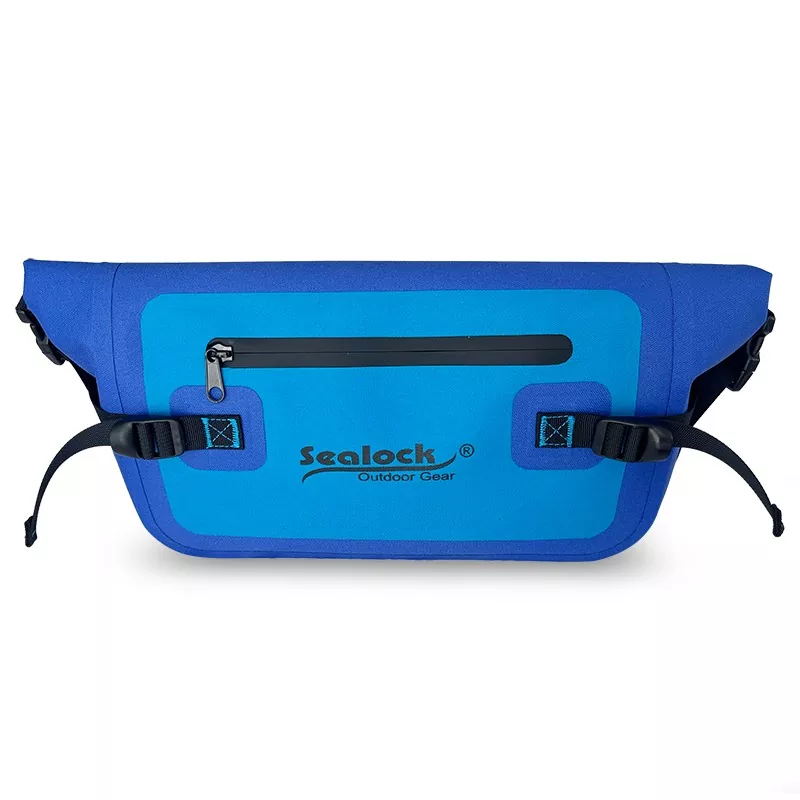
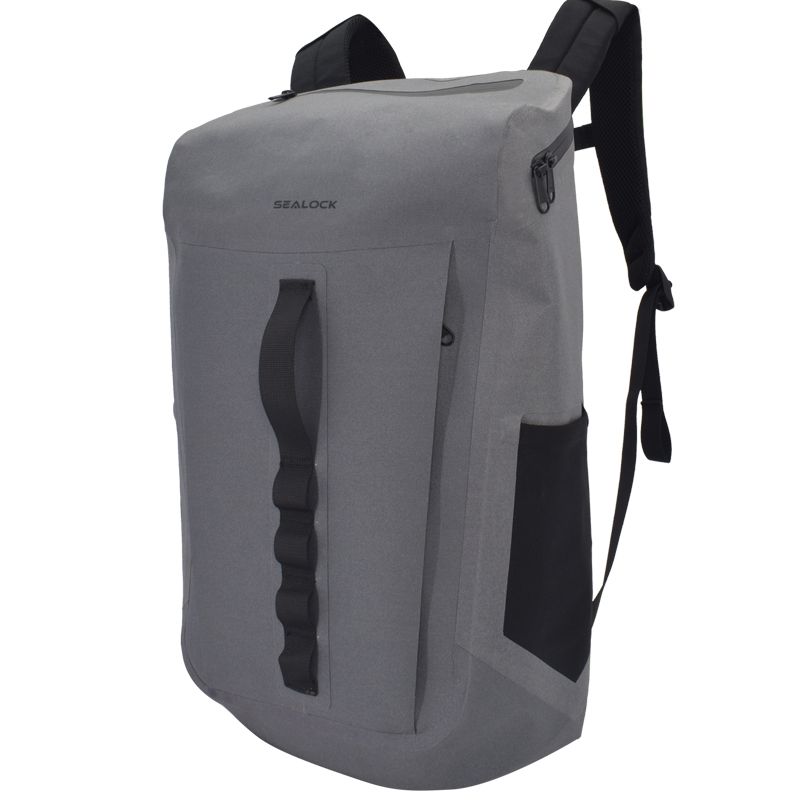
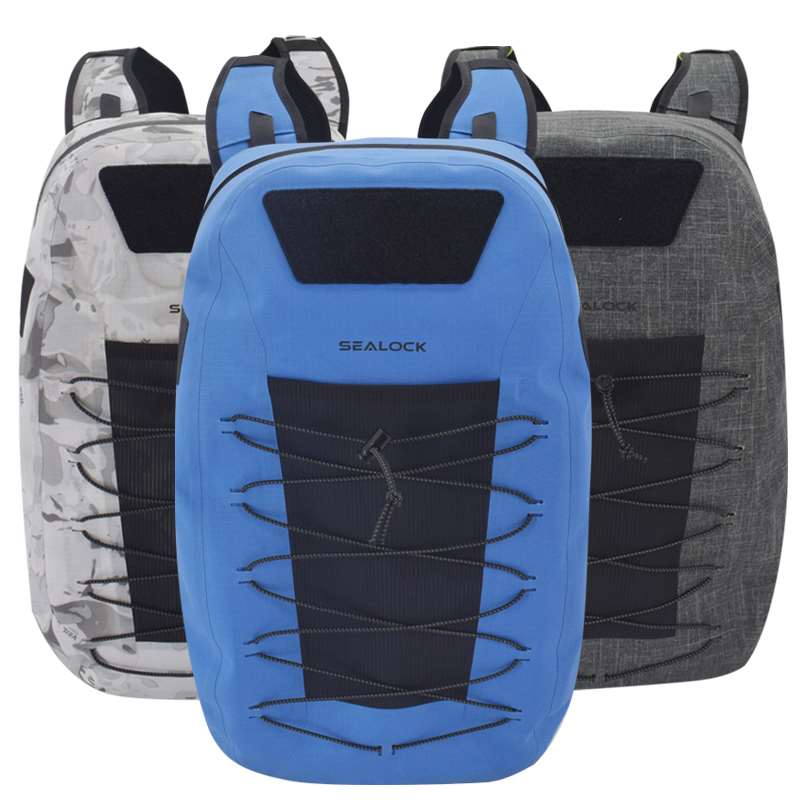
The main disadvantages of waterproof bags are that they cost more than ordinary bags, they do not breathe, so a sweaty back and damp air inside are common, they are slower to open, they offer less organisation, and their zippers and closures need more care. Many are also stiffer and heavier, and "waterproof" on the label does not always mean the bag can go underwater. None of these is a reason to avoid waterproof bags, but each one is worth understanding before you buy or specify one.
We make waterproof bags for a living, at our factories in Dongguan, China and Ho Chi Minh City, Vietnam, and have done so for over 20 years. That gives us a clear view of where waterproof bags fall short, because these drawbacks are exactly what customers complain about and what good design has to solve. Below, each disadvantage is explained together with what can be done about it.
1. They Cost More
A genuinely waterproof bag is made from coated or laminated fabric such as TPU or PVC, joined with high-frequency welded seams rather than ordinary stitching, and closed with a roll-top or a waterproof zipper. Each of these costs more than the materials and methods used for a standard bag. Airtight zippers in particular are one of the most expensive single components on a bag, and welded construction needs dedicated dies and machines. The result is that a waterproof backpack or duffel usually costs noticeably more than a water-resistant one of the same size.
The way to manage this is to pay for waterproofing only where it matters. A bag that faces rain but never goes underwater does not need an airtight zipper; a roll-top or a waterproof coil zipper will do. Our breakdown of what drives the cost of a waterproof bag shows where the money goes.
2. They Don't Breathe
The same property that keeps water out also keeps moisture in. A waterproof shell does not let water vapour escape, so two things happen. First, the back panel of a waterproof backpack gets hot and sweaty quickly, especially in warm weather; reviewers of waterproof daypacks often say the bag simply sticks to the back. Second, anything damp that goes into the bag, from a wet towel to sweaty clothes, stays damp, and the air inside can turn humid and start to smell. A wet item left sealed in a waterproof bag for days is the usual cause of mildew.
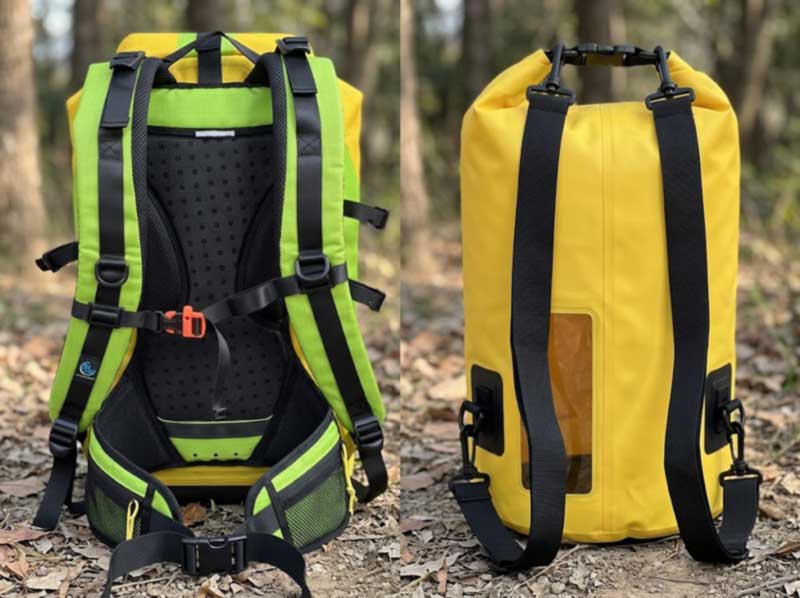
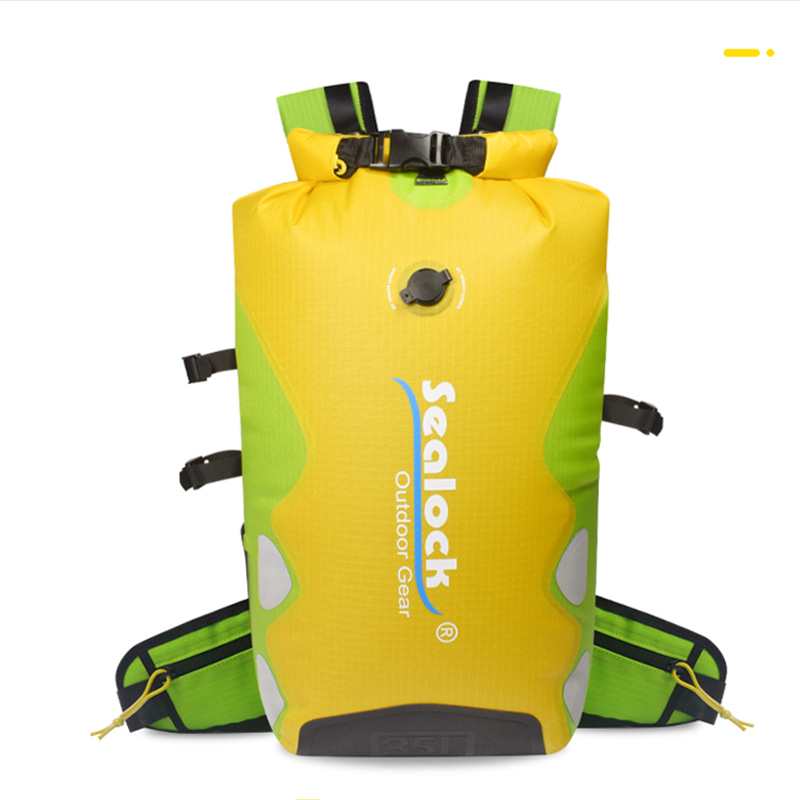
Design can reduce the first problem: a padded, ventilated or suspended back panel holds the waterproof shell away from the body so air can move. The second problem is mostly about use. Waterproof bags should be opened and dried after a wet trip, and a separate wet compartment or a dry-wet separation bag keeps wet kit away from dry clothing.
A ventilated back panel keeps the waterproof shell off the body; a flat back sticks to it.
3. They Are Slower to Open
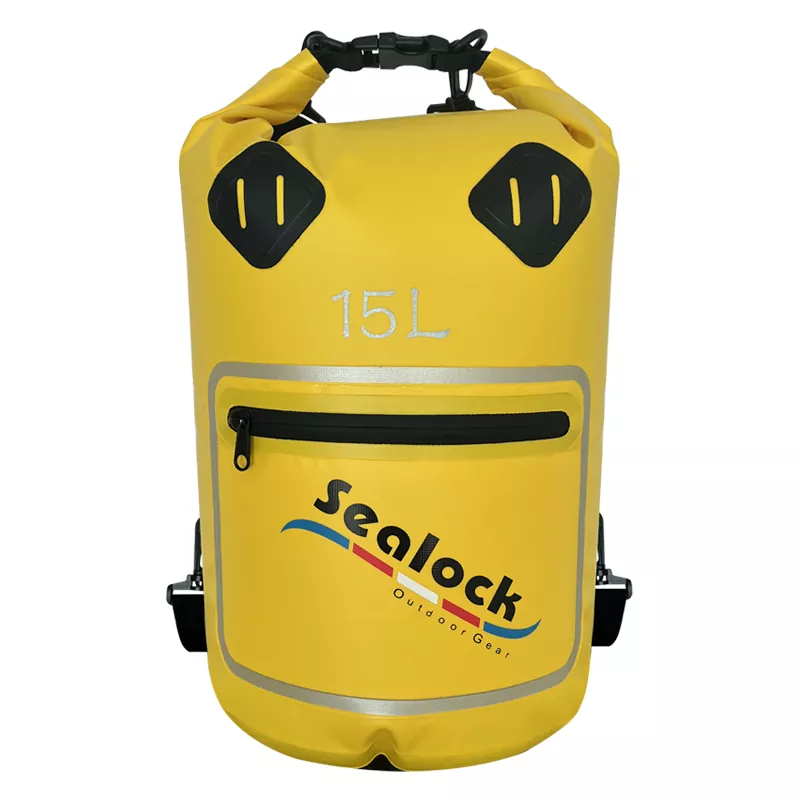
A roll-top needs to be unbuckled and unrolled every time you want something, and rolled three times again to seal properly. An airtight zipper is tight by design and takes a firm pull. Compared with a normal zipped bag, getting a phone or keys out of a waterproof bag takes longer, and some reviewers find roll-top buckles and compression buckles easy to confuse. In a bag that is opened many times a day, that friction adds up.
The usual solution is a small, quick-access pocket for the items you reach for most, with the main compartment kept sealed. A clear window helps you find things without opening the bag at all. Our comparison of roll-top and waterproof zipper closures explains which suits which use.
4. Less Organisation Inside
Every pocket, divider and internal zipper adds seams and components, and every seam in the waterproof area has to be welded rather than sewn. For this reason many waterproof bags are a single open compartment, and small items sink to the bottom. Users often say they have to empty the whole bag to find something.
Organisation can be added without compromising the shell. Removable pouches, internal pockets attached to welded patches, and external pockets that are only splash-proof keep small items in order. Many of our bags combine sewn organiser parts with a welded waterproof body, because our sewing and welding lines work on the same product.
5. Zippers and Closures Need Care
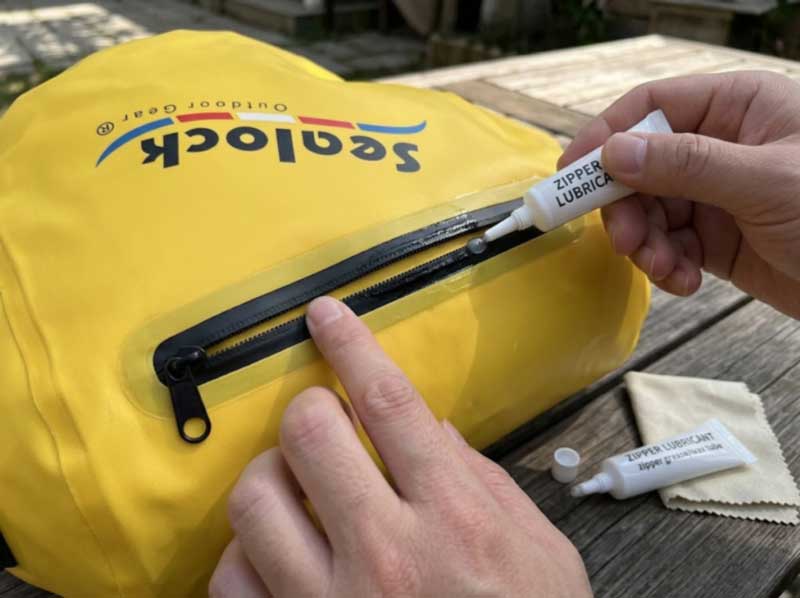
Waterproof zippers are stiffer than ordinary zippers, and airtight zippers are stiffer still, because the tight fit is what keeps water out. They can become harder to pull after the bag has been stored for a long time, in cold weather, or when sand and salt dry on the teeth. Users of well-known waterproof packs regularly mention having to pull hard, and the lubricant supplied with some bags makes a real difference. Roll-tops have their own weakness: grit in the folds can stop them sealing.
The fix is simple maintenance. Rinse closures in fresh water after salt or sand, let them dry, and use the zipper lubricant recommended by the manufacturer. A bag that comes with a small tube of lubricant and clear care instructions will have far fewer complaints than one that does not.
A little lubricant keeps an airtight zipper easy to pull and properly sealed.
6. Heavier and Stiffer Than Ordinary Bags
Waterproof fabrics are coated or laminated, which makes them heavier and stiffer than plain nylon or polyester. PVC tarpaulin in particular is heavy and becomes noticeably stiff in cold weather. A large waterproof bag also holds its air when sealed, which can make it bulky to pack into a car boot or a hatch.
Material choice is the main lever. TPU-laminated fabrics are lighter and stay more flexible in the cold, as our test of TPU and PVC dry bags in freezing cold shows. A purge valve lets the user press trapped air out so a sealed bag packs flat.
7. "Waterproof" Doesn't Always Mean Submersible
Many bags sold as waterproof are designed for rain and spray, not for going underwater. A roll-top bag rated IPX6 will keep its contents dry in a downpour, but if it sinks to the bottom of a lake, water can work in through the closure. External pockets are often only splash-proof even when the main compartment is fully sealed. Buyers who do not check the rating can be disappointed.
The answer is to read the rating. IPX5 and IPX6 cover rain and water jets, IPX7 covers immersion to 1 metre for 30 minutes, and IPX8 covers deeper or longer immersion as declared by the maker. Choose a bag rated for what you will actually do with it.
8. Harder to Repair
A torn seam on a sewn bag can be restitched. A failed welded seam cannot be welded again at home, and stitching through it would only add holes. Small punctures and cuts in TPU or PVC can be repaired with a patch kit and the right adhesive, but structural repairs usually need the manufacturer. The best defence is reinforcement where wear happens, such as abrasion patches on the base and welded reinforcing at strap anchors, so repairs are rarely needed.
9. Environmental Questions
PVC has drawn criticism for its plasticisers and for being difficult to recycle, and some markets restrict certain substances in consumer products. TPU avoids plasticisers and is generally regarded as the more environmentally acceptable choice, and recycled content and PFAS-free coatings are now available for many waterproof fabrics. For brands, the material choice should match both the performance needed and the claims the brand wants to make.
Disadvantages at a Glance
Disadvantage
Why it happens
What solves it
Higher price
Coated fabric, welding, sealed closures
Match the closure to real use
Sweaty back, damp air inside
Waterproof shell does not breathe
Ventilated back panel; dry the bag after use
Slow access
Roll-tops and tight zippers
Quick-access pocket, clear window
Poor organisation
Fewer seams in the waterproof area
Removable pouches, welded-on pockets
Stiff zippers
Tight seal by design; salt and sand
Rinse and lubricate
Weight and stiffness
Coated fabrics, PVC in the cold
TPU fabrics, purge valve
Not always submersible
Built for rain, not immersion
Check the IPX rating
Harder to repair
Welded seams can't be re-sewn
Reinforcement at wear points; patch kits
When a Water-Resistant Bag Is the Better Choice
For daily commuting in light rain, a well-made water-resistant bag with a coated fabric and a rain flap may be the more comfortable and practical option. It breathes a little better, opens faster and usually costs less. A fully waterproof bag earns its place when the contents must stay dry no matter what: on boats, kayaks and motorcycles, in heavy and prolonged rain, or when carrying electronics and documents that cannot be replaced. Our guide to how welded and sewn bags are made explains the construction behind each.
Weight and cold stiffness: TPU-coated 420D nylon, IPX7
How We Make Sure the Advantages Hold
The benefit of a waterproof bag only counts if it is real, so every order passes through IQC on incoming materials, IPQC during welding and sewing, and OQC on finished bags, with SGS or QIMA third-party inspection available on request. Seams are checked for tensile and bonding strength, bags go through a load test of 1,500+ cycles, zippers are tested to 3,000 cycles, hardware goes through salt spray testing, and fabrics are checked for abrasion resistance, colour fastness and colour difference. Waterproofing is verified against the label, with a heavy rain and water-jet test for IPX5 and IPX6 bags and a full water-immersion test of 2+ hours for IPX7 bags. For sealed bags, buyers can follow our customer inspection procedure: unboxing, vacuum extraction, a 24-hour static rest and air-leak determination.
Frequently Asked Questions
Why do waterproof bags smell?
Usually because something damp was sealed inside and the bag cannot breathe. Empty, rinse and air-dry the bag after wet use, and store it open. A new PVC bag can also have a mild material smell, which TPU bags generally do not.
Do waterproof backpacks make your back sweat?
Yes, more than ordinary backpacks, because the shell does not breathe. A ventilated, padded or suspended back panel reduces this considerably.
Why is my waterproof zipper so hard to pull?
Waterproof and airtight zippers are tight by design. Salt, sand, cold and long storage make them stiffer. Rinse the zipper, let it dry and apply zipper lubricant.
Are waterproof bags worth the extra cost?
When the contents must stay dry, such as on the water, on a motorcycle or in long heavy rain, yes. For short commutes in light rain, a water-resistant bag is often enough.
Can a waterproof bag be repaired?
Small cuts and punctures can be patched with a repair kit for TPU or PVC. A failed welded seam is best repaired by the manufacturer.
What is the MOQ for a custom waterproof bag that solves these issues?
Most of our waterproof bags start at 300 pieces per style, with some at 500. Ventilated back panels, quick-access pockets, windows and purge valves can all be specified, and we can add your logo. Samples take about 7–15 days.
Talk to Us About Your Bag
If your customers complain about any of these drawbacks, tell us which ones. We will suggest material, closure and design changes that keep the bag waterproof while making it more comfortable and easier to use. Contact us at info@sealock.com.hk or call +86-769-82009361.
We use cookies to offer you a better browsing experience, analyze site traffic and personalize content. By using this site, you agree to our use of cookies.
Privacy Policy
 English
 Español
 Português
 русский
 Français
 日本語
 Deutsch
 tiếng Việt
 Italiano
 Nederlands
 ภาษาไทย
 Polski
 Svenska
 magyar
 Malay
 বাংলা ভাষার
 Dansk
 Suomi
 हिन्दी
 Pilipino
 한국어
 Türkçe
 Gaeilge
 العربية
 Indonesia
 Norsk
 تمل
 český
 ελληνικά
 український
 Javanese
 فارسی
 தமிழ்
 తెలుగు
 नेपाली
 Burmese
 български
 ລາວ
 Latine
 Қазақша
 Euskal
 Azərbaycan
 Slovenský jazyk
 Македонски
 Lietuvos
 Eesti Keel
 Română
 Slovenski
 मराठी
 Srpski језик