Sealock is a waterproof bag manufacturer and OEM supplier. Buyers comparing quotes are usually working from cost guides written about conventional sewn bags, and then wondering why a welded waterproof bag prices differently. The published breakdowns are broadly accurate for sewn production — they just don't describe this product. Welded construction moves cost between the buckets, adds one the sewn world doesn't have, and changes what happens when something goes wrong on the line. This guide sets out both structures, so you can read a quotation properly and know which levers actually move it.
The Standard Structure, for Reference
For a conventional sewn bag, published industry breakdowns of the FOB factory price converge on roughly:
Use that as a reference point, not as a description of a welded bag. Four things shift.
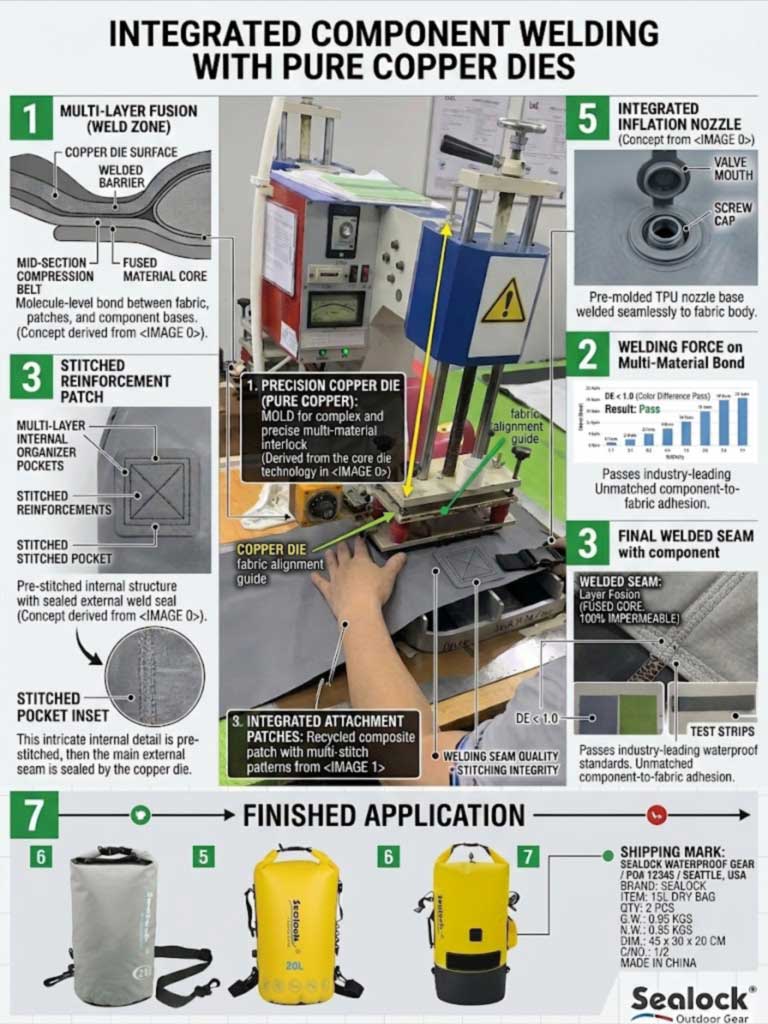
The die on the right is a cost line a sewn bag simply doesn't have.
Shift One: Tooling Becomes a Real Line Item
This is the structural difference. A sewn factory can make a new shape by cutting new patterns — effectively free. A welded shape needs a custom-machined copper electrode that directs RF energy along the intended seam path, and that die is quoted separately with its own lead time before the first sample exists.
Two consequences for your budget:
Tooling is a one-time cost that amortises across the run and across repeat orders. The same die produces the tenth order as cheaply as the first, which is why unit prices improve materially on reorders in welded production — more than they typically do in sewn.
It is part of why welded MOQs sit higher than "rebrand a stock model" minimums. A stock body with your logo carries no tooling; a bespoke shape does.
The underlying equipment explains the economics: modern RF welding machines cost upward of $80,000 each before dies, which is why this capability concentrates in specialist factories and why a factory's line count is a meaningful number rather than a marketing one.
Shift Two: Equipment Depreciation Raises Overhead
Overhead in a sewn factory is dominated by rent, utilities and people. In a welding factory it also carries the depreciation of a floor of six-figure machines and their tooling inventory. The overhead share sits higher than the 10–15% typical of sewn production, and it is genuinely a cost of the process rather than padding.
Shift Three: Materials Cost More, and Matter More
A welded bag requires a weldable coated fabric — PVC tarpaulin, TPU-coated or TPU-laminated textile — which sits above commodity 600D polyester. Specialist components add to it: sealed waterproof zippers are substantially more expensive than standard chains, and valves, gaskets and welded hardware are not trim-drawer items.
Material is also the most powerful lever on price in either construction. A published factory example makes the scale clear: a 30L backpack in 600D recycled polyester quoted around $6.80 FOB at 500 pieces, and the same bag in 1680D ballistic nylon with heavier zippers quoted around $13.20 — with the fabric change alone accounting for roughly 60% of the increase. In waterproof construction the same principle holds: moving between PVC tarpaulin, TPU-coated and double-sided TPU laminate moves the quote more than any other single decision.
Shift Four: The Scrap Asymmetry Nobody Mentions
This is the cost driver that most distinguishes welded production, and it rarely appears in any breakdown.
A bad stitch can be unpicked. A bad weld cannot.
If a sewing operator runs a seam wrong, the seam is opened and re-sewn; the material is recovered and the cost is a few minutes of labour. If a welding cycle runs at the wrong parameters — insufficient dwell, rushed cooling, contaminated surface — the panels are fused incorrectly. They cannot be separated and re-run. The scrap unit is the whole panel set, in expensive coated fabric.
Three things follow, and they explain factory behaviour a buyer might otherwise find excessive:
Test welds and peel tests at the start of every run are not bureaucracy. They cost a few panels; skipping them risks a batch.
Cutting tolerance is tighter, because a welded seam has no seam allowance to absorb drift — so material waste per unit runs differently from sewn production.
Process discipline is priced in. A quote that undercuts the market meaningfully on a welded product is usually pricing out the cooling time, the test welds, or the leak testing — all of which are invisible until the goods arrive.
Shift Five: QC Is a Larger Share
On a sewn bag, final inspection is largely visual and dimensional against an AQL sample. On a sealed product the claim is functional, so verification costs more: real water-submersion batch testing, and on some products 100% leak testing rather than sampling. Our compression bags, for example, are inflation-tested individually before packing, and every shipment passes the customer inspection procedure of unboxing, vacuum extraction, a 24-hour static rest and air-leak determination.
That is a real cost, and it is the cost of being able to state a rating rather than imply one.
Where the MOQ Breaks Actually Fall
Volume reduces unit cost by spreading fixed costs and improving purchasing, and the thresholds are fairly consistent across the industry: meaningful breaks around 300, 1,000 and 3,000 units, with roughly 5–10% reduction at each, and a further 10–15% at the 10,000-piece level. What changes at each step:
At the first break — tooling and setup amortise across more units, and material is bought in roll quantities rather than cuts.
At the middle break — hardware and zipper purchasing moves to volume pricing, and line setup time falls per unit.
At the top break — the run occupies a line efficiently, and waste and changeover per unit drop.
One caveat specific to welded work: the first break matters more here than in sewn production, because that is where die cost spreads. Doubling a first order from 300 to 600 pieces often moves the unit price more than doubling again later.
The Costs That Aren't in the Quote
FOB is the factory gate, and buyers regularly underestimate what sits beyond it. Published guidance puts the additional load at 25–50% of the FOB price once everything is counted:
Sample fees and tooling — separate, up front.
Compliance testing — REACH, Prop 65, colourfastness and similar typically run in the region of $120–250 per style, amortised across the order. Mandatory for US retail and major marketplaces, and routinely omitted from sourcing guides.
Third-party inspection — SGS or QIMA, per inspection.
Packaging — polybag, hangtag, barcode and export carton commonly $0.30–1.00 per unit. A "$5.00 FOB" quote rarely includes the retail packaging a brand actually needs.
Freight, insurance, duty and domestic delivery — and on waterproof bags, freight is often volumetric rather than actual weight, so carton efficiency per size matters more than unit price at the large end.
Engineer for Cost, Don't Ask for a Discount
The most useful reframing in sourcing: if you have a target FOB price, don't ask the factory to make it cheaper — ask them to engineer to the price. The levers are real and quantified:
Pattern nesting. CAD nesting that reduces fabric waste by around 4% saves roughly $0.20–0.40 per bag with no change in fabric quality.
Feature discipline. Removing two non-essential internal organisers can save about 15 minutes of labour — roughly $0.50–0.90 — and often produces a lighter, better bag.
Component sharing. Using the same zipper chain and buckle across three SKUs lets the factory buy at volume, typically a 5–10% hardware discount.
Geometry. Specific to welded work — gentle radii and clean seam runs weld more consistently than tight corners, improving yield and reducing scrap.
Shared tooling across a size ladder. Several of our models run multiple capacities on one pattern, which spreads die cost across a whole range rather than one SKU.
Longer lead times and volume commitments — genuine mutual savings rather than margin pressure.
How This Shows Up in Our Terms
Image
Model
Cost characteristic
MOQ
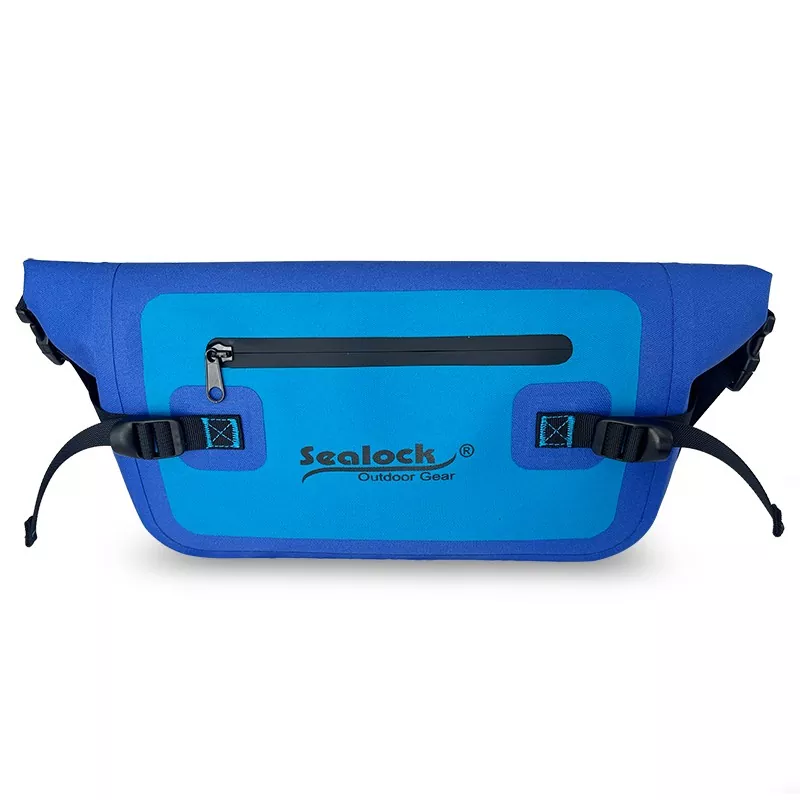
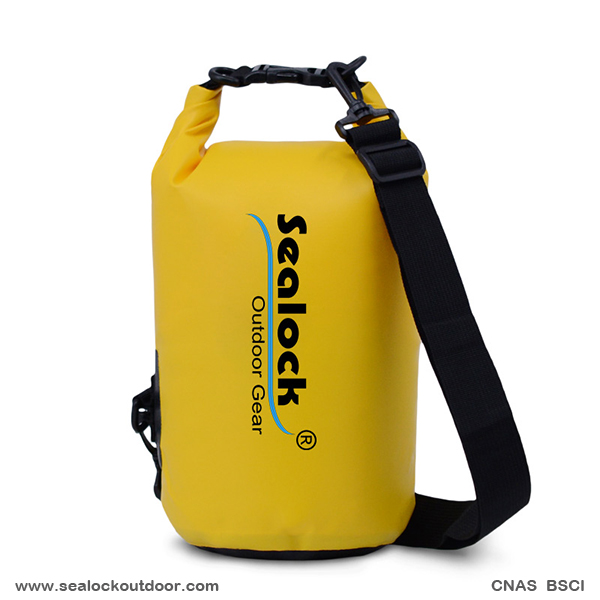
SL-D069 Dry Bag — 5L to 100L with published dimensions per size; 500D PVC mesh; eight colours.
Ten capacities on one pattern — the most efficient tooling amortisation in the range
200
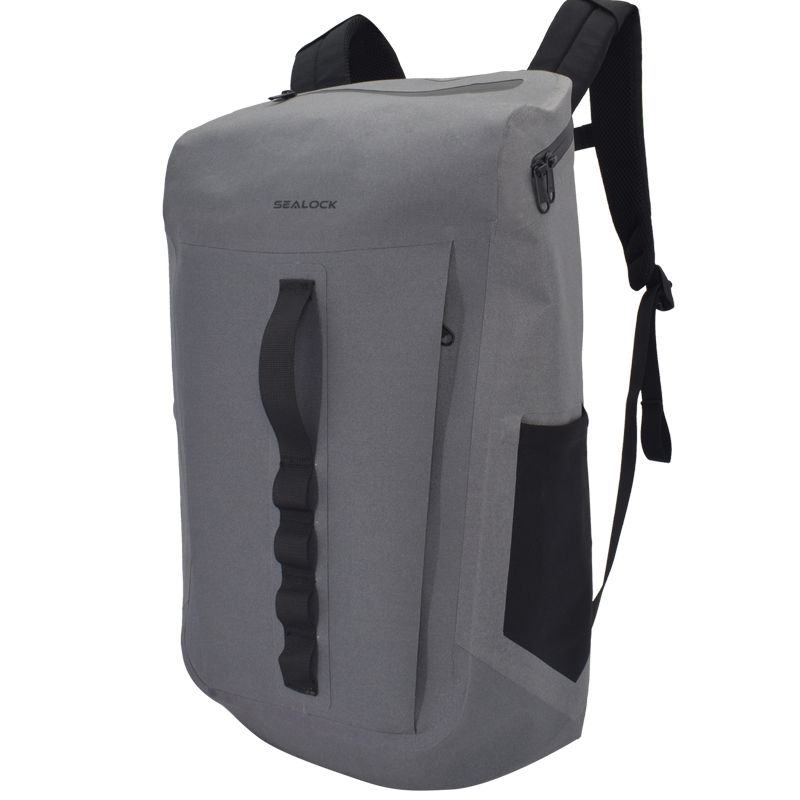
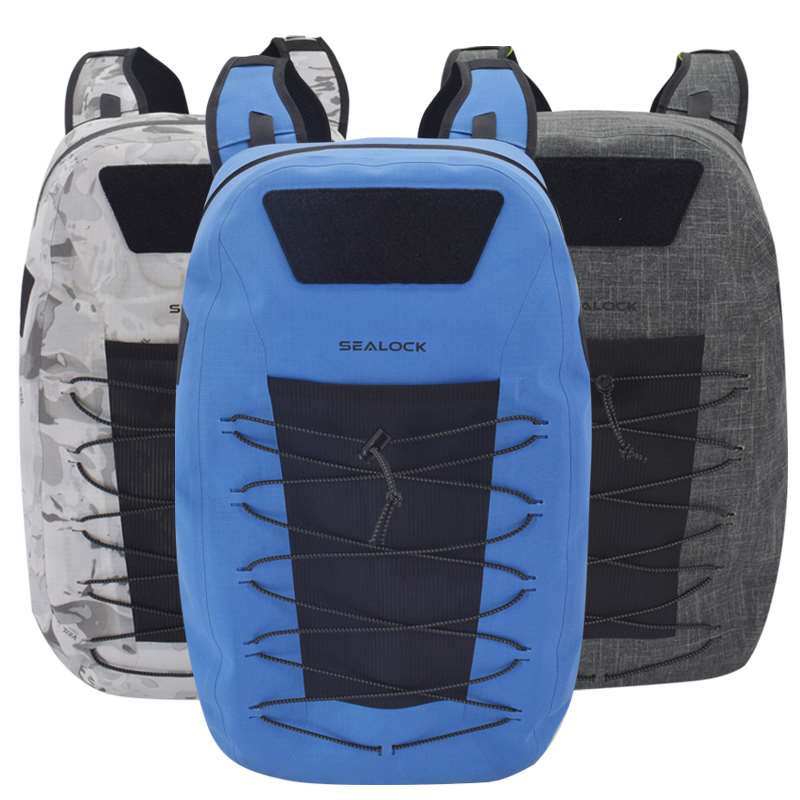
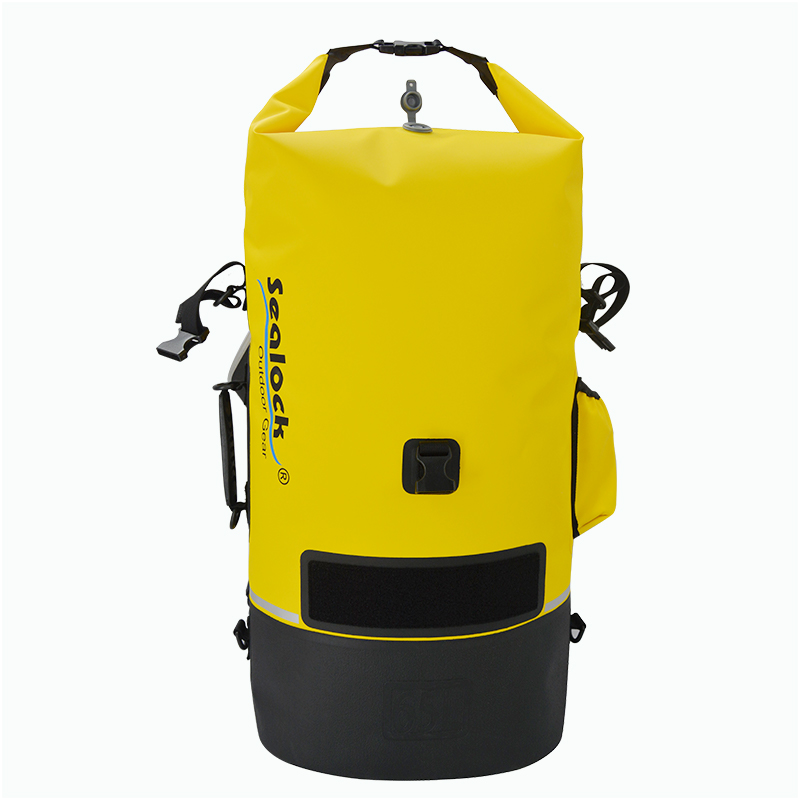
SL-E102 Dry Backpack — 15L / 20L / 30L with published dimensions per size; 500D PVC mesh.
Three capacities on shared tooling — a ladder without three developments
The value end — simple flat-seam geometry, minimal componentry, fast sampling
500
MOQ across the range runs from 200 pieces on some models, typically 300–500. Samples run 3–15 days depending on complexity, production 20–45 days after approval, with tooling quoted separately where a bespoke shape is developed. Production is available from Dongguan or Ho Chi Minh City, which is also a landed-cost decision for US importers.
FAQ: Waterproof Bag Costing
Q: Why is a welded bag more expensive than a sewn "waterproof" one?
A: Weldable coated fabrics cost more than commodity polyester, sealed zippers cost more than standard chains, tooling is a separate line item, equipment depreciation is higher, and functional leak testing costs more than visual inspection. Whether that premium is worth paying depends on whether your product will be submerged — for rain and spray, fully taped sewn construction is often sufficient and cheaper.
Q: Why is tooling charged separately?
A: Because every welded geometry needs a custom copper die. It's a one-time cost with its own lead time, reused on repeat orders — which is why reorder pricing improves noticeably in welded production.
Q: Why do welded factories insist on test welds and cooling time?
A: Because a bad weld can't be unpicked. A mis-sewn seam is opened and redone; mis-fused panels are scrap in expensive coated fabric. Test welds at each run start cost a few panels and protect a batch.
Q: Where do the MOQ price breaks fall?
A: Around 300, 1,000 and 3,000 units, roughly 5–10% at each, with a further 10–15% at 10,000. In welded work the first break matters most, because that's where die cost spreads.
Q: What should I budget beyond the FOB price?
A: Commonly an additional 25–50% once sampling, tooling, compliance testing, inspection, packaging, freight, insurance, duty and domestic delivery are counted. Compliance testing alone typically runs $120–250 per style.
Q: How do I reduce cost without reducing quality?
A: Give us the target price and let us engineer to it — better pattern nesting, removing features that add labour without adding value, sharing hardware across SKUs, weld-friendly geometry, and running a size ladder on shared tooling. Those are genuine savings; simply pressing on margin is not.
Talk to the Factory
For a line-by-line quotation on your specification — materials, tooling, labour, packaging and QC set out separately — contact Sealock at info@sealock.com.hk or +86-769-82009361. Over twenty years of high-frequency welding and industrial sewing under one roof, nine welding lines, dual China–Vietnam production, and a full customer inspection procedure on every shipment.
We use cookies to offer you a better browsing experience, analyze site traffic and personalize content. By using this site, you agree to our use of cookies.
Privacy Policy
 English
  Español
  Português
  русский
  Français
  日本語
日本語  Deutsch
  tiếng Việt
  Italiano
  Nederlands
  ภาษาไทย
  Polski
  Svenska
  magyar
  Malay
Malay  বাংলা ভাষার
  Dansk
Dansk  Suomi
Suomi  हिन्दी
  Pilipino
  한국어
한국어  Türkçe
  Gaeilge
  العربية
  Indonesia
  Norsk
Norsk  تمل
تمل  český
český  ελληνικά
  український
  Javanese
  فارسی
فارسی  தமிழ்
தமிழ்  తెలుగు
  नेपाली
  Burmese
  български
  ລາວ
ລາວ  Latine
  Қазақша
  Euskal
  Azərbaycan
  Slovenský jazyk
  Македонски
  Lietuvos
  Eesti Keel
  Română
  Slovenski
  मराठी
मराठी  Srpski језик