Sealock is a waterproof phone pouch manufacturer and OEM supplier. Every pouch on the market is described as waterproof; far fewer have been tested in a way that means anything. The gap matters more here than in any other waterproof product, because the customer isn't risking a wet towel — they're risking their phone. This guide walks through how a phone pouch is actually tested, from the international standard behind the rating to the checks on the production line, the final shipment inspection, and the three-minute test a buyer can run themselves.
The Standard Behind the Rating
Water-ingress ratings come from IEC 60529 (equivalently EN 60529, with related standards including ISO 20653, AS/NZS 60529 and JIS C 0920). The scale runs from vertical dripping all the way to high-pressure steam cleaning, and each level is a genuinely different test with its own apparatus, flow rate and duration:
Rating
Condition
Test parameters
IPX0
No protection
Not tested
IPX1
Vertical dripping
1 mm/min for 10 minutes, item rotating at 1 rpm
IPX2
Dripping, tilted 15°
3 mm/min, tilted up to 15° from normal position
IPX3
Spraying water
Spray up to ±60° from vertical; oscillating tube over a 60° arc, or ~10 L/min nozzle, min. 5 minutes
IPX4
Splashing from any direction
Same apparatus over a ~180° arc (or turntable at 5 rpm); the common “splash-proof” benchmark
IPX5
Water jets
6.3 mm nozzle, 12.5 L/min at ~30 kPa, from 2.5–3 m, min. 3 minutes
IPX6
Powerful water jets
12.5 mm nozzle, 100 L/min at ~100 kPa — torrential rain and washdown conditions
IPX7
Temporary immersion
1 metre for 30 minutes
IPX8
Continuous immersion
Beyond 1 metre, to a depth and duration the manufacturer declares
IPX9K
High-pressure, high-temperature jets
Four nozzles at 0°, 30°, 60° and 90°; ~80–100 bar at 80±5°C — industrial and automotive washdown
Two Things Buyers Get Wrong About the Scale
First, the ratings are not cumulative. A product rated IPX7 has not necessarily been validated against water jets at IPX5 or IPX6, because the physics of ingress differ substantially — sustained static pressure is a different problem from a forceful directional jet. That's why products needing both are tested and labelled IPX6/IPX7 or IPX6/IPX8 rather than assuming the higher number covers everything.
Second, IPX1 to IPX6 are spray tests, not immersion tests. They simulate rain, splashing, and hose-down cleaning — useful benchmarks for a jacket, a speaker, or a light fitting, but irrelevant to a product whose whole purpose is going underwater. A phone pouch rated IPX4 tells a swimmer nothing. Which is why, for this category, only two levels are meaningful:
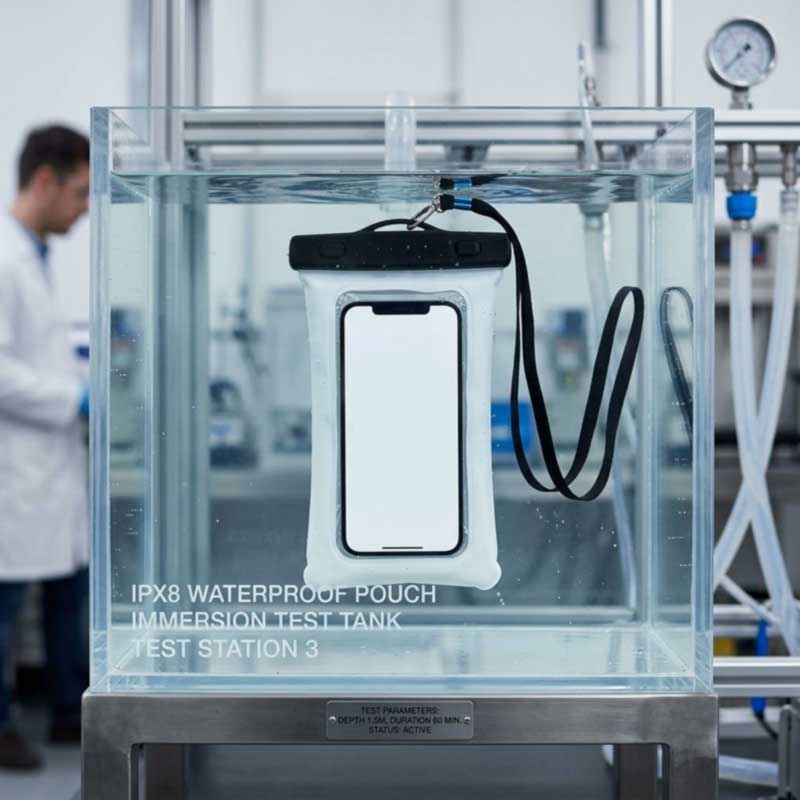
IPX7 — immersion at up to 1 metre for 30 minutes. The standard is precise about the geometry: the bottom of the item sits at no more than 1 metre and the top at least 15 cm below the surface. A fixed, repeatable test.
IPX8 — continuous immersion beyond 1 metre, under conditions the manufacturer specifies. In practice this often means testing at 3–5 atmospheres, equivalent to roughly 30 to 50 metres of water. Because the conditions are manufacturer-defined, an IPX8 claim is only meaningful when the depth and duration are declared.
That last point is the single most useful thing a buyer can know. "IPX8" alone is unverifiable; "IPX8 to 30 metres" is a claim that can be tested and audited.
A rating is only as good as the test behind it — and the depth that was declared.
How a Laboratory Immersion Test Runs
The procedure is more disciplined than "put it in water and see":
Setup — the item is closed exactly as a user would close it, with every seal and closure engaged, and any opening that normally carries a strap or fitting simulated.
Tank — large enough to immerse the item fully without it touching the bottom, so the specified depth is genuine.
Immersion — held at the specified depth for the specified time; for IPX7 that's 1 metre for 30 minutes.
Orientation — a decision is made about testing the item at different angles, since a seal can behave differently depending on which face is uppermost.
Removal and inspection — the item is dried externally, opened, and inspected for ingress. Absorbent paper inside reveals even trace moisture.
For an IPX8 product, a rigorous qualification protocol goes further — a pressure-decay screening first, static immersion at 1.5 times the rated depth for the rated duration, dynamic immersion cycling pressure between zero and the rated depth up to a thousand times, and then a repeat pressure-decay test to detect whether the seal degraded during the cycling. Crucially, environmental pre-conditioning — thermal ageing, humidity, and UV exposure — should come before immersion, so the test reflects a pouch that has lived a summer in the sun rather than one fresh off the line.
Testing Doesn't Start at the Finished Pouch
By the time a pouch is finished, most of the variables that decide whether it seals are already locked in. Testing therefore runs in three tiers through production:
IQC — incoming: film checked for thickness, clarity, and adhesion against the signed standard; gaskets checked for rebound elasticity; ABS lock hardware checked for dimension and toughness. A batch variation in film changes both the optics and the way the body seals.
IPQC — in process: seal and weld integrity, window alignment, closure installation, and lanyard-anchor assembly checked on the line as pouches are built, with test seals run before each batch so parameters are proven rather than assumed.
OQC — outgoing: AQL sampling, immersion testing, and comparison against the signed gold sample, with SGS or QIMA inspection and certification available.
The Test That Catches What Water Misses
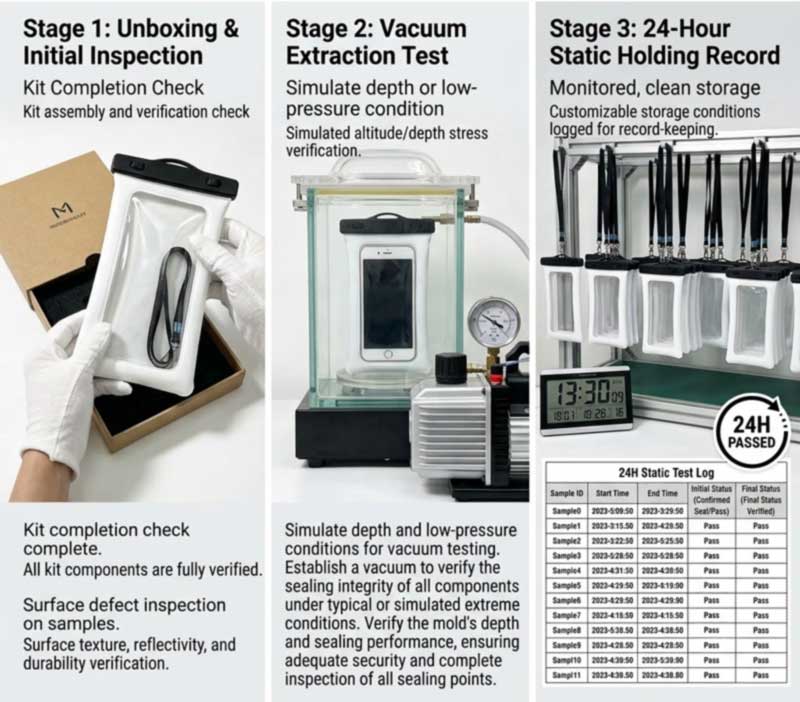
Immersion has a blind spot: a defect can be small enough to pass thirty minutes underwater and still fail a customer weeks later. That's why Sealock strictly executes the complete customer inspection procedure on finished goods — unboxing, vacuum extraction, a 24-hour static rest, and air-leak determination.
The logic is straightforward. Drawing a vacuum puts the seal under a sustained pressure differential in the opposite direction, then twenty-four undisturbed hours give any leak path time to reveal itself. A pinhole too small to admit visible water in a brief dunk will still bleed vacuum over a full day. This is the same principle the strictest IPX8 protocols use when they bracket immersion testing with pressure-decay screening — slow leaks show up as pressure change long before they show up as a wet tissue. On a product guarding a phone, that margin is the difference between a satisfied customer and a destroyed device.
Unbox, draw vacuum, wait a full day, judge the leak — negative pressure finds what immersion hides.
The Other Tests a Pouch Has to Pass
Waterproofing is necessary but not sufficient — a sealed pouch that loses the phone off a broken clip has still failed. The supporting suite covers:
Test
What it proves
Seal bond and peel strength
The heat-seal or weld is fused, not just pressed
Closure cycling
The lock or zipper still seals after repeated use
Jerk-loading on the lanyard anchor
The pouch keeps hold of the phone — a leading failure mode
Film clarity and abrasion
The window stays usable for touch and photography
Buoyancy check
It floats with the target phone inside, not empty
UV, thermal and salt spray
The seal survives a season of sun, heat and seawater
Function check
Touchscreen, Face ID and calls work through the film
Third-Party Certification
An in-house result is a factory's word; a third-party report is evidence a buyer can show their own customers. SGS or QIMA inspection and certification can be arranged on any programme, and for an IPX8 claim in particular, buyers increasingly expect a test report with a declared depth rather than a rating printed on a listing. If you are sourcing and a supplier can't produce one, treat the claim as unverified.
The Three-Minute Test Any Buyer Can Run
Before approving a sample — and worth printing on retail packaging for end users — there's a simple validation sequence:
Dry seal check — put a folded paper towel inside, close and lock the seal, and squeeze gently. There should be no air hiss and no visible gap.
Submersion — submerge the pouch, paper towel inside, at 1 metre for 30 minutes. Wipe it dry, open it, and inspect. Completely dry paper is a pass.
Motion test — while submerged, shake it vigorously for around fifteen seconds to simulate swimming, then recheck. Static sealing and sealing under movement are not the same thing.
Two habits worth passing on to customers: repeat the check periodically with regular use or after any drop, and retire a pouch that shows any dampness. Seal integrity degrades with UV, temperature swings, and repeated use, and a gasket that has been compromised does not recover its elasticity.
The Product Basis
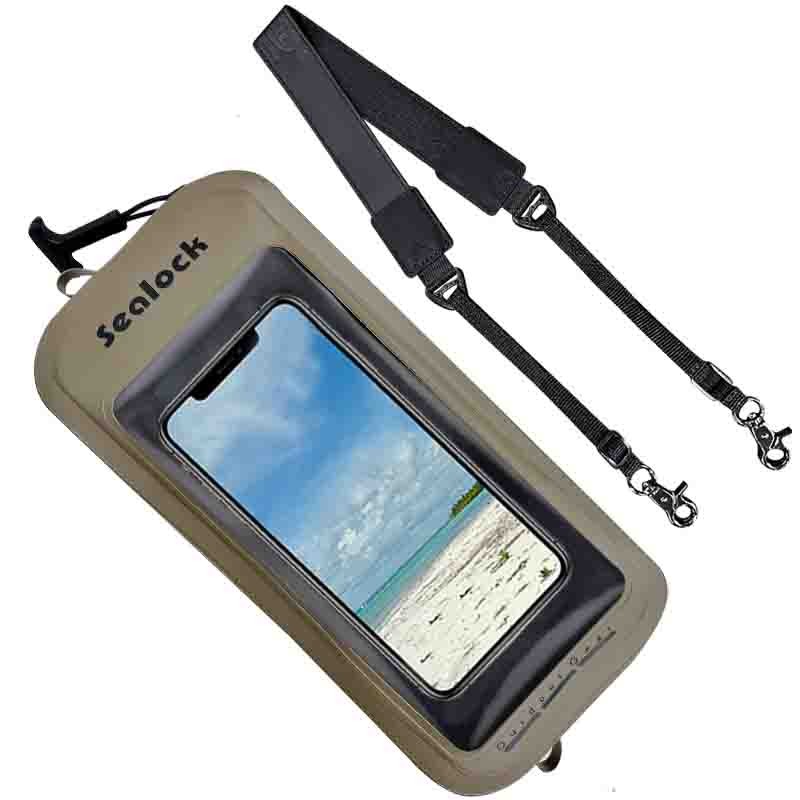
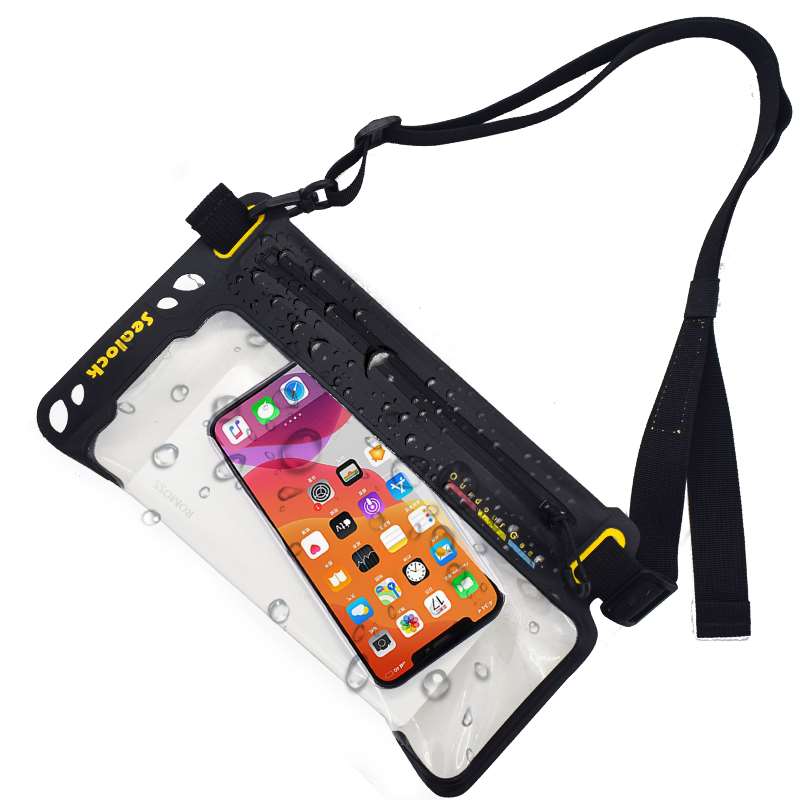
These pouches, from Sealock's waterproof phone pouch line, are all built and verified to the regime above and serve as equal starting points for an OEM order — none is ranked above another:
Image
Model & specs
Seal & rating
MOQ
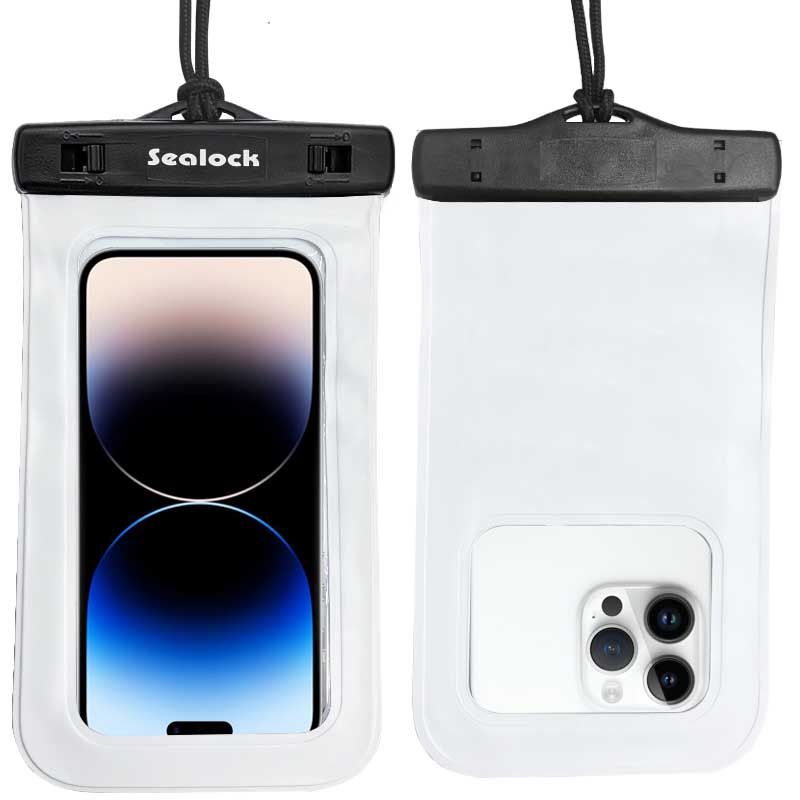
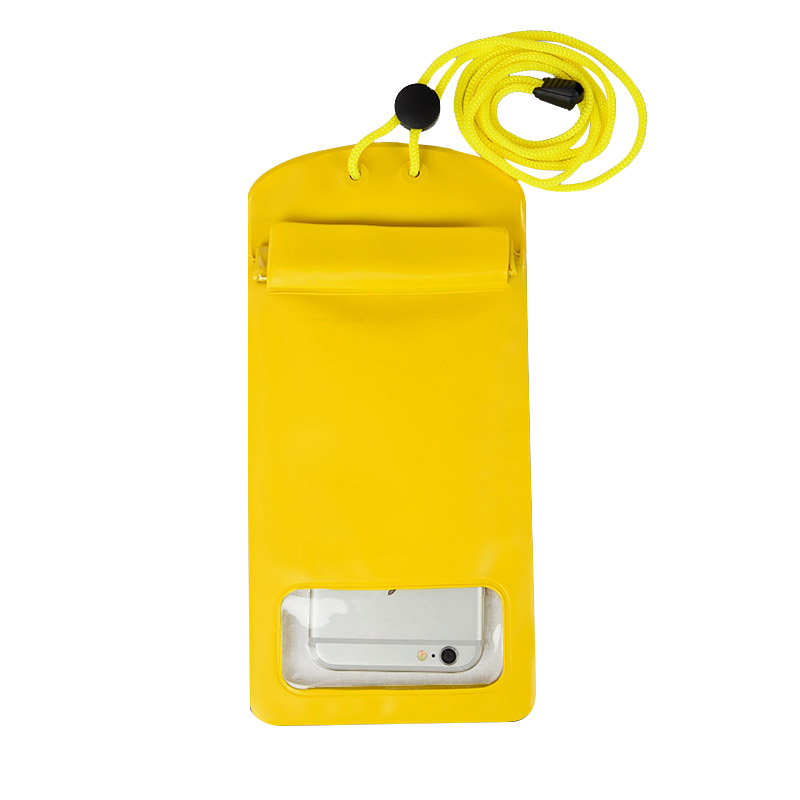
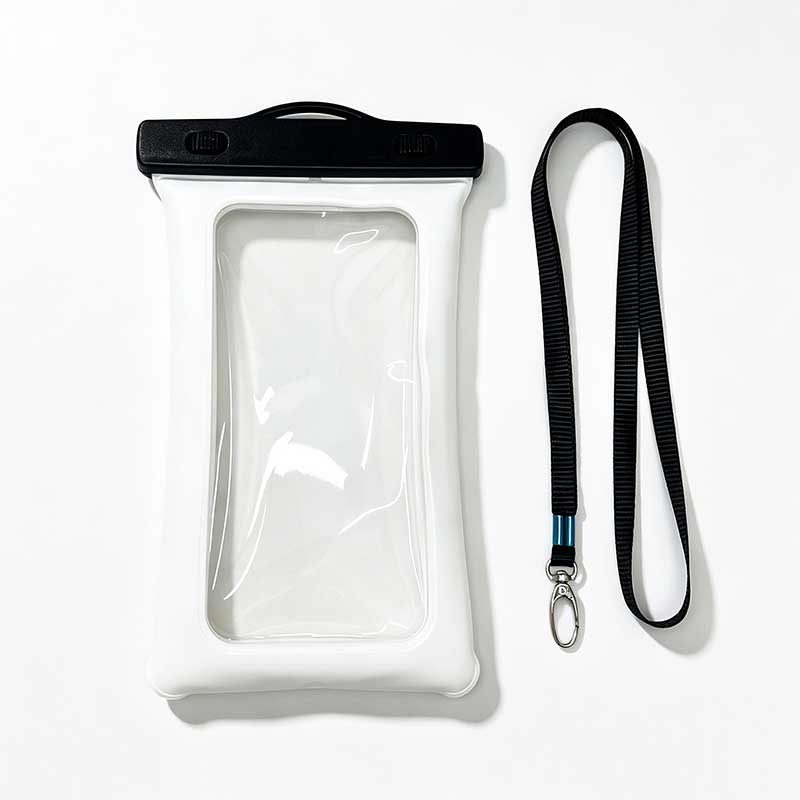
SL-A064 Universal IPX8 Phone Pouch with Camera Window — premium PVC + ABS; external approx. 22×11.5 cm, internal usable approx. 18.5×9 cm; fits up to 7.0″; touchscreen front window + independent rear camera window; Face ID supported; 60–70 g; 45 cm adjustable lanyard.
Q: What's the difference between an IPX7 and an IPX8 test?
A: IPX7 is fixed — 1 metre for 30 minutes, with the top of the item at least 15 cm under the surface. IPX8 is continuous immersion beyond 1 metre under conditions the manufacturer defines, often 3–5 atmospheres, so the declared depth is part of the claim.
Q: Why don't you rate pouches at IPX4 or IPX6?
A: Because IPX1 to IPX6 are spray and jet tests — dripping, splashing, and hose-down conditions — not immersion. They're meaningful for a jacket or a speaker, but a pouch that only passes IPX4 tells a swimmer nothing. For a product designed to go underwater, IPX7 or a declared-depth IPX8 is the only relevant benchmark.
Q: Does a higher IPX number automatically cover the lower ones?
A: No — the ratings aren't cumulative. Passing IPX7 immersion doesn't prove resistance to an IPX5 or IPX6 water jet, because sustained static pressure and a forceful directional jet are different ingress mechanisms. Products that need both are tested and labelled for both.
Q: Is an IPX8 label enough when I'm sourcing?
A: No. Ask for the declared depth and duration plus a test report. An IPX8 rating with no stated depth can't be verified, and it's the most common overclaim in this category.
Q: Why do you use a vacuum test as well as immersion?
A: Because immersion has a blind spot. A pinhole can pass thirty minutes underwater and still fail in service. Drawing a vacuum and holding it for 24 hours exposes slow leak paths as pressure loss — the same reasoning behind the pressure-decay screening in strict IPX8 protocols.
Q: Should pouches be tested after ageing, not just when new?
A: Ideally yes. Thermal ageing, humidity, and UV exposure before immersion simulate real service life — important because seal integrity degrades with sun, heat cycling, and repeated use.
Q: Can you arrange third-party certification?
A: Yes — SGS or QIMA inspection and certification on request, which is what buyers increasingly need to substantiate an IPX8 claim to their own customers.
Q: How can my customers check their own pouch?
A: Paper towel inside, seal it, squeeze for air hiss, submerge for 30 minutes, then shake while submerged to test under motion. Dry paper is a pass; any dampness means retiring the pouch.
Talk to the Factory
For test reports, samples, and OEM/ODM proposals on waterproof phone pouches, contact Sealock at info@sealock.com.hk or +86-769-82009361. Over twenty years in welded and heat-sealed waterproof products, declared-depth IPX8 builds, third-party certification on request, and a full customer inspection procedure on every shipment.
We use cookies to offer you a better browsing experience, analyze site traffic and personalize content. By using this site, you agree to our use of cookies.
Privacy Policy
 English
  Español
  Português
  русский
  Français
  日本語
日本語  Deutsch
  tiếng Việt
  Italiano
  Nederlands
  ภาษาไทย
  Polski
  Svenska
  magyar
  Malay
Malay  বাংলা ভাষার
  Dansk
Dansk  Suomi
Suomi  हिन्दी
  Pilipino
  한국어
한국어  Türkçe
  Gaeilge
  العربية
  Indonesia
  Norsk
Norsk  تمل
تمل  český
český  ελληνικά
  український
  Javanese
  فارسی
فارسی  தமிழ்
தமிழ்  తెలుగు
  नेपाली
  Burmese
  български
  ລາວ
ລາວ  Latine
  Қазақша
  Euskal
  Azərbaycan
  Slovenský jazyk
  Македонски
  Lietuvos
  Eesti Keel
  Română
  Slovenski
  मराठी
मराठी  Srpski језик