Insights

We are glad to share with you about the results of our work, company news, and give you timely developments and personnel appointment and removal conditions.
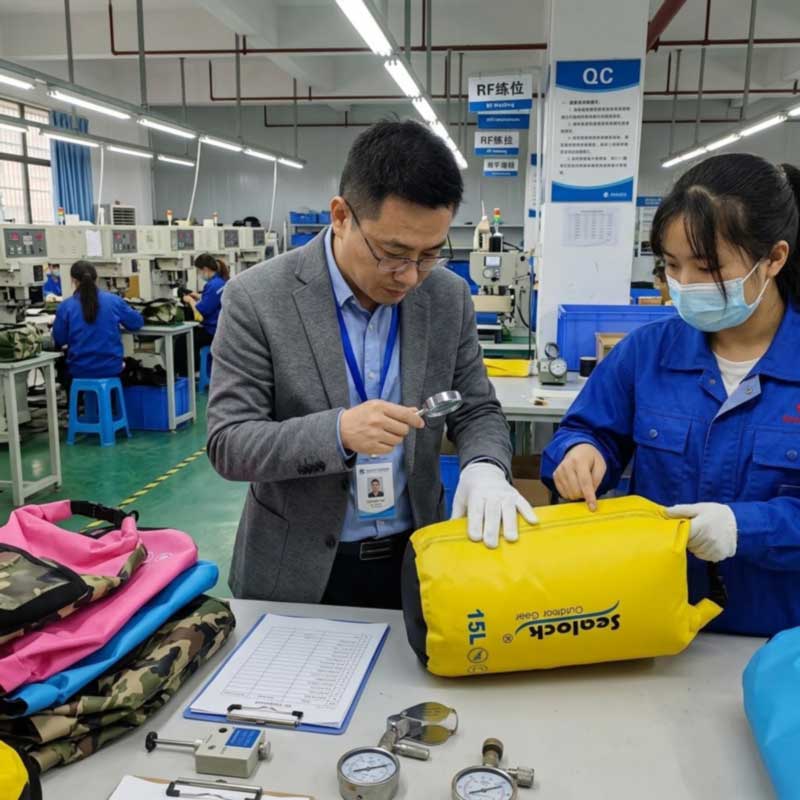
  • Most factory audits for waterproof outdoor gear stop at equipment capability: does the facility have RF welding machines, what denier fabrics do they stock, can they hit the quoted MOQ. These are necessary questions. They're also insufficient ones. This guide covers the three audit dimensions that experienced sourcing managers evaluate beyond manufacturing capability: material traceability and GRS certification for sustainability compliance, ISO 9001 quality management systems as applied to RF welding production (not just the certification plaque), and the social compliance infrastructure—BSCI, SMETA readiness, labor documentation—that determines whether a supply chain can withstand scrutiny from major retail partners and global brand standards teams.

    2026-05-15

  • For brands supplying professional-grade waterproof outdoor gear, a manufacturing partner's RF welding capability is only as meaningful as the process discipline behind it. This article covers the engineering parameters that determine whether RF welding produces consistent zero-leak results at production scale: the physics of 27.12 MHz internal molecular heating versus surface thermal bonding, the narrow calibration window required when welding 840D high-tenacity TPU, the three process variables that separate a controlled production environment from an inconsistent one, and what 1.0 Bar hydrostatic pressure testing actually confirms about a finished weld.

    2026-05-15

  • Most waterproof product failures don't start with the fabric. They start at the seam. This article breaks down the practical and engineering differences between RF welding and traditional stitching for outdoor gear—covering waterproof performance under pressure, long-term durability through field stress cycles, material compatibility, production cost realities, and the specific scenarios where each method is the right choice. Includes a direct comparison table and guidance for OEM buyers evaluating a manufacturer's seam construction capability.

    2026-05-13

  • A:The factory floor doesn't tell you where the market is heading—the buyer conversation does. Across six stops in 2025, from ISPO Munich to Beijing, Vietnam, and Hong Kong, one thing became clear: the rules of OEM partner selection have fundamentally changed. European buyers are rejecting generalists. Procurement officers are treating vendor selection like financial due diligence. And the pressure to de-risk single-country supply chains has made the China-Vietnam dual-base model not a preference, but a requirement. Here's what the most demanding global buyers are actually asking for—and what it means for sourcing strategies heading into 2026.

  • This comprehensive technical report analyzes the critical transition from traditional polymers to PFAS-Free TPU in the waterproof equipment industry. We delve into the environmental mandates driving the non-fluorinated movement, the molecular advantages of TPU in 27.12 MHz high-frequency welding, and Sealock’s rigorous quality protocols for ensuring that sustainable gear meets professional-grade 1.0 Bar submersible standards.

    2026-04-30

 ...23456...55 
X
We use cookies to offer you a better browsing experience, analyze site traffic and personalize content. By using this site, you agree to our use of cookies. Privacy Policy
Reject Accept