




Company News · From the Finishing Floor
A waterproof backpack can have a sound welded shell and still disappoint its buyer: a strap slips through an adjuster, the zipper catches near a corner, or the carton contains the wrong colour. The finishing and packing stages are where these details come together.
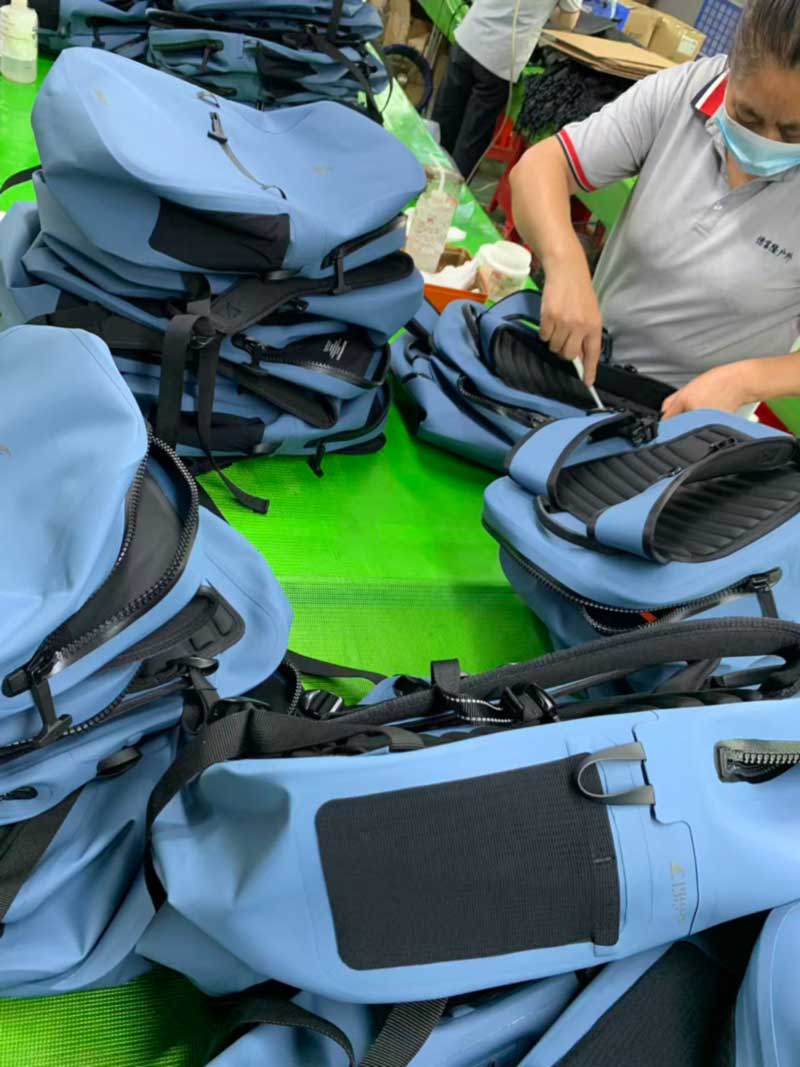
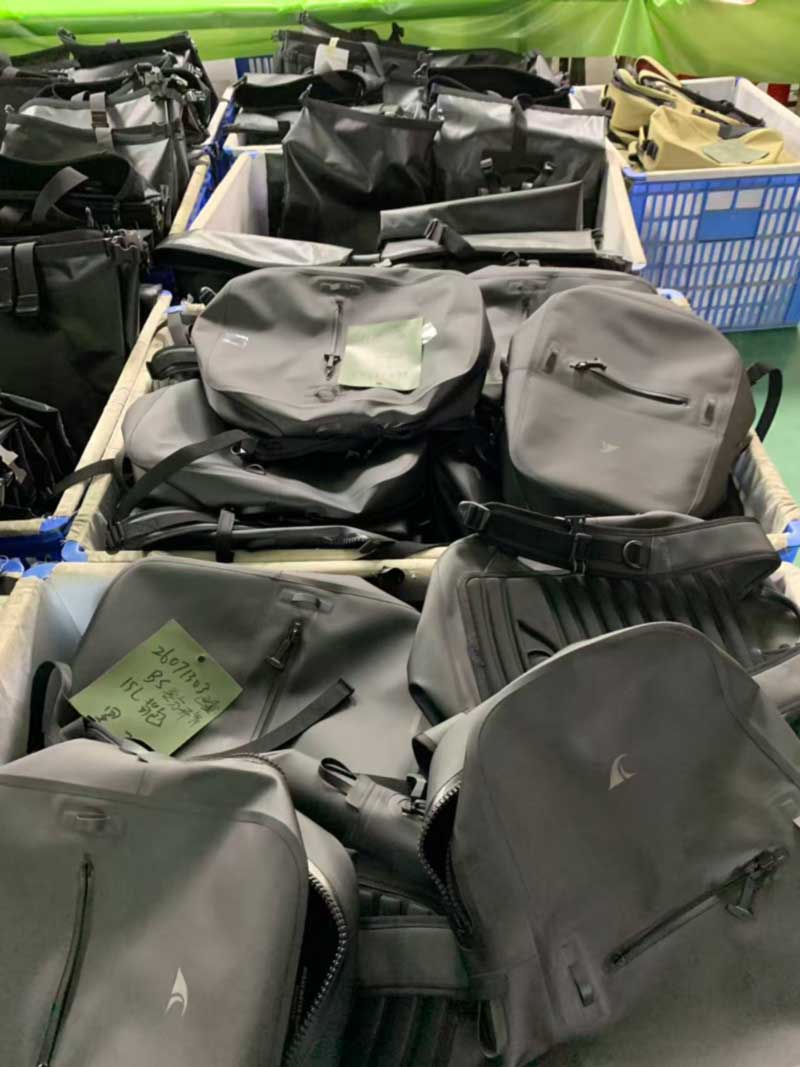
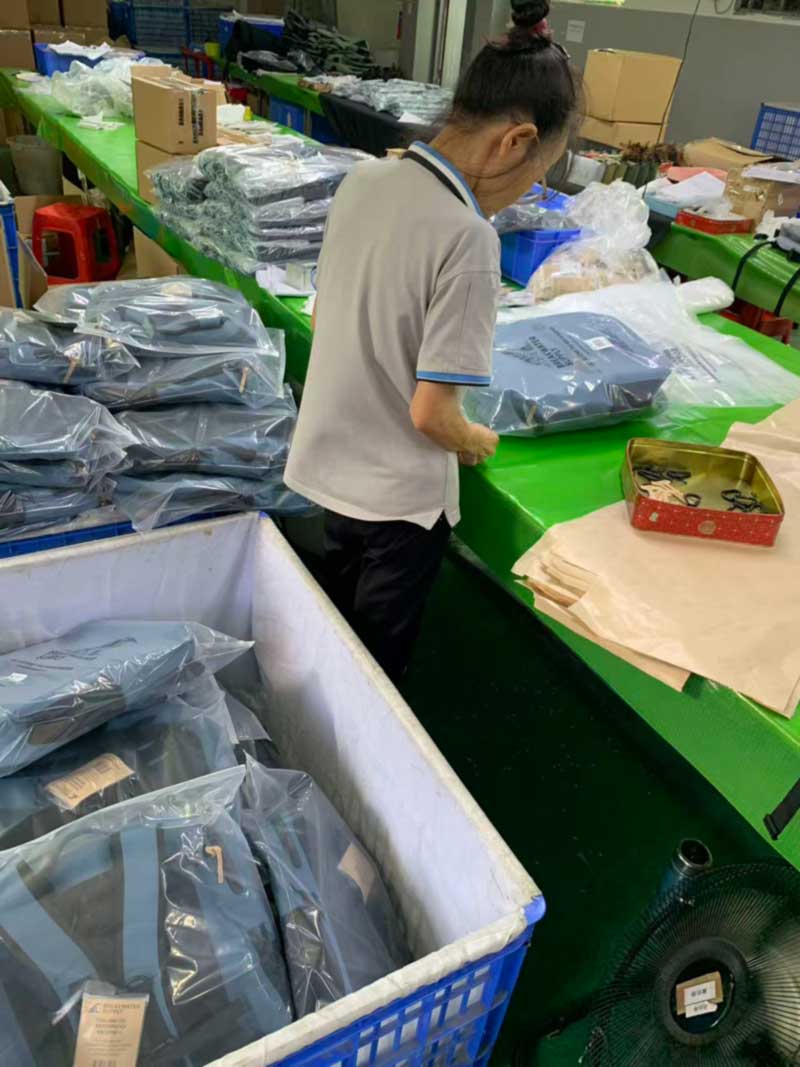
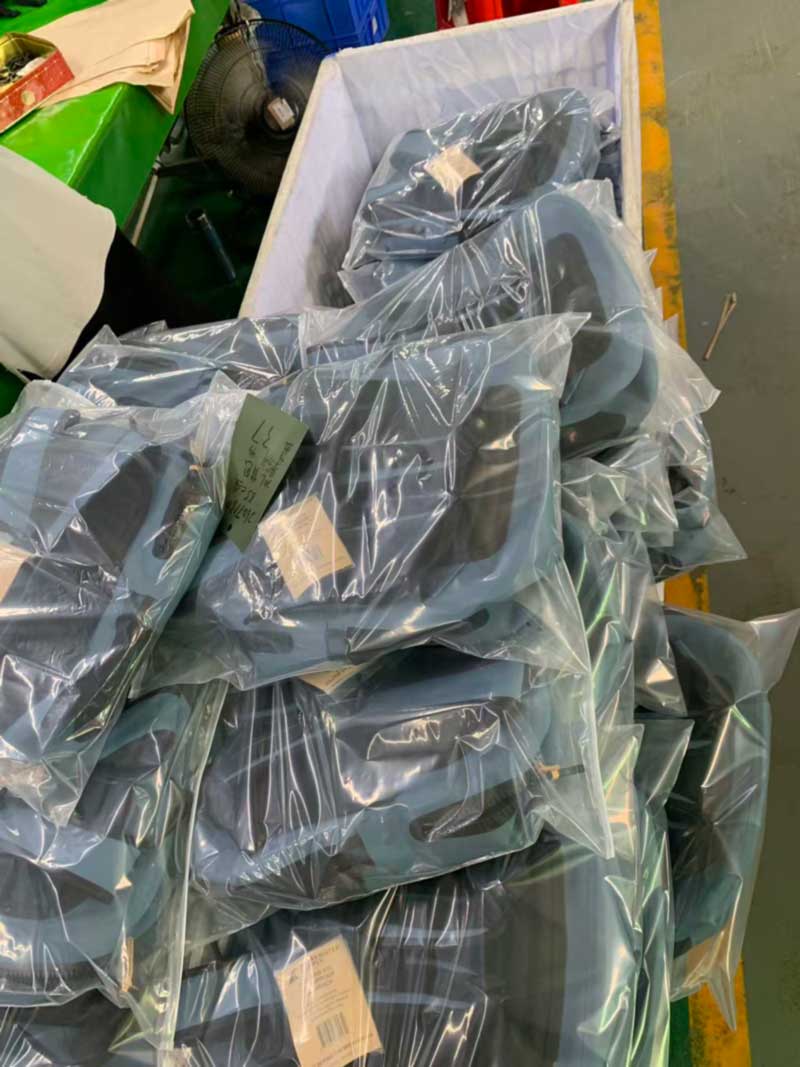
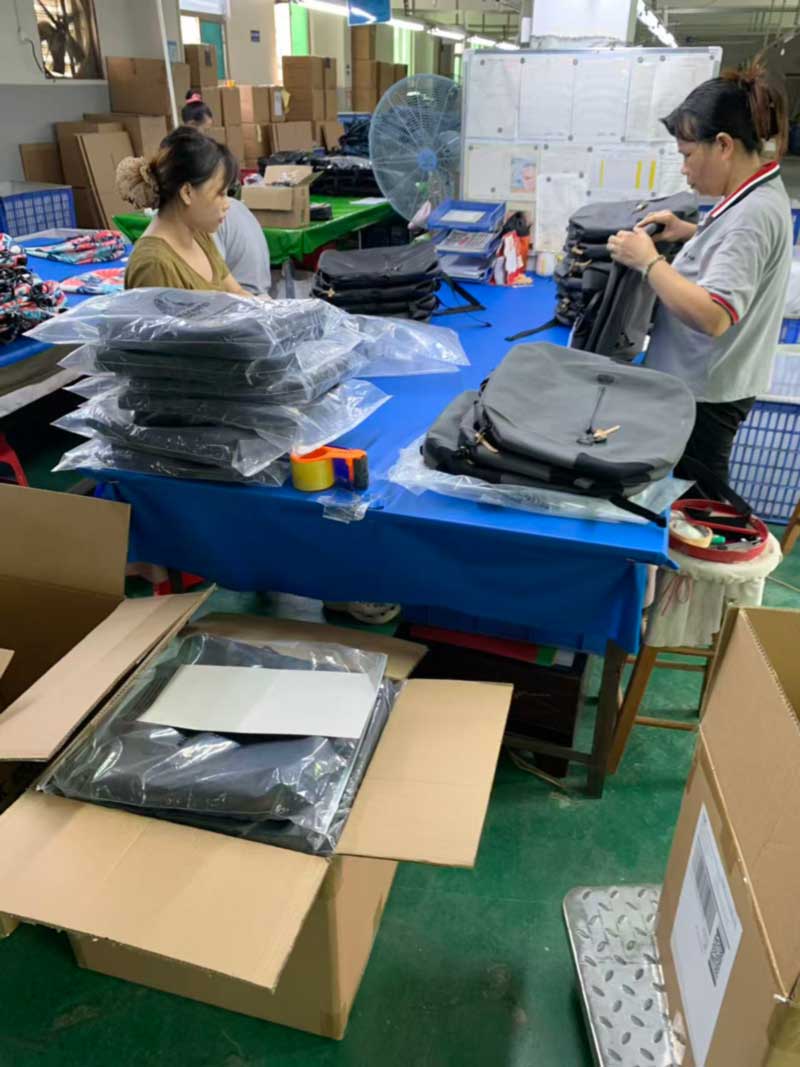
In this factory update, Sealock shares original photographs from its backpack finishing and packing areas. Blue and grey packs sit beside worktables, operators handle closures and back panels, and labelled products move into individual protective bags. Breakwater Supply branding is visible on the blue backpacks and their packaging.
The photographs bring a practical question into focus for OEM buyers: what should be checked on the assembled backpack before it is packed? Waterproof backpack final inspection needs to connect closure operation, carrying hardware, product identification and packing condition with the approved specification.
Check the Zipper on the Finished Backpack
At one finishing table, an operator works along the opening of a blue backpack with a handheld tool. The open bag exposes the main zipper and the surrounding assembly. This is the stage at which the closure can be assessed in the shape the customer will actually use.
For an OEM inspection plan, the useful check is a complete opening-and-closing movement. The slider should follow the intended path without catching fabric or trim, and it should reach the closure position specified for that zipper. Resistance concentrated at one bend deserves investigation even if the rest of the track moves normally.
- Inspect the track: look for trapped thread, loose debris, damaged elements and distorted sections.
- Check the ends: confirm that the slider reaches its intended end position and that tabs or nearby layers do not obstruct it.
- Assess both compartments: where a main opening and front pocket use different closures, evaluate each against its own specification.
Any zipper treatment should follow the instructions for the specified component. Lubricant type, application area and quantity are not interchangeable across all waterproof zippers. More lubricant is not a remedy for a damaged track or incorrect installation.
Operation and sealing are separate checks. A zipper that moves correctly still needs to meet the finished bag’s specified water-protection requirement. A manual closure check does not establish an IP rating.
Follow the Load from the Shoulder Strap into the Shell
The grey-pack photographs show padded back panels, shoulder straps, adjusters and attachment areas on the same finished assembly. Those details need their own review: a sealed compartment and a reliable carrying system perform different jobs.
Start with how the webbing is routed. Twisted straps, an incorrectly threaded adjuster or an incompatible buckle pair can make a backpack difficult to fit even when the individual components look acceptable. Then examine the attachment area for missing stitches where sewing is specified, lifted reinforcement edges or distortion around the connection.
A light hand pull can reveal a loose component, but it is not a rated load test. Qualification of the carrying system should define the load, loading direction, duration or cycle count, and acceptance criteria. When the attachment interfaces with the waterproof compartment, its effect on sealing also needs consideration.
Turn Visible Details into an Inspection Specification
For a new private-label order, the following checkpoints provide a useful starting point. The approved sample, component instructions and intended use should determine the acceptance limits.
| Check area | What to examine | What to record or compare |
|---|---|---|
| Main and pocket zippers | Full travel, snagging, end position and visible track condition. | Closure model, compartment and location of any resistance or damage. |
| Harness and hardware | Strap routing, buckle engagement, adjuster function and attachment workmanship. | Approved routing and component reference; separate load-test results where required. |
| Shell and joint edges | Visible cuts, pinholes, lifted edges and damage near attachments. | Defect location and the corresponding finished-product performance check. |
| Branding and product identity | Colour, model, size, logo, hangtag and barcode data. | The approved SKU list and artwork revision. |
| Individual packaging | Accessory placement, strap arrangement and pressure on closures. | The approved packed sample and required contents. |
| Carton contents | Assortment, quantity, carton identification and packing condition. | Purchase order and packing list. |
Performance evidence belongs alongside these checks. For a water test, the record should identify the product, closure condition, method, exposure conditions and result. If a customer also requires an air-leak test, its pressure and acceptance criteria must be defined separately. Neither result should be inferred from a photograph of a finished pack.
A Readable Barcode Can Still Be the Wrong Label
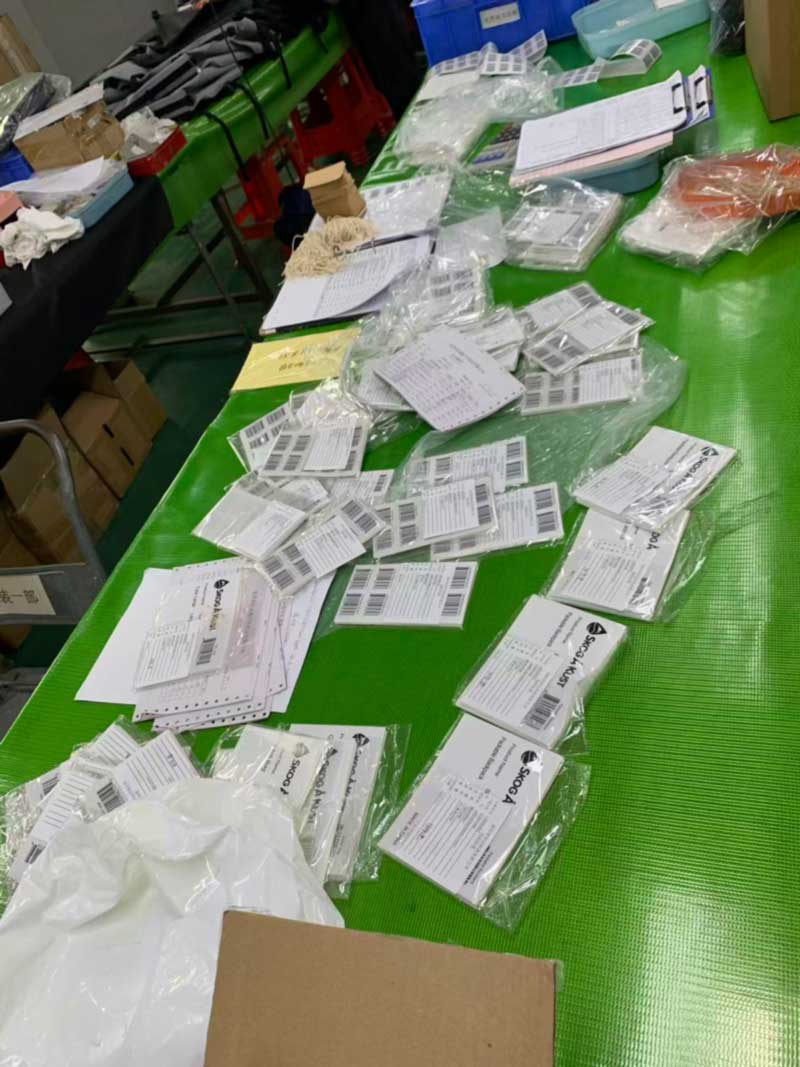
One worktable photograph shows Skog Å Kust branded product documents and barcode labels. Separately, the blue-backpack packing photographs show Breakwater Supply hangtags and printed protective bags. They illustrate why product identification deserves attention when several designs or customer programmes pass through a factory.
A scan confirms that a reader can decode a symbol; the decoded value must also match the intended product. A perfectly readable label for another size or colour still creates a receiving problem. The product, hangtag, individual package and carton information should agree with the order’s approved SKU mapping.
A useful packing reference therefore contains more than a logo file. It includes the product identifier, colour and size description, current artwork, required inserts and carton assortment. If an artwork revision changes, remaining labels from the previous version need a clear disposition before packing continues.
Protect the Closure When the Backpack Is Packed Flat
The later photographs show individually wrapped blue packs in a lined bin and grey packs beside an open carton. Flattening a backpack can reduce shipping volume, but the packed shape must suit the product.
The packing sample should show where the straps, buckles and pullers sit. Hard components should not create concentrated pressure against a coated panel or the next bag’s closure. Avoid forcing a zipper into a sharp fold to achieve a carton size that the product cannot comfortably fit.
Review a packed unit by opening it again. Check that the specified accessories are present, the label matches, the harness can be unfolded normally and the closures remain accessible. Where transport durability is part of the order requirement, evaluate the complete packaging system under an agreed test programme.
Bring the Inspection Requirements into the OEM Brief
Sealock’s backpack range includes different closure and carrying-system configurations. For a zippered design reference, see the SL-E103 waterproof backpack with airtight zipper. Its catalogue specification is a starting point for a new project, not a model identification for the branded products pictured here.
For the earlier manufacturing stages, read our custom waterproof backpack production guide. At the quotation stage, send the intended carrying load, target water protection, closure requirements, colour-and-size assortment and packaging format together. That gives the team a clearer basis for discussing samples and inspection requirements.
OEM Buyer Questions
Does final inspection replace waterproof testing?
No. Appearance, assembly and closure-operation checks do not establish water resistance. The complete backpack needs the test method and acceptance criteria specified for its intended claim.
Should every waterproof zipper receive the same lubricant?
No. Follow the instructions for the actual zipper component, including the approved product and application area. Confirm the component specification before deciding how it should be treated.
What should a finished-product inspection report identify?
It should connect the inspected units to their model or SKU, quantity inspected, applicable specification, observations and test results. Packing checks should identify the matching labels, accessories and carton configuration.
Plan Your Next Waterproof Backpack Order
Send Sealock your target dimensions, use conditions, carrying load and order quantity, together with your label and packaging requirements. We can discuss the construction and sampling details needed for your OEM backpack project.
Discuss Your Backpack Specification