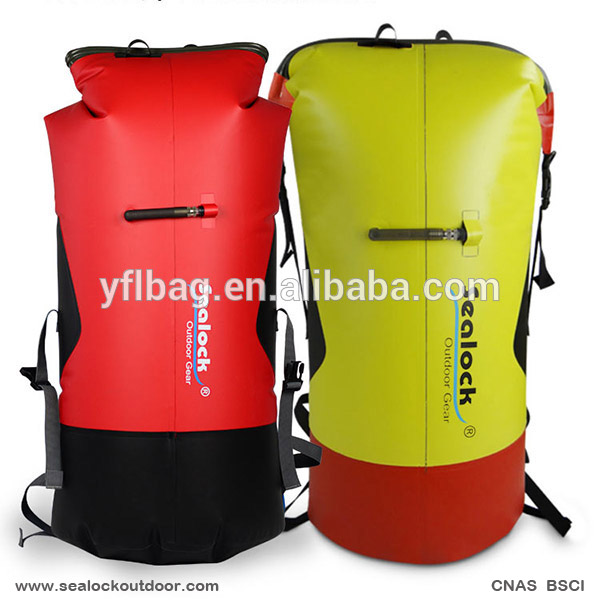
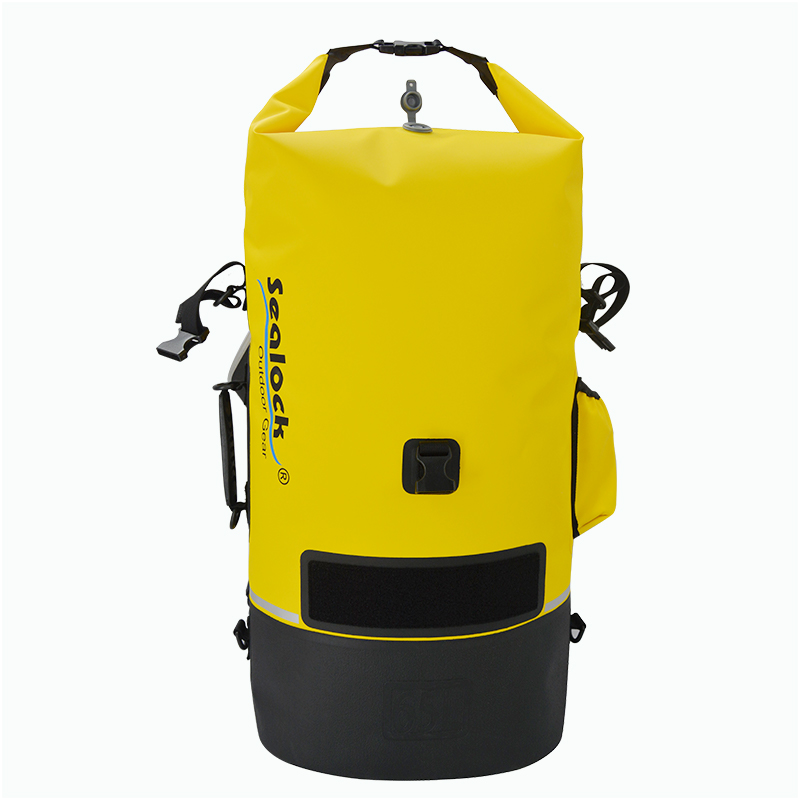
Sealock is a roll-top waterproof backpack manufacturer and OEM supplier. On a dry sack, a roll-top is the simplest closure in outdoor gear — a round tube mouth folded down and clipped. On a backpack it is one of the most demanding components to build, because the opening is wide and shaped, it has to close cleanly against a harness and a frame, and its corners are where almost every roll-top failure begins. This guide covers how the collar is actually manufactured, the hardware decisions behind it, and the specification details that separate a roll-top that seals from one that merely folds.
Why the Roll-Top Wins on a Backpack
The mechanism is worth stating precisely, because it explains the design rules that follow. Folding the fabric over itself creates a labyrinth seal: water has no straight path in, so the opening resists rain without depending on a zipper. That matters because even water-resistant zippers eventually admit water at the teeth under pressure, and a genuinely sealed zipper is expensive hardware with a maintenance requirement. The roll-top delivers a sealed opening with no mechanical part in the sealing path at all — cheaper, simpler and harder to break.
The trade-off is the one every roll-top brief has to design around: the seal only exists if the user can actually fold it. Which puts the collar at the centre of the build.
Fabric folded on itself is a labyrinth seal — no moving part in the sealing path.
The Collar: A Manufactured Component, Not a Length of Fabric
The roll section is a purpose-built assembly with three jobs: give the fold a defined line, hold the edge flat so the layers compress evenly, and anchor the retention hardware. Its specification comes down to four numbers.
Collar height. The material available above the main body determines how many folds a user can achieve at full load. Three folds is the practical minimum for a reliable seal; four for standing water. If the collar is short, a loaded pack can only manage one or two folds — and the customer reports a leak that is really a design shortfall.
Stiffener bar. A plastic or composite strip along the top edge that keeps the mouth flat and square, so the two faces meet cleanly and the folds stack evenly. On welded construction the stiffener is captured between weld lines rather than sewn into a hem, which keeps the barrier continuous.
Fold guidance. A stiffened rim does more than add structure — it guides the user to fold in the right place, so the closure ends up correctly positioned without instruction. Consistency of folding is what makes the seal repeatable across thousands of users.
Width management. A backpack mouth is far wider than a dry sack tube. The wider the opening, the harder it is to keep the fold even across its length, which is why collar stiffness and hardware placement are proportional decisions rather than fixed ones.
Retention Hardware: Two Choices That Work, Two That Don't
What works
Side-release buckles — the standard, secure, familiar and cheap. Two buckles across a wide mouth pull the collar down at both ends; a single central buckle is faster but allows the ends to lift.
G-hook — a metal hook that engages a webbing loop. It fastens quickly, adds rigidity to the closure, and carries a strong perceived-value premium. The commercial arithmetic is worth knowing: a G-hook costs roughly two dollars more than a standard side-release buckle, and typically supports a retail price increase many times that. On a premium commuter pack it is one of the cheapest positioning upgrades available.
What doesn't
Magnets as retention. Magnets are excellent for aligning a collar and useless at holding it. When a user stuffs the pack, internal pressure pops a magnetic closure open. Magnets can assist alignment, but the roll must be physically restrained by a hook or buckle.
Hook-and-loop across the collar face. It seems like an obvious way to add a secondary seal, and it creates a specific customer complaint: if the alignment is even slightly off, the hook side sits exposed and abrades whatever it touches — a merino sweater, a scarf, a jacket. A stiffened collar rim is the better answer than a Velcro face. Where a back-up seal is genuinely wanted, a narrow strip inside the fold, positioned so it never sits exposed, is the safer execution.
Buckle or G-hook for retention; magnets only for alignment — never as the thing that holds.
The Corners: Where Roll-Tops Actually Leak
This is the part of roll-top manufacturing that most guides never mention. When a wide collar folds down, the middle compresses neatly and the outer ends do not — the fold has to turn a corner where it meets the side seam, and material bunches there. Reviewers of premium roll-top packs note exactly this: closures that prioritise fast access can leave the extreme ends of the opening less firmly closed than the centre.
The manufacturing answers:
Hardware at both ends, not just the middle, so the fold is pulled down where it wants to lift.
Corner geometry designed for folding — a gentle radius where the collar meets the side seam rather than a sharp corner that forces the material to bunch.
Weld reinforcement at the collar-to-body junction, since that corner sees repeated flexing every time the pack is opened.
Collar width tapering on some designs, so the ends carry less material to fold.
Material: The Roll Zone Is a Flex-Fatigue Problem
A roll-top collar is folded three to five times every single time the pack is closed — thousands of cycles a year, all concentrated on the same few centimetres. That makes the roll zone the most fatigue-loaded material on the whole product.
The honest guidance: PVC stiffens with repeated folding and UV exposure and can crack along the fold lines over a couple of years of daily rolling. TPU-coated nylon behaves like an elastic rather than a rigid plastic and withstands far more fold cycles without cracking, and it stays flexible in cold weather where PVC becomes hard to fold at all. So:
Daily-use, commuter and cold-climate packs — TPU-coated nylon in the roll zone, and ideally throughout.
Abrasion-first packs — whitewater, rental fleets, cargo — 500D PVC remains the right shell, with the understanding that the roll zone is the wear point and can be reinforced.
Hybrid — a TPU collar on a PVC body is a legitimate way to get fold life where it's needed and abrasion resistance where it counts.
Integrating the Collar With the Rest of the Pack
On a backpack the roll-top does not exist in isolation, and three interactions need designing rather than discovering:
The frame limits the roll. A framesheet or stay that extends too high stops the collar folding down cleanly. The frame height and the collar height are one decision, not two.
The harness gets in the way. Shoulder-strap anchors near the top edge can obstruct the fold; anchor placement has to be set with the closed position in mind.
Capacity changes when sealed. Folding consumes roughly 15–20 cm of vertical fabric, about 4–6L of usable volume against the unrolled figure. Specify capacity with that loss accounted for, and tell customers to fill to about three-quarters — a stuffed pack cannot be folded, which is the real cause of most reported roll-top leaks.
The Production Sequence for a Roll-Top Collar
Panel cutting — collar height cut to specification, with corner radii shaped for folding.
Hardware webbing stitched to flat panels — buckle or G-hook anchors applied at high tension while the material is flat, before any welding.
Stiffener insertion and capture — the top edge formed around the stiffener and closed by weld lines that hold it in position.
Collar-to-body welding — the junction welded and reinforced, with particular attention at the corners.
Closure alignment check — the two faces confirmed to meet squarely; a few millimetres of misalignment means the folds never compress evenly.
Function test — the collar folded to specification at working load, then leak-tested.
The Product Basis
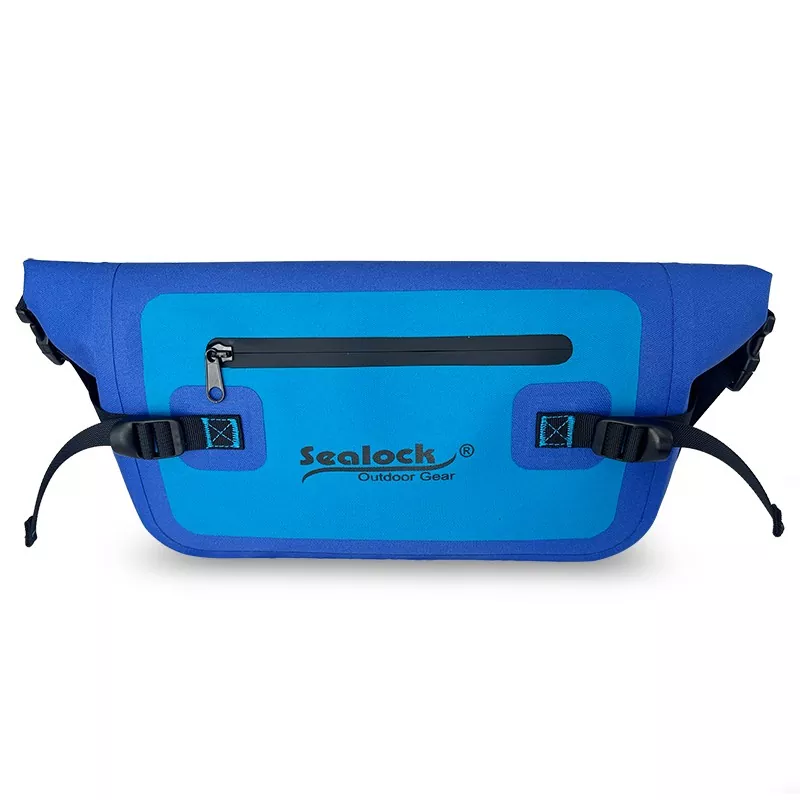
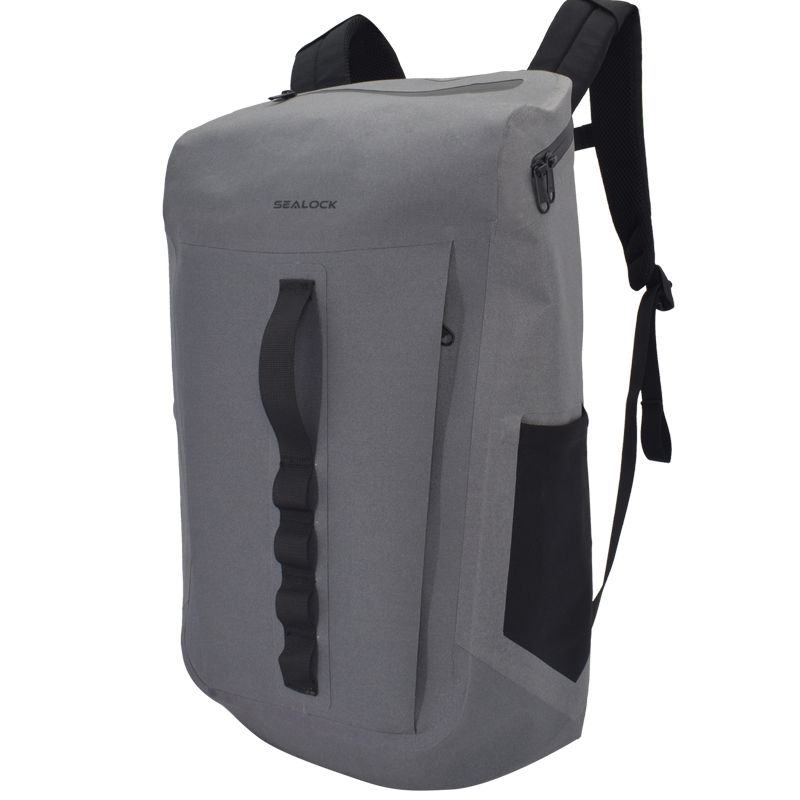
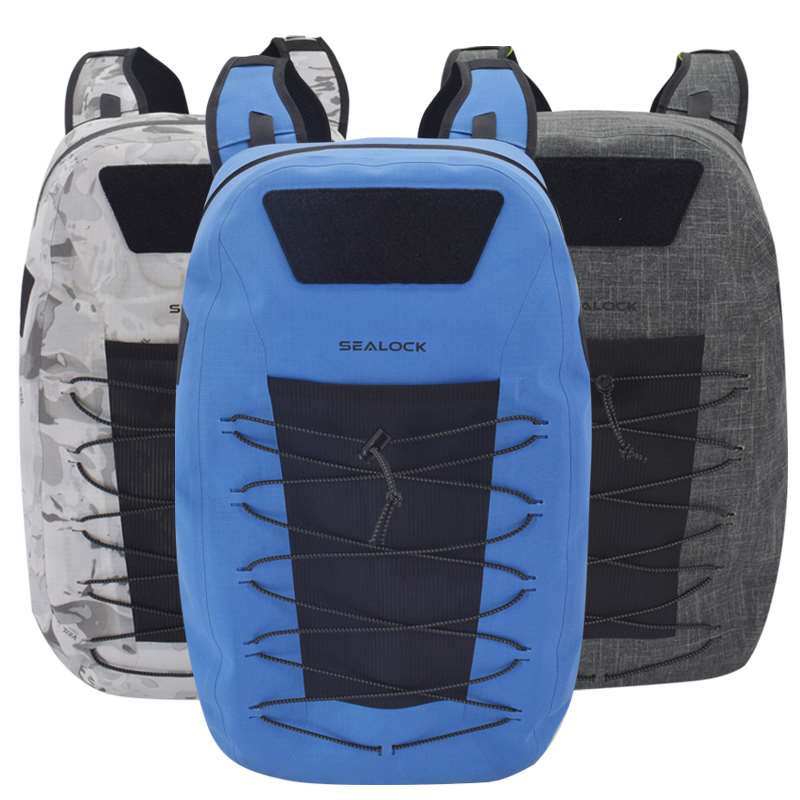
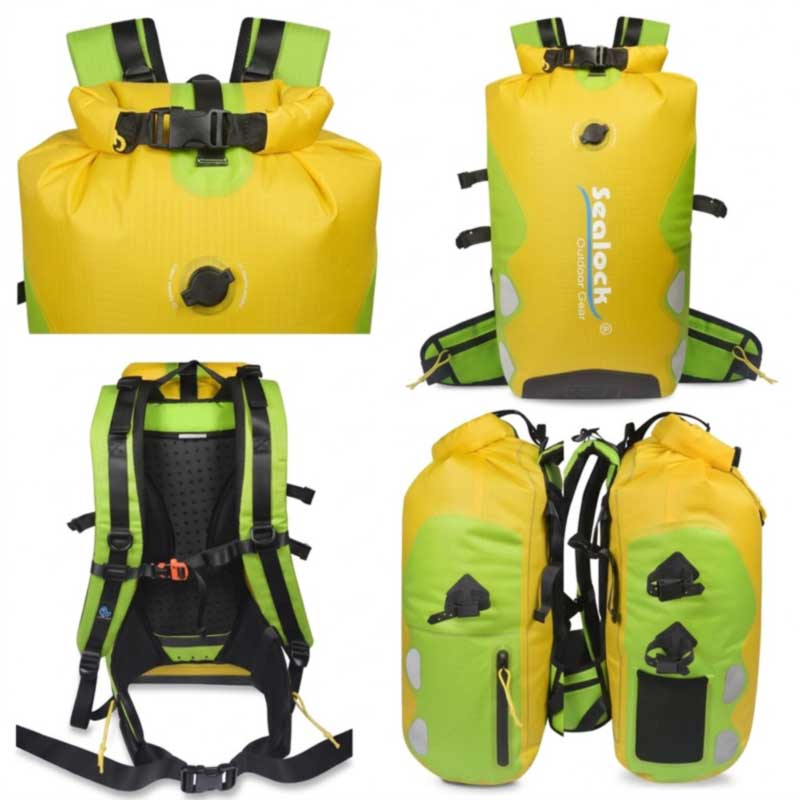
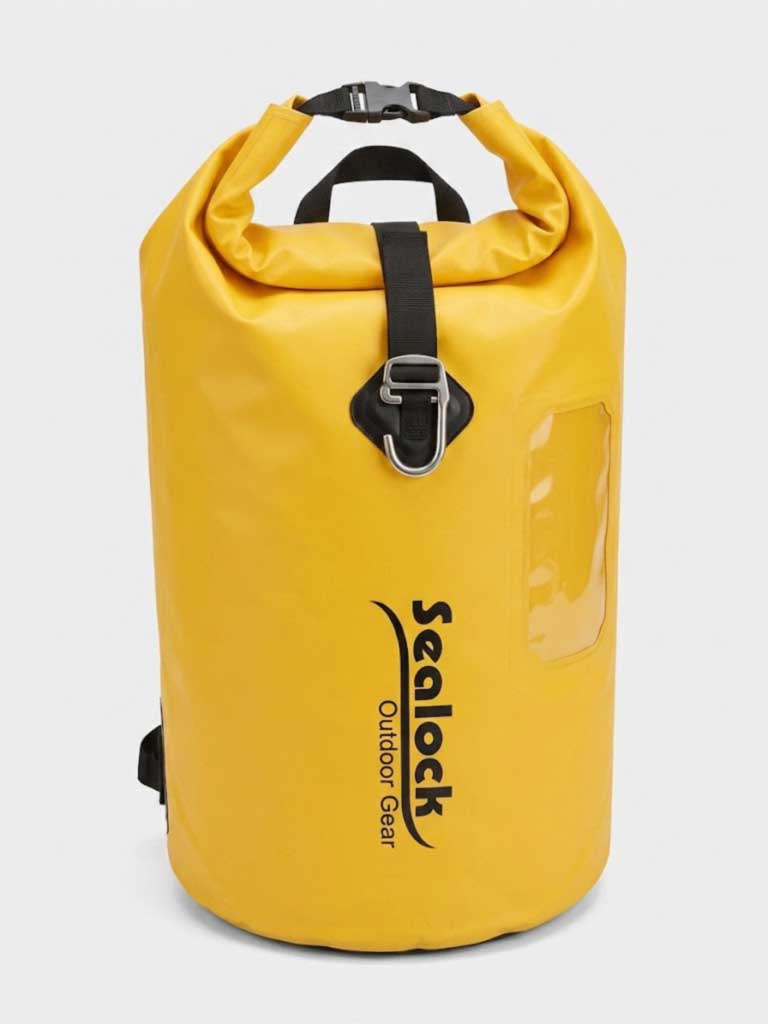
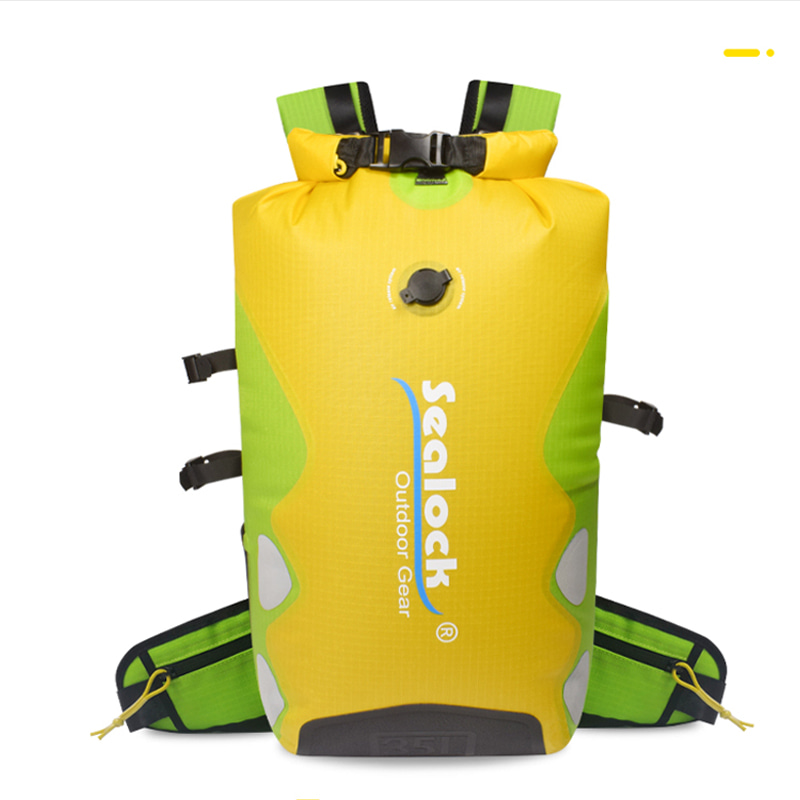
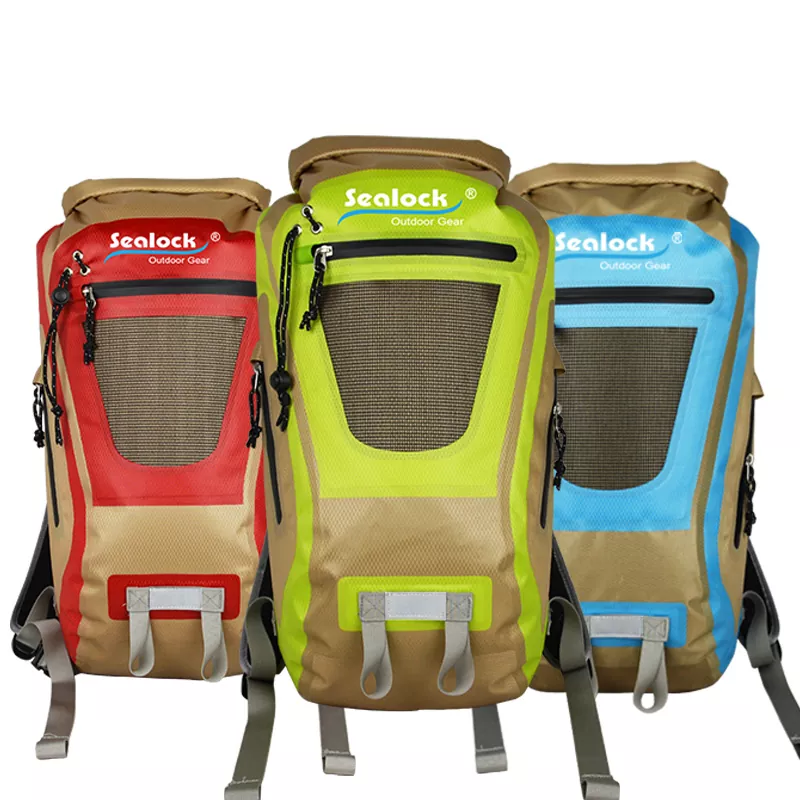
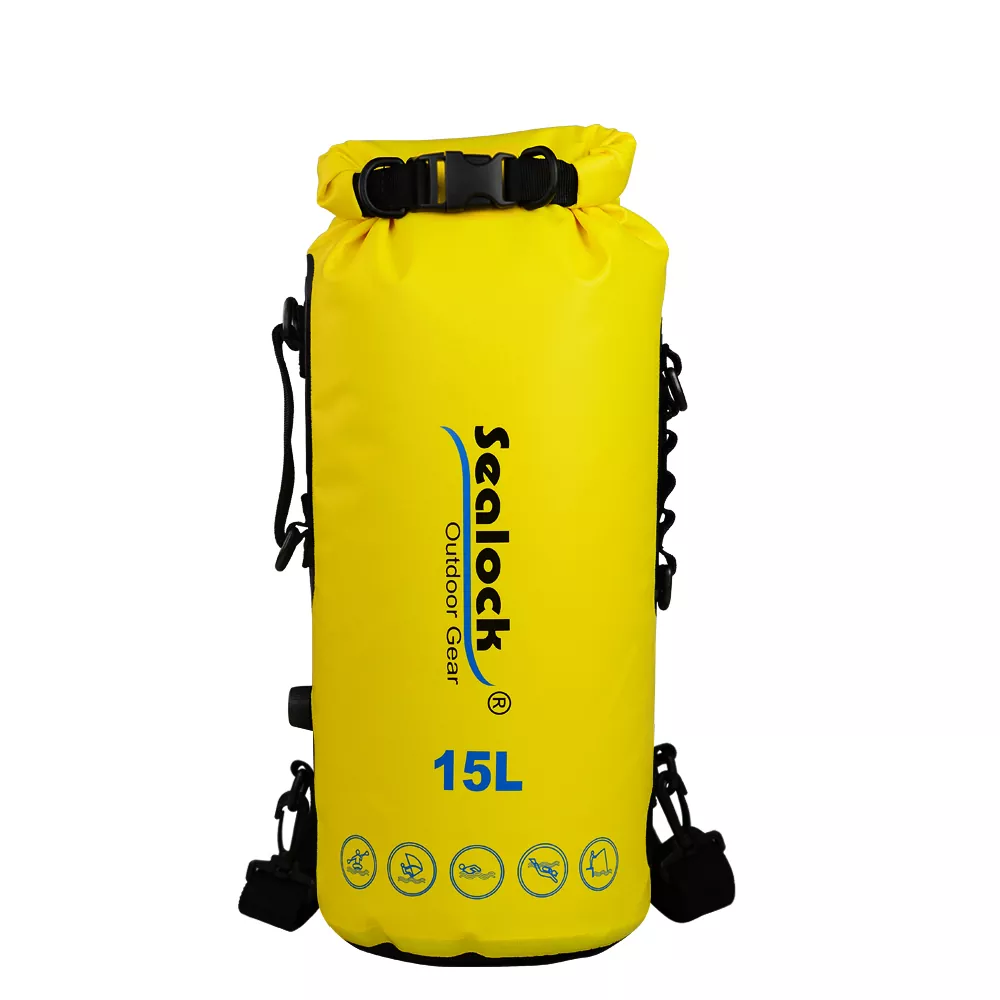
These welded packs are equal starting points for a roll-top programme — none is ranked above another; each shows a different collar and closure configuration:
The alternative to a roll-top — rubber sealing strip, fold-over flap and central compression strap
300–500
Collar height, stiffener specification, retention hardware, corner geometry, material in the roll zone, capacity and branding are all specifiable per order, or a pack can be developed from a sketch.
Quality Control on the Closure
Quality is gated in three tiers — IQC (incoming shell fabric checked for coating thickness, adhesion and weldability, plus stiffener stock, webbing, buckles and G-hooks against the signed standard, with colour difference and fastness), IPQC (collar height and cutting tolerance, stiffener capture, closure alignment, hardware anchor stitching, and weld integrity at the collar-to-body junction and corners, with peel tests on sample welds at each run start), and OQC (ISO 2859 AQL sampling, real water-submersion batch testing with the collar folded to specification, and gold-sample comparison, with SGS or QIMA available).
Sealock also strictly executes the complete customer inspection procedure on finished goods: unboxing, vacuum extraction, a 24-hour static rest, and air-leak determination. For roll-top products specifically, the lab adds fold-cycle testing on the collar and jerk-loading on the closure hardware anchors, alongside weld bond and peel strength, seam strength, a 1,500+ cycle harness load test, abrasion, tear, tensile, salt spray, UV, colour fastness and colour difference.
FAQ: Roll-Top Backpack Manufacturing
Q: How much collar height should we specify?
A: Enough for three folds at working load, and four if the pack is aimed at standing water. Collar height is what determines whether the user can seal a loaded pack — a short collar produces "leaks" that are really a design shortfall.
Q: Can we use magnets for the closure?
A: For alignment, yes; for retention, no. Magnets have no meaningful load-bearing hold, and internal pressure from a full pack pops them open. Use a buckle or a G-hook to physically restrain the roll, with magnets only assisting alignment.
Q: Should we add hook-and-loop across the collar for a secondary seal?
A: We'd advise against a full Velcro face. If the alignment is slightly off, the exposed hook side abrades clothing — a complaint that shows up quickly on commuter packs. A stiffened collar rim is the better solution, with any back-up strip positioned inside the fold where it can't sit exposed.
Q: Buckles or a G-hook?
A: Buckles are the reliable standard; two, at both ends of a wide mouth, close the corners properly. A G-hook adds rigidity and a strong perceived-value lift for a marginal hardware cost, which makes it an efficient upgrade on premium and commuter positioning.
Q: Which material for the roll zone?
A: TPU-coated nylon for anything folded daily or used in the cold — it tolerates far more fold cycles and stays pliable. PVC is the right shell where abrasion dominates, but it stiffens with repeated folding and UV and can crack along fold lines over time, so reinforce or specify a TPU collar if fold life is the priority.
Q: Why do the ends of the opening leak before the middle?
A: Because a wide collar compresses evenly in the centre and bunches at the corners where the fold meets the side seam. The fixes are hardware at both ends, a folding-friendly corner radius, and weld reinforcement at that junction.
Talk to the Factory
To develop a roll-top waterproof backpack, contact Sealock at info@sealock.com.hk or +86-769-82009361. Over twenty years of high-frequency welding and industrial sewing under one roof, collar and closure engineering, fold-cycle testing, dual China–Vietnam production, and a full customer inspection procedure on every shipment.
We use cookies to offer you a better browsing experience, analyze site traffic and personalize content. By using this site, you agree to our use of cookies.
Privacy Policy
 English
  Español
  Português
  русский
  Français
  日本語
日本語  Deutsch
  tiếng Việt
  Italiano
  Nederlands
  ภาษาไทย
  Polski
  Svenska
  magyar
  Malay
Malay  বাংলা ভাষার
  Dansk
Dansk  Suomi
Suomi  हिन्दी
  Pilipino
  한국어
한국어  Türkçe
  Gaeilge
  العربية
  Indonesia
  Norsk
Norsk  تمل
تمل  český
český  ελληνικά
  український
  Javanese
  فارسی
فارسی  தமிழ்
தமிழ்  తెలుగు
  नेपाली
  Burmese
  български
  ລາວ
ລາວ  Latine
  Қазақша
  Euskal
  Azərbaycan
  Slovenský jazyk
  Македонски
  Lietuvos
  Eesti Keel
  Română
  Slovenski
  मराठी
मराठी  Srpski језик