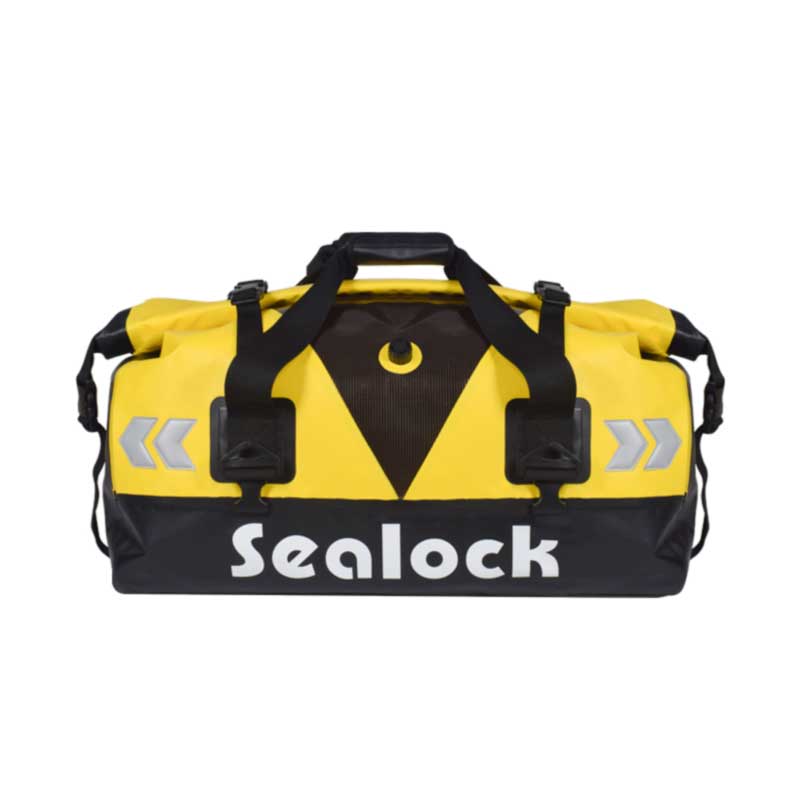
You have two quotes for a 50L roll-top duffel. Both samples look spacious. One costs less. Before choosing, ask both suppliers to pack the same load and show the bag fully rolled and buckled.
That is where the comparison becomes useful. Does the jacket still fit? Can the customer slide a rigid case through the opening? Is there enough fabric left to complete the closure without unpacking half the bag?
A usable-capacity check should give you two answers before you place a bulk order. How many liters does the closed main compartment hold, and can it carry the complete kit your customer expects? Once you have both answers, you can choose a sample, request a specific design change, and give your production team something concrete to reproduce.
Start with the load you plan to sell the bag for
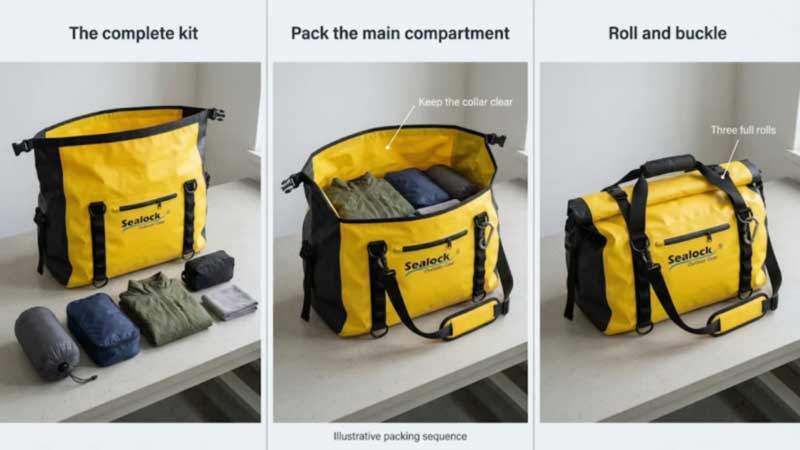
If your product listing will show a sleeping bag, clothing pouch, insulated jacket and boots, put those exact items into the sample. Keep the sleeping bag in the stuff sack your customer will use. Include the largest boot size you intend the bag to accommodate.
For a rental fleet or team order, use one complete issued kit. For a bag designed around equipment, start with the largest rigid item. Its length and shape may decide the design before the total liters do.
Ask the supplier for a continuous video showing the complete load on a table, every item going inside, and the closure being finished. The full roll should remain visible before the buckles are connected.
Then check three things yourself.
Everything intended to stay dry is inside the main compartment. Boots or clothing moved into an external mesh pocket change what the bag is delivering.
The top closes using the model's specified procedure. Keep the roll count and fold width consistent when comparing samples.
The packing sequence is practical. Have a second person unpack and repack the same kit. If it takes the sample maker's exact arrangement to close the bag, the opening or body shape needs another look.
Illustrative packing sequence for the SL-C108. Check the complete reference kit inside the main compartment with the specified rolls and buckles completed.
This also gives you useful retail content. A clear packing demonstration lets a customer compare the bag with the equipment they actually own.
Which Roll-Top Duffel Should You Start With?
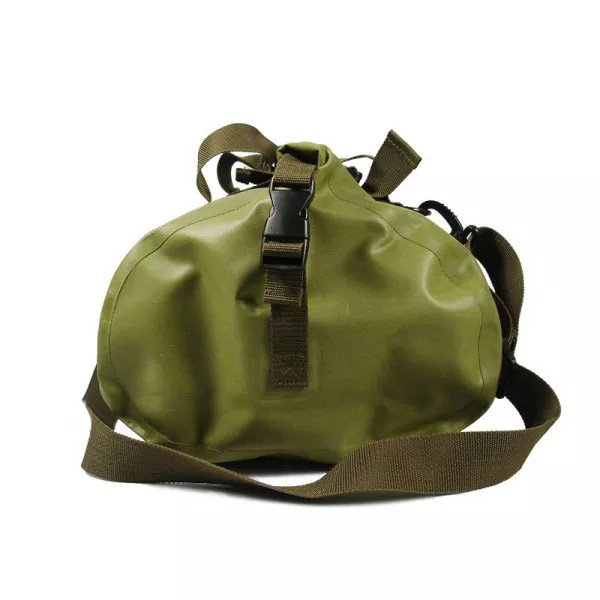
Choose a sample around the load your customer carries. A compact clothing bag, a duffel for bulky equipment and a motorcycle bag strapped to a rack each need a different packing check. These Sealock models give you several starting points across capacity, material and closure configuration.
The capacities below are the published product specifications. Use your sample review to establish the usable main-compartment volume with the agreed closure completed. Where dimensions are provided, the rolled or unrolled condition is shown alongside them.
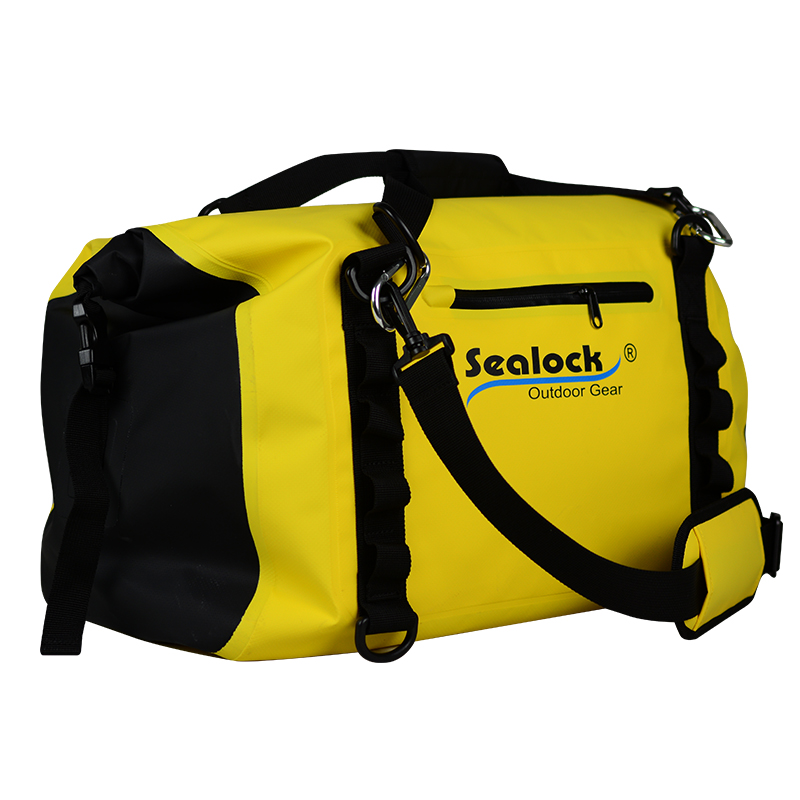
Choose this starting sample for a compact personal kit. Pack the customer's shoes, towel and clothing together, then complete the specified rolls. This shows whether the 20L format meets the intended use or whether the body needs more room.
Check during approval — The cylindrical ends affect how rectangular packing cubes and shoe cases fit. Test the largest item through the opening and into its final position.
Carry options — Top handles and an adjustable, removable shoulder strap
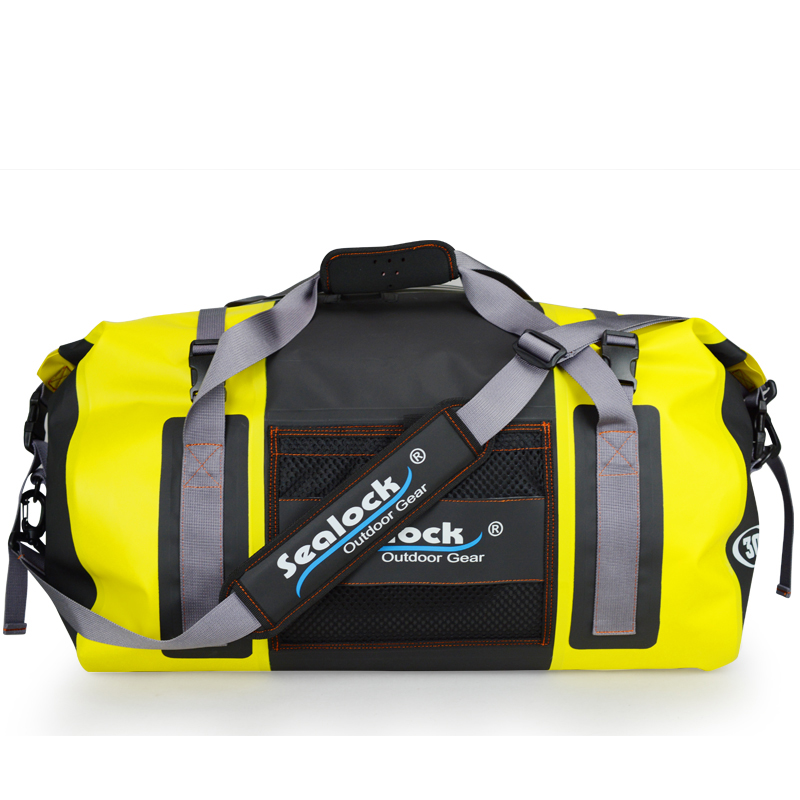
Choose this starting sample when your brief calls for a TPU roll-top duffel around 45L. Compare it with the PVC SL-C108 using the same equipment load and packing sequence.
Check during approval — Ask for the closed sample dimensions, then compare opening access, the room left around the equipment and the effort required to finish the roll.
External storage — Front zip pocket and rear draining mesh pocket
Order quantity — From 300 pieces per color
Choose this starting sample when customers carry dry clothing alongside wet towels or swimwear. Put the complete dry kit inside the main compartment and use the rear mesh pocket for the wet items.
Check during approval — The published height is measured with the top unrolled. Record the closed height after packing and completing the required rolls, especially if the bag must fit a locker or equipment compartment.
Closure features — End buckles, straps over the rolled top and a one-way purge valve
Order quantity — From 300 pieces per color
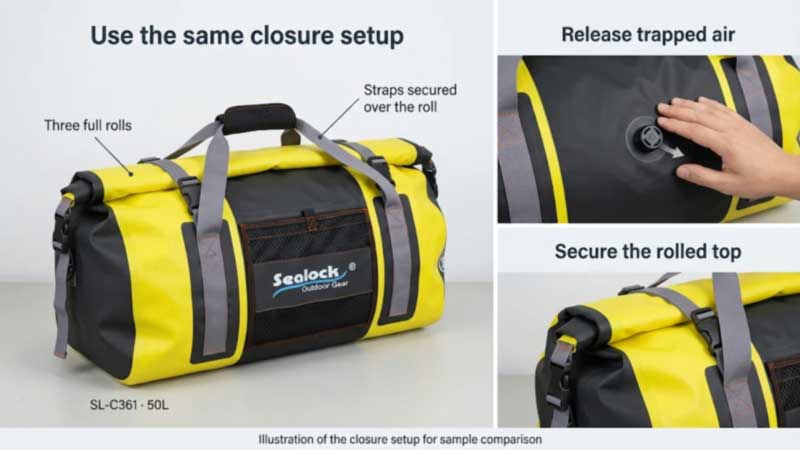
Choose this starting sample for soft gear that traps air during packing. The purge valve provides an air-release point, while the straps over the roll help hold the packed configuration.
Check during approval — Pack the reference load, operate the valve as instructed, finish the roll and secure the straps. Record the final dimensions in that configuration so the next sample is measured consistently.
Packing features — One-way purge valve and internal zip pouch
Mounting — Four mounting straps supplied
Order quantity — From 300 pieces per color
Choose these starting samples when the packed bag must fit a motorcycle seat or luggage rack. Compare both sizes with the same camping or riding kit to see which one meets the load requirement within the available mounting space.
Check during approval — Complete the roll, release trapped air as instructed and attach the loaded bag using the supplied straps. Measure the mounted width and height, and check access to the buckles and carrying handles.
Put the same capacity requirement into every sample request
For each shortlisted model, ask which compartments are included in the stated liters and how the top was closed during measurement. Specify your target usable main-compartment volume, the complete equipment load and any maximum closed dimensions.
Send us the model numbers you want to compare, a photo or list of the full kit, and the dimensions of the largest rigid item. Include the order quantity per color so the sample discussion and quotation cover the same project.
Check the liters with a repeatable fill measurement
The gear test tells you whether the bag suits its intended use. A volume measurement gives you a number to compare across samples and carry into the product specification.
Agree on a fill method with the supplier before comparing results. A practical sample comparison can use dry, rigid plastic balls of the same size and a calibrated volume container. Record the filling material and settling procedure so the next sample can be checked the same way.
Fill the main compartment to its working limit. Leave enough collar to complete the specified rolls and buckle arrangement. Adjust the fill until the closure can be completed normally.
Photograph the closed bag. Show the roll, both ends and the sample identification. Record the roll count and fold width.
Transfer the filling material into the calibrated container. Measure the total using the agreed settling procedure and record the result.
Repeat the check. If the readings vary enough to affect the size claim, resolve the filling or closure inconsistency before approving the number.
Illustration of the SL-C361 closure setup. Use a consistent air-release procedure, roll configuration and strap adjustment when comparing samples.
Keep external pockets out of a main-compartment measurement. If you want a separate pocket-capacity figure, measure it with the main compartment already filled so that shared internal space is counted consistently.
Use the resulting measurement alongside the gear test. Small filling balls can occupy spaces around a curved end panel that a rigid equipment case cannot use. A bag can meet the agreed liter target and still need a wider opening for your customer's load.
If the sample does not work, ask for the right change
“Make it bigger” leaves several decisions open. Show the supplier exactly where packing stops or where closing becomes difficult. That makes the next sample revision much more specific.
What happens during packing
What to ask the supplier to review
What to check on the revised sample
The rigid case fits inside the body but catches at the opening.
The clear opening length, opening width and surrounding panel shape.
Insert and remove the case with the rest of the kit already packed.
The complete kit fits, but the required rolls cannot be completed.
The usable body space and the collar allowance needed around that load.
Pack the full kit, complete the closure, then measure the closed bag.
The fill measurement meets the target, but boots or equipment leave awkward gaps.
The base proportions and end-panel shape around the actual equipment.
Repeat the packing test with the same items and their normal protective cases.
The bag holds everything and closes, but will not fit the intended locker or rack.
The distribution of capacity across length, width and height.
Place the fully packed bag into the actual space or a dimensionally accurate fixture.
A longer body may solve an equipment-fit problem while changing the carrying balance. A wider opening may make loading easier while changing the way the collar rolls. After a pattern change, repeat the complete packing and closure sequence before approving the revision.
Make the approved sample useful during production
Your purchasing team, factory and final inspector should be able to repeat the same check. Keep the approved sample together with the equipment list, packing video, measured volume, closure instructions and packed dimensions.
Record the pattern revision and agreed tolerances in the specification. Set the acceptance criteria before production, including how samples will be selected from the order. The factory can then compare production bags with a defined result.
Ask a selected production sample to do the same job as the development sample. Load the reference kit, complete the rolls, close the buckles and check the agreed dimensions. If the materials or construction change during development, repeat the relevant checks on the final version.
For a waterproof model, include the approved closure configuration in the water-test brief as well. Capacity and water-test records should describe the same finished design and how its top is closed.
Questions buyers ask about roll-top duffel capacity
Does rolling the top reduce the advertised capacity?
It reduces the space available compared with the fully open bag. Whether that reduction is already included in the advertised liters depends on how the model was measured. Ask for the closed-capacity measurement and its closure conditions before applying a deduction of your own.
Can I calculate usable capacity from length, width and height?
Those measurements are useful for an initial estimate and for checking external fit. Rounded ends, tapered panels and the folded collar change the available internal space. For sample approval, pair an agreed fill measurement with the actual packing test.
How many times should the top be rolled during the check?
Use the closure instructions for the exact model. Sealock's SL-C428 and SL-C108 specify at least three full rolls before buckling. For a custom design, agree on the roll count and fold width, then use that configuration throughout sample approval and production inspection.
Bring your packing problem to the sample discussion
If you already have a sample that will not close around the full kit, send a photo of the packed bag and the item that had to be left out. Include the largest rigid item's dimensions and any limit on the bag's closed size. That gives us a useful starting point for discussing the body, opening and closure.
If you are developing a new range, send the target capacity, full packing list, quantity per color and intended use. Our custom duffle bag guide covers the wider choices in construction and branding.
For the SL-C108, the published starting quantity is 300 pieces per color, with samples in 7–15 days. Include any requested pattern changes in your inquiry so the sample scope and timing can be confirmed together.
We use cookies to offer you a better browsing experience, analyze site traffic and personalize content. By using this site, you agree to our use of cookies.
Privacy Policy