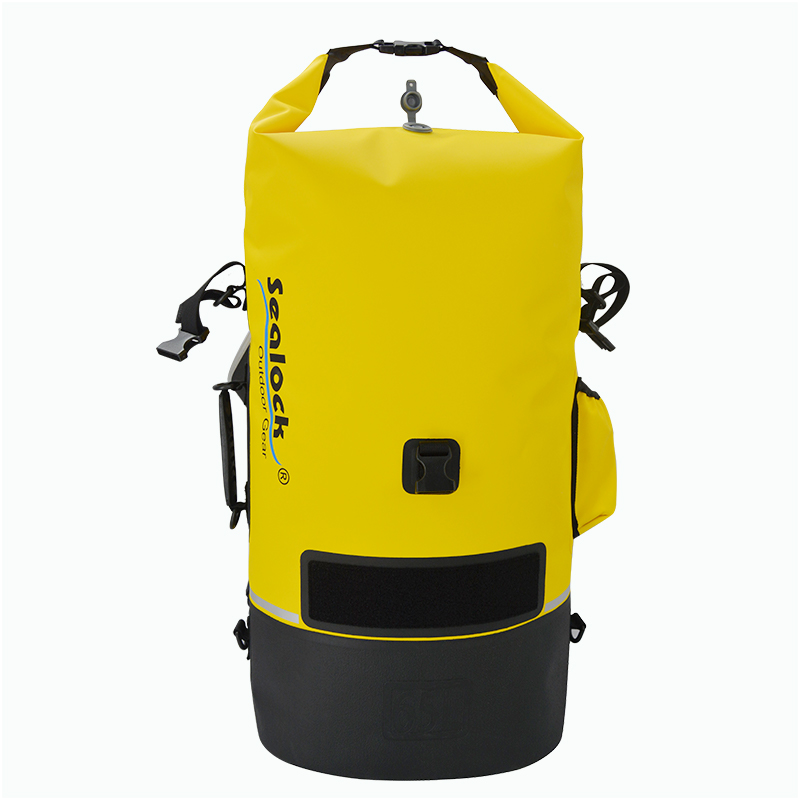
Sealock is a waterproof bag manufacturer working across all three models. The terms get used loosely in this industry — sometimes carelessly, sometimes not — and the difference between them is not academic. It determines who owns the design, whether a competitor can buy the same product, what happens to your tooling if the relationship ends, and how much you spend before the first unit ships. This guide sets out the practical differences, the risk most brands only discover afterwards, and one question specific to welded production that sewn-bag guides never raise.
The Three Models, Precisely
Private label
ODM
OEM
What you supply
Your logo
Your colours, materials, hardware choices from a catalogue
Your specification or design
Who owns the design
The factory
The factory, unless transferred in writing
You
Can competitors buy it
Yes
Yes, unless exclusivity is agreed
No
Tooling cost
None
None, or partial
Yours to fund
MOQ
Lowest
Moderate
Highest
Time to market
Weeks
One to three months
Longest — tooling, sampling, testing
Differentiation
Branding only
Moderate, within a catalogue
Total
Same factory, three relationships — and three different answers to "is this yours?"
The Risk Brands Discover Too Late
This is the one worth reading twice. Many brands choose ODM expecting a unique product, then find their "custom" bag on a competitor's website.
It isn't misconduct. It is how the model works: in an ODM arrangement the manufacturer retains ownership of the design unless it is explicitly purchased and transferred in the contract. Which means the same factory can legally sell the same design to anyone else, including the brand competing with you in the same aisle.
The fix is contractual, not emotional. If you are running ODM and differentiation matters:
Negotiate exclusivity — by design, by market, by channel, or for a defined period. Any of these is better than none.
Buy the design outright if the product is central to your positioning, and record the transfer in writing.
At minimum, own something — a distinctive colourway, hardware, or a structural modification that is yours even when the base shape isn't.
A Terminology Warning
Some suppliers describe themselves as OEM while actually offering private label. The label on the relationship is worth less than the answer to two questions: who owns the design, and who owns the tooling? Ask those directly and the model becomes clear regardless of what the website says.
Equally: never assume you own a design simply because you paid for production. IP transfer should be written into the agreement, effective on payment.
The Question Sewn-Bag Guides Never Ask: Who Owns the Die?
Here is where welded waterproof production differs materially from conventional bag making, and where a generic OEM guide will leave you exposed.
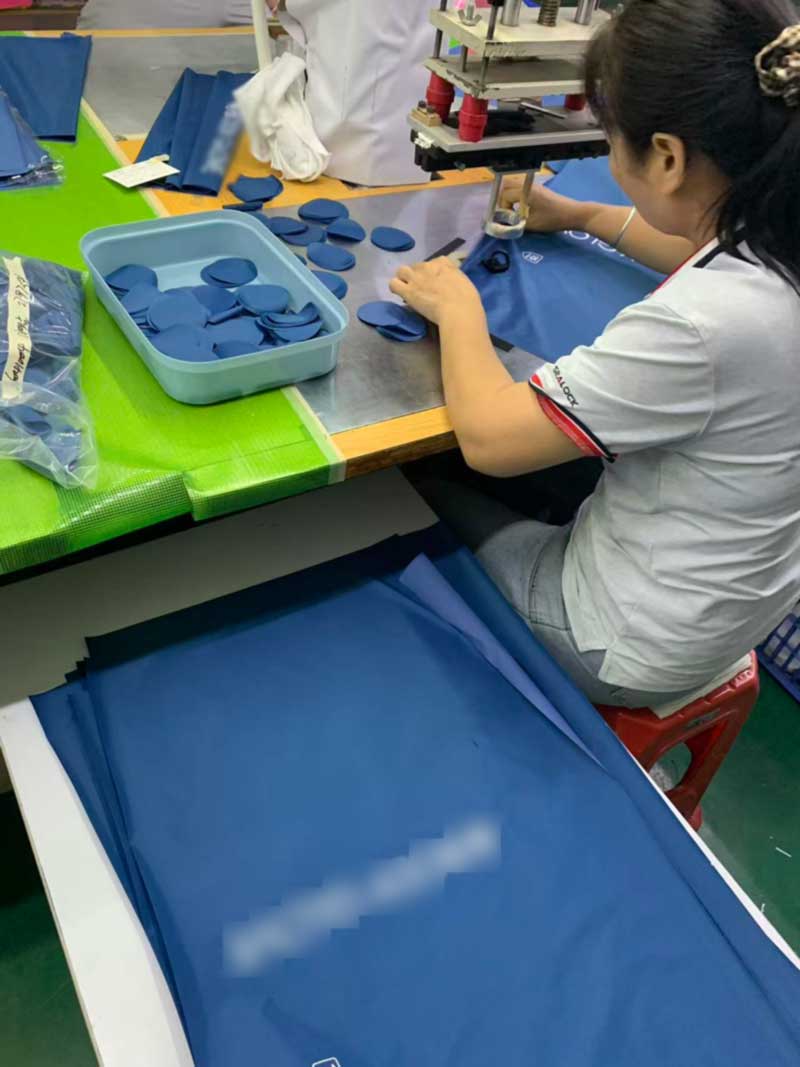
In sewn production, a "custom shape" means new paper or CAD patterns — effectively free, and trivially transferable. In welded production, a custom shape requires a machined copper electrode that directs RF energy along the seam path. That die is a real, physical, funded asset, and it raises questions that don't exist in the sewn world:
Who owns it? In standard OEM agreements, the buyer owns the mould once it is paid for. Get that in writing rather than assuming.
Can it move? Ownership and portability are not the same thing. A die is machined for a particular geometry and press setup; moving production is rarely as simple as shipping a tool. Ask what a transfer would actually involve before you need the answer.
What happens if the supplier closes? An uncomfortable question that costs nothing to ask at the contract stage and a great deal to ask later.
What does it cost, and how does it amortise? Tooling is quoted separately from unit price and reused across repeat orders — which is why welded reorder pricing improves more than sewn.
The upside of the same fact
Tooling cuts both ways, and the second edge favours the brand. A bespoke welded shape is genuinely harder to copy than a sewn one. A competitor who wants your silhouette cannot simply hand your bag to another factory and have patterns traced — they need their own die, their own development and their own tooling spend. In a category where most differentiation is colour and print, an exclusive welded geometry is a real barrier, and it is the strongest argument for OEM in this industry.
The die is the asset — and the reason a welded shape is harder to copy than a sewn one.
The MOQ Trap
Low quoted minimums look attractive and frequently carry high unit prices. Compare total investment, not MOQ. A 200-piece minimum at a high unit price can cost more in total, and leave you with less stock, than a 500-piece run priced properly.
Ask for the full breakdown before committing: unit price at each quantity tier, sample fees, tooling, compliance testing, packaging, and inspection. In welded work the first MOQ break matters most, because that is where the die cost spreads — doubling a first order often moves the unit price more than doubling again later.
The Sensible Progression
Most brands do not start at OEM, and shouldn't. The common and sensible path is private label or ODM first, to validate the market at low risk, then OEM as volumes and requirements firm up. Framed as a decision:
Private label — you are launching a first product, testing a category, or filling a gap in a range quickly. Lowest cost, lowest risk, no differentiation beyond branding.
ODM — you want something better than off-the-shelf without funding development. Choose a base model, specify materials, colours and hardware, and negotiate what exclusivity you can.
OEM — the product is core to your positioning, you have a roadmap that justifies tooling, and you need something a competitor cannot buy. Highest investment, highest control, and the only route that gives you the design.
ODM with modifications — a featured base model adapted to a brief
300
SL-J033 Waterproof Expedition Pack — 45/55/65L; TPU on 420D nylon; IPX8 rubber sealing strip, fold-over flap and compression strap; full load-bearing suspension.
OEM territory — the complexity level where a bespoke shape and its own die make sense
300–500
Across the range MOQ runs from 200 pieces on some models, typically 300–500. Sampling is 3–15 days depending on complexity, production 20–45 days after approval, with tooling quoted separately for bespoke shapes. We operate an IP-protection process for private-label and OEM development, and production is available from Dongguan or Ho Chi Minh City on the same approved specification.
Questions to Settle Before You Sign
Who owns the design, and is IP transfer written into the agreement, effective on payment?
Can the factory sell this design to others? If so, what exclusivity is available — by market, channel or period?
Who owns the tooling once paid for, and what would a transfer actually involve?
What is the unit price at each quantity tier, and what is the total investment including samples, tooling, testing, packaging and inspection?
What happens to designs, technical files and tooling if the relationship ends?
What certification and compliance support comes with the model — and against which specification?
What is the inspection plan, and will a signed gold sample be held by both parties?
FAQ: Choosing a Manufacturing Model
Q: If I pay for an ODM product, is the design mine?
A: Not by default. In ODM the manufacturer retains ownership unless the design is explicitly purchased and transferred in the contract — which means the same design can legally be sold to your competitors. If uniqueness matters, negotiate exclusivity or buy the design outright, in writing.
Q: How do I tell whether a supplier is really offering OEM?
A: Ignore the label and ask two questions: who owns the design, and who owns the tooling? Some suppliers describe private label as OEM. The contract answers the question; the website doesn't.
Q: Who owns the welding die?
A: In standard OEM agreements the buyer owns the tooling once it is paid for — but put it in writing, and separately ask what moving it to another factory would actually involve. Ownership and portability are different things.
Q: Is OEM worth the extra cost for a waterproof bag?
A: It depends on whether the shape is part of your positioning. The argument specific to this industry is that a bespoke welded geometry is genuinely hard to copy — a competitor needs their own die and development, not just a pattern traced from your sample.
Q: Should a new brand start with OEM?
A: Usually not. Private label or ODM validates the market at much lower risk, and moving to OEM once volumes and requirements are clear is the normal, sensible progression.
Q: Is a low MOQ always better?
A: No. Low minimums often carry high unit prices. Compare total investment across tiers, and note that in welded production the first break matters most because that is where tooling cost spreads.
Talk to the Factory
Tell us your product idea, target market and volume, and we will advise which model actually fits — including when private label is the better answer than OEM. Contact Sealock at info@sealock.com.hk or +86-769-82009361. Over twenty years of high-frequency welding and industrial sewing under one roof, in-house pattern and die development, an IP-protection process, dual China–Vietnam production, and a full customer inspection procedure on every shipment.
We use cookies to offer you a better browsing experience, analyze site traffic and personalize content. By using this site, you agree to our use of cookies.
Privacy Policy
 English
  Español
  Português
  русский
  Français
  日本語
日本語  Deutsch
  tiếng Việt
  Italiano
  Nederlands
  ภาษาไทย
  Polski
  Svenska
  magyar
  Malay
Malay  বাংলা ভাষার
  Dansk
Dansk  Suomi
Suomi  हिन्दी
  Pilipino
  한국어
한국어  Türkçe
  Gaeilge
  العربية
  Indonesia
  Norsk
Norsk  تمل
تمل  český
český  ελληνικά
  український
  Javanese
  فارسی
فارسی  தமிழ்
தமிழ்  తెలుగు
  नेपाली
  Burmese
  български
  ລາວ
ລາວ  Latine
  Қазақша
  Euskal
  Azərbaycan
  Slovenský jazyk
  Македонски
  Lietuvos
  Eesti Keel
  Română
  Slovenski
  मराठी
मराठी  Srpski језик