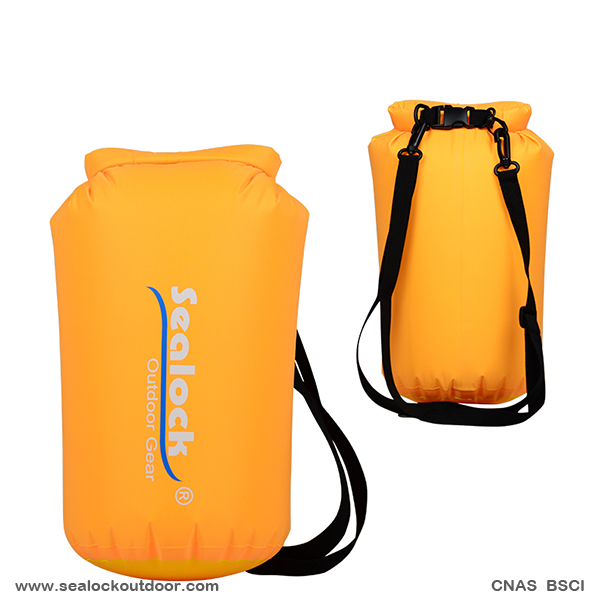
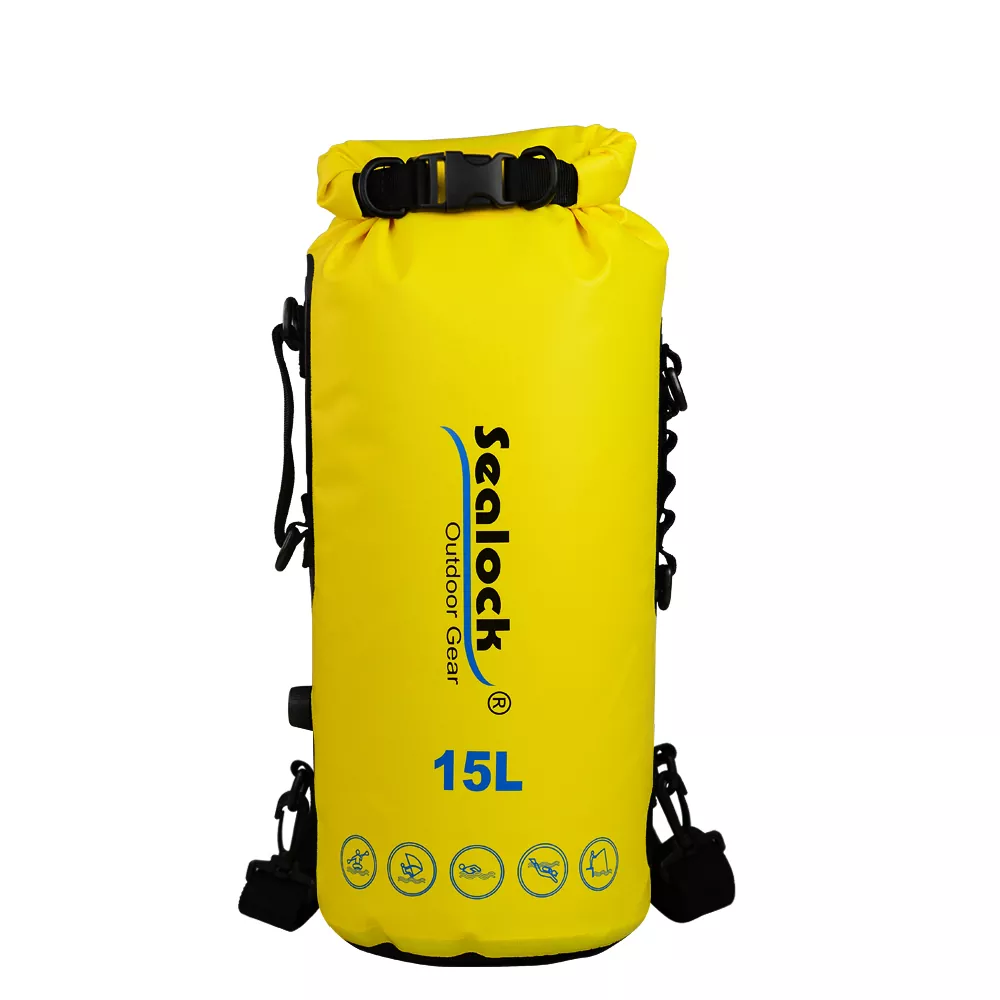
Sealock is a kayak dry bag manufacturer and OEM supplier. Material selection for paddlesports is not the same problem as for camping or travel gear, because a kayak bag lives in an environment that attacks materials from three directions at once: ultraviolet light amplified off the water surface, salt that dries into an abrasive, and constant hydrolytic exposure. A fabric that performs well in a rucksack can fail in a season on a sea kayak. This guide covers what those forces actually do, and how to specify a material against the water your customer paddles.
The Three Forces That Age a Kayak Bag
1. UV — and why it's worse on the water
Open water offers no shade and reflects light back upward, so a bag lashed to a deck takes far more UV than the same bag on a trail. The mechanism matters for material choice: UV breaks down the plasticizers in untreated vinyl, causing brittleness and cracking — and in harsh marine service that can happen within months rather than years. The failure mode is worth understanding too: it isn't gradual softening, it's a fabric that seems fine until it cracks.
2. Salt — an abrasive, not just a corrosive
This is the force most buyers underestimate. Salt crystals that dry on a surface act as abrasives, grinding into the topcoat with every wave and wind gust. Combined with UV, salt exposure accelerates finish breakdown and opens entry points for mildew at seams. Dried salt also concentrates sunlight on the surface it sits on, compounding the UV problem.
The practical consequence belongs on your care card: rinsing with fresh water after every saltwater outing is not optional. In hot, humid coastal regions the combination of UV, salt and humidity means a stated service life should be treated as a ceiling rather than a floor unless the customer maintains the gear.
3. Hydrolysis and mildew
Constant wetting, packing away damp, and humid storage all attack coatings and encourage mould in seams and backing layers. Hydrolysis resistance is a genuine specification point for a marine product, not a footnote.
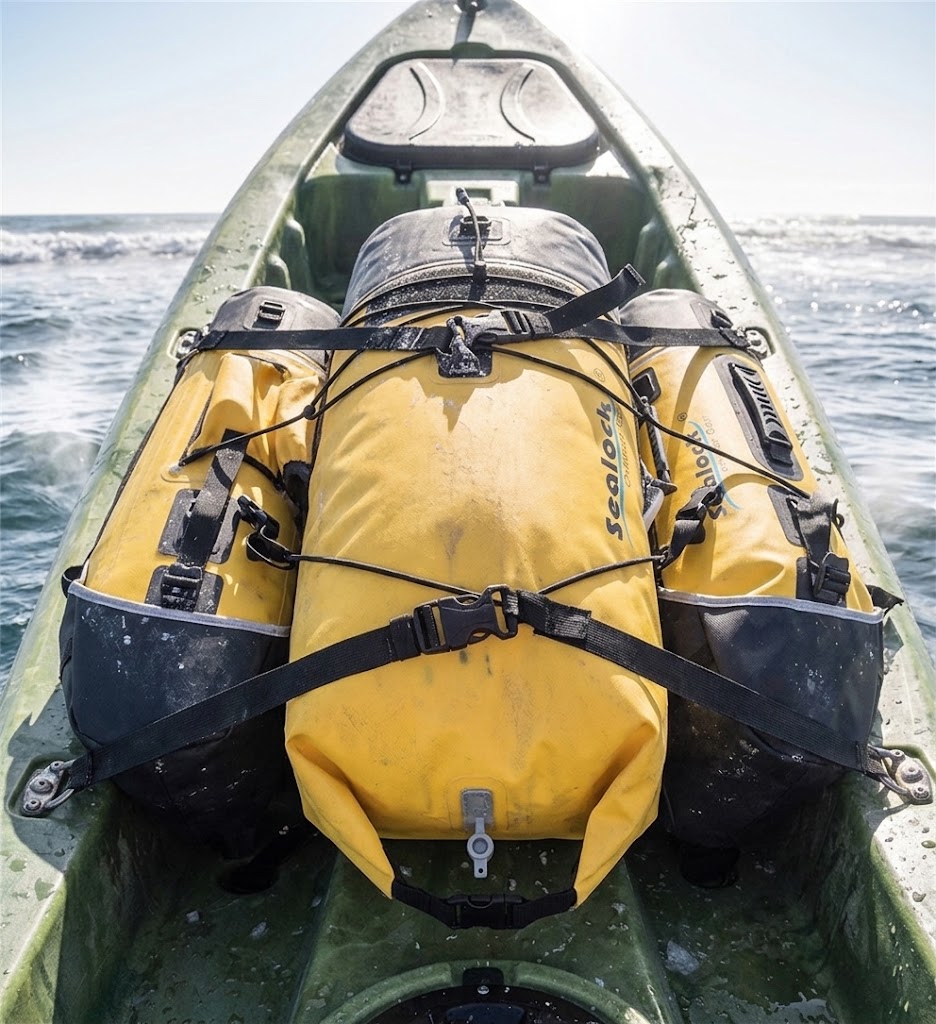
UV reflected off water, salt drying into an abrasive, constant wetting — three forces at once.
How the Two Main Materials Answer Those Forces
Property on the water
PVC tarpaulin
TPU-coated / laminated
UV resistance
Vulnerable unless UV-stabilised; plasticizer loss leads to cracking
Strong; aliphatic grades resist yellowing and cracking
Saltwater / hydrolysis
Chemically resistant, but surface finish degrades under salt abrasion
High hydrolytic resistance — a marine strength
Abrasion (rock, gravel, hull)
Excellent — thick coating takes constant scraping
Very good; elasticity absorbs rather than gouges
Puncture / sharp objects
Reasonable, but prone to tears from sharp edges
Superior — absorbs impact and resists tearing
Cold water and air
Stiffens; hard to roll and seal properly
Stays flexible far below freezing
Mildew resistance
Needs treatment; seams are the weak point
Good; some grades are inherently resistant to fungal growth
Air retention (valved bags)
Good on quality formulations
Good, with better long-term flex at the valve area
Field repairability
Excellent — simple patch kits work well
Good, but repair materials are less universally carried
Cost
The value baseline
Higher
Note the one clear PVC advantage that matters specifically on the water: field repairability. A simple patch on a PVC bag can be done on a gravel bar mid-trip, which is worth real money to expedition and rental customers.
The Specification Buyers Get Wrong: Denier Without Coating Weight
This is the single most common material mistake in this category. Buyers specify a high denier and assume durability follows. In marine service it doesn't: choosing a high-denier yarn with a low coating weight still results in rapid UV degradation. It is the synergy of base yarn and coating that determines actual field durability — the yarn carries the tensile load, the coating carries the weather.
So a marine-grade brief specifies four things separately:
Base fabric and denier — nylon for higher tear and abrasion strength, polyester for cost and dimensional stability. A woven structure also holds up better against salt crystallisation than a non-woven surface.
Coating type and weight — not just "TPU coated" but the coating mass, since that is what resists UV and salt.
UV stabilisation — UV-stabilised grades and additives such as HALS (hindered amine light stabilisers) materially extend colourfastness and strength.
Seam method — high-frequency welding, which produces a mechanically bonded seam rather than an adhesive joint that salt and moisture can work into.
The Hybrid Answer: TPU Body, PVC-Reinforced Base
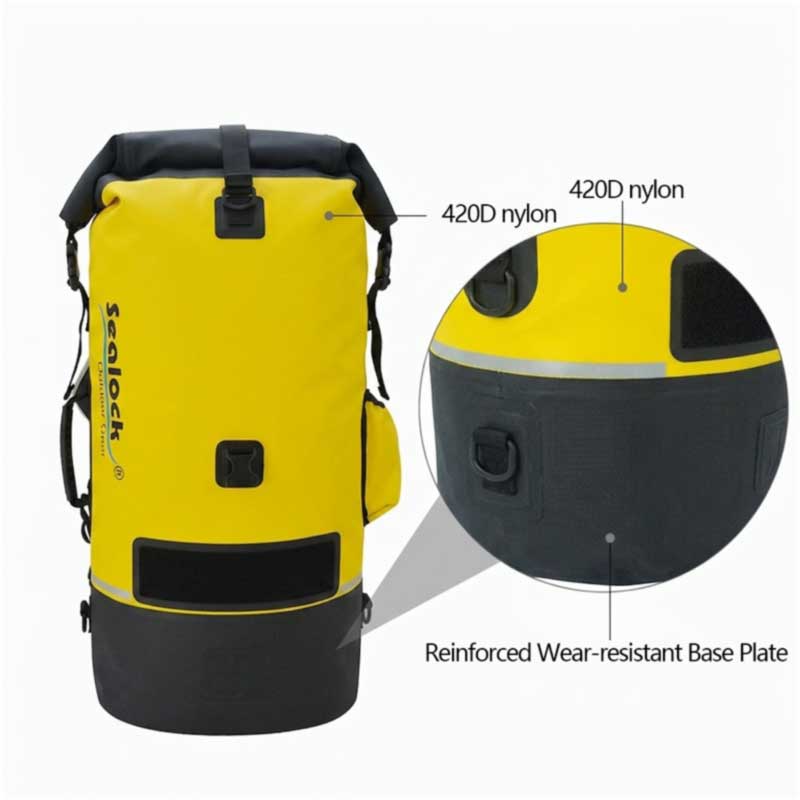
Serious marine gear increasingly doesn't choose. A common and sensible construction for kayak and kayak-fishing bags is a TPU-based main body with a PVC or double-layer reinforced base panel in the high-wear zone. The body gets TPU's UV stability, hydrolysis resistance, flexibility and low weight; the base — the part dragged over gravel launches and hull edges — gets the material that handles constant scraping best.
If you're specifying one bag to cover several conditions, this is usually a better answer than compromising on a single fabric throughout.
Reinforce where it drags — the base takes damage the rest of the bag never sees.
TPU-laminated nylon, UV-stabilised; PVC-reinforced base
Lakes and recreational
Sun and general wear
500D PVC with UV-stabilised coating — the value choice
Expedition and portage
Weight, carry loads, mixed terrain
TPU on 420D nylon; heavy reinforced abrasion base
Rental fleets
Abuse, turnaround, repairability
500D PVC — toughest per dollar and easiest to patch
Cold-climate and winter
Low-temperature flexibility
TPU — PVC stiffens and cracks in the cold
What Belongs on the Care Card
Material choice only delivers its rated life if the customer maintains the product, and most don't know how. Three lines on a care card prevent a large share of warranty complaints:
Rinse with fresh water after every saltwater outing — dried salt is abrasive and accelerates finish breakdown.
Dry before storing — packing away damp promotes mildew in seams and backing layers.
Store out of direct sun — UV exposure during storage does as much damage as time on the water.
The Product Basis
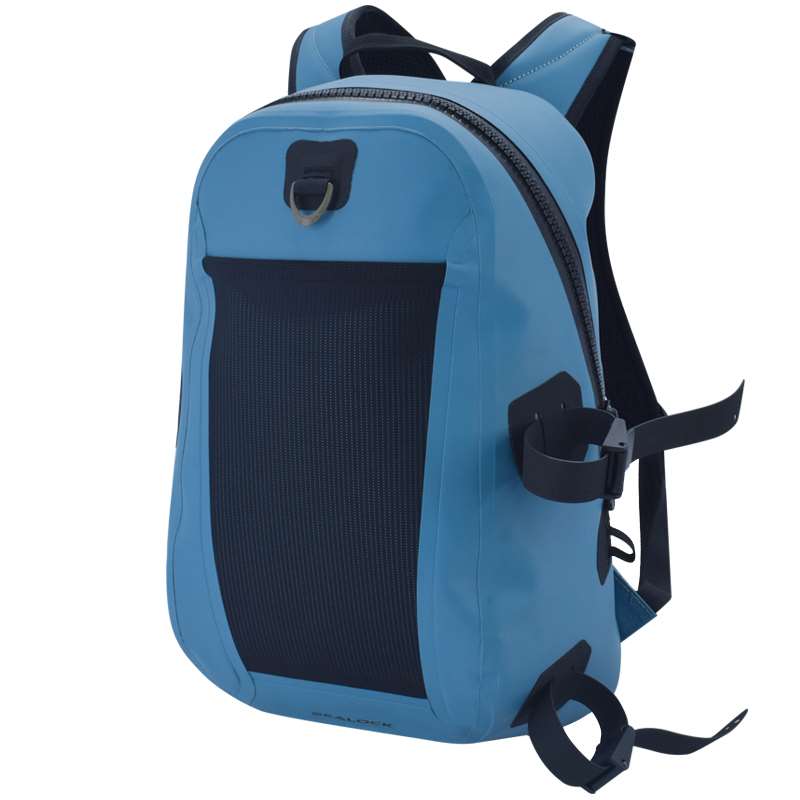
These welded bags, from Sealock's dry bag line, show the material options in production and are equal starting points for an OEM order — none is ranked above another:
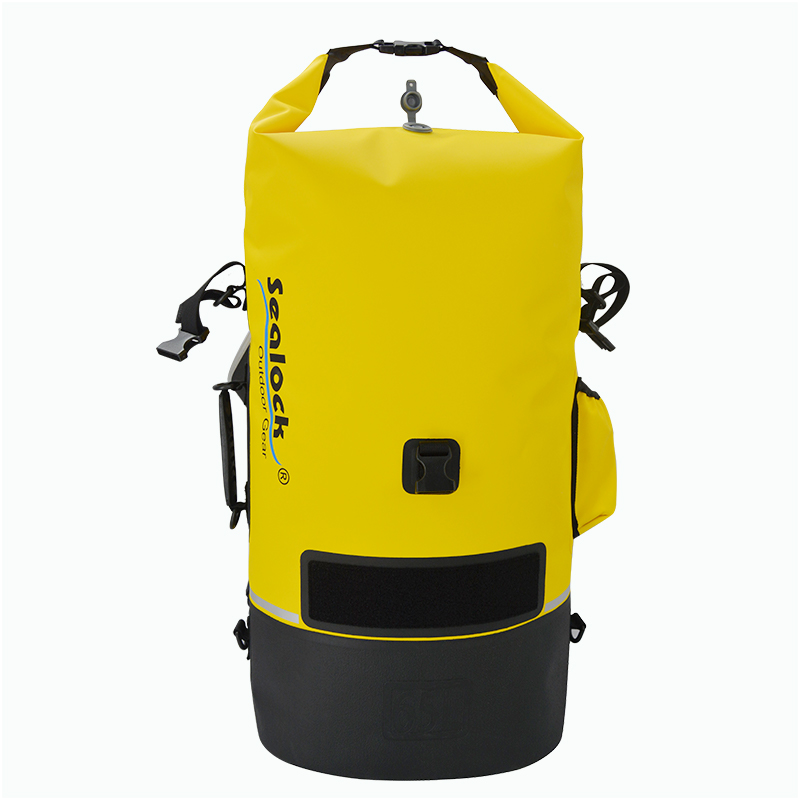
TPU laminated on 420D nylon — UV and hydrolysis resistance with a reinforced base where it drags
300–500
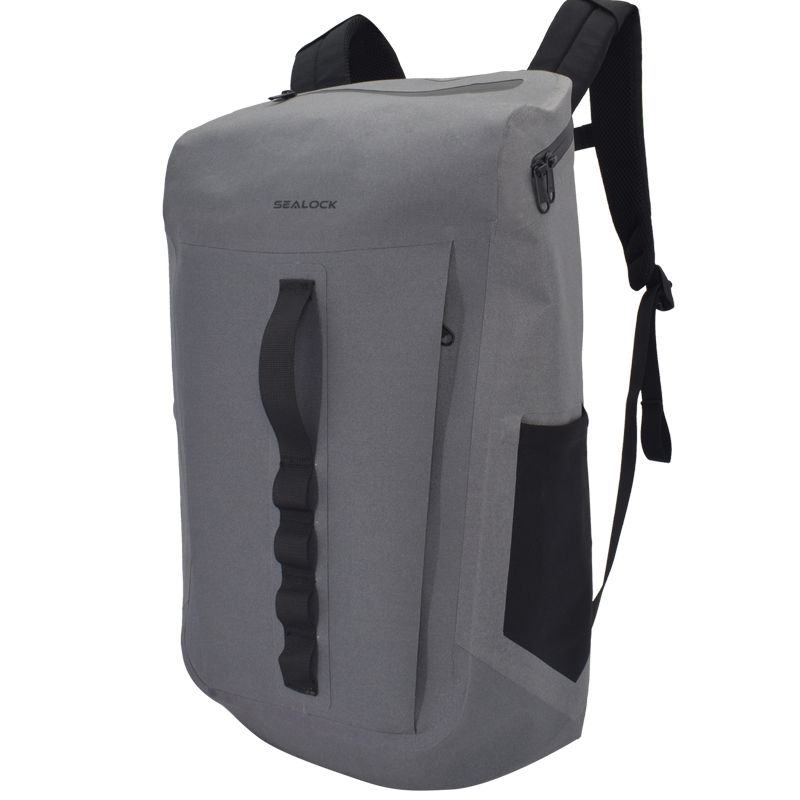
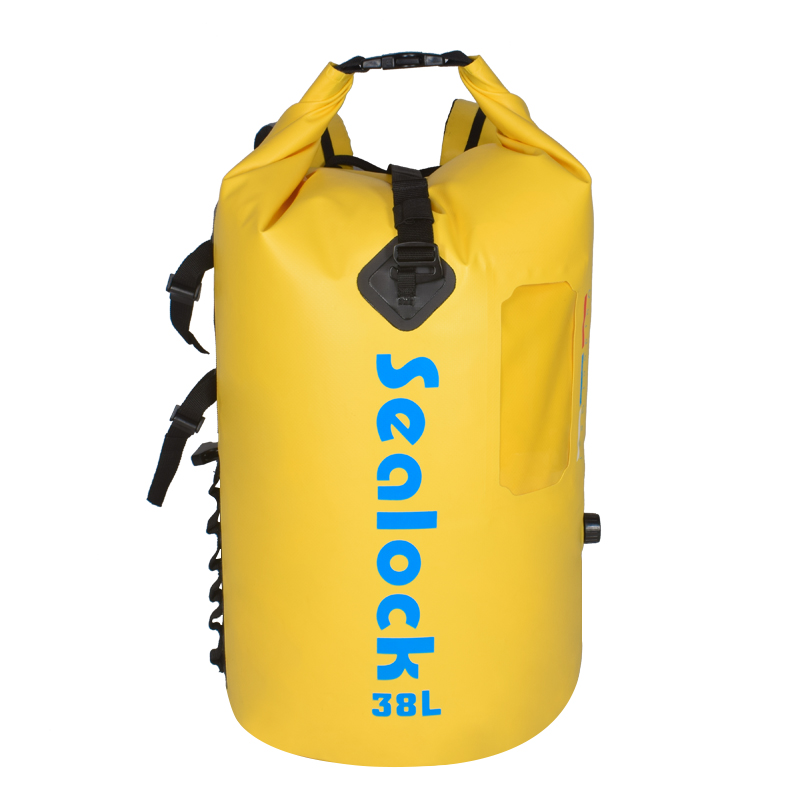
38L Waterproof Dry Backpack for Kayak — semi-circular shell; front phone window; multi-function lock; side inflation/deflation valve; one-piece EVA back panel.
500D PVC at 0.5 mm — heavy coating weight for launch-ramp abrasion and air retention
70D nylon-coated PVC — nylon base for tear strength at minimum weight
500
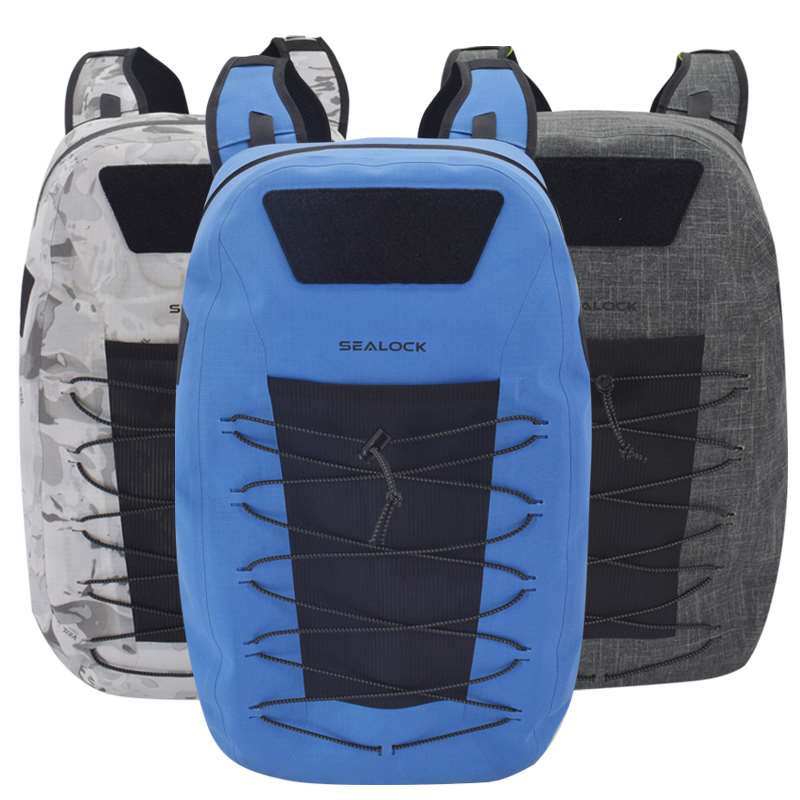
SL-E102 Dry Backpack — 15L / 20L / 30L with published dimensions per size; custom colours and sizes.
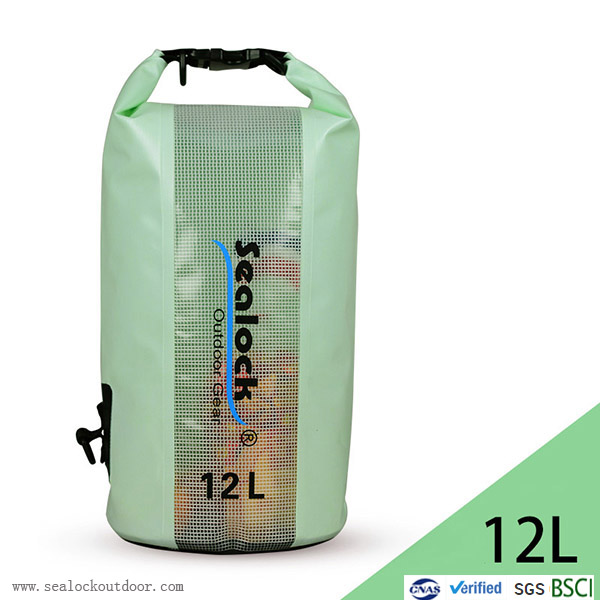
500D PVC mesh — reinforced woven structure for repeated fleet use
300
Base fabric, denier, coating type and weight, UV stabilisation, reinforced base panels and recycled (GRS) options are all specifiable per order, on a base model or a design developed from a sketch.
Verifying Material Performance
Marine claims need marine testing. At IQC, incoming rolls are checked for coating thickness, adhesion, weldability, colour difference and fastness against the signed standard — because a roll that drifts on coating weight will pass a tensile test and still fail in the sun. IPQC covers cutting tolerance, weld integrity and load-point assembly in line, with peel tests on sample welds at each run start. OQC covers ISO 2859 AQL sampling, real water-submersion batch testing, buoyancy checks and gold-sample comparison, with SGS or QIMA available. Sealock also strictly executes the complete customer inspection procedure on finished goods: unboxing, vacuum extraction, a 24-hour static rest, and air-leak determination. For paddlesports programmes the lab work that matters most is salt spray, UV ageing, abrasion, tear and colour fastness, alongside weld bond and peel strength, a 1,500+ cycle load test with jerk-loading on anchors, tensile and colour difference.
FAQ: Kayak Bag Materials
Q: Why do kayak bags age faster than camping bags in the same material?
A: Because open water offers no shade and reflects UV upward, salt dries into an abrasive that grinds the coating, and the fabric is wet far more often. Three degradation forces act at once rather than one.
Q: Is a higher denier enough for a marine bag?
A: No. A high-denier yarn with a low coating weight still degrades quickly under UV. The base yarn and the coating together determine field durability, so specify denier, coating type and coating weight separately — and ask for UV stabilisation.
Q: PVC or TPU for sea kayaking?
A: TPU-laminated nylon for the body — better UV stability, hydrolysis resistance, puncture resistance and cold flexibility. Consider a PVC or double-layer reinforced base for the high-wear zone. For whitewater and rental fleets, PVC throughout is often the better call.
Q: Does PVC have any advantage on the water?
A: Yes, two. Thick PVC handles constant scraping against rock and hull edges extremely well, and it's simple to patch in the field — which matters on expeditions and in rental fleets where a repairable bag beats a replaceable one.
Q: What should we tell customers about maintenance?
A: Rinse with fresh water after every saltwater outing, dry before storing, and keep the bag out of direct sun in storage. Dried salt is abrasive and, combined with UV, is the main driver of premature finish failure.
Q: Can you build one bag in two materials?
A: Yes — the SL-D054 is offered in either PVC or TPU tarpaulin, so a brand can run a value version and a marine-grade version of the same shape. Hybrid construction with a reinforced base is also available.
Talk to the Factory
To specify the right material for your kayak bag programme, contact Sealock at info@sealock.com.hk or +86-769-82009361. Over twenty years of in-house high-frequency welding in both PVC and TPU, UV-stabilised and recycled material options, salt spray and UV testing, and a full customer inspection procedure on every shipment.
We use cookies to offer you a better browsing experience, analyze site traffic and personalize content. By using this site, you agree to our use of cookies.
Privacy Policy
 English
  Español
  Português
  русский
  Français
  日本語
日本語  Deutsch
  tiếng Việt
  Italiano
  Nederlands
  ภาษาไทย
  Polski
  Svenska
  magyar
  Malay
Malay  বাংলা ভাষার
  Dansk
Dansk  Suomi
Suomi  हिन्दी
  Pilipino
  한국어
한국어  Türkçe
  Gaeilge
  العربية
  Indonesia
  Norsk
Norsk  تمل
تمل  český
český  ελληνικά
  український
  Javanese
  فارسی
فارسی  தமிழ்
தமிழ்  తెలుగు
  नेपाली
  Burmese
  български
  ລາວ
ລາວ  Latine
  Қазақша
  Euskal
  Azərbaycan
  Slovenský jazyk
  Македонски
  Lietuvos
  Eesti Keel
  Română
  Slovenski
  मराठी
मराठी  Srpski језик