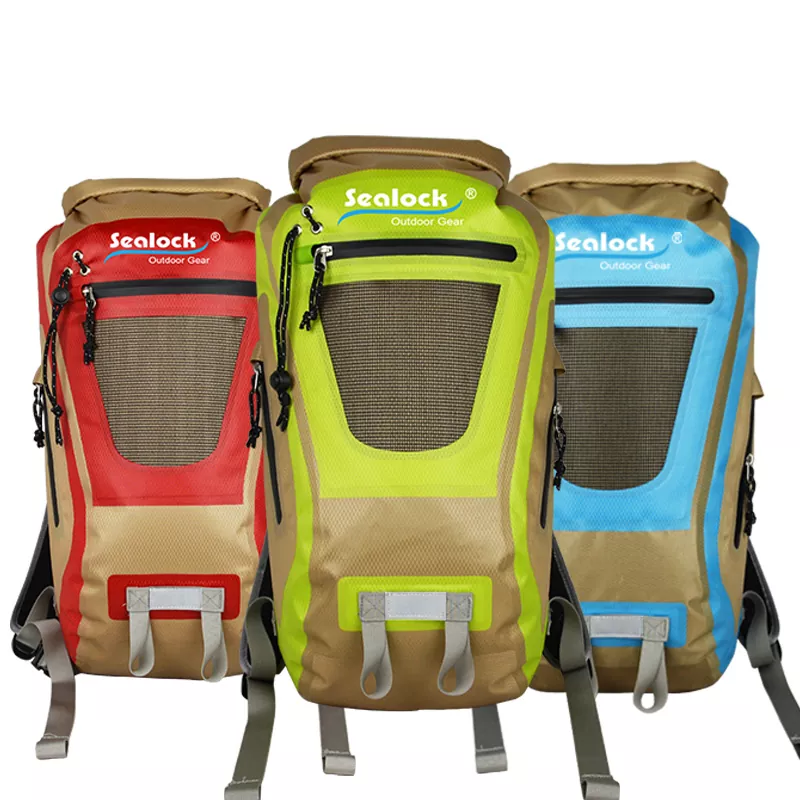
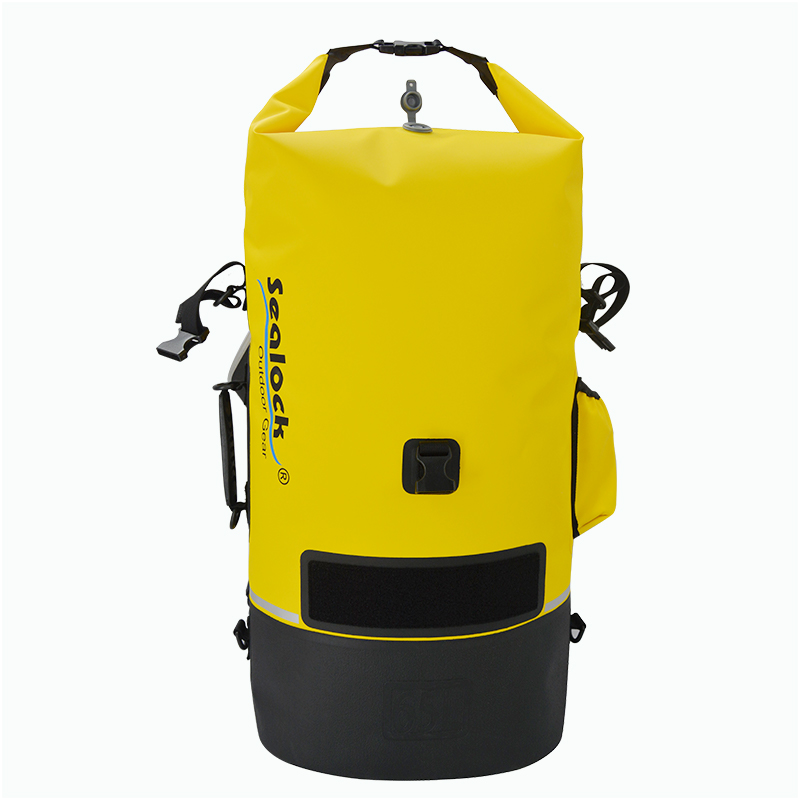
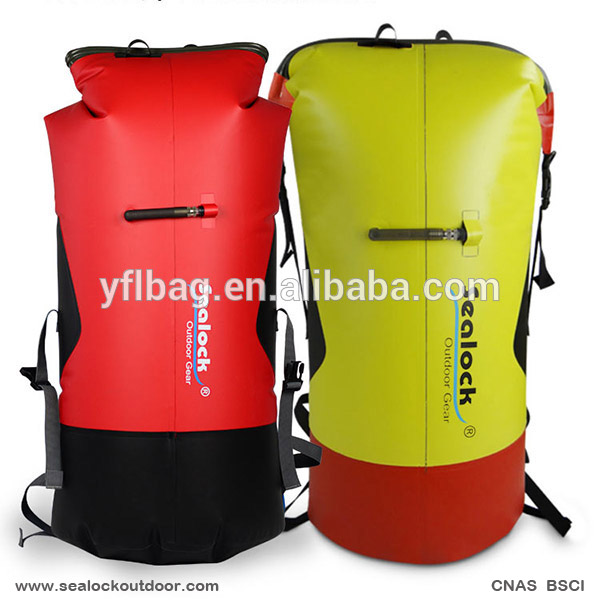
Sealock is a waterproof backpack manufacturer in China supplying OEM, ODM, and wholesale buyers worldwide. The backpack is the hardest format in waterproof gear, and for a reason most specifications never name: waterproofing and carrying comfort pull in opposite directions. A sealed shell cannot breathe. A harness has to be anchored to a barrier that must not be perforated. A ventilated back panel wants air gaps exactly where a waterproof body wants continuous material. Building a pack that is genuinely dry and genuinely comfortable is an engineering compromise, and how a factory resolves it is what separates a good waterproof backpack from a dry sack with straps on it.
The Central Conflict: Seal Versus Ventilation
Any backpack sitting flat against a back with no airflow channel accumulates sweat quickly, and on a waterproof pack that problem is structural rather than incidental: the shell is a sealed membrane, so moisture has nowhere to go. Honest outdoor guidance says as much — fully waterproof shell-on-back designs are best avoided for long, hot days unless the mission demands it.
The resolution is that comfort in humidity comes from the back-panel system, not from the shell. A sealed body can be paired with a carrying system engineered to create airflow, distribute load, and keep the wearer's back off the membrane. That's the design decision a brand should be making deliberately.
A sealed shell can't breathe — so comfort has to be engineered into the back system.
Three Back-System Architectures
Back systems fall into three genuine architectures, and there is no universally best one — the right choice depends on load weight, climate and activity:
Architecture
Strength
Trade-off
Best for
Contact back — foam directly against the back
Maximum load transfer and stability
Least ventilation
Heavy loads, cycling, paddling — anywhere a pack must not shift
Tensioned mesh — a suspended panel holding the pack off the back
Excellent airflow
Less stable under heavy loads
Hot climates, moderate loads, day use
Hybrid — contact foam with ventilation channels
Balance of both
Neither extreme
Most general-purpose waterproof packs
One nuance worth passing to customers: on a bike, a pack that "hangs back" away from the body becomes painful quickly, which is why cycling packs favour close contact rather than maximum airflow. And comfort under real weight comes from support, not airflow alone — dense foam with a sheet or frame is more stable and less fatiguing over hours than a highly ventilated panel carrying the same load.
Making a Ventilated Panel Work on a Sealed Shell
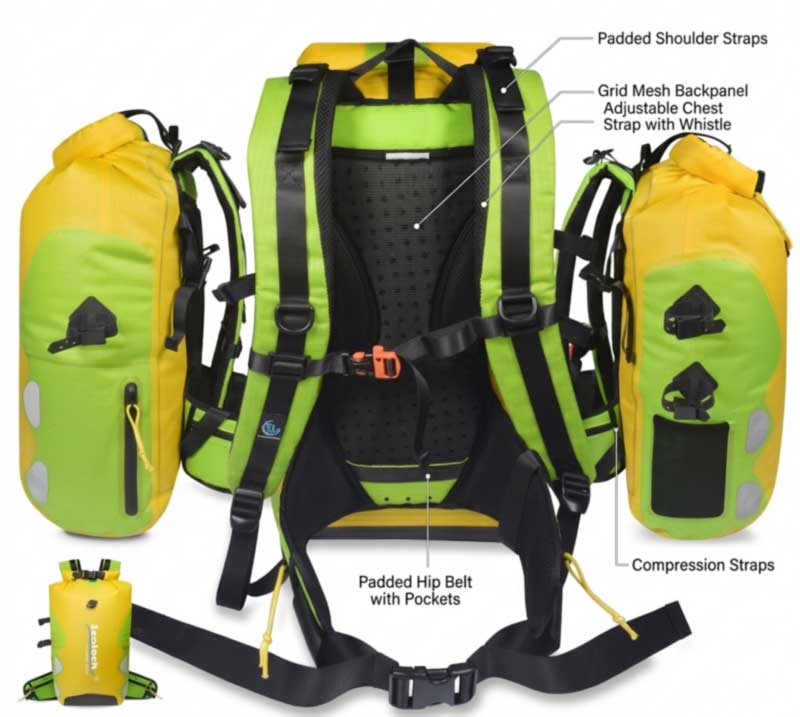
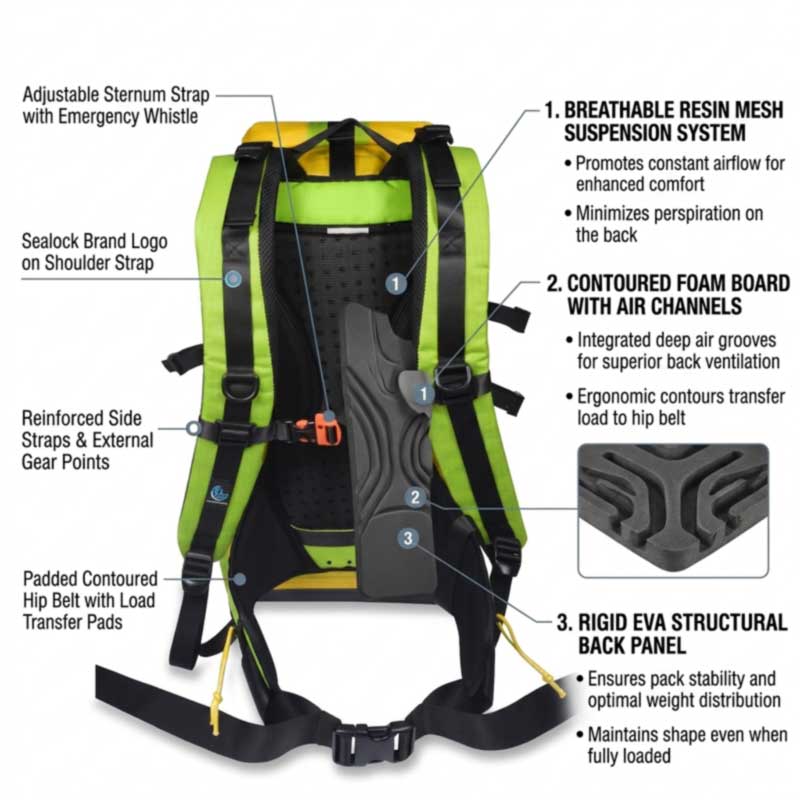
Air channels and cutouts. Foam covered in fabric doesn't breathe by itself — ventilation comes from the geometry. Moulded channels let air move between the body and the pack.
EVA back panels. A one-piece EVA panel reduces both weight and heat build-up while keeping the sealed shell intact behind it. EVA is also RF-weldable, so it can be integrated into the build rather than glued on.
3D spacer mesh on the panel and strap contact surfaces, which gives an airy feel and dries faster than flat fabric.
A contoured, physiological curve that follows the spine, creating a natural gap rather than a flat plate against the back.
Reinforced anchors, not perforations. Harness and hip belt anchors are stitched to the panels at high tension before the shell is welded, so the load path is engineered and the perforated footprint ends up covered by the welded skin.
The Waterproof Core
High-frequency welded seams at 27.12 MHz — panels fused with no needle holes. A stitched-and-taped pack relies on adhesive that lifts with age and flex.
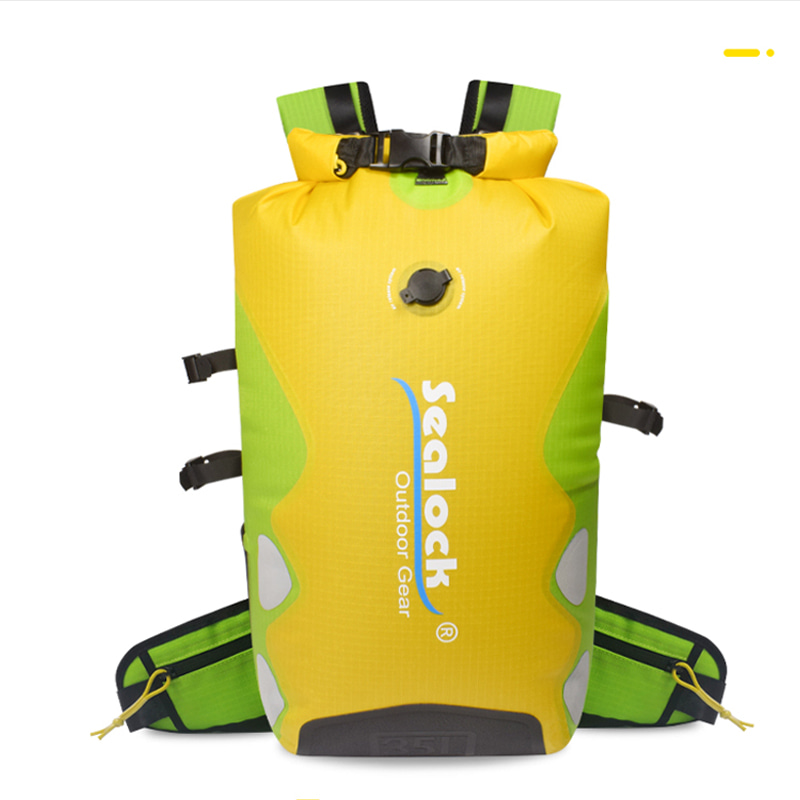
A closure matched to the use — a roll-top for general outdoor and paddling use, an airtight zipper where fast wide access matters, or a compressed rubber sealing strip under a fold-over flap for expedition-grade sealing.
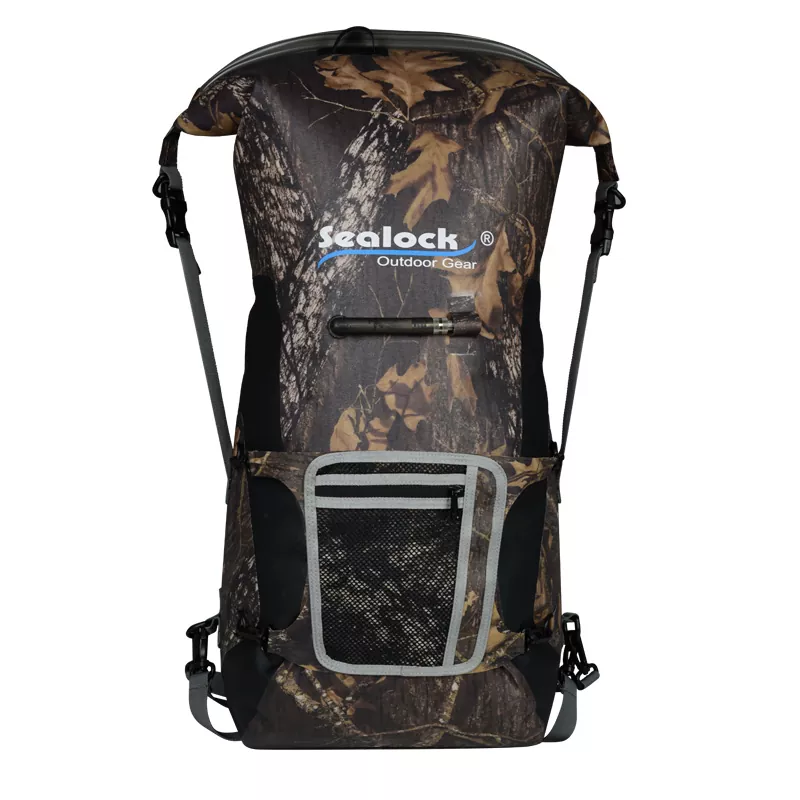
Honest compartment rating — a sealed main compartment plus a water-resistant front pocket, each rated separately rather than one blanket claim.
Material matched to the hazard — 500D PVC tarpaulin for abrasion and rock contact, TPU-coated or laminated nylon for lighter weight, cold flexibility and UV stability.
Verification on the finished pack — up to a verified IPX7 on welded roll-top and airtight-zipper builds, and IPX8 on rubber-seal expedition construction.
Three ways to keep a back off a sealed membrane — each suits a different load and climate.
The Factory
Dongguan: 12,000 m², 400+ staff, nine high-frequency welding lines, around 100,000 units per month; over twenty years in welded waterproof bags.
Two Ho Chi Minh City, Vietnam plants for diversified origin and US-tariff mitigation.
Exports to 40-plus countries; 20-plus waterproofing patents; OEM production for brands including OSPREY, KAILAS, SIMMS, West Marine, DESCENTE and CHUMS.
Certifications: ISO 9001, BSCI, SMETA P4, HIGG, GRS and SCAN at factory level; Bureau Veritas, SGS, REACH, EN71 and RoHS at product level on relevant models.
Waterproof Backpack Range
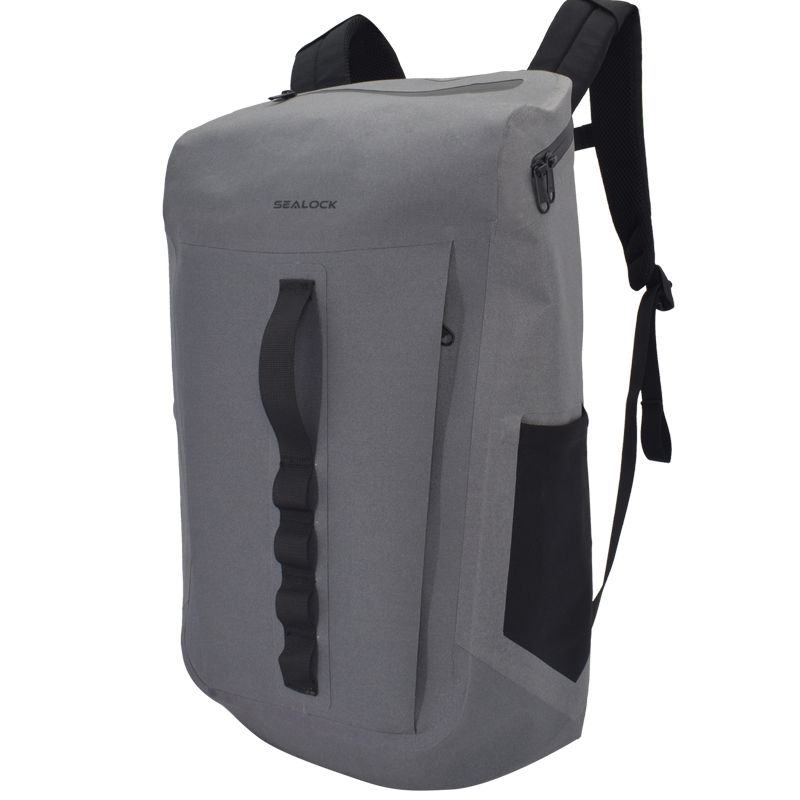
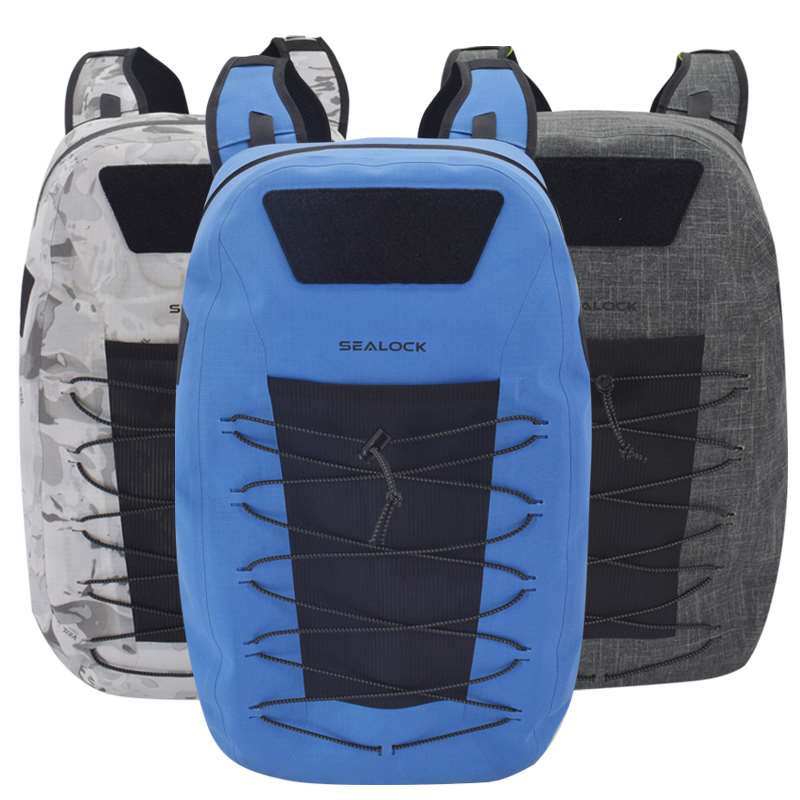
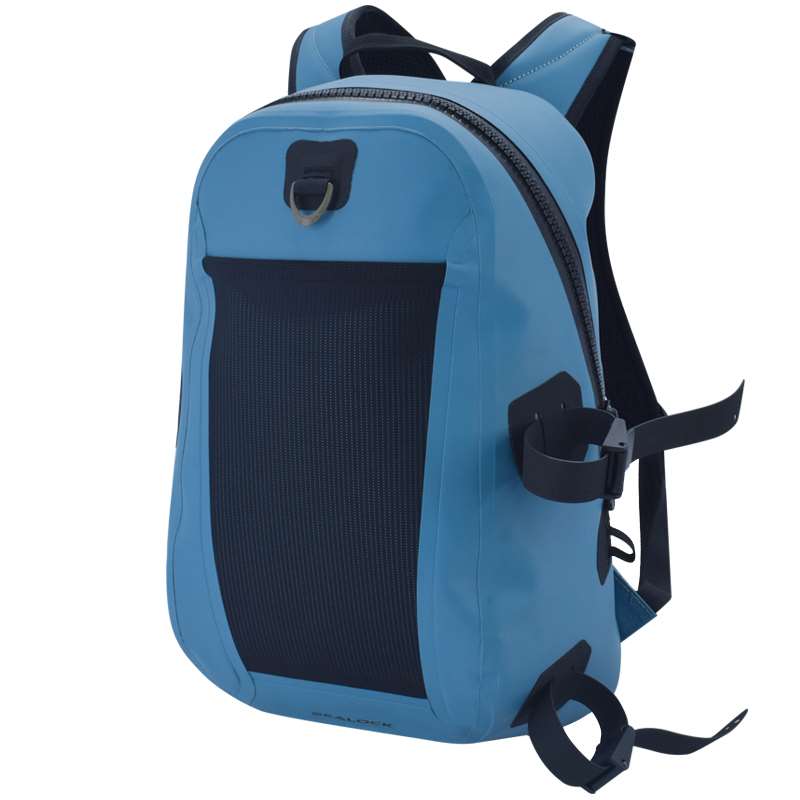
These welded packs are equal starting points for an OEM order — none is ranked above another; between them they cover every back-system architecture, closure type and capacity band:
One-piece EVA back panel — cuts weight and heat on a sealed shell
300–500
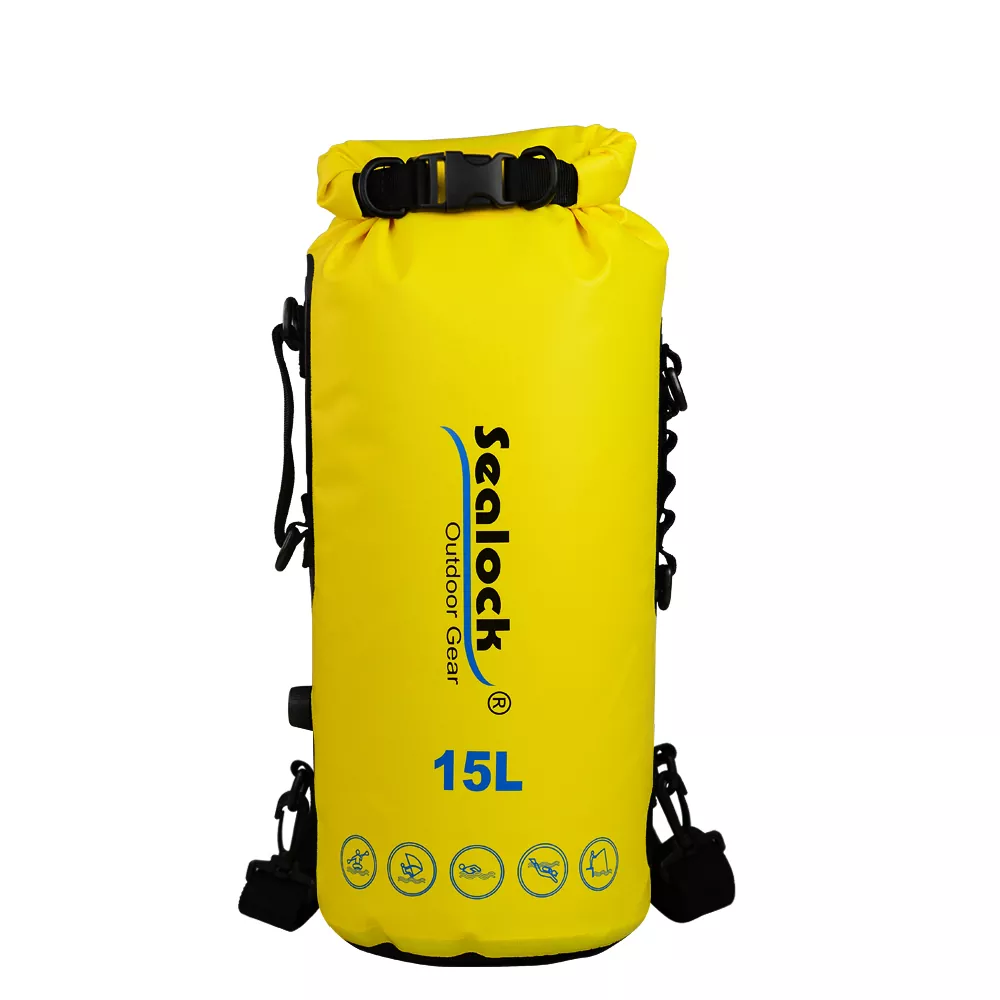
SL-E102 Dry Backpack — 15L / 20L / 30L with published dimensions per size; 500D PVC mesh; custom colours and sizes.
Three capacities on one pattern — roll-top
300
Capacity, material, closure, back-panel system, harness configuration, hardware, colour and branding are all specifiable per order, or a pack can be developed from a sketch.
Applications
Hiking and camping — sealed loads through rain and damp ground, with a carry system built for hours under weight.
Paddlesports — packs that float, lash to a deck, and survive a capsize.
Cycling and commuting — close-contact carry so the pack doesn't pull backward, with a laptop layer inside a sealed body.
Expedition and portage — full load-bearing harness with hip belt, reinforced base, and the highest sealing grade.
Private label and promotional — branded packs at volume in custom colourways.
OEM / ODM Terms and Quality Control
Item
Detail
MOQ
300–500 pcs per model
Sampling
3–15 days depending on the build; new tooling quoted separately
Verified IPX7 on welded roll-top and airtight-zipper builds; IPX8 on rubber-seal construction
Origin
Dongguan, China or Ho Chi Minh City, Vietnam
Quality is gated in three tiers — IQC (incoming fabric, zippers, buckles, foam and webbing against the signed standard, with colour difference and fastness), IPQC (cutting tolerance, weld integrity, back-panel and harness assembly, and closure installation in line, with peel tests on sample welds at each run start), and OQC (ISO 2859 AQL sampling, real water-submersion batch testing, and gold-sample comparison, with SGS or QIMA available). Sealock also strictly executes the complete customer inspection procedure on finished goods: unboxing, vacuum extraction, a 24-hour static rest, and air-leak determination. Because a backpack carries load as well as sealing it, the lab work weights heavily toward the harness: a 1,500+ cycle load test with jerk-loading on shoulder-strap and hip-belt anchors, alongside weld bond and peel strength, foam compression recovery, abrasion, tear, tensile, salt spray, UV, colour fastness and colour difference.
FAQ: Sourcing Waterproof Backpacks
Q: Can a fully waterproof backpack be breathable?
A: The shell can't be — a sealed membrane doesn't pass moisture. Comfort comes from the back-panel system instead: air channels, EVA or spacer mesh panels, and a contoured shape that holds the pack off the back. For long, hot days, specify a ventilated carry system rather than expecting the shell to breathe.
Q: Which back system should we choose?
A: Contact foam for heavy loads, cycling and paddling, where stability matters most; tensioned mesh for hot climates and moderate day loads; hybrid channels for general-purpose packs. There is no universally best option — it follows the load, the climate and the activity.
Q: How are shoulder straps attached without piercing the waterproof shell?
A: Anchors are stitched to the flat panels at high tension before the body is welded, so the load spreads across a stitched footprint and the perforations end up covered by the welded skin. Purely welded anchors can peel under sustained shear.
Q: Roll-top or airtight zipper on a backpack?
A: Roll-top for reliability, lower cost and no maintenance — the right default for outdoor and paddling packs. An airtight zipper gives fast, wide access, which suits commuter and technical packs where the bag is opened repeatedly.
Q: Can you put a laptop compartment inside a sealed pack?
A: Yes — an internal computer layer sits within the sealed body, so the device is protected by the shell rather than by a separate waterproof sleeve. Our SL-E103 is built this way.
Q: What are the MOQ and lead times?
A: Typically 300–500 pieces per model, samples in 3–15 days depending on complexity, and production 20–45 days after approval.
Talk to the Factory
For quotations, samples, and OEM/ODM proposals on waterproof backpacks, contact Sealock at info@sealock.com.hk or +86-769-82009361. Over twenty years of in-house high-frequency welding, nine welding lines, every back-system architecture, dual China–Vietnam production, and a full customer inspection procedure on every shipment.
We use cookies to offer you a better browsing experience, analyze site traffic and personalize content. By using this site, you agree to our use of cookies.
Privacy Policy
 English
  Español
  Português
  русский
  Français
  日本語
日本語  Deutsch
  tiếng Việt
  Italiano
  Nederlands
  ภาษาไทย
  Polski
  Svenska
  magyar
  Malay
Malay  বাংলা ভাষার
  Dansk
Dansk  Suomi
Suomi  हिन्दी
  Pilipino
  한국어
한국어  Türkçe
  Gaeilge
  العربية
  Indonesia
  Norsk
Norsk  تمل
تمل  český
český  ελληνικά
  український
  Javanese
  فارسی
فارسی  தமிழ்
தமிழ்  తెలుగు
  नेपाली
  Burmese
  български
  ລາວ
ລາວ  Latine
  Қазақша
  Euskal
  Azərbaycan
  Slovenský jazyk
  Македонски
  Lietuvos
  Eesti Keel
  Română
  Slovenski
  मराठी
मराठी  Srpski језик