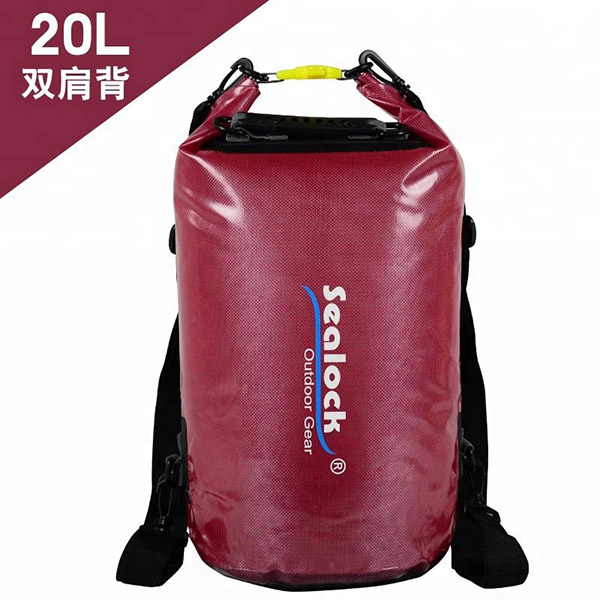
Sealock is a kayak bag manufacturer and OEM supplier. Feature lists are the easiest part of a product brief to get wrong, because every feature reads as a benefit on paper and almost none is free. A pocket costs waterproofing. A harness costs weight and adds failure points. Ultralight fabric costs abrasion life. This guide ranks kayak bag features by whether they actually earn their place — what each one buys you, what it costs you elsewhere, and where the honest limits are.
Tier One: Non-Negotiable
These aren't features so much as the definition of the product. A kayak bag missing any of them isn't a cheaper kayak bag — it's a different, worse product.
Welded seams. High-frequency welded seams outperform glued or stitched ones, which delaminate over time. Taped construction can pass an early test and fail after a season of real immersion. If a bag will be submerged, welded is the only construction that holds up.
A stated rating. Look for IPX7 or above — submersion at 1 metre for 30 minutes — and treat anything labelled only "water-resistant" as a different category. Ask for verification on the finished bag, not a fabric figure.
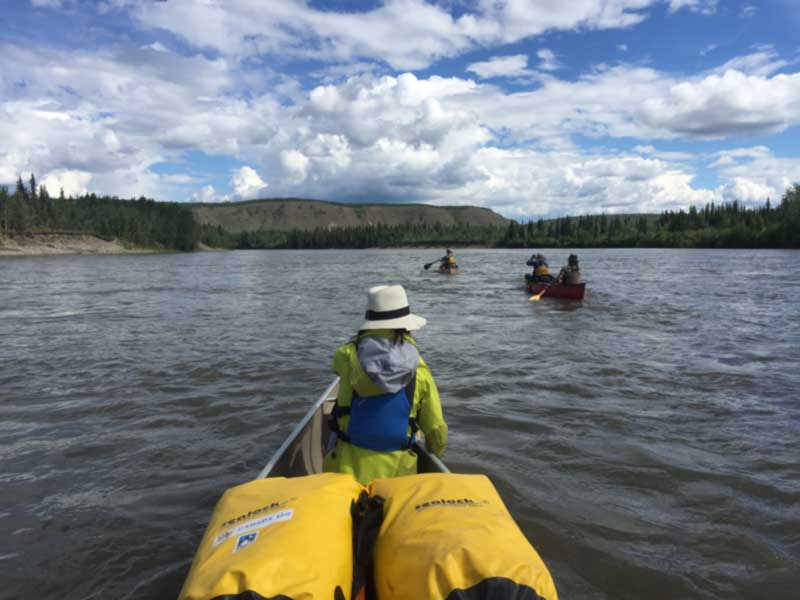
Buoyancy. A true overboard bag should float even when loaded. The useful question to put to a supplier is specific: floats with how much weight inside? A bag that only floats empty isn't answering the scenario it exists for.
A closure that seals under real conditions. A roll-top needs at least three folds before clipping; the practical test is whether a paddler can achieve that with cold, wet hands, at full load, in a hurry.
At least one secure attachment point. D-rings or lash loops so the bag ties into deck rigging. Deck gear should attach at two points minimum, so a single-point bag limits how it can be used.
The real test of a closure isn't the lab — it's cold, wet hands at full load.
Tier Two: Features That Earn Their Cost — With Conditions
External mesh pocket
Buys you: somewhere for a water bottle, sunscreen, wet sandals, a damp towel or a rod handle — wet gear kept away from the dry compartment without carrying a second bag. Costs you: nothing structurally, but it offers no waterproof protection. Anything that can't tolerate moisture has to be double-bagged. State that plainly on the listing rather than letting a customer discover it.
Front zip pocket
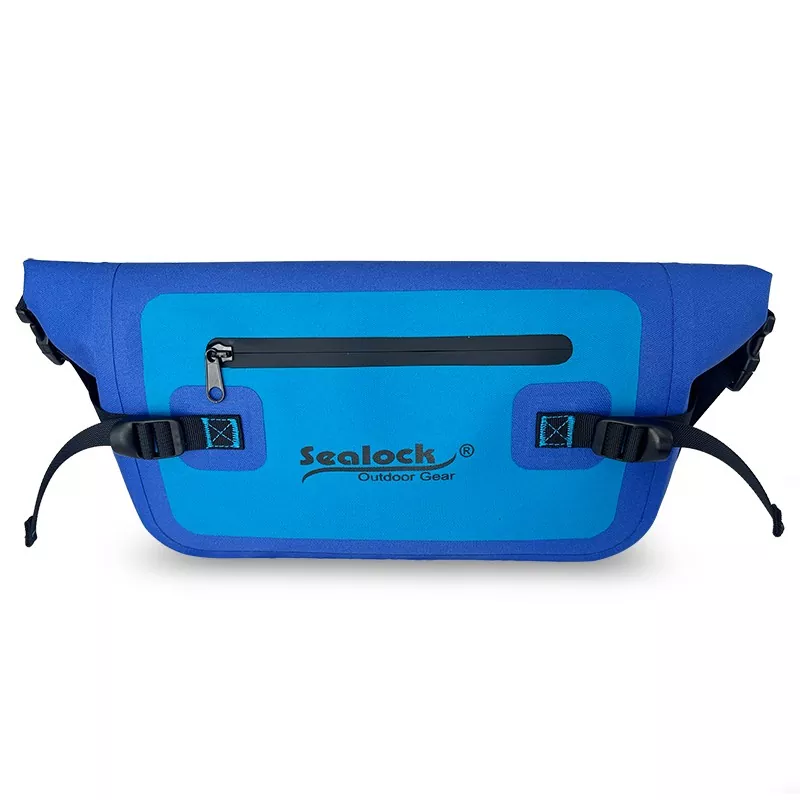
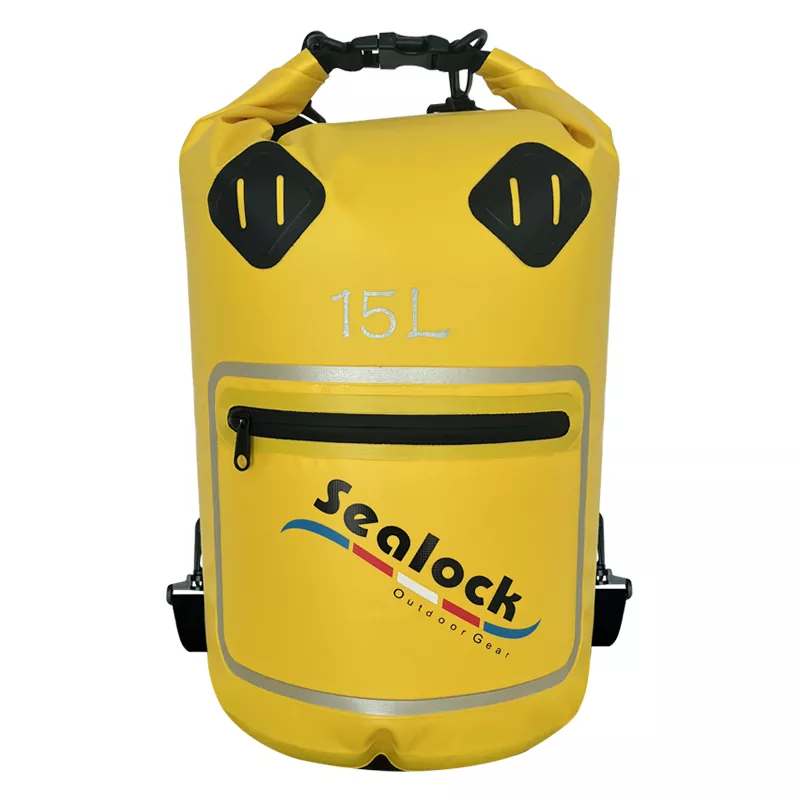
Buys you: quick access to small essentials without unrolling the main compartment — the roll-top's one genuine weakness. Costs you: a zip pocket is typically far less waterproof than the sealed main body. Many bags on the market carry a front phone pouch that is splash-proof only, and a customer who puts a phone there and capsizes will report the bag as leaking. Rate each compartment separately and say so.
Backpack straps
Buys you: hands-free carry, which is essential for portaging between waterways or walking gear from the car to the launch. Costs you: weight, cost, and failure points. Strap breakage under load and wear at the strap attachment are among the most common complaints on budget bags. If you specify a harness, specify the anchor construction and load testing too — and consider whether the size justifies it at all. Below roughly 20L, a single shoulder strap is usually the better product.
Padded straps
Buys you: comfort on longer carries. Costs you: weight and price. Unpadded straps are an acceptable compromise for occasional use and short trips; for heavy daily use or long portages they aren't. Match the padding to the customer, not to the spec sheet.
Detachable straps
Buys you: the ability to strip the harness off and stuff the bag into a hatch, where straps just get in the way. Costs you: hardware cost and one more thing to lose. Worth it on bags aimed at sea kayaking; less relevant for SUP or rafting.
Included phone pouch
Buys you: a genuinely appreciated bundle. A dedicated phone dry bag lets a paddler operate a touchscreen without opening the main bag at all, and reviewers consistently note the small price premium pays for itself the first time a phone goes in the water. Costs you: little — and it lifts perceived value more than almost any other addition.
Tier Three: Small Details That Punch Above Their Cost
These are the features that show up in reviews as the reason one bag beat another, and most add very little to the unit price:
A light-coloured interior. A white or bright inner surface makes contents findable inside a bag — a small thing that testers repeatedly call out, and free if specified at the material stage.
Reflective trim. Paddlers are frequently out at dawn, dusk and in fog. Reflective strips make a bag visible to other boaters and findable if it goes overboard in low light — and they double as brand real estate. Most dry bags on the market are still designed only to be seen in daylight, which makes this a genuine differentiator rather than a me-too feature.
A flat base. Lets the bag stand upright for packing and loading rather than falling over on a launch ramp.
Field-repairable buckles. A broken buckle shouldn't retire an otherwise sound bag.
Load ratings marked on the lash points. A small printed detail that tells the user what the anchors will take — and signals that they were engineered rather than assumed.
A transparent window. Identify contents without unrolling — particularly useful inside a dark hatch.
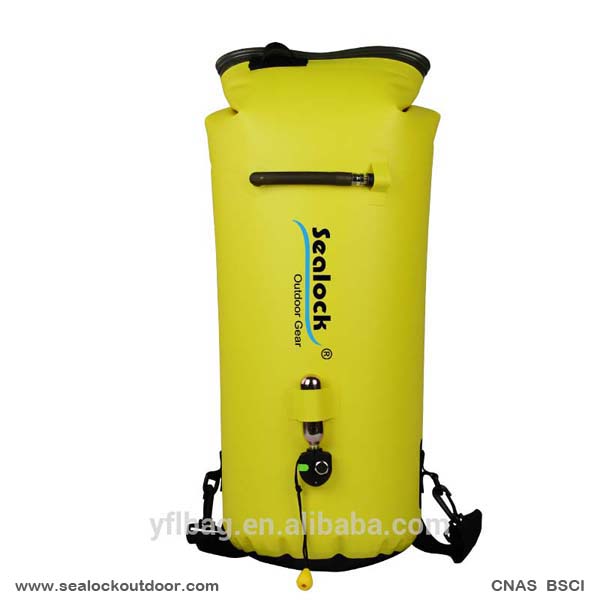
An inflation and deflation valve. Purge air to compress the bag into a hatch, or add air for temporary flotation support.
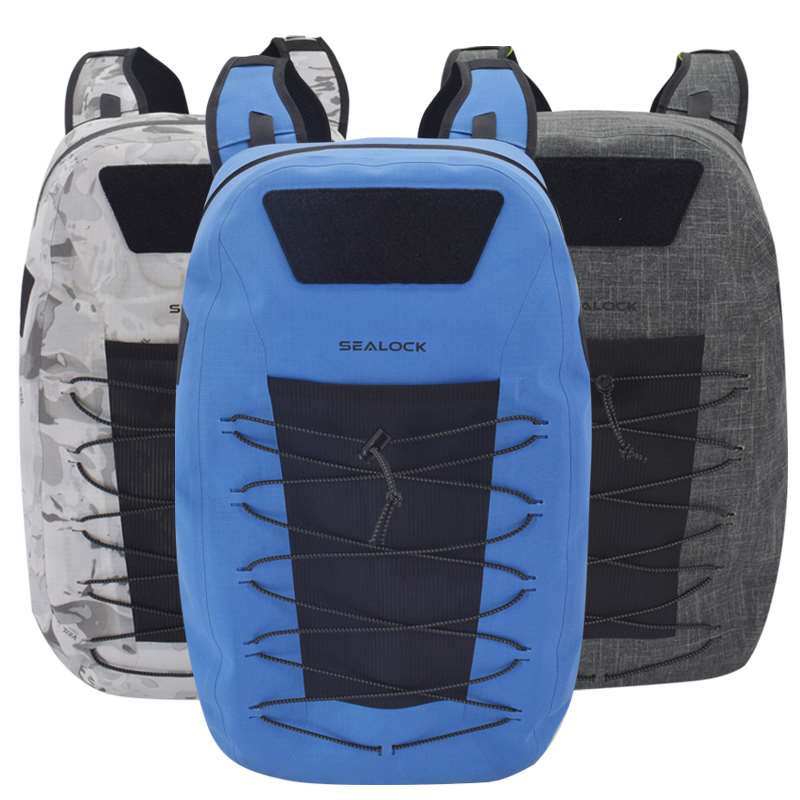
Assorted colours across a set. Colour-coding turns several bags into an organisation system rather than a pile.
The Shape Decision Buyers Overlook
Round tube or rectangular? It sounds cosmetic and isn't. A rectangular bag can fit roughly 30% more gear than a round sack of the same litre rating, because it packs squarely instead of leaving voids — and that matters enormously inside a kayak hatch, where the constraint is the shape of the compartment rather than the number on the label. Round tubes slide into cylindrical hatches more easily and are cheaper to tool; rectangular bags pack better and stand better. Choose deliberately rather than by default.
Where "More" Is Actively Worse
Ultralight fabric on an abrasion product. Thinner material saves real weight and packs smaller, but won't hold up to abrasion or sharp objects and is unsuitable for whitewater or anywhere the bag will be dragged. If your customer paddles rock, specify 500D PVC and accept the grams.
A harness on a small bag. Adds cost and weight to a product that will be hand-carried or clipped anyway.
A hip belt that isn't a real hip belt. Many dry packs carry a hip belt that is just a strap — no padding, no pockets. It's honest to either build it properly or leave it off, rather than list it as a feature that underdelivers.
Too many pockets on a sealed bag. Every pocket is a penetration of the waterproof shell and another process window in production. Add them where they solve a real access problem, not to lengthen the feature list.
The Feature Priority Table
Feature
Priority
The trade-off
Welded seams
Essential
None — the alternative simply fails
Buoyancy
Essential
Defeated if packed with dense metal items
Lash points / D-rings
Essential
Must be engineered anchors, not stitched-on tabs
Heavy denier fabric
Essential for whitewater
Weight and pack size
Front zip pocket
High value
Not fully waterproof — must be rated separately
Mesh pocket
High value
Zero water protection; contents must tolerate wet
Backpack harness
Size-dependent
Weight, cost, and the category's top failure point
Reflective trim
Underrated
Minimal cost; real safety and brand benefit
Light interior
Underrated
Essentially free if specified early
Valve
Situational
A penetration — needs its own testing regime
Ultralight fabric
Situational
Poor abrasion and puncture resistance
The Product Basis
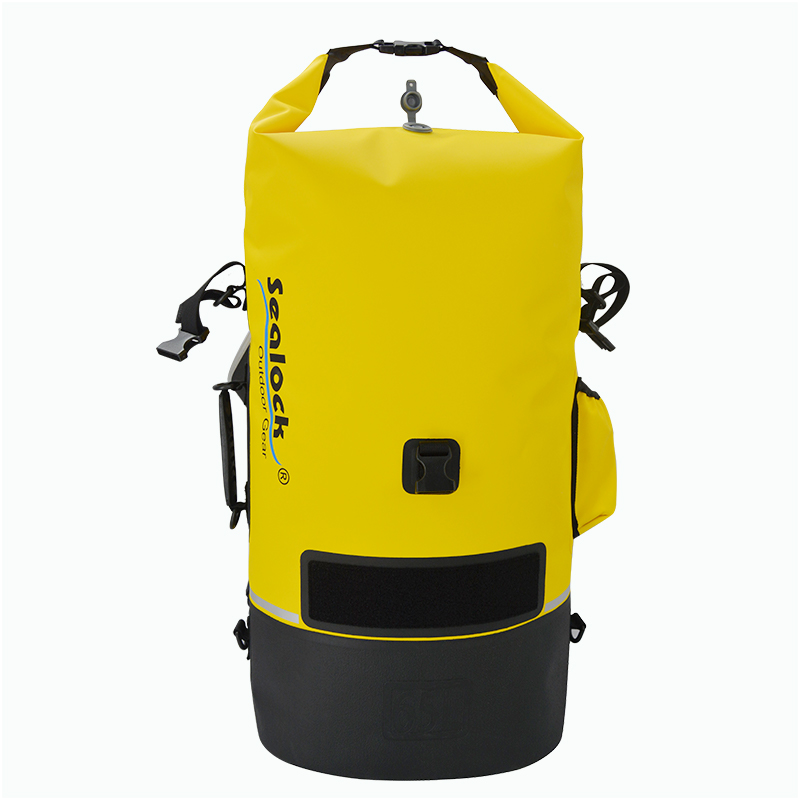
These welded bags, from Sealock's dry bag line, are equal starting points for an OEM order — none is ranked above another; each shows a different feature set from the tiers above:
Window + detachable strap + wet/dry — three Tier Two features done properly
300
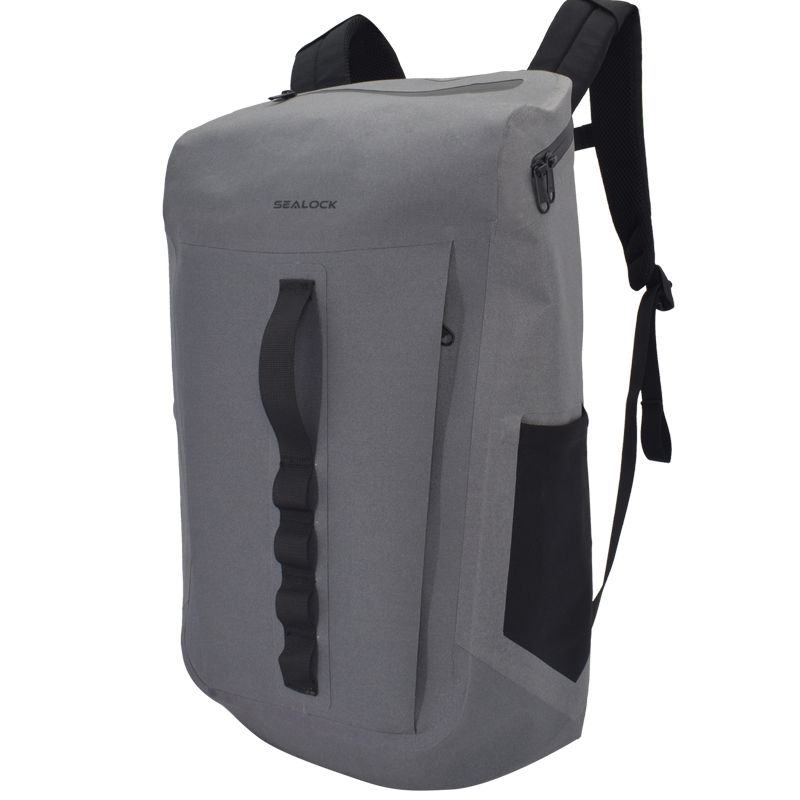
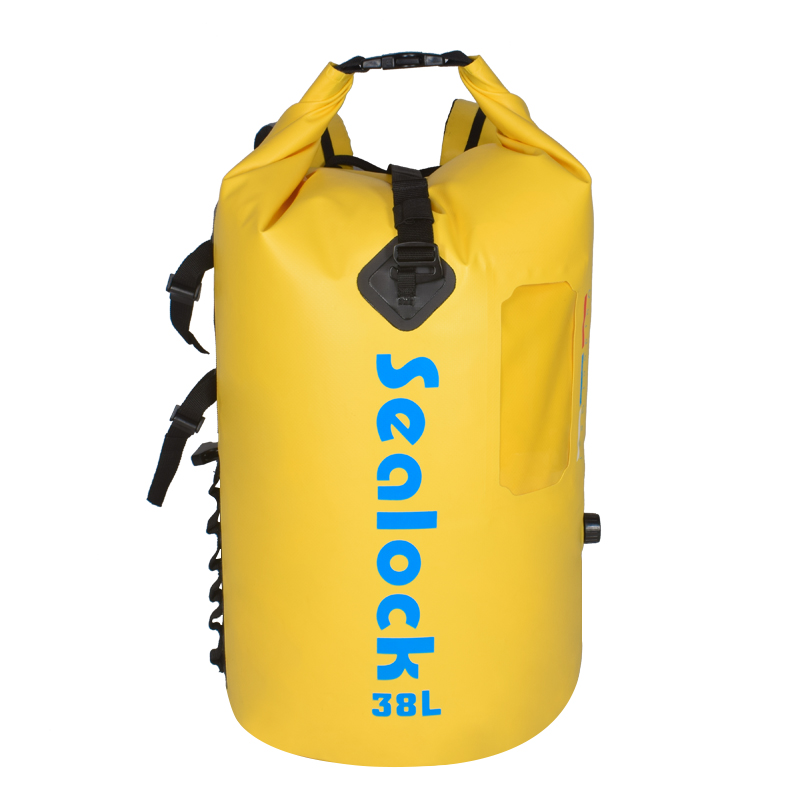
38L Waterproof Dry Backpack for Kayak — 500D PVC, 0.5 mm; semi-circular shell; front phone window; multi-function lock; side inflation/deflation valve; one-piece EVA back panel.
Phone window + valve + ventilated back panel — the feature-led build
Air control without extra pockets — one feature, done well
500
SL-D135 Kayaking Tube Dry Bag — 500D PVC tarpaulin; fold-seal with back-up Velcro; inner pocket with waterproof zipper; seven colours; ISO9001, BSCI, Bureau Veritas.
Tier One only, executed well — redundant sealing, no clutter
500
SL-D025 Kayaking Dry Bag — 5/10/15/20/30/40L with published dimensions per size; 500D PVC mesh; custom colours; sample 7–10 days.
A colour-coded set — organisation as the feature
300
Reflective trim, light-coloured interiors, windows, valves, mesh and zip pockets, harness configuration and colour-coding are all specifiable per order, on any base model or on a design developed from a sketch.
Every Feature Adds a Test
The quiet cost of a long feature list is verification. Each pocket, valve and window is a penetration of the waterproof shell with its own process window, and each has to be proven rather than assumed. Quality is gated in three tiers — IQC (incoming fabric, valves, buckles and webbing against the signed standard, with colour difference and fastness), IPQC (cutting tolerance, weld integrity on body seams and penetrations, window and valve installation, harness and lash-point assembly, with peel tests on sample welds at each run start), and OQC (ISO 2859 AQL sampling, real water-submersion batch testing, buoyancy checks with the target load inside, and gold-sample comparison, with SGS or QIMA available). Sealock also strictly executes the complete customer inspection procedure on finished goods: unboxing, vacuum extraction, a 24-hour static rest, and air-leak determination. The lab additionally runs weld bond and peel strength, a 1,500+ cycle load test with jerk-loading on harness anchors and lash points, abrasion, tear, tensile, salt spray, UV, colour fastness and colour difference.
FAQ: Specifying Kayak Bag Features
Q: Which features are genuinely non-negotiable?
A: Welded seams, a stated and verified rating of IPX7 or above, buoyancy when loaded, a closure that seals with cold wet hands, and secure attachment points. Everything else is a decision about the customer and the price point.
Q: Should we add a front zip pocket?
A: It solves the roll-top's real weakness, which is access — but it is not as waterproof as the sealed main compartment. Add it, and rate it separately in your listing so a customer never puts a phone there expecting submersion protection.
Q: When do backpack straps stop being worth it?
A: On smaller bags. Below roughly 20L a single shoulder strap is usually the better product, since a harness adds weight, cost and the category's most common failure point. Above that, specify anchor construction and load testing, not just "backpack straps".
Q: Round or rectangular?
A: A rectangular bag fits around 30% more gear than a round sack at the same litre rating, because it packs without voids — a real advantage in a hatch. Round tubes slide into cylindrical hatches more easily and cost less to tool. Decide by where the bag will live.
Q: Is reflective trim worth adding?
A: It's one of the best value-to-cost features available. Paddlers are out at dawn, dusk and in fog, most dry bags are designed only for daylight visibility, and reflective detailing makes a bag findable if it goes overboard — while serving as brand placement.
Q: How do we know a bag really floats?
A: Ask for the figure, not the adjective — how much weight can be inside while it still floats. We verify buoyancy with the target load in the bag rather than empty.
Talk to the Factory
To specify the right feature set for your kayak bag programme, contact Sealock at info@sealock.com.hk or +86-769-82009361. Over twenty years of in-house high-frequency welding, nine welding lines, valve and window integration, dual China–Vietnam production, and a full customer inspection procedure on every shipment.
We use cookies to offer you a better browsing experience, analyze site traffic and personalize content. By using this site, you agree to our use of cookies.
Privacy Policy
 English
  Español
  Português
  русский
  Français
  日本語
日本語  Deutsch
  tiếng Việt
  Italiano
  Nederlands
  ภาษาไทย
  Polski
  Svenska
  magyar
  Malay
Malay  বাংলা ভাষার
  Dansk
Dansk  Suomi
Suomi  हिन्दी
  Pilipino
  한국어
한국어  Türkçe
  Gaeilge
  العربية
  Indonesia
  Norsk
Norsk  تمل
تمل  český
český  ελληνικά
  український
  Javanese
  فارسی
فارسی  தமிழ்
தமிழ்  తెలుగు
  नेपाली
  Burmese
  български
  ລາວ
ລາວ  Latine
  Қазақша
  Euskal
  Azərbaycan
  Slovenský jazyk
  Македонски
  Lietuvos
  Eesti Keel
  Română
  Slovenski
  मराठी
मराठी  Srpski језик