A bag that lives on a bicycle or a motorcycle has a harder working life than almost any other bag a brand will sell. It is strapped to a moving machine, rubbed against a frame or a fairing for hours at a time, sprayed with road water that carries grit, oil and winter salt, baked in the sun while the vehicle is parked and, on a motorcycle, sometimes held a hand's width from an exhaust. Choosing the fabric for that bag is therefore less about a spec sheet and more about matching a material to what the road will actually do to it.
This guide is written for brand owners and product managers who are specifying a bike or motorcycle bag range. It explains the four kinds of damage the road inflicts, compares the five materials we use most for these products, and shows why a waterproof fabric on its own does not make a waterproof bag. It draws on over 20 years of making waterproof bags at our factory in Dongguan, with a second production base in Ho Chi Minh City, Vietnam.
The Four Things the Road Does to Fabric
The first is abrasion at contact points. A handlebar bag rubs against cables and the head tube, a seat pack swings against the seat post and the rider's thighs, and a motorcycle saddlebag sits against a pillion footrest or a pannier frame. The damage is concentrated in small areas rather than spread over the whole bag, which is why a material's overall abrasion figure matters less than how the bag is reinforced where it touches the vehicle. A coating that wears through at one rubbing point lets water in just as surely as a split seam.
The second is contamination. Water thrown up by a front wheel is not clean rain. It carries grit that acts like fine sandpaper, chain lubricant, diesel film from the road surface and, in northern winters, de-icing salt. Salt is especially hard on metal hardware, while oil and fuel residue can attack some coatings and soften low-grade plastics over time. A material that wipes clean and does not absorb this mixture keeps its appearance and its waterproofing much longer.
The third is temperature at both ends of the scale. Bikepacking and adventure motorcycle riders travel in freezing mornings and hot afternoons, and the bag must flex in both. Some materials become stiff and prone to cracking at fold lines in the cold, while in heat a dark bag in direct sun can reach surface temperatures well above the air temperature. On a motorcycle there is an extra risk: a saddlebag that drops onto a hot silencer can be damaged in seconds, whatever it is made from, which is why the mounting design and a heat shield matter as much as the fabric.
The fourth is ultraviolet light. Bike and motorcycle bags spend whole days in the sun, and repeated UV exposure slowly breaks down coatings and fades colours. A bag that looks fine after one season and chalky or brittle after three will generate complaints long after the purchase order has been closed, so UV performance belongs in the material decision rather than being left to chance.
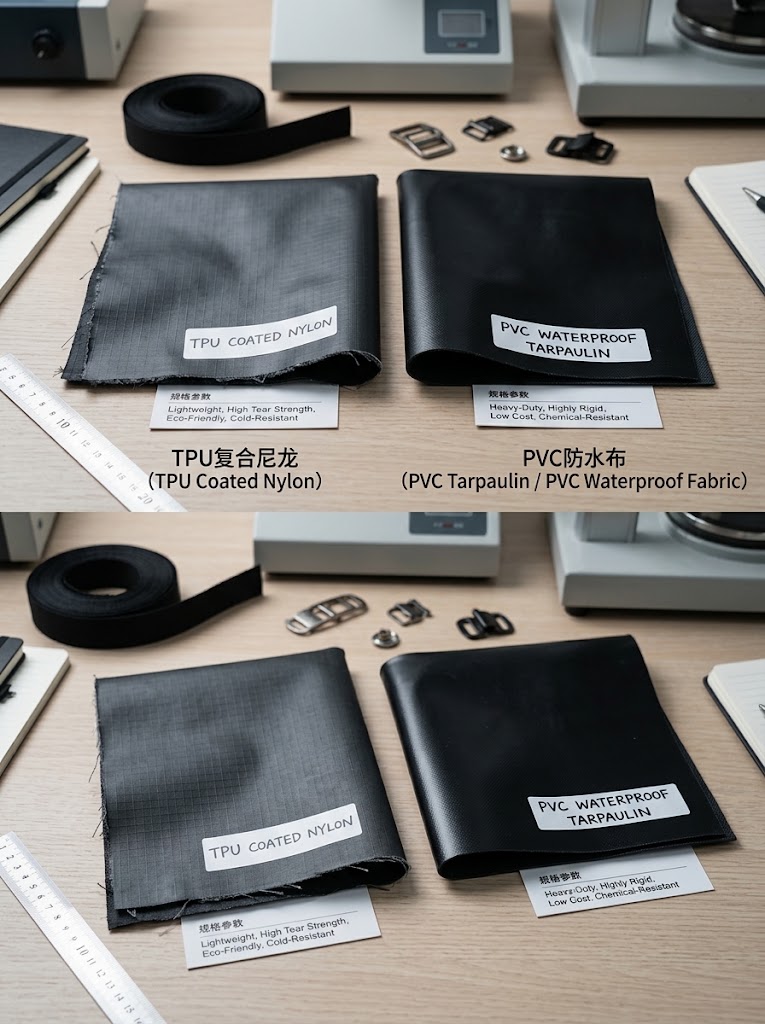
The main material families for bike and motorcycle bags, from lightweight TPU-laminated nylon to heavy PVC tarpaulin.
How the Main Materials Compare
The table below summarises the materials we use most often for cycling and motorcycle luggage. It is a starting point for a conversation, not a final ranking, because the best choice depends on the bag type, the target retail price and the riding conditions the brand is designing for.
Water-repellent rather than waterproof; mould cost for new shapes
TPU or PVC: The Decision That Matters Most
For fully waterproof bike and motorcycle bags the real choice is usually between TPU and PVC, because both can be joined with high-frequency welded seams that keep water out without stitch holes. They behave very differently on the road, though, and the right one depends on the vehicle.
TPU is the natural choice for bicycles. It is lighter, which matters to riders who count every gram on a bikepacking setup, and it stays supple in cold weather, so a roll-top closure still folds cleanly on a frosty morning. TPU also has good resistance to abrasion and to oils, and a TPU-laminated ripstop nylon handles the constant flexing of a handlebar roll or a long seat pack well. The trade-off is cost: TPU-laminated fabric is more expensive per metre than PVC tarpaulin, and that difference shows up in the unit price.
PVC tarpaulin earns its place on motorcycles. A 50-litre saddlebag carrying a full touring load is a heavy, bulky object, and PVC gives it the stiffness and toughness to keep its shape and survive being dropped, dragged and strapped down hard. It is easy to wipe clean of road grime, it welds very consistently, and it keeps the retail price within reach for mid-market motorcycle brands. Its weaknesses are weight and stiffness in the cold, which matter much less on a motorcycle than on a bicycle. Brands with a strong sustainability message may still prefer TPU, and that is a positioning decision worth making early, before samples are developed.
Base Fabric Denier, and What It Is For
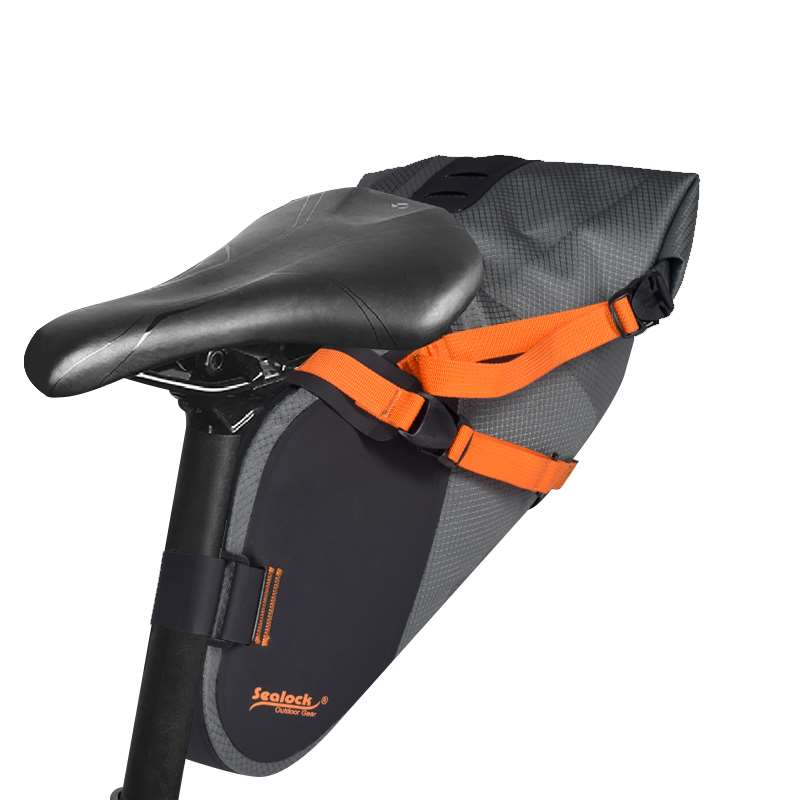
Underneath the coating or laminate sits a woven base fabric, and its denier tells you how thick the yarn is. Lighter fabrics in the ripstop or 210D to 420D range suit bags where weight is the priority, such as handlebar rolls for gravel and road bikepacking. Heavier 600D to 840D fabrics suit bags that face the most rubbing, such as seat packs that swing against the seat post and frame bags that sit against the rider's knees.
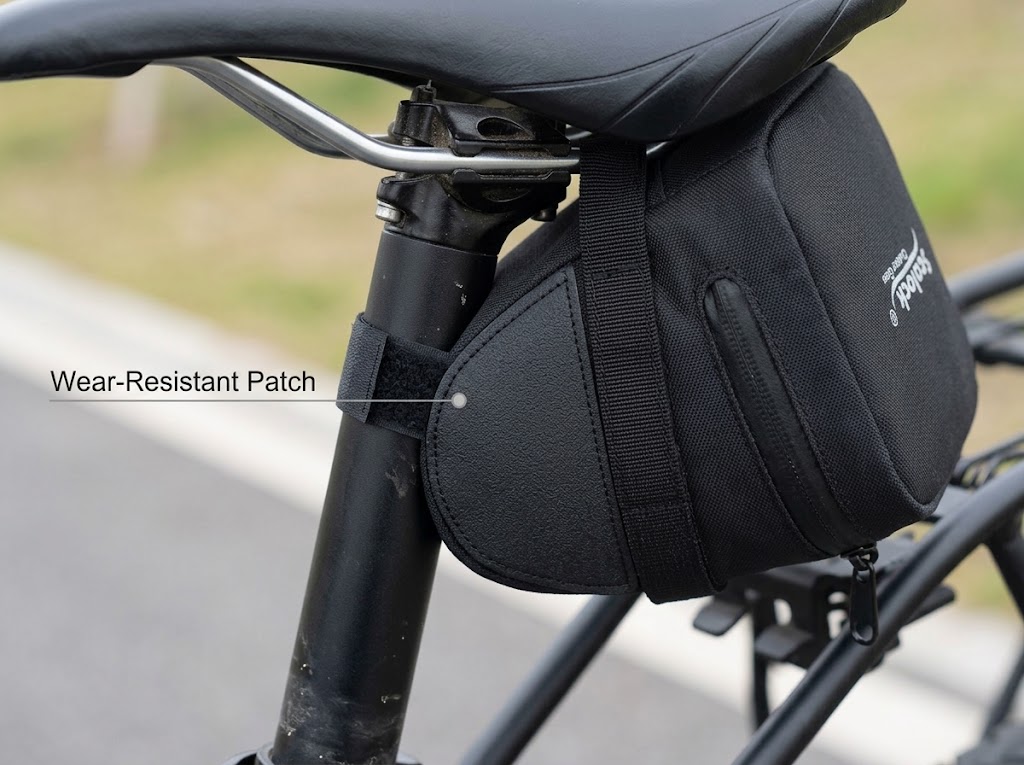
A higher denier is not automatically better. It adds weight and stiffness, and a very stiff fabric can be harder to roll and harder to weld into tight corners. A common and sensible approach is to combine fabrics in one bag: a lighter main body with a heavier panel, or an added abrasion patch, at the points where the bag touches the bike. That keeps the bag light while putting the strength exactly where the road attacks it.
Reinforcement placed at the contact points, where a bike bag actually wears.
Waterproof Fabric Is Not a Waterproof Bag
This is the point that causes the most confusion between buyers and suppliers. A bag can be made from a fully waterproof fabric and still let water in, because the seams, the closure and every strap attachment are possible entry points. The fabric only sets the upper limit; the construction decides whether the bag reaches it.
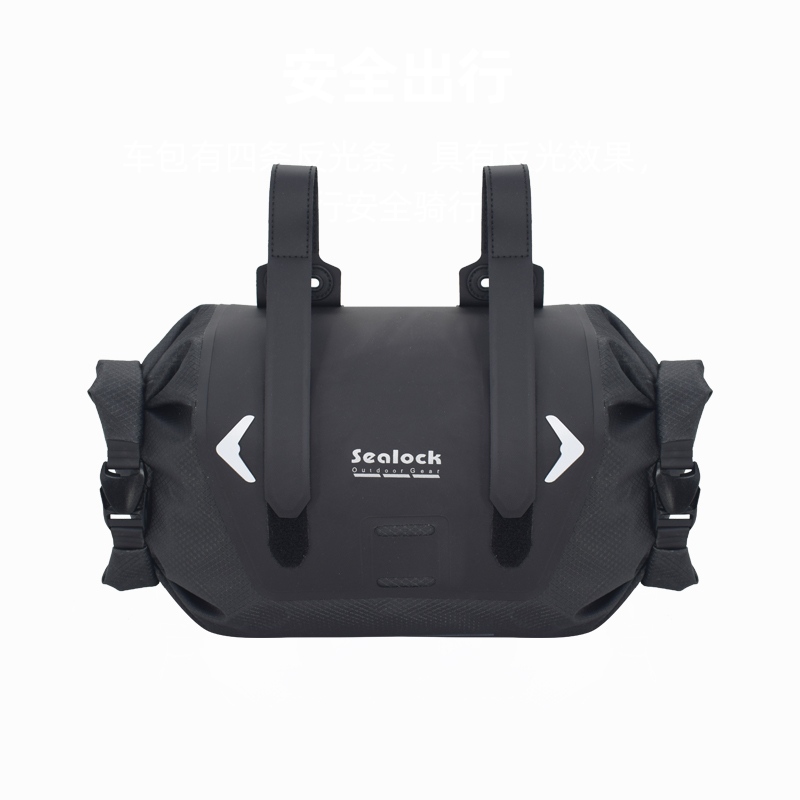
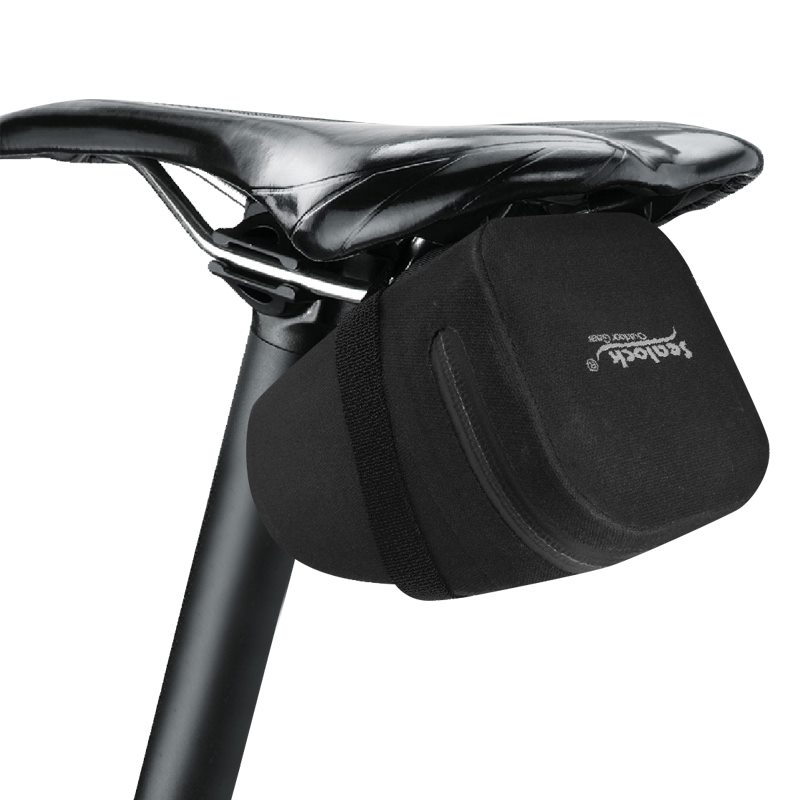
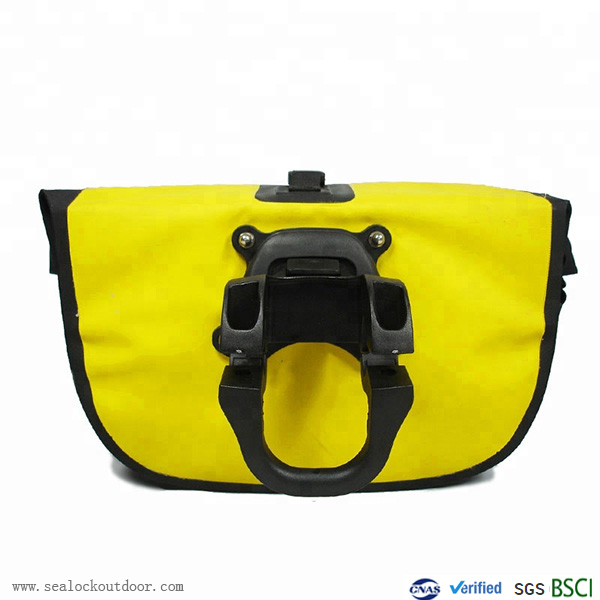
Two products from our own range show the difference clearly. The SL-K054 3D-shell seat bag uses a TPU fabric, but its parts are joined by stitching, and stitch holes are not waterproof, so it is correctly described as water-resistant rather than waterproof. The SL-K060B handlebar bag uses a TPU-coated ripstop fabric with high-frequency welded seams, welded strap ports and a roll-top closure, and it passes a heavy rain and water-jet test to an IPX6 rating. Both are good products for their purpose and price point; they simply make different promises, and the product listing has to match the construction.
This does not mean sewing is the lesser method. Sewing gives more freedom in shape, pockets and structure, and many of our best-selling bags combine stitched assemblies for organisation with welded zones where water must be kept out. What matters is that the brand decides which parts must be waterproof, specifies the construction for those parts, and describes the finished bag honestly.
Hardware and Trims Age Faster Than Fabric
On a road bag, the first part to fail is often not the fabric at all. Buckles crack in cold weather, hooks loosen with vibration and steel parts rust after a winter of salted roads. For bike and motorcycle luggage we recommend engineering plastics for buckles and mounting hooks, stainless or coated metal where metal is needed, and webbing with a tight weave that does not absorb much water. Reflective trims should be welded or bonded rather than simply printed where possible, because they face the same spray and abrasion as the rest of the bag. Asking a supplier for the specification of every trim, not only the main fabric, avoids most of the after-sales problems we see on cheaper road bags.
Bike and Motorcycle Bags in Our Range
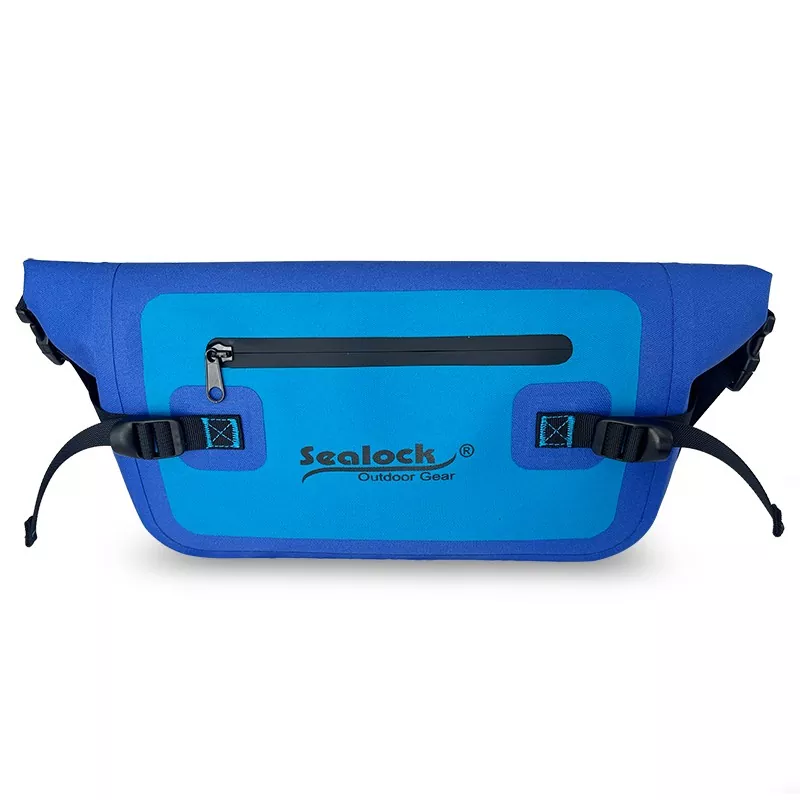
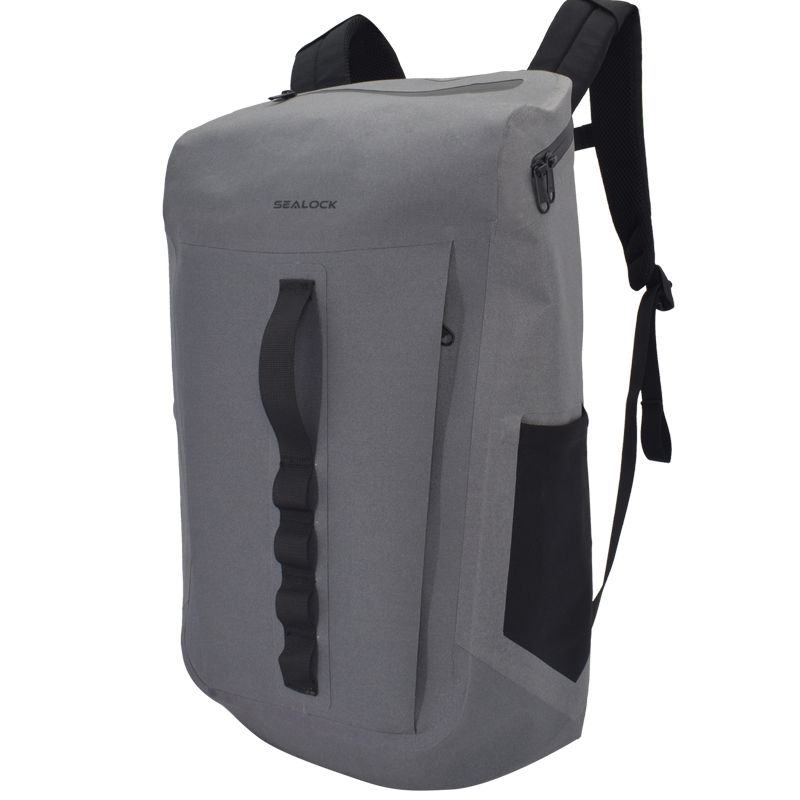
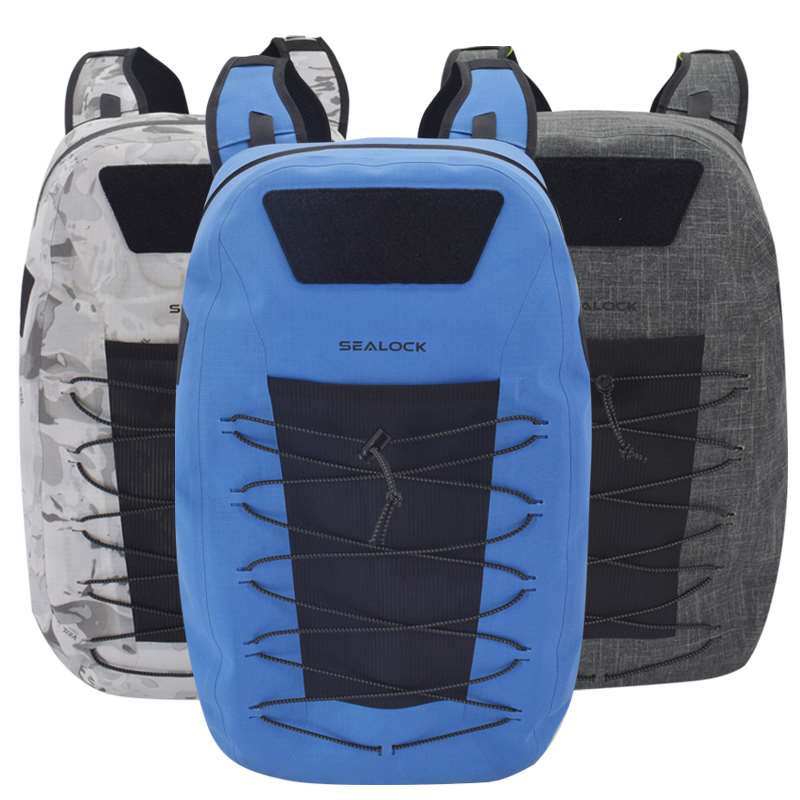
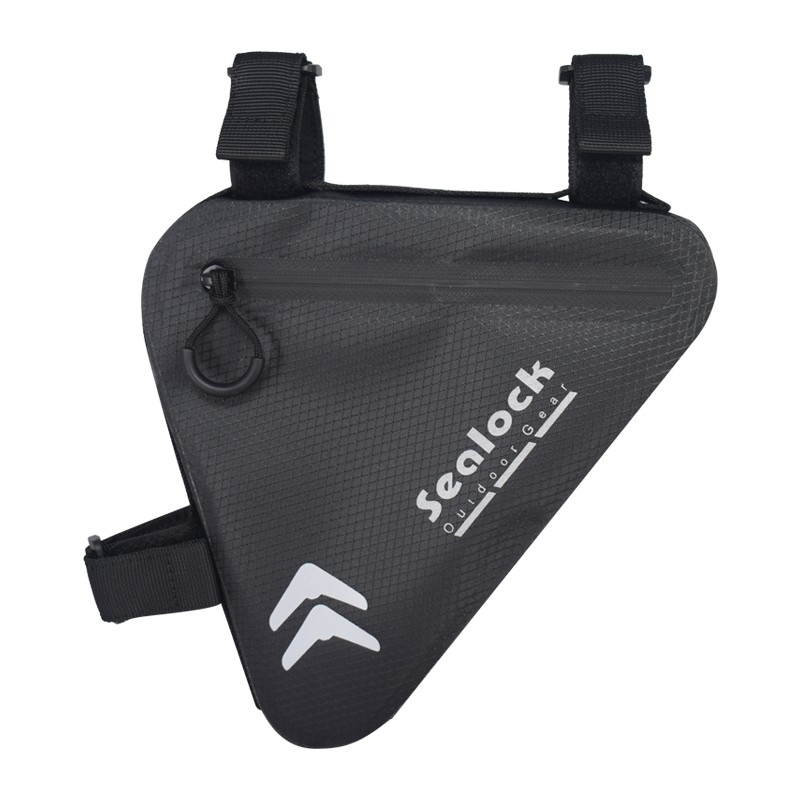
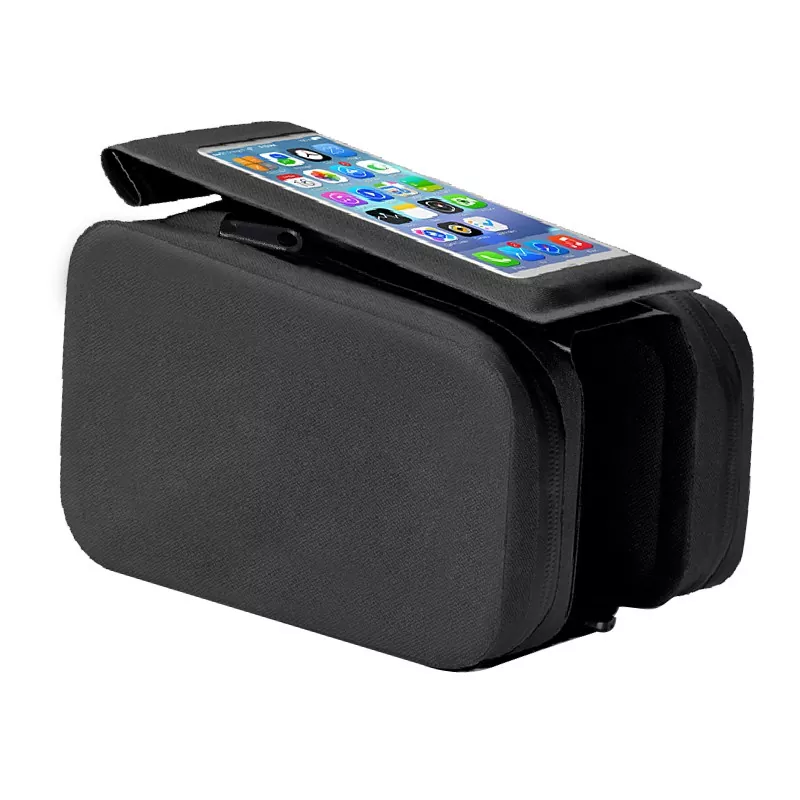
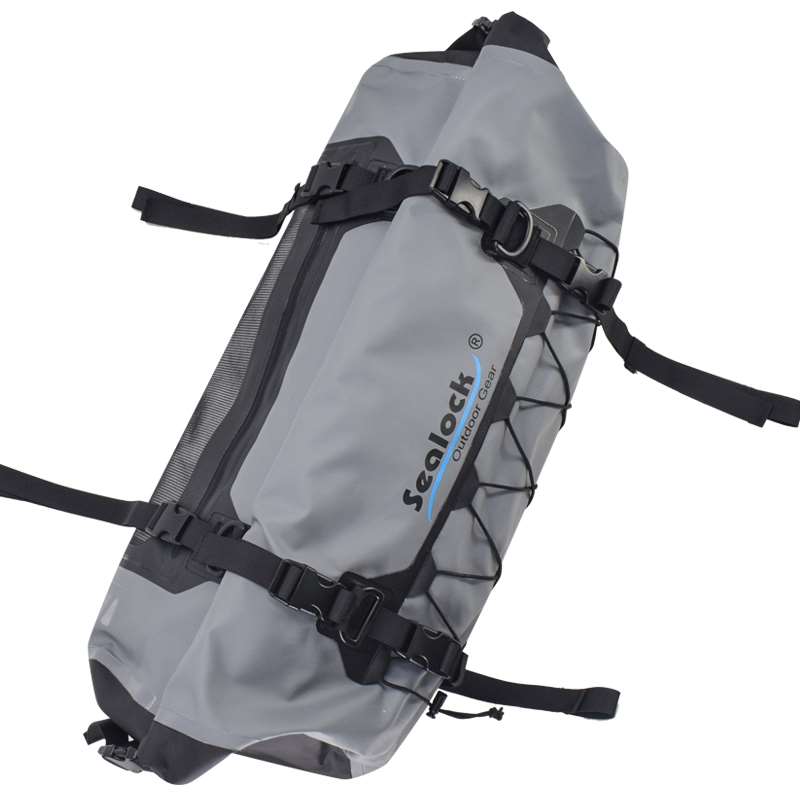
The products below show how these materials are used in practice. Each one is available for OEM and ODM development with your own logo, colours and modifications.
Seamlessly welded, reflective trim, 50 kg capacity
How We Verify the Material Choice Before Shipment
A material that looks right on a swatch card still has to prove itself in the finished bag. Every order runs through IQC on incoming fabric and trims, IPQC during cutting, welding and sewing, and OQC on finished goods before packing, with SGS or QIMA third-party inspection available when the buyer requests it.
For bike and motorcycle bags the test plan focuses on what the road does. Abrasion tests check the fabric and the reinforced contact panels, salt spray tests check buckles and metal hardware, and colour fastness and colour difference checks confirm that the bag matches the approved sample and will not bleed onto clothing in the rain. Tensile and bonding strength tests confirm that welded seams and strap anchors hold under a full load, the load test runs through 1,500+ cycles to simulate long-term carrying, and zippers on accessory pockets are tested to 3,000 cycles of opening and closing. Waterproofing is verified to match the claim on the label: a heavy rain and water-jet test for IPX5 and IPX6 bags, and a full water-immersion test of 2+ hours for any bag rated IPX7.
For products with welded or air-tight bodies, buyers who inspect goods on arrival can follow our standard customer inspection procedure: unbox the bags, extract the air by pressing or vacuum extraction, leave them at a 24-hour static rest, then carry out the air-leak determination. A bag that has held its shape after 24 hours has no leak at its seams or closure.
Frequently Asked Questions
What is the MOQ for custom bike or motorcycle bags?
MOQ depends on the product and the material. Many of our bike bags start from 300 to 500 pieces per style, and some welded PVC models start from 200 pieces. Custom fabric colours or newly developed materials can raise the minimum, because fabric mills have their own minimums, so it helps to share your colour plan at the start.
How much does the material choice change the price?
Material is one of the largest cost drivers. PVC tarpaulin is generally the most economical waterproof option, TPU-laminated nylon costs more, and TPU-coated high-tenacity nylon costs the most. Construction also matters: a fully welded bag with a purge valve and welded strap ports costs more to make than a sewn bag in the same fabric. We quote against your target retail price and can suggest where a cheaper material will not hurt performance.
Can you put our logo on TPU and PVC bags?
Yes. Screen printing, heat transfer, welded patches and reflective logos all work on TPU and PVC, and we choose the method that will survive road spray and abrasion on the specific bag. Welded or bonded reflective logos are a popular choice because they add night visibility at the same time.
Which material is best for winter riding?
TPU stays more flexible than PVC at low temperatures, so roll-top closures keep folding cleanly and fold lines are less likely to crack. For motorcycle luggage that is not rolled often, PVC still performs well in winter, but metal hardware should be stainless or coated to resist road salt.
Is a TPU bag always waterproof?
No. TPU fabric is waterproof, but if the bag is stitched together the stitch holes let water in unless the seams are welded or taped. Ask your supplier how the seams, closure and strap attachments are made, and which test the waterproof claim is based on.
Can you mix sewn and welded construction in one bag?
Yes, and many good road bags do. Organiser pockets and structured panels are often sewn, while the main compartment is welded to keep water out. We plan the construction zone by zone during development so each part is made by the method that suits it.
Develop Your Bike or Motorcycle Bag Range With Us
If you are planning a new cycling or motorcycle luggage line, or want to upgrade the materials in an existing one, send us your target products, riding conditions and price points. Our team will recommend materials and construction for each bag and prepare samples for evaluation. Contact us at info@sealock.com.hk or call +86-769-82009361.
We use cookies to offer you a better browsing experience, analyze site traffic and personalize content. By using this site, you agree to our use of cookies.
Privacy Policy
 English
  Español
  Português
  русский
  Français
  日本語
日本語  Deutsch
  tiếng Việt
  Italiano
  Nederlands
  ภาษาไทย
  Polski
  Svenska
  magyar
  Malay
Malay  বাংলা ভাষার
  Dansk
Dansk  Suomi
Suomi  हिन्दी
  Pilipino
  한국어
한국어  Türkçe
  Gaeilge
  العربية
  Indonesia
  Norsk
Norsk  تمل
تمل  český
český  ελληνικά
  український
  Javanese
  فارسی
فارسی  தமிழ்
தமிழ்  తెలుగు
  नेपाली
  Burmese
  български
  ລາວ
ລາວ  Latine
  Қазақша
  Euskal
  Azərbaycan
  Slovenský jazyk
  Македонски
  Lietuvos
  Eesti Keel
  Română
  Slovenski
  मराठी
मराठी  Srpski језик