Welded Body Seams
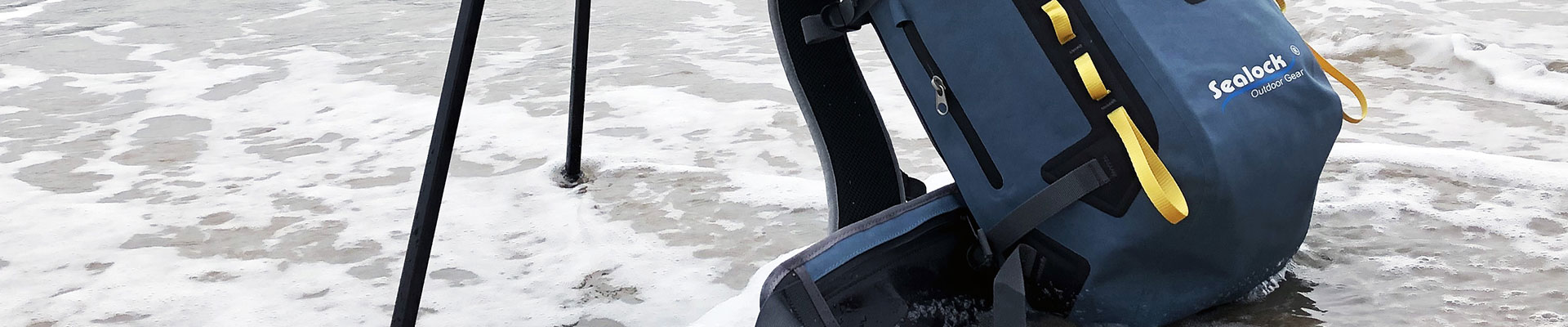
High-frequency welding fuses the tarpaulin along every seam, producing a joint as watertight as the panel itself.
 English
 Español
 Português
 русский
 Français
 日本語
 Deutsch
 tiếng Việt
 Italiano
 Nederlands
 ภาษาไทย
 Polski
 Svenska
 magyar
 Malay
 বাংলা ভাষার
 Dansk
 Suomi
 हिन्दी
 Pilipino
 한국어
 Türkçe
 Gaeilge
 العربية
 Indonesia
 Norsk
 تمل
 český
 ελληνικά
 український
 Javanese
 فارسی
 தமிழ்
 తెలుగు
 नेपाली
 Burmese
 български
 ລາວ
 Latine
 Қазақша
 Euskal
 Azərbaycan
 Slovenský jazyk
 Македонски
 Lietuvos
 Eesti Keel
 Română
 Slovenski
 मराठी
 Srpski језик

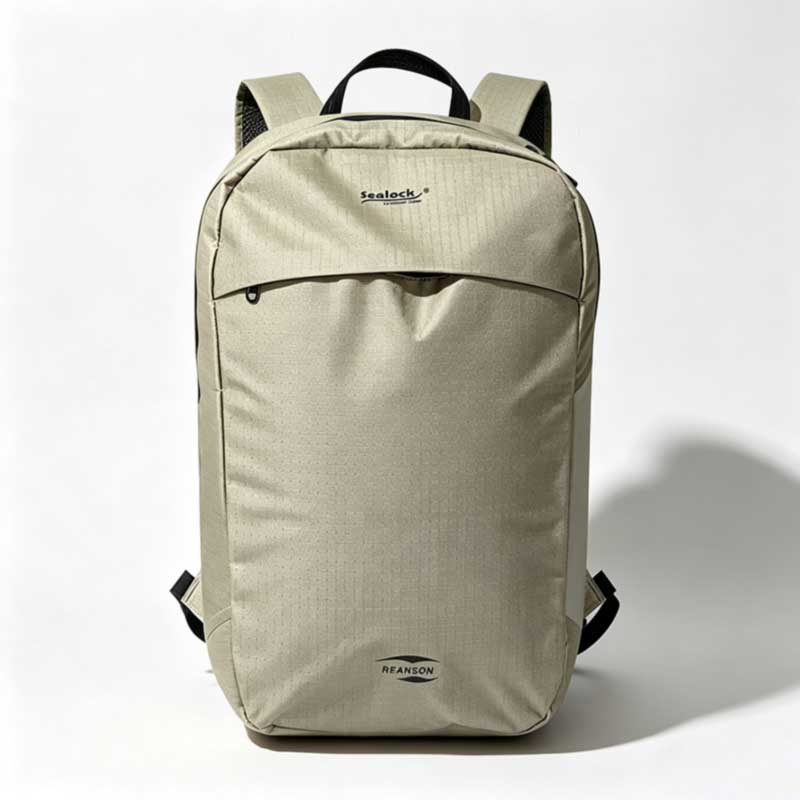
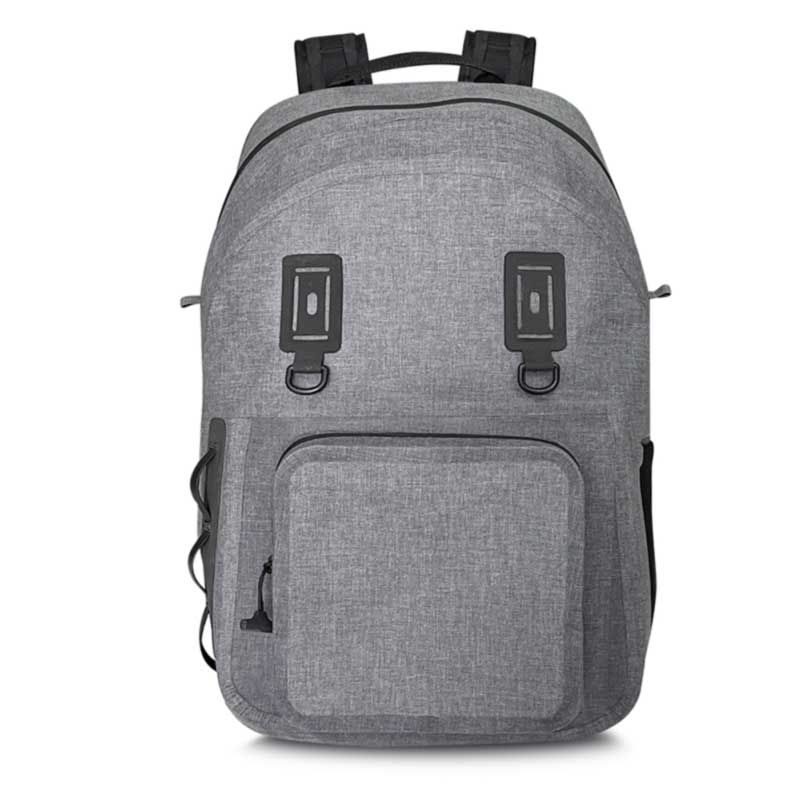
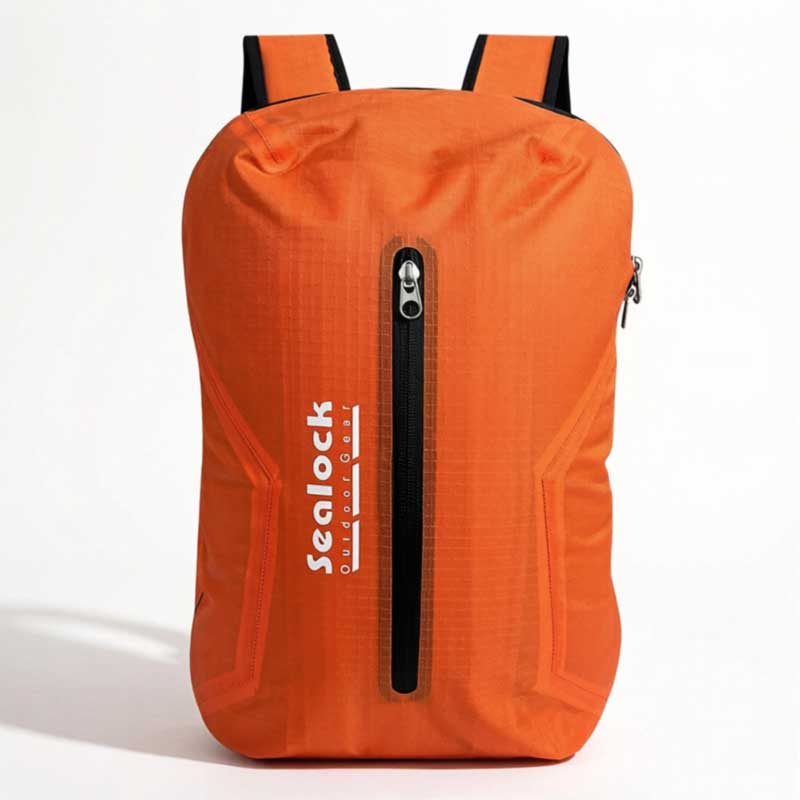
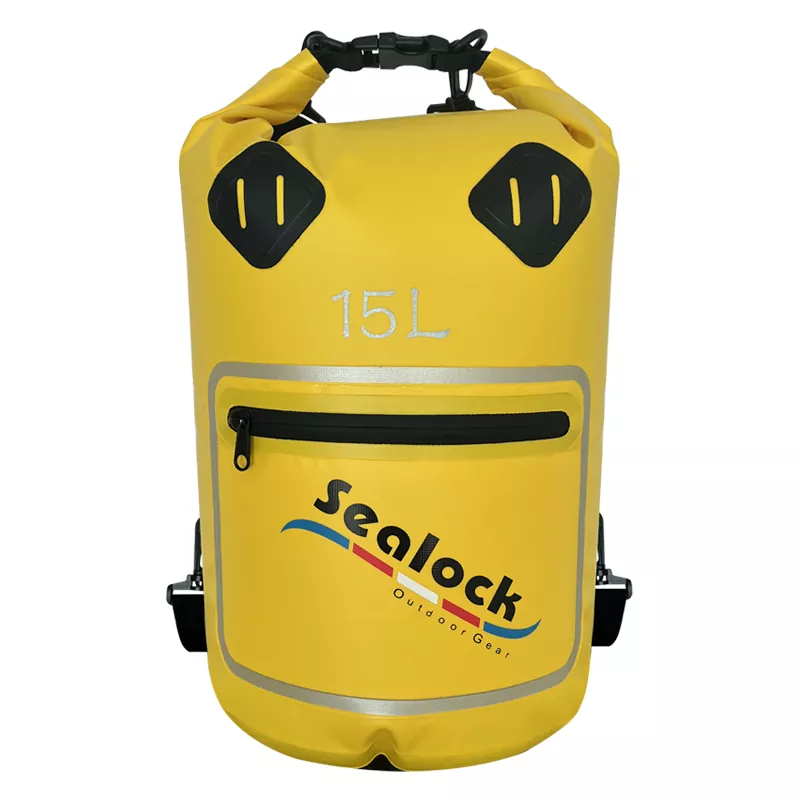
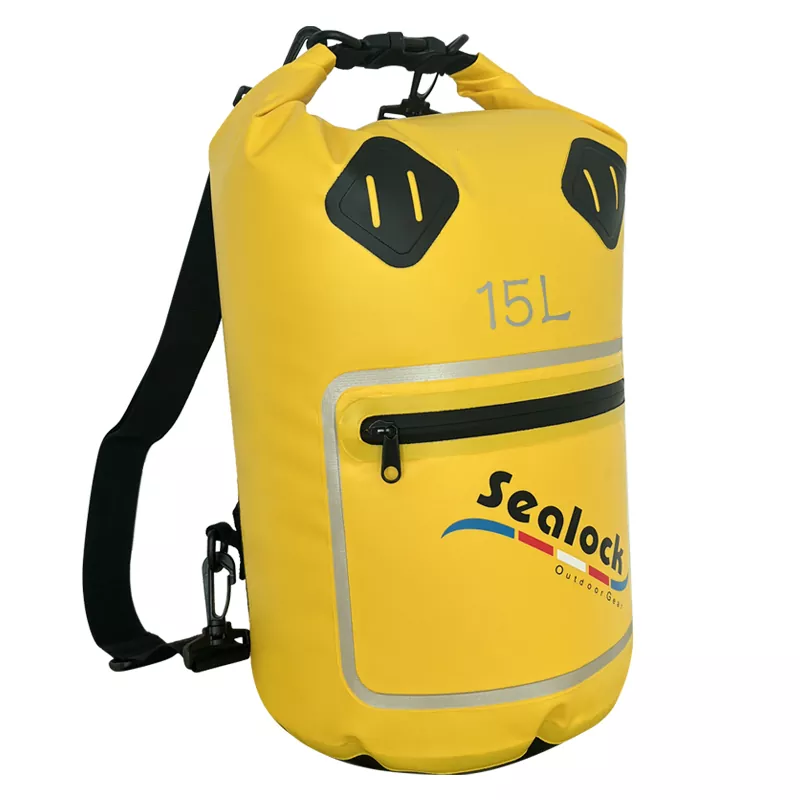
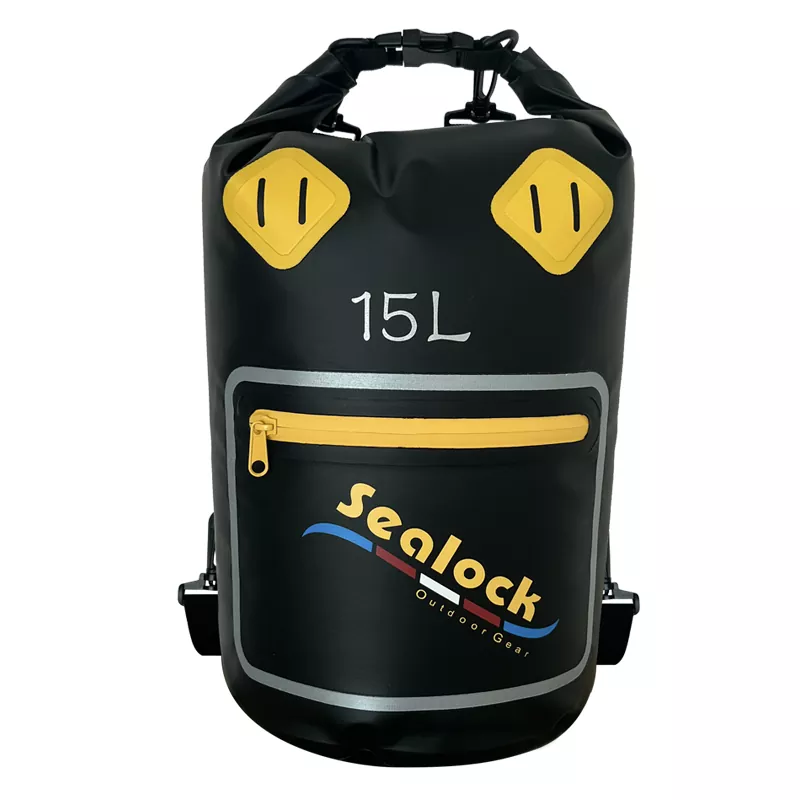
Waterproof tube dry bag with Zip Pocket ,used high and quality welded process with tarpaulin material Quality assurance. We devoted ourselves to outdoor waterproof gear bag many years,covering most or europe and the Americas market. We are expecting become your long term partner in china.
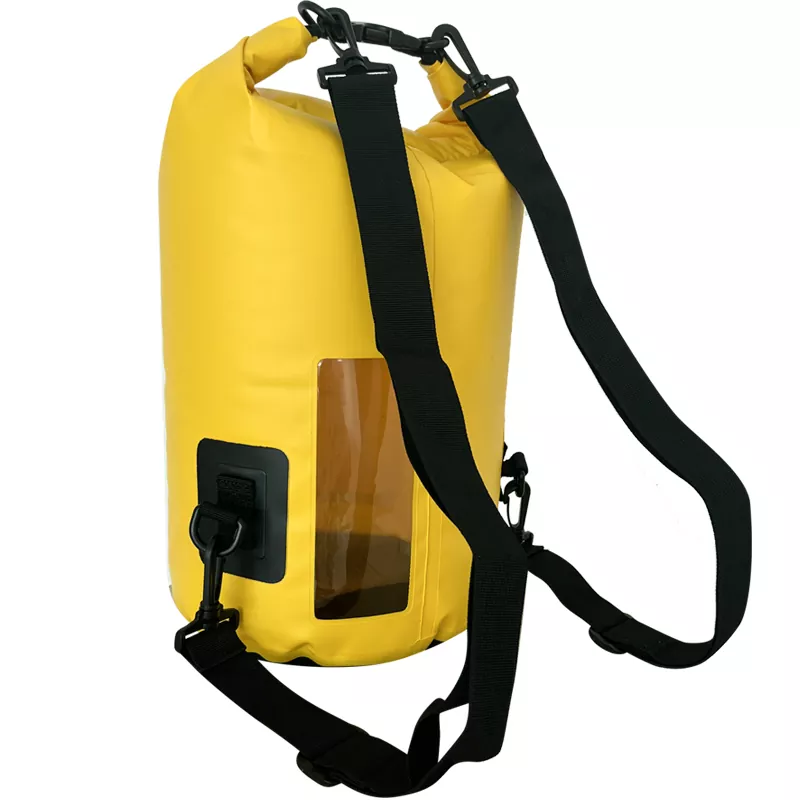
Most dry bags force a trade: seal everything away and lose track of what is inside, or keep things accessible and give up waterproof integrity. The SEALOCK SL-D693 resolves that with a transparent viewing panel welded into the body and a separate zip pocket for wet gear — so the main compartment stays sealed while you can still see what you packed and stow a soaked rash guard without soaking everything else.
The body is 500D PVC tarpaulin with high-frequency welded seams, closed by a roll-top that reaches IPX7 when rolled correctly. Air trapped in the rolled chamber keeps a loaded bag floating rather than sinking, which is the property that matters most in the moment a kayak goes over.
Available in 15L and 20L, in yellow and black, with a detachable reinforced webbing strap and POM buckles. Built for kayaking, rafting, beach days, boat fishing, and any trip where the gear has to stay dry and the bag has to survive the season.
An opaque roll-top has a hidden cost that only shows up in the field. To check whether the spare fleece is in there, you unroll the closure — often with wet hands, often on a moving boat — and then you have to roll it back correctly under time pressure. Every one of those cycles is an opportunity for water to get in, and the failures people blame on the bag usually happened during an unnecessary opening.
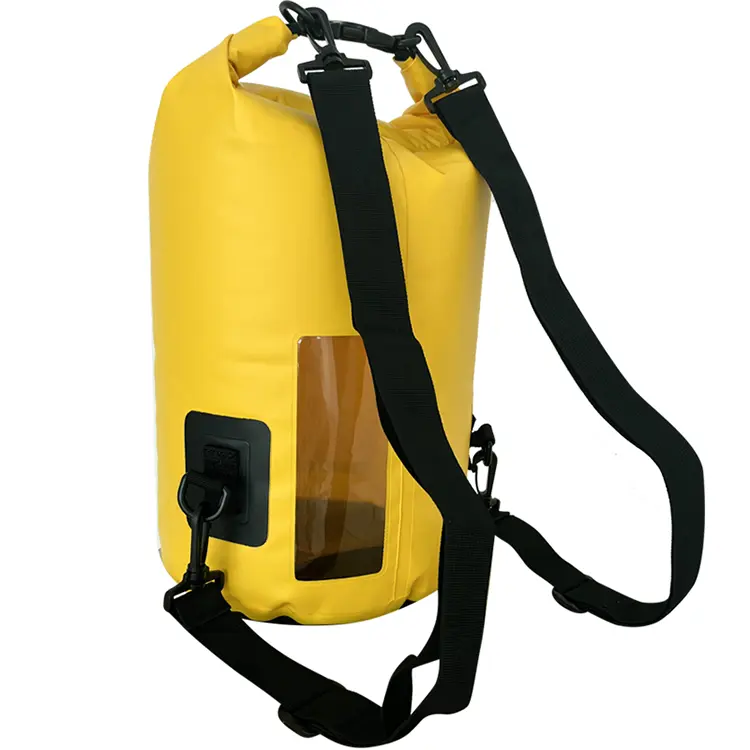
The welded PVC window removes most of those openings. Contents are identifiable at a glance, so the bag gets opened when something is actually needed rather than when the packer's memory fails. For rental fleets and outfitters this matters twice over: staff can verify contents at handover without breaking the seal, and customers who have never used a roll-top are not repeatedly re-rolling a closure they do not understand.
The zip pocket is deliberately outside the waterproof chamber. That is the point. A wet swimsuit, a used towel, a muddy pair of sandals, or a dripping fishing glove all need somewhere to go, and putting them in the sealed compartment defeats the entire purpose of carrying a dry bag.
With the pocket separated, the main chamber holds only what must stay dry — spare clothing, electronics, documents, a camera body — while everything wet stays on the outside of the waterproof line. The pocket is also where small items belong that would otherwise sink to the bottom of a 20-litre tube and require a full unroll to retrieve.
| Main Sealed Compartment | External Zip Pocket |
|---|---|
| Spare clothing and insulation layers | Wet swimwear and towels |
| Cameras, phones, power banks | Sandals, gloves, wet socks |
| Documents, tickets, cash | Sunscreen, snacks, small tools |
| Anything that ends the trip if it gets wet | Anything needed without unrolling the top |
The 500D specification describes the denier of the base fabric scrim laminated between PVC layers. Higher denier means thicker yarn, and thicker yarn means the fabric resists abrasion and tearing rather than relying on the PVC coating alone. It is the difference between a bag that survives being dragged across a gunwale or a gravel launch and one that develops pinholes in its first season.
The material also matters for how the bag is joined. PVC tarpaulin can be high-frequency welded, which fuses the two layers into a continuous material rather than joining them with thread. There are no needle penetrations anywhere in the body, so there is no seam tape to peel, no stitch line to wick water, and no gradual leakage as the sealant ages. On a stitched-and-taped bag, the tape is the weakest component and the first to fail; on a welded bag, that failure mode does not exist.
High-frequency welding fuses the tarpaulin along every seam, producing a joint as watertight as the panel itself.
The clear PVC panel is welded into the body rather than sewn or bonded, so the window perimeter is not a leak path.
An additional PVC film layer at the roll-top opening resists the repeated creasing that eventually cracks unreinforced material.
Acetal buckles hold their strength in cold and stay serviceable after salt exposure, unlike the brittle nylon hardware common at lower price points.
A roll-top is a compression seal, not a mechanical one. Waterproof performance is produced by the pressure of the rolled material against itself, which is why the same bag can pass or fail depending entirely on how it was closed. Two facts govern the outcome.
First, expel excess air but not all of it before rolling — pressing the opening flat gives the roll a clean flat face to compress against, while leaving some air in the chamber is what keeps the bag buoyant. Second, roll at least three full turns. One or two turns produce a closure that looks shut but has no sealing pressure; the third turn is where the compression becomes real. Clip the buckles across the roll to lock it, and the bag will withstand a full water-immersion test of 2+ hours consistent with its IPX7 rating.
Because the rolled chamber retains air, a correctly closed SL-D693 floats when loaded with typical soft gear. This is a recovery feature rather than a flotation device — it buys the minutes needed to retrieve a bag after a capsize instead of watching it sink out of reach. The yellow colourway exists for the same reason: a black bag on moving water is difficult to spot, and buyers supplying rental or guided operations should weigh visibility against aesthetics.
Buoyancy depends on load. A bag packed solid with dense contents and rolled with all air expelled will not float, so operators who rely on this property should brief users to leave headspace when rolling.
Roll-top capacity is nominal and measured before rolling — the three turns needed to seal consume roughly the top fifth of the tube. Both sizes below are stated at nominal volume, with realistic loads listed to help you specify the right size rather than discovering it after the first container arrives.
| Capacity | Dimensions | Typical Load |
|---|---|---|
| 15L | 53 × 36 cm | Day trip: change of clothes, towel, camera, lunch, small first aid kit |
| 20L | 57 × 38 cm | Overnight or two-person day use: insulation layer, sleeping clothes, toiletries, electronics |
| Product Name | Waterproof Dry Bag |
|---|---|
| Product Type | Roll Top Dry Bag |
| Model No. | SL-D693 |
| Capacity | 15L / 20L |
| Material | 500D PVC Waterproof Tarpaulin |
| Color | Yellow / Black |
| Waterproof Rating | IPX7 |
| Closure Type | Roll Top Closure |
| Carrying Method | Shoulder Carry (Detachable Strap) |
| Window Design | Transparent Viewing Window |
| Dry-Wet Separation | Yes — External Zip Pocket |
| Floating Capability | Yes |
| Seam Construction | High-Frequency Welded |
| OEM / ODM | Supported |
| Logo | Customized |
| MOQ | 300 pcs |
| Sample Lead Time | 7–15 Days |
| Production Lead Time | 30–45 Days |
| Country of Origin | Guangdong, China |
| Capacity | Dimensions |
|---|---|
| 15L | 53 × 36 cm |
| 20L | 57 × 38 cm |
| Component | Material |
|---|---|
| Main Body | 500D PVC Tarpaulin |
| Transparent Window | PVC Clear Film |
| Closure Reinforcement | PVC Waterproof Film |
| Strap | Removable Reinforced Webbing |
| Buckle | POM Buckle |
SEALOCK has built waterproof gear for over 20 years, with production in Dongguan, China and Ho Chi Minh City, Vietnam. Among the brands we manufacture for are OSPREY, KAILAS, CHUMS, and snow peak — companies whose specifications tend to be exacting, which is the standard our tooling and QC are set up around.
On this platform, most requirements can be met. Logo application and colourway changes are routine. Beyond that, we develop from the ground up: altered tube proportions, additional capacities outside the 15L/20L pair, repositioned or resized viewing windows, a second pocket, D-ring or lash-point additions, alternative webbing widths, and different hardware specifications. Ground-up structural development carries a longer schedule than branding work, and we will tell you what that schedule genuinely is when we quote rather than after you have committed to a launch date.
The production sequence below exists to make performance repeatable across batches — the thing that separates a factory sample from a container that behaves the same way.
Tarpaulin rolls are checked for coating consistency and colour before cutting; clear film, webbing, and POM hardware are verified against specification.
Body panels and window apertures are cut to fixed tooling, holding the dimensional consistency that welding requires.
The clear PVC panel is welded into the body aperture first, while the panel is still flat and the weld line is fully accessible.
Side seams and base are high-frequency welded, then the closure band reinforcement is applied at the opening.
The zip pocket is fitted, webbing anchors are reinforced, and POM buckles are assembled and function-checked.
Batch samples go to immersion testing; the balance is inspected for appearance, window clarity, and hardware operation before packing.
Inspection runs at three points — IQC on incoming materials, IPQC during welding and assembly, and OQC before the container is sealed. SGS or QIMA third-party inspection can be arranged on request, and customers running their own protocol are welcome to execute it in full on site: unboxing, vacuum extraction, 24-hour static rest, and air-leak determination.
| Test | What It Establishes |
|---|---|
| Full Water Immersion (2+ hours) | IPX7 sealing performance of the closed bag, including window and pocket interfaces. |
| Bonding Strength Test | Weld integrity at body seams, base, and window frame under peel load. |
| Load Test (1,500+ cycles) | Strap anchor and body durability under repeated loaded carry. |
| Zipper Fatigue (3,000 cycles) | Pocket zipper operation after a full service life of opening and closing. |
| Tensile Strength | Webbing, buckle, and anchor point strength at and beyond rated load. |
| Salt Spray | Hardware and material resistance to sustained marine exposure. |
| Abrasion Resistance | Surface durability against the dragging and scuffing typical of boat and shore use. |
| Colour Fastness & Colour Difference | Print retention in UV and consistency between production batches and reorders. |
IPX7 covers immersion — capsizes, dropped bags, swamped cockpits, sustained rain. IPX8 describes deeper or longer submersion and is not what a roll-top closure is designed to deliver, because roll-tops seal by compression rather than by a mechanical lock. For paddle sports, fishing, and beach use, IPX7 is the appropriate specification.
In the overwhelming majority of cases the bag was rolled fewer than three turns, or one end of the roll was looser than the other. Water enters at the corner of a slack roll. The second most common cause is over-packing, which leaves too little material above the contents to roll properly.
Clear PVC film stiffens with UV exposure and cold. Storing the bag rolled tight through a winter and then unrolling it in cold weather is the scenario to avoid. Stored flat and out of direct sunlight, the window outlives the rest of the bag.
No, and intentionally so — it sits outside the sealed compartment for wet items. Anything that must stay dry belongs in the main chamber.
With normal soft-gear loading and air left in the chamber before rolling, yes. Packed dense and fully compressed, it will not. Brief end users on leaving headspace if buoyancy is part of your product claim.
Yes. The reinforced webbing strap detaches, which suits deck-lashed and in-hatch use where a loose strap is a snag hazard.
Yes. Additional capacities, altered proportions, and repositioned windows are all standard ODM work. Contact us with your target sizes and we will quote tooling and schedule.
300 pieces. For mixed-size or mixed-colour orders and project-specific requirements, write to info@sealock.com.hk.
PVC tarpaulin is forgiving material, and the failure modes it does have are predictable and avoidable.
Packaging is specified to your channel — bulk poly for outfitter and promotional volume, header card or retail box for shelf presentation. Carton quantity and dimensions vary by capacity and are confirmed at quotation.
| Standard Packaging | Individual Poly Bag |
|---|---|
| Retail Packaging | Header Card or Custom Colour Box |
| Shipping Methods | Express, Air Freight, Sea Freight, Railway Transport |
| Export Markets | North America, Europe, Australia, Southeast Asia |
If you are sourcing dry bags for a retail line, a rental fleet, or a branded promotion, the fastest way to evaluate the SL-D693 is to put one in water yourself. Samples ship in 7–15 days, and we will include both capacities if that helps your decision.
Email info@sealock.com.hk with your target quantity, sizes, and branding requirement, and we will come back with pricing and a realistic production schedule.
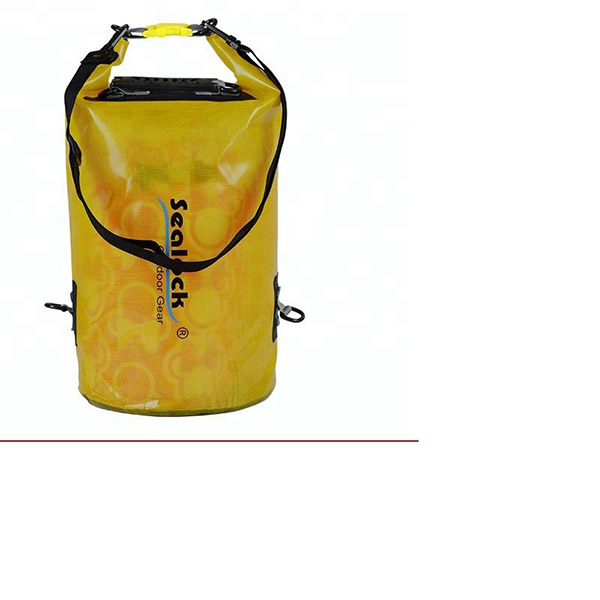 10L Dry Bag – Waterproof 10 Liter Roll-Top Tube Dry Sack, 5L to 40L
 2L Waterproof Dry Tube Bag
 20L Waterproof Dry Tube Bag
 Beach Dry Bag – Waterproof Roll-Top Tube Bag in 5L, 10L, 20L and 30L
 Swim Dry Bag – Waterproof Roll-Top Tube Bag for Swimming and Open Water
 15L Dry Bag – Roll-Top Waterproof 15 Liter Tube Dry Sack, Also in 5L to 25L