





Waterproof Bag Types Explained: A B2B Buyer's Guide to Every Category
For a buyer assembling a product line, picking the wrong waterproof bag category costs more than picking the wrong supplier. This guide classifies every waterproof bag by a single clean dimension — form factor — then maps each to its use cases, waterproof rating, and the MOQ, lead-time and compliance notes.
- First, the only distinction that matters: waterproof vs water-resistant
- IPX ratings: the selection baseline
- How this guide classifies bags (one dimension, no overlap)
- The eight form factors at a glance
- Form factor 1–8: profiles with sourcing notes
- Use-case lens: combining form factors by market
- Compliance map: which categories trigger which tests
- How to choose, and how to combine
- FAQ
1. First: waterproof vs water-resistant
This distinction is the foundation of every decision below, so it comes first — not buried after the product tables. The two terms are routinely conflated, and the gap has direct warranty and chargeback consequences at volume.
- Water-resistant — handles light rain and splash, usually via a coating (e.g. PU-coated polyester). Prolonged contact lets moisture through. Acceptable for everyday urban SKUs; unacceptable for water sports or marine use.
- Waterproof — engineered to keep water out via waterproof base fabric (PVC tarpaulin or TPU laminate), sealed/welded seams, and a roll-top or waterproof-zipper closure.
If a bag will face submersion, driven rain, or standing water, only true waterproof construction holds up — and that construction must be specified by IPX rating, not by the word "waterproof.
"
2. IPX ratings: the selection baseline
"Waterproof" with no IPX figure behind it is unverifiable. The IPX scale (the X means dust isn't being rated) is how you tell a factory exactly what to build. For the whole bag category, four ratings cover almost every program:
| Rating | Protection | Construction it implies | Typical bag match |
|---|---|---|---|
| IPX4 | Splash from any direction | Coated fabric, taped seams | Urban backpacks, slings, totes |
| IPX6 | Powerful water jets | Welded seams + roll-top/zipper | Moto luggage, cycling bags, most dry bags |
| IPX7 | Immersion to 1 m, 30 min | Welded seams + sealed closure | Quality dry bags, waist packs, phone pouches |
| IPX8 | Continuous immersion >1 m | Welded + airtight zipper | Submersion-grade dry bags & cases |
Most programs land at IPX6–IPX7. Specifying higher than the use case needs just adds cost. The construction column above is intentionally brief — the engineering behind welded seams (high-frequency welding vs stitching, and how it's pressure-tested) is its own topic, covered in our RF welding vs stitching and 1.0 bar testing articles.
3. How this guide classifies bags: one dimension, no overlap
A common mistake in category guides is mixing classification axes — listing "backpack, duffel, sling" (form factors) alongside "motorcycle, fishing, cycling" (use cases) as if they were the same kind of category. They aren't, and the overlap wrecks product-line planning: a cycling bag is a backpack or a frame bag; a fishing bag is a waist pack or a sling. Budgeting them as separate lines double-counts.
So this guide uses one axis only: form factor — the physical construction of the bag. Use cases (moto, fishing, cycling, watersports) are treated as a separate lens in Section 6, where we show which form factors combine to serve each market. This keeps your assortment planning clean: you buy form factors, you merchandise them by use case.
4. The eight form factors at a glance
Capacities and MOQ/lead-time figures below are Our company’s standard reference values; confirm exact numbers against a specific spec.
| Form factor | Capacity | Typical IPX | MOQ* | Sample→bulk lead time* |
|---|---|---|---|---|
| Roll-top dry bag | 5–60 L | IPX6–7 | 500 pcs | ~7–45 days |
| Waterproof backpack | 15–40 L | IPX4–6 | 300–500 pcs | ~7–60 days |
| Waterproof duffel | 30–120 L | IPX6 | 300–500 pcs | ~7–55 days |
| Waterproof tote | 10–40 L | IPX4-8 | 500–2500+ pcs | ~7–50 days |
| Waterproof sling | 2–15 L | IPX4–6 | 500–1,000 pcs | ~7–35 days |
| Waterproof waist pack | 1–8 L | IPX6–7 | 300 pcs | ~7–45 days |
| Phone pouch / gear case | <1–3 L | IPX7–8 | 500 pcs | ~7–40 days |
| Waterproof cooler | 12–50 cans | IPX6 + leakproof | 300–500 pcs | ~7–60 days |
*Typical planning ranges. MOQ falls with stock shapes/single colors and Custom tooling incurs additional mould charges; lead time depends on customization and order size.
5. The eight form factors in detail
1 · Roll-top dry bag
Seals by rolling the open edge and clipping side buckles — a fold-based closure needing no zipper. Best ratio of waterproof performance to unit cost in the category, which makes it the volume backbone of outdoor assortments.
Use cases: kayaking, boating, paddleboarding, camping.
Sourcing note: simplest tooling, no zipper hardware → lowest MOQ (typically 500) and fastest sampling; a sensible first SKU for a new line. See the dry bag range.
2 · Waterproof backpack
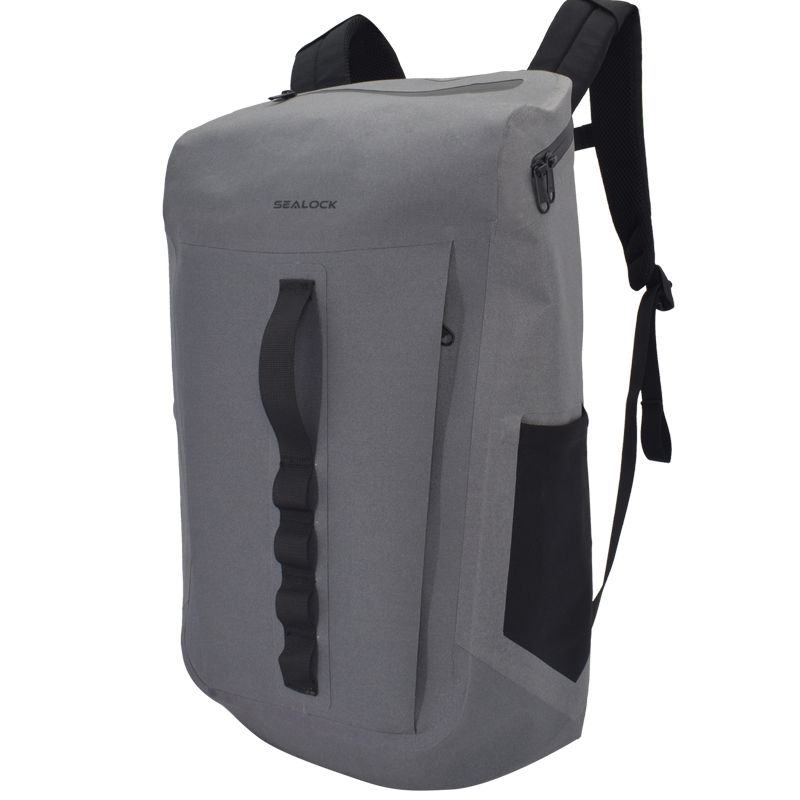
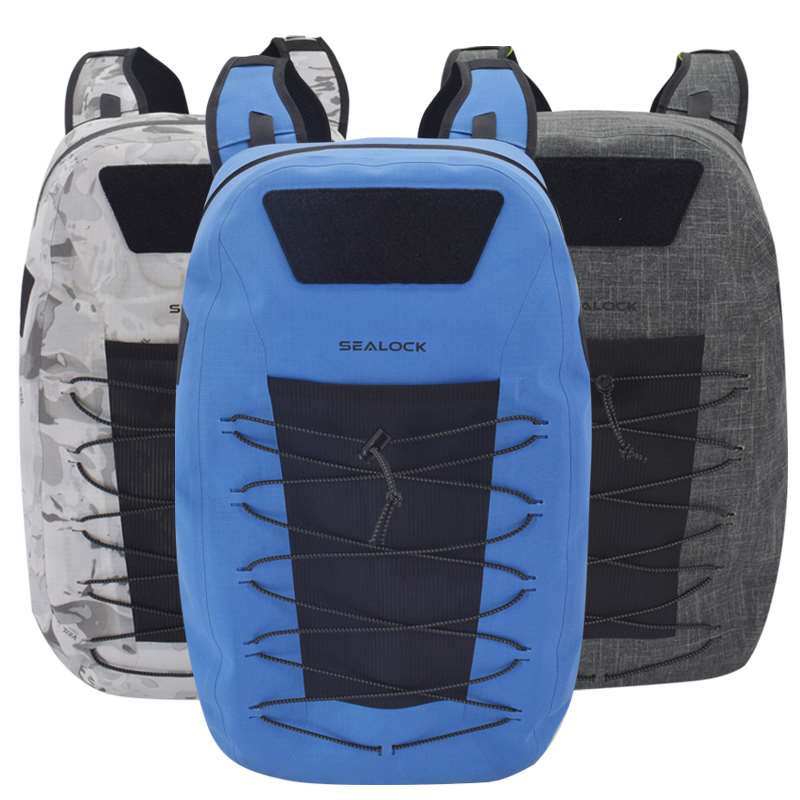
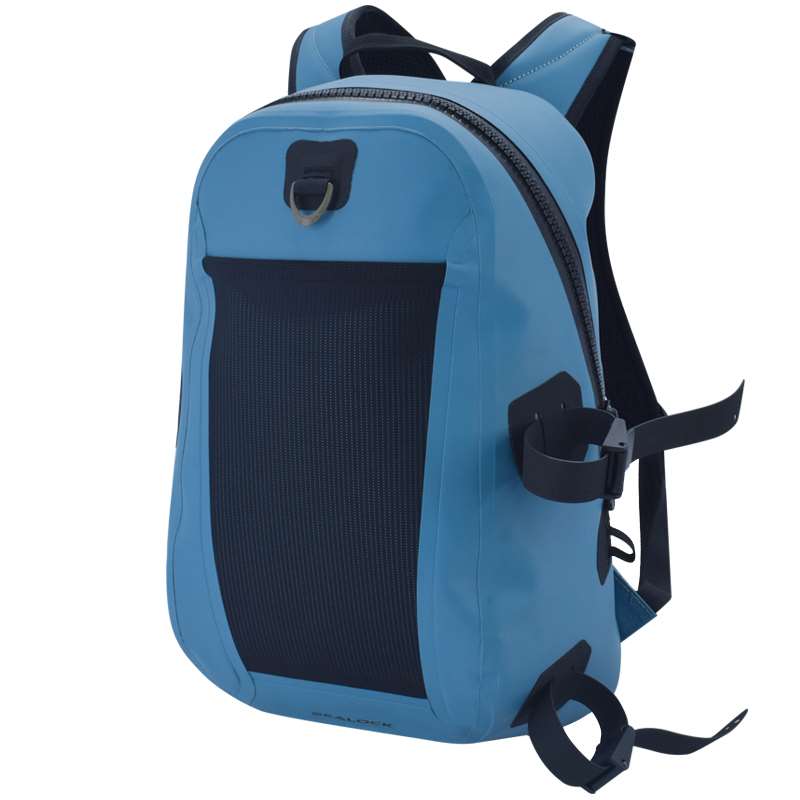
Waterproof fabric + welded seams + roll-top or waterproof zipper, with a wearable harness. Spans commuter, cycling, and technical outdoor packs.
Use cases: commuting, cycling, travel.
Sourcing note: the harness, laptop sleeve, and back panel add components, lengthen lead time (~7–60 days) and concentrate quality complaints — specify harness construction and closure precisely, and require seam testing. See the waterproof backpack range.
3 · Waterproof duffel
Wide opening, large single compartment, maximum capacity.
Use cases: expedition, overlanding, marine, team sports.
Sourcing note: material-heavy, so fabric weight drives both unit and freight cost. Ask whether the design supports flat/folded packing to raise container CBM efficiency — a real landed-cost lever on bulky SKUs. See the waterproof duffel range.
4 · Waterproof tote
Open or zip-top carry bag, often the most fashion-adjacent waterproof format. Usually IPX4-class (splash, not submersion).
Use cases: beach, market, everyday, promotional.
Sourcing note: lower waterproof spec means lower cost and broad appeal; strong candidate for branded/promotional runs. Pair with higher-spec SKUs to balance a range.
5 · Waterproof sling
Single-strap quick-access bag for a few essentials; functional-meets-fashion.
Use cases: city travel, cycling, sightseeing.
Sourcing note: style-sensitive, so it rewards seasonal colorways over a static SKU — plan refreshes, and keep tooling flexible for new shapes. See the sling bag range.
6 · Waterproof waist pack
Hands-free carry with airtight or highly water-resistant closure.
Use cases: fishing, paddleboarding, running, beach.
Sourcing note: low unit cost and high attach rate make it an ideal volume accessory to bundle with larger SKUs — and bundling helps you clear MOQ on a mixed order. See the waist pack range.
7 · Phone pouch & gear case
Smallest format, highest-value contents, often the highest IPX in a range (IPX7–8).
Use cases: phones, cameras, GPS, valuables.
Sourcing note: tiny units, very large order quantities (500+), and a natural impulse add-on or branded giveaway — useful for hitting volume targets. See waterproof phone pouches.
8 · Waterproof cooler
Solves two problems at once — keeping water out and cold in — via insulation plus a welded leakproof liner.
Use cases: fishing, beach, boating, events.
Sourcing note: a partly different supply chain (insulation, liners, sometimes hard inserts) means longer lead time (~7–60 days) and its own QC checkpoints; budget accordingly. See waterproof coolers and cooler backpacks.
6. Use-case lens: combining form factors by market
Use cases aren't separate categories — they're combinations of the eight form factors above, merchandised for a market. This is how an assortment is actually planned:
| Target market | Form factors that combine into the line |
|---|---|
| Motorcycle / ADV touring | Tail & saddlebag duffels + dry bags + phone pouch. See moto luggage |
| Fishing | Waist pack + sling + cooler + dry storage. See fishing bags |
| Cycling | Frame/handlebar/seat bags + commuter backpack. See cycling bags |
| Watersports | Roll-top dry bag + waist pack + phone pouch + cooler |
| Urban / everyday | Backpack + sling + tote (IPX4-class) |
Reading the table this way prevents the double-counting trap: you don't budget "a cycling line" and "a backpack line" — the cycling line is a curated set of backpack and frame-bag form factors.
7. Compliance map: which categories trigger which tests
Waterproof bags use PVC and TPU, which face chemical regulation in Western markets. Confirm requirements before sampling — discovering a restriction after mass production turns a finished order into unsellable inventory. The common ones:
| Regulation | Market | Applies to |
|---|---|---|
| REACH / SVHC | EU | All PVC/TPU bags sold in Europe |
| California Prop 65 | US | All categories sold into California |
| RoHS | EU/global | Bags with electronics/lighting components |
| PFAS restrictions | EU + US states | Coated fabrics; specify PFAS-free where required |
| Food-contact (LFGB/FDA) | EU/US | Cooler liners contacting food |
On the factory side, retail buyers also commonly require social/quality audits (BSCI, SMETA, ISO 9001) as an onboarding condition, and for waterproof goods specifically, a defined QC protocol — to catch the leak defects that cause batch returns. PFAS-free TPU is covered in our PFAS-free TPU note.
8. How to choose, and how to combine
There is no single best waterproof bag — only the right form factor for a use, at the right IPX, sourced in the right mix. The quick map:
- Kayaking & watersports → roll-top dry bag (IPX6–7)
- Daily commuting → waterproof backpack (IPX4–6)
- Expedition transport → waterproof duffel (IPX6)
- Food & drink → waterproof cooler (IPX6 + leakproof)
- Hands-free activity → waist pack (IPX6–7)
- Electronics → phone pouch / case (IPX7–8)
For buyers: the real question isn't "which category" — it's "which mix, at what IPX, in one order." A typical line pairs a low-MOQ workhorse (dry bag or waist pack), a margin driver (backpack or cooler), and a volume accessory (phone pouch), then consolidates them with one full-range manufacturer to clear MOQs and share freight. That cross-category sourcing logic — MOQ aggregation, mixed-SKU container loading, multi-category compliance — is where a full-range supplier beats a single-category factory.
9. Frequently asked questions
Match it to the realistic worst case the end user faces: IPX4 for urban splash, IPX6 for driven rain and water jets (moto, cycling, most dry bags), IPX7 for temporary immersion, IPX8 for sustained submersion. Specifying higher than needed only adds cost.
As an industry range, roughly 300–500 pieces for most stock-shape form factors, lower (300–500) for material-heavy duffels and coolers, and higher (500+) for small high-volume pouches. Stock shapes and single colors lower it; custom tooling raises it.
Plan on roughly 7–60 days sample-to-bulk depending on form factor and customization — pouches and dry bags at the short end, backpacks and coolers at the long end. Fast sample approval is the variable buyers most control.
Usually yes. PVC/TPU bags commonly require REACH (EU) and Prop 65 (US) screening; cooler liners may need food-contact testing; coated fabrics increasingly require PFAS-free declarations. Confirm before sampling.
A low-MOQ workhorse (roll-top dry bag or waist pack) to prove the market, then expand into higher-margin backpacks or coolers. Combining form factors in one order also helps reach factory minimums.
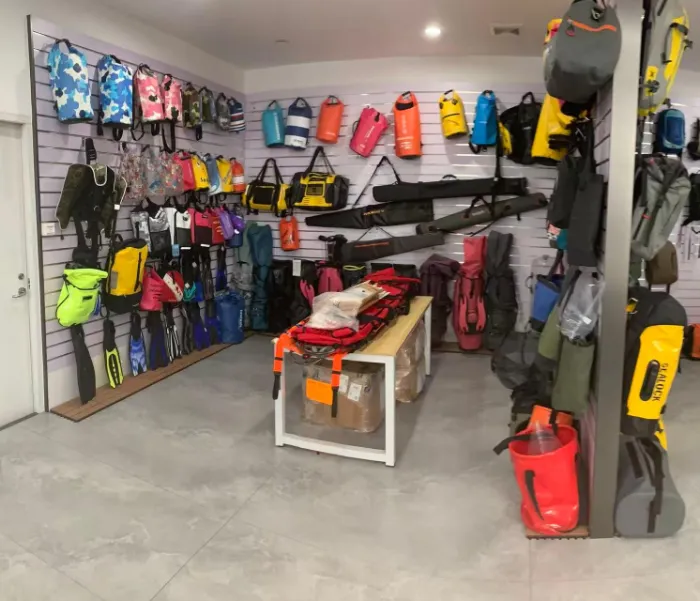
Planning a multi-category waterproof bag line?
Browse the full Sealock product range to see every form factor in one place, or read our OEM manufacturer overview for production and QC capability. To scope an assortment with MOQ, IPX and compliance defined, send the details via our contact page.