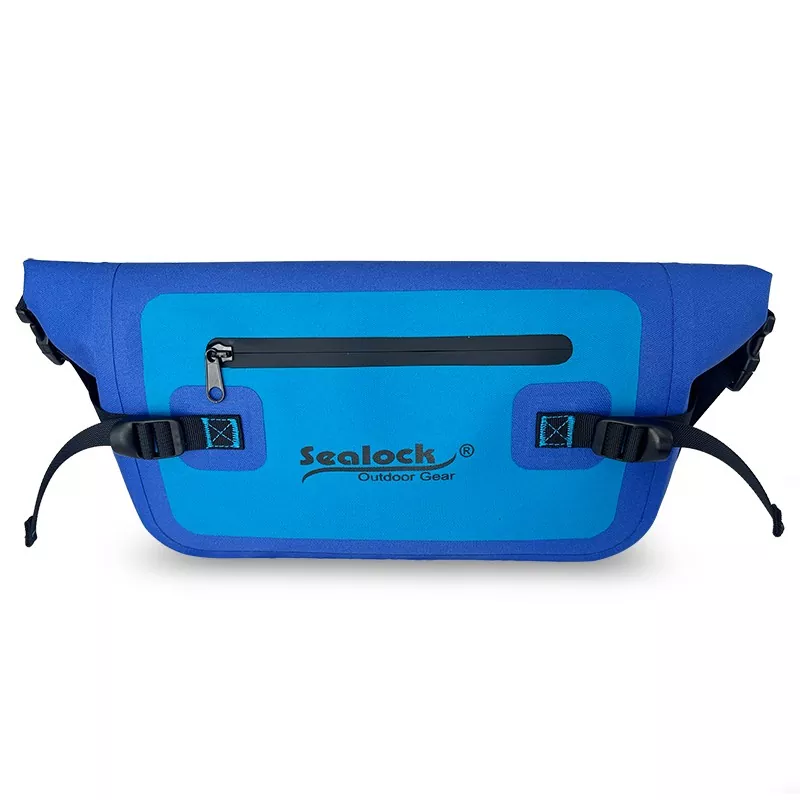
Sealock is an OEM waterproof camping bag manufacturer and supplier for outdoor brands. A camping brand almost never needs a single bag — it needs a coordinated system: a dry sack for the sleeping bag, a duffel to haul the kit, a roll-top pack for the trail in, all sharing a look, a colour story, and a waterproof standard. The leading outdoor names build camping carry as a range across capacities, not a one-off, and the factory's job is to deliver that consistency at volume. This guide covers how an outdoor brand builds a waterproof camping line via OEM — the system, the spec decisions, and the details buyers judge.
Think in Systems, Not Single Bags
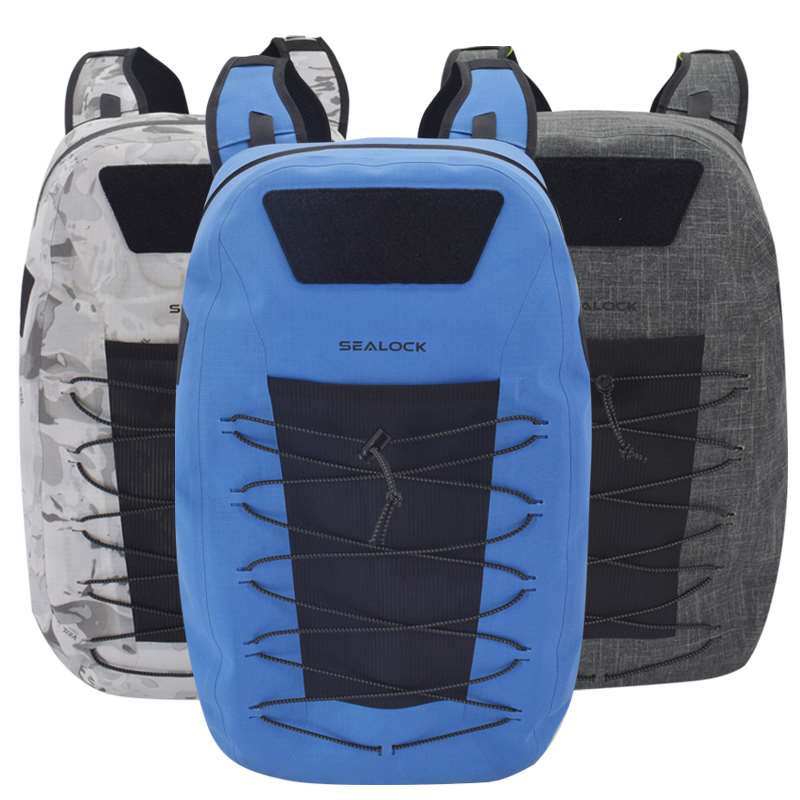
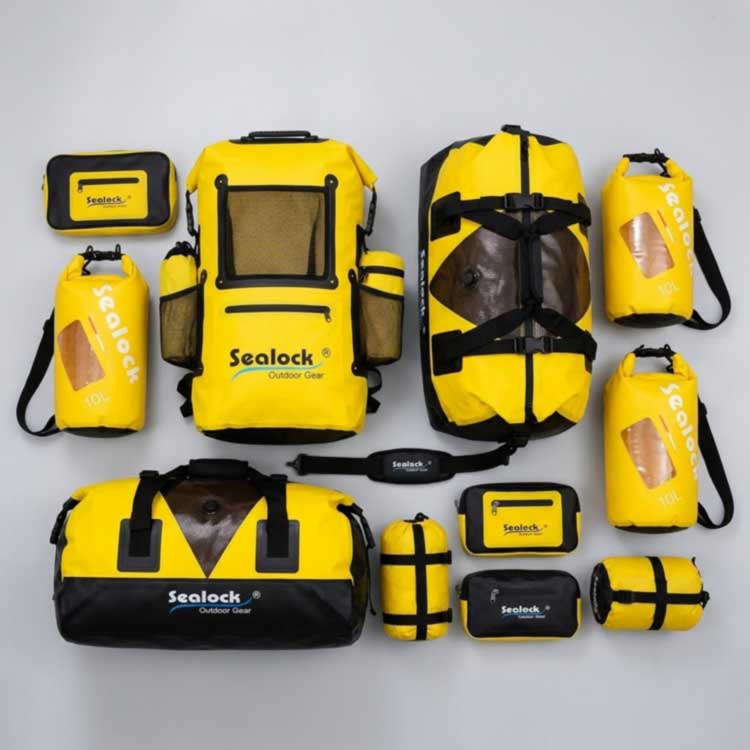
Look at how established outdoor brands structure their camping carry and a pattern emerges: a family of bags in stepped capacities (roughly 28, 40, 60, 90, and 120L), built on a shared fabric and design language, with interchangeable carry options — grab handles, over-the-shoulder straps, and removable backpack straps on the same body. A camping range works when the pieces look like a set and cover the trip lengths a customer actually takes. For an OEM programme, that means deciding the capacity ladder and the shared design cues up front, then building each piece to the same waterproof and durability standard.
A camping line is a system — stepped capacities, one look, one waterproof standard.
Match the Build to the Camping Sub-Segment
"Camping" spans very different loads, and an outdoor brand should decide which it's serving before speccing:
Backpacking and ultralight — lighter TPU-coated fabric, a roll-top pack and compression dry sacks, weight kept down for the walk in.
Car camping and overlanding — heavy-duty PVC or high-denier fabric, a rugged duffel that shrugs off grit, straps, and a roof rack, with strong lash points for tying down.
Paddling and boating camps — fully sealed, submersion-grade dry bags and duffels that float and survive a wet crossing.
Basecamp and festival — large-volume duffels and organized packs, where colour and branding carry the shelf appeal.
The Durability Details Outdoor Buyers Judge
Reviewers and serious users hold camping bags to a high bar, and the same durability details come up again and again — each one a spec an OEM buyer controls:
A tough base — a seamless, welded “bathtub” base keeps gear dry on wet ground and takes the most abrasion; heavier fabric at the bottom pays off.
Fabric weight matched to use — from lighter TPU-coated cloth for packs to heavy 500D PVC and high-denier bases for hauling duffels.
Lash points — daisy chains, D-rings, and webbing loops are essential for strapping a bag to a roof rack or a raft, where losing gear is not an option.
UV and abrasion resistance — a bag lives strapped to a rack in sun and wind shear, so material has to resist both.
Easy access — a wide-mouth or U-shaped opening and a lid or mesh pocket stop the “dig to the bottom” complaint on a big duffel.
Buoyancy — a sealed bag floats if it goes in the water.
The Waterproof Core: Welded, Not Sewn-and-Taped
Serious dry-bag guidance is explicit: look for High-frequency (HF) welded seams rather than sewn-and-taped ones, because welding gives an airtight seal with the best strength and resilience, while taped seams lift over time. Sealock welds at 27.12 MHz, pairs it with a roll-top or airtight-zipper closure, and proves each design with a real water-submersion test on the finished bag — rated to a verified level rather than a marketing number. The wider waterproof-versus-water-resistant distinction is set out in this guide, and the full camping range in our waterproof camping bag manufacturer overview.
Sustainability Is Now Table Stakes
Eco-conscious buyers increasingly expect it, and leading brands have moved their camping ranges to recycled fabrics, TPU-laminated recycled ripstop, and PFAS-free finishes. Sealock supports recycled materials and holds GRS certification alongside its social and quality audits, so a brand can market a genuinely sustainable camping bag with the documentation to back it. Branding on these fabrics runs from welded logos and woven labels to catalysed silk-screen that resists cracking and fading on a rugged shell.
The Product Basis
These welded bags, from Sealock's waterproof camping bag line, are equal starting points for a brand system — none is ranked above another; pick the pieces that build your range and customize the fabric, capacity ladder, colourway, and branding:
Base model & specs
Role in the system
Construction
MOQ
Unplug Ultimate Adventure Bag — 25L / 45L / 65L; TPU-coated, fully sealed welded seams; converts between backpack, duffel, and dry-sack; padded breathable straps; floats.
Convertible hero across trip lengths
HF-welded; TPU-coated
300–500
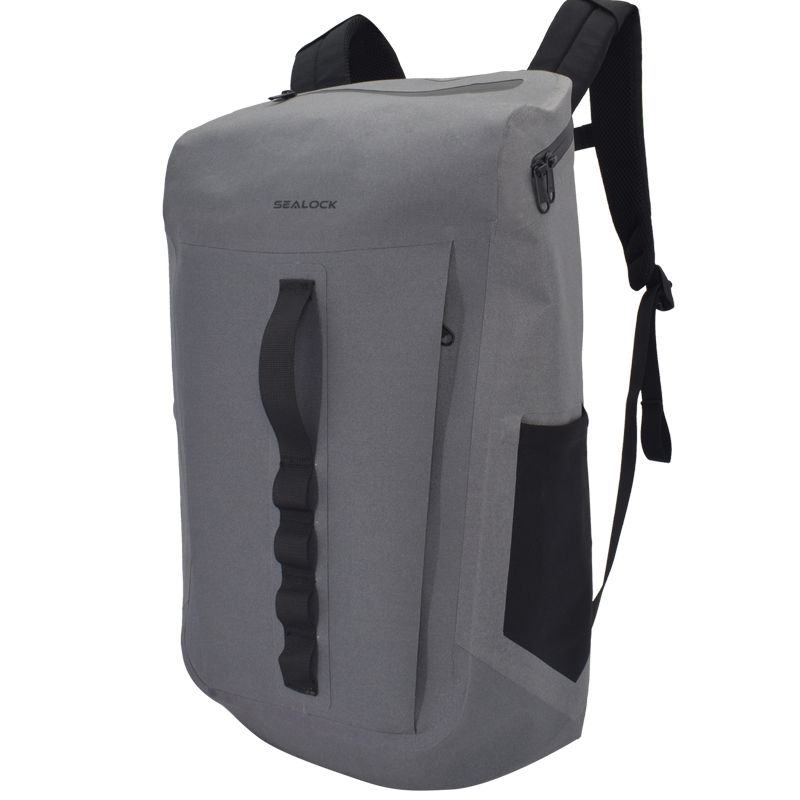
Roll-Top Waterproof Backpack — 500D PVC tarpaulin; HF-welded; roll-top (fold 3–4 times and buckle); front splash-proof zip pocket; side mesh bottle pocket.
The SL-D110 dry bag alone spans nine capacities, which makes it a ready-made ladder for a brand's dry-sack line; the Unplug convertible covers three carry styles in one SKU. Fabric, capacity, colourway, closure, lash hardware, and branding are all specifiable per order.
OEM / ODM and Custom Development
Sealock builds camping bags to a brand's spec and from a brand's blank sheet — a sketch or reference sample becomes a pattern, a prototype, and a production run. A brand can lock the fabric (recycled options included), the capacity ladder, the carry system, the lash layout, the colourway, and the branding method, then roll it across the whole range for a consistent look. Ground-up development takes longer than customizing a base model, so plan against launch and trade-show dates; the private-label path is set out in our custom private-label guide.
Item
Detail
MOQ
300–500 pcs (model-dependent)
Sampling
7–15 days
Production
30–45 days after approval; longer for ground-up custom
Materials
500D PVC, TPU-coated, and recycled (GRS) options
Rating options
IPX4–IPX6 (splash) up to a verified IPX7 (1 m / 30 min)
Inspection
IQC + IPQC + OQC (incl. real water-submersion batch test)
Trade terms
FOB Guangdong; China or Vietnam origin
Quality Control: IQC / IPQC / OQC
Quality is gated in three tiers — IQC (incoming fabric, buckles, and webbing against the signed colour card, with colour difference and fastness), IPQC (in-process cutting tolerance, weld integrity, and stitch checks on the line), and OQC (outgoing AQL sampling at 2.5, a real water-submersion batch test, and golden-sample comparison, with SGS or QIMA inspection available). Because camping bags get dragged, overloaded, and strapped down, the lab pays particular attention to a 1,500+ cycle load test and jerk-loading on handles and lash points, weld bond/peel strength, and abrasion, alongside the submersion test, tensile, salt spray, colour fastness, and colour difference.
FAQ: OEM Camping Bags for Outdoor Brands
Q: Can you build a coordinated range, not just one bag?
A: Yes — that's the point. A brand locks a fabric, colourway, and design language, and we build the dry sacks, packs, and duffels across a capacity ladder to the same standard, so the line looks and performs like a set.
Q: What fabric should a camping bag line use?
A: Match it to the segment: TPU-coated for lighter backpacking pieces, 500D PVC for rugged hauling duffels, with a heavier welded base where abrasion is worst. Recycled (GRS) options are available for a sustainable line.
Q: Do you offer recycled and PFAS-free materials?
A: Yes — recycled fabrics with GRS certification, so a brand can market a sustainable camping bag with documentation, in step with where the outdoor market has moved.
Q: Why welded seams instead of sewn-and-taped?
A: HF welding gives an airtight seal with the best strength and resilience, while taped seams lift over time. For a camping bag that must stay dry for years, welded is the durable choice.
Q: Can you add lash points, daisy chains, and a tough base?
A: Yes — D-rings, daisy chains, webbing loops, and a heavier welded bathtub base are all specifiable, which matter for strapping a bag to a rack or raft and for wet-ground durability.
Q: What are the MOQ and lead times?
A: Typically 300–500 pieces per model, samples in 7–15 days, and production around 30–45 days after approval; ground-up custom development takes longer.
Talk to the Factory
To build a waterproof camping bag system for your outdoor brand, contact Sealock at info@sealock.com.hk or +86-769-82009361. Over twenty years in welded waterproof bags, recycled-material and dual China–Vietnam options, and finished-product submersion testing across the range.
We use cookies to offer you a better browsing experience, analyze site traffic and personalize content. By using this site, you agree to our use of cookies.
Privacy Policy
 English
  Español
  Português
  русский
  Français
  日本語
日本語  Deutsch
  tiếng Việt
  Italiano
  Nederlands
  ภาษาไทย
  Polski
  Svenska
  magyar
  Malay
Malay  বাংলা ভাষার
  Dansk
Dansk  Suomi
Suomi  हिन्दी
  Pilipino
  한국어
한국어  Türkçe
  Gaeilge
  العربية
  Indonesia
  Norsk
Norsk  تمل
تمل  český
český  ελληνικά
  український
  Javanese
  فارسی
فارسی  தமிழ்
தமிழ்  తెలుగు
  नेपाली
  Burmese
  български
  ລາວ
ລາວ  Latine
  Қазақша
  Euskal
  Azərbaycan
  Slovenský jazyk
  Македонски
  Lietuvos
  Eesti Keel
  Română
  Slovenski
  मराठी
मराठी  Srpski језик