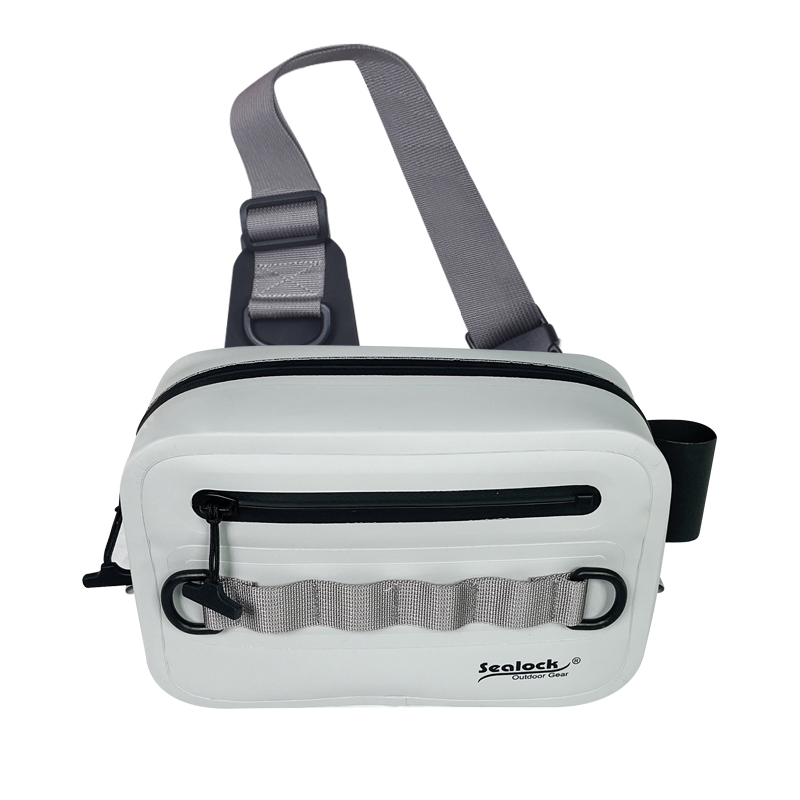
Sealock is a waterproof waist pack manufacturer and OEM supplier. "IPX8" appears on a lot of waist pack listings, but for a bag worn at the hip it is more marketing headroom than useful protection — and a claim that is very hard to honestly back on a product this small. This guide sets out what IPX7 and IPX8 actually mean, why a genuine IPX8 waist pack is so difficult to build and verify, and why a reliable, tested IPX7 pack is the right specification for almost every real use case.
IPX7 vs IPX8 at a Glance
IPX7 and IPX8 are the two highest water-immersion ratings in the IEC 60529 standard. The difference is that IPX7 is a fixed test, while IPX8 is defined by the manufacturer. The table below summarises what each one means in practice.
IPX7
IPX8
Test depth
Up to 1 metre
Beyond 1 metre, as declared by the manufacturer
Test duration
30 minutes
As declared, usually longer than 30 minutes
Who sets the conditions
Fixed by the standard
Agreed or declared by the manufacturer
What to check on the label
The rating is enough
The declared depth and time
Typical products
Welded waist packs, dry bags, backpacks with airtight zippers
Phone pouches, dive cases, gasket-sealed bags
Realistic use
Drops, swims, capsizes, heavy rain
Snorkelling, diving, long submersion
Two points are often misunderstood. A higher rating does not automatically include the lower ones, because IPX7 and IPX8 are immersion tests and do not cover high-pressure water jets, which are tested separately under IPX5 and IPX6. And neither rating covers salt water, chlorine or ageing; they describe how a new product performed in fresh water in a laboratory. For a waist pack, that makes IPX7 the realistic specification, as the rest of this article explains.
What the Two Ratings Mean
Both sit at the top of the IP (Ingress Protection) scale under IEC 60529, but they are not the same test:
IPX7 — immersion in 1 metre of water for 30 minutes. A defined, repeatable test with a fixed depth and time.
IPX8 — continuous immersion beyond 1 metre, to a depth and duration the manufacturer must declare. There is no fixed number; an IPX8 claim without a stated depth and time is incomplete.
That difference is the whole story. IPX7 answers a clear question — can the pack survive a metre for half an hour? IPX8 is open-ended, and honest use of it requires the maker to specify and prove the exact depth it was tested to. A pack labelled "IPX8" with no declared depth tells you nothing verifiable.
IPX7 is a defined test: one metre, thirty minutes, verified on the finished pack.
Why a Genuine IPX8 Waist Pack Is So Hard to Build
The reason is physics, not effort. Water ingress under immersion is driven by hydrostatic pressure, which rises with depth (P = ρgh). At one metre the load on the seals is modest; go deeper and it climbs steadily, pressing water continuously against every seam, weld, and gasket by permeation, capillary action, and the slow compression set of the rubber seal. Holding out a metre for thirty minutes and holding out several metres for an extended period are different engineering problems.
A waist pack makes it harder still. It has a high ratio of seam and corner length to volume, more direction changes in its welds, and a short zipper run where the start and end points — the hardest part of any airtight zipper to seal — make up a large share of the closure. There is little internal space to absorb flexing, so stress concentrates at the zipper ends and panel junctions. Building a compact pack to a true, declared IPX8 depth consistently, at volume, is a tolerance level that most factories cannot honestly guarantee — which is exactly why so many "IPX8" waist packs on the market would not pass a real deep-immersion test.
Our position is straightforward: with current welding and airtight-zipper technology, Sealock builds and verifies waist packs to IPX7. We do not label a waist pack IPX8, because we will not put a number on a product that we cannot prove on the finished item. That honesty is the point of a rating.
Why IPX7 Is the Right Spec for a Waist Pack
For how a waist pack is actually used, IPX7 is not a compromise — it covers the real scenarios:
Water sports — kayaking, SUP, and swimming near the surface put a pack in splash, spray, and the occasional dunk, which is squarely within a 1-metre/30-minute rating.
An accidental drop overboard — a sealed, air-holding pack floats, so it sits at the surface rather than sinking to a depth where IPX8-level pressure would even apply.
Fishing, hiking, and cycling — heavy rain, river edges, and wet decks are comfortably handled by IPX7.
Travel and everyday carry — downpours and wet surfaces are well below immersion territory.
A waist pack is a surface-worn, buoyant item, not diving equipment. The situations where a genuine multi-metre IPX8 seal would matter — sustained deep submersion — are ones a floating hip pack is very unlikely to face. A reliable IPX7 that is actually tested beats an IPX8 label that isn't.
What Reaching a Reliable IPX7 Takes
1. RF-Welded Seams, Not Stitched or Taped
For IPX7, welded seams are not optional. Stitching punches needle holes through the barrier; taped seams rely on an adhesive that lifts over time. Radio-frequency (high-frequency) welding at 27.12 MHz fuses the coated panels at the molecular level with no perforation, producing a seam that is effectively part of the fabric. On a waist pack, the welds run through tight corners where heat and pressure must stay consistent — a shaped panel is harder to weld cleanly than a large flat one.
2. An Airtight Zipper, Welded Void-Free to the Panel
The main-compartment closure carries most of the difficulty. A true airtight zipper seals through a compressed rubber gasket along the slider path — identifiable by the textured rubber lips, and stiffer to operate, which is a functional trade-off rather than a defect. It has to be welded to the panel with a void-free bond so the seal is continuous from fabric to zipper, and the zipper's TPU coating must resist hydrolysis and ageing, the most common long-term failure of an airtight closure.
3. Honest Pocket Rating
The IPX7 rating applies to the sealed main compartment. A front accessory pocket for cash, cards, and a phone is a water-resistant zip for quick access, because a second airtight zipper adds cost and stiffness to a small bag. Declaring each pocket honestly — IPX7 main compartment, water-resistant front pocket — is more credible than a single blanket claim. The wider waterproof-versus-water-resistant distinction is set out in this guide, and the underlying construction in our waterproof waist pack manufacturer overview.
Where an IPX7 seal is won or lost: the welded corners and the zipper-to-panel bond.
How the IPX7 Rating Is Verified
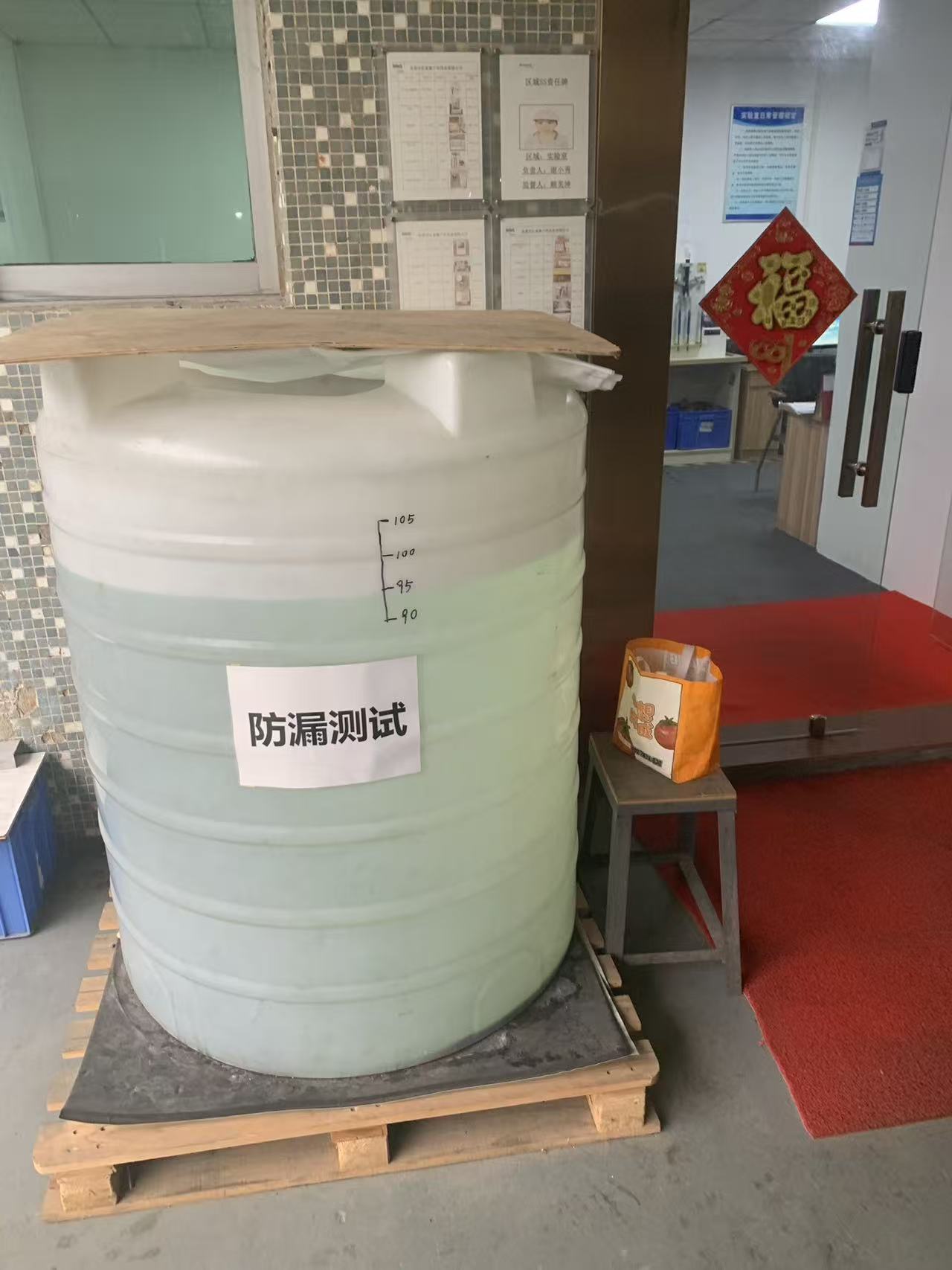
A rating is only as good as the test behind it. Verification follows a defined immersion process aligned to IEC 60529:
Pre-test inspection — each sample is checked for weld defects and the gasket and seals confirmed intact.
Defined immersion — the sealed pack is submerged to 1 metre for 30 minutes.
Absorbent indicators inside — tissue or paper reveals even minor ingress.
Post-test inspection — the pack is opened and checked at the zipper path, seams, corners, and panel junctions.
On the line this sits inside a three-tier system — IQC on incoming materials, IPQC in process, and OQC before shipment with AQL sampling and a submersion batch test. A finished-product test is the only proof that counts; a fabric or component spec alone does not certify the assembled pack.
The Product Basis
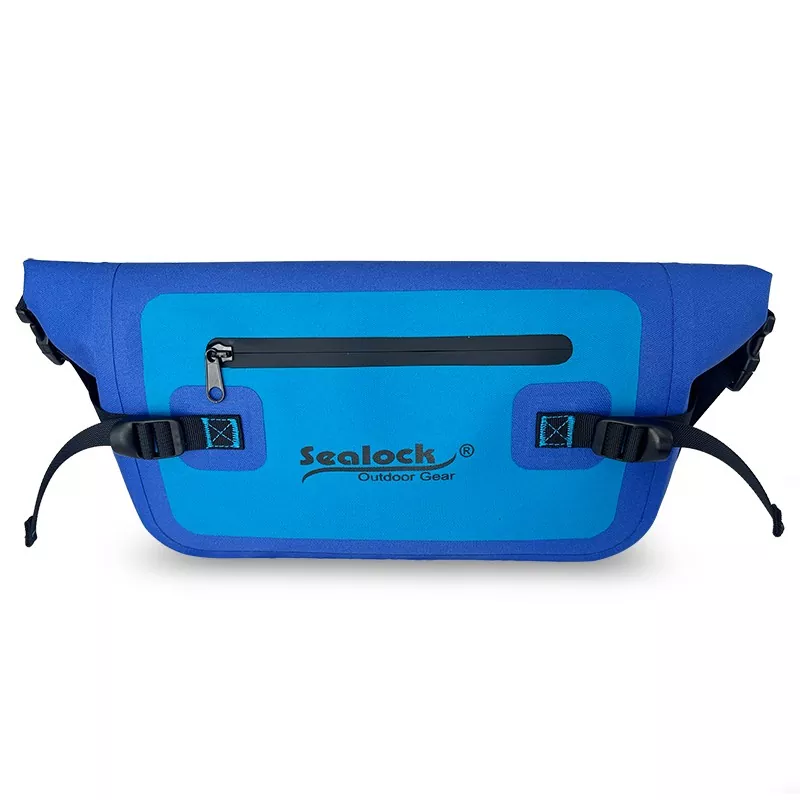
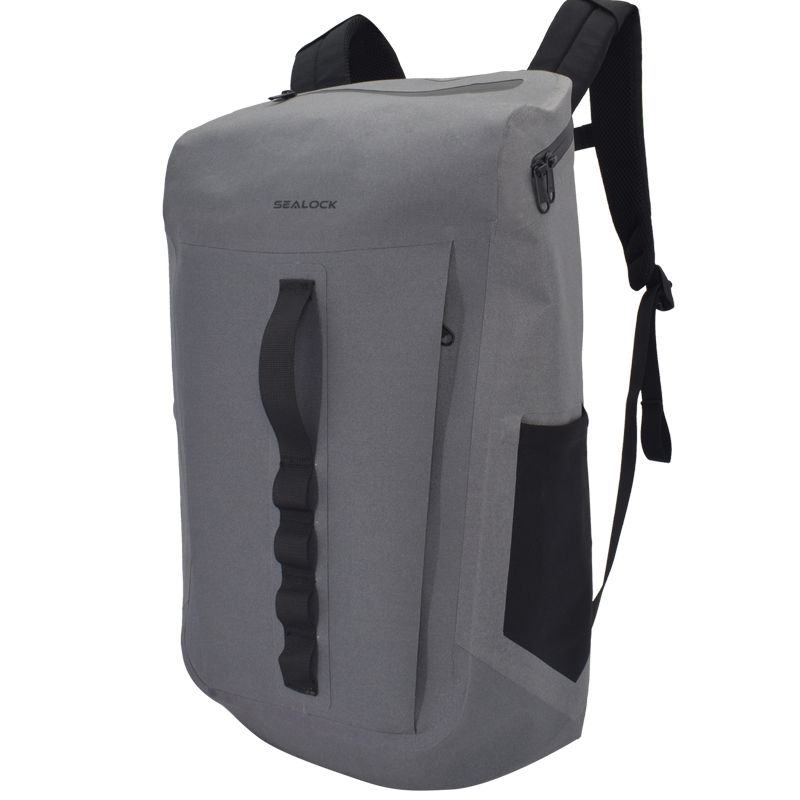
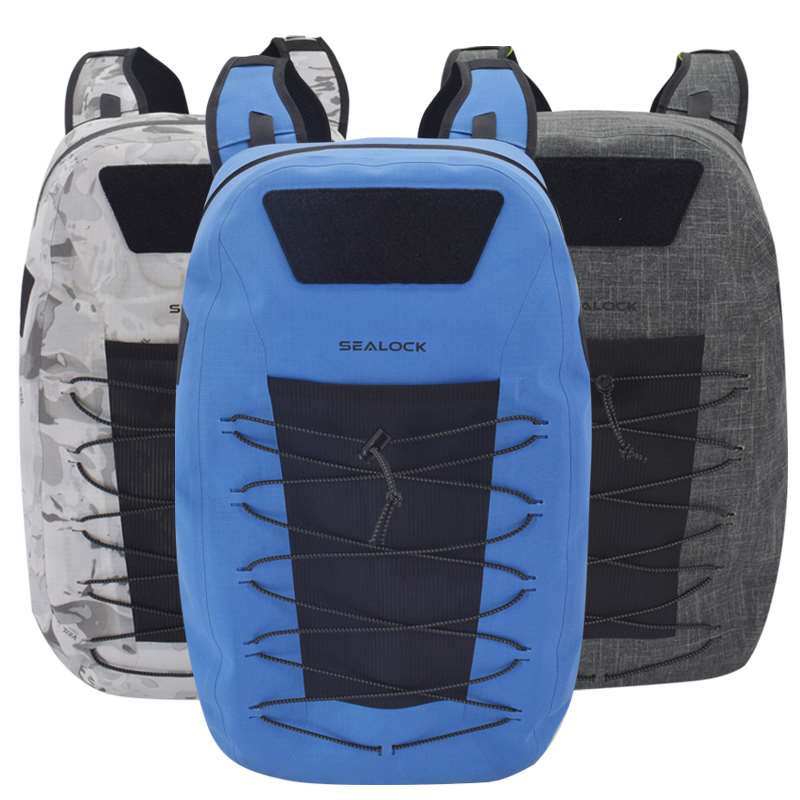
These welded packs, from Sealock's waterproof waist pack line, are equal starting points for an IPX-rated programme — none is ranked above another; the rating and closure are specified to the use case:
IPX7; airtight main zipper + water-resistant front pocket
500D PVC, HF-welded
300
SL-F142 Waterproof Fishing Waist Bag — 4.5L; waterproof zipper; expandable side waist belt; reflective front pocket; side pocket for a 1.5L bottle; black, blue, yellow, orange, grey; BSCI.
The waterproof target is specified per project — up to a verified IPX7 — with the closure and weld map engineered to the brand's use case, then proven on the finished pack. Development runs from a customized base model to a ground-up design; the private-label path is set out in our custom private-label guide.
OEM / ODM Terms
Item
Detail
MOQ
300–500 pcs (model-dependent)
Sampling
7–15 days; longer if a new welding mould is required
Production
30–45 days after approval
Rating options
IPX4–IPX6 (splash) up to a verified IPX7 (1 m / 30 min)
Inspection
IQC + IPQC + OQC (incl. submersion batch test)
Trade terms
FOB Guangdong; China or Vietnam origin
FAQ: IPX7 vs IPX8 Waist Packs
Q: What's the real difference between IPX7 and IPX8?
A: IPX7 is a defined test — 1 metre for 30 minutes. IPX8 is continuous immersion beyond 1 metre to a depth the manufacturer must declare. Without a stated depth, an IPX8 claim isn't verifiable.
Q: Do you make IPX8 waist packs?
A: No. With current welding and airtight-zipper technology, we build and verify waist packs to IPX7. We don't label a pack IPX8, because we won't put a number on a product we can't prove on the finished item — and a genuine deep-immersion IPX8 is extremely hard to guarantee consistently on a bag this small.
Q: Is IPX7 enough for a waist pack?
A: For how a waist pack is used — surface water sports, an accidental dunk, heavy rain, fishing, travel — yes. A sealed pack also floats, so it stays at the surface rather than sinking to a depth where IPX8 pressure would apply.
Q: Why are so many waist packs on the market labelled IPX8?
A: Because "IPX8" reads as higher on a listing, and the rating has no fixed depth, so it's easy to claim and hard for a buyer to check. Ask any supplier for the declared depth and a finished-product test report; many can't provide one.
Q: Can the front pocket be waterproof too?
A: The IPX7 rating applies to the sealed main compartment. The front pocket is a water-resistant zip for quick access; rating each pocket honestly is more useful than a single blanket claim.
Q: How do you prove the IPX7 rating?
A: A 1-metre, 30-minute immersion test on the finished pack with absorbent indicators inside, inside a three-tier IQC/IPQC/OQC system with a submersion batch test before shipment.
Talk to the Factory
To engineer and verify a reliable IPX7 waterproof waist pack, contact Sealock at info@sealock.com.hk or +86-769-82009361. Over twenty years in welded waterproof bags, RF welding in-house, a China–Vietnam dual-base option, and finished-product submersion testing — rated to what we can prove, not to what sells.
We use cookies to offer you a better browsing experience, analyze site traffic and personalize content. By using this site, you agree to our use of cookies.
Privacy Policy
 English
  Español
  Português
  русский
  Français
  日本語
日本語  Deutsch
  tiếng Việt
  Italiano
  Nederlands
  ภาษาไทย
  Polski
  Svenska
  magyar
  Malay
Malay  বাংলা ভাষার
  Dansk
Dansk  Suomi
Suomi  हिन्दी
  Pilipino
  한국어
한국어  Türkçe
  Gaeilge
  العربية
  Indonesia
  Norsk
Norsk  تمل
تمل  český
český  ελληνικά
  український
  Javanese
  فارسی
فارسی  தமிழ்
தமிழ்  తెలుగు
  नेपाली
  Burmese
  български
  ລາວ
ລາວ  Latine
  Қазақша
  Euskal
  Azərbaycan
  Slovenský jazyk
  Македонски
  Lietuvos
  Eesti Keel
  Română
  Slovenski
  मराठी
मराठी  Srpski језик