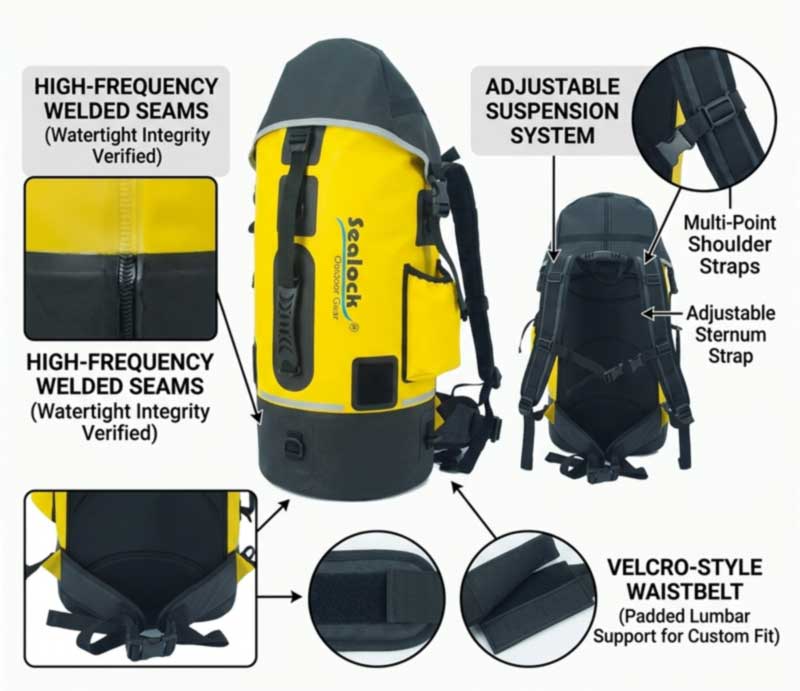
Sealock is an OEM waterproof backpack supplier and manufacturer. Most waterproof backpack briefs specify capacity, material, closure and colour — and say nothing about the one variable that decides whether the customer keeps the pack: whether it fits their body. A backpack is the only waterproof product that has to be sized to a person, and fit is the leading cause of discomfort, poor load transfer and returns in the category. This guide covers the fit decisions an OEM buyer actually controls, and why they're harder — and more valuable — on a welded waterproof pack.
Fit Starts With Torso Length, Not Height
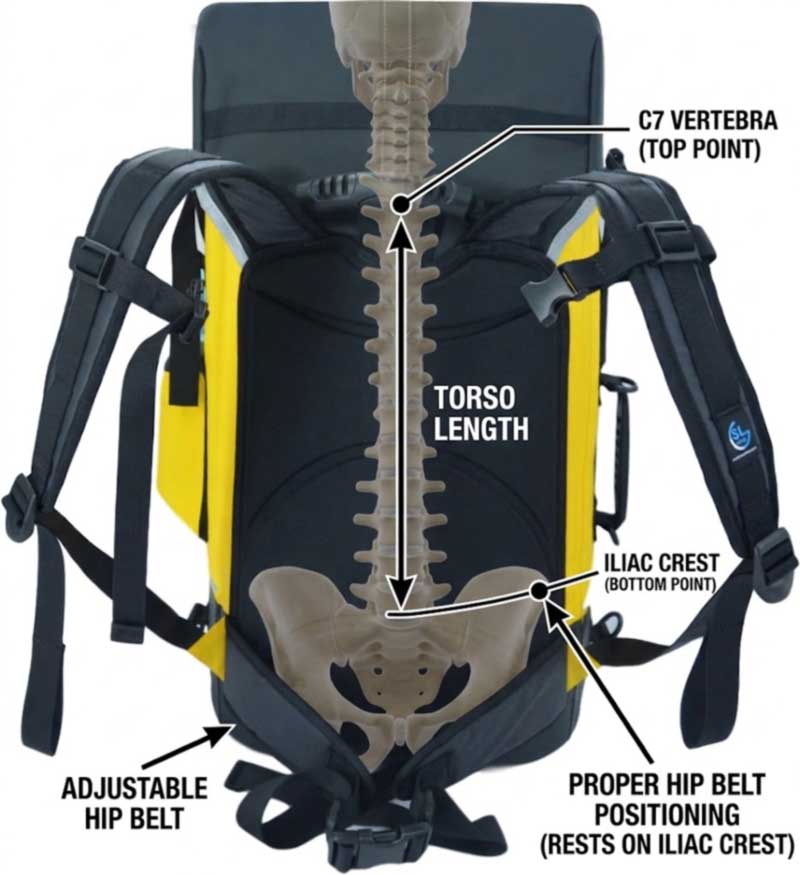
The measurement that governs backpack fit is torso length: the distance along the spine from the bony C7 vertebra at the base of the neck down to the top of the iliac crest — the point where the thumbs meet at the spine with hands on the hips. Most adults fall between roughly 16 and 22 inches, and that range has little to do with overall height. Two people of the same height can need different pack sizes.
The consequence for a brand is direct: if the torso length is wrong, no amount of strap adjustment fixes it. The diagnostic customers are told to use is simple — if the hip belt cannot be centred on the hip bones, the torso length is wrong. A pack that fails that test gets returned regardless of how well it seals.
Torso length, not height — and if the hip belt won't sit on the hip bones, nothing else will fix it.
The Fit Strategy Decision: One Size, Multiple Sizes, or Adjustable
Approach
What it costs
Best for
One fixed size
Lowest cost and simplest inventory; fits the fewest people
Day packs, dry backpacks under ~30L, rental fleets, promotional
Fixed sizes in S / M / L
Three SKUs, three sets of tooling considerations, three-way inventory risk
Specialist retail where fit is a purchase criterion
Adjustable suspension
More hardware and assembly cost per unit
One SKU covering a wide torso range — usually the best commercial answer
For most brands the adjustable route wins, because it collapses three SKUs into one while fitting more customers. Real reference points from the market: adjustable systems commonly cover torso ranges of about 17 to 21 inches in a single pack, and some designs offer three torso sizes each adjustable by a further 3 inches. Retail advice reinforces the value — buyers unsure of their size are told to choose a pack with full adjustment points, and when between sizes to take the smaller one and use its adjustment range rather than a pack that is too long.
The Hip Belt Is Where the Market Has a Gap
This is the most useful thing in this guide for a brand looking to differentiate. The hip belt carries most of a loaded pack's weight, and yet very few manufacturers offer adjustable or interchangeable hip belts. All too often there is one hip belt size per torso length and no way to swap it — so a customer whose hips fall outside that range simply returns the pack.
The specifics worth building to:
Hip belts are sized on the iliac crest, not the waistline — measured around the top of the hip bones, which sits higher than where trousers sit. Hip belt sizing therefore differs from pant-waist sizing, and a customer using the wrong reference will order the wrong size.
A useful adjustment range. Adjustable belt systems on the market span roughly 26–42 inches on a unisex fit and 24–40 inches on a women's fit, with extended options going considerably larger. A hook-and-loop system is a simple, low-cost way to deliver that.
Both failure directions matter. Too small and there's no room to secure it properly; too large and the pack slides down as the wearer walks — a complaint that shows up particularly on long trips as the user's weight changes.
Padding geometry. Belt padding should extend slightly beyond the front point of the hip bones, with roughly 4 to 8 inches of gap between the belt wings when fastened.
Removable belts serve two purposes — size swapping, and letting the pack be stripped down for stowage in a boat or a hatch.
An adjustable hip belt is a modest cost item that addresses a documented, widespread complaint. On a waterproof pack, where the customer is already paying a premium, it's an easy way to justify the price.
Women's and Youth Fit: Not a Scaled-Down Men's Pack
A women's-specific fit is a genuinely different harness geometry, not a smaller version of the same one:
Shorter torso lengths as the baseline.
A narrower, shorter harness with curves shaped for the neck, shoulders and chest, and a yoke with varying padding thickness rather than uniform foam.
A hip belt contoured to wrap the curves of the hips rather than a straight belt, which improves load stabilisation.
Different sizing arithmetic. Guidance for curvier hips is to take the smallest waist measurement and add about 5 inches; for straighter hips, add about 3 inches.
Youth and growing-teen products are the other case where adjustable suspension earns its cost outright, since the pack has to fit across a changing body rather than a fixed one.
Adjustment hardware on a sealed shell — every anchor has to carry load without breaching the barrier.
Why Fit Is Harder on a Welded Waterproof Pack
On a conventional pack, an adjustable back system attaches to a sewn body wherever the designer wants. On a welded waterproof pack it cannot, because every anchor point is a potential breach of the barrier. That constrains where adjustment hardware can live and how it is fixed.
Our approach is sequence-based: harness, hip belt and suspension anchors are stitched to the flat panels at high tension before the shell is welded, so the load spreads across a stitched footprint and the perforations end up beneath the welded skin or under localised reinforcement. Purely welded anchors can peel under sustained shear, which is exactly the loading an adjustable system sees. Anchors are then load- and jerk-tested rather than assessed by eye.
The practical brief point: decide the fit system before tooling. Adjustment hardware positions affect the weld map and the die, and are expensive to move once the mould exists.
The Fit Specification Checklist
Element
What to specify
Torso strategy
Fixed single size, S/M/L, or adjustable — and the torso range in inches or cm
Hip belt
Adjustment range, padding geometry, removable or fixed, unisex or women's
Contact foam, EVA, mesh or channelled — matched to load and climate
Anchors
Construction method and tested load, not just "reinforced"
Fit guidance
A measuring guide and size chart for your listing and hangtag
That last line matters commercially. Fit-related returns often come from customers who never measured themselves. Publishing a torso measuring guide and an honest size chart costs nothing and prevents returns that a better product alone won't.
The Product Basis
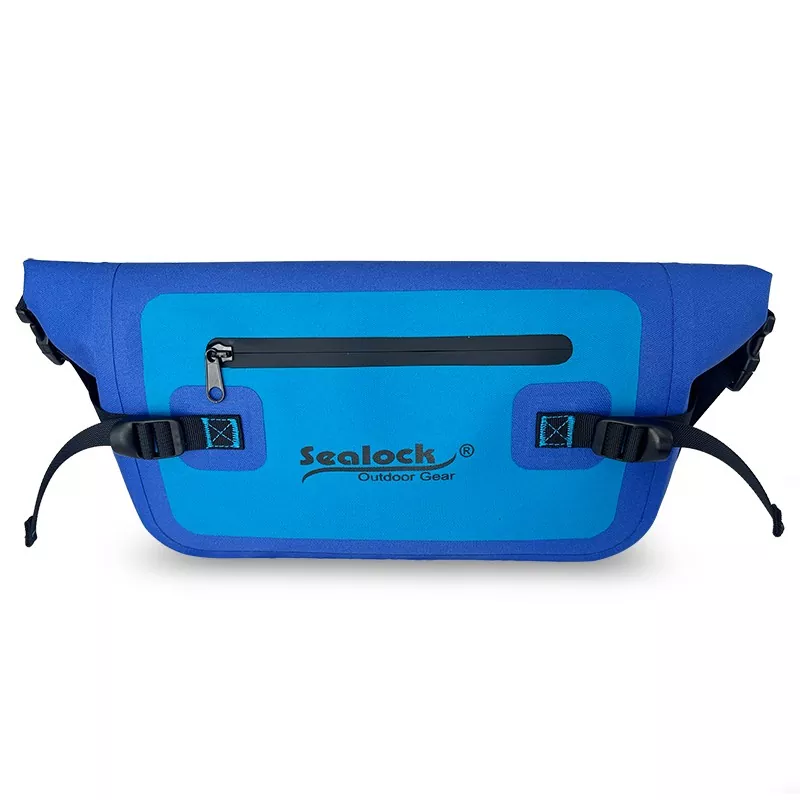
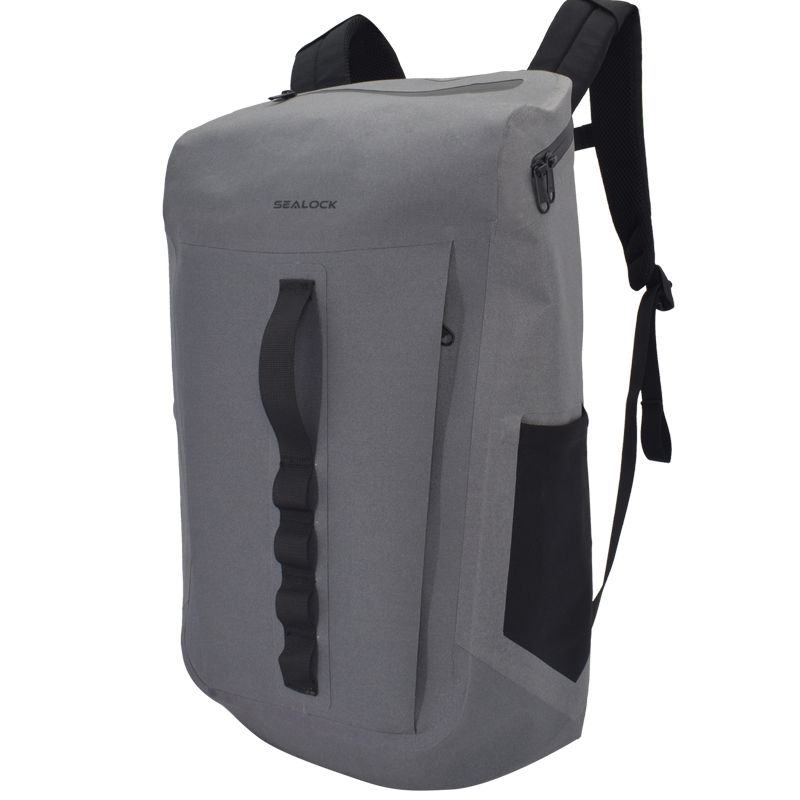
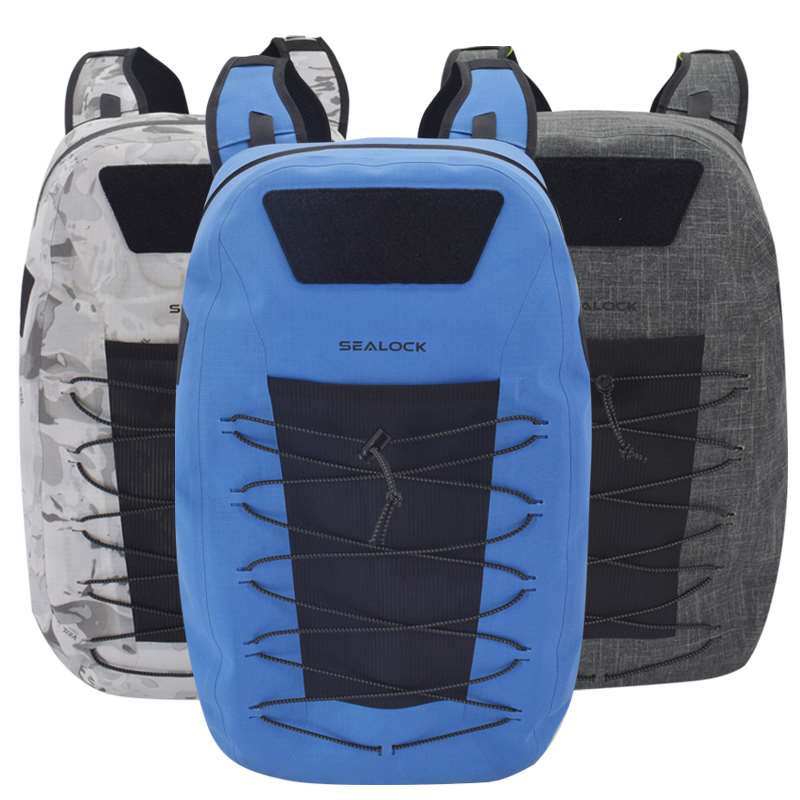
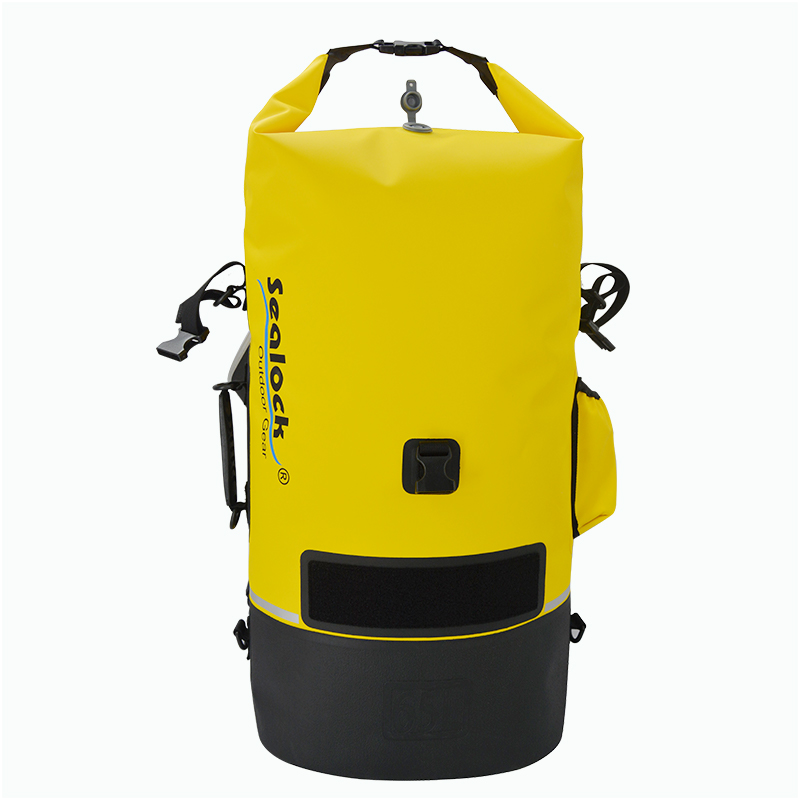
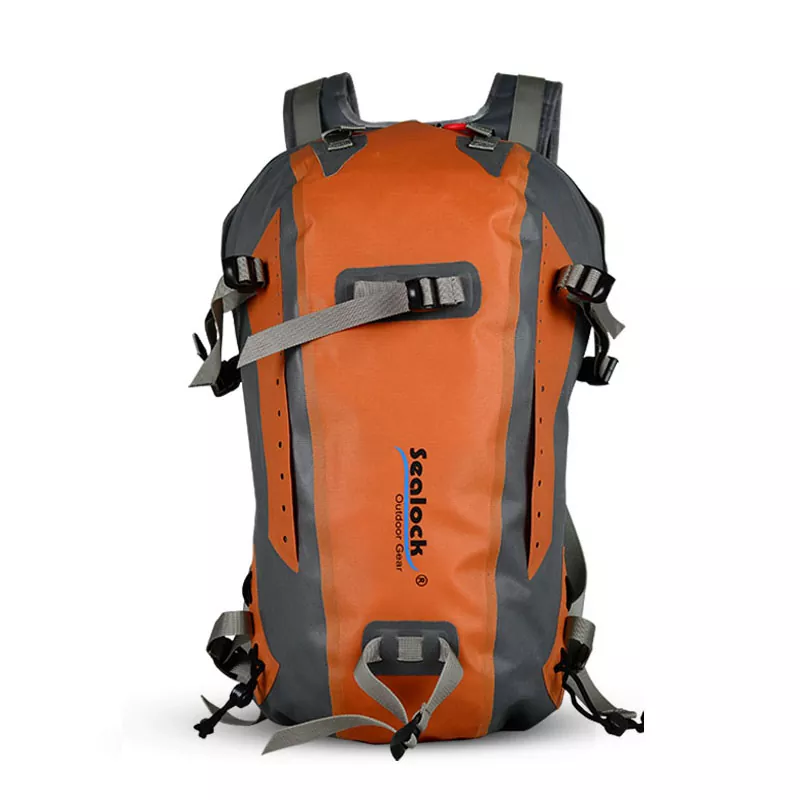
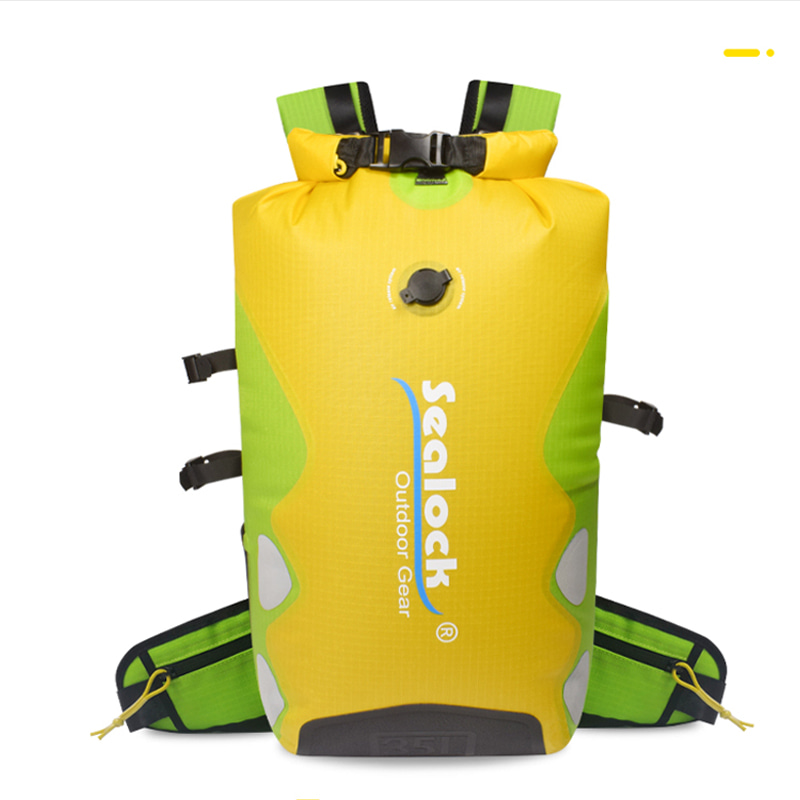
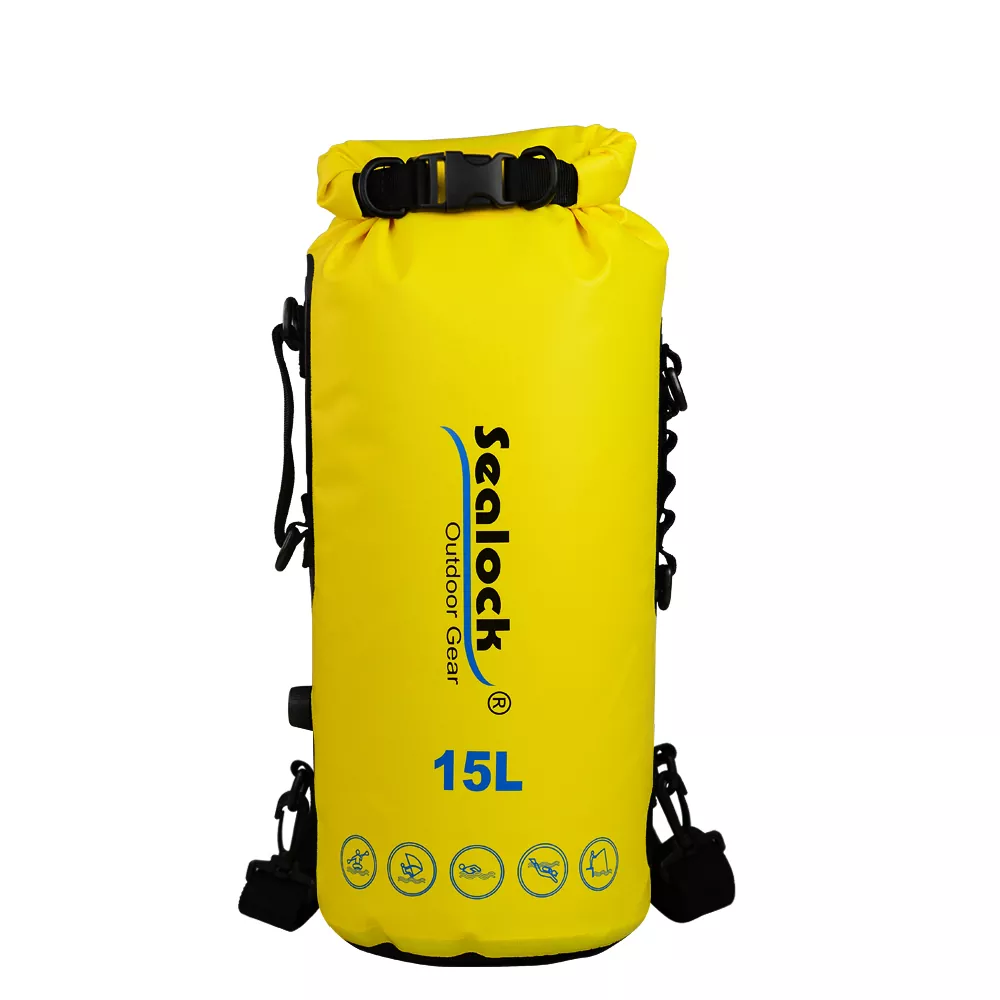
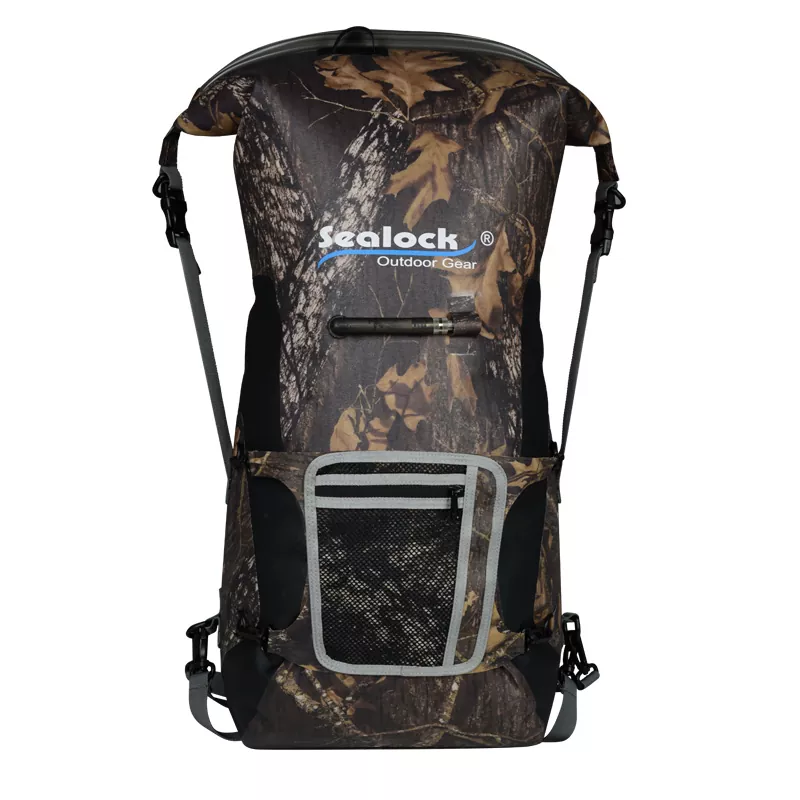
These welded packs are equal starting points for an OEM programme — none is ranked above another; each shows a different carry and fit configuration:
Torso strategy, hip belt system, harness geometry, back panel type, capacity, material, closure, colour and branding are all specifiable per order — including women's-specific and adjustable-suspension development — or a pack can be built from a sketch.
Terms and Quality Control
Item
Detail
MOQ
300–500 pcs per model
Sampling
3–15 days depending on the build; fit samples recommended in more than one size
Production
20–45 days after sample approval
Tooling
Custom die per shell geometry; adjustment hardware positions affect the weld map
Rating options
Verified IPX7 on welded roll-top and airtight-zipper builds; IPX8 on rubber-seal construction
Origin
Dongguan, China or Ho Chi Minh City, Vietnam
Quality is gated in three tiers — IQC (incoming fabric, buckles, webbing, foam and adjustment hardware against the signed standard, with colour difference and fastness), IPQC (cutting tolerance, weld integrity, harness and hip-belt anchor assembly, and back-panel installation in line, with peel tests on sample welds at each run start), and OQC (ISO 2859 AQL sampling, real water-submersion batch testing, and gold-sample comparison, with SGS or QIMA available). Sealock also strictly executes the complete customer inspection procedure on finished goods: unboxing, vacuum extraction, a 24-hour static rest, and air-leak determination. Because an adjustable fit system multiplies the load paths, the lab programme weights heavily toward a 1,500+ cycle load test with jerk-loading on shoulder, sternum and hip-belt anchors, plus foam compression recovery, hook-and-loop cycle testing on adjustable belts, weld bond and peel strength, abrasion, tensile, salt spray, UV, colour fastness and colour difference.
FAQ: OEM Waterproof Backpack Fit
Q: Should our pack be one size or several?
A: Below about 30L, one size with a well-adjusted harness usually serves. Above that, either offer S/M/L or — more efficiently — a single adjustable-suspension SKU covering a torso range. Adjustable collapses three SKUs into one while fitting more customers.
Q: What torso range should an adjustable system cover?
A: Most adults measure roughly 16 to 22 inches, and adjustable systems on the market commonly span about 17 to 21 inches in one pack. Specify the range you want covered rather than saying "adjustable".
Q: Why does the hip belt matter so much?
A: It carries most of the load, and it's where the market underserves customers — most packs offer only one belt size per torso length with no way to swap it. An adjustable or interchangeable belt is a low-cost feature that addresses a widespread complaint.
Q: Is a women's fit just a smaller pack?
A: No. It means shorter torso lengths, a narrower and shorter harness curved for the neck, shoulders and chest, a yoke with varying padding thickness, and a hip belt contoured to the hips. Sizing arithmetic differs too.
Q: Can adjustable systems be built into a welded waterproof pack?
A: Yes, but the anchors have to be engineered rather than added — stitched to flat panels at high tension before welding, then covered by the sealed skin and load-tested. Decide the fit system before tooling, because hardware positions affect the die.
Q: How do we reduce fit-related returns?
A: Publish a torso measuring guide and an honest size chart on the listing and hangtag, and specify enough adjustment range that a customer between sizes still has a workable fit.
Talk to the Factory
To develop a waterproof backpack that fits your customers as well as it seals, contact Sealock at info@sealock.com.hk or +86-769-82009361. Over twenty years of in-house high-frequency welding, nine welding lines, load-tested harness systems, dual China–Vietnam production, and a full customer inspection procedure on every shipment.
We use cookies to offer you a better browsing experience, analyze site traffic and personalize content. By using this site, you agree to our use of cookies.
Privacy Policy
 English
  Español
  Português
  русский
  Français
  日本語
日本語  Deutsch
  tiếng Việt
  Italiano
  Nederlands
  ภาษาไทย
  Polski
  Svenska
  magyar
  Malay
Malay  বাংলা ভাষার
  Dansk
Dansk  Suomi
Suomi  हिन्दी
  Pilipino
  한국어
한국어  Türkçe
  Gaeilge
  العربية
  Indonesia
  Norsk
Norsk  تمل
تمل  český
český  ελληνικά
  український
  Javanese
  فارسی
فارسی  தமிழ்
தமிழ்  తెలుగు
  नेपाली
  Burmese
  български
  ລາວ
ລາວ  Latine
  Қазақша
  Euskal
  Azərbaycan
  Slovenský jazyk
  Македонски
  Lietuvos
  Eesti Keel
  Română
  Slovenski
  मराठी
मराठी  Srpski језик