




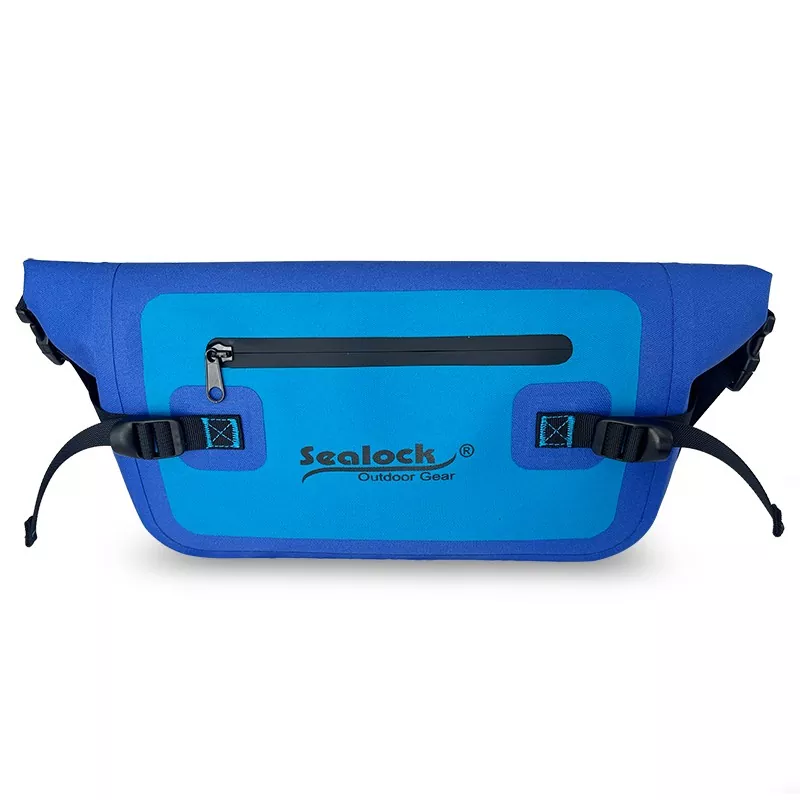
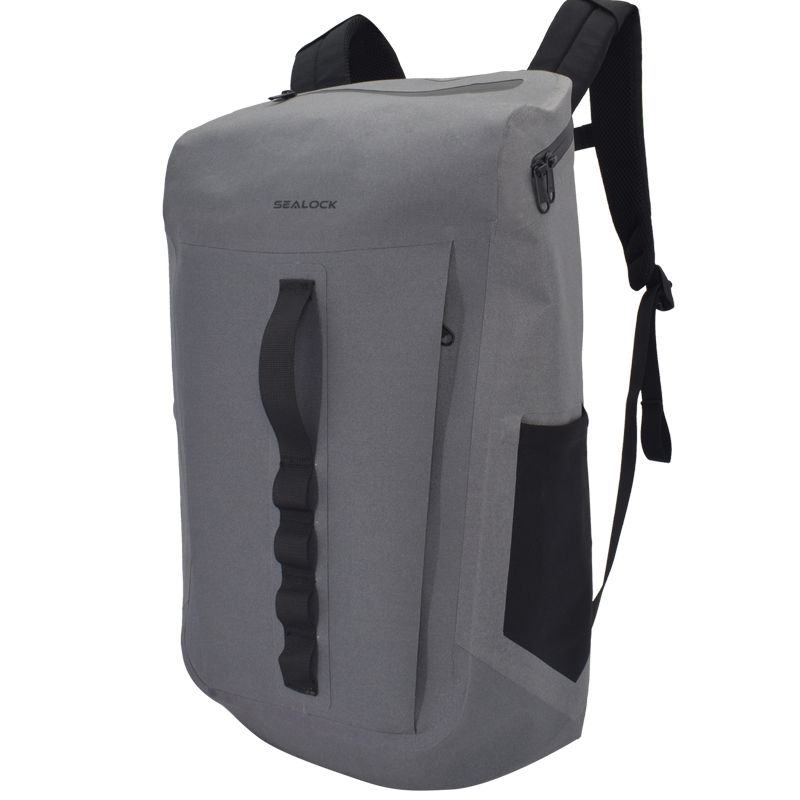

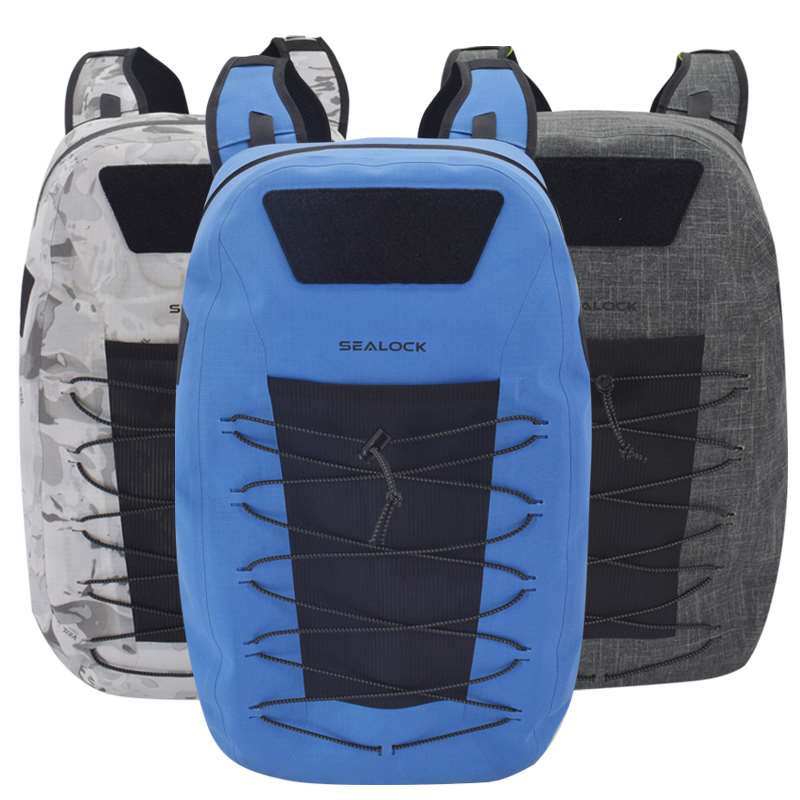
A structural analysis of hydrodynamic impact, RF-welded waterproof construction, and load-bearing suspension systems used in modern fishing dry backpacks.
Understanding Failure Modes in Wading Environments
Deep river crossings, surf wading, and fast-moving currents expose fishing backpacks to stress conditions that conventional outdoor bags are not engineered to survive.
1. Hydraulic Impact Failure
A sudden fall into moving water generates localized hydrodynamic pressure against zipper tracks and seam junctions. Standard water-resistant zippers often fail during these impact spikes, allowing immediate water intrusion into the main compartment.
Sensitive equipment such as fly boxes, phones, vehicle keys, and compact camera systems are especially vulnerable during submersion events.
2. Abrasion & Current Compression
Fast currents can pin a backpack against submerged rock surfaces, concentrating pressure and abrasion along fabric folds and structural seams.
Low-tensile stitched fabrics frequently tear under these combined forces, exposing the dry chamber to continuous water flow.
3. Water-Retention Weight Gain
Traditional mesh-padded backpacks absorb significant amounts of water during extended wading sessions. This additional fluid weight affects body balance and increases fatigue in unstable currents.
Closed-cell suspension systems eliminate this issue by preventing moisture absorption entirely.
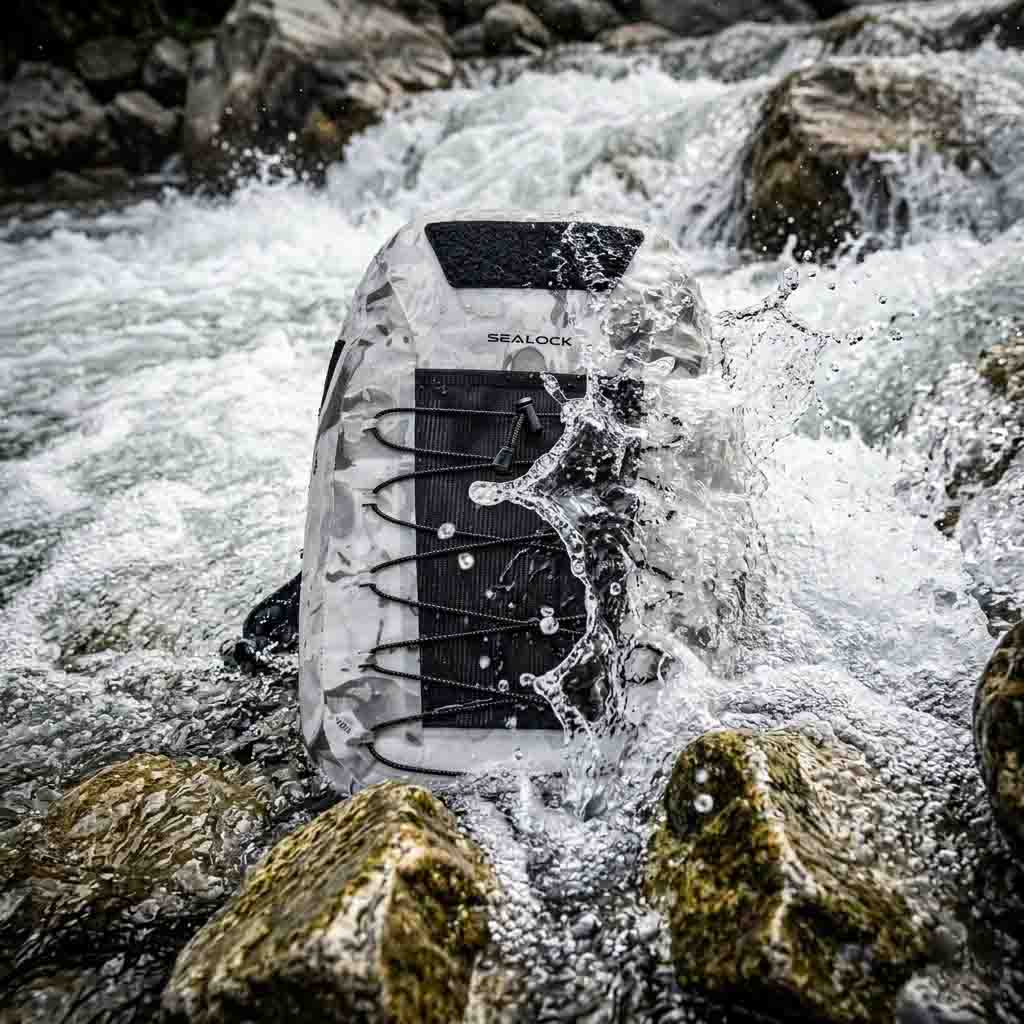
RF-Welded Construction vs Traditional Sewn Seams
Conventional waterproof bags rely on stitched fabric panels combined with adhesive seam tape. Under repeated stress, the stitch holes deform and eventually become water entry paths.
RF welding eliminates stitching entirely by molecularly bonding TPU-coated fabric layers together using high-frequency electromagnetic energy.
Sealock 15L Large-Capacity Fly Fishing Waterproof Backpack utilizes a 27.12 MHz radio frequency welding process to fuse dual-sided 500D TPU laminated panels into a single continuous waterproof structure without thread or adhesive tapes.
This process forms a homogeneous polymer bond that maintains structural integrity under hydrostatic pressure, saltwater exposure, and repeated flex cycling.
Structural System Layout
| Component | Functional Purpose |
|---|---|
| Gas-Tight Waterproof Zipper | Maintains submersion-level sealing under hydraulic pressure. |
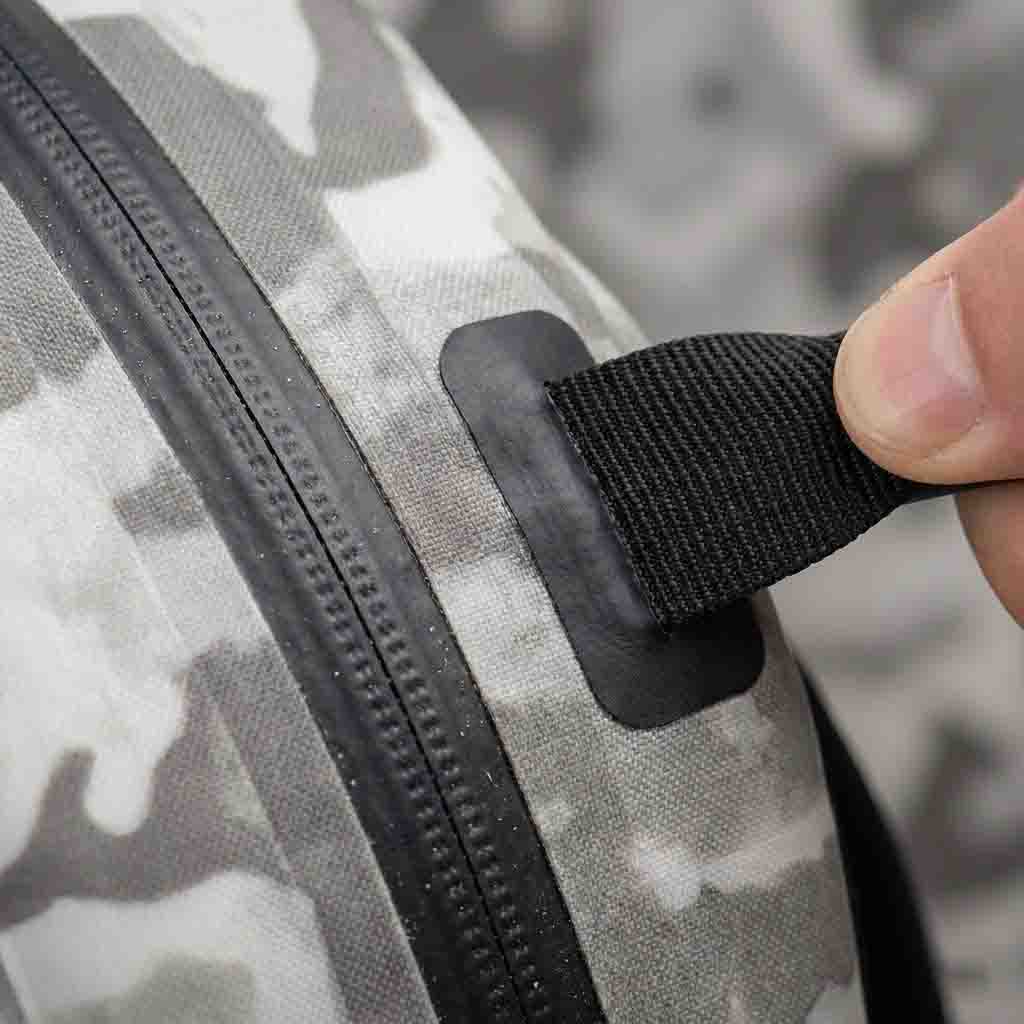
| Welded MOLLE Tool Platform | Distributes external tool loads without puncturing the waterproof chamber. |
| Closed-Cell EVA Suspension | Prevents water absorption and reduces dead-weight accumulation. |
Technical Specifications
500D Polyester + Dual-Sided TPU Lamination
15L Tactical Wading Configuration
IPX7 Submersible Protection
12mm RF Fusion Bead ±0.5mm
Quality Verification Process
Every production batch undergoes pneumatic pressure-hold testing inside a submerged hydrostatic inspection chamber.
The backpack is internally pressurized and compressed underwater while technicians inspect for air leakage, weld defects, or pinhole failures. Any escaping bubble stream results in immediate rejection of the production lot.
Final Engineering Perspective
In technical fishing environments, waterproof performance depends less on surface coatings and more on structural construction methods.
RF-welded TPU systems, closed-cell suspension platforms, and gas-tight sealing architectures provide substantially greater long-term reliability than stitched waterproof assemblies exposed to continuous abrasion, saltwater, and dynamic hydraulic stress.
B2B Procurement Action: To benchmark these structural tolerances against your brand's existing tactical gear catalog, contact our engineering department
FAQ
Q: Many reviewers complain that waterproof fishing pack zippers split apart, jam, or leak after a few trips. How does Sealock fix this?
A: Standard water-resistant zippers found on cheap gear are simple nylon coil tracks wrapped in a thin polyurethane exterior coating, sewn directly onto the bag. When sand grit or saltwater salt crystalizes inside the coil, the slider misaligns, causing the zipper to split open under tension. Furthermore, water forces its way past the stitched needle holes under minimal hydraulic load. Sealock utilizes a genuine Gas-Tight Zipper. It features heavy thermoplastic teeth that lock together to force a thick, integrated rubber lip into solid compression. Because the zipper assembly is fused to the TPU body via high-frequency welding with zero sewing needle involvement, there are no structural perforations to allow moisture ingress.
Q: Users frequently report that exterior accessory loops rip completely out of the dry bag fabric under heavy loads, ruining the backpack. How do you prevent this?
A: Traditional factories sew exterior webbing tabs directly onto a single layer of waterproof fabric, trying to seal the interior holes with a strip of adhesive tape. When a user hooks a heavy wading net or heavy plier sheath to the loop, the rotational pulling force concentrates entirely on the weak stitch lines, tearing the fabric matrix and causing leaks. Sealock eliminates this fault through our Perimeter-Welded MOLLE design. We use laser-cut, heavy-duty TPU reinforcing patches as an intermediary load distributor. These patches are fused to the exterior skin using high-frequency waves, blending the components into a single layer. The mechanical stress is entirely absorbed by the outer shell layer, while the interior dry compartment remains stitchless and protected from tearing.
Q: Why do conventional wading backpacks develop severe mildew odors and get extremely heavy during deep river wading?
A: This occurs because standard backpacks use open-cell polyurethane foam wrapped in porous nylon mesh for back support. Open-cell foam is structurally porous, meaning it acts like a sponge, drawing in organic river slime, microscopic algae, and high-salinity seawater. Once trapped inside the mesh, it cannot dry properly, turning the back panel into a breeding ground for bacteria and mold that generates foul odors, while adding up to 3kg of dead fluid weight. Sealock solves this by using molded closed-cell EVA foam blocks welded directly to the backpack wall. EVA foam features completely isolated air cells that physically block water entry. The panel retains zero fluid weight, rinses completely clean with river water, and dries instantly, removing the physical conditions required for bacterial growth and bad smells.
Q: internal seam tape peels and lifts away after saltwater exposure, leading to complete bag failure. Do your welded seams separate?
A: Stitched-and-taped construction relies on liquid adhesive coatings to hold the seam tape over the needle line. Marine saltwater brine is highly corrosive; as salt crystals dry inside micro-gaps, they expand mechanically and dissolve the adhesive glue matrix, causing the tape to separate (delamination). Sealock uses zero glue and zero thread. Our high-frequency welding process uses electromagnetic energy to interlock the TPU molecules of the overlapping sheets directly at a structural level. The panels are grown together into a single layer. Our joints pass severe ASTM D751 weld-shear fatigue evaluations, ensuring the seam life matches the lifespan of the base TPU material regardless of continuous salt brine exposure or damp storage fields.
For a detailed analysis of long-term flexibility, hydrolysis resistance, and cold-weather durability, see our TPU vs PVC waterproof material comparison.