




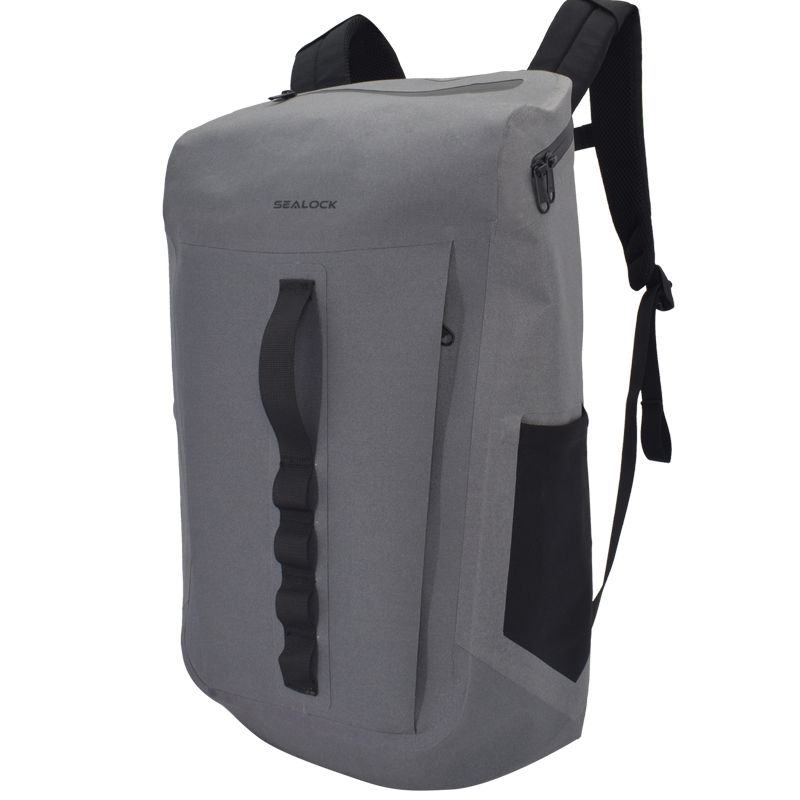

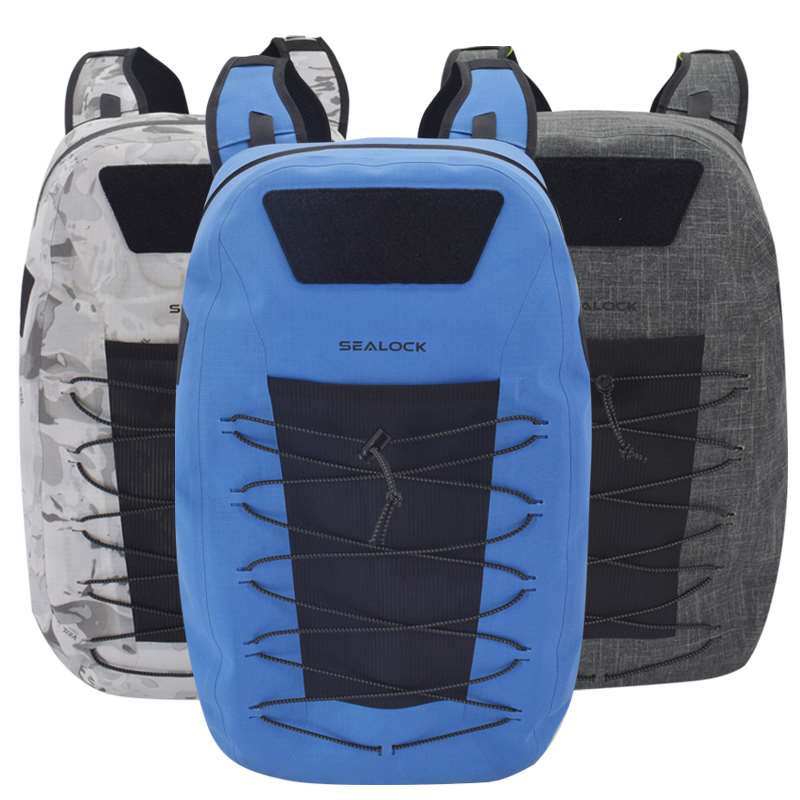
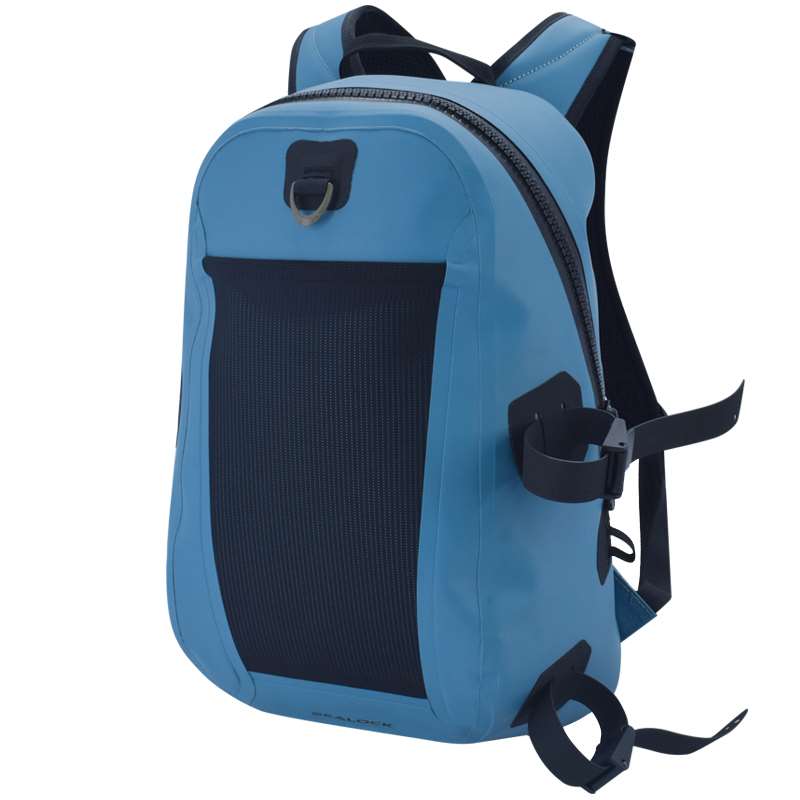
Two backpacks sit side by side online. One says "water-resistant," the other "waterproof," and the second costs noticeably more. Marketing? Sometimes. But underneath the labels sits a real construction difference — and once you see it, choosing between them stops being guesswork and becomes a simple match to how wet your life actually gets.
The confusion exists because both terms describe "keeping water out," so they sound like degrees of the same thing — water-resistant a bit, waterproof a lot. That framing is wrong, and it's why people end up with soaked laptops. The two labels describe different constructions, not different amounts of the same protection. Start from the construction, and everything else — what each survives, what each costs, which one you need — follows logically.
The real difference is construction, not degree
How a water-resistant backpack is built
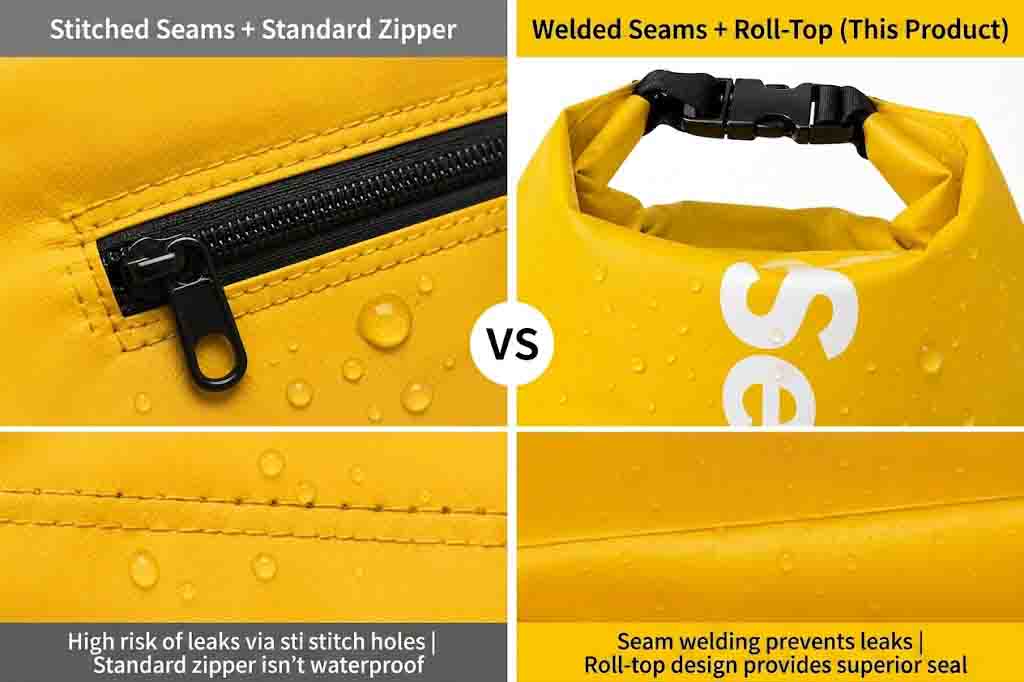
A water-resistant pack is a normal backpack with defenses added. The fabric (usually polyester or nylon) gets a water-repellent coating — often a PU layer or DWR finish — so water beads and rolls off rather than soaking in immediately. But the pack is still assembled the normal way: panels stitched together (every stitch a needle hole), closed with a standard zipper (a row of interlocking teeth water can pass through).
So its protection has built-in expiry points: coatings wear off, and the seams and zipper were never sealed to begin with. Light rain rolls off; sustained rain finds the holes.
How a waterproof backpack is built
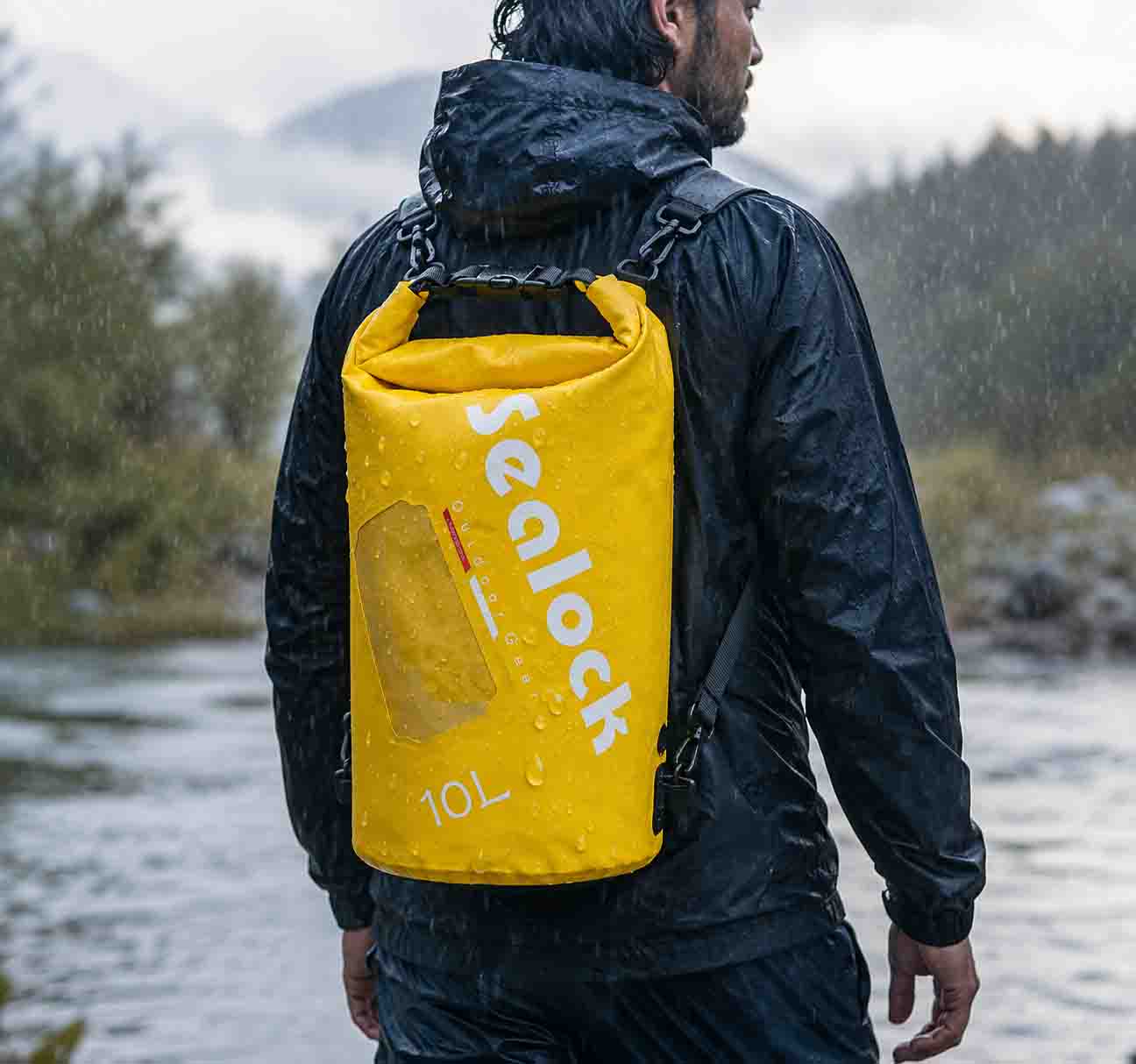
A waterproof pack is engineered from the start so water has no route in. Three things change: the fabric itself is inherently waterproof (TPU-laminated fabric or PVC tarpaulin — not a coating that wears off); panels are joined by welded seams, fused under heat and pressure with zero needle holes; and the opening is a roll-top closure or a genuine waterproof zipper, designed to seal rather than merely close.
The difference shows in how each is verified: waterproof construction can carry an IPX rating because there's a sealed boundary to test. A coating can't earn that — there's nothing sealed to rate. (The full engineering story is in our welding vs stitching explainer.)
What that difference means in real conditions
Because the constructions differ, their failure points differ — and that's what decides what each can actually survive:
| Condition | Water-resistant pack | Waterproof pack |
|---|---|---|
| Light rain, short exposure | Fine | Fine |
| Sustained heavy rain | Soaks through seams & zipper | Stays dry |
| Road spray (cycling/moto) | Fails fast — driven water finds holes | Built for it |
| Set down in a puddle / wet deck | Wicks in from the base | Sealed |
| Splash / brief drop in water | Contents wet | Survives (IPX6–8 by rating) |
| After 1–2 years of wear | Coating degrades, protection fades | Welded structure unchanged |
Notice the pattern: the water-resistant pack fails wherever water gets time or pressure — sustained rain, driven spray, standing water — because time and pressure find the stitch holes and zipper. The waterproof pack has no holes to find. That's also why aging treats them differently: a coating is a consumable, a welded seam is structural.
So which do you need? Match it to your exposure
Given those boundaries, the choice is just a question of where your real use falls:
| Your situation | What you need | Why |
|---|---|---|
| Office commute on foot/transit, mild climate | Water-resistant is enough | Short exposures, light rain, shelter nearby |
| Daily cycle commuting, any climate | Waterproof | Road spray + sustained exposure + a laptop at stake |
| Motorcycle riding | Waterproof | Rain at speed is driven water — resistant packs fail fast |
| Hiking in changeable weather | Waterproof (or resistant + liner) | Hours from shelter; weather you can't schedule |
| Kayaking, boating, paddleboarding | Waterproof, submersion-rated | Splash is constant and immersion is possible |
| Carrying a laptop/camera in any of the above | Waterproof | The cost of one failure exceeds the price difference |
A useful shortcut falls out of the table: if water arrives with time or pressure (long rain, spray, immersion) or your contents are expensive to lose, go waterproof; if water only ever arrives briefly and gently, resistant is genuinely enough. There's no virtue in over-buying — a school pack doesn't need welded seams. The mistake to avoid is the opposite one: trusting a coating with conditions that need a seal. And if you already own a good pack, you don't always need to replace it — a liner and dry bags can bridge the gap, as covered in our guide to waterproofing a backpack.
How to tell which one a listing is actually selling
Labels get stretched, so verify the construction instead of trusting the adjective. Four checks, straight from the differences above:
- Look for an IPX rating. Genuine waterproof packs state one (IPX6 jets / IPX7–8 immersion). "Waterproof" with no rating usually means "coated."
- Check the seams. Visible stitching on the main body means needle holes — water-resistant, whatever the title says. Welded seams look fused, with no thread line.
- Check the closure. A roll-top or a chunky sealed waterproof zipper signals waterproof construction; a standard exposed zipper caps the pack at water-resistant.
- Check the material wording. "TPU-laminated," "PVC tarpaulin," "welded" = waterproof construction. "PU-coated," "DWR-treated," "water-repellent finish" = a coating on normal fabric.
The bottom line: water-resistant and waterproof aren't two strengths of the same shield — they're different constructions. A coating on stitched fabric handles brief, gentle rain; welded seams with a sealed closure handle time, pressure, and immersion. Match the construction to your real exposure: commuting on foot, resistant is fine; cycling, riding, paddling, or carrying electronics through real weather, waterproof is the one that won't let you down — and now you can verify which one you're holding.
Frequently asked questions
For light or brief rain, yes. For sustained heavy rain it isn't — water works through the stitched seams and standard zipper given time. If you're regularly out in long rain, you need waterproof construction or a liner inside.
Check the construction: visible stitching on the main body and a standard zipper mean water-resistant. Welded (fused, no-thread) seams, a roll-top or sealed waterproof zipper, and a stated IPX rating mean waterproof.
It's a tested water-protection rating: IPX4 covers splashes, IPX6 powerful jets like driven rain, IPX7–8 immersion. A pack with no IPX rating usually relies on a coating rather than sealed construction.
Yes. DWR and PU coatings degrade with use, washing, and UV, so a resistant pack protects less each year. Welded waterproof construction is structural and doesn't fade the same way.
If your exposure involves time, pressure, or expensive contents — cycle commuting, riding, paddling, a laptop in real weather — yes, one saved soaking pays the difference. For mild, brief exposure, a resistant pack is honestly sufficient.
Because many packs sold as waterproof use coated fabric with a standard zipper — the fabric sheds water but the zipper never sealed. A genuine waterproof pack uses a roll-top or a true waterproof zipper for exactly this reason.
Not necessarily — many are styled for commuting and double as outdoor packs. But if your everyday never gets properly wet, you're paying for capability you won't use; a resistant pack plus a liner on bad days is a fair alternative.
Decided you need the real thing?
If your exposure calls for welded construction, see the waterproof backpack range — TPU builds with sealed closures, including 25L commuter models with laptop sleeves — or browse all waterproof bags to match the format to your use.