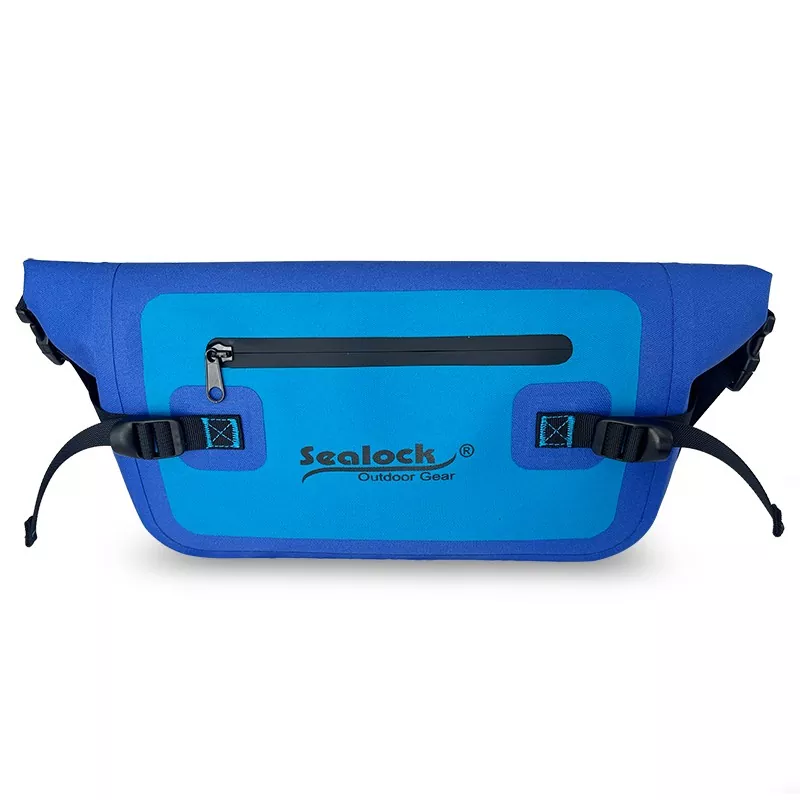
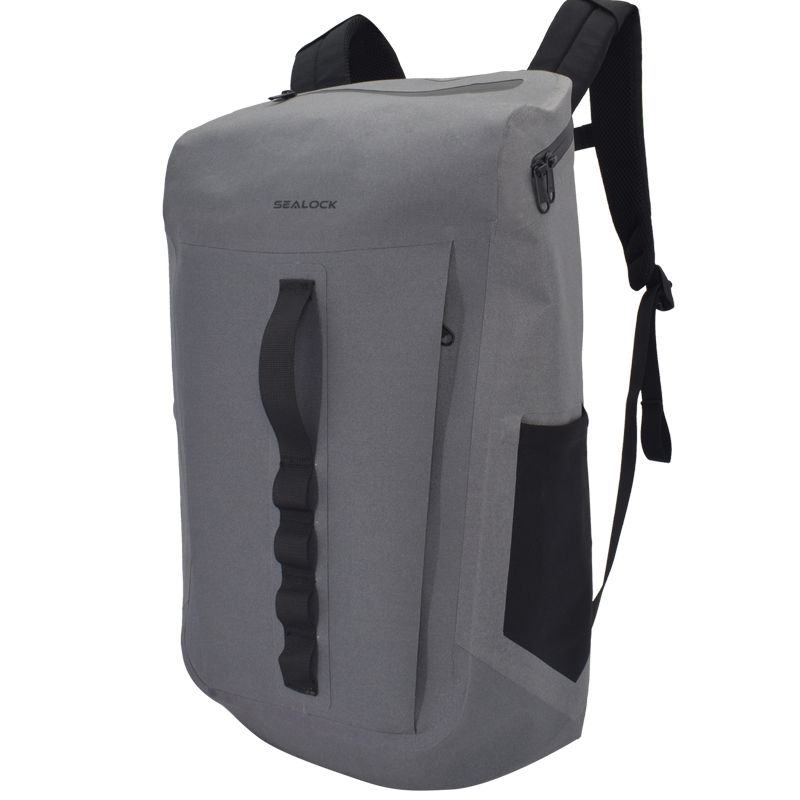
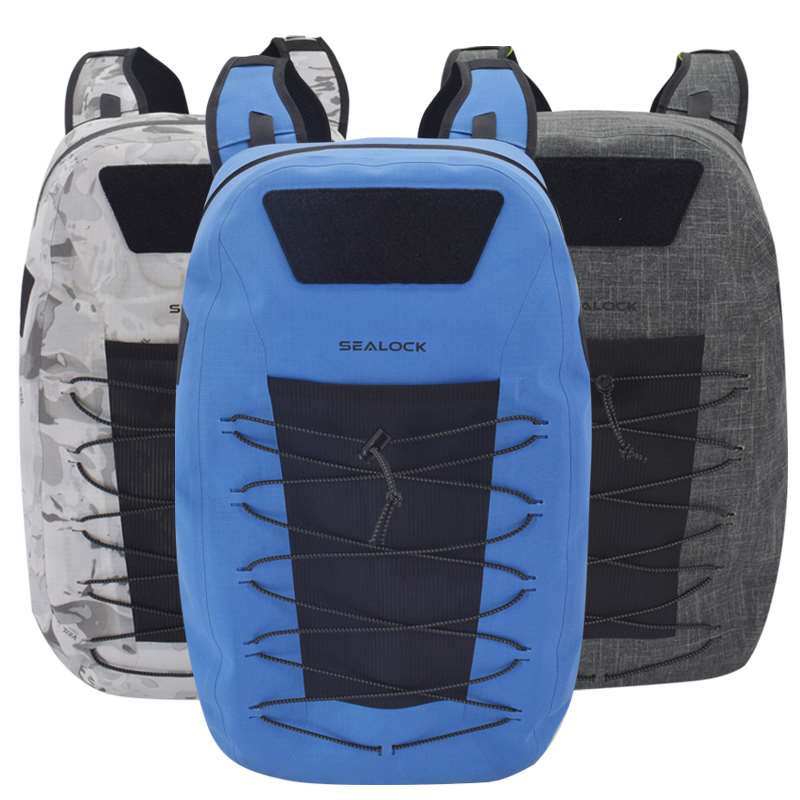
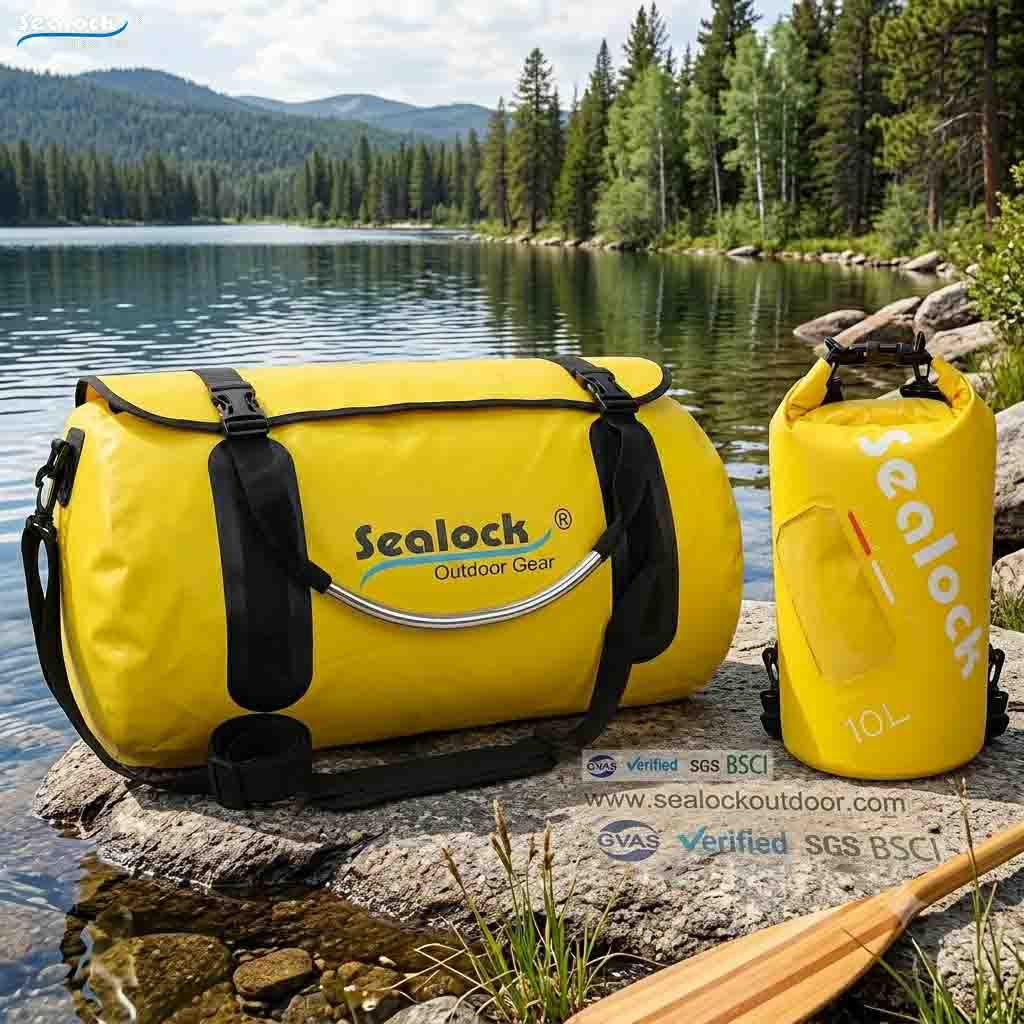
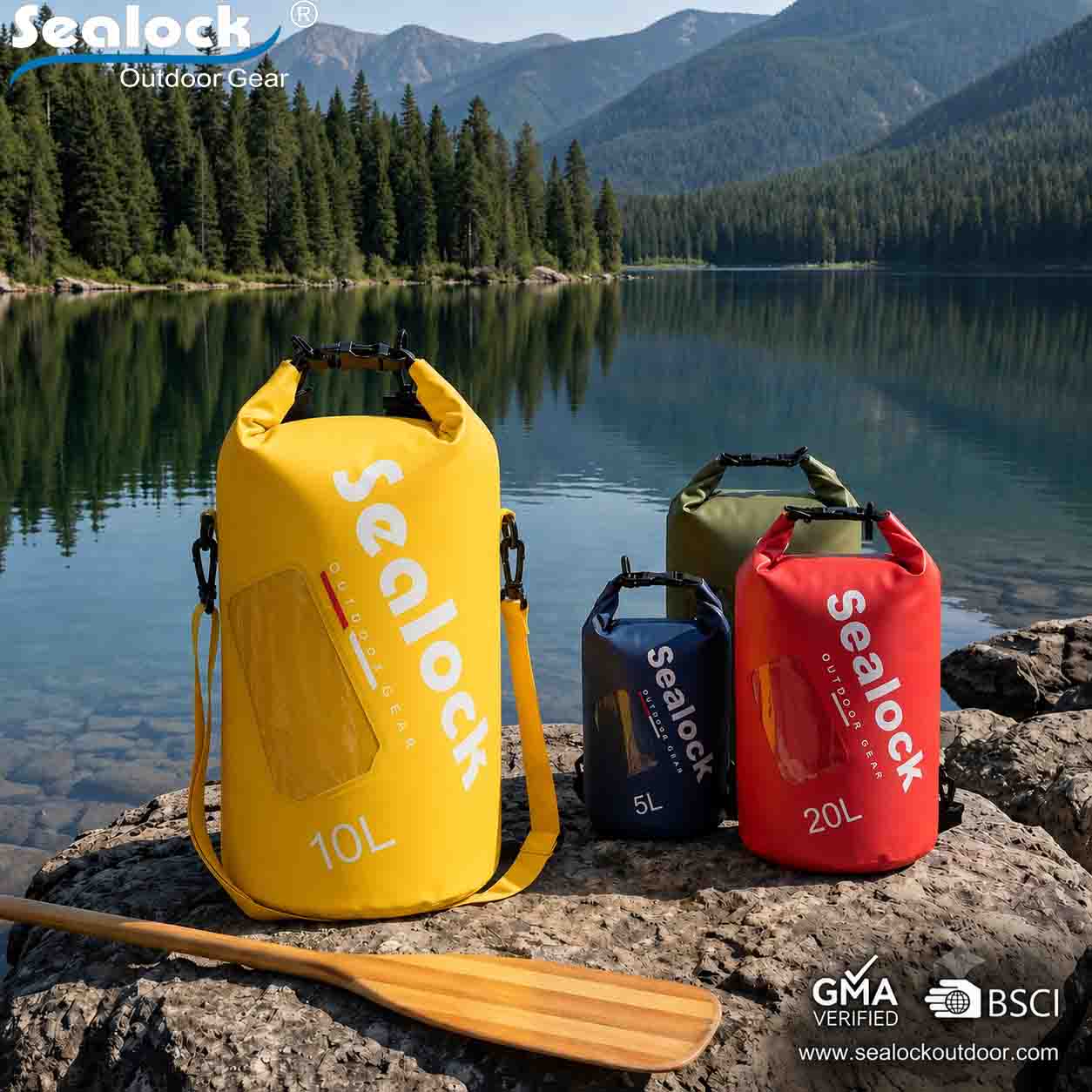
Sealock manufactures both the waterproof duffel bag and the dry bag, so procurement teams regularly ask the factory to draw a clear line between them. On a product page the two can look like cousins — both shrug off water, both come in bright colours, both get tossed into boats and truck beds. Yet for a buyer placing a wholesale order, the differences in shape, closure, and end use decide which one actually moves off the shelf. This guide breaks it down from a manufacturer's point of view, with real parameters and live product links so sourcing managers can quote with confidence.
Quick Answer: The Short Version
A dry bag is a single-chamber waterproof sack, usually sealed with a roll-top, built to keep water out completely. A waterproof duffel bag is a larger, structured carry bag — duffel-shaped, often fitted with backpack straps and grab handles — designed to haul a full kit while staying dry. Put plainly: a dry bag guards a handful of items, while a waterproof duffel bag moves an entire load. Both rely on the same welding technology, but they answer two different jobs.
figure 1:Shape Comparison Between Waterproof Duffel Bags and Roll-Up Dry Bags
Feature
Dry Bag
Waterproof Duffel Bag
Shape
Tube / sack
Structured duffel
Closure
Roll-top (or airtight valve)
Roll-top or airtight zipper
Typical capacity
2L – 100L
25L – 80L
Carry style
Single sling / shoulder strap
Backpack + duffel handles + shoulder strap
Best for
Kayaking, paddling, day trips
Travel, expeditions, full gear hauls
Who Makes Them: A Look at the Manufacturer
Both products come out of the same workshops at Sealock Outdoor Gear Co., Ltd., a waterproof bag maker with more than 21 years on the job. The brand has shipped to over 40 countries and holds 20+ waterproof product patents, which is why names such as Stanley, Osprey, Musto, and Simms have run OEM programmes through the plant. For a buyer, that track record is the difference between a factory that "can try" and one that has already solved the hard problems.
Factories & Capacity
Dongguan, China — 12,000 m², 400+ workers, 9 HF welding lines, ~100,000 units per month.
Ho Chi Minh City, Vietnam (two sites) — 10,500 m² and 7,000 m², popular with US and EU buyers chasing tariff savings.
R&D centre — a 2,000 m² Dongguan studio with a 10-person design team and 400-sample monthly capacity.
Certifications Buyers Ask About
Compliance paperwork is non-negotiable for serious retail and promotional accounts. Sealock carries SMETA P4, HIGG, SCAN, GRS, BSCI, and ISO9001, so audits and customs checks rarely become a bottleneck.
The Technology That Keeps Water Out
Whether the order is a dry bag or a duffel, the waterproof performance comes from the same engineering. This is the part that separates a true welded product from a "water-resistant" coated bag.
High-Frequency Welding
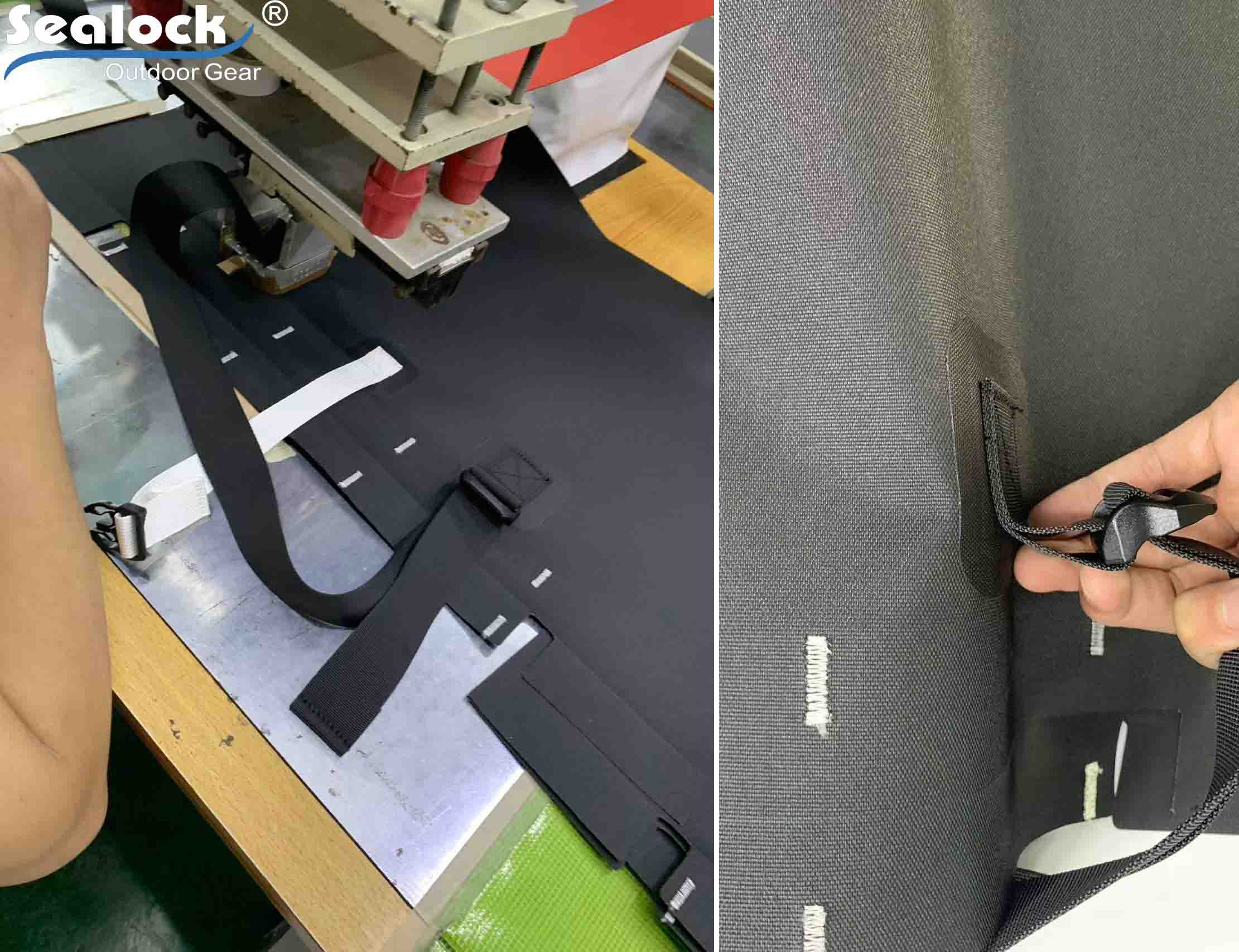
Seams are fused, not sewn. Using 27.12 MHz high-frequency (HF) welding, the panels are bonded into a single airtight shell with no needle holes for water to creep through. Stitched bags simply cannot reach this level of sealing, no matter how much tape is added.
The two workhorse fabrics are 500D PVC tarpaulin and TPU-coated cloth. PVC is tough, abrasion-proof, and cost-effective, which suits a heavy-duty dry bag or a workhorse waterproof duffel bag. TPU is lighter, softer, more flexible in the cold, and a touch greener — the preferred choice when weight and feel matter.
How the Factory Tests Waterproofing
Every welded design is validated to 1.0 Bar external pressure, meaning the seams hold even when the bag is pushed underwater rather than just rained on. That single test is why a Sealock dry bag floats when dropped overboard and why a packed waterproof duffel bag keeps its contents bone-dry through a soaking ferry crossing.
Product Lineup: Specs and Live Links
Below are the parameters buyers usually request first. Each link points to the live product page for full detail and quoting.
The Unplug model is the standout here: it converts between backpack, duffel, and dry-sack, so one SKU covers three carry styles. That flexibility makes a waterproof duffel bag an easy upsell for travel and adventure brands.
Notice the capacity range: a dry bag scales down to 2L for a phone-and-keys carry and up to 100L for a full boat haul, which a structured duffel cannot match. Paddlers also lean on models like the 28L kayak dry backpack with its inflation valve for extra rigidity on deck.
Quality Control: How Every Bag Is Checked
A welded seam either holds or it doesn't, so the factory treats inspection as a hard gate, not a formality. The QC flow runs in five steps:
Incoming material check — fabric thickness, coating, and roll defects are verified before cutting.
Weld-strength sampling — seams are pull-tested so the bond is stronger than the fabric itself.
Pressure / air test — finished bodies are checked against the 1.0 Bar standard to confirm a full seal.
Hardware & stitching review — straps, buckles, valves, and zippers are stress-checked on the duffel models.
Final cosmetic & packing audit — colour, print registration, and carton counts are signed off before shipment.
How to Choose: Duffel or Dry Bag?
The decision usually comes down to how the end customer carries and packs. A quick rule of thumb:
Choose a dry bag when the buyer's audience paddles, fishes, or wants a light single-chamber sack to drop inside a larger pack.
Choose a waterproof duffel bag when the audience travels, runs expeditions, or needs to shoulder a full kit with organised carry options.
Stock both when targeting general outdoor retail — the dry bag wins on price points, while the duffel lifts the average order value.
OEM / ODM: Working With the Factory
Sealock runs full OEM and ODM service, from a buyer's sketch through to mass production. The commercial terms are straightforward:
Item
Detail
MOQ
300–500 pcs (category-dependent)
Sampling
7–15 days
Customisation
Colour, size, logo (silk-screen), packaging
Trade terms
FOB Guangdong; China or Vietnam origin
Because Sealock holds factories in both China and Vietnam, US buyers can route a waterproof duffel bag or dry bag programme through the Vietnam site to ease tariff exposure — a practical edge that pure-China suppliers can't offer.
FAQ: Waterproof Duffel Bag vs Dry Bag
Q: What is the main difference between a waterproof duffel bag and a dry bag?
A: A dry bag is a single-chamber roll-top sack made to keep water fully out of a small load, while a waterproof duffel bag is a larger structured carry bag with handles and straps built to move a full kit. They share the same welded waterproofing but serve different carry needs.
Q: Is a dry bag more waterproof than a waterproof duffel bag?
A: Not necessarily. Both reach the same sealing level when welded to the 1.0 Bar standard. A roll-top dry bag and a roll-top duffel both keep contents dry; the zipper duffel adds easy access, so the trade-off is convenience versus the dry bag's simpler, fully sealed body.
Q: Which is better for kayaking — a dry bag or a waterproof duffel bag?
A: For kayaking, a dry bag usually wins because its slim tube shape slides into hatches and lashes to deck rigging. A waterproof duffel bag is the smarter pick for travel and longer expeditions where a buyer needs more capacity and structured carry.
Q: Can the factory produce both the waterproof duffel bag and the dry bag under one logo?
A: Yes. Sealock builds both in the same workshops with shared OEM service, so a buyer can launch a matching range — dry bag plus waterproof duffel bag — under a single brand, colourway, and packaging spec in one production run.
Talk to the Factory
For quotes, samples, or a full OEM proposal on either the waterproof duffel bag or the dry bag, reach the Sealock team at info@sealock.com.hk or +86-769-82009361. With 21+ years of welded-bag experience and dual China–Vietnam production, Sealock turns a product idea into a shippable, audit-ready order.
We use cookies to offer you a better browsing experience, analyze site traffic and personalize content. By using this site, you agree to our use of cookies.
Privacy Policy
 English
  Español
  Português
  русский
  Français
  日本語
日本語  Deutsch
  tiếng Việt
  Italiano
  Nederlands
  ภาษาไทย
  Polski
  Svenska
  magyar
  Malay
Malay  বাংলা ভাষার
  Dansk
Dansk  Suomi
Suomi  हिन्दी
  Pilipino
  한국어
한국어  Türkçe
  Gaeilge
  العربية
  Indonesia
  Norsk
Norsk  تمل
تمل  český
český  ελληνικά
  український
  Javanese
  فارسی
فارسی  தமிழ்
தமிழ்  తెలుగు
  नेपाली
  Burmese
  български
  ລາວ
ລາວ  Latine
  Қазақша
  Euskal
  Azərbaycan
  Slovenský jazyk
  Македонски
  Lietuvos
  Eesti Keel
  Română
  Slovenski
  मराठी
मराठी  Srpski језик