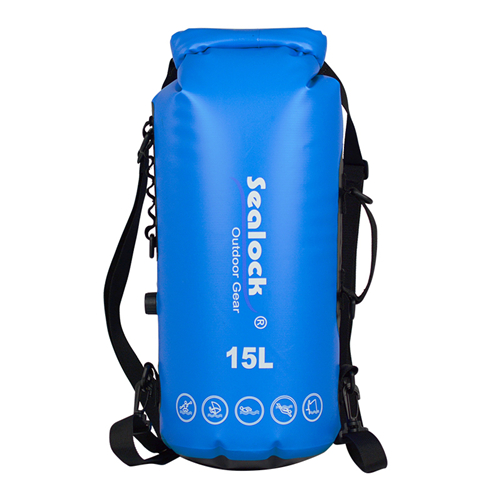
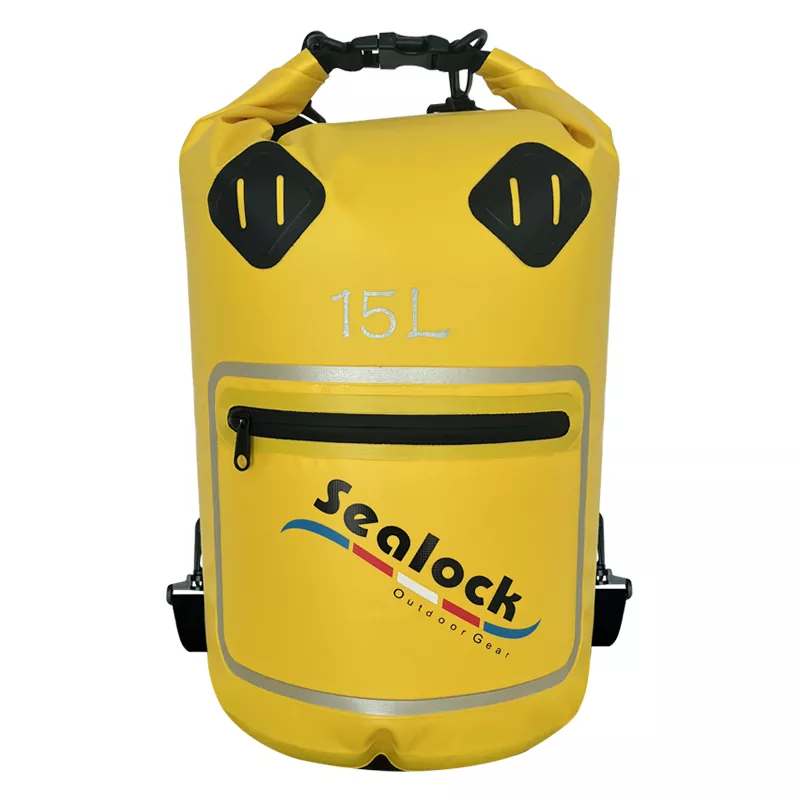
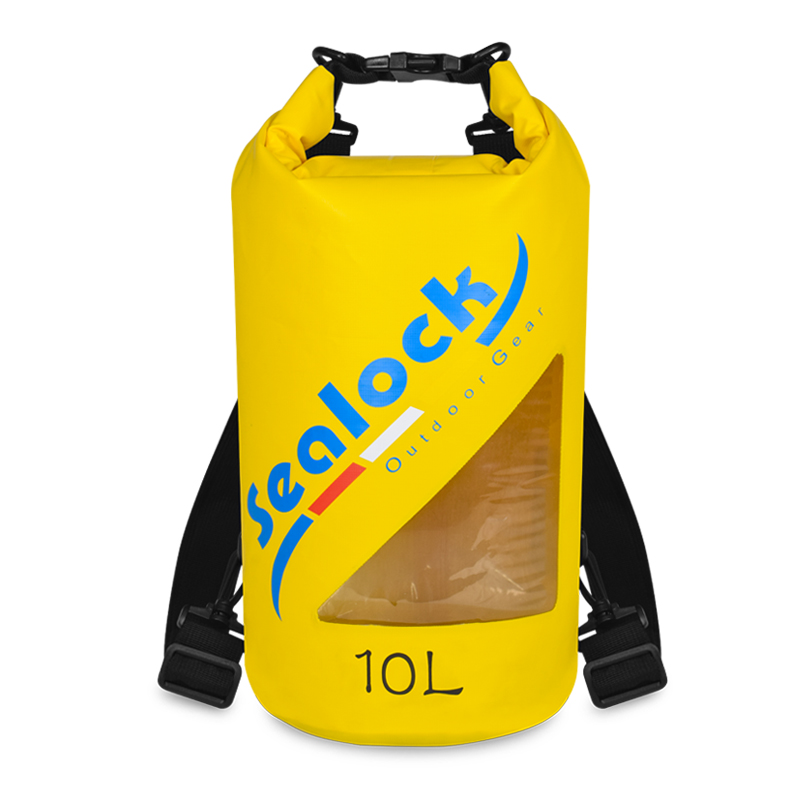
A dry bag is one of the few promotional products that gets tested by the person who receives it. A pen either writes or it does not, and a tote bag either holds groceries or it does not, but a dry bag makes a promise, and the recipient finds out whether the promise was kept the first time it rains at the beach or the bag goes over the side of a kayak. When a branded dry bag lets water in, the logo on the outside is the name that gets the blame.
This guide is for promotional product distributors, event agencies and corporate buyers ordering dry bags in volume. It explains the difference between the dry bags sold in the promotional market, how to plan an order around a fixed event date, which decoration methods suit a giveaway budget, and what to check before the cartons are shipped. It is based on over 20 years of making waterproof bags at our factories in Dongguan, China and Ho Chi Minh City, Vietnam.
Not Every Promotional "Dry Bag" Is Waterproof
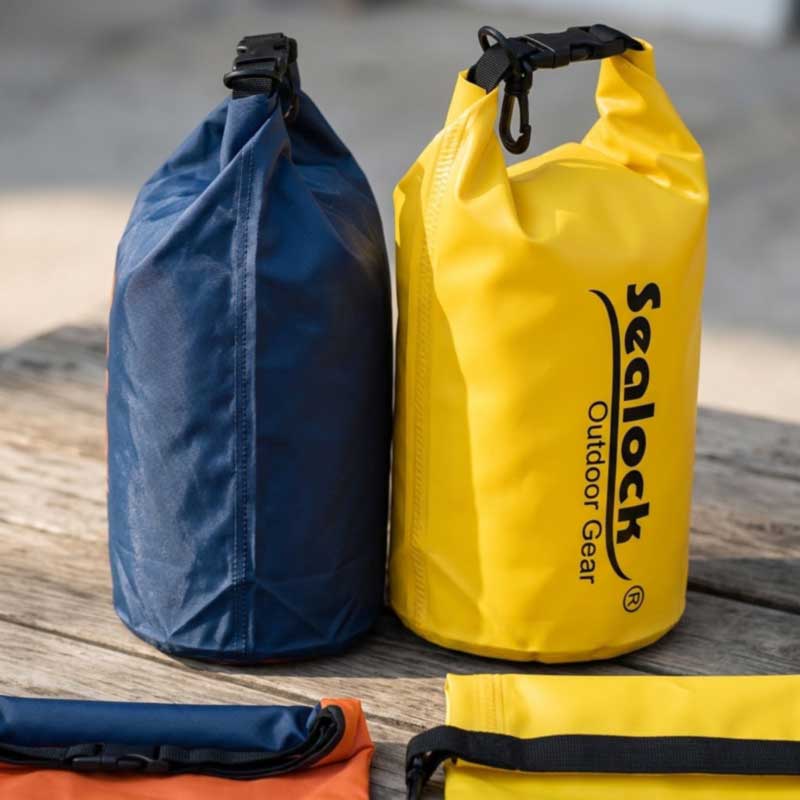
Browse any promotional catalogue and the word "dry bag" covers a wide range of products. At the lower end are bags made from thin 210D or 300D polyester or nylon with a PVC or PU coating and heat-sealed seams. They are light, colourful and inexpensive, and they are perfectly reasonable as a festival or trade-show giveaway that will mostly keep sand and splashes off a phone. They are not built for sustained rain or immersion, because thin coatings scuff through quickly and heat-sealed seams on light fabric can peel under load.
The standard for a working dry bag is 500D PVC tarpaulin or TPU-laminated fabric joined with high-frequency welded seams and closed with a roll-top and buckle. This is the construction used by paddling and outdoor brands, and it is what most recipients picture when they hear the word dry bag. It costs more per unit, but it is the version that will still be in use, and still showing the logo, a year after the event.
Neither option is wrong. The mistake is ordering the first while the campaign promises the second. If the brief says the bag is for boat days, fishing trips or surf clubs, the construction needs to match. If it is a light giveaway for a city event, a lighter build may be the better use of budget. We are happy to quote both so the choice is made on purpose. For the material side of this decision, our dry bag material guide on TPU and PVC covers the differences in more detail.
Two bags sold under the same name: light coated polyester on the left, 500D PVC with welded seams on the right.
Sizes That Work for Promotions
Promotional dry bags cluster around a few sizes for good reason. Two to five litres holds a phone, keys and wallet and fits in a delegate pack or a gift box. Ten litres is the most versatile size, large enough for a towel and a change of clothes and still cheap to ship in volume. Fifteen to twenty litres turns the bag into a genuinely useful piece of kit for boating and camping, and it gives the most print area for the logo. Larger sizes are usually reserved for VIP gifts and staff kits rather than mass giveaways.
Shipping volume matters more than buyers often expect. Dry bags pack flat, but a carton of 20-litre bags still takes far more space than a carton of 5-litre bags, and on a large order that difference can change the freight cost per unit noticeably. For a deeper look at how volume choices affect a range, see our dry bag capacity guide for wholesale buyers.
Planning an Order Around an Event Date
Promotional orders are almost always tied to a date that cannot move: a product launch, a trade show, a race or a summer campaign. That makes timing the single most important part of the order. A late delivery to a fixed event is not a delay, it is a failure, and the cost of rush freight, reprints and staff time to rescue it usually wipes out the margin on the job.
The safest way to plan is to work backwards from the event. Allow time for artwork approval and a branded pre-production sample, which typically takes 7–15 days. Bulk production follows in about 30–45 days. Sea freight then adds anything from about two to five weeks depending on the destination port, plus customs clearance and delivery to the venue. In practice, that means placing the order around three months before the event for sea freight. Air freight can recover a few weeks if the schedule is tight, at a much higher cost per unit, which is worth agreeing with the end client in advance.
Origin can matter as well. Because we produce in both China and Vietnam, buyers shipping to markets where the tariff on Chinese-origin goods is significant can choose Vietnamese origin for the same product. That decision is best made at quotation stage, not after the order is placed.
Decoration on a Giveaway Budget
For most promotional dry bags, a one- or two-colour screen print on one side is the most economical choice and is very durable when the ink is matched to the bag's coating. Full-colour logos on PVC are best handled with heat transfer. Full-coverage sublimation, where the whole bag is printed edge to edge, works on polyester fabric but not on PVC, so a bag designed for sublimation will be a polyester build with the waterproofing trade-offs described above.
Wherever the logo goes, keep it below the roll-top fold zone, where the surface stays flat and the print will not crack when the bag is rolled shut. Every additional colour and every additional print position adds to the unit price, so for large giveaway runs a strong single-colour logo usually gives the best result for the budget. Our article on which logo methods survive on a waterproof bag explains each method in detail.
A one-colour logo placed below the roll zone is the most cost-effective decoration for large runs.
Accessories, Packaging and Compliance
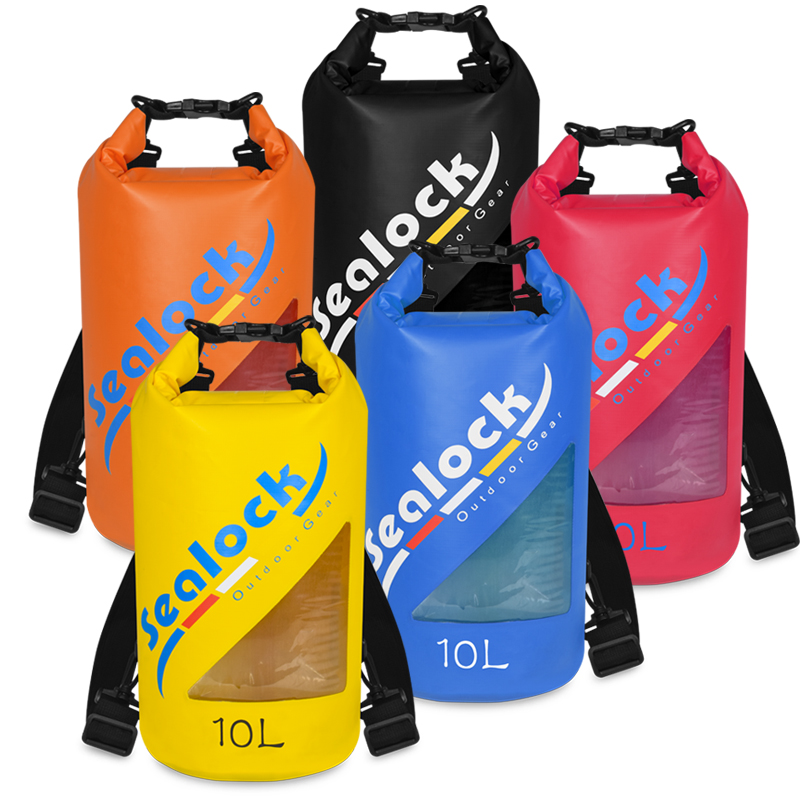
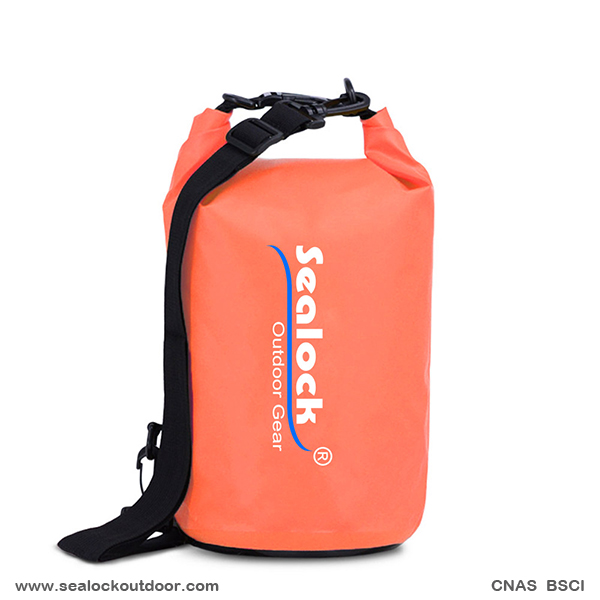
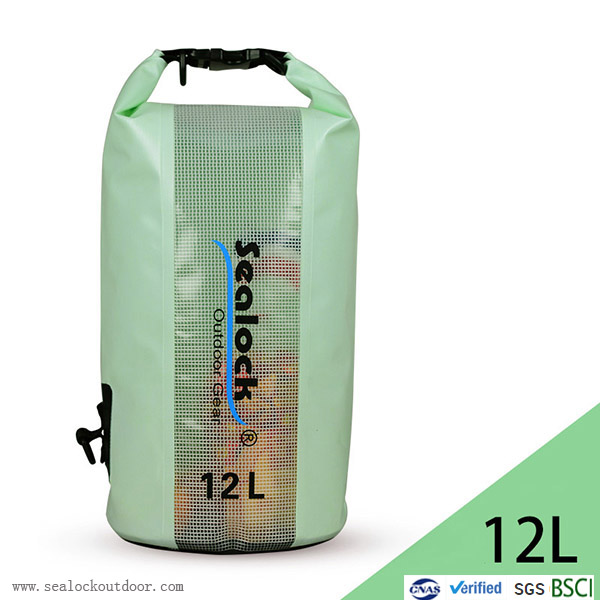
Small additions change how a promotional dry bag is used. A shoulder strap turns a 10- or 20-litre bag into something people carry all day, a clear phone window makes a small bag useful on the beach, and a carabiner or clip lets a 2- to 5-litre bag hang from a belt loop or a backpack. Clips supplied on promotional items should be described as accessory clips, not climbing equipment, and they should be specified to resist salt water if the bags are going to coastal events.
Packaging is the part of a promotional order that is most often forgotten until the last minute. Bags can be packed individually in poly bags, with header cards for retail-style display, or bundled into kits with other items. If the goods are being split across several event locations, cartons can be packed and labelled by destination at the factory, which saves the distributor a day of repacking on arrival.
Finally, a promotional dry bag ends up in consumers' hands, so the materials need to meet the rules of the destination market. PVC compounds can be specified to meet regulations such as REACH in Europe and California's Proposition 65, and TPU is an alternative for clients who prefer to avoid PVC altogether. Our 2-litre SL-D051, a popular promotional add-on, is supplied with REACH and EN71 test reports. Ask for the relevant test reports at the quotation stage, especially if the bags may be given to children.
Dry Bags Suited to Promotional Programmes
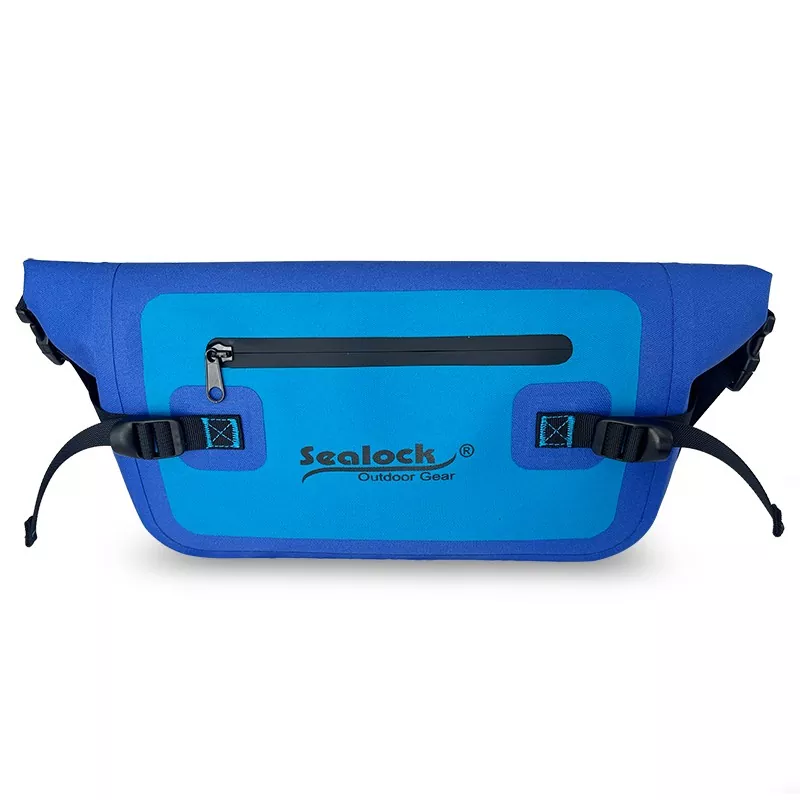
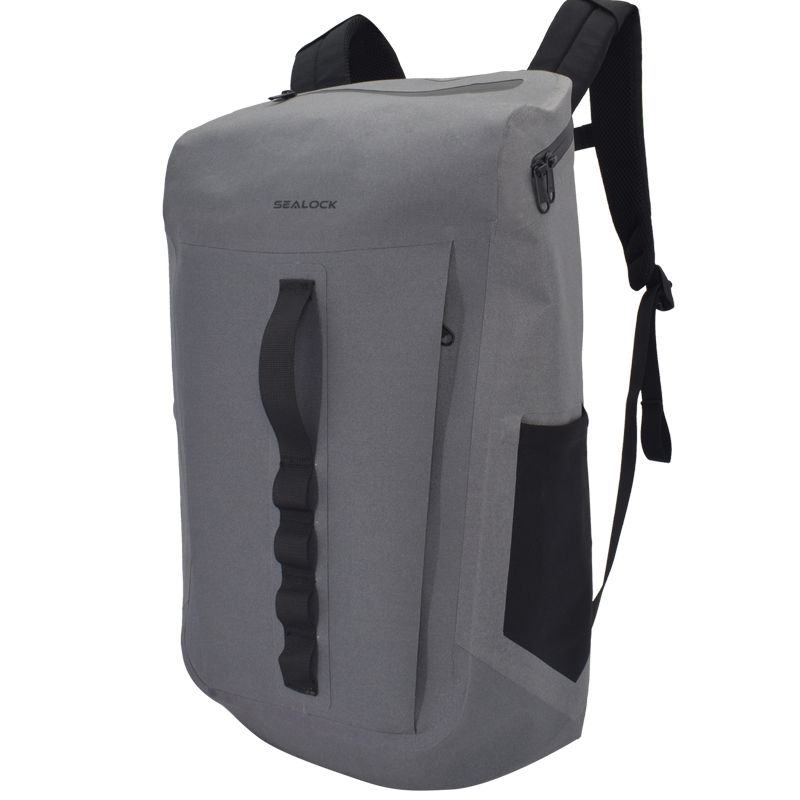
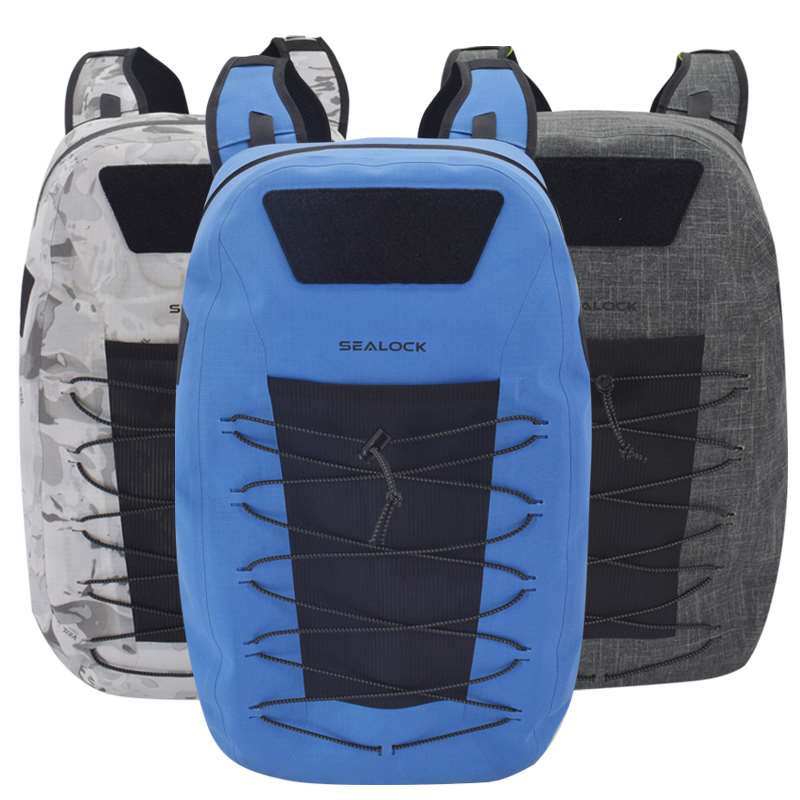
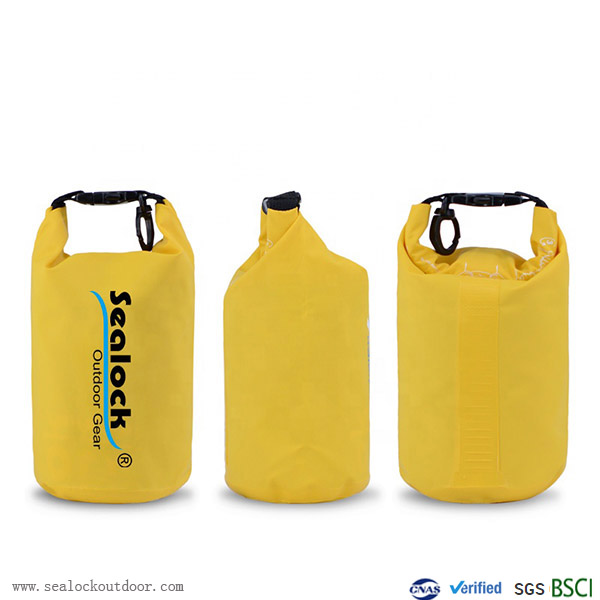
All of the products below can be supplied with your client's logo, colours and packaging. They cover the common promotional sizes from a pocket-sized pouch to a 20-litre bag with a window.
Promotional buyers rarely see the goods before their client does, so the inspection at the factory is the inspection that counts. Fabric, inks and hardware are checked at IQC on arrival, printing and welding are monitored at IPQC during production, and finished bags go through OQC before packing. SGS or QIMA third-party inspection can be booked on request, and many distributors use it on large or time-critical orders.
For the bag, we check tensile and bonding strength at the welded seams, run load testing through 1,500+ cycles, and test abrasion resistance. Salt spray testing applies to clips and metal hardware. For the branding, we check colour fastness, colour difference against the approved sample and print adhesion, so the logo on the last bag matches the first. Roll-top dry bags are verified with a heavy rain and water-jet test, and any style sold as submersible to IPX7 goes through a full water-immersion test of 2+ hours. Our article on how dry bags are tested before shipment describes each test step by step.
Frequently Asked Questions
What is the minimum order for promotional dry bags?
MOQ is 300 to 500 pieces per style with your logo, depending on the model. Several colours can usually be combined within one order, with a minimum per colour that we confirm in the quotation.
How much does a promotional dry bag cost?
Price depends mainly on size, material and decoration. A small PVC dry bag with a one-colour print sits at the lower end, while a 20-litre bag with a window, shoulder strap and multi-colour logo costs more. Order quantity, packaging and the choice of China or Vietnam origin also affect the final price, and we quote these separately so you can adjust the specification to the budget.
Can you print a full-colour logo?
Yes. Full-colour logos on PVC are applied by heat transfer. If you want the whole bag printed edge to edge, that requires a polyester build suited to sublimation, which is less waterproof than PVC.
How long does a promotional order take?
Branded samples take about 7–15 days and bulk production about 30–45 days, followed by shipping. For sea freight, we recommend ordering around three months before the event date.
Will the bags float?
A closed dry bag with air trapped inside will usually float, which helps if it is dropped from a boat or pier. It is a convenience, not a safety feature, and should not be promoted as a flotation aid.
Can you pack and label cartons for different event locations?
Yes. We can pack by destination, apply your carton labels and include header cards or individual bags so the goods are ready to hand out on arrival.
Plan Your Next Promotional Dry Bag Order
Send us your client's event date, quantity, logo and target unit price, and we will recommend a size, build and decoration method that fits the budget and the deadline, then prepare a branded sample. Contact us at info@sealock.com.hk or call +86-769-82009361.
We use cookies to offer you a better browsing experience, analyze site traffic and personalize content. By using this site, you agree to our use of cookies.
Privacy Policy
 English
  Español
  Português
  русский
  Français
  日本語
日本語  Deutsch
  tiếng Việt
  Italiano
  Nederlands
  ภาษาไทย
  Polski
  Svenska
  magyar
  Malay
Malay  বাংলা ভাষার
  Dansk
Dansk  Suomi
Suomi  हिन्दी
  Pilipino
  한국어
한국어  Türkçe
  Gaeilge
  العربية
  Indonesia
  Norsk
Norsk  تمل
تمل  český
český  ελληνικά
  український
  Javanese
  فارسی
فارسی  தமிழ்
தமிழ்  తెలుగు
  नेपाली
  Burmese
  български
  ລາວ
ລາວ  Latine
  Қазақша
  Euskal
  Azərbaycan
  Slovenský jazyk
  Македонски
  Lietuvos
  Eesti Keel
  Română
  Slovenski
  मराठी
मराठी  Srpski језик