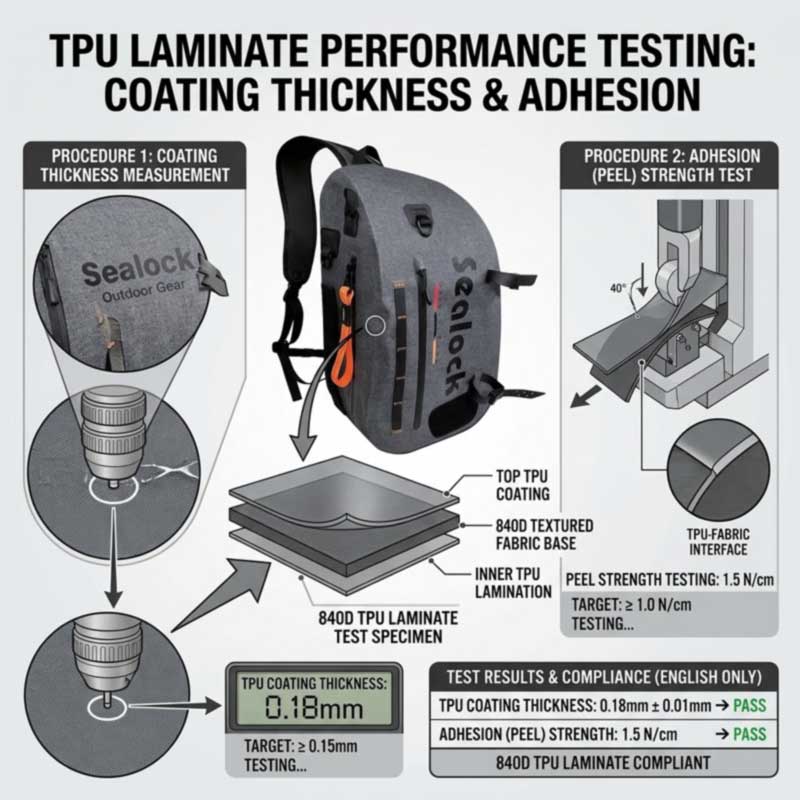
Sealock is a fly fishing pack manufacturer and OEM supplier. Material selection in this category has a clear benchmark, and it is worth naming: the premium waterproof fly packs on the market are built from 840-denier ballistic nylon coated with TPU on both sides of the fabric. That specification exists because fly fishing attacks a pack in ways other outdoor categories don't — including one chemical threat the angler brings along deliberately. This guide covers the real material decisions: denier, single versus double-sided lamination, puncture, and chemical exposure.
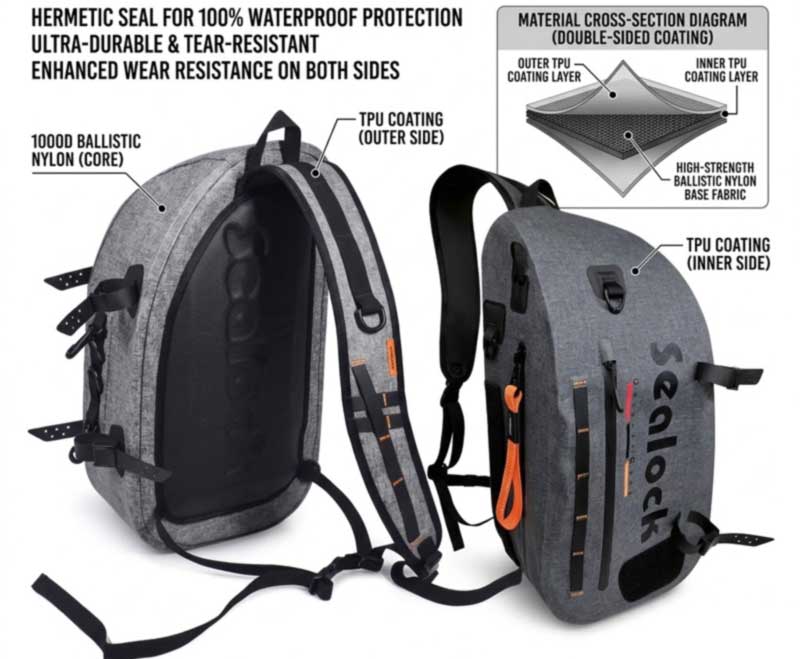
Why "Both Sides" Is the Specification That Matters
Most coated fabrics are laminated on one face. The premium fly fishing standard laminates both, and the difference is structural rather than cosmetic:
A sealed barrier from either direction. Water pressing from outside and moisture from wet gear inside both meet a coated surface, rather than one coated face and one exposed woven face.
The base weave is encapsulated. An exposed nylon face wicks — nylon absorbs water and takes on weight. Coating both sides removes the wicking path entirely.
Weldability on both faces. High-frequency welding fuses coating to coating. Double-sided lamination means a seam can be welded regardless of how the panels fold, which matters on the complex geometry of a fly pack.
Abrasion protection on the inside too — relevant when hard tools, boxes and a reel sit against the inner wall.
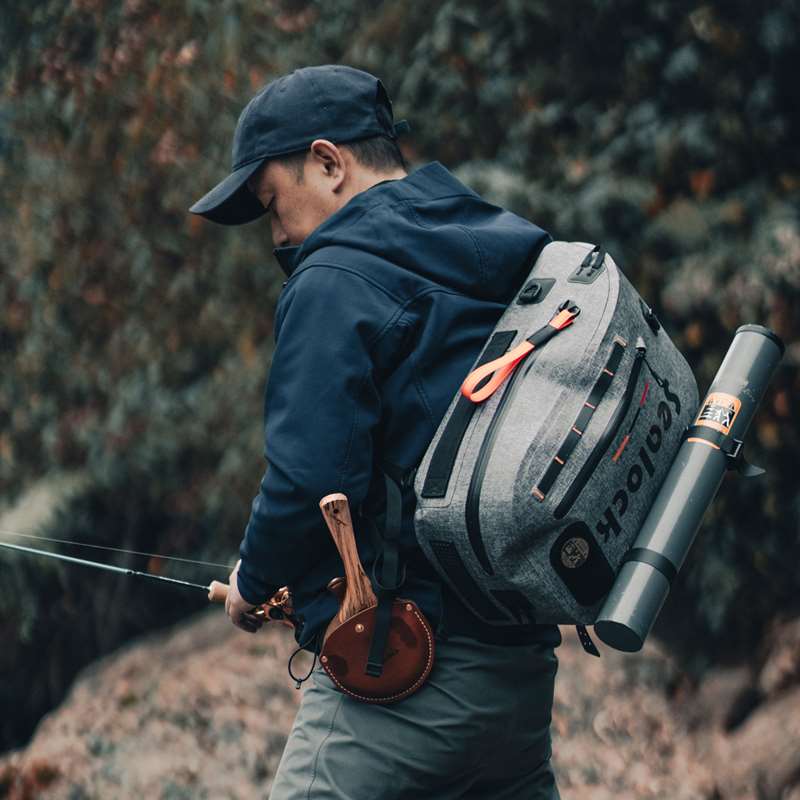
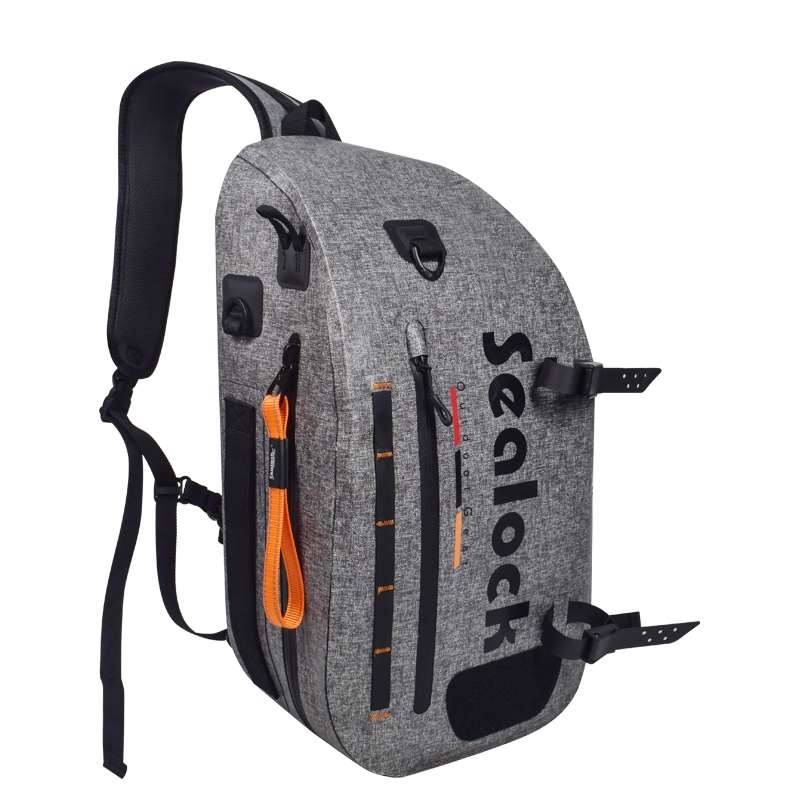
Our SL-E008-1 and SL-E217B use 840D TPU double-sided lamination; the SL-E217B additionally carries an internal reinforced fabric layer between the coatings. This is the same construction logic as the benchmark packs in the segment — unsurprising, since we build for brands in it.
Coated on both faces — the weave is encapsulated, not merely covered.
420D or 840D: The Actual Decision
420D TPU
840D TPU (double-sided)
Weight
Noticeably lighter — matters on a sling worn one-shouldered all day
Heavier; justified when the pack is carried on a harness
Abrasion
Good for brush, rock contact and normal wading
Ballistic-grade — the standard for hard use
Puncture
Adequate
Substantially better — the reason the premium tier specifies it
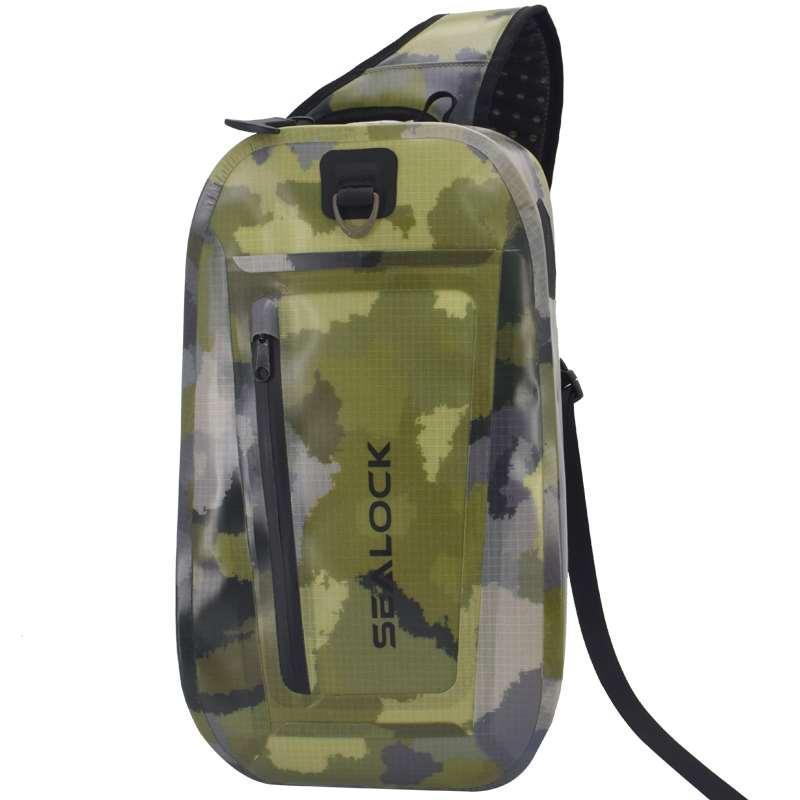
The honest framing for a brand: 420D is not the compromise version, it's the right answer for a lighter pack that gets carried on one shoulder for eight hours. 840D is the right answer where the pack takes real punishment and the harness carries the extra weight. Our 10L sling uses 420D TPU; our 14L and 24L packs use 840D. That is a deliberate ladder, not a cost hierarchy.
The Threat No Other Category Faces: DEET
This is the material consideration specific to fishing, and it is routinely absent from specifications. DEET, the active ingredient in most insect repellents, is an aggressive solvent for synthetic materials. Harvard Health notes it can damage plastic, rayon, spandex, leather and painted or varnished surfaces, and that anglers must wash it off their hands because it can dissolve fishing line, wader material and related gear. Trout Unlimited puts it more bluntly for fly line: even a small dose will, over time, eat through the coating and begin to break down the nylon core.
An angler applies repellent to their hands and then handles the pack all day, every day, all season. A pack is therefore exposed to DEET more consistently than almost any other piece of gear. The practical implications:
TPU is the better coating here. Its chemical resistance is superior to softer coatings and to bare synthetics, which is one more reason the premium tier converged on TPU laminate.
Printed logos are the vulnerable point. Painted and varnished surfaces are explicitly on the damage list, so specify catalysed inks or, better, a welded logo patch on packs aimed at markets where repellent use is heavy.
Zipper pulls, tabs and trim in softer plastics take the same exposure. Specify materials, not just colours.
Put it on the care card. Advising customers to wash repellent off their hands and wipe the pack down is cheap and prevents warranty claims that aren't manufacturing faults.
Sunscreen, fly floatant and fish slime add to the same picture. Chemical exposure resistance belongs in a fly pack specification alongside abrasion and UV.
The pack is handled all season by hands carrying repellent — a welded logo outlasts a printed one.
Puncture: The Hook Problem
Puncture resistance is named explicitly in this category for a reason no other outdoor product shares: hooks. Flies get pressed against the pack, stowed on patches, dropped into pockets and caught on the shell. Add thorns, brush and the sharp edges of rock banks, and the material has to resist penetration rather than just rubbing.
This is where ballistic-grade 840D earns its place. It is also why reinforcement matters as much as base denier: high-wear zones, the base panel, and every attachment loop should be reinforced, since damage to the material creates the openings that defeat the waterproof function altogether. A pack that is 840D everywhere but unreinforced at the load points is not a well-specified pack.
Abrasion, UV and the Rest
Abrasion — rocks, brush, boat gunwales and repeated wear from swinging a sling round to the chest. Ballistic weave outperforms standard woven fabrics here.
UV — a full season on open water with no shade. TPU laminate holds up markedly better than uncoated or lightly-coated alternatives, and UV-stabilised grades extend colour and strength retention.
Saltwater — for flats programmes, hydrolysis resistance and corrosion-resistant hardware, plus a rinse instruction on the care card.
Temperature — TPU stays flexible in cold, which matters for winter steelhead and shoulder-season fishing where a stiff pack is hard to work with numb hands.
Matching Material to the Fishery
Programme
Specify
Trout, walk-and-wade day slings
420D TPU — lighter on one shoulder for eight hours
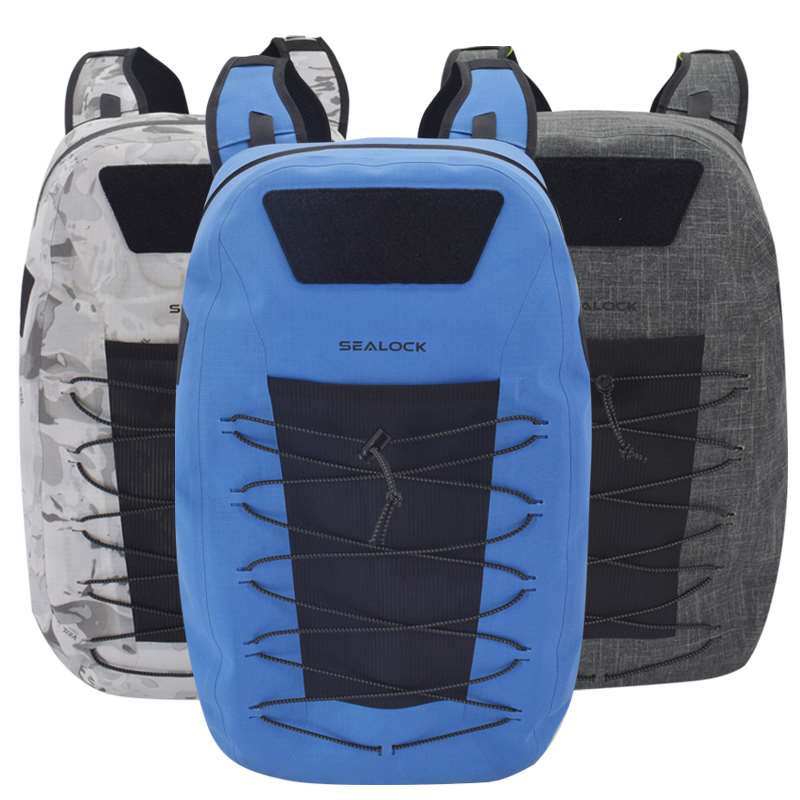
840D TPU composite with internal reinforced fabric, TPU coated both sides — the reinforced-core build
300–500
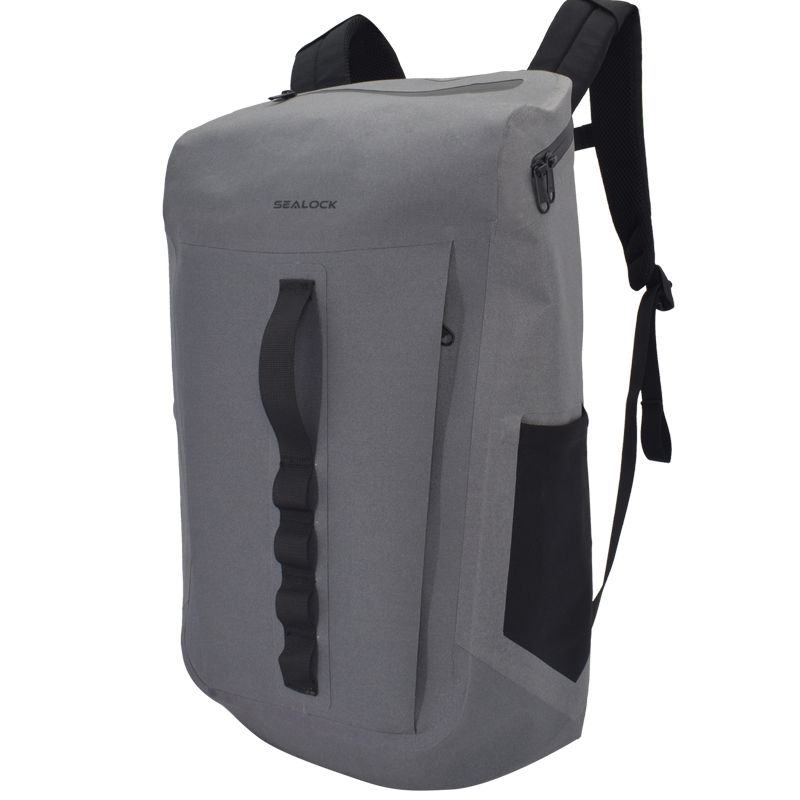
SL-E008-1 Fly Fishing Pack 24L — seamless airtight construction; waterproof zipper with strong vapour tightness; front tool suspension system; side bottle storage; detachable extended vest with its own airtight pouch.
840D TPU double-sided lamination — the category benchmark spec, on the tier that takes the most punishment
300–500
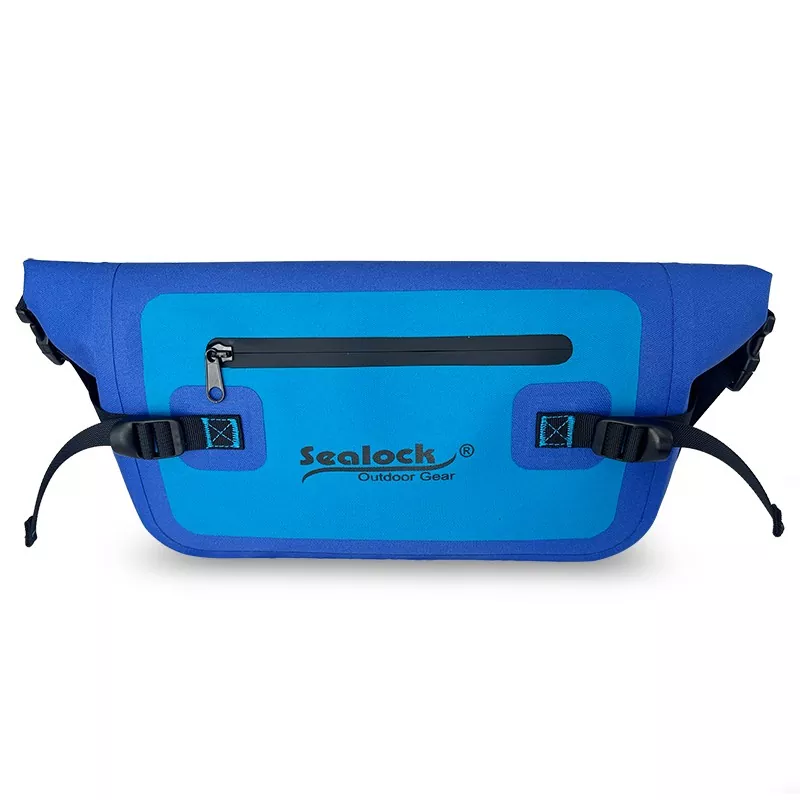
SL-F142 Waterproof Fishing Waist Bag — 4.5L; waterproof zipper; reflective front pocket; side pocket for a 1.5L bottle; expandable side waist belt; BSCI.
420D TPU tarpaulin — light hip-pack tier for short sessions
300
Denier, lamination (single or double-sided), reinforcement zones, UV stabilisation, hardware grade, trim materials, colourway and branding method are all specifiable per order, or a pack can be developed from a sketch.
Coating thickness and adhesion on both faces — a double-sided laminate has to be verified as one.
Verifying the Material
Quality is gated in three tiers — IQC (incoming laminate checked for coating thickness and adhesion on both faces, weldability, colour difference and fastness, plus zippers, hardware and trim against the signed standard), IPQC (cutting tolerance, weld integrity, zipper installation and attachment stitching in line, with peel tests on sample welds at each run start), and OQC (ISO 2859 AQL sampling, real water-submersion batch testing, and gold-sample comparison, with SGS or QIMA available). Sealock also strictly executes the complete customer inspection procedure on finished goods: unboxing, vacuum extraction, a 24-hour static rest, and air-leak determination. For fly packs the lab weights toward puncture and tear resistance, delamination testing on the double-sided laminate, UV ageing, and salt spray, alongside weld bond and peel strength, seam strength with load cycling on anchors, abrasion, tensile, colour fastness and colour difference.
FAQ: Fly Fishing Pack Materials
Q: What is the benchmark material in this category?
A: 840-denier ballistic nylon with TPU coating on both sides of the fabric. It's what the premium waterproof fly packs are built from, and it's the construction used on our 14L and 24L models.
Q: Why coat both sides?
A: A single-coated fabric leaves an exposed nylon face that wicks and absorbs water. Coating both sides encapsulates the weave, gives a sealed barrier from either direction, allows welding on either face, and protects the inner wall from hard tools and boxes.
Q: Is 420D a downgrade?
A: No — it's the correct choice for a day sling carried on one shoulder for eight hours, where weight is a genuine performance factor. 840D is correct where the pack takes hard use and a harness carries the extra weight. Specify by use, not by hierarchy.
Q: What is the biggest chemical risk to a fly pack?
A: DEET. It damages plastics, coatings and painted or varnished surfaces, and it's on the angler's hands all season. Specify TPU coating, prefer a welded logo over print, specify trim materials rather than just colours, and put a wipe-down instruction on the care card.
Q: Why is puncture resistance called out so often in fly fishing?
A: Hooks. Flies are pressed against, stowed on and caught on the pack constantly, alongside thorns and rock. Damage to the material creates openings that defeat the waterproofing, so puncture resistance protects the seal, not just the appearance.
Q: Can you supply recycled or UV-stabilised versions?
A: Yes — recycled (GRS) options and UV-stabilised grades are available, which matter for eco-positioned lines and for saltwater programmes spending full seasons in the sun.
Talk to the Factory
To specify materials for your fly fishing pack programme, contact Sealock at info@sealock.com.hk or +86-769-82009361. Over twenty years of high-frequency welding and industrial sewing under one roof, 420D and 840D double-sided TPU construction, OEM production for leading fishing brands, dual China–Vietnam manufacturing, and a full customer inspection procedure on every shipment.
We use cookies to offer you a better browsing experience, analyze site traffic and personalize content. By using this site, you agree to our use of cookies.
Privacy Policy
 English
  Español
  Português
  русский
  Français
  日本語
日本語  Deutsch
  tiếng Việt
  Italiano
  Nederlands
  ภาษาไทย
  Polski
  Svenska
  magyar
  Malay
Malay  বাংলা ভাষার
  Dansk
Dansk  Suomi
Suomi  हिन्दी
  Pilipino
  한국어
한국어  Türkçe
  Gaeilge
  العربية
  Indonesia
  Norsk
Norsk  تمل
تمل  český
český  ελληνικά
  український
  Javanese
  فارسی
فارسی  தமிழ்
தமிழ்  తెలుగు
  नेपाली
  Burmese
  български
  ລາວ
ລາວ  Latine
  Қазақша
  Euskal
  Azərbaycan
  Slovenský jazyk
  Македонски
  Lietuvos
  Eesti Keel
  Română
  Slovenski
  मराठी
मराठी  Srpski језик