Sealock manufactures waterproof bags in Dongguan, China and in Ho Chi Minh City, Vietnam. Almost every US buyer we speak to now opens with origin rather than product, and most are working from information that is out of date — the rules changed twice in 2026 alone. This guide sets out where things actually stand as of September 2026, why the China–Vietnam gap is narrower than it was, and the compliance test that decides whether a Vietnamese-made bag counts as Vietnamese. Tariff policy is moving quickly; treat this as a framework and confirm current rates for your HTS codes with your customs broker before committing.
What Changed, and When
Three things happened in quick succession, and each reset the arithmetic:
20 February 2026 — the US Supreme Court struck down the IEEPA "reciprocal" tariff regime. The headline rates that had driven a wave of sourcing decisions — Vietnam at 46%, Bangladesh 37%, Cambodia 49% — ceased to apply, and duties paid under them from April 2025 became refundable.
24 February – 24 July 2026 — a flat 10% Section 122 surcharge applied while a longer-term structure was worked out.
24 July 2026 — Section 122 expired at its 150-day statutory limit and was replaced the same day by a Section 301 forced-labour tariff, following USTR investigations into how trading partners enforce prohibitions on goods produced with forced labour. It is two-tier: 10% for most economies, and 12.5% for a list of roughly 46–60 economies that includes both China and Vietnam.
The practical implication is the one most sourcing pages haven't caught up with: Vietnam is in the higher tier, alongside China. The blanket assumption that moving to Vietnam removes a tariff problem no longer holds in the form it did in 2025.
Two origins, one standard — but origin is now a compliance question, not just a cost one.
Where the Two Origins Actually Stand
Layer
China
Vietnam
MFN base rate
Applies (textiles average around 9%; varies widely by HTS)
Applies — Vietnam has PNTR status, so standard WTO treatment
Applies — 7.5% to 25% depending on the product list
Does not apply — these are China-only
Free trade agreement
None
None — no preferential rate beyond MFN
Net effect
Most penalised origin, because product-specific 301 stacks on top
Lower total burden, but no longer the clean advantage of 2025
For context on scale: Vietnamese fabrics now sit at roughly the 9% base plus 12.5%, around 21.5% total — against approximately 55% under the old 46% IEEPA regime. The collapse from those 2025 rates to a near-uniform base is the largest shift in sourcing economics the sector has seen in a decade, and it has changed which decisions make sense.
One development worth watching if you buy in volume: alongside the forced-labour tariff, USTR has proposed a textile and apparel mechanism under which a designated volume of imports could qualify for a reduced Section 301 rate, tied to the importing country's purchases of US-origin textile inputs such as cotton and man-made fibres, administered through a three-year tariff-rate quota programme. It isn't settled, but it could matter for larger programmes.
The Test That Actually Decides Origin
This is the part that gets glossed over on supplier websites, and it is where buyers carry real risk. A bag is not Vietnamese because it was packed in Vietnam. US Customs applies a substantial transformation test: a new and different article of commerce must emerge in Vietnam, with a different name, character or use from the imported inputs.
What does not qualify:
Relabelling.
Minor processing.
Adding Vietnamese components to goods that are essentially Chinese.
And here is the part any honest supplier should tell you rather than hide: US customs guidance explicitly lists "Chinese-headquartered factories with Vietnamese assembly plants" as a red flag, along with production that only recently shifted to Vietnam. Vietnam is also subject to anti-circumvention scrutiny on goods using Chinese components, and USTR opened further Section 301 investigations in March 2026 covering both economies.
We are a Chinese company with Vietnamese plants. That description matches the red flag on paper, which is precisely why the documentation has to be real rather than asserted. A buyer's protection is not a supplier's reassurance — it is a Certificate of Origin plus supply-chain documentation that stands up to a substantial-transformation analysis, and that is what should be requested from any supplier making a Vietnam-origin claim, including us.
What to Ask Any Supplier Offering Vietnam Origin
Which operations happen where? Specifically: where is the fabric cut, where is it welded, where is it sewn, where is it assembled and finished. Substantial transformation turns on the manufacturing, not the packing.
Can you provide a Certificate of Origin and the supporting supply-chain documentation? If a supplier hesitates here, that is your answer.
How long has the Vietnamese production been running? Recently-shifted production attracts more scrutiny than an established plant.
What is the input origin? Coated fabric, zippers, buckles and webbing all have origins, and the analysis considers them.
Can the same specification be produced in either country? If yes, you retain flexibility as policy moves — which, given that it has moved twice this year, has value in itself.
What is the forced-labour compliance position? The current Section 301 tier is explicitly a forced-labour measure, so social audit status is now a tariff-adjacent question, not just an ethics one.
How Sealock Is Set Up
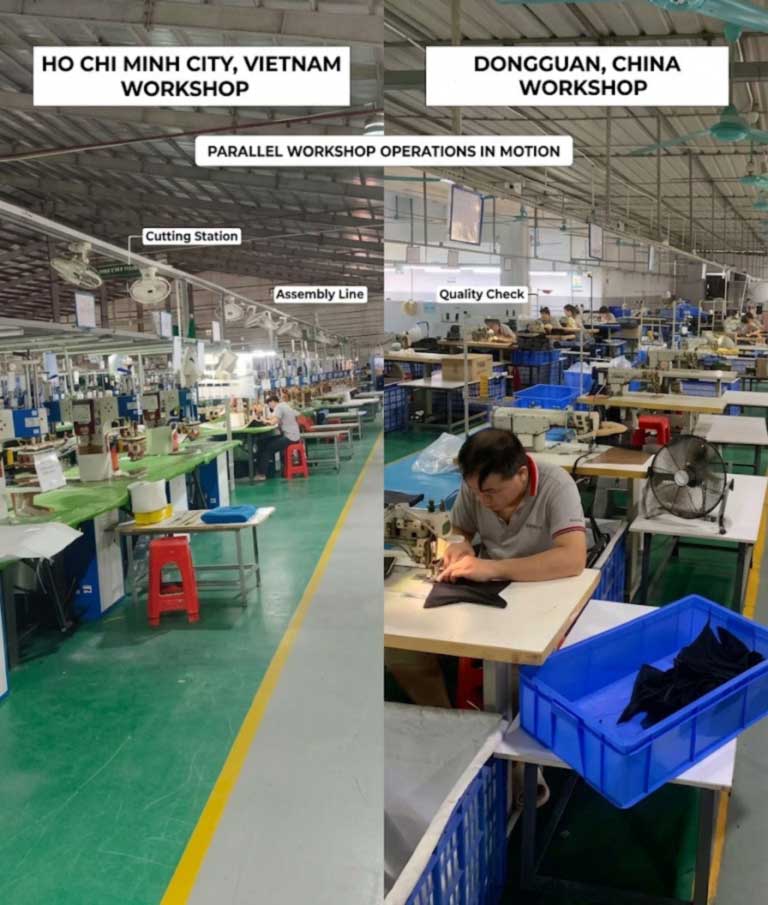
Dongguan, China — 12,000 m², 400+ staff, nine high-frequency welding lines, around 100,000 units per month.
Two plants in Ho Chi Minh City, Vietnam — established manufacturing rather than a recent relabelling arrangement, running the same welding and sewing standard as Dongguan.
The same specification can be quoted from either origin, which is the practical point: a brand can hold one approved gold sample and choose the production base per order as policy changes.
Social and quality audits in place — SMETA P4, BSCI, ISO 9001, HIGG, GRS and SCAN, with Bureau Veritas, SGS, REACH, EN71 and RoHS testing at product level. Given that the current tariff tier is a forced-labour measure, an auditable social compliance position is more commercially relevant than it was a year ago.
Documentation on request — Certificate of Origin and supporting production records for any Vietnam-origin order.
What we won't tell you is that Vietnam origin makes a tariff problem disappear. It doesn't, in the current structure — both origins sit in the 12.5% tier, and the real China–Vietnam difference now comes from the product-specific Section 301 lists that apply only to Chinese goods. Whether that difference is material depends entirely on your HTS codes, which is a conversation for your broker with your product in front of them.
Practical Sourcing Positions
If you are…
Worth considering
A US importer with products on a Section 301 list
Vietnam origin can remove that stacked layer — provided substantial transformation is genuinely met and documented
A US importer whose HTS codes aren't on those lists
The gap may be smaller than expected; run the landed cost before restructuring supply
Selling outside the US
None of this applies to your market; choose origin on cost, lead time and capacity
Uncertain where policy goes next
Dual-origin capability on one approved specification is the hedge — it converts a structural decision into a per-order one
Importing at volume
Watch the proposed textile tariff-rate quota mechanism tied to US-origin inputs
SL-J033 Waterproof Expedition Pack — 45/55/65L; TPU on 420D nylon; IPX8 rubber sealing strip; reinforced abrasion base; padded harness and hip belt.
300–500
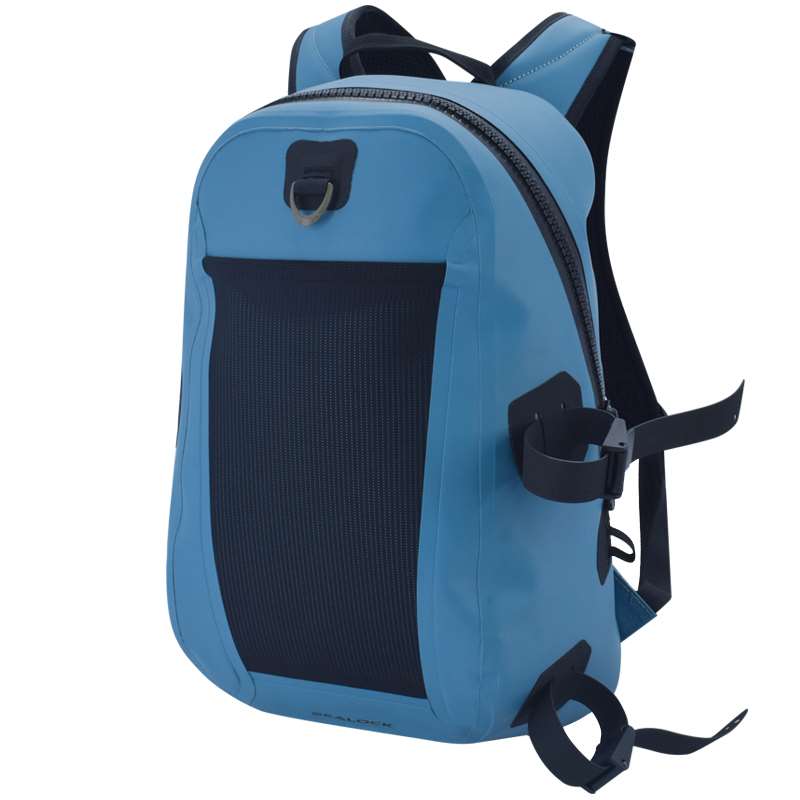
SL-F115 Waterproof Sling Waist Pack — approx. 3L; 500D PVC; IPX7; airtight main zipper plus water-resistant front pocket; breathable padded back panel.
300
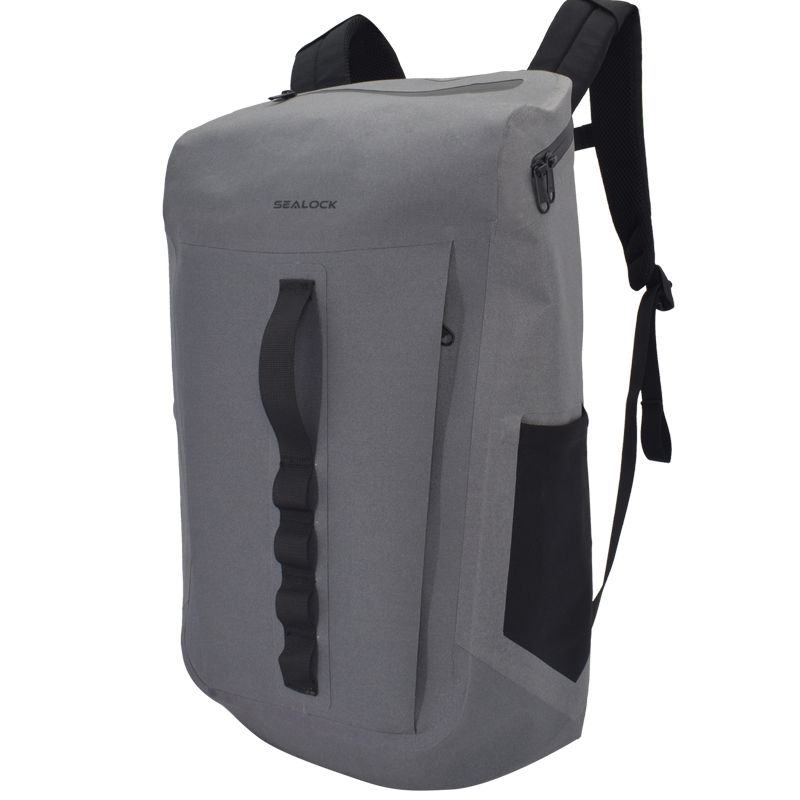
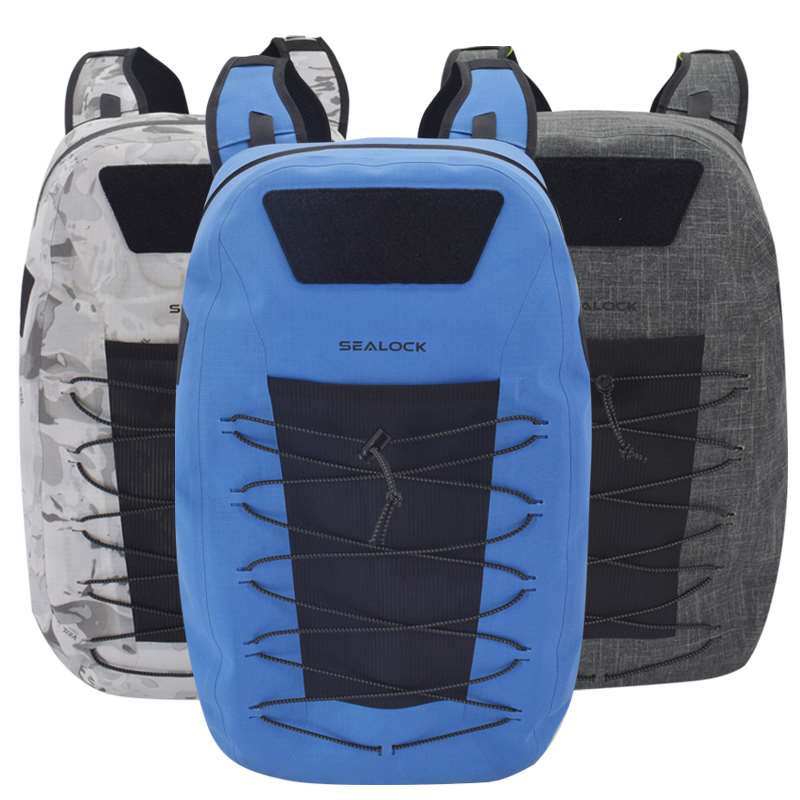
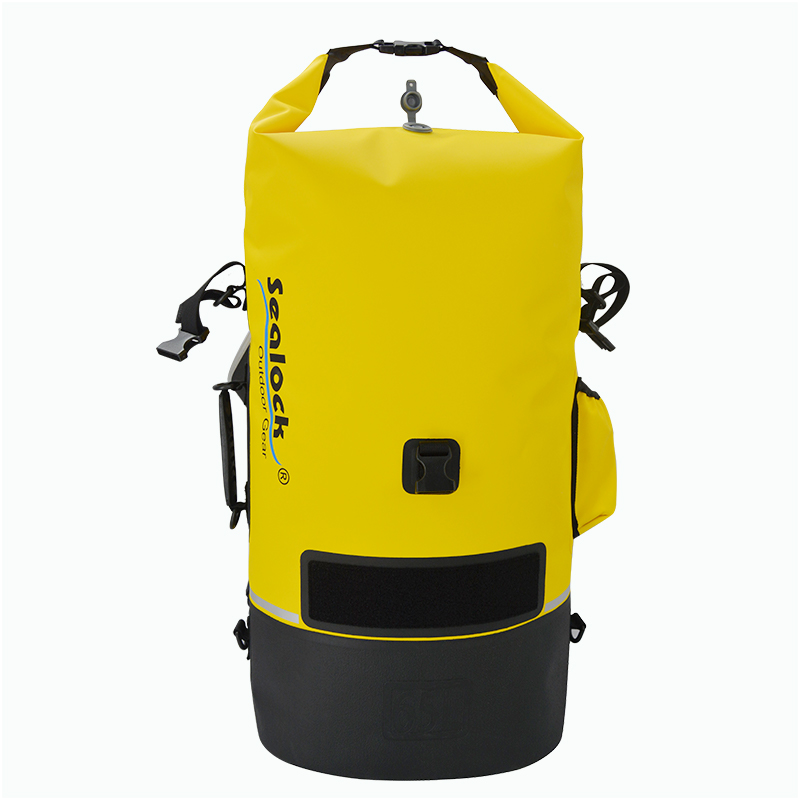
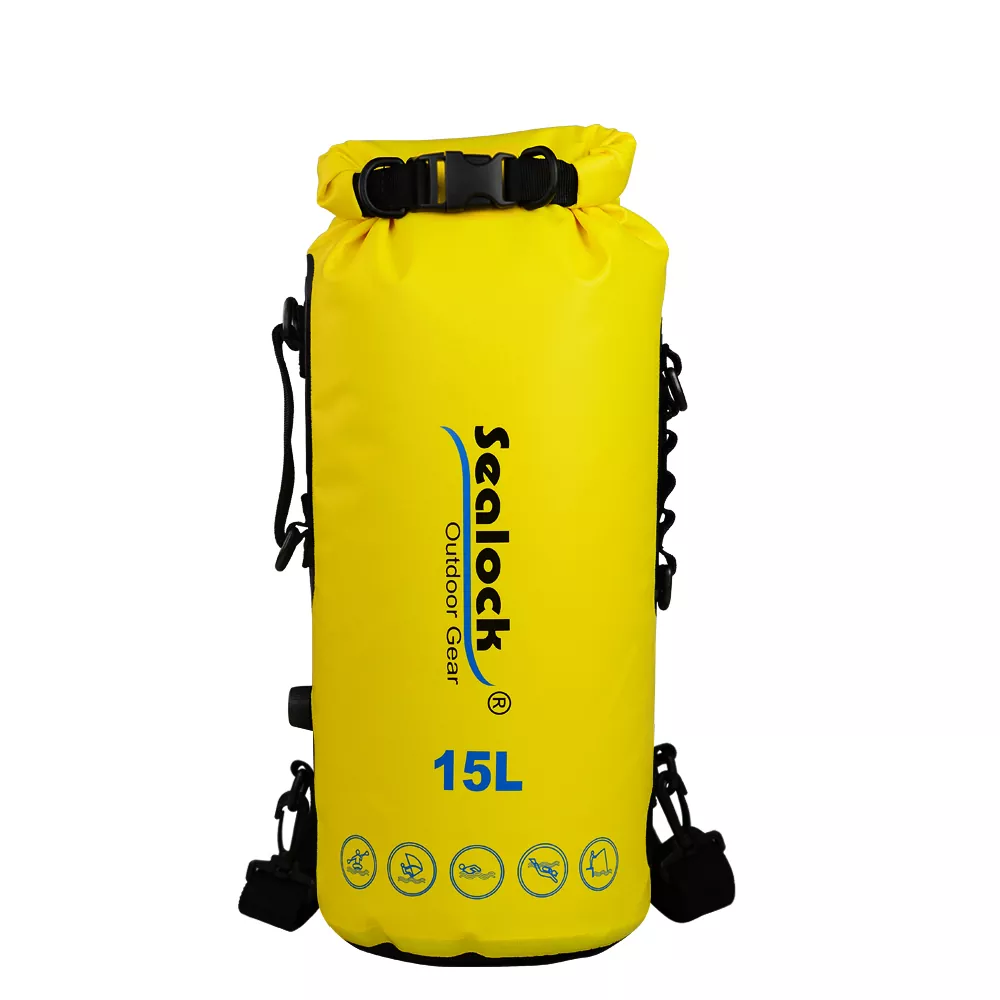
SL-E102 Dry Backpack — 15L / 20L / 30L with published dimensions per size; 500D PVC mesh; custom colours and sizes.
300
Any model in our range can be quoted from Dongguan or Ho Chi Minh City against the same approved specification and gold sample. MOQ is 200–500 pieces depending on the model, samples run 3–15 days, and production 20–45 days after approval.
The Same Standard in Both Plants
Dual origin is only useful if the product is identical, so both bases run the same three-tier system — IQC on incoming fabric, hardware, webbing and thread against the signed standard; IPQC covering cutting tolerance, weld integrity with peel tests at each run start, and load-point stitching; and OQC with ISO 2859 AQL sampling, real water-submersion batch testing and gold-sample comparison, with SGS or QIMA inspection available in either country. Both also execute the complete customer inspection procedure on finished goods: unboxing, vacuum extraction, a 24-hour static rest, and air-leak determination.
FAQ: China and Vietnam Sourcing
Q: Does moving to Vietnam still avoid tariffs?
A: Not the way it did in 2025. Since 24 July 2026 both China and Vietnam sit in the 12.5% tier of the Section 301 forced-labour tariff. The remaining difference is the product-specific Section 301 lists from 2018, which apply only to Chinese goods and range from 7.5% to 25% — so whether Vietnam helps depends on your HTS codes.
Q: What happened to the 46% Vietnam rate?
A: The Supreme Court struck down the IEEPA reciprocal regime on 20 February 2026. Duties paid under it from April 2025 became refundable, and Vietnamese textile duties now run closer to the 9% base plus 12.5%.
Q: We're a Chinese company with Vietnamese plants — isn't that a red flag?
A: On paper it matches a listed red flag, and we'd rather say so than have you discover it later. What resolves it is evidence: which operations occur where, how long the plants have been running, input origins, and a Certificate of Origin with supporting documentation. Ask us for it, and ask any other supplier the same.
Q: What is substantial transformation?
A: The Customs test for origin. A new and different article of commerce must emerge in the country claimed, with a different name, character or use. Relabelling, minor processing, or adding local components to essentially Chinese goods does not qualify.
Q: Can we hold one specification and switch origin per order?
A: Yes, and given that the rules changed twice in 2026, that flexibility is the practical hedge. One approved gold sample, quoted from either plant.
Q: How current is this information?
A: It reflects the position as of September 2026, after the July restructuring. Rates and programmes are moving; confirm your specific HTS codes with your customs broker before making a sourcing decision on the strength of any supplier's summary, including this one.
Talk to the Factory
To discuss dual-origin production, documentation, or a quotation from either base, contact Sealock at info@sealock.com.hk or +86-769-82009361. Over twenty years of high-frequency welding and industrial sewing, nine welding lines in Dongguan, two plants in Ho Chi Minh City, auditable social and quality compliance, and a full customer inspection procedure on every shipment.
We use cookies to offer you a better browsing experience, analyze site traffic and personalize content. By using this site, you agree to our use of cookies.
Privacy Policy
 English
  Español
  Português
  русский
  Français
  日本語
日本語  Deutsch
  tiếng Việt
  Italiano
  Nederlands
  ภาษาไทย
  Polski
  Svenska
  magyar
  Malay
Malay  বাংলা ভাষার
  Dansk
Dansk  Suomi
Suomi  हिन्दी
  Pilipino
  한국어
한국어  Türkçe
  Gaeilge
  العربية
  Indonesia
  Norsk
Norsk  تمل
تمل  český
český  ελληνικά
  український
  Javanese
  فارسی
فارسی  தமிழ்
தமிழ்  తెలుగు
  नेपाली
  Burmese
  български
  ລາວ
ລາວ  Latine
  Қазақша
  Euskal
  Azərbaycan
  Slovenský jazyk
  Македонски
  Lietuvos
  Eesti Keel
  Română
  Slovenski
  मराठी
मराठी  Srpski језик