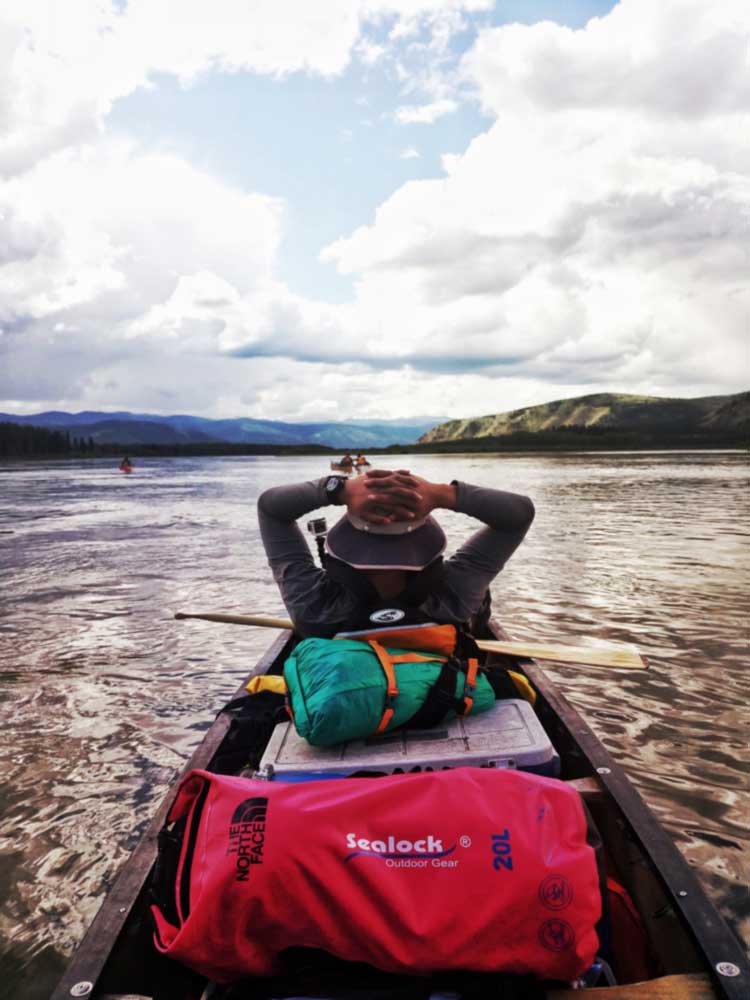
Sealock is a custom waterproof camping bag manufacturer and OEM supplier. Most camping bag orders go wrong in the same two places: the capacity is specified from a catalogue number rather than from the gear that has to fit, and the closure is chosen without understanding what it costs in usable space and access. This guide walks a buyer through the decisions that actually determine whether a camping bag works — sizing, closure, material, carry, and verification — with the real numbers behind each.
Step 1: Size From the Gear, Not the Label
Capacity is the first and most consequential decision. The practical ladder that experienced outdoor buyers work to:
Capacity
What it actually holds
2–5L
Phone, keys, wallet, camera, documents
5–10L
Day trip: a change of clothes, snacks, headlamp, first-aid kit
10–20L
Multi-day clothing, shoes, bulkier personal gear
20–30L
Group gear and camping essentials
30–50L
Extended trips: tent, sleeping bag, larger loads
50–80L
Basecamp and family loads, hauling a full kit
Two adjustments matter more than the table itself. First, add a 5–10L buffer over your calculated gear volume, because the roll-down consumes space (see below). Second, beware the 30L trap: a standard uncompressed three-season sleeping bag alone can fill about three-quarters of a 30L sack, leaving no room to roll properly — too tight for camping, too floppy for a day trip. If a sleeping bag is in scope, step up rather than squeeze.
Size from the gear that has to fit — then add a buffer for the roll-down.
Step 2: Understand What the Closure Costs
Roll-top — and the volume it eats
A roll-top is the industry standard because it seals reliably and has nothing to break. But the sealed roll consumes real height: closing one takes up roughly 15–20 cm of vertical fabric, with each fold using about 4–5 cm. In practice that means usable capacity is around 4–6L less than the bag's flat-state number. A properly sealed roll needs at least three folds, and four for standing water. Spec the capacity with that loss already accounted for, and note that a roll-top works best when the bag is close to full — an under-filled large bag rolls into a floppy, unstable shape.
Waterproof zipper — speed for maintenance
An airtight zipper gives quick, wide access, which matters on a big duffel that gets opened repeatedly at camp. The trade-offs are real: the seal is tight by design, so it takes noticeably more effort to open and close; it needs cleaning and care, since dirt and salt deposits degrade it; and an overstuffed zippered bag may not seal properly. It's the right choice for access-heavy basecamp bags, less so for a bag that will be pushed underwater for long periods.
The professional's trick
For genuinely critical items, experienced users put a small dry bag inside a bigger one — a camera in a 5L sack inside a 30L pack. Two independent seals rarely fail together, and it costs almost nothing. A brand can build this into a range by offering small dry pouches alongside the main bags.
Step 3: Choose the Material for the Conditions
500D PVC tarpaulin — tough, abrasion-resistant, and cost-effective; the workhorse for hauling duffels and rugged dry bags.
TPU-coated fabric — lighter, softer, and importantly more flexible in the cold; heavy polymer fabrics stiffen badly at low temperatures, so TPU is the better choice for cold-weather and shoulder-season camping.
Recycled (GRS) options — where a brand needs a sustainability story with documentation.
Denier is about durability and weight, not waterproofing — the coating and the seam method are what keep water out. Specify all three separately.
Step 4: Specify the Carry and Hardware
Padded shoulder straps above 30L — anything bigger than that needs proper straps; a loaded 40L+ bag on thin webbing is unusable on a trail.
Lash points — D-rings, daisy chains, and webbing loops for strapping to a roof rack, raft, or bike; on an overlanding bag these are essential, not decorative.
A tough base — a welded, seamless base handles wet ground and takes the most abrasion.
Access — a wide mouth or a lid pocket prevents the “dig to the bottom” problem on large duffels.
Four folds seal it — and cost 15–20 cm of height, or roughly 4–6L of capacity.
Step 5: Plan the System, Including Wet Gear
A camping range works better as a set than as one big bag. Modular smaller bags beat a single large one for organization, and two habits from experienced campers are worth designing around: keeping the sleeping bag in its own dedicated dry bag that only gets opened at bedtime, and carrying a separate bag for wet or muddy gear so damp kit never mixes with clean clothing. For a brand, that argues for a stepped ladder of sizes rather than a single hero SKU — the approach set out in our OEM camping bag guide for outdoor brands.
Step 6: Verify Before Bulk
Never approve a production run on a spec sheet. A fabric figure is not a finished-bag result — test the sample you're given:
Put absorbent paper inside, seal the bag, and submerge it fully.
Press on the closure and add weight; leaks appear under pressure that don't show at rest.
Reverse the test — fill it with water, seal it, and lay it flat to check the seams.
Load it to capacity and confirm the roll-top still closes with enough folds, or that the zipper seals without straining.
Carry it loaded to check straps, handles, and lash points.
Then gate the order: a signed golden sample, three-tier IQC/IPQC/OQC with AQL sampling and a submersion batch test, and an independent pre-shipment inspection before final payment. The wider vetting framework is in our guide to choosing a waterproof bag supplier.
Common Buying Mistakes
Ignoring the roll-down loss — ordering to the flat-state number and finding the bag 4–6L smaller in use.
Landing on 30L with a sleeping bag in scope — the classic squeeze.
Confusing denier with waterproofing — thickness is durability, not sealing.
Choosing a heavy PVC for cold-weather use — it stiffens; TPU stays flexible.
Approving on paper — the dunk test is the only proof that counts.
The Product Basis
These welded bags, from Sealock's waterproof camping bag line, are equal starting points to specify against — none is ranked above another; pick whichever base matches the use case and customize capacity, fabric, colour, and branding:
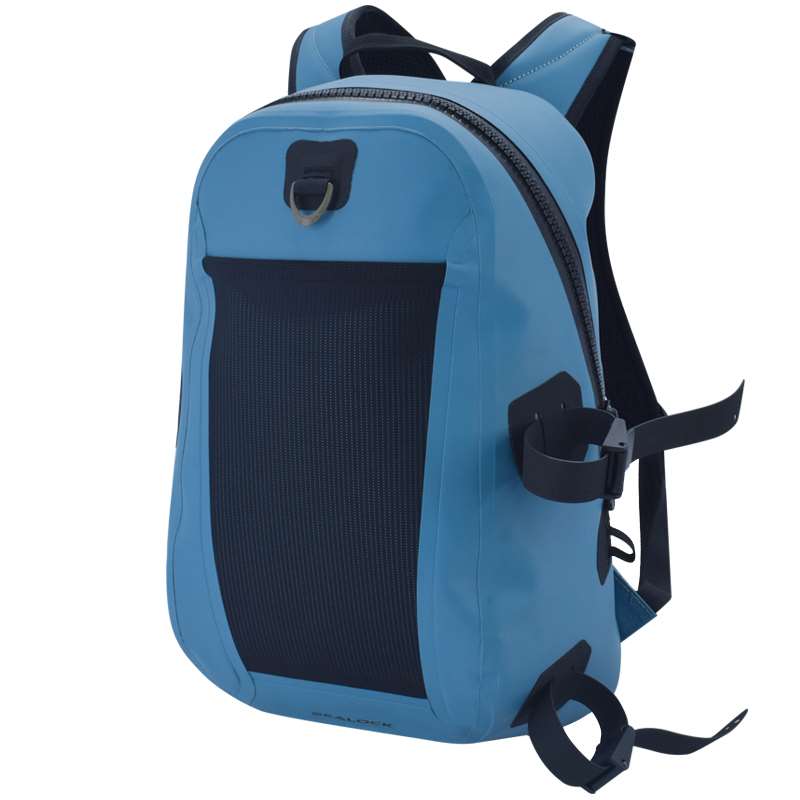
Unplug Ultimate Adventure Bag — 25L / 45L / 65L; TPU-coated, fully sealed welded seams; converts between backpack, duffel, and dry-sack; padded breathable straps; floats.
Cold-weather flexibility; multiple carry styles
HF-welded; TPU-coated
300–500
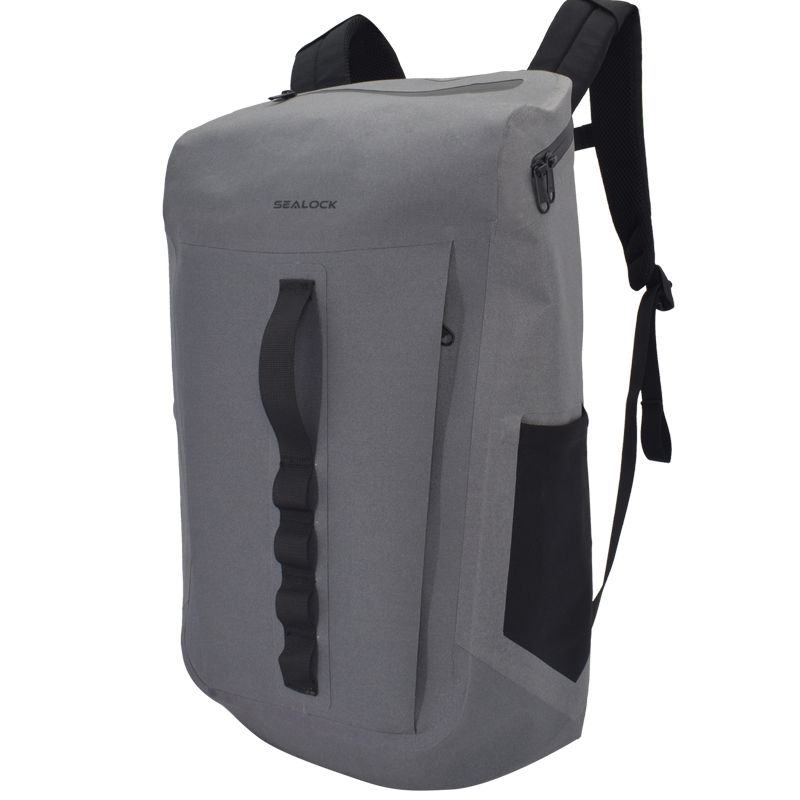
Roll-Top Waterproof Backpack — 30L; 500D PVC tarpaulin; HF-welded; roll-top (fold 3–4 times and buckle); front splash-proof zip pocket; side mesh bottle pocket.
Trail-in carry with quick-access pocket
HF-welded; 500D PVC
300–500
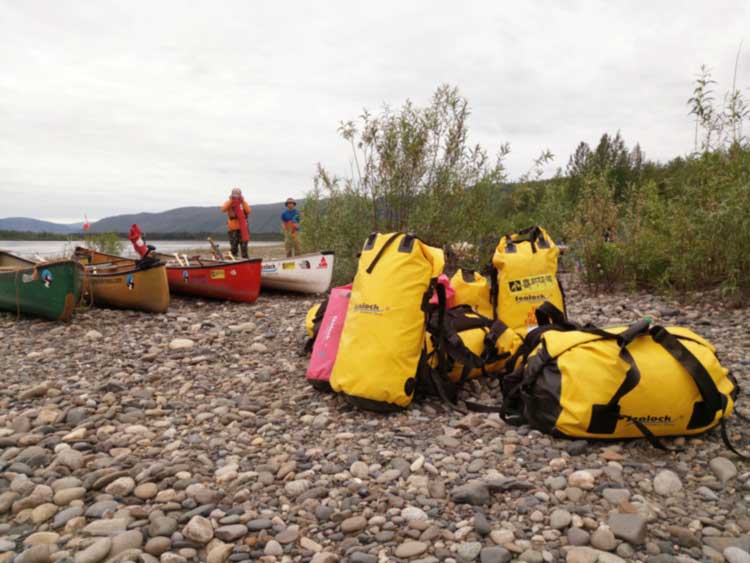
Waterproof Duffel Bag — 50L / 80L; PVC tarpaulin or TPU; heat-welded seams; grab handles.
Basecamp hauling and family loads
HF-welded; PVC or TPU
300–500
Terms and Customization
Item
Detail
MOQ
300–500 pcs (model-dependent)
Sampling
7–15 days; longer if a new welding mould is needed
Production
30–45 days after approval
Customisation
Capacity, fabric, closure, straps, lash hardware, base, colour, logo
Rating options
IPX4–IPX6 (splash) up to a verified IPX7 (1 m / 30 min)
Trade terms
FOB Guangdong; China or Vietnam origin
FAQ: Buying Custom Camping Bags
Q: Why is my dry bag smaller inside than its stated capacity?
A: Because the roll-top seal consumes 15–20 cm of vertical fabric — about 4–5 cm per fold — which cuts usable volume by roughly 4–6L compared to the flat-state figure. Spec with that buffer built in.
Q: What size do I need for a sleeping bag?
A: More than you'd think. An uncompressed three-season sleeping bag can fill about three-quarters of a 30L sack, leaving too little room to roll and seal. Step up in size, or use a compression sack, and keep the sleeping bag in a dedicated dry bag.
Q: Roll-top or waterproof zipper for a camping bag?
A: Roll-top for reliability and submersion; a waterproof zipper for fast, wide access at basecamp. The zipper needs cleaning and care, is stiffer to operate, and may not seal if the bag is overstuffed.
Q: Does a higher denier mean more waterproof?
A: No. Denier is thread thickness — durability and weight. Waterproofing comes from the coating and, above all, from welded seams. Specify them separately.
Q: Which fabric holds up in cold weather?
A: TPU-coated. Heavy polymer fabrics like 500D PVC stiffen noticeably in low temperatures, while TPU stays flexible — the better pick for cold and shoulder-season camping.
Q: How do I verify the bag is really waterproof before bulk?
A: Test the finished sample: absorbent paper inside, full submersion, pressure on the closure, and a reverse fill test. Then gate the order with a golden sample, IQC/IPQC/OQC, and a pre-shipment inspection.
Talk to the Factory
To spec and sample a custom waterproof camping bag, contact Sealock at info@sealock.com.hk or +86-769-82009361. Over twenty years in welded waterproof bags, a China–Vietnam dual-base option, and finished-product submersion testing you can verify yourself.
We use cookies to offer you a better browsing experience, analyze site traffic and personalize content. By using this site, you agree to our use of cookies.
Privacy Policy
 English
  Español
  Português
  русский
  Français
  日本語
日本語  Deutsch
  tiếng Việt
  Italiano
  Nederlands
  ภาษาไทย
  Polski
  Svenska
  magyar
  Malay
Malay  বাংলা ভাষার
  Dansk
Dansk  Suomi
Suomi  हिन्दी
  Pilipino
  한국어
한국어  Türkçe
  Gaeilge
  العربية
  Indonesia
  Norsk
Norsk  تمل
تمل  český
český  ελληνικά
  український
  Javanese
  فارسی
فارسی  தமிழ்
தமிழ்  తెలుగు
  नेपाली
  Burmese
  български
  ລາວ
ລາວ  Latine
  Қазақша
  Euskal
  Azərbaycan
  Slovenský jazyk
  Македонски
  Lietuvos
  Eesti Keel
  Română
  Slovenski
  मराठी
मराठी  Srpski језик