Sealock is a custom waterproof sling bag manufacturer and OEM supplier. Most sourcing guides stop at the commercial terms; this one goes onto the factory floor. A welded sling bag is not sewn together — it is fused, panel by panel, under a high-frequency electric field, and almost everything that can go wrong with a waterproof bag traces back to what happens at that press. Understanding the production sequence tells a buyer what to specify, what to ask for, and what the realistic constraints are on a custom design.
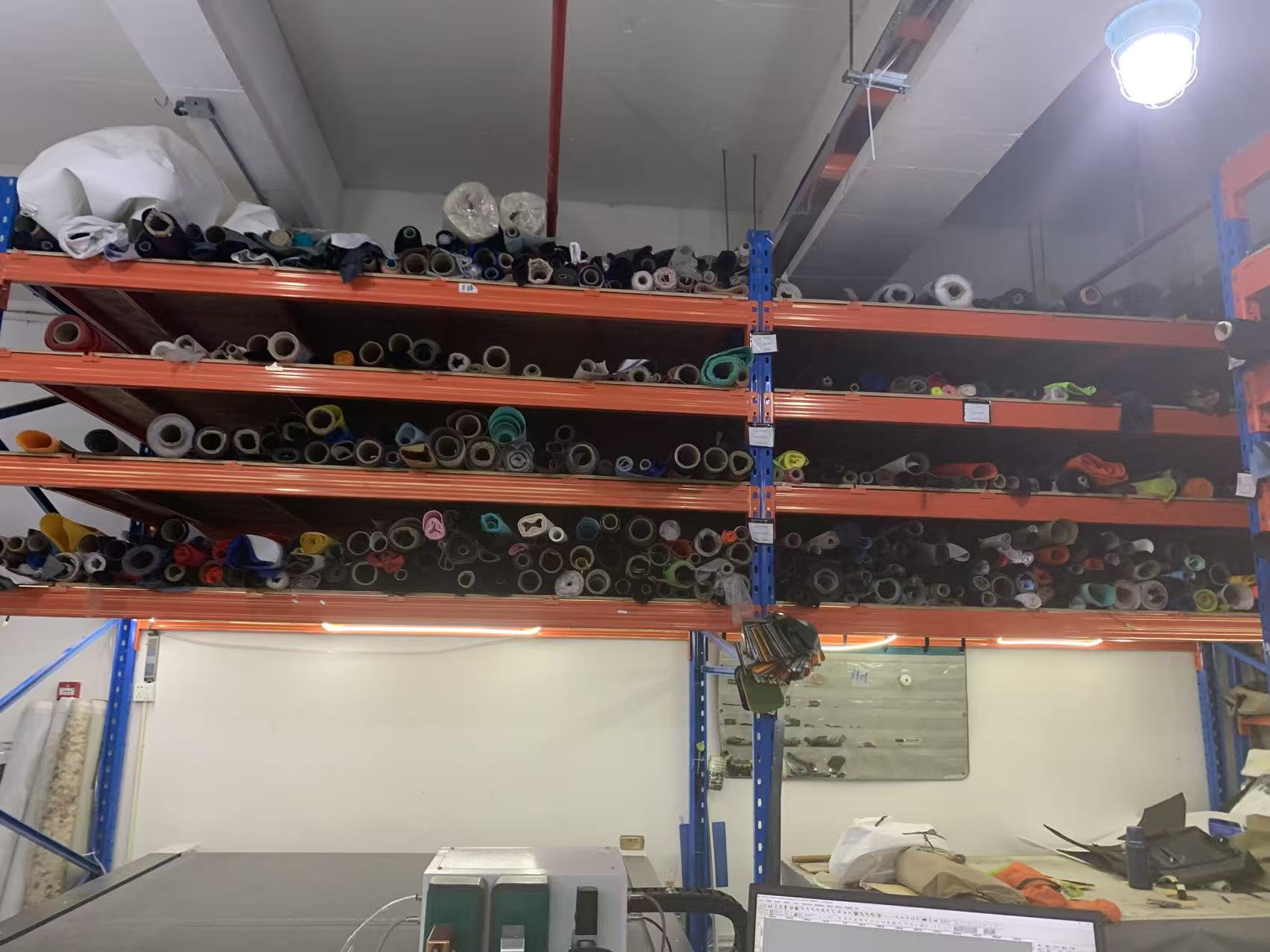
Step 1: Material Selection — Not Every Fabric Can Be Welded
High-frequency welding only works on polar thermoplastics — materials whose molecules respond to an alternating electric field. PVC, TPU, nylon, PET, and EVA all qualify; common polyolefins do not. This is a hard constraint, not a preference: a fabric that isn't weldable has to be sewn, and a sewn sling cannot be genuinely waterproof.
500D PVC tarpaulin — tough, abrasion-resistant, cost-effective, and one of the easiest materials to weld consistently.
TPU-coated nylon (420D and up) — lighter, softer, more flexible in cold conditions, and it welds with high bond strength.
Coating thickness — welding suits thin films and coated fabrics; the coating has to be thick enough to fuse but within the range the process handles.
Material choice also affects downstream steps: elastic TPU-coated fabrics don't tear-seal cleanly, so panels are normally die-cut after welding rather than torn from the sheet. The fuller material comparison is in our TPU waterproof material guide.
It starts with a weldable material — everything downstream depends on it.
Step 2: From Bag Geometry to a 2D Weld Pattern
Before anything is cut, the three-dimensional sling has to be translated into a precise two-dimensional weld pattern — the flat layout of panels and the exact path every seam will follow. This is where a custom shape becomes manufacturable, and where an experienced factory will push back on a design that can't be welded cleanly: very tight radii, converging seams, and sharp corners are all harder to fuse consistently than long, gentle runs.
Step 3: Tooling — the Die That Shapes Every Weld
Custom welded production requires custom-machined electrodes, or dies, that direct the RF energy exactly where the seam belongs. Some suppliers don't mention this up front; it's better to know early:
Tooling is quoted separately and adds lead time before mass production can begin.
The sequence is CAD review, tooling quote, sample die fabrication, first-article sample, then final revisions.
Once a die exists it is reused across the run and across repeat orders, so the cost amortises — which is part of why OEM minimums sit higher than simply rebranding a stock model.
Step 4: Cutting
Panels are cut to the pattern with tight tolerance control, because a welded seam has far less forgiveness than a sewn one — there is no seam allowance to absorb a few millimetres of drift. Cutting accuracy is checked in-process (IPQC), along with grain direction and batch labelling against the approved materials.
Step 5: The Weld Itself
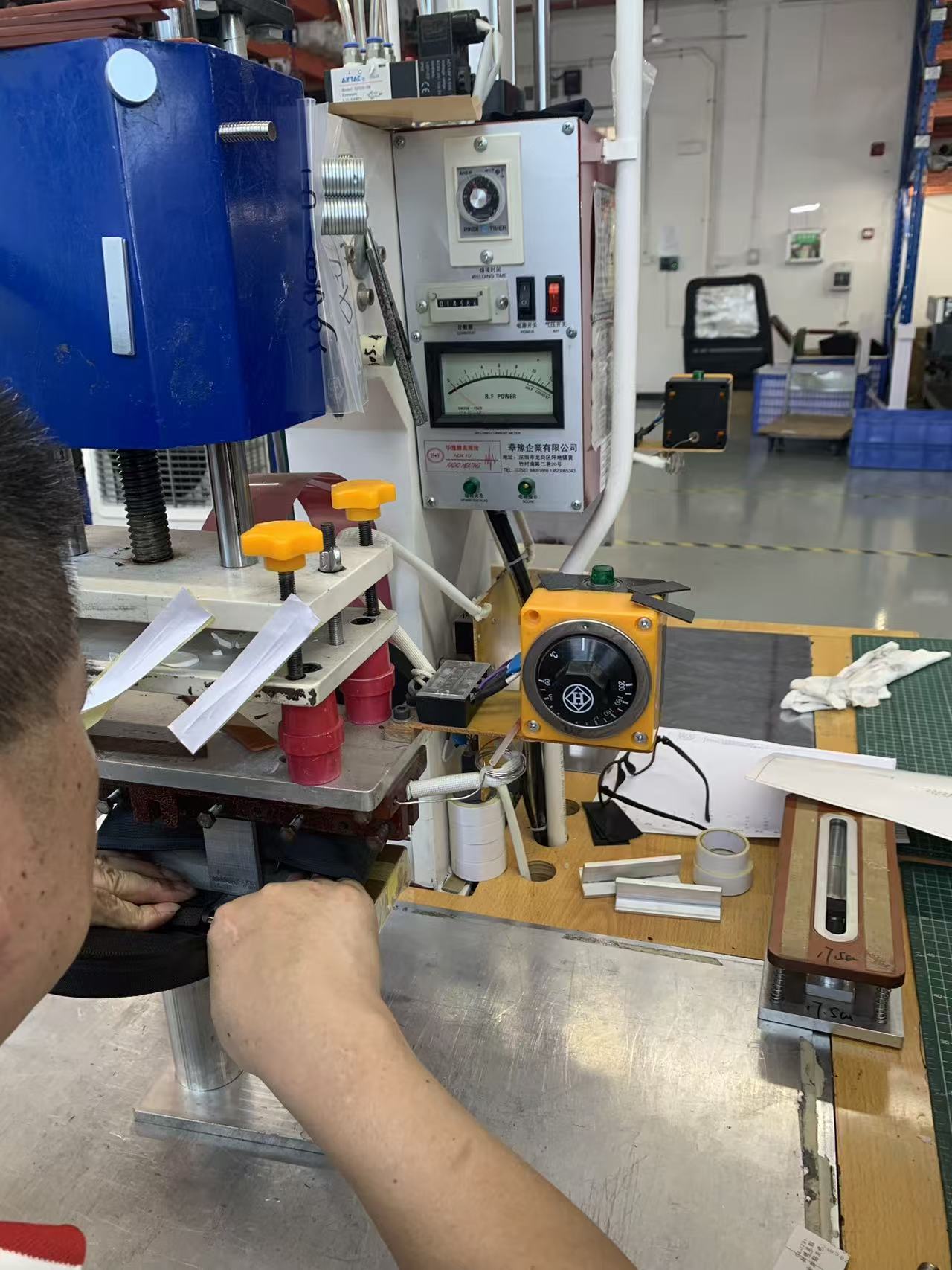
This is the heart of the process. High-frequency welding at 27.12 MHz generates heat inside the material rather than applying it from outside: the electric field makes polar molecules vibrate, and that molecular friction melts the mating surfaces from within. The result, done correctly, is a bond at the molecular level that can be stronger than the parent material, with no needle holes and no seam tape.
On the floor the cycle runs in a fixed sequence:
Position — the panels are laid perfectly flat between the electrodes, with a consistent overlap width.
Clamp — heavy pneumatic pressure is applied to the stack.
Energize — the RF field is applied for a set time, typically a few seconds.
Fuse — internal heat melts the mating surfaces under pressure.
Cool under pressure — the press stays closed while the seam solidifies. This step cannot be rushed.
Release and inspect — the seam is checked before the part moves on.
What Goes Wrong at the Press
Cold welds — if the cycle is rushed or the power is wrong, pressure is applied but the centre of the stack never reaches temperature. The seam looks fine and peels later. A pre-heat and correct dwell time prevent it.
Contamination — airborne silicone or release agents on a TPU surface disrupt the bond chemistry and cause failures that are invisible at inspection. Clean tooling and a controlled area matter.
Arcing — dirty or poorly insulated tooling can arc and damage both die and material; buffer layers and clean electrodes prevent it.
Uneven pressure — electrodes must be calibrated so energy and force distribute evenly, or one end of a seam under-fuses.
Inconsistent parameters — documented SOPs and test welds before each production run are what make results repeatable across thousands of units.
Heat from the inside out — then cooled under pressure before the press opens.
Step 6: Strap Anchors — the Sling-Specific Step
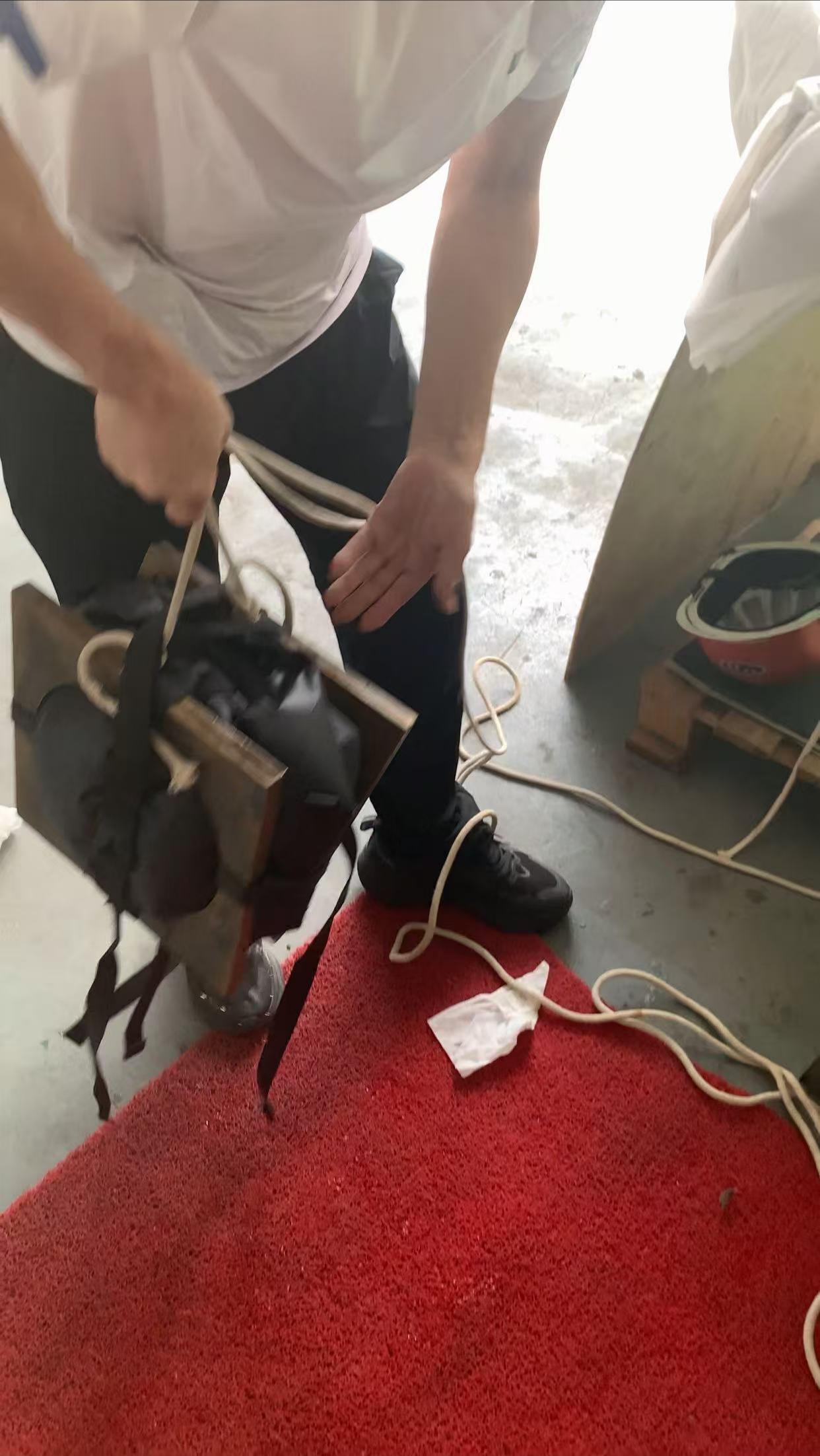
On a sling, the entire load passes through the strap attachment points, which makes them the defining production step for this category. Two things matter: the anchor has to be strong enough for a single-strap load path, and it must not compromise the waterproof barrier. Welding the anchor patch into the shell keeps the barrier continuous, where a stitched-on strap would puncture it. The anchors are then load- and jerk-tested rather than judged by eye — straps tearing out is the most damaging complaint in the sling category, and it is a production problem before it is a design one.
Step 7: Installing the Closure
The closure is the other high-risk interface. An airtight zipper has to be welded to the panel with a void-free bond so the seal runs continuously from fabric to zipper tape; any gap at that junction becomes a leak path under pressure. On a roll-top design, the top section is welded and reinforced so it survives repeated folding, with buckle webbing anchored the same way as the strap points. The trade-offs between the two systems are compared in our guide to roll top vs waterproof zipper camping bags for oem projects.
Step 8: Assembly, Hardware and Branding
With the sealed body complete, the remaining components go on: buckles, D-rings, lash webbing, the padded strap, a breathable back panel, and internal dividers. Branding is applied by silk-screen, hot-pressing, or a welded logo — and because the shell is a sealed barrier, any branding method must not perforate it. Packaging follows the buyer's spec: polybag, hangtag, care card, barcode, inner and master carton.
Step 9: Testing and Quality Gates
Quality is gated in three tiers rather than checked once at the end:
IQC — incoming fabric, zippers, buckles, and webbing against the signed colour card, with colour difference and fastness.
IPQC — cutting tolerance, weld integrity, anchor assembly, and closure installation checked on the line as bags are built.
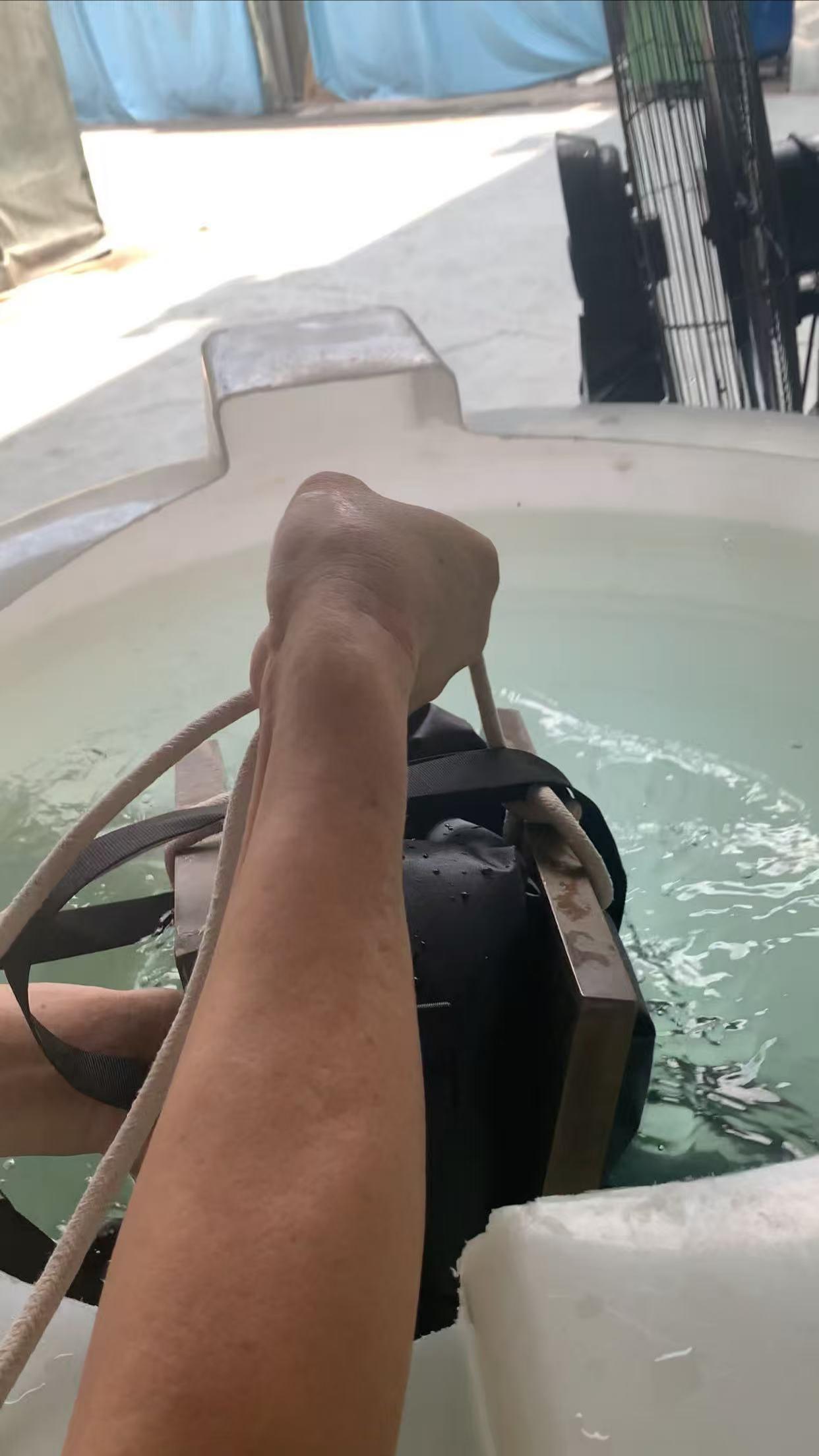
OQC — AQL sampling at 2.5/4.0, a real water-submersion test on finished bags, and comparison against the signed gold sample, with SGS or QIMA inspection available.
The supporting lab suite covers weld bond and peel strength, a 1,500+ cycle load test plus jerk-loading on the strap anchors, zipper cycling to 3,000 times, abrasion, tensile, salt spray, colour fastness, and colour difference. Sealed main compartments are rated up to a verified IPX7 — one metre for thirty minutes — proven on the finished bag rather than inferred from a fabric figure.
Every design is proven twice: the seal in the tank, the anchors under load.
What This Means for Your Design Brief
Specify a weldable material — PVC or TPU-coated fabric; a non-weldable fabric forces stitching and loses the waterproof claim.
Keep the geometry weld-friendly — gentle radii and clean seam runs weld more consistently than tight corners and converging seams.
Budget for tooling — a custom shape needs a custom die, quoted separately with its own lead time.
Detail the strap anchors — construction, width, padding, adjustment range, reversibility. This is where slings fail.
State the rating in numbers — with a finished-product submersion test, and declare which pockets are sealed versus water-resistant.
Allow for revisions — expect around two counter-sample rounds; the workflow and timeline are set out in our OEM waterproof sling bag supplier guide.
The Product Basis
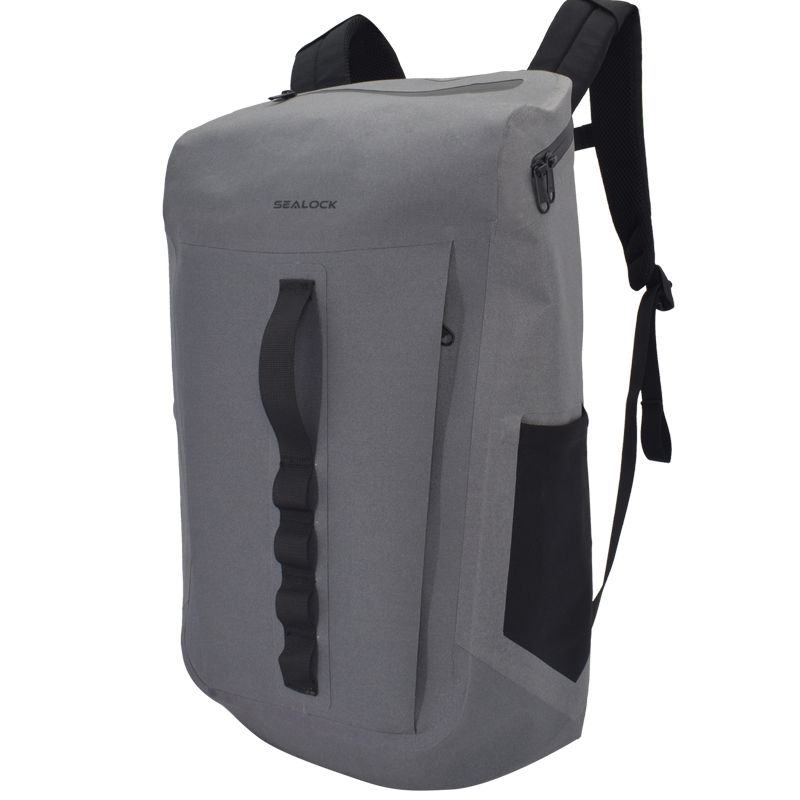
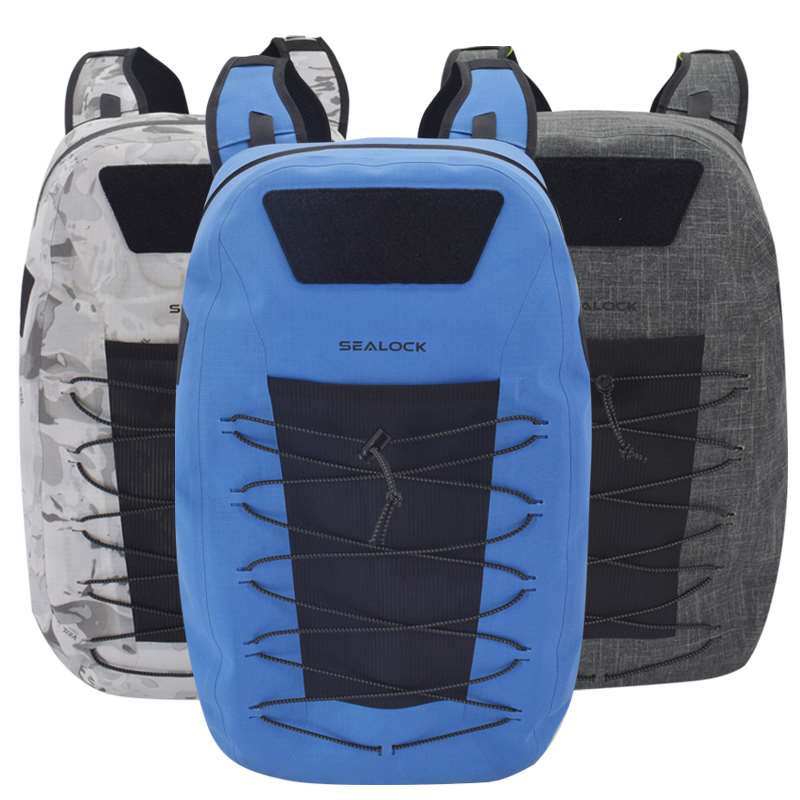
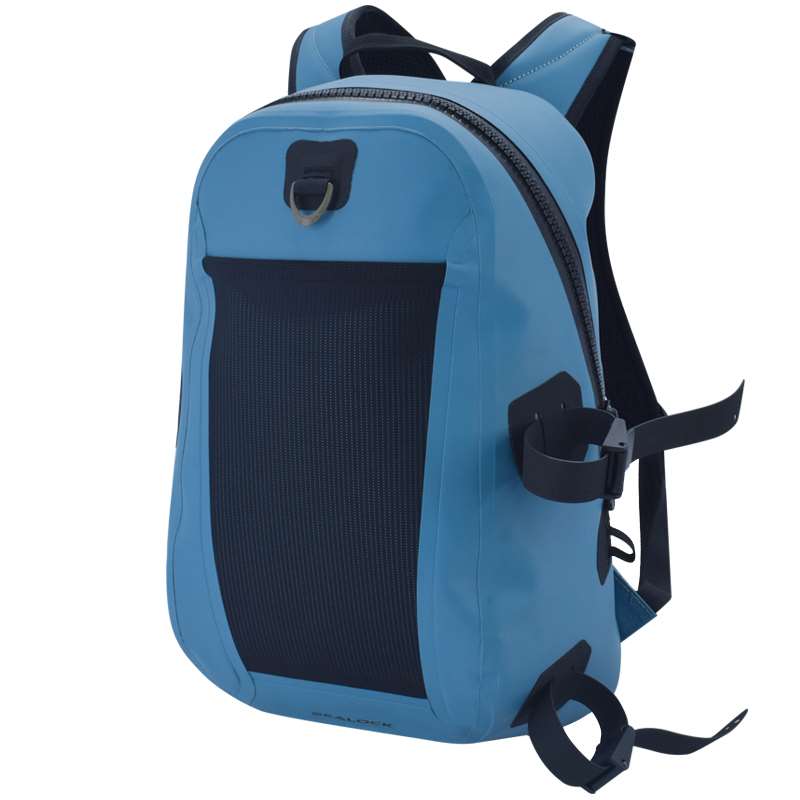
These welded bags, from Sealock's waterproof sling bag line, are equal starting points for a custom project — none is ranked above another; a brand can start from any of them or from a blank sheet:
Model & specs
Production notes
Construction
MOQ
SL-F115 Waterproof Sling Waist Pack — approx. 3L (24×8×15.5 cm), 0.56 kg; 500D PVC; IPX7; airtight main zipper + water-resistant front zip pocket; breathable padded back panel; adjustable, removable strap with quick-release buckle; dual D-rings, lash webbing, side loops.
Airtight zipper welded void-free; sealed main compartment
HF-welded; 500D PVC
300
Waterproof Messenger & Sling Dry Bag — sample size 9L (L31×W10×H31 cm), custom sizes accepted; 420D TPU-coated nylon; black, blue, orange, yellow, grey, red and more; silk-screen; sample 7–10 days.
TPU-coated nylon; panels die-cut after welding
HF-welded; 420D TPU-coated nylon
200
Waterproof Sling Bag with TPU — welded TPU tarpaulin construction; sizes, colourway, pocket layout, and strap system specifiable per order.
Custom geometry; die tooling quoted per design
HF-welded; TPU tarpaulin
300–500
Production Terms
Item
Detail
MOQ
200–500 pcs (model- and customization-dependent)
Tooling
Custom die quoted separately; adds lead time before mass production
Sampling
7–15 days per round; typically two rounds
Production
30–45 days after sample approval
Capacity
Nine HF welding lines; around 100,000 units/month; China or Vietnam origin
Rating options
IPX4–IPX6 (splash) up to a verified IPX7 (1 m / 30 min)
FAQ: Sling Bag Production
Q: Why can't you weld any fabric we choose?
A: High-frequency welding only works on polar thermoplastics — PVC, TPU, nylon, PET, EVA. A non-polar fabric won't fuse in the field and would have to be sewn, which forfeits a genuine waterproof claim.
Q: What is a cold weld, and how is it avoided?
A: A seam where pressure was applied but the material centre never reached temperature — it looks acceptable and peels in use. A correct pre-heat, dwell time, and cooling under pressure prevent it, backed by test welds and documented parameters before each run.
Q: Why is there a tooling charge on a custom shape?
A: Every welded geometry needs a custom-machined die to direct the RF energy along the seam path. It's a one-time cost, quoted separately, and it adds lead time before the first sample can be made — then it's reused for repeat orders.
Q: How do you stop the strap tearing out of the bag?
A: The anchor patch is welded into the shell so the barrier stays continuous and the load path is engineered rather than stitched on, then verified with load and jerk testing at QC.
Q: Is a welded seam really stronger than a stitched one?
A: For waterproofing, decisively — there are no needle holes, and the molecular bond can be stronger than the parent material itself. Stitched seams rely on tape that lifts over time.
Q: Does the bag design affect how easily it can be made?
A: Yes. Long, gentle seam runs weld more consistently than tight corners and converging seams. We review a design for weldability up front and suggest adjustments that improve both quality and yield.
Talk to the Factory
To put a custom waterproof sling bag into production, contact Sealock at info@sealock.com.hk or +86-769-82009361. Over twenty years of high-frequency welding, nine welding lines, dual China–Vietnam production, and finished-product submersion testing on every design.
We use cookies to offer you a better browsing experience, analyze site traffic and personalize content. By using this site, you agree to our use of cookies.
Privacy Policy
 English
  Español
  Português
  русский
  Français
  日本語
日本語  Deutsch
  tiếng Việt
  Italiano
  Nederlands
  ภาษาไทย
  Polski
  Svenska
  magyar
  Malay
Malay  বাংলা ভাষার
  Dansk
Dansk  Suomi
Suomi  हिन्दी
  Pilipino
  한국어
한국어  Türkçe
  Gaeilge
  العربية
  Indonesia
  Norsk
Norsk  تمل
تمل  český
český  ελληνικά
  український
  Javanese
  فارسی
فارسی  தமிழ்
தமிழ்  తెలుగు
  नेपाली
  Burmese
  български
  ລາວ
ລາວ  Latine
  Қазақша
  Euskal
  Azərbaycan
  Slovenský jazyk
  Македонски
  Lietuvos
  Eesti Keel
  Română
  Slovenski
  मराठी
मराठी  Srpski језик