Sealock is a waterproof camping bag manufacturer in China supplying OEM, ODM, and wholesale buyers worldwide. "Camping bag" isn't one product — a campsite needs a dry sack for a sleeping bag, a duffel to haul the kit, a roll-top pack for the trail in, and a small dry bag for a phone and documents, and each has to keep water out through rain, river crossings, and a bag set down on wet ground. Building all of them on one welded platform, to a rating that survives real conditions rather than a marketing label, is what a specialist waterproof factory does. This overview sets out the range, the construction, and the sourcing terms.
What "Waterproof Camping Bag" Actually Covers
Outdoor buyers use the phrase for several distinct forms, and a camping programme usually needs more than one:
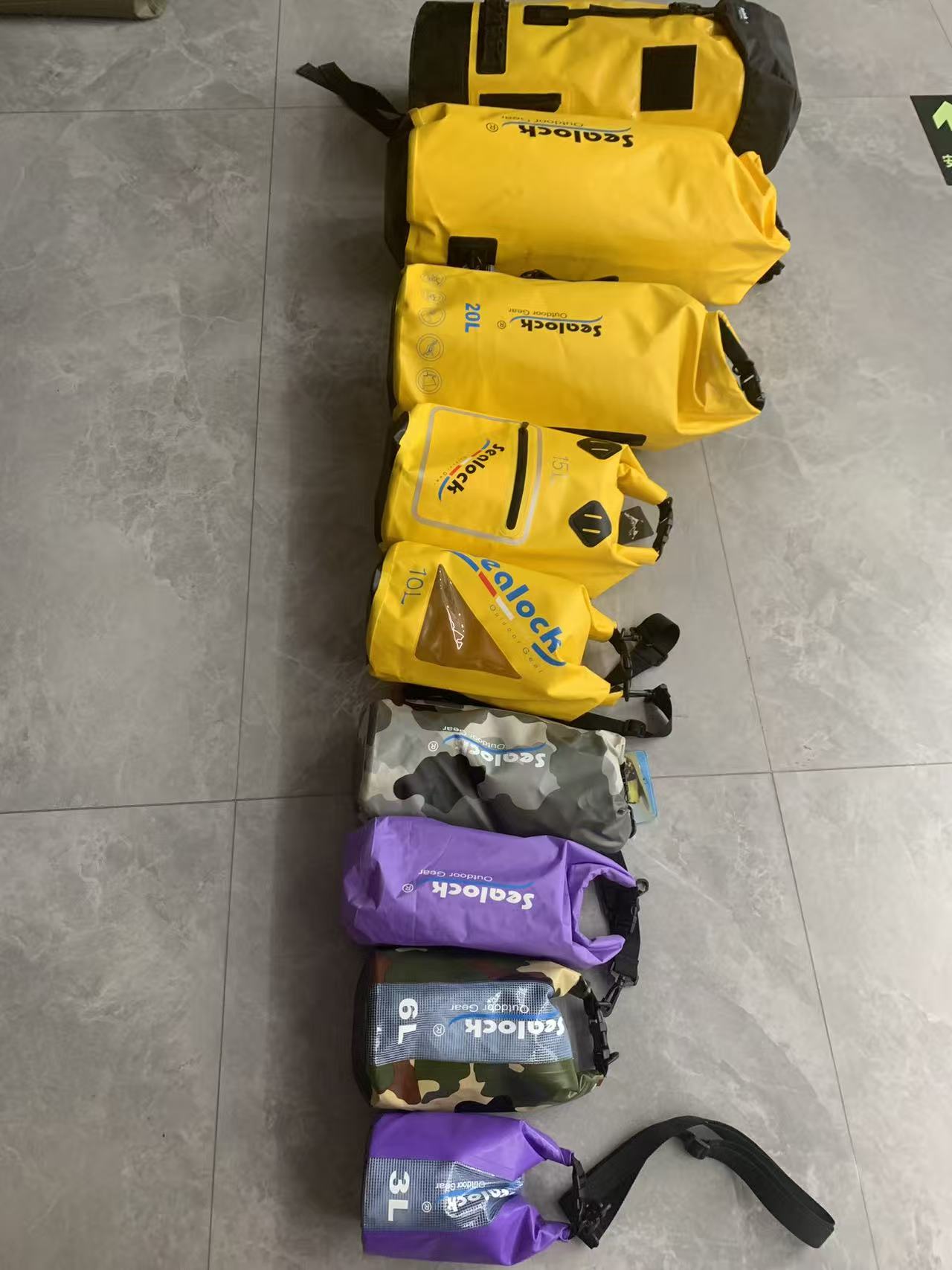
Dry bag — a single-chamber roll-top sack that keeps a defined load completely dry; the workhorse for sleeping bags, clothing, and electronics.
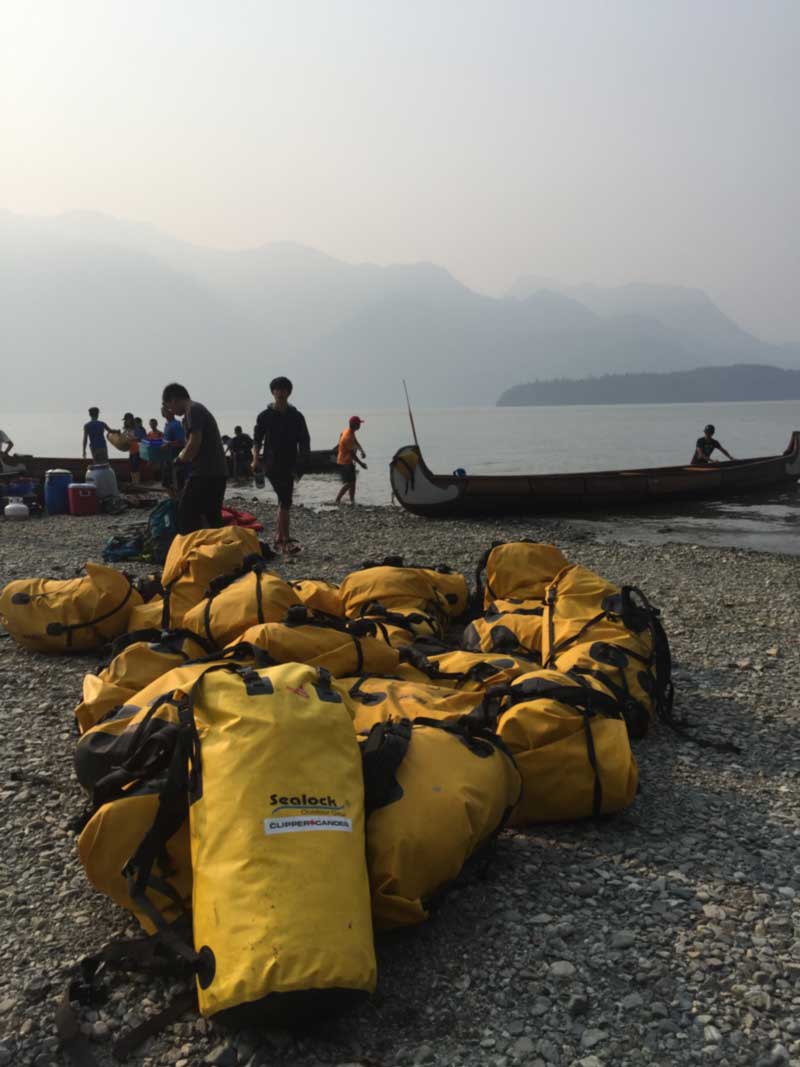
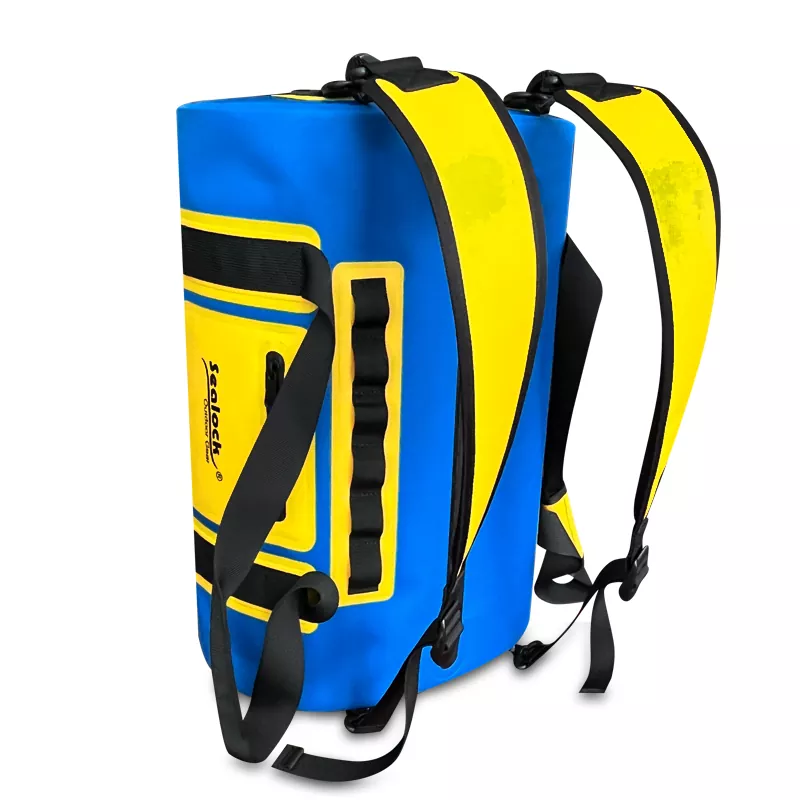
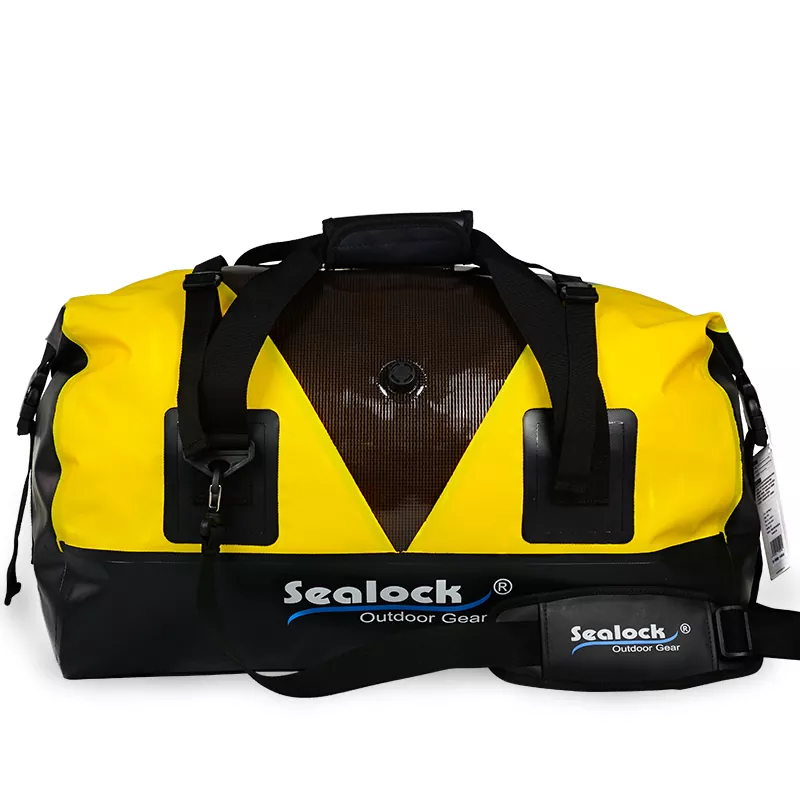
Waterproof duffel — a larger, structured bag, often with backpack straps and grab handles, built to move a full camping kit and stay dry through a soaking transfer.
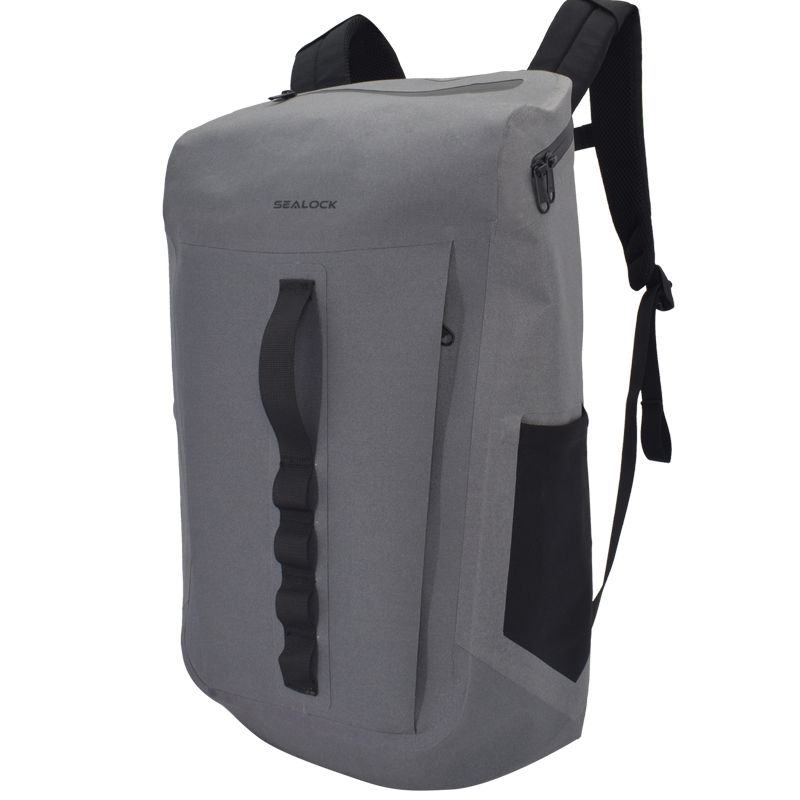
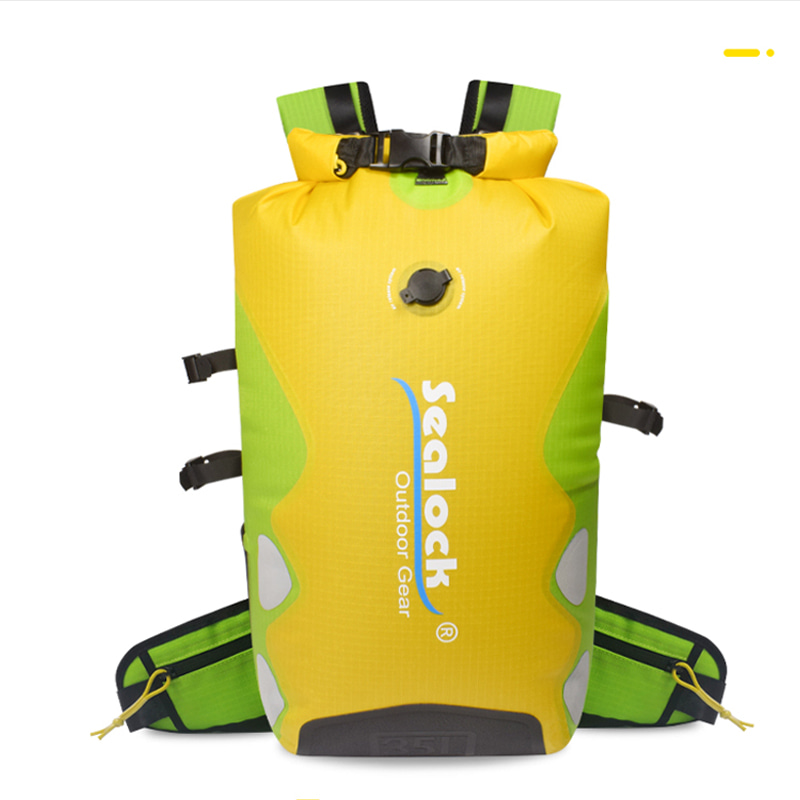
Roll-top waterproof backpack — a carry-in pack for the hike to the site, sealed at the top and comfortable loaded.
Convertible bag — a duffel/backpack/dry-sack hybrid that covers several carry styles in one SKU.
Small dry pouches — for a phone, keys, and documents inside the larger bag.
The distinction between a dry bag and a duffel is simple: a dry bag guards a handful of items, while a waterproof duffel moves an entire load. Both rely on the same welding technology; they just answer different jobs at camp.
A campsite needs several bags — one welded platform can build them all.
What Makes a Camping Bag Genuinely Waterproof
At camp a bag faces rain overnight, damp ground, spray on the water crossing, and grit — so the construction, not the label, decides whether the kit stays dry:
High-frequency welded seams — panels fused at 27.12 MHz with no needle holes, sealing out water, dust, and mud. A stitched camping bag wicks water along every seam.
A reliable closure — a roll-top folded three to four times and buckled creates an airtight seal; an airtight zipper does the same on a zippered pack. A standard zip is an open channel.
The right fabric for the job — 500D PVC tarpaulin for a tough, abrasion-resistant, cost-effective workhorse, or TPU-coated fabric where lighter weight, a softer feel, and cold-weather flexibility matter.
Buoyancy — a sealed bag traps air and floats if it goes into the water, so a dropped dry bag stays at the surface.
Proof on the finished bag — a real water-submersion test on the completed product, not a fabric figure. The wider distinction is in our guide to waterproof vs water-resistant construction.
The Factory: Capacity and Certifications
Welding a full camping range cleanly at volume takes real equipment and pattern experience. Sealock has been building welded waterproof bags for over twenty years:
Dongguan: 12,000 m², 400+ staff, nine HF welding lines, output around 100,000 units per month.
Two Ho Chi Minh City, Vietnam plants for diversified origin and US-tariff mitigation.
Exports to 40-plus countries; 20-plus waterproofing patents; OEM production for outdoor names including Osprey, KAILAS, SIMMS, and CHUMS.
Certifications: SMETA P4, HIGG, SCAN, GRS, BSCI, ISO9001, with an IP-protection process for private-label programmes.
Waterproof Camping Bag Range
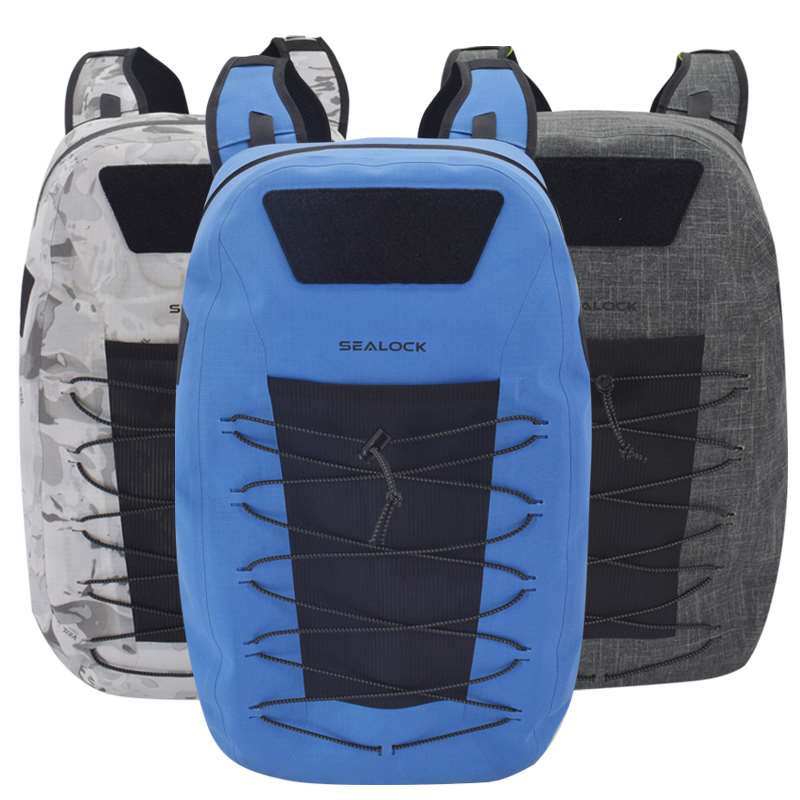
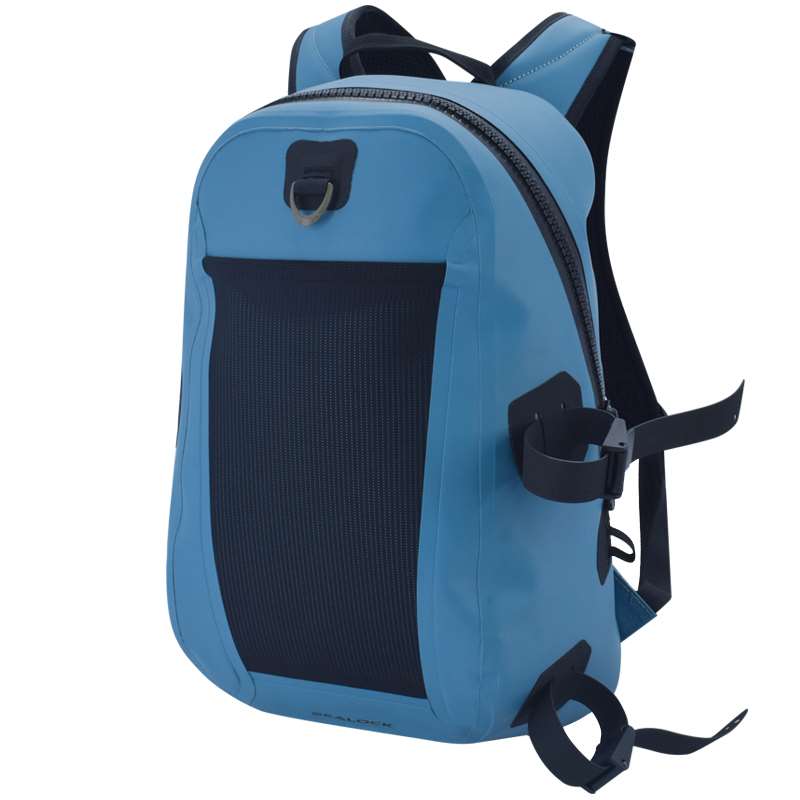
These welded bags, from Sealock's waterproof camping bag line, cover the main camping forms and serve as equal starting points for an OEM order — none is ranked above another; pick whichever suits the use case and customize from there:
Model & specs
picture
Role at camp
Construction
MOQ
Unplug Ultimate Adventure Bag — 25L / 45L / 65L; TPU-coated fabric, fully sealed welded seams; converts between backpack, duffel, and dry-sack; padded breathable straps; floats.
SL-D110 Waterproof Dry Bag — 2/5/10/15/20/30/40/60/80L; 500D PVC tarpaulin; roll-top; red, yellow, blue, green, black, gray, orange, pink; silk-screen; some sizes with a phone window.
Sleeping bag, clothing, dry storage
HF-welded; 500D PVC
500
SL-D045 Large Waterproof Duffle Bag — 50L-80L; PVC tarpaulin or TPU; heat-welded seams; grab handles; built to haul a full kit and stay dry through a soaking transfer.
Move the whole camping load
HF-welded; PVC or TPU
300–500
Capacity across the range runs from a 2L pouch to an 80L duffel, and the Unplug convertible is the standout where one SKU needs to cover three carry styles. Material, capacity, colourway, closure, pockets, and branding are all specifiable per order.
From a 2L pouch to an 80L duffel — one welded standard across the range.
Applications
Camping and backpacking retail — dry sacks and roll-top packs that keep a sleeping bag and clothing dry through rain and damp ground.
Paddling and boating — sealed duffels and dry bags that survive a soaking crossing and float if dropped.
Overlanding and moto-camping — tough PVC duffels that shrug off grit, straps, and abrasion.
Festival and travel — branded, custom-colour dry bags at volume.
Private label and promotional — high-margin welded bags with a custom logo and colourway.
OEM / ODM and Custom Development
Sealock builds camping bags to a brand's spec and from a brand's blank sheet — a sketch or reference sample becomes a pattern, a prototype, and a production run. Specifiable: capacity and shape, material and denier (500D PVC or TPU), closure (roll-top or airtight zipper), carry system, pockets, colourway, and branding by silk-screen, hot-pressing, or welded logo. Ground-up development takes longer than customizing a base model, so brands should plan against launch dates; the private-label path is set out in our custom private-label guide.
Item
Detail
MOQ
300–500 pcs (model-dependent)
Sampling
7–15 days
Production
30–45 days after approval; longer for ground-up custom
Rating options
IPX4–IPX6 (splash) up to a verified IPX7 (1 m / 30 min)
Inspection
IQC + IPQC + OQC (incl. real water-submersion batch test)
Trade terms
FOB Guangdong; China or Vietnam origin
Quality Control: IQC / IPQC / OQC
Quality is gated in three tiers — IQC (incoming fabric, buckles, and webbing against the signed colour card, with colour difference and fastness), IPQC (in-process cutting tolerance, weld integrity, and stitch checks on the line), and OQC (outgoing AQL sampling at 2.5/4.0, a real water-submersion batch test, and golden-sample comparison, with SGS or QIMA inspection available). The lab suite runs the submersion test, weld bond/peel strength, a 1,500+ cycle load test on straps and handles, plus tensile, abrasion, salt spray, colour fastness, and colour difference — the abrasion and load tests matter especially for camping duffels that get dragged and overloaded.
Choosing a Camping Bag Supplier
Confirm real welding — only HF-welded seams support a genuine waterproof claim; sewn or taped seams leak at camp over time.
Match fabric to use — 500D PVC for abrasion-heavy hauling, TPU where weight and cold flexibility matter.
Require finished-product proof — a submersion test on the completed bag, not a fabric figure.
Check the closure — a roll-top or airtight zipper, used correctly, is what actually seals.
Verify the audit trail — BSCI, ISO9001, SMETA, an IP-protection process, and third-party inspection options. The wider framework is in our guide to choosing a waterproof bag supplier.
FAQ: Sourcing Waterproof Camping Bags
Q: What's the difference between a dry bag and a waterproof duffel for camping?
A: A dry bag is a single-chamber roll-top sack that guards a handful of items; a waterproof duffel is a larger structured bag that moves a full kit. Both use the same welding, but they answer different jobs — many camping programmes carry both.
Q: PVC or TPU — which fabric for a camping bag?
A: 500D PVC tarpaulin is tough, abrasion-resistant, and cost-effective for hauling duffels and workhorse dry bags. TPU-coated fabric is lighter, softer, and stays flexible in the cold, preferred where weight and feel matter.
Q: Will a waterproof camping bag float if it goes in the water?
A: Yes — a sealed bag traps air and floats, so a dropped dry bag or roll-top pack stays at the surface rather than sinking. It's a result of the sealed construction.
Q: What capacities can you build?
A: From a 2L pouch to an 80L duffel, with dry bags across the full range and duffels and packs sized to the use case. Capacity, colour, and pockets are all specifiable.
Q: What waterproof rating should a camping bag have?
A: Match it to the use: IPX4–IPX6 for splash and rain, up to a verified IPX7 (1 m for 30 minutes) for genuine immersion during river crossings and paddling. We rate to what we can prove on the finished bag.
Q: What are the MOQ and lead times?
A: Typically 300–500 pieces per model, samples in 7–15 days, and production around 30–45 days after approval; ground-up custom development takes longer.
Talk to the Factory
For quotations, samples, and OEM/ODM proposals on waterproof camping bags, contact Sealock at info@sealock.com.hk or +86-769-82009361. Over twenty years in welded waterproof bags, dual China–Vietnam production, and finished-product submersion testing on every design.
We use cookies to offer you a better browsing experience, analyze site traffic and personalize content. By using this site, you agree to our use of cookies.
Privacy Policy
 English
  Español
  Português
  русский
  Français
  日本語
日本語  Deutsch
  tiếng Việt
  Italiano
  Nederlands
  ภาษาไทย
  Polski
  Svenska
  magyar
  Malay
Malay  বাংলা ভাষার
  Dansk
Dansk  Suomi
Suomi  हिन्दी
  Pilipino
  한국어
한국어  Türkçe
  Gaeilge
  العربية
  Indonesia
  Norsk
Norsk  تمل
تمل  český
český  ελληνικά
  український
  Javanese
  فارسی
فارسی  தமிழ்
தமிழ்  తెలుగు
  नेपाली
  Burmese
  български
  ລາວ
ລາວ  Latine
  Қазақша
  Euskal
  Azərbaycan
  Slovenský jazyk
  Македонски
  Lietuvos
  Eesti Keel
  Română
  Slovenski
  मराठी
मराठी  Srpski језик