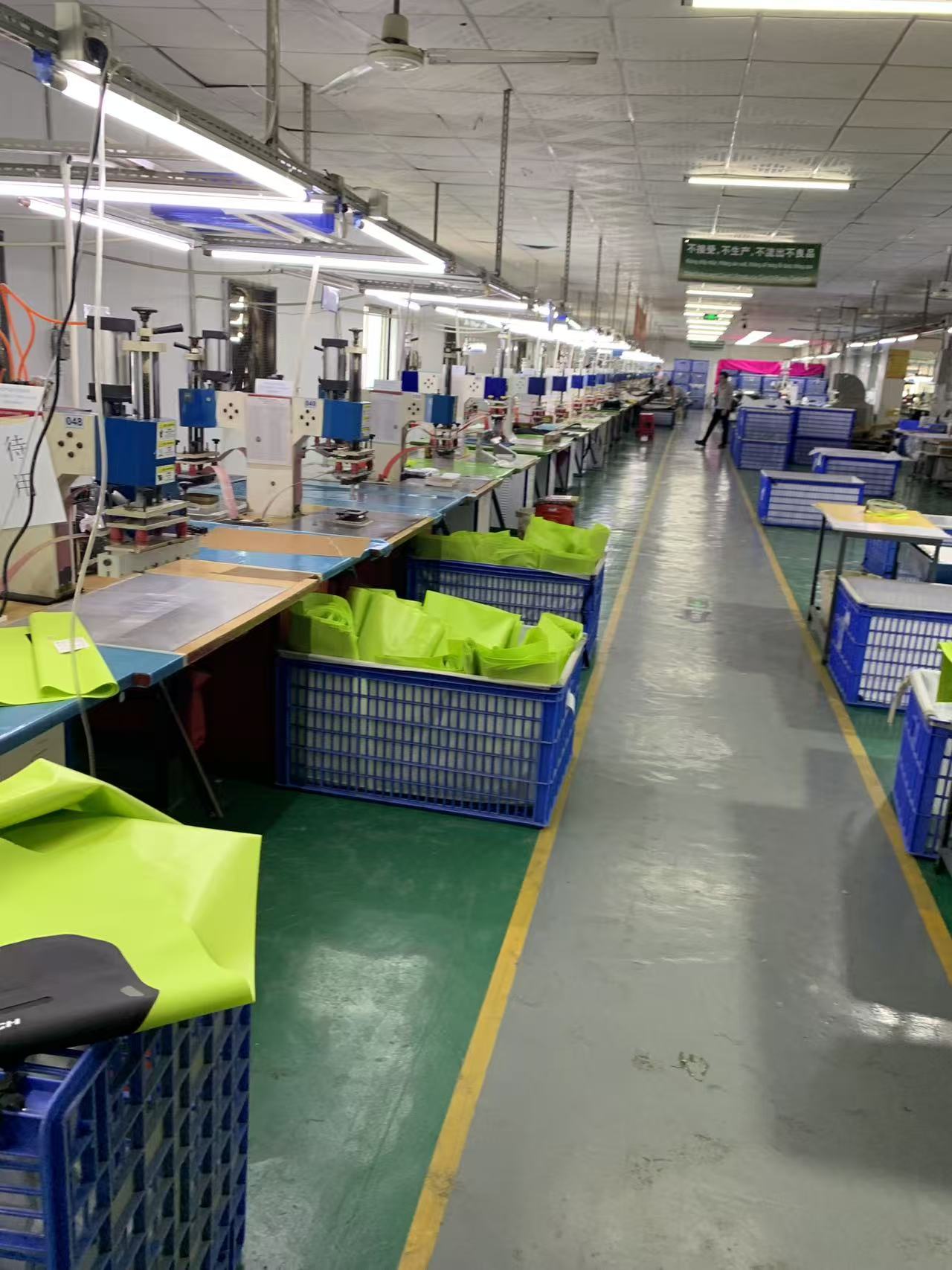
Most factory tours are photographs of clean floors. This one is a production run in progress — a high-visibility fluorescent motorcycle luggage programme moving through our Dongguan facility from welded panel to air-tested finished unit. The colour makes it unusually easy to follow: every stage in the sequence is the same fluorescent yellow, so a single walk down the line shows the product assembling itself in front of you.
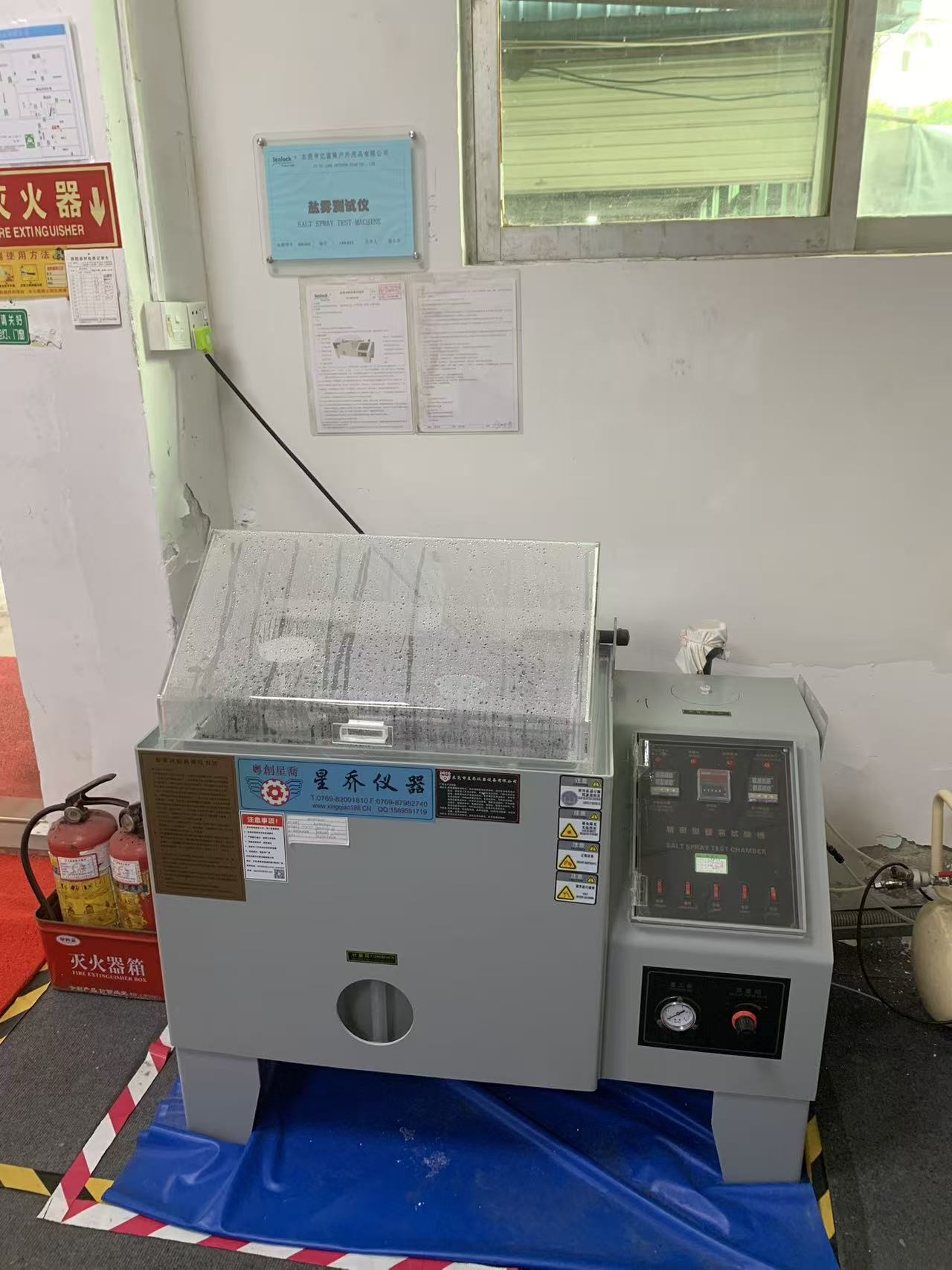
A dry bag that has been on a boat for two seasons rarely fails because the fabric gave up. It fails because a D-ring has bloomed white and seized, a slider will no longer run cleanly along a waterproof zipper, a snap hook has left a rust streak down a pale panel, or a rivet has swollen and split the material around it. Salt does not attack the parts of a bag that manufacturers like to talk about. It attacks the small metal components that get specified late in development, bought on price, and never tested — and it does so in a way that turns a functional failure into an appearance failure and then into a sealing failure, usually in that order.
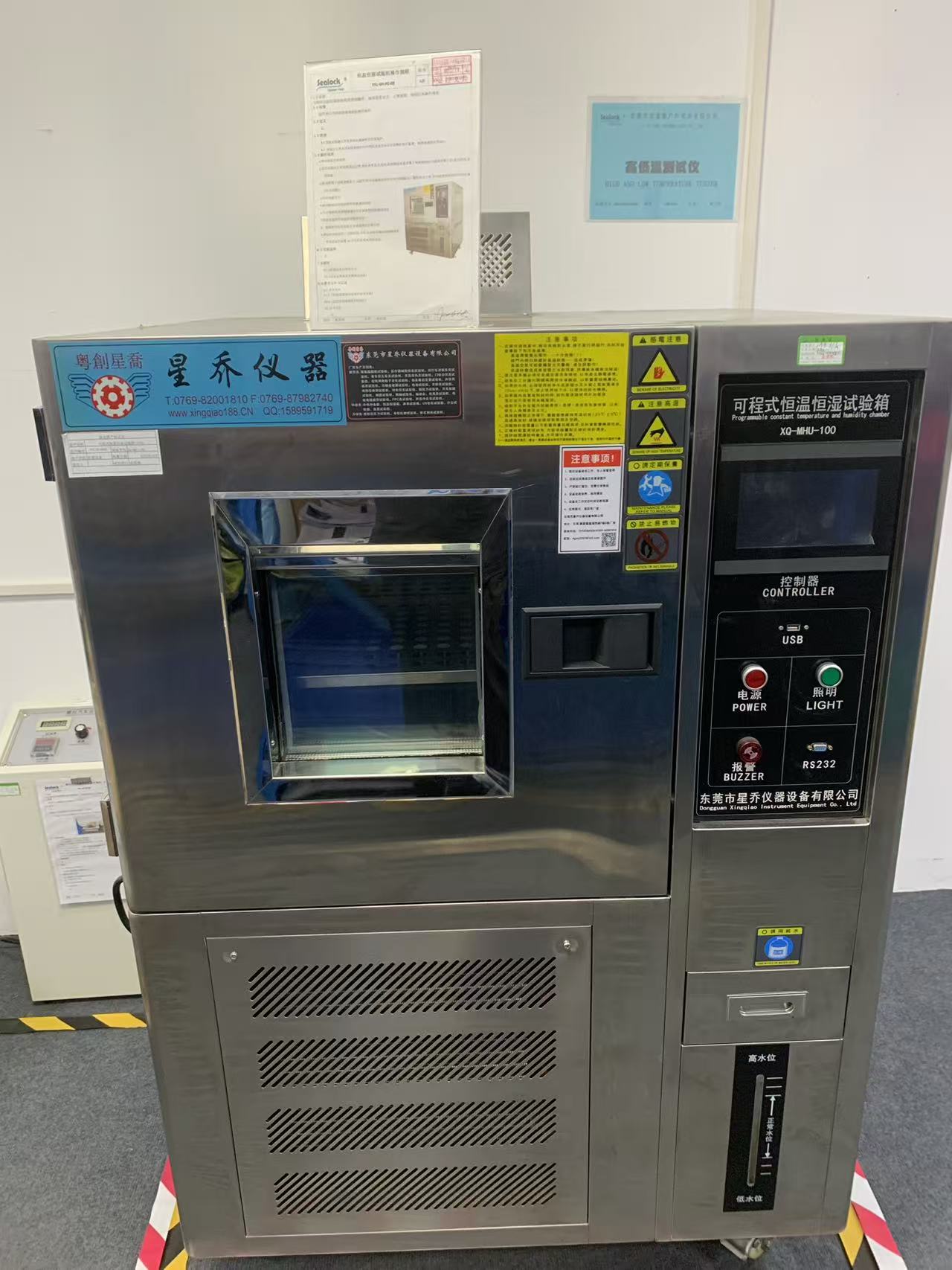
DONGGUAN, China — [August], 2026 — Every test in this series so far has attacked a product in a single, obvious way: rub it, pull it, cycle it, peel it apart. Each answers a mechanical question, and each gives you an answer the same afternoon.This machine is different. It doesn't touch the product at all. It just puts it in a stainless steel box, seals the door, and then changes the weather — hot and humid, hot and dry, then cold — and leaves it there for three days. Nothing visibly happens. That's the point. What it's testing for is the class of failure that never announces itself, and that no mechanical test will ever find.
DONGGUAN, China — [August], 2026 — Here's a complaint no factory wants to receive. The bag is fine. It's welded, it's sealed, it holds water out exactly as promised. The problem is the customer's white t-shirt, which now has a faint stripe of the bag's colour across the back — and the passenger seat of their car, which has a matching one.Colour transfer is a small failure with a long tail. It doesn't stop the product working, so it never shows up in a waterproof test or a load test, and it's almost never specified in a purchase order. It just quietly turns a good product into a returned one. The machine in this article exists to catch it before it ships.AATCC crockmeter in the Sealock in-house laboratory.The motorized crockmeter in Sealock's lab, with its controlled operating procedure posted at the machine.
DONGGUAN, China — [Month Day], 2026 — Everything this company builds rests on one claim: that two pieces of coated fabric, fused together by high-frequency welding, will behave as a single piece of material for the life of the product. Every dry bag, every cooler, every inflatable buoy is that claim repeated a few hundred times around a seam.It's a claim you can't verify by looking. A perfect weld and a marginal weld look identical from the outside — the difference only shows up months later, when the marginal one starts to peel apart in a customer's hands. Which is why the machine in this article exists, and why, of everything in our lab, it's the one that most directly measures whether our core process is working.It pulls the weld apart and tells you exactly how hard it had to try.
DONGGUAN, China — [Month Day], 2026 — Ask any bag factory where the warranty claims come from and you'll get the same answer, delivered with a sigh. Not the fabric. Not the seams. The zipper.It makes sense when you think about what a zipper is: the only part of a bag with dozens of moving components, operated several times a day, every day, usually with one impatient hand, often while the bag is stuffed past the point of reason. Everything else on a bag sits still. The zipper works for a living.So in our lab there's a machine whose entire job is to open and close zippers until something gives. In the photograph its counter is set to 3,000 cycles. It will run all of them, under measured load, and then stop by itself.